Today. Tuesday. 5pm Eastern Time. Baltimore’s WBAL, AM 1090. Listen live.
Author: Moskos
-
Legal drug shakedown
NPR has a good story about law enforcement agencies seizing drug assets. It can pay for itself.
The kicker is this: police prefer to come in after the drugs have been sold because it’s better for police to seize the money rather than the drugs. If police seize the drugs, the drugs are destroyed. If police seize the money from selling the drugs, they get to keep the money.
Talk about a dirty partnership. I thought robbing drug dealers was a crime.
-
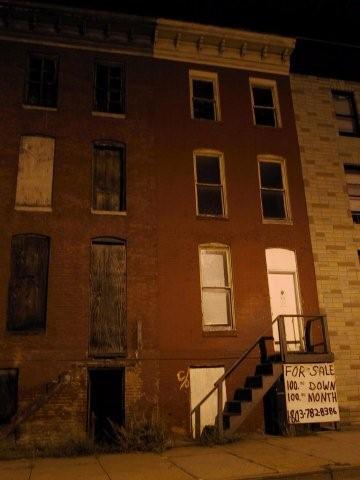
The failure of Section 8 housing
Ta-Nehisi Coates has an interesting post about the Failure of Section 8 Housing. I wrote a comment as well.

[Here’s a linkto the Atlanticarticle that started this discussion.]
-
$20 for a cigarette
In England, the Daily Express reports that drug dealers are getting arrested on purposeso they can make more money by selling drugs in jail.
A few years ago they banned cigarettes and smoking in Rikers Island (NYC’s jail). Now a single cigarette sells for about $20. For one tobacco cigarette. More often than not, these cigarettes come from correctional officers (i.e.: jail guards).
If we can’t win the war on drugs in jail, where can we win it?
-
Officer Pete says (rule 5):
When I ask you where you live, give me a proper address with a street and a number. Don’t just say, “around the corner.”
-
Officer Pete says (holiday special):
In the hood, ain’t no holiday like Father’s Day!
-
The path to drug regulation?
I had a thought about your book. This is not a criticism but something I was left wanting when I finished. Someone, somewhere, (and I nominate you) needs to articulate at length a pathway from the current environment towards what decriminalization/legalization would look like.
If there’s one out there it’s not widely known.
I think there’s a lot more enthusiasm for legalization than there appears because there’s no channel for it. A lot of people that are for it or at least equivocal would say “let’s give Plan X a try”. Its harder to bring people around to a conceptual, as you know from working the street.
I also believe (in my tiny little opinion) that the black community would get behind any reasonable pathway presented because they’re paying an outsized price for the war on drugs.
One thing has occurred to me though: Any plan offered would have to consider the pushback from a multi-billion dollar tax free industry having it’s existence threatened.
Sgt. [name and e-mail withheld upon request]
Thanks for the nomination. And that’s a valid complaint about my book. To be honest, I have no idea.
I’m pretty pessimistic about the whole possibility of any real pullback in the war on drugs. But then I suppose “wets” thought that too, in 1925. Maybe it really does start with medicinal marijuana. Maybe more Americans need to visit Holland. Maybe it has to do with getting the medical industry behind regulation (because they could profit from treatment and would profit from selling legal drugs). Maybe it has to do with finding and outing a criminal element contributing to drug war politicians. Maybe it’s LEAP.
But it’s not just drug dealers who are against legalization. It’s prison guards. It’s police agencies. It’s the makers of military equipment. It’s the entire prison-industrial complex.
I’m open to ideas. Comment below.
-
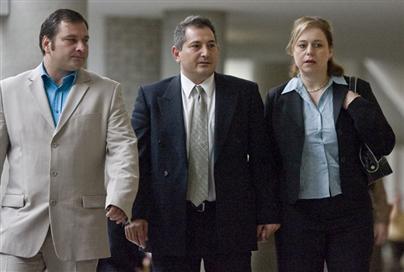
Drug Raid Death Not Guilty
Same old same old: Cops bust down door. Drug dealer wakes up and thinks he’s being attacked by criminals. Drug dealer shits his pants. Drug dealer fires off four rounds. Somebody innocent dies, this time a hard-working police officer.
A sergeant pointed out this story to me. He writes:
“Yea, it’s Canada, but it’s not too much a stretch to see this happening here. Bottom line: Everyone loses.”
 In the middle is the drug-dealing cop-killing malaka. (Photo by Dave Sidaway)
 -
Back on the Ron Smith show
It looks like I’ll be back on WBAL’s Ron Smith Show Tuesday, June 17, 5pm. AM 1090 in Baltimore. If you’re not in Balto, you can stream the show online.
-
Legal drugs kill more people than illegal drugs
Damien Cave writes a very interesting story in the New York Times.
In Florida, which is apparently the only state that keeps good track of these things, the rate of deaths caused by prescription drugs is three times the rate of deaths caused by all illicit drugs combined.
Out of 168,900 deaths statewide, legal opioids (such as Vicodin and OxyContin) caused 2,328 deaths. Drugs with benzodiazepine (such as Valium and Xanax), led to 743 deaths.
Cocaine killed 843, methamphetamine killed 25, and heroin was found in the bodies of 110 people who died. Marijuana and ecstasy, of course, killed nobody. That last figure shouldn’t surprise you. If it does, you’ve been bamboozled by lies and the lying prohibitionist liars who tell them.
Alcohol was judged to cause 466 deaths.
I’m not certain what this all means. I’ve been told by many of my students–particularly white students from the suburb–that the abuse of prescription drugs is a huge problem. But from both my personal and police experience, prescription drug abuse is all but foreign to me.
When my wife had emergency heart surgery in 2006, a doctor prescribed me Vicodin. Supposedly this was to treat the not-so-horrible pain I had in a hang-nail caused pinky infection. Really. But really he was just being kind, in a Californian kind of way. So I took a pill. With red wine. The wine part was definitely not recommended by the doctor. But it was on the advice of a friend of mine who does know something about the recreational misuse of prescription pain killers. It did nothing for me. A day or two later I took another pill. Or was it two? Then I gave up. It wasn’t for me. I really don’t understand how pain killers fall in the pleasurable category. But that’s just me.
But, as Ali G would say, I digest. Regarding drug deaths in Florida, a few thoughts come to mind:
1) Why are we so worried about illegal drug abuse when a bigger problem is right in front of us? But also, why are so many people dying from regulated drugs? I’ve always argued that regulation prevents overdoses. Doesn’t it?
2) At least there’s almost no violence around the prescription drug trade. Overdoses aren’t good, but at least doctors and Valium addicts aren’t shooting each other. Drug abuse should be the concern of the individual, the family, and the health care system.
3) Through health issuance and prescription plans, employers and the government are subsidizing middle-class drug abuse. Tell Rush Limbaugh and your right-wing friends that, the next time they complain about their tax dollars supporting crack addicts.
[Though in the interest of fairness, tell your liberal friends the un-politically correct truth that a whole lot of crack is bought when the welfare (and social security and disability) checks come out every month.]
4) If you think race and class aren’t a key part of the war on drugs, ask yourself why we are so quick to demonize and lock up poor people and the same time we offer sympathy and treatment to people who have the money and connections to get addicted to prescription drugs?
[If more poor people had good relations with doctors and cheap prescription drug coverage, they’d probably be very happy to abuse legal drugs. Hell, if more poor people had good health care coverage, many wouldn’t need to abuse any drug at all.]
5) If prohibition and incarceration are the answers to our drug problem, why don’t we use the same approach to fight prescription drug abuse? Medical necessity? Next time you pop a Viagra, tell yourself it’s more medically necessary than an emancipated chemo patient smoking a joint. Isn’t Viagra the definition of a recreational drug?