Author: Moskos

  • 3 Detectives in Bell Shooting Acquitted

    You heard it here first in my March 6 post.

    My gut knows the police did something wrong because Sean Bell is dead. But what should a reasonable police officer have done? I don’t know. I never had to shoot my gun on duty. My gun was never the only thing between me and an SUV trying to kill me. I have doubts. As long as Justice Cooperman has some of the same doubts, the officers will and should walk free.

  • “Hard” versus “soft” drugs

    The Dutch make an interesting and useful distinction between “hard” and “soft” drugs. When a Amsterdam police officer says, “I think drugs should be illegal and dealers should go to prison,” they’re almost assuredly talking about “hard” drugs like crack and heroin. Marijuana and hashish are considered “soft” drugs and were decriminalized in 1976.

    The result is that “coffee shops” selling weed and hash appeared, since people knew you wouldn’t get arrested for possession.

    When the hard/soft distinction was made, the idea was to accept marijuana for what it is and allow people to buy weed without having to deal with drug dealers and guns and gangsters.

    The hard/soft distinction is somewhat arbitrary. But no more so than our distinctions between legal, prescription, and prohibited drugs.

    There is also some debate about whether to classify ecstasy and hallucinogenic mushrooms as hard or soft.

    Dutch police generally support the hard/soft distinction and would not want to close “coffee shops,” even if they could. In speech, they use “drug” to mean “hard drug.”

    When I asked a police officer to clarify the distinction between “hard” and “soft” drugs, she said a hard drug is one that, “if you do it wrong, you can die.” That’s not a bad working definition. Particularly because it presents the problem of drug policy as geared to saving lives, and not imposing morals or punishing deviants.

    Of course I think all drugs should be regulated, but I would settle for a system where no drug user is jailed, violence is low, and drug use is seen as a public-health rather than criminal-justice issue.

  • A genuine “good guy”

    Initially my presence was greeted with skepticism, especially from supervisors who believed, probably accurately, that nothing good could come from my writing. One lieutenant told me: “Moskos, I like you. But I don’t want anything to do with your book. I don’t want to be in it. I don’t want my name in it. I don’t want any part of it.” Outside of this reference, he’s not.

    That quote is from Cop in the Hood. That very lieutenant (if my memory is correct) sent me the following email:

    Moskos,

    I hope you are doing well.

    You were always a genuine “good guy” and always listening and learning.

    Can’t wait to get the book.

    It isn’t like it used to be around here. You would probably only know a handful of people at the Eastern.

    Good Luck, …………

    Those are very kind words. Of course any two-bit grad student can listen and learn, it’s the actual “doing” that makes you real police.

    I received a follow-up email on 28 April:

    Yes, I believe it was I the one who said don’t put me or my name in your book. That’s OK.

    The small portion I read online looks great! It should be mandatory reading for all high school seniors to give them a taste of reality not seen on MTV’s “real world”.

    So how’s life as a professor? I hope things are going well for you. I bet some of your students can’t believe some of the stories you can tell them about inner city life.

    I think the experience you’ve had will be nothing but good for your career, and life in general.

    You’ve had the chance to see things 95% of society doesn’t know exist.

    With any luck all of your students will become right wing conservatives!

  • Officer Down

    It’s horrible anytime a police officer dies. It’s particularly horrible when it’s at the hands of another police officer.

    If the Baltimore Sun is correct, the officer who died had 44 years on. I didn’t know any officer had 44 years on.

    My condolences to the officer’s family.

  • From the Economist

    This is from the Economist:

    Thursday

    I’M STANDING on a street lined with boarded-up shops—a popular haven for drug-dealers. A police officer is frisking a suspect whose trousers are nearly around his knees. The policeman didn’t pull them down; that’s how the suspect wears them. A bit impractical, perhaps, if his line of work requires him to run away from policemen.

    But he insists that he is no longer in that line of work. He was caught once, but is now going straight. He has a legitimate reason for hanging around a nearly deserted street, after dark, in the pouring rain, for several hours. He is waiting for someone, he says.
    AFP Follow the trousers

    The police officer’s colossal partner, whose sense of humour is as robust as his shoulders, prays aloud: “Oh Lord, I pray that a meteorite hits this [drug bazaar].” (He adds a P.S. to the effect that God should be careful not to hurt anyone.)

    The temporal authorities in Baltimore take a more pragmatic approach to fighting crime. Like every other large city, they have copied elements of New York’s system for mapping crime statistics, which allows police departments to send officers where they are most needed.

    Baltimore has also put more officers on foot patrol, so that they are closer to the people they are supposed to protect. It has locked up many of the most violent offenders. And it has encouraged local volunteers to mediate between young hot-heads. Such volunteers know when a fight is about to erupt over, for example, a stolen girlfriend. All this is quite new, but the mayor, Sheila Dixon, thinks it is working. The murder rate for the first three months of this year was sharply lower than last year.

    But still, the drug trade is unlikely to be peaceful so long as it is illegal. Crack pushers cannot ask the courts to settle their disputes. The only way to stop them shooting each other is to legalise drugs, reckons Peter Moskos, a sociologist who spent a year as a policeman in Baltimore’s eastern district and wrote a book about it.

    That is not going to happen, alas. And even if it did, it would hardly be a panacea. Anyone with a proper job leaves the ghetto. The young men left behind develop traits that render them unemployable. For example, says Mr Moskos, they react violently to trivial slights. This is a useful quality in a drug-dealer, but less so in most other trades.

  • A night of fieldwork in Amsterdam

    A night of fieldwork in Amsterdam

    I often wonder why anybody would prefer to crunch numbers than do fun qualitative research.

    I’m in Amsterdam right now. I made contact with and successfully gained access to my desired police station tonight (to make a long story short).

    I want to compare the attitude toward drugs of Baltimore and Amsterdam police officers. These attitudes are very different. Even the most conservative of Dutch cops thinks that people should be able to purchase and smoke weed in “coffee shops.” No Dutch cop thinks that drug users should rot in prison. Most Dutch cops think that punishment needs to be harsher for dealers of “hard drugs” (crack and heroin).

    I meet the chief. He is both friendly and smart. And welcoming to an outside American research he doesn’t know. I interview him and some of his main men. Then I ask to talk to some low-level cops, doing the kind of work I did. I am passed around to various police officers and interview them all.

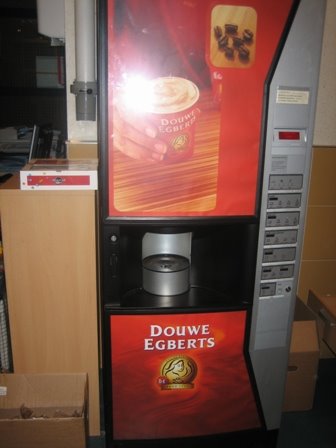
    As a cop, I’m impressed with the free coffee machine. It makes much better coffee than the machines they used to have when I did research here 10 years ago in de Pijp.

    Next to the coffee machines is a box of free sandwiches. While the cop in me loves free food. I pass on the broodjes. I think it’s strange that the police here make such an effort to keep cops from taking free food outside the police station that they prefer the cops to eat and drink without leaving the police station. Is that a victory?

    One police officer asks me if I want to join some plain-clothes officers on their patrol of the Red Light District. Sure, I say. So I do.

    The big problem of the area is not drug use or prostitution. Prostitution is legal here. Marijuana and hash can be legally bought in any of many legal “coffee shops.” The big problem of the vice-filled center in this city of sin is, get this, fake-drug dealers.

    People who stand on bridges trying to get stupid tourists to buy drugs. Except they don’t have drugs. And they might take you into an alley and rob you. It’s not much of a crime here to sell baking soda. So it’s hard to get rid of these guys. And they really are a terrible P.R. problem for Amsterdam.

    So many tourists come here and think, “This city is so overrun with drugs. I mean, there’s a drug dealer standing on every corner!” There’s not a drug dealer on every corner. But there is a man trying to sell you fake drugs on most bridges in this very small part of the city where all the tourists walk around to do their vice-related slumming tour. (Can you imagine if Baltimore’s Eastern District was a tourist attraction… and it was perceived to represent the whole city?)

    These cops, a man and a women, have been on this detail for three months. So all the bad guys know them, uniform or not.
    You can see this as the guys look down and slink away when they see the plain-clothed police.

    So the cops ask me to walk in front of them so people would proposition me (really, I’m not well known in the Red Light District). So I do. It’s raining for the first time in days, so the streets are relatively empty. But after maybe 1/2 an hour, I walk by a man.
    He says, “Cocaine?”
    I say, “What?”
    He says, “You want to buy cocaine, heroin, ecstasy?”
    That’s it. That’s what they need for the arrest.
    I say, “How much?”
    He says, “Follow me.”
    I say, “No thanks.” And, using our pre-arranged sign, I take off my hat. I walk away. The officers, close behind and in listening range, make the arrest.

    This is such small-scale stuff for a Baltimore cop. But it’s been years since I’ve been part of the action. Hell, I never even worked plain-clothes. My heart is beating fast as I enjoy the small surge of adrenaline. It’s fun to be back in the game, even if in a very small way.

    These cops have arrested this guy before. He is walked (rather freely, in my opinion) back to the police station. He is treated very politely and very humanly.

    The prisoner is guilty of the very minor crime of offering (non) drugs. That’s a 150 euro fine. But he doesn’t have any real drugs on him, except his prescription meds. But he’s also guilty of violating his 3-month banishment order (issued four days ago) for the same crime. By law, he must stay out of the city center. Yes, in Europe, you can still be banished. Now he’ll get (re)offered a place to sleep and social help.

    Unlike American police, most Dutch police are happy to offer social help.
    “Really? Is that real police work?” I asked.
    “Yes, because it helps solve the problem…. Isn’t it better to prevent a crime than make an arrest?” I couldn’t have said it better myself.
  • Brave ethnographic confession from Cop in the Hood

    Professor Corey J. Colyer of West Virginia University sent me the following email:

    Peter,

    This note is motivated by a remark you make about your methods in the first chapter of Cop in the Hood. It is rare (and therefore refreshing) to see an ethnographer admit that they failed to capture details in their notes. We get tired, overwhelmed, and even bored in our efforts to craft moderately complete ethnographic records. The bulk of the methods literature (in my humble opinion) unrealistically frames the good ethnographer as a tireless scribe, who dutifully returns to the desk after a long day in the field to generate thousands of pages of notes. This leads to what I describe as “ethnographer’s guilt” and worries of being a fraud. I’ve never measured up to this model and it’s nice to see someone as talented as yourself admit to this as well. [By that I mean, you seem to more than adequately support your assertions with rich ethnographic detail]. I suppose it makes me feel less like a fraud as I return to my manuscript this morning.

    I’ll sharing that section of your first chapter with my graduate level methods class next Monday.

    With respect,
    Corey

    Corey J. Colyer, PhD
    Assistant Professor
    Division of Sociology
    School of Applied Social Sciences
    West Virginia University
    PO Box 6326
    Morgantown, WV 26506-6326

  • Hate mail (2.4)

    The latest from my conservative friend:

    Prof Moskos;

    Lets get real. Legalize drugs? Just look at alcohol. 21 years olds buy it give it to younger friends, who give it to even younger friends and now we have many 12 year old alcoholics in this country. Multiply that with narcotic addiction and see what the fabric of this country looks like then. Who will be trainable to fly the F22 raptor? Some coke head like Obama….. And lets be realistic.. What is so bad about drug dealers killing each other..?

    As far as I’m concerned that is a win-win situation.

    Now to your premise about liberals not ruining Police Depts…. In the past Baltimore had one of the best Homicide squads in the Nation. Their clearance rate was over 90%.

    Then came the downfall ” Affirmative Action” every liberals dream.

    Good street smart homicide detectives were unceremoniously removed from homicide and put back in uniform. They were replaced with rookie, black, officers with little or no experience, just to appease the Gods of P.C.

    Now the clearance rate is somewhere around 40% and homicides are up.

    Please explain how this liberal move has made Baltimore a safer place to live.

    Baltimore now has a new nickname which is known all over the East coast: ” The City that Bleeds”.

    When I was a kid in the 40’s and 50’s you could sleep in Patterson Park on hot nights.

    Try it now… if you dare….

    Again about education. I have a daughter-in-law with a masters my son had 3 years college, and my family is conservative. Mostly because of family values and the fact that my son and his wife went to a Moderate school. There were no Ward Churchills teaching there. I myself have some credits from a community college. I am not against education, I am against educators brainwashing students to be little socialists.

    Kruschev once said “we will destroy you from within”. That destruction starts with biased education.
    Mark DeRosa Sgt ( ret) Balto P D

  • Hate mail (2.3)

    I’m giving the sergeant a pseudonym, Sgt. Mark DeRosa. That’s not his real name. He is willing to use his real name and print his email. But I’d prefer to give him a pseudonym and not print his email.

    I wrote:

    Sgt. DeRosa,

    I also want you to know that I am and will continue to post our correspondence on www.copinthehood.com. I’m not identifying you in any way, other than retired BCPD sgt.

    Yours,
    Professor Peter Moskos
    Dept. of Law and Police Science
    John Jay College of Criminal Justice
    899 10th Ave, Room 422
    New York, NY 10019

    Sgt [DeRosa] writes:

    Feel free to post my name and address if you wish [Ed note: I do not wish. But I admire his willingness.]. I am a proud conservative and vote that way every election. I distrust any one who contends that “the police are the problem” in the ghetto. Those animals living there who rob “mostly their own” are the problem. I totally distrust any one who contends that drugs should be legalized. Hell, why not legalize bank robbery & rape, then we could lay all the police off as there would be no crimes to arrest for. Then we would have more money to give to those who chose not to work for a living.

    Liberalism has ruined Police Depts all across this country. It has begun to ruin the whole country as well.

    As for me I will not sing “Kum-by-ya.”, I will keep my powder dry, my guns loaded, and my picture of Charlton Heston dusted. I will never be a victim because some liberal thinks I should be. Further more, I do not have a problem with your PHD, just the way educators use it to impress liberal views on young kids who are paying a fortune to be turned into future liberal activists. It is a statistical fact that 90% of professors are left wingers. Surveys that were taken prove this, as the intelligencia has admitted it. Ward Churchill is a perfect example. Teach if you wish, but teach the truth, not the truth as you wish it to be.
    [Mark DeRosa] Sgt (ret) BCPD

    My response:

    [Sgt DeRosa],

    The police are not the problem. I agree. Again, I wish you would read my book. You’ve taken me for some cop-bashing liberal. I’m not (well, I am liberal. But I’m not a cop basher. Believe it or not, those are two different things).

    I do think drugs should be legalized. Basically because I don’t think drug dealers wouldn’t shoot each other as much if drugs were legal. There’s more, but I’m not going to type my reasoning again here. It’s in the book.

    I think you misunderstand Liberalism. I’m not saying there aren’t any stupid and intolerant liberal. There are. Just like exists among conservatives. I feel I do teach the truth. Sometimes the truth is Liberal. Sometimes the truth is Conservative. You know what liberals and conservatives have in common? When they know that they’re always right and think less of those who hold other opinions, they become one and the same thing: fascist.

    But no, I don’t think Liberalism has ruined Police Departments. I think Liberalism has made policing and the country better. I also think that police should reflect, to some extent, the people they police. So personally, being liberal and living in a liberal area, I’d prefer to have more liberal cops. I think the streets would be safer.

    I appreciate you not hating me for having a college degree. I’m sorry you’re against higher education in general because of the generally liberal bias. But that’s why you take many professors, to hear all different perspectives.

    Peter