Category: Police

  • This city ain’t ready for reform!

    No, it doesn’t.

    Wait a second… if you think Baltimore has 73,000 arrests, watch this magic:

    [POOF!]

    I just reduced arrests by 63 percent!

    There were fewer than 28,000 arrests in 2015. That’s a pretty big difference.

    Can’t we expect better facts from a City’s Health Commissioner. She’s a medical doctor, for crying out loud. How about factual facts?

    Reasonable people can and should differ on opinions, but I still have this naïve belief that if people stop believing lies, we’d have a lot more common ground.

    Baltimore arrests peaked in 2003 (with 114,000). From 2003 to 2011, homicides steadily declined in Baltimore and so did arrests. Great. 2009 was the last time Baltimore saw more than 70,000 arrests. 2009 was also the only year (since God knows when) that Baltimore has seen fewer than 200 homicides.

    This matters because blaming arrests is the false political narrative put out by Mayor Stephanie Rawlings-Blake’s administration in order to deflecting blame for last year’s riots. The 2015 “uprising,” say those on the left, happened because people are angry about racial injustice and police abuses. (Like being “angry” excuses rioting or makes it inevitable.)

    That’s right, say “progressive reformers,” criminals like Donta Bettshelped burn the city because he was angry about er, mass-arrest policies that he isn’t even old enough to remember?

    Any time ideology trumps common-sense problem-solving, you’re in for trouble. And reformers love circular logic. Reforms can’t not work, because reform is needed. And reformers never accept responsibility for the unintended (and sometimes intended) consequences of their actions. And when reforms don’t work? Then we need more reform. I prefer the old adage: when you find yourself in a hole, the first thing to do is stop digging.

    And yet the city administration — I don’t know if they’re purposeful lying or shamefully ignorant ideologues (though either would be troubling) — harps back to a false past to deflect blame for the messed-up and deteriorating present.

    Things were actually getting better in Baltimore. And then a minor corruption scandal (Dixon) led to the current unqualified reform (SRB) mayor who brought in a certain reformer of police (Batts, whose only proven success seems to have been at career hopping) who done messed everything up! Murder increased from pretty much the moment Batts “reformed” the police department. Things got worse. Well it can never be the fault of reform. So it must O’Malley’s fault from 10 years ago.

    Here’s my litmus test: If you talk about the crime and police without ever once saying the word “criminals,” you’re a reforming fool.
  • Chicago violence

    Chicago violence

    Maybe killers don’t dress with such flair in Chicago as they do in Detroit. But what Chicago murders lack in quality, they make up for in quantity.

    Some experts prefer to put their head in the sand and hope it all goes away:

    “Trying to read too much into this is a grave mistake,” said Craig B. Futterman, a clinical professor of law at the University of Chicago. “We’re all just guessing.”

    Really? A “grave mistake” when homicides are almost doubled compared to the same time last year? No. It’s high time for everybody to give their best guess. Here’s mine:

    Since January, officers have recorded 20,908 times that they stopped, patted down and questioned people for suspicious behavior, compared with 157,346 in the same period last year. Gun seizures are also down: 1,316 guns have been taken off the streets this year compared with 1,413 at this time last year.

    And convictions in gun cases are getting hard to win:

    In part, that’s because of the public’s concern over police tactics in the wake of high-profile shootings of African-Americans by police officers around the country, according to both prosecutors and defense attorneys.

    It’s not so much as a “guess” as connecting the dots. That decrease in stops was by design:

    …tied to a departmental change that took effect in January, requiring officers to fill out a far more detailed form for each one. The change was imposed after the American Civil Liberties Union raised questions about whether officers were targeting minorities in their stops.

    Well, of course they were. How are you going to target homicides in Chicago without a focus on minorities? Of 3,000 people shot and 506 killed in Chicago, 80 percent were black and another 15 percent hispanic. 95 percent of those killed are black or hispanic in a city that is roughly two-thirds black or hispanic.

    So yeah, when it comes to preventing gun violence in Chicago, the police would be remiss if they didn’t focus on minorities. And men, too (90 percent of victims). Should police stop more Polish-American women in Jefferson Park? Jefferson Park would love more police presence (if that were possible). (To my surprise, there even was a murder in Jefferson Park last year. One.)

    Of last year’s murder carnage just 123 suspects have been arrested. The clearance rate was 25 percent. So there’s room for improvement there, too. Right now literally hundreds of active murderers are walking around the streets of the South and West Sides of Chicago. 142 murders just through March.

    Look, maybe an increase in shootings in Chicago isn’t related to decreasing interaction between police and criminals. Maybe there is no cause and effect between attempts to limit and control police activity against young black and hispanic men and an increase in violence among some of these same young black and hispanic men. Yes. It’s a guess.

    But what if aggressive policing — and inevitably some of that will cross the line to an illegal stop or search — actually prevents violence? What if there were a cost to a laser-like and exclusive focus on police misconduct? Reducing police stop in general is one way to reduce illegal police stops and citizen complaints. But maybe it’s the wrong way. What if one consequence of focusing only on police misconduct were fewer gun convictions? What if it were more murders? (And God forbid you call this relationship something like the Ferguson Effect, because that doesn’t exist.)

    Hey, on the plus side, police-involved shootings in Chicago were down in 2015. Mission accomplished, I guess.

    Here’s the most shameful response to more murdered black men:

    Some experts… point out that the numbers in recent years have been below those in the early 1990s, when more than 900 murders were reported some years.

    Wow. And so effing what?! Talk about the soft bigotry of low expectations. Imagine saying we needn’t worry about institutional racism because it’s so much less today than it was in the 1960s (and 1860s, for that matter). Or check into a hospital where mortality is up and their response is: “Trying to read too much into this is a grave mistake. We’re all just guessing. Besides, mortality was so much greater in the past.”

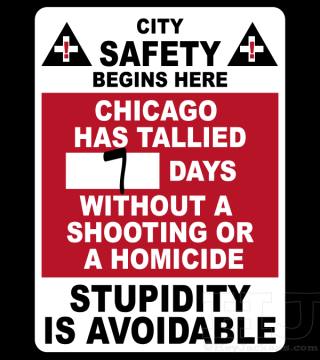
    Also, from the fun info at heyjackass.com, Chicago saw but 7 days in 2015 without a reported shooting or homicide. Seven.

    Also, on the subject of the CPD, I’m happy an insider seems to have been tapped to be the next chief of police in Chicago. I have no idea who the person is. But I’m happy it’s not another outsider with no real clue coming in to save the day.

  • I wanna be a cowboy…

    In some ways this is just another shooting in the hood.

    But I post it because, well, look at her Jessie getup!

    Also, she packs her gun in her panties.

    And there’s high quality video.

    Does there have to be more?

    I wanna be a cowboy… and she can my cowgirl.

    This is the violence problem in America. Have an argument? Upset? Feel bad? Get a gun, holster it in your undies, and then use as needed at the gas station.

    On the plus side, no police officer got in trouble for confronting, frisking, or even having to shoot this juvenile.

    I’m assuming she’s just a “girl” since her name wasn’t released. I also feel sorry for any youngsters who watched this and say, “That’s mom!”

    [Also, notice the cross around her neck. Here’s yet another example of radical Christian terrorism. And yet nobody but me has noticed this clear sign of Christian jihad.]

  • “What messy justice looks like: After Peter Liang’s killing of Akai Gurley, DA Ken Thompson does the right thing twice”

    Harry Siegel’s excellent column in the Daily News:

    The progressive prosecutor — elected on a promise to salvage Brooklyn justice from the oxymoronic state his predecessor had reduced it to — did the right thing first in holding the cop to account and convicting him before a jury of his New York City peers, and again in recommending that he be let off the hook of incarceration.

    The whole system failed here: in the screening that let Liang join the force in the first place and the Academy “training” that left him certified in but never actually taught CPR; in the lousy NYCHA buildings where stairwells are blacked out and elevators broken down, where the good people who live there sometimes need police to help keep common areas safe.

    By recommending no jail time for Liang, Thompson made plain that he wouldn’t make one cop the scapegoat for all that, and for a national conversation about killer cops, too. But by prosecuting him, Thompson made plain that what Liang did, letting off a fatal shot in the dark, was a crime, cop or no cop.

    “A lot of people have trouble getting their heads around this case, because they think it’s like other police shootings and it’s not,” explains John Jay Professor Eugene O’Donnell, a former cop and prosecutor in New York City. “The others are shoot-don’t shoot events, about decisions cops make in one second.

    “That is the obstacle to charging the police, those ‘fear of my life’ shootings. The law of self-defense is extremely favorable to the police — to everybody, actually, as we found with George Zimmerman — but especially the police.”

    None of that, he notes, applies to Liang, and — with no legal leg to stand on — he became the rare cop to ask for a jury rather than a bench trial, perhaps in the hopes that at least one juror would overlook the law and cut him a break.

    One bitter irony: Thompson’s choice not to punish Liang for going to trial highlighted how often other defendants are effectively punished for pleading their innocence. A pound of flesh frequently gets taken in sentencing after a guilty verdict, in part to account for the turmoil a trial puts a victim’s family through but mostly to “pay” for the resources trials demand of prosecutors and police.

    Which is outright un-American, but also at the heart of our justice system as it normally functions. …

    Bottom line: In a complex case fraught with racial politics, Thompson did his job as a minister of justice, holding a cop to account for the fatal consequences of his actions, and trying to find the right measure of justice. …

    And that’s how our justice system should work, for everyone.

  • Who is this man?

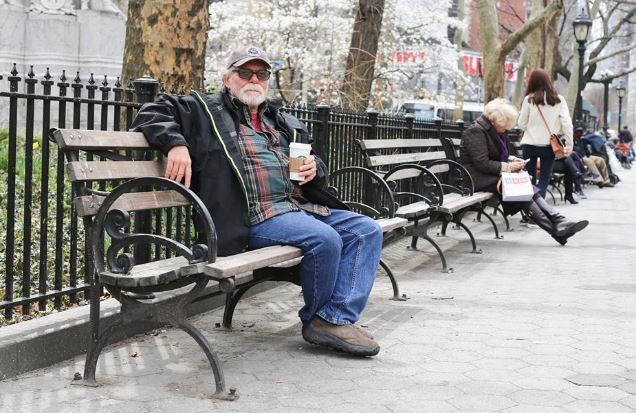
    Who is this man?

    Does anybody recognize this guy from Humans of New York? More than 13,000 shares and 147,000 likes on facebook.

    He says he was a Baltimore cop for 21 years and a heroin addict the entire time. It’s not inconceivable, but it doesn’t ring true. I see a guy sitting on a bench in NYC with a story. I don’t believe him. I prefer my facts verified.

    And I’m naturally suspicious. He says he took two-weeks’ leave and quit cold turkey. But he also says he was an addict the entire time? Which one is it? And how did he pass random drug tests?

    Update: It’s hard to prove a negative, but I’m called BS since nobody I know recognizes this guy (and that includes people who came on the job in the since the 1960s). It just doesn’t ring true. From various Baltimore cops, past and present:

    If he was addicted his whole time on the force, somebody on the street would have outed him to get a better deal from another officer. He’d have been too high to be as afraid as he claims. Who walks in on their junkie side partner and just says “well, as long as it doesn’t affect your work”? How many junkies would YOU trust YOUR life to? So he gets clean and doesn’t force his WIFE into rehab? She’s using every day and spending his money?????

    Nah. Good reading,though. I’ll wait for the movie.

    And this:

    Let’s say this fool retired 20 or even 25 years ago, it still would have been during the time when mandatory “random” urinalysis was conducted. From what I understand, when the program was started, within the first two years, everyone had been tested at least once.

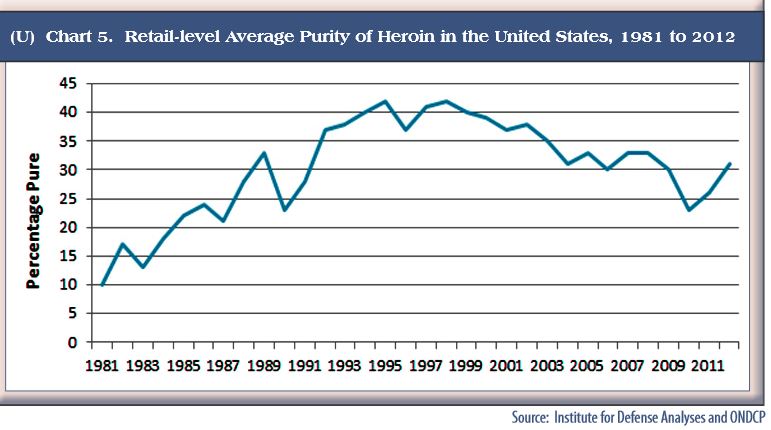
    That long ago, to use heroin in a powder form it would have had to have been “smoked” as the purity of the powder back then, I do not believe was high enough to snort. And there is no way he was doing it while working and getting away with it because he would have immediately went “on the nod” and not been able to work until he came off of his high.

    Locking himself in a hotel room, alone, for two weeks while he kicked it is another pile of manure. He would have needed at least one other person there to even try to pull it off to help him keep hydrated, etc. And the hotel staff after a few days of the do not disturb sign on the door know would have checked in some form to see if he was in there and did not skip out on the bill.

    The only thing this story is good for is fertilizer.

    The heroin purity argument is persuasive. Heroin, best I know, needs to approach 40 percent purity to make it snortable. It was nothing close to that in the 1980s. From the DEA:

    The only real chance nobody would recognize this guy is if were already retired in the 1990s.

    I know that there were some steroid users in the mid 80s, a couple of cocaine resignations, and a couple of positive test results where the addicted claimed addiction as a medical disability.

    And of course, why this matters:

    We have enough issues, now everyone will think half of us get high.

    Impersonating a former cop. But why did he have to pick Baltimore?

    2nd Update: I’ve heard back from more old-time former Baltimore Cops. Nobody has ever seen this guy before.

  • Bratton on Cruz

    Bill Bratton in the Daily News:

    There seems to be a widespread belief among certain members of the political class that protecting the country against terrorism is a matter of ideology. According to them, the strong leaders in this area are the ones who are willing to insult Muslims, advocate torture, and engage in various other provocations. They claim that other leaders are paralyzed by political correctness and that they alone have the ideological fortitude to guard against the terrorist threat.

    Recently, Republican presidential candidate Ted Cruz called for police to “patrol and secure Muslim communities before they become radicalized.” We already patrol and secure Muslim neighborhoods, the same way we patrol and secure other neighborhoods.

    In New York City, we protect all communities from crime and terrorism — yes, Muslim communities too — because like us, they are Americans who own businesses, work hard, pay taxes and dream of a better life for their children. Over 900 of them work in my police department as police officers, many of them in counterterrorism and intelligence. Many of them have served in the military and fought for their country.

    For what it’s worth, I wrote this a few years ago about the problems of “Demographics Unit” 2006 report.

  • “Queens Man Accused of Making Over 30 False Calls to 911”

    This doesn’t happen enough(the prosecution, not the BS calls to 911):

    In all, the authorities said, more than 30 calls were made over a month, none for actual emergencies. On Friday, prosecutors in Queens said that they had all been traced to one man.

    He told the fire marshal investigating the case that he made the calls. “My uncle is verbally abusive to me,” he told the investigator, referring to a relative with whom he lives, “and the sound of sirens calms him down.”

    The man, Kenneth Campbell, 47, of the Briarwood neighborhood, has been charged with five counts of making a terroristic threat and more than two dozen counts of false reporting of an incident, prosecutors said.

  • Arrest of Postal Worker in Crown Heights

    Unless there’s more to this story that hasn’t come out — and there may be (though I wouldn’t bet on it) — this is inexcusably shitty.

    The video:

    So is this unrelated incident in 2013 when a cop made a left turn into and killed a teacher crossing the street. It’s all too common for drivers in error to get away with killing pedestrians in New York City without serious consequences. Add police into the mix, and this isn’t even a surprise.

    But the egregious and shameless part here is the city arguing that the victim “knew or should have known in the exercise of due/reasonable care of the risks and dangers incident to engaging in the activity alleged.” That’s lawyer talk for it’s the pedestrian’s fault for crossing the street, in the crosswalk, with the walk sign.

    Update:

    Police Commissioner Bill Bratton said Monday that he reviewed multiple videos of the incident and was “not pleased” with what he saw, and that the officers were supposed to be in uniform as part of their detail.

    “All four of these people, including the lieutenant, were in street clothes, not in uniform,” Bratton said during an unrelated press conference Monday. “That’s in direct violation of our patrol guide. So we will be investigating that element of it.”

    Grays said he hopes the officers involved will be disciplined, but not fired.

    “I don’t want them to be jobless because they might have family, kids they need to support,” he said.

    “It’s sad. I thought when I put on a uniform that I’d be treated a little different, but there’s no difference. I’m just another brother with a uniform.”

    Follow-up post.

  • Who should you vote for?

    Who should you vote for?

    Somebody got it all figured out:

  • Legalize It All

    Legalize It All

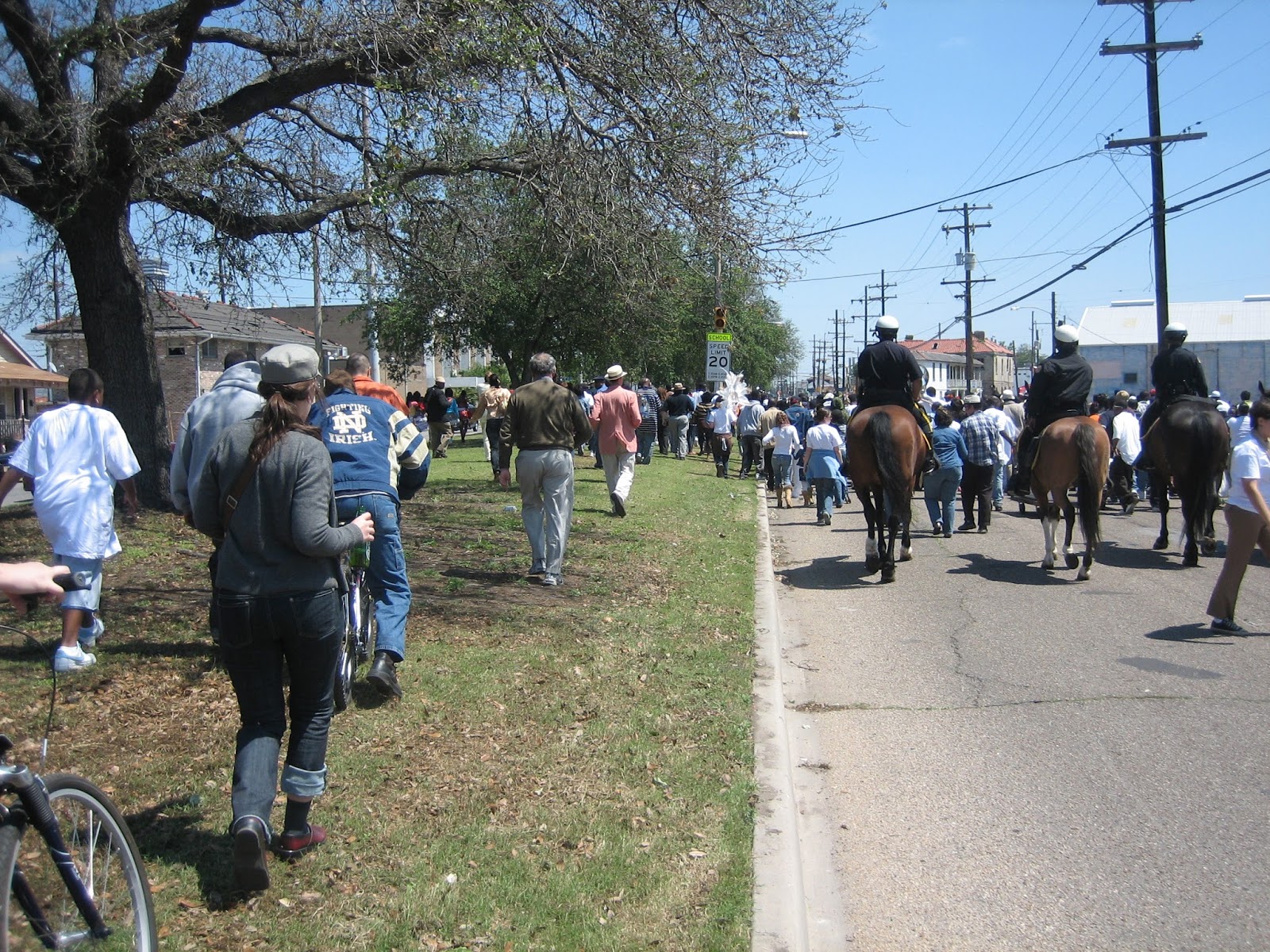
    Dan Baum has written a bunch of good books about a variety of subjects, and I’ve mentioned him many times on this blog (search for his name, if you want). I first met Dan and his wife, Margaret, in New Orleans in 2007. The title of my book, “In Defense of Flogging,” was coined the night I met them, at dinner.

    Dan is the dandy is the middle with the peach jacket and straw hat.

    His latest piece in Harpers Magazine is about legalizing drugs. He’s been at this for a while. Smoke and Mirrors came out in 1997. If I remember correctly, this was in Smoke and Mirrors. But maybe the time is more ripe now:

    I started to ask Ehrlichman a series of earnest, wonky questions that he impatiently waved away. “You want to know what this was really all about?” he asked with the bluntness of a man who, after public disgrace and a stretch in federal prison, had little left to protect. “The Nixon campaign in 1968, and the Nixon White House after that, had two enemies: the antiwar left and black people. You understand what I’m saying? We knew we couldn’t make it illegal to be either against the war or black, but by getting the public to associate the hippies with marijuana and blacks with heroin, and then criminalizing both heavily, we could disrupt those communities. We could arrest their leaders, raid their homes, break up their meetings, and vilify them night after night on the evening news. Did we know we were lying about the drugs? Of course we did.”

    It’s worth reading the whole thingfor an idea about how we might be able to move forward on this whole drug and this prohibition problem.

    In other words, our real drug problem — debilitating addiction — is relatively small. One longtime drug-policy researcher, Peter Reuter of the University of Maryland, puts the number of people addicted to hard drugs at fewer than 4 million, out of a population of 319 million. Addiction is a chronic illness during which relapses or flare-ups can occur, as with diabetes, gout, and high blood pressure. And drug dependence can be as hard on friends and family as it is on the afflicted. But dealing with addiction shouldn’t require spending $40 billion a year on enforcement, incarcerating half a million, and quashing the civil liberties of everybody, whether drug user or not.

    So consider Portugal, which in 2001 took the radical step of decriminalizing not only pot but cocaine, heroin, and the rest of the drug spectrum. … No other country has gone so far, and the results have been astounding.

    When applying the lessons of Portugal to the United States, it’s important to note that the Portuguese didn’t just throw open access to dangerous drugs without planning for people who couldn’t handle them.

    Decriminalization has been a success in Portugal. Nobody there argues seriously for abandoning the policy, and being identified with the law is good politics.

    As successful as Portugal’s experiment has been, the Lisbon government still has no control over drug purity or dosage, and it doesn’t make a dime in tax revenue from the sale of drugs. Organized crime still controls Portugal’s supply and distribution, and drug-related violence, corruption, and gunned-up law enforcement continue. For these reasons, the effect of drug decriminalization on crime in Portugal is murky.

    Portuguese-style decriminalization also wouldn’t work in the United States because Portugal is a small country with national laws and a national police force, whereas the United States is a patchwork of jurisdictions — thousands of overlapping law-enforcement agencies and prosecutors at the local, county, state, and federal levels…. We cannot begin to enjoy the benefits of managing drugs as a matter of health and safety, instead of as a matter of law enforcement, until the drugs are legalized at every level of American jurisprudence, just as alcohol was re-legalized when the United States repealed the Eighteenth Amendment in 1933.