Category: Police

  • Good news: Baltimore Homicides in 2016 only up a little…

    Baltimore homicides, year to date, are only up a bit compared to last year. Through March 24th, 50 this year compared to 47 in 2015.

    Rarely is more murder good news. But it’s certainly an improvement from last year, post riot. From May through December 2015, there were 269 murders in 244 days. So 50 murders in 84 days in 2016 is strangely good news. Yes I know it’s low season. But it’s still a good sign. We’ll see if it lasts.

  • A Toddlin’ Town

    From AP:

    In all, Chicago has paid a staggering sum — about $662 million — on police misconduct since 2004, including judgments, settlements and outside legal fees, according to city records. The payouts, for everything from petty harassment to police torture, have brought more financial misery to a city already drowning in billions of dollars of pension debt.

    The Chicago police said there were 45 firings and 28 suspensions from 2011 through 2015 in a department of about 12,000. Some cases remain open.

    The city’s top lawyer, Stephen Patton, says his office has reduced costs with new strategies: It has cut the number of outside lawyers by more than 80 percent, taken more cases to trial (the corporation counsel’s office won 21 of 28 last year), whittled down a backlog and spread the word it will no longer settle small cases routinely.

    Burge cases — including settlements and outside lawyers — have cost the city more than $92 million (about $109 million, if county and state expenses are included), according to Taylor, who keeps his own tally.

    And I’m just going to beat Pirate to the punch.

  • Taser Use

    Great story in the Baltimore Sun about taser use:

    • Nearly 60 percent of those hit by Tasers in Maryland were described by police as “non-compliant and non-threatening,” according to data from 2012 when the state began collecting data through 2014.

    • In one out of every 10 incidents, police discharged the weapon for longer than 15 seconds — a duration that exceeds recommendations from Taser International, the U.S. Department of Justice and policing experts. The data downloaded directly from the devices often shows more activations than officers document in police reports.

    • Officers fired the weapons at the chest in 119 incidents in 2014 — even though Taser has warned since 2009 that doing so could cause cardiac arrest.

    And why?

    From 02:20 of the video in the story:

    The Taser is a great tool because if you go out on a call or something… and he’s fighting… before, if you hit him was a asp [baton] he’s going to get a lot of contusion marks and maybe break some bones. A Taser is not going to do that.

    See contusions look bad. But Tasers sometimes kill. To me the issue has always been whether the Taser is used for a threat (OK) or compliance (bad).

  • 125 Overdose Deaths a Day

    125 Overdose Deaths a Day

    It makes homicide — which kills “just” 40 Americans a day — look positively benign.

    47,000 Americas died from drug overdose in 2014. That’s a shocking figure. 47,000 is the number of US soldiers who died in Vietnam combat. And that was over 20 years.

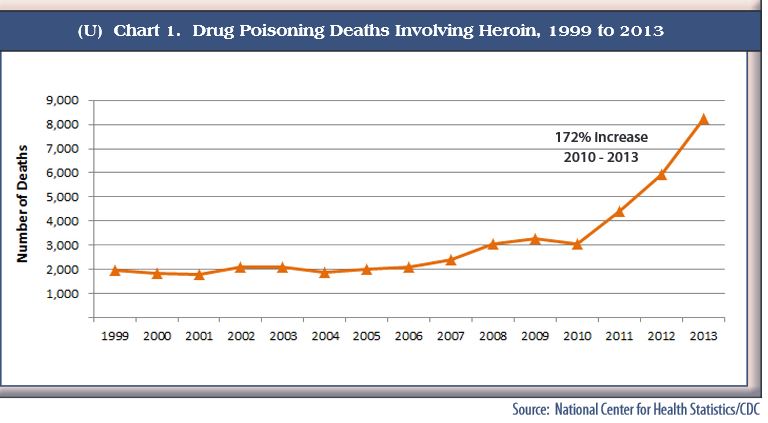
    Heroin deaths have shot up since 2010:

    From the Times:

    The death rate from drug overdoses is climbing at a much faster pace than other causes of death, jumping to an average of 15 per 100,000 in 2014 from nine per 100,000 in 2003.

    Nationally, opioids were involved in more than 61 percent of deaths from overdoses in 2014. [Only 61%? I’m actually surprised it’s that low.] Deaths from heroin overdoses have more than tripled since 2010 and are double the rate of deaths from cocaine.

    From CNN:

    The biggest increase in deaths was from from synthetic opioids, which went up 80%. According to the CDC, the increase in synthetic opioid deaths coincided with increased reports by law enforcement of illicitly manufactured fentanyl.

    The states with the highest rates of overdose were West Virginia, New Mexico, New Hampshire, Kentucky and Ohio.

    Since 2000, opioid drug overdose deaths rose 200%. Nearly half a million lives have been lost to opioid drug overdoses since then.

    Maybe we could look at a country that has come very close (knock on wood) to solving this problem? There are about 100 overdose deathsin the Netherlands. 16.8 million people. That’s a rate of 0.6. Yeah: zero-point-six. Put another way, if the Netherlands were the size of the US, there would be about 2,000 overdose deaths. So what do they do in the Netherlands? Give that shit away for free, literally.

    Or maybe we should just take out another kingpin or two. That always seems to work.

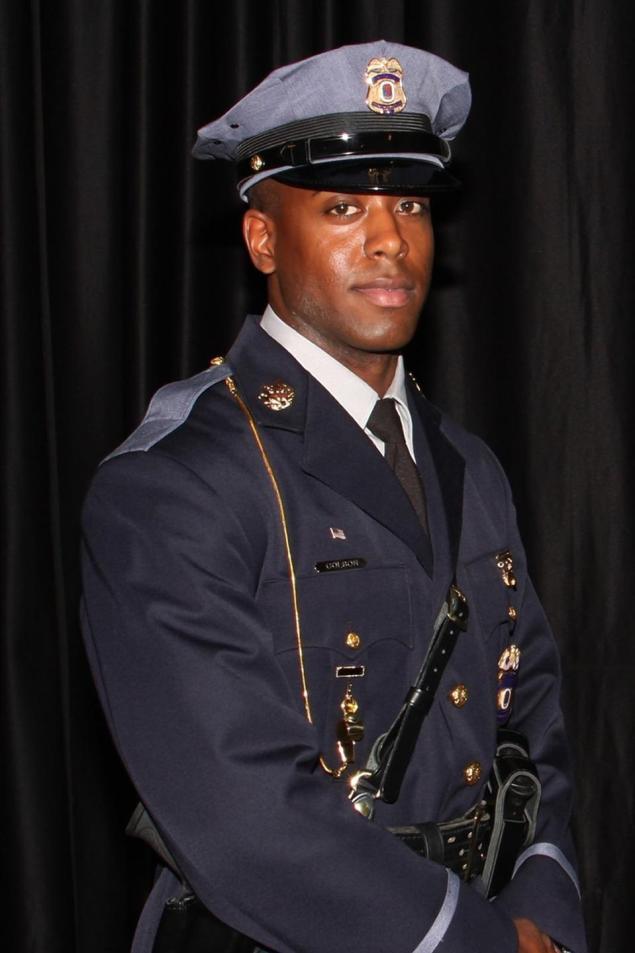
  • RIP Detective Colson

    RIP Detective Colson

    “The shot that struck and killed Detective Colson was deliberately aimed at him by another police officer,” Stawinski said. “It’s another tragic dimension to this unfolding story.”

    Ouch.

    A black cop in civilian clothes being killed by other cop? This is not exactly frequent… but it is all too regular.

    In 170 years of US policing, you know how many white cops have been killed in similar cases of mistaken identity? Best I know, four. (Jenkins, Skagen, Stamp, and Breitkopf)

    Here’s my previous post.

  • Broken Windows case study

    Here’s how Broken Windows works in real life. A “subway swiper” — a minor crime — causes disorder, and then swiper gets into a fight and is murdered.

    Herbert Burgess, the Metrocard swiper — “58 prior arrests and sent to prison in 1993 for 18 years after confessing to fatally strangling his roommate” — was stabbed and killed:

    Neighborhood residents said Mr. Burgess was a familiar presence in the subway station, where he subtly approached people and asked them to give him a dollar or two in exchange for a swipe of his MetroCard. (Selling swipes is illegal in New York City.) Many people described him as disheveled.

    From the Daily News:

    Burgess saw Velazquez’s daughter trying to add money onto her MetroCard at a machine.

    He offered to swipe her through the turnstile for $1.

    She refused and tried again to add cash at the machine, which scammers have been known to disable to force straphangers to buy from them.

    Burgess grabbed the cash out of her hand and taunted her, sources said. As he walked off, she accused him of robbing her, followed him to street level and called 911 to report him.

    She then called her dad, Velazquez, 48, sources said.

    Burgess tried to return the cash but she refused and said it was too late, sources said. An irate Burgess dropped the money and punched her in the face.

    Velazquez showed up and the daughter pointed to Burgess, sources said.

    Velazquez chased Burgess back into the station and grabbed him just as Burgess was about to jump the turnstile.

    Velazquez stabbed the victim in the back but Burgess still made it over the turnstile and onto a downtown No. 2 train, according to cops.

    Burgess made it just one stop before medics rushed him to Mount Sinai St. Luke’s Hospital, where he died.

    Not entirely surprisingly:

    Police released a mug shot of Velazquez from a 2013 Harlem arrest for weapon possession and asked for the public’s help tracking him down Thursday.

    He has 12 prior arrests, mostly on drug charges, police said. He has one weapons possession arrest.

    And yet another non-gun murder in New York City.

  • Beware of the Risen People

    Beware of the Risen People

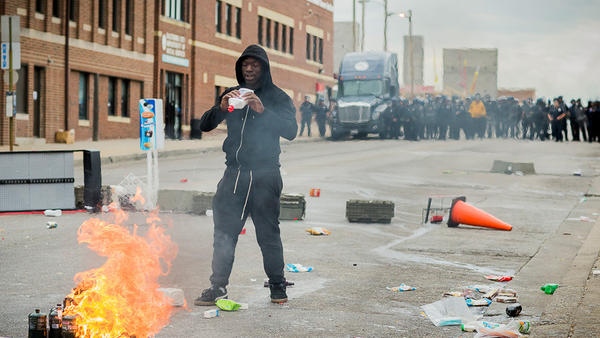
    The ATF released a version of this photo taken during the April 27 riots. The guy (“repeatedly captured in photographs and other images on the day of the rioting”) was later identified as Donta Betts:

    He confessed to creating the explosion to ward off the cops “so people could finish … stealing whatever they was going to steal.”

    “I figured I did all this because that was my period of time to go wild on the police…. I figured I did all this because that was my period of time to go wild on the police.”

    The image above became a symbol.

    It’s pretty easy to find people defending looting, riots, militancy, and destroying police cars. “All that rage is justified.” At the time (and still today) some insist they were no “riots.” Just an “uprising.” Beware of the risen people, oppressed, angry at (among other things) arrest-based policing that under Mayor O’Malley (who left office when Betts was 11, presumably before even his first arrest). People living in the hood in Baltimore have reason to be angry. That doesn’t mean they’re burning down drug stores and old-folk homes.

    So it’s with a bit of schadenfreude that I read Kevin Rector’s story in the Sun today in which Betts pleaded guilty to a bunch of stuff:

    Donta Betts participated in the looting of the CVS pharmacy at the intersection of Pennsylvania and North avenues on April 27 — which became a symbol of the unrest when it burned to the ground — and lighted a roll of toilet paper, placed in on top of propane cylinders and then squirted lighter fluid onto both in an attempt to prevent police from responding to looting at the pharmacy.

    But wait, there’s more:

    Then on July 2, Betts shot a woman after she only paid him $20 for $40 worth of heroin, according to Rosenstein’s office and the plea deal. He was later captured on a recorded call by the Maryland Department of Public Safety and Correctional Services admitting to the shooting but asking an associate to get the woman to sign an affidavit saying he did not shoot her, according to Rosenstein’s office.

    In summary:

    “Donta Betts engaged in arson, looting, assault and other mayhem during the Baltimore riots. He threw rocks at the police near Mondawmin Mall; tried to destroy police cars; stole from a pharmacy, a liquor store and a shoe store; and set off a homemade bomb. Ten weeks later, he tried to murder a woman over a $20 drug dispute, then he conspired to get her to sign a false affidavit. We caught him only because police and prosecutors spent many hours reviewing video and audio recordings. It may sound like a story arc from a TV series, but it is real life in Baltimore.”

    You know what pains me about the picture? The line of cops “holding the line.” It was the tactics of April 2015, and not the oppression of centuries, that allowed parts of Baltimore to explode. Bad leadership has consequences. The mayor and police commissioner were not up for the job. Of course there’s always been oppression. Luckily riots happen less often.

  • “Not on my post, you don’t”

    Thinking about lobbies and public housing and policing….

    Take the Jackie Robinson Homes, “an 8-story building with 189 apartments housing some 440 residents.” Last year there was an issue with kids raising hell. Residents were scared.

    So lets say there are 600 people living there in the Jackie Robinson Home (since many live off lease). Put a cop there. What else are police doing that is more important? To hell with whatever patrol structure currently exists. To hell with the desk jobs and even specialized units. Three cops can work 14-hours, six-days a week. One officer working less than 40 hours a week can still be responsible for one building. And you’ve still got the entire NYPD as backup. A police officer out of car — with a name and face, a human being — this is how you build relationships and solve crimes while practicing aggressive order-maintenance community policing.

    From DNAinfo:

    A tenant of the Jackie Robinson Houses provided DNAinfo with video Tuesday showing the indoor bicycle riding and other rowdy conduct that residents said has been routine at 111 E. 128th St. since October 2014.

    The commanding officer of the building’s police service area only found out about the teens’ behavior Tuesday [December 2015, a year later] and no residents had previously filed any formal complaints, an NYPD source told the Daily News.

    Presumably, three months later, this has been resolved by now. But why should it take a formal complaint for a housing cop to know about a year-long problem in a building they patrol? Why isn’t there a cop who can say, “this is my building and I know what is going on and who is doing it”?

    Police officers need — and for the most part want to assume — geographic ownership. I was happy one night to be “Sheriff of Orangeville” (thanks for that term, D.W.). Oh, yes, there was a new sheriff in town, and Orangeville was quite that night. (The rest of 334 post was OK, too.) Mostly I had to be happy with the area around Hopkins hospital. But whichever post I policed, it was “my” post that night. I cared. And also… I didn’t want the hassle and paperwork and hospital details that come with serious crime.

    Progress and “sector policing” put the nail in the coffin of Baltimore post integrity (@ThanksBatts). Basically, instead of one cop patrolling one post you have five cops patrolling five posts. A cop can’t care or take ownership of a whole police sector of ten or twenty thousand people. But a cop can almost handle two square miles and 3,000 people. So now crime is up and there isn’t a single officer who says, “This is my corner and you drinking and selling drugs here is disrespectful to me, personally.”

    Well, back in NYC, there’s a housing bureau cop for every 200 residents in public housing. About 500,000 residents in 328 developmentsand 2,553 buildings buildings. You don’t need a NYPD mobile command post with loud generator and overly-bright lighting after somebody gets killed. If there are 2,700 police officers in the Housing Bureau, then there are more officers than buildings.

    Do you see where I’m going with this?

    Why not just assign one officer to each building? Now many of the buildings are small and don’t need anybody. So you don’t put a cop there. Queensbridge is the largest public housing project remaining in America. Six cops on visible patrol 14 hours a day, six days a week. That takes about 18 cops in total. But it’s still just cop for each 450 residents. Is that too much to ask?

    Were it up to me, I’d give each patrol officer a very small chuck of the city. Of course you’d have to patrol a larger area. But you and only you are responsible for everything that happens in that for that small chunk. Everything. We’re talking an area of roughly 500 people or 1/3 of a mile of street. Those are your people. Know them. Treat them well. And when residents have a problem, they could still call 911 and a cop will show up. But they might prefer to wait till you’re on duty to talk to you, whom they know. It’s really not that crazy. And for some reason it will never happen.

  • A Cloak of Silence After a South Bronx Killing

    A Cloak of Silence After a South Bronx Killing

    Benjamin Mueller and Al Baker in the New York Times describe one homicide in the Bronx. “To understand why killings persist in an era of historically low crime, The New York Times is reporting this year on each murder in the 40th Precinct.” This is the kind of in-depth story that informs.

    If we’re going to improve things, where do we start? Sure, the Collazos need help. But then so do my students who grow up as his neighbors. While Fredo is selling drugs and smoking weed in the lobby — and non-residents complain that “non-violent drug offenders” like Fredo are being harassed by police — my students have to get by him and his crew to get to my class. Some people manage to make better life decisions and finish high school and get jobs and graduate college and get better jobs. In a world of limited resources, who do we help? And how many red flags do there need to be?

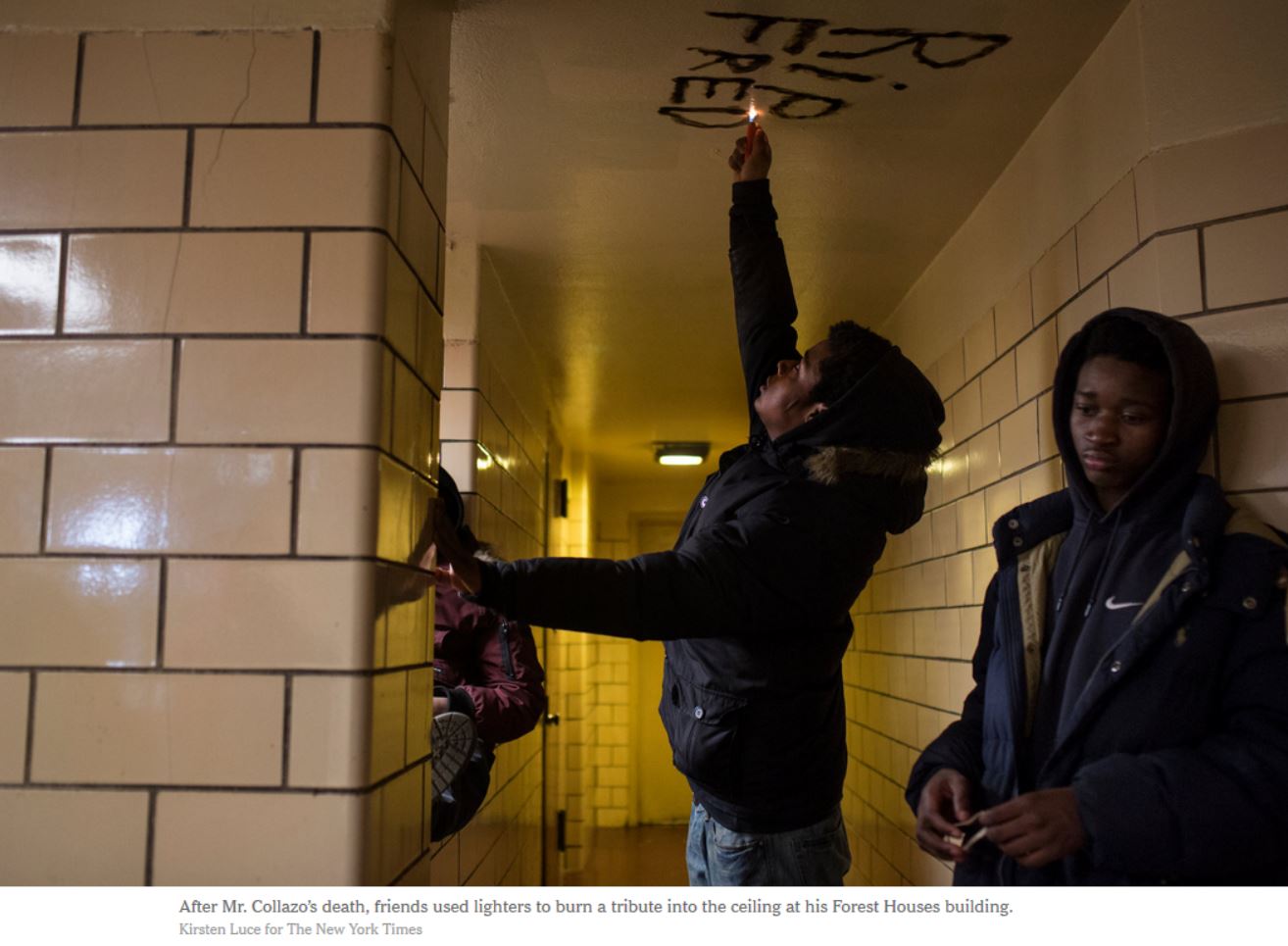
    A “broken window” in action. Cause nothing says respect to your neighbors like “RIP Fredo” burned into the ceiling of the hallway.

    Here’s a name and a face and a life. 20-year-old Freddy Collazo:

    Mr. Collazo’s father, who was addicted to heroin, served nearly two years in state prison for drug sales. His parents separated when he was in his early teens.

    Mr. Collazo’s … slashing in May 2012; his wounds — including cuts to his head, ear, left elbow and right middle finger — were recorded by the police, despite his refusing to talk to officers at a hospital.

    He got a .32-caliber Smith & Wesson revolver after the 2012 slashing — a requisite precaution, friends and relatives said.

    But Mr. Collazo was coy, even with close friends, about why people wanted to hurt him. When Ms. Soto asked how she could help, her son acknowledged being in trouble but insisted, “No questions.”

    When he was sent to jail on Rikers Island, his father, whose name is also Alfredo Collazo, was already there, having been locked up four days earlier on drug charges.

    He had expensive tastes in clothes, favoring name-brand polo shirts.

    He popped prescription pills, including Percocet, smoked marijuana in the lobby of his apartment building and sold drugs, sometimes under the banner of Forest Over Everything but just as often on his own.

    Mr. Collazo dropped out of Herbert H. Lehman High School in the 11th grade.

    Mr. Collazo was arrested again in April 2014, this time for marijuana, but he only had to pay a fine. He walked around as if he were invincible, friends said, relying on his crew for protection as his street feuds piled up.

    His ability to keep avoiding prison time created suspicions among his crew.

    Last May, Mr. Collazo entered a residential drug-treatment program in Brooklyn.

    His anxiety ran so deep that Mr. Collazo once badgered a new student who he thought had been looking at him too much.

    In late February a hooded gunman crept up behind Mr. Collazo. The first bullet severed Mr. Collazo’s spine and blew through his heart, killing him before he hit the pavement. His cousin, Luis Cruz, ran.

    Then the gunman stood over Mr. Collazo, 58 days past his 20th birthday, and with a .45-caliber pistol pumped at least six more bullets into his body, leaving a total of 10 entry and exit wounds.

    Sgt. Michael J. LoPuzzo, the commander of the 40th Precinct detective squad, said Mr. Collazo was “assassinated.”

    But Mr. Cruz has told Mr. Collazo’s mother that he will not say who the killer is.

    “I told him, ‘Please, you was there, go to the cops and tell them what you know,’” Mr. Collazo’s mother, Glenda Lee Soto, said. “He told me he’s not going to do it. He’s not going to go down for a snitch. He’s not going to rat nobody.”

    Chief Boyce said people’s reluctance to speak with investigators “doesn’t mean we stop — it just means our task is all the more difficult.”

    At his funeral the next Sunday, two young men were handcuffed by the police as they entered the funeral home parking lot; the police said they had arrested one person, for having stolen license plates.

    Friends scrawled tributes on the wall — “F.O.E.,” “For you we gon bang bang,” “Ima put them under dirt” — and raised their lighters to the ceiling to burn “RIP FREDO” into the beige paint.

    The lobby became choked with marijuana smoke. Mr. Collazo’s raps blared from his friends’ cellphones and echoed off the walls. The group scattered when two officers arrived, responding to a neighbor’s complaint.

    But slowly they returned.

    And some people? Out of all this? Of all they could criticize? They would find fault with police for maintaining order in the lobby of a public housing building. Nothing but police harassing innocent children of color as they mourn the untimely death of their friend.
  • “Looking for female homicide detective for potential TV show”

    This came in over the transom from a Kimmie Lucas at Discovery Studios. Somebody out there may be interested. I know nothing else about it:

    We are a production company seeking Female Homicide Detectives for a potential new series. Detective can be working currently or retired. We want to tell your story! If interested, please email me at kimmiecastinglosangeles@gmail.com or call at 323-308-3751. Thank you!