Category: Police

  • This is what rational drug policy looks like

    This is what rational drug policy looks like

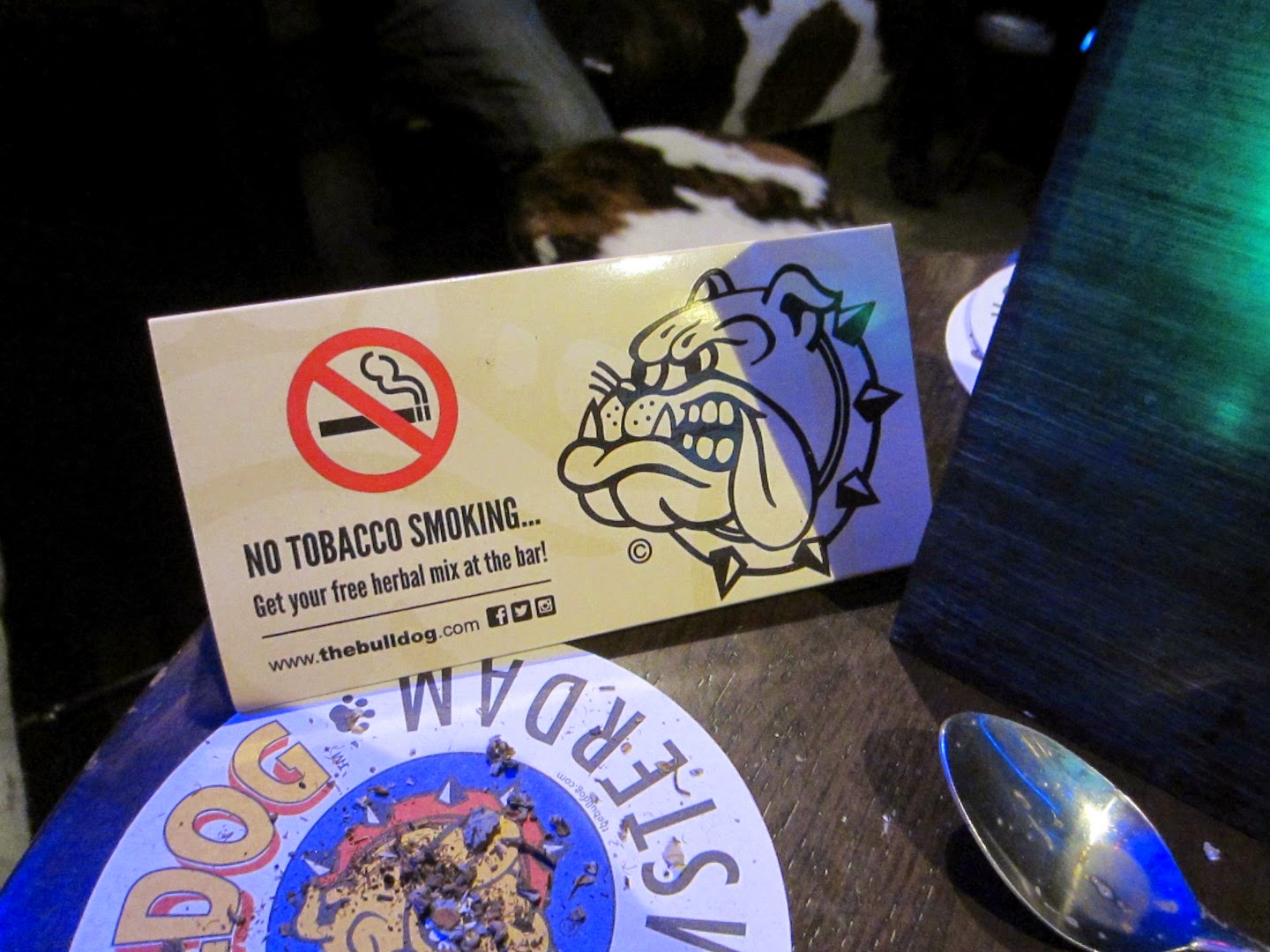
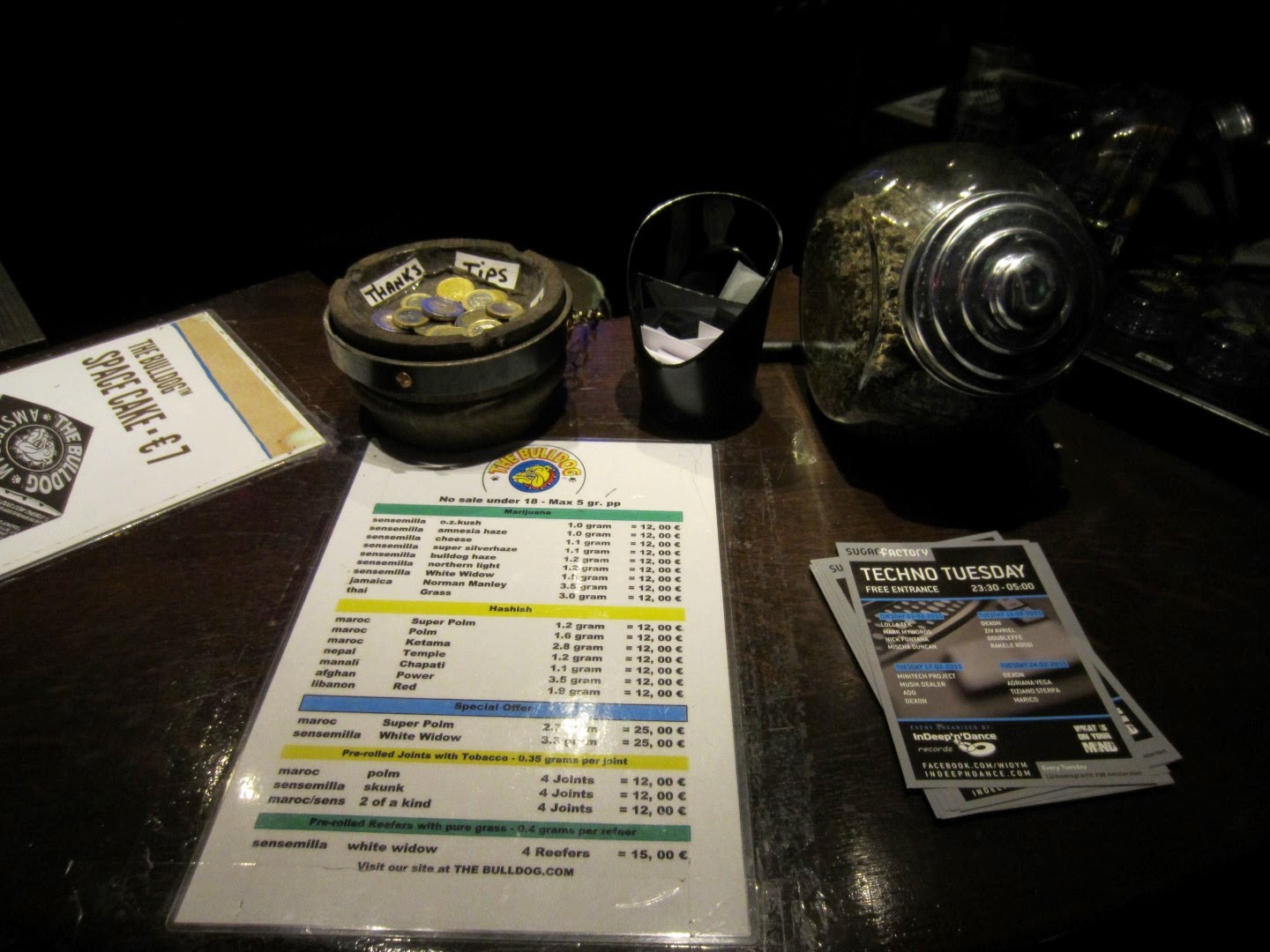
    The other day my wife and I visited a friend from way back who now works in a coffee shop. Actually a famous one, the Bulldog, which is soon to celebrate it’s 40th anniversary.

    Mostly I just love how a legal and regulated drug trade becomes, well, boring.

    There actually is a worker on duty who is registered by the city as a drug dealer. Along with having to get a standard cafe operator’s license, the city A) checked his criminal background and B) made sure his money is legit. That’s it. They also gave tips in the standard cafe license class (along with, you know, the usual: keep hot, hot, and cold, cold, and don’t cross-contaminate) on how to run a business and keep accounts and deal with labor issues. Here, as long as you play their game, they actually want you to succeed.

    What’s odd about the coffee shop business is that the business is legal, the drugs they sell are legal in all but name, but the store is only allowed to have 500 grams (1 lb) of weed in stock at any given time (that’s strange, but whatever). So they constantly get re-upped. And at that point in the supply trade, from the guy supplying the coffee shop and up the wholesale ladder, the drugs are illegal. Odd. Also, I think, now there has to be a dedicated drug dealer. Years ago you could order coffee and a joint from the same guy. Now, or at least here, one employee makes the coffees and handles all the business except the drugs. The other sells the drugs. Whatev… It works for the Netherlands. And yes, no tobacco smoking inside a business. That’s illegal.


    This looks a lot better than prohibition, even Dutch prohibition.

  • Don’t snort the white heroin!

    Don’t snort the white heroin!

    So a few months ago in Amsterdam, a couple British tourists died from a drug overdose. The Brits are kind of like the canaries in a coal mine of tourists. Brits are usually the first to somehow kill themselves, if given the opportunity. (It has to do with alcohol.)

    Anyway, they did die. It turned out that some guy on the street was selling heroin as cocaine. This is odd mostly because heroin is more expensive than cocaine, so the drug dealer probably didn’t know what he was selling. But the end result is people snorted heroin, many went the hospital, and a few died.

    So what do you as a tourist city do? Well most places would cover it up. Or make ads showing happy people having fun in the sun. Well there isn’t much sun here, but jokes aside, what they did in Amsterdam is very impressive. It’s what a rational drug policy looks like.

    First of all, hard drugs (heroin and cocaine) are illegal here. So you can’t go into a coffee shop and buy them. But as this city is a bit of a drug tourist destination, people come here wanting to do drugs. So like anywhere, they find a way to buy them.

    As I have written, police spend effort cracking down on fake drug sellers. But these real drugs. Prohibition deaths. Because both the buyer and seller thought they were buying and selling something else.

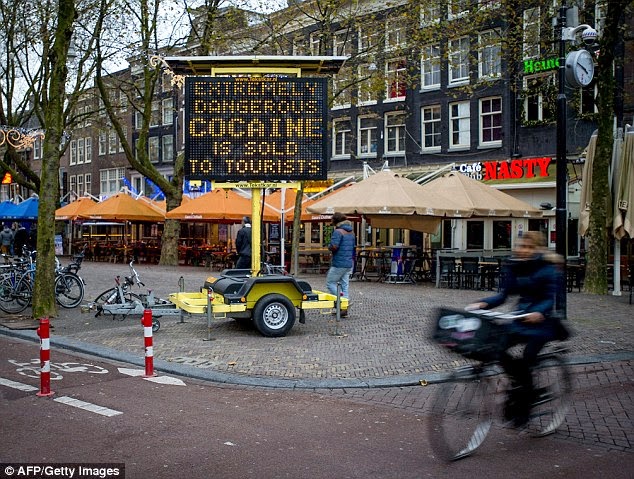
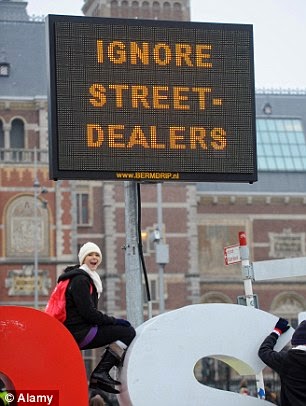
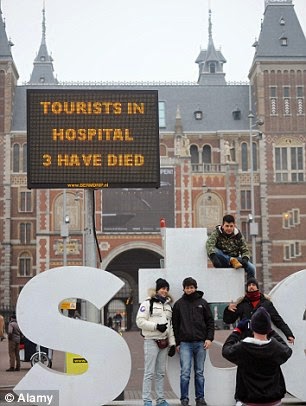
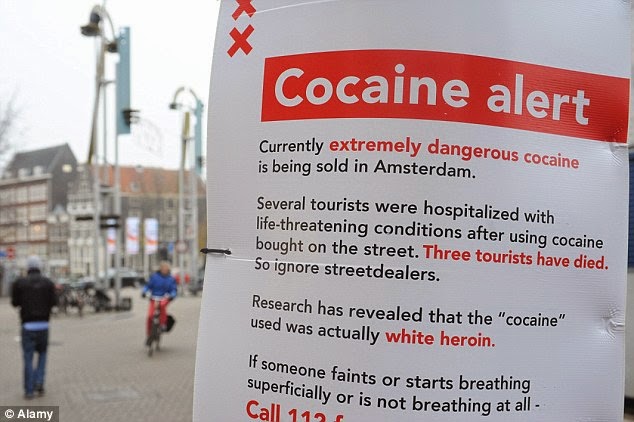
    So the city but up signs to warn tourists. It may seem like common sense, but what American city would do this? And it was an issue here too. I mean, who wants to see such signs in their beautiful city?


    Of course the campaign to warn tourist more than the actual deaths became international news. Is this good for the city’s image? Well, actually, probably, yes.

    And nobody else died. That’s kind of important.

    Here’s what the Mayor Van der Laan wrote on December 3, 2014. It’s very rational. It’s very Dutch:

    Cocaine alert and reputation

    For the past two months, seventeen predominantly young tourists fell victim to so-called ‘white heroin’. Heroin, sold as cocaine on the streets, that is much more dangerous and therefore potentially deadly. Three young Brits died. An indescribable loss to their family members and friends.

    People who say it is not allowed to use hard drugs are, of course, correct. Reality is, unfortunately, unruly. Many people do something illegal now and again. Even nice people, even people who could be our own family and friends. We cannot ignore that reality, and this is the foundation for our drug policy, which, at its core, takes drug usage as a health problem. Not criminalising it (as opposed to many other countries) makes room for education, safety testing and prevention. And this makes people who unexpectedly use too many or contaminated drugs, be able to apply for first aid, without worrying about being prosecuted.

    We hope the police will find the perpetrator soon. In the meantime, our campaign will continue. There are 35 matrix signs with warnings to tourists. We know most young weekend tourists often arrive on Thursdays or Fridays. Special teams distribute flyers at Amstel bus station, Central Station, Schiphol Airport, and in the city centre.

    In addition, we recommend the exclusion tests available at smartshops. They demonstrate whether or not you are dealing with heroin, but should not offer a false sense of security. This is why we are telling users very clearly that the test does not guarantee the drugs are safe to use.

    Tourists have let us know they appreciate these efforts. Many are surprised we openly warn them of the dangers these drugs entail. I get a lot of questions about that. Don’t you think it is bad for the city’s reputation, all those warning signs and (inter)national media attention? people want to know. The answer to that question is ‘no.’ I would find it bad for the city if we did not do this. Amsterdam wants to do everything to prevent new victims. That is the least we can do.

  • Dateline: Amsterdam

    Dateline: Amsterdam

    I’m in Amsterdam. It’s been three years since I’ve been here, which is the longest I’ve ever been away since 1991, when I first visited (and then lived in) this fine city.

    Like New York or Chicago, Amsterdam has gentrified. A lot. The city is also less interesting. It’s called vertrutting: dulling. There’s a movement to “stop the verturtting of Amsterdam.” It’s like “keep Austin weird.” It’s also pretty much a lost cause. Compared the mid 1990s, Amsterdam is cleaner. It’s more expensive. It’s a lot less scruffy. The squat scene, for instance — once a vital part of culture and nightlife (and housing) — is dead. It used to be legal. It no longer is. The Red Light District is getting smaller and smaller. There is pressure to close down coffee shops (where you buy weed). And coffee shops, despite the fact they’re here to say, are being shut down entirely in some areas (the Spui and Warmoestraat). Why? Nobody knows for sure. They’re also not being allowed within 250 meters of school (300 meters in the rest of the country). This is a solution to a non-existent problem. And yet despite this, the city abides.

    It’s hard to say this still isn’t a great place. Sure Amsterdam may be cleaner, richer, less working class, and less interesting. But I’m happy there’s less dog shit to step in. And things get decided rationally here, by and large. And hell, compared to when I lived here in the 1990s, perhaps I’m cleaner, richer, less working class, and less interesting. So who am I to complain?


  • The Eastern District

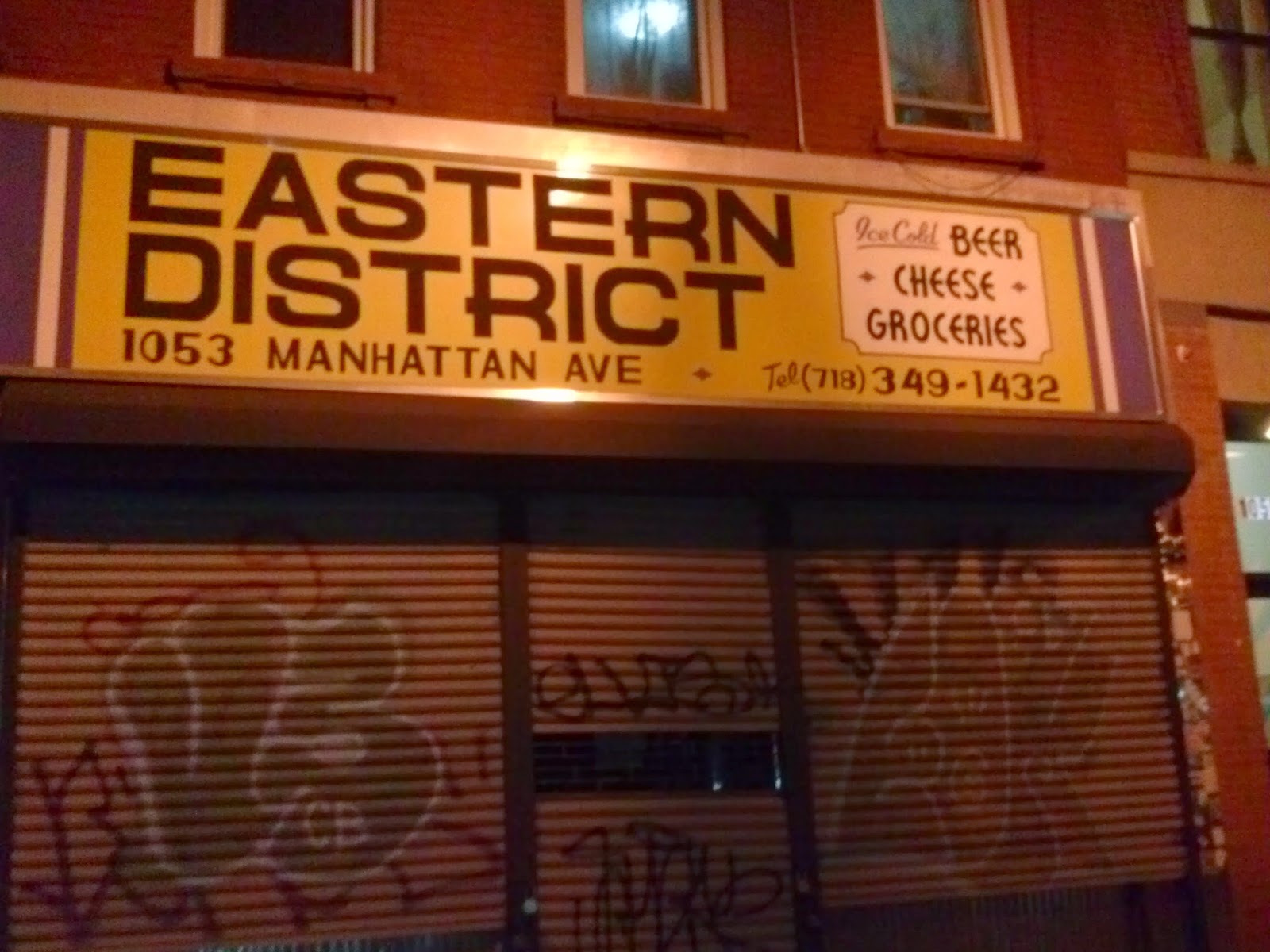
    The Eastern District

    NYC style. Greenpoint, Brooklyn.

  • Why Yes…

    Why Yes…

    …Occasionally a man does put on his papou’s (grandfather’s) 1930s AHEPAfez while giving a Greek Americans talk at New York’s Archdiocesan Cathedral of the Holy Trinity.

  • Is this what Prohibition was like?

    So there’s something very odd about this:

    According to the [New York City] Department of Health, New York University students were dispatched to gather shisha from of 13 hookah bars; after samples were analyzed, it was found that all 13 samples contained tobacco.

    Well I should hope so! You might find the same if you analyzed a pack of Marlboro Lights. The article goes on:

    “To know that tobacco was smoked inside these establishments, exposing hundreds to the dangers of secondhand smoke, is troubling,” Merle Myerson, the director of the Mount Sinai Roosevelt and St. Luke’s Cardiovascular Disease Prevention Program, said in a statement.

    To know that tobacco was smoked inside these establishments…“? These places are tobacco smoking bars. You might not like it. It might not be legal. But don’t be shocked. It’s not even like these places are even speakeasies. They’re shisha joints. That’s what you do: smoke tobacco.

    “Shisha” is tobacco smoked from a water pipe. Always has been. Always will be. (And hookah is just another word for shisha, though linguists and Arab-snobs like to look down on the more western childish word “hookah”. The brits sometimes call it “hubbly bubbly”. The Greeks call it “nargilé,” but gave up on it a while back, a few hipsters notwithstanding).

    There is a strip of shisha (and other middle-eastern) joins a few blocks from me, on Steinway Street. At least one of these shisha places has been here since long before me. Interestingly, though, most of the shisha joints appeared after the smoking ban took effect in NYC circa 2003. Most are still probably legal because smoking is permitted if (at least as I understand it) most of their income (80%?) comes from tobacco sales (an exception that was really meant for rich cigar bars). So yeah, if they also sell beer or dinner, it’s probably not allowed. But what shouldn’t be an issue is what “those people” are smoking. It’s not Soylent Green. It’s tobacco!

  • Bringing a gun to a gun fight

    It does seem pretty stupid to rob a gun store. But it also calls into question the deterrent effect of guns. A good man with a gun was not enough to stop four bad people with guns. There was a gunfight. The store owner was killed. His wife believes her life was saved because of his gun. I wonder.

  • 311 is a Joke

    When 311 is introduced for non-emergency calls, there’s always talk about how the new 311 system will ease pressure on the 911 system. That never happens (but “hope springs eternal…”).

    I can’t actually find the 911 numbers, but I know there are more 911 calls now than in 2003, when 311 was introduced here in NYC. (I know because 911 calls always go up).

    But what’s amazing is how much 311 calls have gone up. Whether this is good or bad is debatable. But it’s certainly noteworthy and does cost money.

    The 311 system in NYC went live in March 2003. There were 8,383 calls a day average: “As many as 32,023 callers a day”! (Plus $25 million in start up costs plus $27 million-a-year operation.)

    Six year later (2010) the system was taking 68,000 calls a day (more than twice as much as the maximum load when the system was introduced).

    In 2014, New Yorkers used the 311 system 28 million times! (16% higher than 2011) I had to do the math, but that’s 77,000 times a day.

    311 call volume will increase. As will 911 call volume. It is written. And maybe increased call volume can increase forever — or maybe it’s a good thing — but let’s not fool ourselves into thinking anything will decrease 911 calls but going back on the promise of unlimited free supply of police services

    And kind of related — and certainly amusing — in 2012 38% of 911 calls in NYC (not 311) were inadvertent. 10.4 million 911 calls in 2010. Of those, 4 million were “butt calls.” I have to assume that these were not handed to patrol officers. But when I was a cop in 2000 (cell phones were just up and coming), 6% of all calls were “911 no voice.” And we had to respond to all of them.

  • From the [not so] sharp minds at ProPublica

    I’ve written before about their foolish and inaccurate claim that the black-to-white racial disparity among those shot by police is 21 to 1. I said, given the group they look at, the number is 9 to 1. But without any slight-of-hand or misleading highlighting of statistical outliers, the actually black-to-white racial disparity, the take-home stat, is 4 to 1.

    More than two months passed. The inaccurate 21-to-1 figure was bandied about by the NPR, the New York Times, and The Economist.

    Then, on a quiet Christmas Eve, ProPublica’s Ryan Gabrielson and Ryann Grochowski Jones posted an article to address criticism (mainly brought by me and David Klinger) of their initial study.

    I don’t want to waste much more time on this; I’ve wasted too much already (see 1, 2, 3, 4). But I do find it funny, in their piece, after many paragraphs focusing on the red herring non-issue of hispanic undercount, there it is — buried in the 11th paragraph — they kind of admit I’m right: the ratio might be 9 to 1!

    Maybe I should just stop there and say, “you’re welcome.”

    But, but, I can’t! Because then there it is — a revisionist gem — they say the actual number doesn’t really matter: “And whether 9 times as great, 17 times or 21 times, the racial disparity remains vast, and demands deeper investigation.”

    What the fuck?!

    The 21-times ratio is the only real point of your original article (which is still up and unapologetic)! And the only real point of my bitching was that 21-times is wrong. Now even 4:1 or 9:1 may be too large. And it does demand deeper investigation. So why not investigate deeper (Or at least crib from those who have)? According to ProPublica: “the data is far too limited to point to a cause for the disparity.” Actually, no. The disparity can be explained pretty well, without too much “deep” digging. What I’m about to tell isn’t the “deepest” investigation, mind you, but it’s a start. And it’s on me, guys. Gratis.

    The black to white racial disparity (all ages) of those killed by cops since 2000 (and reported to the UCR, which is big caveat) is 4 to 1. The racial disparity among those who kill cops is 5 to 1 (the rate is per capita, mind you, not the absolute number). I’d bet $20 it holds for teens, too.

    Now one could say, as does Prof. Klinger, that the data on police-involved homicides are simply too limited to make any point at all. But if one is willing to play with bad data (and I’m game, if they’re the best we got), then you can’t say your conclusion is fine but… other conclusions? …well, “the data is far too limited.”

    Finally — and it goes back to my point about outliers and cherry-picked bullshit data — ProPublica has the chutzpah to say they can’t go back further in time — thus including more data, increasing statistical validity, and decreasing the magnitude of their conclusion — because, get this: they can’t get accurate population numbers.

    So let me get this right: they’re fine using fucked-up UCR data on justified police-involved homicide, they’re fine cherry picking an outlier three-year sample with an “n” (total cases) of 62, but they wouldn’t dare look at more years because we can’t estimate the US population between 2001 and 2007? Are they on crack? Are they stupid? Or are they simply blinded by ideologically bias. I honestly do not know. But it’s a nonsensical line of statistical integrity for them to draw.

    Here is it in their words:

    Using Census 2000 and Census 2010 data for baselines assumes that the ratio of populations remain static, and that a snapshot of population rates for a subset of time can be assumed to be accurate for an entire period. We know that’s not true…. To test the critics’ argument, we calculated risk ratios for as far back as the American Community Survey data goes (2008) [ed note: the ACS actually goes back to 2005, but whatever]. From 2006 to 2008, the risk ratio was 9.1 to 1 (with a 95 percent confidence interval 6.19, 13.39).

    First of all, stop the fancy talk about “risk ratio” and “confidence interval.” You either don’t know what you’re talking about or you’re knowingly trying to mislead.

    Speaking above your reader’s head is a dirty rhetorical trick to hoodwink gentle reades into trusting your statistical acumen (which is pretty crappy). As my grand pappy used to say, “Ain’t no need to use a 25-cent word when a 5-cent one will do.” (See, now I’m usin’ the reverse rhetorical trick by affectin’ an aww-sucks-I’m-just-a-common-guy style of speech here.) For what it’s worth, my papou was an immigrant who spoke with a Greek accent.

    “Risk ratio” here means nothing more than “more likely.” “Confidence interval,” well, if you’re going to use it, explain it. Better yet, explain it accurately* or at least point out that it supports 9:1 more than 21:1.

    More to the point, it’s pointless to discuss statistical nuances of irrelevancy! Of all the problems in your analysis, you’re going to draw the line at estimating population in Census off-years? Really?! It’s like we’re sitting in your rusted jalopy and you tell me you can’t drive me home because the windshield wipers aren’t working. But you failed to mention the fact that the whole thing is up on cinder blocks!

    Of course we can estimate population figures, you fools! The US population grew 9.7% between 2000 and 2010. Talk about easy math! Go on, be bold, you dirty devil: assume a linear population growth for all categories. Divide 10% by 10. It comes out to 1% a year. I know it’s not perfect, but it’ll be close enough; trust me. (Actually population growth of 9.7% over 10-years comes out 0.925% compounded continuously.)

    Will this population estimate be perfect? No. Is it good enough? Yes. Will it tell you far more about what you claim to show? Of course. Is that why you won’t do it? Probably. Would this population estimate be the single most accurate number in your entire analysis? Abso-fucking-lutely.
  • Confidence Intervals

    * This is a footnote to the above post. (and the third in a series on basic math concepts)

    The ProPublica people don’t explain confidence intervals at all in this piece, but in their original they say, “a 95 percent confidence interval indicates that black teenagers are at between 10 and 40 times greater risk of being killed by a police officer.” Er… actually, no.

    A “95 percent confidence interval” doesn’t indicate anything about the real word. What a 95 percent confidence interval “indicates” is that there is statistically a 19 in 20 chance that the “real” number they’re looking for is somewhere between 10 and 40. (And a not-insignificant 1 in 20 chance that it’s not!) A wide confidence interval may sound dramatic, but it’s a red flag which means there isn’t enough data.

    Compare these two statements:

    A) “a 95% confidence interval indicates that black teenagers are at between 5 and 80 times greater risk of being killed by a police officer.”

    B) “a 95% confidence interval indicates that black teenagers are 10 to 11 times greater risk of being killed by a police officer.”

    The first may sound more damning, but the large number (80 times!) just comes from ambiguity because there’s not enough data). The second statement actually tells us much more, and with much greater accuracy.