Copinthehood.com has moved to qualitypolicing.com

  • Numbers, please

    I don’t normally go around asking for stats. I’ll take a good anecdote over a slippery statistics any day.

    And yet… I feel like an old operator at times saying, “Number, please.”

    Last night I was writing and had a very simple question: how many US prisoners are in solitary confinement? Seems like a simple and important question since this a free country and solitary confinement has been proven to drive people crazy.

    Get this… we don’t know. How can we not know? I don’t think you have to be a bleeding heart to think we should know how many people are locked up in solitary confinement. Isn’t not knowing a sign of the gulag?

    Then by chance there’s a story in USA Today about solitary. At least from the Illinois figure we can extrapolate to the rest of the nation. So I would guess between 40,000 and 80,000.

    Speaking of numbers, there’s this story in The Wall Street Journalabout, a 54-year-old librarian in Las Cruces, New Mexico, who “spends most mornings sifting reports in the Mexican press to create a tally of drug-cartel-related killings in Ciudad Juárez, Mexico.”

    Why? Because nobody else is keeping track. The paper points out, “There is no official count of the people killed in Mexico’s escalating drug wars—whether the victims are drug traffickers, police or civilians.”

    In Juarez, the tally this year already (it’s June) is over a thousand. “I don’t think there’s a phenomenon like that in the world unless it’s a declared war,” Ms. Molloy said, “Ten years from now, people are going to ask ‘What happened in Juárez?’”

    When I see fancy stats I’m always skeptical (especially when they’re based on data of questionable validity). But a basic count? A simple population figure? Solitary confinement? Murders? People… these are numbers we need!

    [Update: LEAP board member Walter McKay lives in Mexico and keeps track of the numbers. He posts on the LEAP Blog. He also maintains a Google map of the murders.]
  • Baltimore Officer Not-Guilty in 2008 Shooting

    So finds a Baltimore City Jury. The story by Erica Green in the Sun.

    Sanders testified that Hunt assaulted him during a drug arrest at Hamilton Park Shopping Center two years ago, and that if Hunt hadn’t reached for his pocket while running away, the five-year veteran wouldn’t have shot him twice in the back.

    The jury began deliberating Friday afternoon and returned the not-guilty verdict a little more than three hours later.

    At the time of the shooting, Hunt was on probation for assaulting and eluding a police officer. He faced two years in prison if arrested again.

    Belsky [Sanders’ laywer] emphasized that the case was all about whether his client acted reasonably.

    “This is a good man who did nothing wrong,” Belsky said after the verdict. “The state’s attorney’s office should spend its time trying to foster good relations with the Police Department instead of prosecuting good police officers. That’s how we’ll solve the crime problem in Baltimore.”

  • Stupid People Attack Christians for Being Muslim

    Of course I wouldn’t be for stupid people attacking Muslims either. But there is something deliciously ironic in turning against people who flew across the country to join your hate-filled cause.

    What else can you say about something so idiotic? (other than “Go back to Jersey, you friggin’ yahoos!”)

    At least it shows the true color of these so-called patriots is more blackshirt than red white and blue.

    At one point, a portion of the crowd menacingly surrounded two Egyptian men who were speaking Arabic and were thought to be Muslims.

    “Go home,” several shouted from the crowd.

    “Get out,” others shouted.

    In fact, the two men – Joseph Nassralla and Karam El Masry — were not Muslims at all. They turned out to be Egyptian Coptic Christians who work for a California-based Christian satellite TV station called “The Way.” Both said they had come to protest the mosque.

    “I’m a Christian,” Nassralla shouted to the crowd, his eyes bulging and beads of sweat rolling down his face.

    But it was no use. The protesters had become so angry at what they thought were Muslims that New York City police officers had to rush in and pull Nassralla and El Masry to safety.

    “I flew nine hours in an airplane to come here,” a frustrated Nassralla said afterward.

  • Cops Cuff Cop at Mets Game

    Cops arrest an off-duty cop for being drunk and obnoxious at the ballpark.

    This doesn’t surprise me. But I mention it for those who talk too much of the Blue Wall of Silence and some secret code of brotherhood and that cops never arrest another cop unless they have to and somebody is hurt.

    Now I’m sure (and would hope) that the drunk cop in this case was given a chance to behave maturely. And perhaps one extra chance that a non-cop wouldn’t get. Thatis professional courtesy.

    But then they slapped the cuffs on and arrested the schmuck. And they didn’t let him go and all laugh and have a drink together as soon as they were out of public view.

  • The Parable of Prohibition

    Daniel Okrent has a new book out, Last Call: The Rise and Fall of Prohibition. I haven’t read it yet. But I’ll be damned if Johann Hari in Slate hasn’t written one of the better book review I’ve ever read.

    It’s not easy to keep writing about the absurdity of prohibition in a new way. But until we end drug prohibition, we got to. This whole this is worth a read. Here’s a chunk of it:

    The hunger for a chemical high, low, or pleasingly new shuffle sideways is universal.

    And in every generation, there are moralists who try to douse this natural impulse in moral condemnation and burn it away. They believe that humans, stripped of their intoxicants, will become more rational or ethical or good.

    The story of the War on Alcohol has never needed to be told more urgently—because its grandchild, the War on Drugs, shares the same DNA. Okrent alludes to the parallel only briefly, on his final page, but it hangs over the book like old booze-fumes—and proves yet again Mark Twain’s dictum: “History doesn’t repeat itself, but it does rhyme.”

    When you ban a popular drug that millions of people want, it doesn’t disappear. Instead, it is transferred from the legal economy into the hands of armed criminal gangs.

    So if [Prohibition] didn’t stop alcoholism, what did it achieve? The same as prohibition does today—a massive unleashing of criminality and violence. Gang wars broke out, with the members torturing and murdering one another first to gain control of and then to retain their patches. Thousands of ordinary citizens were caught in the crossfire. The icon of the new criminal class was Al Capone…. But he was an eloquent exponent of his own case, saying simply, “I give to the public what the public wants. I never had to send out high pressure salesmen. Why, I could never meet the demand.”

    By 1926, he and his fellow gangsters were making $3.6 billion a year—in 1926 money! To give some perspective, that was more than the entire expenditure of the U.S. government. The criminals could outbid and outgun the state. So they crippled the institutions of a democratic state and ruled, just as drug gangs do today in Mexico, Afghanistan, and ghettos from South Central Los Angeles to the banlieues of Paris.

    Who now defends alcohol prohibition? Is there a single person left? This echoing silence should suggest something to us. Ending drug prohibition seems like a huge heave, just as ending alcohol prohibition did. But when it is gone, when the drug gangs are a bankrupted memory, when drug addicts are treated not as immoral criminals but as ill people needing health care, who will grieve? American history is pocked by utopian movements that prefer glib wishful thinking over a hard scrutiny of reality, but they inevitably crest and crash in the end. Okrent’s dazzling history leaves us with one whiskey-sharp insight above all others: The War on Alcohol and the War on Drugs failed because they were, beneath all the blather, a war on human nature.

    Read the complete version in Slate.

  • On [Acadmic] Writing

    I have an article in the current Political and Legal Anthropology Review, “Policing: A Sociologist’s Response to an Anthropological Account”:

    In order to be read (and who among us writes for sheer compositional joy alone?) writing needs to be good; people won’t read the other kind. The more jargon and sociobabble we anthropologists, sociologists, and ethnographers spew out, the more we strive to define ourselves as literate scribes in an academic temple, the more irrelevant we become.

    I’m all for sound and progressive arguments, but style is the key to good writing. I just wish more academics would worry about the Elements of Style as much as they obsess over the whims of anonymous reviewers and straitjacket themselves with journal orthodoxy.

    As an added bonus I’ve become a published poet in the same piece by reducing “Casey at the Bat” to haiku form:

    mighty casey swings
    oh two two on down by two
    no joy in Mudville

    Yes, folks, inspiration like that is why we professors always rake in the big bucks.

  • What Flags?

    Off-duty Baltimore officer Gahiji Tshamba, the guy who seems to have emptied his glock at and into a man for touching his girlfriend seems to have a bit of a history. “Investigators found13 bullet casings at the scene and the officer’s gun was empty. Nine of those bullets ended up hitting the ex-Marine, which some say is excessive.”

    The problem is not drinking and carrying a gun in a bar. The problem is being drunk while having a gun, a temper, and really bad judgment!

    Meanwhile another Baltimore officer is on trial for an on-duty shooting. This case is not so clear cut and knowing nothing, I’m not willing to comment. But he is the first officer to be put on trial for an on-dutyshooting since the Lexington Market police-involved shooting of James “Don’t Shoot that Boy!” Quarles (I saw that video in the police academy–one officer shot, many didn’t).

    [Update on the life and career of Officer Tshamba.]

  • Hispanics leave Arizona ahead of immigration law

    So says USA Today.

    The governor said, “If that means that fewer people are breaking the law, that is absolutely an accomplishment.” The good news is that at least one of the criminals–I mean business owner–plans to move to New York City.

    It would be nice if the aftermath of this law could to be analyzed rationally and people actually listened to the facts. But I doubt it.

    If crime goes down (rate, not numbers) and the economy improved, I would certainly admit I was wrong about that. So let’s see. But to me this isn’t primarily about crime (though I think the crime rate will go up). It is about humanity and the economy (and in NYC, terrorism).

    Let me gaze into my crystal ball… I look at Arizona and see crime going up and anti-immigrant people calling for even more stringent anti-immigrant laws. I see the local economy going down while those on the right change the subject, blame Obama, call for more prisons, and talk about the importance of sending a messages to these immigrant criminals.

    This would not be the first time that the idea of “sending a message” outweighs common sense and good policy.

  • Communists Born in the USA and Dire Straits

    I was in the hardware store the other day. The one where the business owner is a middle-aged, liberal, dog loving, some’er teeth, former punk kind of guy (only in New York).

    Dire Straits “Walk of life” was on the radio and I mentioned how I loved that song when it came out… and how today he sounds more like a Bruce Springsteen wannabe.

    Then we started talking about Springsteen. It took me years before I liked Springsteen (till hearing “Nebraska,” to be precise). Right about then a very clean-cut older guy came in and overheard our conversation. I noticed, as he interrupted, that his belt holding up his shorts and tucked in shirt was perfectly straight around the circumference of his big belly:

    “Springsteen, Born in the USA. You ever hear the lyrics?”

    No, and, er, that’s not what we were talking about.

    “‘Put a rifle in my hands/Sent me off to Vietnam/To go and kill the yellow man.’ How about that? Yellow man!”

    Silence. (though those areinteresting lyrics)

    “You know what it is about Vietnam?”

    No. But I bet you’re going to tell me.

    “We could have won that war!”

    Really?

    “Yeah, we could have won that war if it weren’t for… communistsand their sympathizers. Sympathizers born right here in the USA!”

    You know, I thought we lost 50,000 men over there because it was a fight we kept fighting even though we couldn’twin. Sometimes, no matter how hard you try, you lose. Especially in another country’s civil war.

    But what do I know? I was barely alive. Maybe the problem wasn’t conditions over there but people over here who were against the war. Maybe we just needed more troops and few more years to really beat those bastards.

    Kind of like the war on drugs. Or Iraq. To think that liberal ol’ me may be responsible for brave young soldiers running over IEDs and not the draft-dodging politicians who sent them there in the first place. (Don’t judge patriotism by service! Judge it by flag pins in the lapel!]

    It’s always easier to blame others than admit you were wrong.

    But I said nothing. This guy was already on mindless autopilot mode. Standing in front of an ACLU sticker shouting about communists and their sympathizers ruining this country.

    I took my box of garbage bags and left.

  • Hyper-Alertness

    Hyper-Alertness

    I was listening to my all-time favorite interviewer, Milt Rosenberg, talk to a few Chicago cops. Like most cops talking in public, this interview starts out a bit stilted, but they open up by the end.

    [I was on this show last year–my life’s dream! I’ve been listening to Uncle Milt for about 30 years (and I’m only 38). He would come on after away Cubs games and I would just listen even though I was far too young to understand all the discussion. I think he’s why I’m an intellectual. And just for the record, Milt is quite conservative (though I think he’s become more conservative over the years). But, unlike, say, Rush, he’s an intelligentconservative. Listen to this discussion about Obama to hear his show at its best…. Now if only I could figure out why my interview isn’t on their archives.]

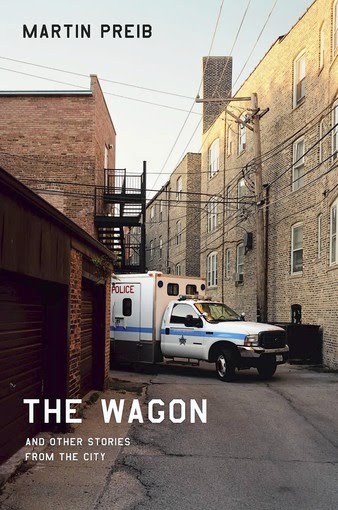
    One of the cops, Martin Preib, wrote a wonderful book, The Wagon and Other Stories From the City. I keep meaning to write on it but haven’t (his book is not the only thing I mean to write on but haven’t). It’s great. Buy it. Read it. If you’re reading this, you’ll like Preib’s book. It’s not super light reading (published by the University of Chicago) but I mean that in a good way. The guy can write. And it reads really really well. It will stand the test of time.

    So these guys got me thinking. Brought me back to the old days (shocking to think it’s been 9 years since I’ve walked the beat).

    Here’s one thing I don’t miss about being a cop: Hyper-Alertness (I just made that term up).

    What do I mean?

    1) When you walk into a store, is your first thought, “Is the place being held up?”

    2) When you’re looking in the mini-mart fridge, are you looking in the reflection in the glass to see who enters the store?

    3) When you enter a room of strangers, do your eyes move to people’s hands?

    4) When you sit in restaurant, do you always sit with your back to the entrance, ideally with your back to wall?

    5) Do you assume that everybody is lying?

    6) Is the thought of taking a nap in a public park completely insane?

    7) Do you always carry a heavy badge and credentials?

    8) Do you feel a bit naked without your gun?

    9) When you’re off duty, does the thought of hearing these words terrify you, “I know you!”

    10) (…if you’re a cop, feel free to add what I’m forgetting.)

    If you’re a cop, you’ll say yes to all these things. These are the things that just come natural to cops. If you’re a cop, you can’t imagine doing otherwise.

    I quit the P.D. in 2001. It took about two years before I could stop carrying my badge (though during that time I never pretended I was a cop). It took anothertwo years andtaking another job (my current job) before I could ignore the above rules and… relax.

    And remember, I was only a cop for two years (and I’m a pretty relaxed person by nature).

    Being hyper-alert is part of the job. It keeps cops alive. And if you start being hyper-alert, it’s not something you can just turn off in public.

    [If you’re not a cop but happen to ride a bicycle in the city like I do, you can kind of understand hyper-alertness in a different way (at least if you’re alive to read this). Now imagine that level of alertness 24/7.]

    But being hyper-alert doesn’t make life more fun. Ignorance canbe bliss. Sometimes it’s nice to tune out. Sometimes it’s nice to put on headphones, blast techno music, and ignore everybody around you. Because if you’re not a cop, there’s a good chance that nobody will hurt you.

    And you know what? Most people can live all their lives oblivious and unarmed and die peacefully in bed surrounded by loved ones.

    I don’t miss being hyper-alert. I’m happy I’m no longer hyper alert. Though obsessionally something will trigger it.

    Does not being hyper-alert make me less safe? No doubt. But not being hyper-alert makes me so much happier.