Copinthehood.com has moved to qualitypolicing.com

  • Stop paperwork

    In Chicago, as in New York City, police officers have been instructed to fill out a new an extremely burdensome form every time they stop somebody. This would be great if eliminating police stops were a worthy goal.

    In Chicago, as reported in the Sun-Times:

    Interim Chicago Police Supt. John Escalante said Tuesday he hopes to counter a severe downturn in street stops by responding to cops’ complaints about the “burdensome” reports they’ve been filling out since the beginning of the year.

    Escalante told the Chicago Sun-Times that officers will start using a new, streamlined form on March 1.

    Street stops plummeted 79 percent in January compared with the same period of 2015. Meanwhile, murders and other crimes have skyrocketed this year in Chicago, which many cops have attributed to the slowdown in street stops.

    The city and the ACLU agreed last week on the streamlined form.

    Meanwhile, in New York, stops are down and reported crime this year to date is basically steady. Homicides are down 25 percent. Shootings down 30 percent.

    Subway crime is reported up. Or so I hear. I’m not certain because I can’t find any actual data on subway crime.

    I did see this video of a guy been egged on to assault a Chinese food delivery guy. The delivery man decided to fight back, got in a few punches (hee), and lived to tell about it. But what’s interesting is that this took place in the lobby of public housing, exactly where cops are patrolling less aggressively since they were accused of harassing poor innocent tenants hanging out in lobbies. While this is just one incident, it is exactly why police do need to patrol lobbies of public housing. And no, it’s not just a matter of people who don’t live there. It’s about maintaining order.

    According to one resident of public housing I spoke to, things are getting slightly worse in terms of people up to no blocking the way of people coming and going. But “it’s not nearly as bad as it used to be [years ago]. But it’s swinging in that direction.”

    Next post on this.
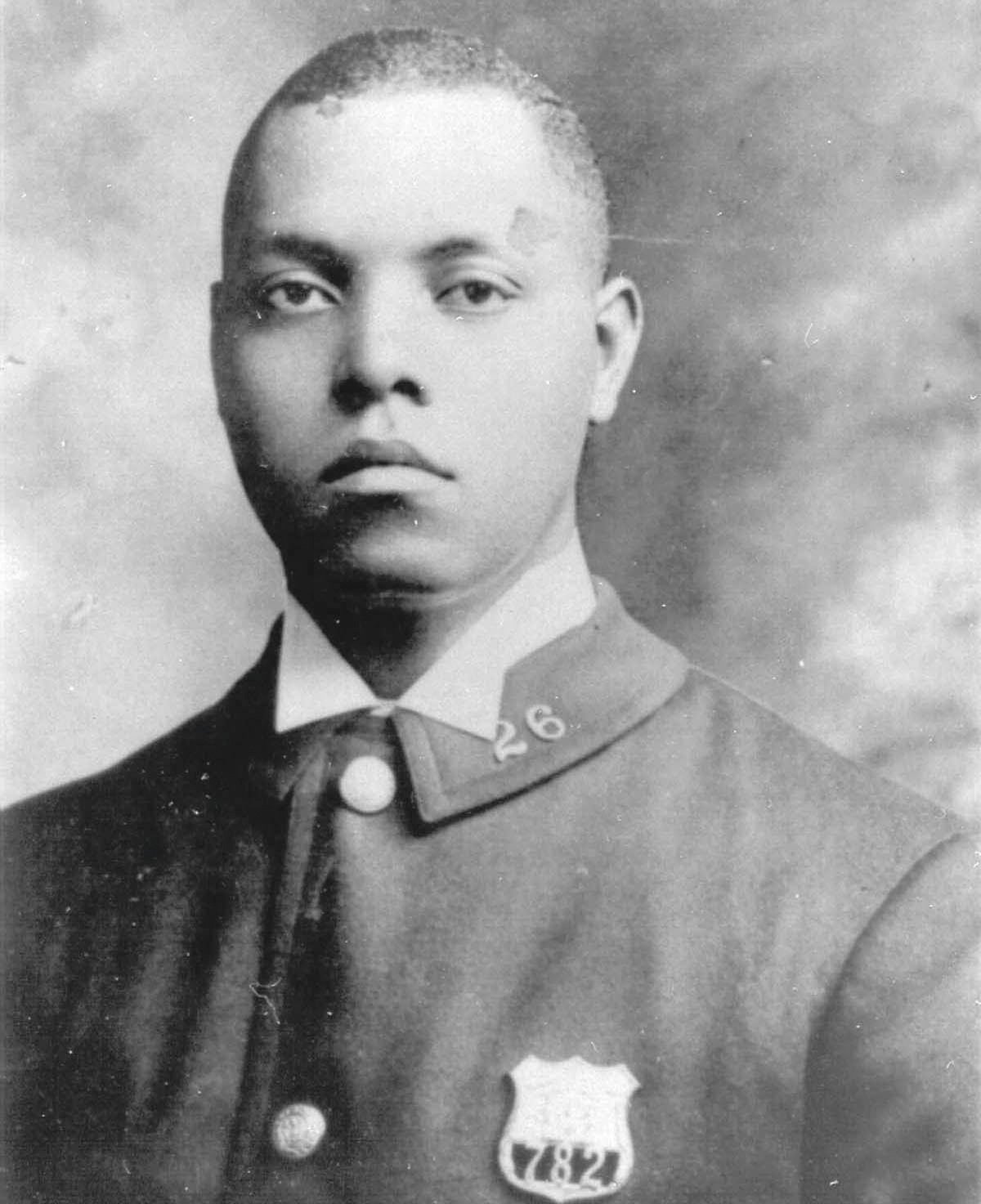
  • One Righteous Man

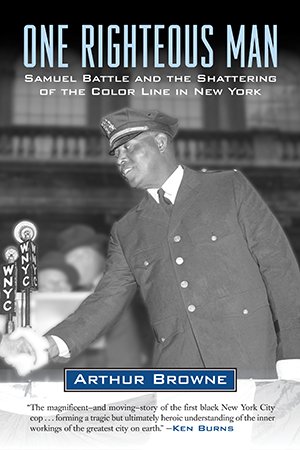
    One Righteous Man

    I read pretty quickly. I’m always looking for new non-fiction. Particularly history. I’ve found Darkblue714 on twitter has never failed me with good book recommendations. He reminded me to read The Warmth of Other Suns: The Epic Story of America’s Great Migration. Being a best seller in 1994, I don’t know how that bestseller managed to escape my classes in graduate school. [Turns out it came out in 2010, which explains why I didn’t read it in graduate school.] Anyway, if you don’t know what “The Great Migration” is, well, shame on you. But leaving that aside. It’s a great book.

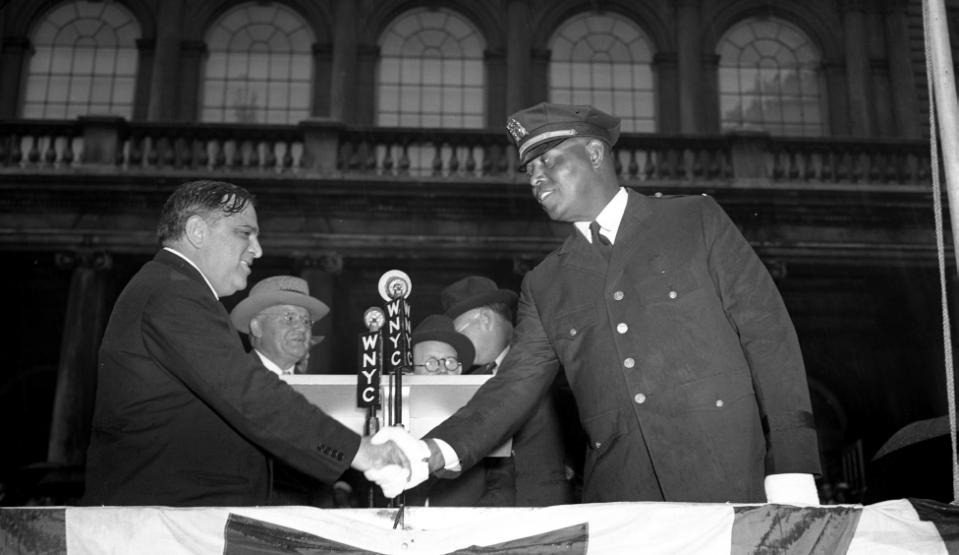
    Darkblue’s next recommendation was One Righteous Man: Samuel Battle and the Shattering of the Color Line in New York. This is new book. And it’s great history for anybody interested in police history, the NYPD, black history, American history, New York history, or for anybody who enjoys a good biography of a fascination man. You think you got it tough? Imagine being the first black cop in New York City. (Though Brooklyn had a few before Consolidation). Battle knew everybody who was anybody. The entirety of black America (and much of white America) passed through his watch. All the politicians, musicians, stars, and political leaders come to him. Talk about some weight on your shoulders. It’s an amazing story.

    That white guy? He’s LaGuardia. If you don’t know who he is… well, he’s more than a crappy airport and great community college near my house.

  • Al Baker is one smart, journalist

    I always like Al Baker’s stories. He seems to get it. And I don’t think he’s Greek. But I do think his father was a cop. Maybe that matters. Or maybe he’s just smart and works hard. Anyway, I’m happy to see him writing about police issues again. I trust that when I read his stories, I’m going to learn something.

    On stop and frisk in the NYPD. As to the picture… why is that cop car on the sidewalk? It’s just a Broken Window pet peeve of mine.

    Since Mayor de Blasio took office in New York, the number of recorded street stops has continued to decline, to about 24,000 last year from 45,787 in 2014…. Those tallies represent a small fraction of the stop-and-frisk activity logged during the administration of Mayor Michael R. Bloomberg, a political independent, when recorded stops reached a height of 685,000 in 2011, and fell to about 192,000 in 2013, which was Mr. Bloomberg’s last year in office.

    To ask cops to fill out a lengthy form and have another officer, the sergeant, review the form? It’s too much to ask. Not when stops are discretionary. (There’s also something rude about asking all this information from a person who just wants to go about his business, but nobody ever raises that point.) But if the goal is to end stops and all discretionary policing, well, this is one step to that goal.

    All that said, keep in mind murders are down 38 percent this year! That stat doesn’t mean much in mid-February, of course. But were shootings up, I’m sure you’d be hearing from the usual suspects saying the sky is falling… and it’s Obama’s fault… and don’t black lives matter?

    Anyway, I still have to read the whole report. Summaries and thoughts from those who have are more than welcome.

    [Kind of sort of related, how much does the “independent monitor,” Arnold & Porter LLP, get for writing this report? And does anybody know if anybody knows if consent decrees have any impact on crime? Something seems awfully fishy — not about this report in particular, I have great respect for Anthony Braga — but for the whole advice and consult and decree concept in general. Is there a ready list of police departments that have been under consent decrees and for which years?]

  • Dukakis is one smart Greek

    It’s too bad this man wasn’t president. Oh, the economic and foreign policy horrors that could have been avoided. But I don’t say that just because he’s Greek. (Though that helps.) And I don’t say that just because he was kind enough to write the introduction to my Greek Americans book. (Though that was very nice of him.)

    Here’s what Dukakis has to say about current political issues. In Slate.

    I like his take down of Scalia’s so-called “originalism,” which masked little more than a hard-core conservative ideology:

    What would I be doing? I’d be pointing out that if you are a constitutionalist, or an originalist, whatever those terms mean—because they really mean nothing. You know, Nino [Scalia] was a classmate of mine at law school. He was no more an originalist than the man on the moon.

    What was originalist about Bush v. Gore? What was originalist about the Second Amendment decision? What was originalist about Citizens United for God’s sake, Isaac? We have been regulating campaign contributions since the late 19th century. Where in the Constitution does it say that money is speech? Originalism? Are you kidding me? But in any event, if you believe that, then the president has a solemn responsibility to make a nomination and the Senate has a solemn responsibility to consider it seriously, right?

    A bright guy — yeah. But he was to the right of Marie Antoinette for Christ’s sake. There was no consistency in his so-called philosophy. Money is corporate speech. This is all preposterous.

    His take on foreign policy is also excellent and worth reading.

  • The right not to get shot

    The right not to get shot

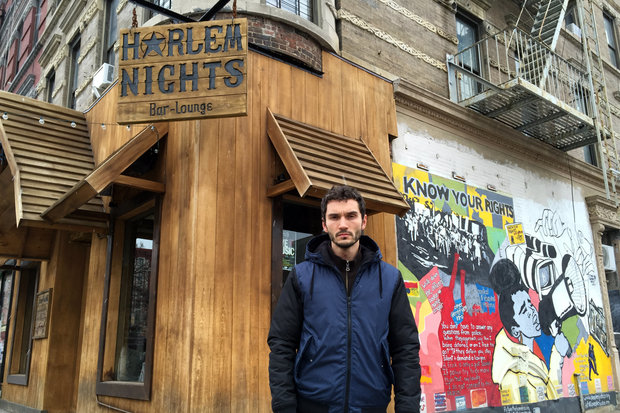
    There’s something ironic here, this Harlem bar owner discussing the fatal shooting in his bar and the need the need to buy a metal detector and hire a third security guard in order to pat-down customers so nobody gets shot:

    He called the extra security measures, “horrible” and “insane” but unfortunately necessary to keep everyone safe.

    Hoping there isn’t retaliation, he’s standing in front of a “know your rights” mural that urges people to observe and record — but not cooperate with — police.

    (FYI, from google street view, the mural predates the bar.)

  • Continuing with the “Ferguson Effect”

    The other week I wrote about the so-called “Ferguson Effect.” Alex Elkins has some more thoughts on this issue, over on his blog:

    The main “take-away,” the one the authors hope the media will pick up and run with, namely, that the Ferguson Effect, as construed by conservatives and certain media outlets, is “spurious.” This is too strident, in my opinion, in light of the available evidence that *something* did change over the past year. It’s not as if the change was in aggravated assault, a notoriously unreliable classification subject to manipulation by police command. No, the change was in murder, hardly a trivial matter.

    Lastly, the authors were unable to link crime trends to the sense that police had backed off in the era of #BlackLivesMatter. They write: “It is important to note that the city-level crime data used in this analysis cannot establish whether loss of legitimacy or de-policing is at the root of an observed increase in crime, or whether contagion induced by social media was responsible for transmitting these changes.”

    That, of course, is the argument that cops have made. Police have contended that after the deaths of Mike Brown and Freddie Gray, and the intense public criticism of over-policing, they have made fewer discretionary street stops and scaled back proactive Broken-Windows-style policing, and as a result, they say, opportunistic criminals have entered the void and committed more violent crimes, like murder.

    In light of all the killing in 2015, I’m willing to entertain this idea. I don’t understand why some seem to think that conceding this premise — that protest has had some effect on police — threatens the Left and its agenda. Massive street protests and intense sustained media attention surely have affected cops — indeed, many have said as much. We can grant that and still maintain the legitimacy of protest and our concerns.

    We have lots of work to do. Refuting the so-called Ferguson Effect — which essentially asks who’s to blame, which conservatives like Mac Donald use to undermine legitimate democratic protests against abusive state practices — when the evidence actually does indicate an increase in violent crime, should be the least of our concerns.

  • A Refresher on Regression Analysis

    That’s all. And not a bad refresher at that, by Amy Gallo in Harvard Business Review:

    “You have to go out and see what’s happening in the real world. What’s the physical mechanism that’s causing the relationship? … A lot of people skip this step and I think it’s because they’re lazy. The goal is not to figure out what is going on in the data but to figure out is what is going on in the world. You have to go out and pound the pavement,” Redman says.

    “And if you see something that doesn’t make sense ask whether the data was right or whether there is indeed a large error term…. And, he says, never forget to look beyond the numbers to what’s happening outside your office: “You need to pair any analysis with study of real world. The best scientists — and managers — look at both.”

  • “Our Police Today… Frustrated, Bitter, Resentful”

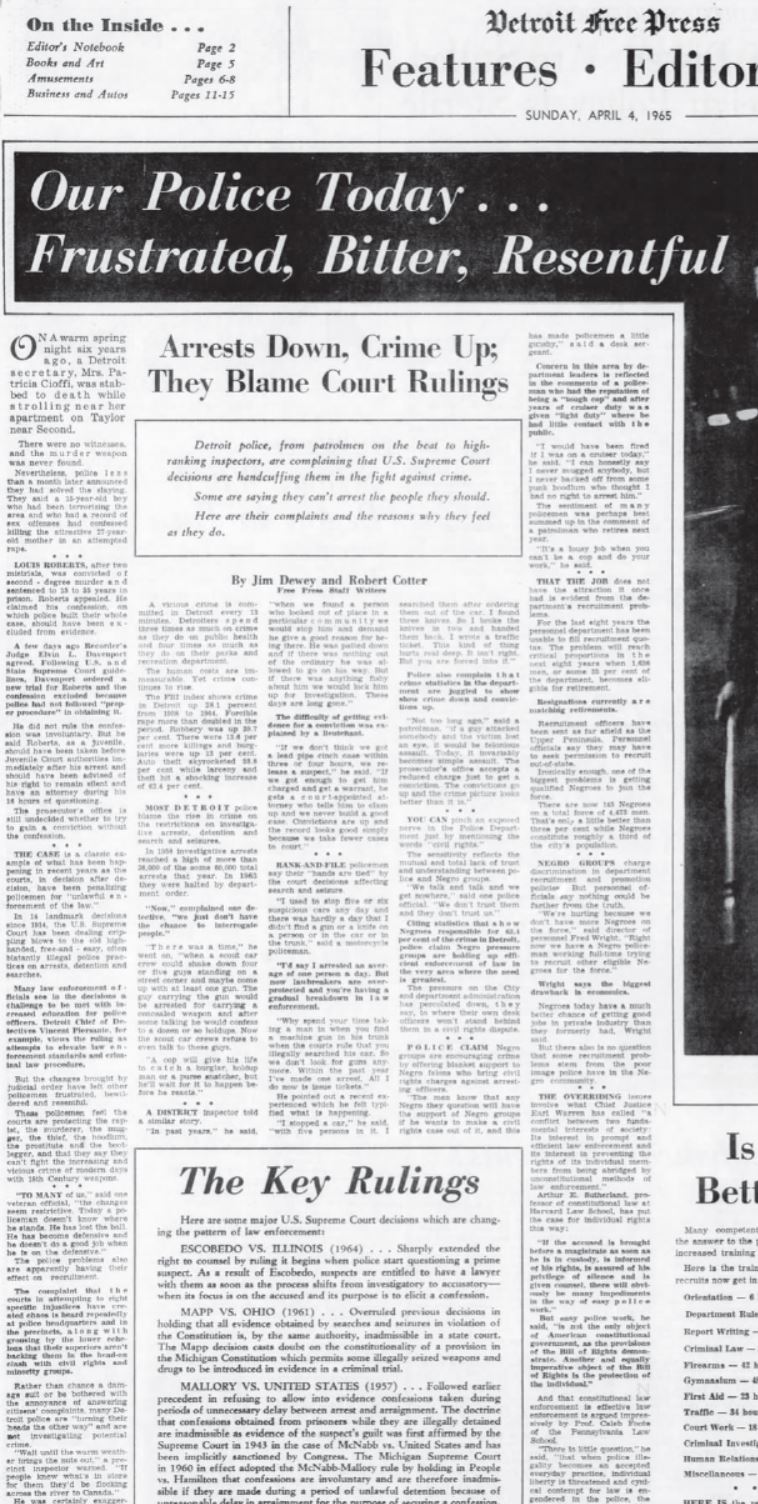
    “Our Police Today… Frustrated, Bitter, Resentful”

    Have you heard the news? There’s nothing new under the sun.

    “Today a policeman doesn’t know where he stands. He has lost the ball. He has become defensive and he doesn’t do a good job when he is on the defensive.”

    “A cop will give his life to catch a burglar, holdup man, or a purse snatcher, but he’ll wait for it to happen before he reacts.”

    “So we don’t look for guns anymore. Within the past year I’ve made one arrest. All I do now is issue tickets.”

    “It’s a lousy job when you can’t be a cop and do your work.”

    Police claim [black] groups are encouraging crime by offering blanket support to [black] felons who bring civil rights charges against arresting officers.

    That the job does not have the attraction it once had is evident from the department’s recruitment problems. For the last eight years the personnel department has been unable to fill recruitment quotas.

    And Prof Caleb Foote of the Pennsylvania Law School makes the case that “constitutional law enforcement is effective law enforcement”:

    “There is little question that when police illegality becomes an accepted everyday practice, individual liberty is threatened and cynical contempt for law in engendered in the police, the law violator and the law abider alike.”

    Of course this isn’t from today. It’s from the Detroit Free Press of April 4, 1965.

    (Of course, it’s worth pointing out that crime really was skyrocketing, and Detroit never recovered. Who knows? Maybe judicial changes were partially to blame.)

    [Thanks to Alex Elkins for the article, and also these Detroit murder numbers:]

    Detroit murders by year:

    1964 — 136

    1965 — 201

    1966 — 252

    1967 — 331

    Murder jumped by 47% between 1964 and 1965. Those numbers rival the increase in murder that some cities experienced in 2015; the national increase was around 15%.

  • NYPD Officer Liang found guilty

    Do I think Peter Liang wanted to kill Akai Gurley? No. Do I think Liang messed up so bad that he should be found criminally guilty of manslaughter and official misconduct for failing to help Mr. Gurley as he lay dying in a public housing stairwell?

    Yeah.

    But, as a side note, Liang is right about this:

    He felt unqualified to perform CPR, as is required of an officer under such circumstances, because he received poor training at the Police Academy.

    And I certainly don’t think he (or anybody) should be given a long sentence without mens rea.

  • It’s been a bad week for cops

    Eight cops have been shot and killed this month. And February, 2016, ain’t even half over. Already, on my social media stream, I see my cop friends blaming Obama.

    Well, you must remember December, 2003 when seven cops were shot and killed? Republican George W Bush was president. August of that year? Nine cops were shot and killed. April? Ten cops shot and killed.

    Or maybe it was better when Reagan was president and this country “was great”? In July, 1982, eight cops were shot and killed. August: ten. September: eleven. October: eight.

    Ronald Reagan? 37 cops shot and killed in four months!

    Under the Obama administration, you have to go back to May of last year to get 37 cops shot and killed. (That’s nine months, for those lacking in certain skills.)

    Do I think the president is to be blamed for dead cops? No. And that’s my point. But maybe you just hate Obama so much that you don’t remember any of that. That’s fine. Honestly, I had to look up those old figures. But you conservative Obama-hating motherf*ckers said you’d “never forget.” But you have.

    If you want to judge presidents by the number of cops shot and killed, Obama has been the most pro-cop president ever. And if your conservative ideology is more important to you than dead cops? Well, then, fuck you.