Copinthehood.com has moved to qualitypolicing.com

  • William Hackley, Baltimore police officer, Historian

    Retired Baltimore Police Officer and amateur historian William Hackley passed away.

    Were it not for Officer Hackley, so much of the history of the BPD would be lost to time.

    I never met him, though I think I contributed a few pictures to his website. Give it a look (and get ready for some old-school website music or turn off the sound). There’s a lot there.

    While Officer Hackley will win no awards for website design, he more than made up for that with his knowledge of, dedication to, and love of the men and women, past and present, of the Baltimore City Police Department.

    Rest in peace.

    2014 update: The website moved. Now it’s here: http://baltimorecitypolicehistory.com/citypolice.

  • The Ray Kelly Smackdown Hour

    Except this time it was Ray Kelly who was doing the smacking down. He gave it back good to the New York City Council on the subject of stop and frisks and violence among minority youths. From the New York Times:

    “What I haven’t heard is any solution to the violence problems in these communities — people are upset about being stopped, yet what is the answer?” Mr. Kelly asked Councilwoman Melissa Mark-Viverito, who had been asking the commissioner to acknowledge that the department’s practice of street stops in minority communities left many people “feeling under siege.”

    “What have you said about how do we stop this violence?” Mr. Kelly asked, asserting that violence among minority youth is “something that the government has an obligation to try to solve.”

    Ms. Mark-Viverito, whose district includes East Harlem and part of the South Bronx, was now pressed for an answer.

    “There needs to be prevention and deeper community-based tactics and strategy” she offered. “Yeah, what is that?” he asked in a dismissive manner.

    Ms. Mark-Viverito spent the next few moments trying to exit the debate over police tactics that she had sought, eventually saying, “I think I’ve made my point.”

    To that, Mr. Kelly shot back: “I’m not certain what your point is.”

    Dammmmmmn.

    Of course there is a better solution: smarter stop and frisks, based not on “productivity goals” but on actions of intelligent police officers who have discretion and can distinguish between criminal and non-criminal black man.

    But Kelly has a point. It’s too easy to criticize the police. It would also help if you actually had some ideas as to how to make police better. And it isthe government’s obligation to try and solve the problem of violence in minority neighborhoods. It’s not that the police are without blame… but don’t justblame the police.

    Update: Some of the video can be seen here.

  • Procedural versus substantive justice

    There’s a great review of William Stuntz’s book, The Collapse of American Criminal Justice (which I have but have not read). Stuntz was conservative, just FYI. The review is by Leon Neyfakh in the Boston Globe. Stuntz’s point is that procedural justice is not the same is real justice. And the trend towards the former, encouraged by liberals, has actually screwed everything up. It’s quite convincing, at least in summary form. Neyfakh explains it well, particularly how well intentioned layers have helped screw everything up, with their misguided faith in the magic of procedure:

    At the heart of the book is Stuntz’s surprising argument about how we reached this point: that well-intentioned Supreme Court rulings meant to protect defendants from unfair and discriminatory police practices combined with the harsh laws passed in response to the crime wave of the 1960s and ’70s to produce a system that is merciless, destructive, and above all, unjust.

    Stuntz described it as a chain reaction, set off by the fact that the court had focused all its efforts on procedure, and had failed to impose any substantive limits on what legislators could criminalize and the punishments they could impose.

    In effect, those rights that the Warren Court gave defendants have become bargaining chips, to be traded away by defense attorneys in exchange for shorter sentences.

    The practical result, Stuntz writes, is that the criminal justice system is now anything but local, and mostly indifferent to the people whose lives are most directly affected by it. Poor minorities who live in the urban neighborhoods with the most crime are living under laws passed to please middle-class voters who live elsewhere, and processed by a system built to force a guilty plea rather than determine whether they actually deserve to go to prison.

    “It is the lawyer’s conceit to believe, on some level, that if you can get the procedure to be perfect, that will ensure that the results will be perfect,” said Joseph Hoffmann, a professor at the Indiana University Maurer School of Law, who has known Stuntz since the two of them clerked together on the Supreme Court. “It’s the way most lawyers look at the world….They would say procedural justice is how you get to substantive justice.”

    Alas, the real world doesn’t work that way.

  • Police Apologize For Job Poorly Done

    It doesn’t happen often. But here it is. Oh, no, it’s not a US police force. That would be a sign of weakness. Wouldn’t be prudent. Might admit legal liability.

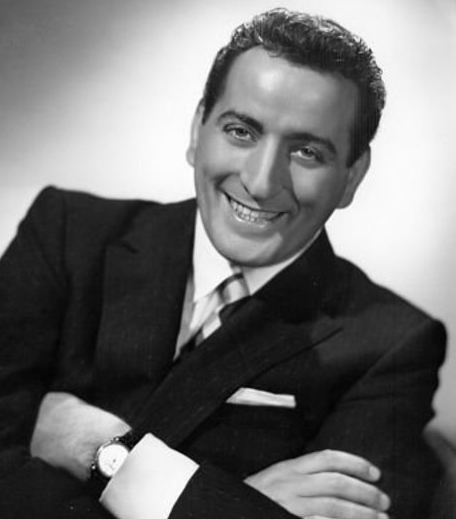
  • Tony Bennett Is Great

    Tony Bennett Is Great

    I didn’t know that Tony Bennett came out for drug legalization.

    Tony Bennett is a hometown hero here in Astoria, Queens. I mean, I’ve had more than a few debates with old timers about how great Tony Bennett is. And it’s strange, because we’d both be on the same side.

    Old man: “Tony Bennett is great.”

    Me: “Yes, he is.”

    Old man: “Did you know he’s from Astoria?”

    Me: “Yes, I did. He sure is great.”

    Old man: “I’m telling you, he’s better than Frank.”

    Me: “I agree. He sure is. Frank is overrated. Tony, underrated.”

    Old man: “Tony Bennett is great, I tell you.”

    Me: “I couldn’t agree more.”

    And then they’d start getting all huffy.

    Tony Bennett, by the way way, returns the love (the video is worth watching, if you like Tony Bennett, and who doesn’t?):

    “The finest place to live,” Mr. Bennett, 82, said as he showed a reporter his favorite haunts [in Astoria]. “I’ve been all over the world — Paris and Florence and Capri — and yet I come back here and I like this better than any place I’ve ever lived.”

    So you may wonder why the fancy new public arts school here in Astoria in named the “Frank SinatraSchool of the Arts High School. I mean, Frank Sinatra isn’t from Astoria! And besides, as we all know, Tony Bennett is better than Frank.

    Well, it turned out that Tony Bennett wanted it this way. The whole school was his idea, but he declined the honor of having it named after him. He askedthat the school be named after his friend, Frank Sinatra. What a champ, Tony Bennett is. Did you know he’s from Astoria?

    In all that back and forth I almost missed this pieceby my fellow members of LEAP, Niell Franklin and Katharine Celantano, about Tony Bennett.

    I hear he’s a great man.

  • You Can’t Blame the Police

    I wrote in the New York Times:

    Much — though by no means all — of the disproportionate rate of blacks stopped, frisked, arrested, convicted and imprisoned is a simple reflection of violence in poor African-American communities. Like robbing banks because that’s where the money is, the obvious reason police focus so much of their attention on the young male black community is because that is where the murders are.

    It’s not politically correct to say so, but reality isn’t politically correct. Over 90 percent of New York City’s 536 murder victims last year were black or Hispanic. Just 48 victims were white or Asian. The rate of white homicide in the city (1.18 per 100,000) is incredibly low, even by international standards.

    This is from a greater “debate” titled “Young, Black and Male in the United States.” What’s odd about these New York Times’s “debates” is that they’re not debates. There are eight people contributing (for no pay) independently of each other, none of whom have any idea what the others are saying. This may or may not lead to good points being made, but it is a bit of shame it’s not a real debate.

    Update: And a few stats that didn’t make it in my piece, for reasons of relevancy and style.

    Leaving aside domestic violence, how many of the roughly 1.3 million white women in New York City were murdered last year by a stranger (ie: leaving out the 34 cases of domestic-related violence)?

    Zero. Zero.

    And 31% of domestic violence murder victims were male. Because compared to other locales, in terms of crime New York has a strangely broad definition of “domestic.” In most places domestic violence means you are or have had sex with somebody. In New York it means living under the same roof.

  • A most fabulous correction

    From Salon.com, regarding an interview they did with me:

    The June 20, 2011, story “Could Flogging Solve Our Prison Crisis” initially stated that “the Corrections Corporation of America helped draft anti-immigration laws,” a reference to the draft legislation that later became Arizona SB 1070. CCA has brought it to our attention that although CCA did have a representative at the ALEC meeting where model legislation similar to 1070 was drafted, CCA was not involved in drafting the language. The story has been corrected. [Correction made 3/8/12]

    Of course. Their man sat quietly the whole time playing solitaire. I regret the error.

  • “Moskos, your thoughts!”

    “Moskos, your thoughts!”

    There were many periods of silence in the police academy. The environment didn’t exactly encourage free and independent thinking.

    During these awkward moments, Agent Cassidy, when he was in the room, was fond of bellowing out, often apropos of nothing, “Moskos, your thoughts!” Thirteen years later, these might be most (only?) remembered words from the academy class of 99-5.

    David Simon writes about Cassidy in the Sun (unfortunately, it seems, behind their new pay wall). You can’t say “if it weren’t for bad luck, Cassidy would have no luck at all.” He’s had his share of good luck. He’s alive, right? But he’s had more that many people’s share of rotten luck as well.

    Now Cassidy has end-state liver cirrhosis. Seems he got Hepatitis C from a blood transfusion after being shot. He needs a new liver. Cassidy was shot in 1987 trying to apprehend a man wanted for partially blinding an old man who had the gumption to tell the bastard to stop beating a girl. Cassidy pulled up on a corner and tried to take him in. There was a fight. Cassidy doesn’t remember the rest, because he took a couple of bullets from a .357, one at point blank range to the forehead. But for some reason Cassidy didn’t die, though he did lose 100 percent of his sight, smell, and taste.

    Cassidy went on with life, had kids, learned to get by with a guide dog, went to work, got a masters degree, and began teaching law class in the police academy. (Then, outside of shooting and driving, the onlywell-taught class in the Baltimore police academy. He said he wanted his kids to see him go to work everyday.)

    Cassidy’s shooter was later arrested and (barely) convicted. Seems most of the fine city jury had no opinion and simply wanted to go home (I had forgotten these details):

    A college student training to be a special education teacher, the young juror, allied with an older woman, fought a pitched battle to bring the rest of the jury around. It was a transforming experience, so much so that years later, that juror would be a Baltimore City prosecutor, her life changed by the experience in that jury room.

    It would be another 12 years, during my time on the force, after the killing of Officer Kevon Malik Gavin, before a city jury would actually be stupid enough to let a cop-killer walk free.

    Because of the Cassidy shooting, tactics in Baltimore changed. We wait for backup (right?) before putting the cuffs on a suspect. We don’t put people against walls they can push off of and spin around on us. Also, we’re inspired by Cassidy’s life and more thankful for some abilities we are all too quick to take for granted.

    “You know what I would have done differently?,” Cassidy says in a video in his memorable staccato delivery, “Very simple. I would have taken that day off. Right?”

    From the FOP Lodge #3:

    Another ‘Signal 13’ goes out for Police Agent Gene Cassidy who was shot in 1987.

    Baltimore City FOP Lodge 3 is holding a Blood Drive/Liver Donor Information at the FOP Hall on Monday, March 19th from 11:00am-6:00pm. This Blood Drive is in Honor of all Injured Police Officers, Firefighters, Medics and our Military Personnel serving the United States overseas. Come out and support one of our own heroes – Gene Cassidy of the Western District.

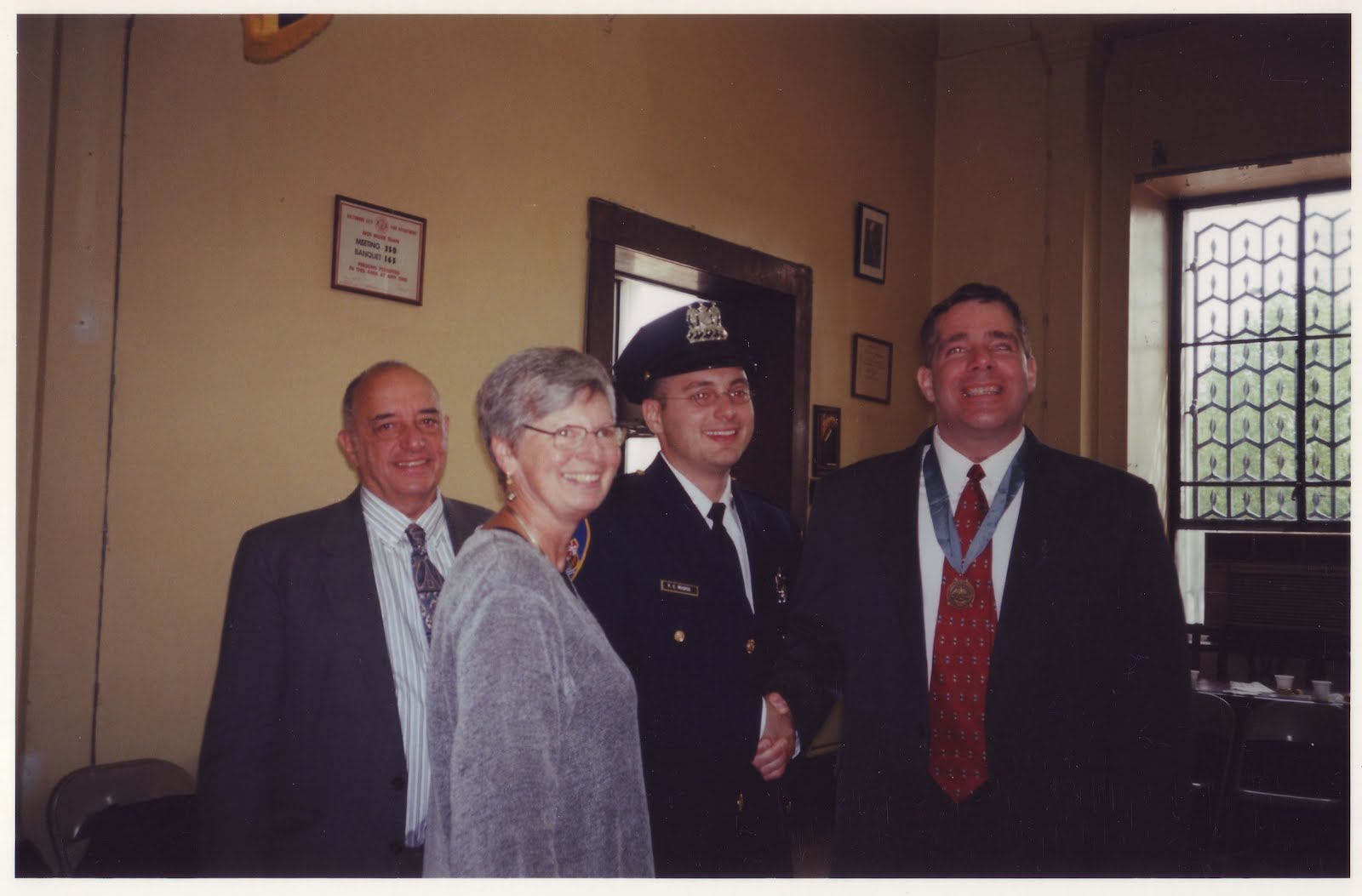
    Here’s me with Agent Cassidy and my parents, on the day of my graduation from the police academy, April 14, 2000.

  • America causes Christian Exodus

    We did so in Iraq. Syria will probably be next. I’m not too confident about Egypt… but that wasn’t our fault. Still, shouldn’t we be more supporting of strong secularleaders?

    I’m not generally one to comment on geo-political religious issues. I’m not really religious, myself. But I do think it’s shame, and strange, that country by country, American presence seems to mark the end of religious communities, usually Christian, that have survived, literally, for millennia.

  • What Kind of Country?

    A very good episode of This American Life. Specifically about Trenton, paying too much tax, paying too little tax, budget cuts, and policing. Notice (what is still denied by many academics) the basic link between cutting police, ineffective policing, and rising crime. Or course it could always be just coincidence. Except it isn’t.

    [thanks to Admiral de Ruiterweg]