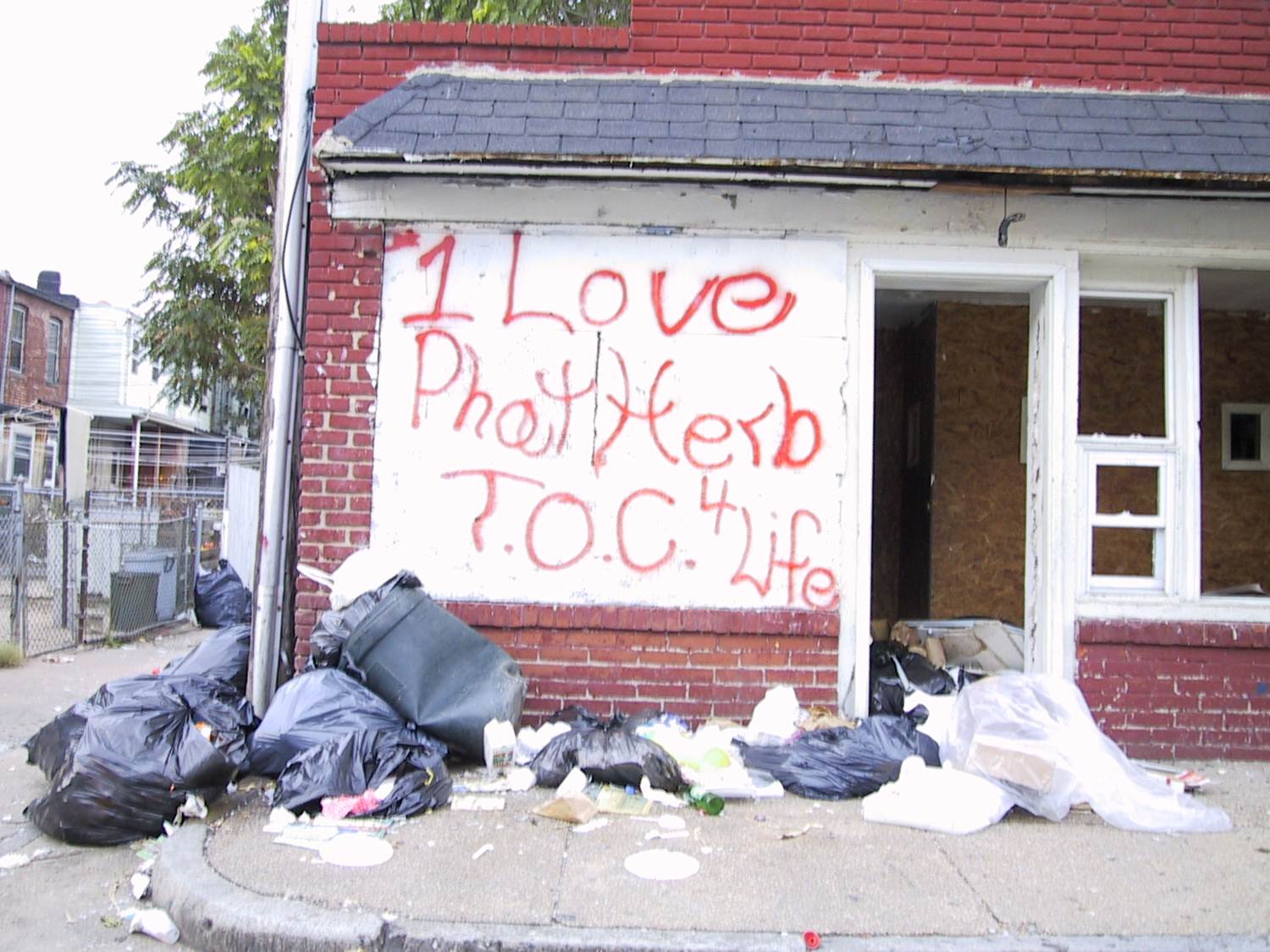
Tag: Baltimore

  • Tough Baltimore arrest

    Tough Baltimore arrest

    Monument and Rose. 325 Post. Cop gets sucker punched trying to take a guy into custody.

    Anybody know if the original 30-1 got away? Was he backing up time? (email me at mail@petermoskos.com if you don’t want to post a public comment.)

    30-2 is lucky he didn’t end up like like “Fat Herb,” 11 years ago.


    And is the term “30-1” still even used among Balto PD? Or was I, a G series, part of the last generation to use it, as we were the last to fill in a box 30-1?

    [thanks to Gotti and LvT for the link. The pic is mine.]

  • Under 200

    In 2011, there were 196 murders in Baltimore, the lowest number since 1977. From the Baltimore Sun:

    The drop extends an overall downward trend in gun violence here since 2007, the year Police Commissioner Frederick H. Bealefeld III took office.

    During the crack-fueled drug wars of the 1990s, killings in the [Eastern] district sometimes topped 80 a year. Last year, there were 27 killings, and only one since Oct. 17 — nothing to brag about and yet a remarkable number for this beleaguered area.

    The new priorities led to a sharp drop in arrests, with less than half as many people arrested last year than the 100,000 locked up in 2005.

  • Like no crab I’ve ever seen

    “Can I take a picture?”

    “No,” said the old fish monger.

    “But I’ve never seen a crab like this.”

    “What do you mean? You never seen a crab?”

    “I’ve seen lots of crabs. But not like this.”

    “How can you not have seen a crab?”

    “How do you cook them? Do you boil or steam them?”

    “Yes, it’s cooked through.”

    “But how do you cook them? Boiled or steamed?”

    “I boil them!”

    “Steamed crabs are better.”

    “Don’t you tell me how to cook crabs! I’ve been cooking fish longer than you’ve been around.

    “I’ve still never seen crabs like this. They’re all big and round.”

    “You must be from the moon, then!” he harumphed. “But go ahead, take a picture.”


    [I’m in England. Regular blogging will resume in February.]

  • Baltimore City’s curfew center

    To round up wandering kids in an effort to combat mobs of roving teens. From the Sun:

    Baltimore’s curfew center began four years ago — a collaborative effort among police, the school system and social services — to get kids off the street and away from potential harm.

    Their work has taken on a new urgency as other cities grapple with so-called “flash robs,” most notably Philadelphia, which moved up its curfew to 9 p.m. in hopes of combating large, roving groups of young people who caused mayhem there.

    Now if only there were a center to pick up mobs of roaming parents.

  • What is wrong the C.J. system

    What is wrong the C.J. system

    There’s very little that strikes me as more absurd than offering or accepting a guilty plea for time served. It represents so much about what’s wrong with the criminal justice system. And that’s a lot.

    If you’re guilty, then it’s a travesty of justice because you get to go home.

    If you’re innocent, it’s an even worse travesty. But you get to go home.

    Snoop from “The Wire” just took such a plea. From the Sun:

    She was sentenced to seven years in prison [for heroin dealing], with all of the time suspended except for the five months she has already served while awaiting trial, most of it spent at home, under electronic monitoring.

    Pearson, 31, explaining her decision to take a deal. She repeatedly said she would have been found “not guilty” at trial, but that she couldn’t wait for the proceeding, which could have been years in coming.

    Now I don’t think she innocent. But that doesn’t matter. Why offer this plea? Because the Office of the State’s Attorney has its own issues. And they want their caseload reduced. And they judge their own stats on guilty pleas.

    What would it take to have a justice system where the accused actually had a timely trial and the guilty actually get punished? We’d need more courtrooms, judges, and lawyers on both sides. That would take money. Lot’s of money. And that’s not going to happen any time soon.

    So we continue with a criminal justice that is dedicated to processing the maximum number of people with as little use of court resources as possible. Mostly it means thousand of people getting caught up in its slow wheels until they accept a plea. Call it what you will, it’s not justice.

  • Twin Cities?

    The current and first issue of the new food magazine Lucky Peach has an article about yakamee in New Orleans. This further supports my belief that Baltimore and New Orleans were siblings separated at birth.

    Yakamee is a crappy Chinese take-out noodle dish. I ordered it once, to the amazement of the woman behind the plexiglas and pretty much every white cop I worked with. It happens to be very soupy, so not good for eating in a cop car. It also just happens to not be very good.

    But yakamee is part of all the various foods in Baltimore that I had never heard of or eaten before I was a cop. In order of deliciousness.

    1) Blue crabs, both steamed and as crab cakes. Now technically I hadheard of crabs, but I’m still including they because they’re so good in Baltimore and such a part of their culture.

    2) Pit beef. Like roast beef, but smoked. If it’s hinting of pink it’s called “rare.”

    3) Lake trout. Famously neither lake nor trout. Also a bit ghetto, but I make no apologies for loving me some fried whiting with hot sauce on white bread.

    4) Yakamee. It’s not good, but interesting in that it can also be the generic name for Chinese take-out. Took me awhile to figure out what the hell the word was and a bit longer what it meant (and I spell it like it sounds, not like it’s written).

    All these go well with Boh.

    And Bull and Oyster Roasts deserve very special mention.

    And I should also point out that Lexington Market has the largest chicken wings I’ve every seen. I think they’re all on steroids.

    Can you tell the annual crab feast is coming up? Cause I’m thinking about food.

  • John McAndrew Sr.

    Western District Officer McAndrew retires after 50 years of service. From the Sun:

    He had no idea that he would carry this passion for 50 years of service. Asked how many police commissioners he had served under, McAndrew smiled, and said: Everyone.

    (anybody know his sequence number!?)

  • These are a few of my favorite things…

    These are a few of my favorite things…

    I stumbled across an Asian grocery store in The Bronx that had some of the feistiest crabs I’ve seen a while. Decent sized, too (for New York). I bought six. I was tempted to let one loose on the subway home, but I resisted. But a good eye would have seen some some of the claws poking through the bag.

    Come here, my pretties…

    [I have Old Bay… too bad I don’t have rock salt]

  • Drug Dealers vs. Business

    Drug Dealers vs. Business

    [I just stumbled across this postfrom 2008 and rather liked it (if I do say so myself). I don’t really remember writing it. And since I don’t remember writing it, I figure you don’t remember reading it! So here it is again:]

    A liquor store in Baltimore is being forced to close because a man was killed there and drug dealers congregate. I’m of mixed feelings. Liquor stores in the ghetto are hardly the most sympathetic businesses. But if they were all shut down, it’s not like the neighborhood’s problems would suddenly disappear.

    It’s a shame there aren’t more locally run business in the ghetto. In many ways, the Eastern District is typical. Here’s a quick, perhaps inaccurate, and certainly unpolitically correct history of business life in the Eastern.

    In the old days, or so I hear, many of the local businesses were run by Jewish people. At least that’s how the story is told on the street. Were they exploitive? Some think so. But, no, I don’t. Are allbusinesses exploitative? I don’t think so. Many of these Jews had grownup in the neighborhood. Many had stayed in the neighborhood when other whites fled. Yes, they were there to make money. But they also spoke English and hired locals to work in their stores. In hindsight, these were the good old days.

    After the riots in the late 1960s, many of these store owners felt betrayed by the anger, left broke by the destruction, and realized that a little profit wasn’t worth their life. A lot of businesses packed up or closed for good.

    Over the next 30 years, more businesses closed. And not an insignificant number of these after the owner got killed in a robbery.

    Today there’s not much left. Monument St is still filled with stores. And there’s a excellent (black owned) produce store that deserves special mention (Leon’s Produce, 1001 N. Washington St.).

    Other stores include laundromats, bars, Chinese takeout (called “yakamee” in Baltimore), and corner stores. The corner stores are now mostly run by Koreans (who are still referred to as “Chinamen”). If the store owners can’t afford a home in the suburbs, they may they live upstairs, in a sort of a castle-like fortress setup.
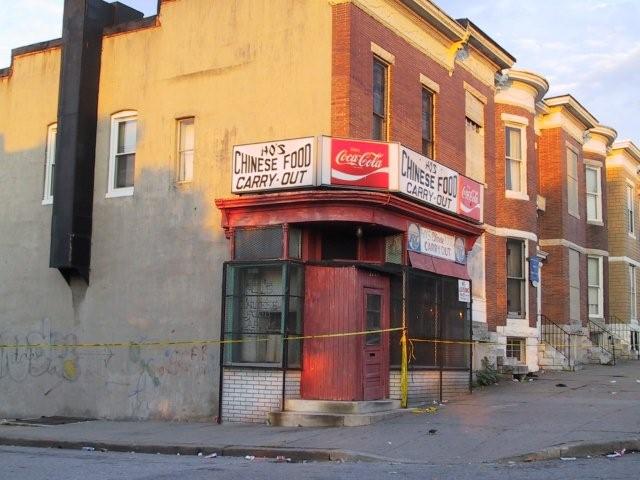

    I can see the causes for resentment on both sides. At it’s worst, think L.A. riots and Koreans guarding their stores with guns. The store owners sit all day behind plexiglas selling overpriced crap. Many don’t speak English. Most hate their customers. And because they’re behind glass and won’t come out, they can’t control what goes on in the lobby of their own store. And unlike the old days, these store owners, by and large, couldn’t care less about the well being of the neighborhood. Still, and this is important to remember, the bigger problem in the neighborhood is too fewstores, not bad store owners. Besides it’s not easy to run a business in the ghetto. That’s why so few people do it. I wouldn’t. If running a store in the ghetto were such an easy way to make money, why don’t you do it?

    Now I don’t know Mr. Yim, the owner of the closed liquor store. But my guess is 1) he felt helpless to control what went on in and around his store, 2) he washelpless to control what went on in and around his store, and 3) he didn’t really care as long as his 1,000 daily customers kept giving him money so he and his family could survive.

    From the story: “More than 300 residents signed a petition in the spring asking the city liquor board not to renew the store’s license…. ‘With those doors locked, [the drug dealers] don’t have a place to hide anymore.’”

    But here’s the problem: with the doors locked, the drug dealers willstill have places to hide. Drug dealers don’t want legitimate stores. Business owners are a pain in their ass. Business don’t want drug dealers scaring customers. Businesses call police… until eventually the business owner gives up.

    For drug dealers, a vacant building is better for business than a store. Vacants don’t attract people who don’t want to buy drugs. Vacants don’t call police. Vacants are good places to hide your stash. You can run away from police through a vacant. You can party and fuck your girl in a vacant.
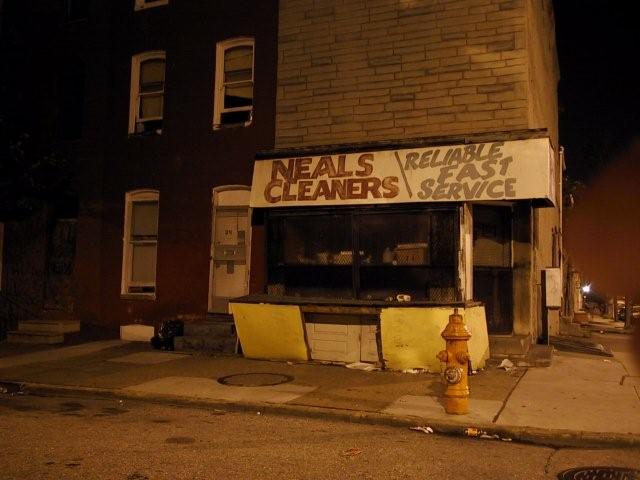

    I was friends with a local man man who ran a corner laundromat. From behind the glass we’d drink coffee and talk about politics and race and I’d chuckle at the junkies who came in and paid 50 cents for a cup of sugar with a little coffee. The owner believed he was doing good. He was. If he closed, how would the old people on the block do their laundry? He was right. He also closed around 2pm because it was too dangerous after that.
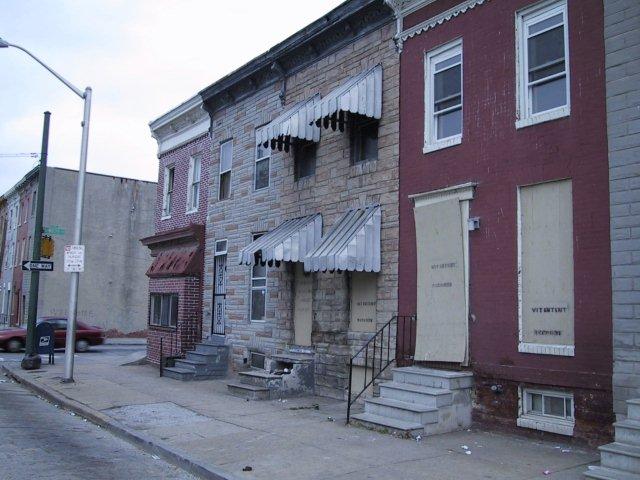

    His corner was a bad drug corner. The worst we had in Sector 2. And that’s saying a lot. For a while he called police because of drug dealing on his corner. When police pulled up, the dealers would run into his store (and cause trouble). After a while, police became convinced that hewas a drug dealer. Because whenever police pulled up, there were drug dealers in his store. There’s a certain logic to that, except it’s wrong.

    As much as I can guarantee anything, I can guarantee that this man was not dealing drugs. But what was he to do? He stopped calling police and continued to yell at dealers when they came in his store. There’s nothing the dealers would have liked more than him closing for good. And that’s why it’s sad whenever a business closes. Every time a store closes, the drug dealers win. And by and large, the drug dealers have been winning a lot.