Tag: Baltimore

  • Eastern District Commander Cleared

    Justin Fenton reportsin the Sun:

    A city police commander has been reinstated for active duty after being cleared of wrongdoing in a probe into text messages he exchanged with a community activist who was being sought on a warrant and later allegedly stabbed his wife to death.

    The Police Department intends to address “procedural issues” with how the warrant was handled. It did not go through normal channels; instead of sending it to a special domestic violence unit, Eastern District officers who knew Cleaven Williams tried to serve it themselves and gave him the chance to turn himself in.

    If you have the guy’s phone number and can get him to turn himself in, isn’t that worth a try? Seems like a better way to handle a warrant than busting down a door at 5am. And no, it’s not rare for community activists to have a direct line to the district commander.

  • The End of a Glorious Tradition?

    Now I haven’t witnessed this first hand, but it’s no great secret in the police world that every now and then somebody very troublesome may be picked up and dropped off far from home. Alas, this glorious police tradition may be on the way out, at least in Baltimore. Such is the usual fate in the light of media publicity.

    This gambit–I don’t know what it’s called, but there’s got to be some good slang. I propose “going on a field trip. This gambit has probably been on the decline for a long time, and certainly at least since the spread of cell phones. But the basic concept, a long lost late-night walk home, is a classic.

    Peter Hermann reports:

    And we still have to figure out why two city officers on a violent crime task force drove a teen-ager to a park in Howard County and left him there without shoes and his cell phone. … I’m hearing he was [a drug lookout and] warning friends the cops were coming.

    Regardless, cops can’t abduct citizens and leave them places…. If he’s really obstructing, then arrest him…. Both officers are under investigation. It boggles the mind.

    Not really. More mind boggling is how Hermann, a smart and savvy crime-beat reporter, could argue that arresting a lookout is a valid option. It’s hard to imagine a lookout even being chargedin CBIF (must less prosecuted). You think the state’s attorney will take an obstruction-of-justice case based on a report that says a guy shouted “hootie-hoo” every time po-po rolled by? Have you not heard of the 1st Amendment? Not to mention tourette syndrome.

    There’s nothing police can do. Does that justify abduction? Not usually. But under extenuating circumstances, I’m willing to tolerate it and laugh about it later. I’ve been there. It’s too easy to understand officers’ frustration.

    If abduction of lookouts isn’t the answer–and admittedly is probably isn’t–the only realistic alternative is to do nothing. Them’s the facts in the war on drugs.

  • Balto Cops Bust Wrong Door, Leave it Hanging

    My NYPD students tell me that New York doesget the doors they bust down fixed. Not in Baltimore.

    Police bust down your door in the course of duty? It’s on you. Even if it turns out you’re innocent.

    Peter Hermann writes:

    First city cops bust down the wrong door on a drug raid. Then, when Andrew Leonard tries to get the city to put his door back, the city tells him to forget about it — Baltimore police may have the wrong house but they had the right address on the warrant. So the raid team didn’t make the mistake; the person who wrote the warrant did. Makes no difference as far as city liability goes.

    But Mr. Leonard’s problems don’t end there. After he tried but failed to get public works to pick up his broken door and throw it away, a city in

    [Update]

  • Witness Intimidation

    Witness intimidation is nothing new. But it usually doesn’t happen from the defendant to the witness while the witness is on the stand.

    Melissa Harris writes in the Sun:

    On the 10th day of the 17-day trial, as the lawyers huddled at the bench with their backs turned, the jury watched the 29-year-old defendant lock eyes with the witness, hold up a legal document with one hand, pump a thumbs-down gesture with the other and warn, “I know your name. You’re going down. You’re going down.”

    Fear instantly gripped the face of the witness, who muttered in disbelief, and within earshot of jurors, “Did he just threaten me?”

  • 37 Arrests, then a Killing

    A witness identified Anderson, of the 4300 block of Seminole Ave., as one of the kidnappers….

    Anderson has been arrested and charged at least 37 times, mostly with drug possession charges…. Most were dropped by prosecutors before they reached trial.

    He was also charged three times with attempted murder and five times with handgun charges, dropped each time by prosecutors. He was found guilty of various charges in nine cases, never sentenced to more than two years in jail and typically receiving suspended sentences.

    Waddell [the victim] had a long criminal record as well. He was indicted in January 2008 on five counts of drug possession, which were dropped March 31, three weeks before he was killed.

    Seems like the Baltimore Police were doing their job. Can the State’s Attorney’s Office say the same?

    Justin Fenton wrote the story in the Sun.

  • Balto Patrol Short Handed

    Peter Hermann reports in the Baltimore Sun.

    Top brass always says patrol is the backbone of the police department. They lie. Roughly half of the police department is assigned to the patrol. When you need officers, you take them from patrol. Backbone my ass! What kind of organization knocks out its own vertebrae?

    When officers are taken from patrol, of course patrol suffers. Fully staffed patrol would be able to better respond to calls. No doubt. Without enough officers, response time increases and patrol officer simply don’t have the time to do the job they could and want to do.

    Poaching from patrol is bad in other ways, too. It kills morale. After the department is done poaching from patrol, you get a “temporary manpower shortage.” A permanenttemporary manpower shortages. That means you can’t get a day off. Or days off get canceled. Then officers have to call in sick to reclaim the day off. You can get in serious trouble for that. But you can get in even more serious trouble if you can’t take your planned wedding anniversary cruise you’ve paid for and for which you’ve had days-off approved for 11 months in advance.

    I’m of the belief that car patrol simply doesn’t serve much purpose at all. The Kansas City Preventive Patrol Experiment proved it… but didn’t change anything. Crime wouldn’t go down even with fully staffed car patrol.

    Better to get the police out of cars and end the charade of rapid response to every call to 911. The problem is most–not many–most calls to 911 and 311 are bullshit: calls to non-existent addresses, drug dealers reporting a shooting to force an officer to move away, kids playing on phones, and calls that absolutely should have nothing to do with police (“my daughter doesn’t want to go to school” or “my boyfriend is putting his feet in my hair”).

    The majority of what’s left is simply not time sensitive.

    In the Eastern District, drug calls are a quarter of all calls. Add drug-related calls and you’ve got about half of the 113,000 calls for service per year. Clearly car patrol hasn’t solved the drug problem. Calling 911 about yo-boys slinging on drug corner does not tell the post officer anything he or she doesn’t know.

    Serious crimes? Assaults by shooting are 0.3% of all calls for service. Same for assault by cutting. Rape calls (most of which do not involve rape) are 0.1% of all calls. Carjacking? 0.04% of all calls. Aggravated assaults? 1.4%

    By comparison, kids calling 911 and hanging up is 6% of all calls. False alarms are 8% of all calls. I wrote about it here for the academic journal Law Enforcement Executive Forum. Chapter Five of Cop in the Hood says much the same thing but in a much more interesting way.

    It would be better to get rid of 911 or at least the lie that every call for service will be dealt with promptly. As it is now, even for real issues, police normally arrive after the fact and are left to pick up the pieces and write a report. Better to have officers walking or biking the beat able but not required to answer every request for police service. This kind of patrol could actually preventcrime and increase public satisfaction.

    Rapid Response should be a division separate from patrol. A few officers in cars could serve as backup and be assigned to those calls in which police really are actually needed right there and then. But these calls are few and far between. And if it’s a bullshit call? Then take a number and we’ll get to it when we can. The promise of car patrol and the illusion of rapid response is not worth the resources of half the police department.
  • Oh, Baltimore!

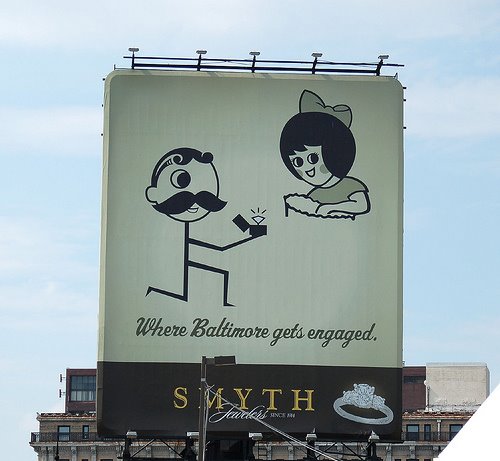
    Oh, Baltimore!

    Feds Say Utz Potato Chip Stand at Baltimore’s Lexington Market Was Used to Sell Guns.

    And it looks like The Greek is behind it, according to the story by Van Smith and Chris Landers in the Baltimore City Paper.

    I wonder if this means the wedding is off?Or at least of the shotgun variety.

  • Indictments in Baltimore

    Three officers, two retired, one of whom I know and like, are indicted five years after an incident. Gimme a break.

  • Gangsta Rap, Yo-Boys, and B-more.

    So I’m trying to write and Schoolly-D’s “A Gangster Story” comes on. I hear him say “B-more” and “yo-boy” and perk up.

    I’ve always liked slang and wondered about the term “yo-boy” because it’s so common in Baltimore’s ‘hood but I’ve never heard it outside of Baltimore (what’s a “yo-boy?” You gotta read my book. You have, right? If not, here’s a useful link to Amazon.com so you can buy Cop in the Hood). According to Schoolly, “yo-boy” was known to him in Philadelphia and used at least as far back as 1985. And yes, surprisingly(?) gangsta rap owes a bit of its existence to Charm City.

    Get schooled by Schoolly:

    I think it’s about time that we discuss, know what I’m saying, gangsta rap. The true story of gangsta rap, where it come from, actually. Settle down now. Roll up something. This is how it went, you know:

    Back in 1985 I made this song called PSK, right? That’s a bad mother fucker, know what I’m saying. Am now, too. Shiit.

    You know, I mean, this reporter fromSpinMagazine, right? He was doing this article on these little young gangstas down in B-more, you know what I mean, called the yo-boys. So, you know, he drove down there for the weekend to do this little piece.

    But all weekend long, and shit, right, they kept playing this song: “Boom Platt Boom Platt Boom Platt.” Right? Know what I’m saying? … All weekend long. What the fuck was that song? They was like, what? That was my man, Schoolly D, up there in Phili, man, shit, nigger (you know how a nigger says, talking shit).

    He goes back up to New York City and he’s doing this story. And he still can’t get this song out his head and shit. “Boom Platt Boom Platt.”

    So he starts thinking it, right, you know: Pistols, cheeba, cars, gold, bitches, fast money, the fast life. That was that that gangsta life and shit, man. Shit. Know what I’m saying? Ganstas, gangtsa music, rap. He put all that shit together and came up with the term “Gangsta Rap.”

    So, you know what I mean, that was when we first heard gangsta rap from that song PSK I did in ’85. And it’s still alive today.

    I’ve figured out that that Spinarticle is the 1986 piece by Barry Michael Cooper, “In Cold Blood: The Baltimore Teen Murders.”

    I hadn’t heard of Mr. Cooper. I should have. He’s still active and lives in Baltimore. Here’s a interesting interview of Barry Michael Cooper where he explains, among other things, how “crack made hip-hop very corporate.”

    Anybody got a copy of that Spin article I can read?

  • Shoe-Leather Research

    It’s a lazy journalist and an incompetent academic who writes a story based on the anecdotes of cab drivers, bartenders, and shoe shiners. But…

    I was getting my shoes shined Friday afternoon in Baltimore’s Penn Station and the shoe shiner and I were chatting. He was a black man, a bit older than me. Baltimore born and bred. West Side.

    Snowing in New York, I said. Crazy.

    He has family upstate.

    No, New York City.

    Snowing in the city? Crazy. Upstate is one thing.

    Pretty bleak upstate.

    Too quiet there, he said. I’m a city man.

    Me too.

    He quoted something out of the Bible. Kind of lost me there.

    I asked him if things were getting better or worse in Baltimore.

    “You want what you want to hear or you want me to be honest?” He looked me in the eyes and said the truth: “It’s the same as it ever was.”

    He mentioned that he had a few other stands in other locations, too. But it wasn’t easy to expand his business.

    “Why?” I asked, thinking of the poor economy.

    “I can’t find any workers.”

    “Really? But there’s lots of guys standing on the corner.” This was a leading question because I knew the answer.

    “Yeah,” he said, “But of them kids have any work ethic.”

    All he wanted was somebody willing to show up on time every day and work. And he couldn’t find it.

    I mentioned that you won’t get rich shining shoes, but it’s honest work. My grandfather shined shoes. His grandfather taught him the value of honest work. Honest work. “That it is,” he said, “and it keeps the lights from flickering. Know what I mean? It pays the bills.”