Tag: Baltimore

  • Baltimore To End Year With Fewest Murders In Two Decades

    Justin Fenton writes in the Sun.

    This is great news. But one thing is very curious:

    The city’s Western District, for example, where nearly 90 people were killed in 1992, recorded 23 homicides in 2008. It has not recorded fewer than 32 homicides in a year since at least 1970.

    But the Western District is also emblematic of the past year’s uneven results: While it recorded the largest drop in homicides of any district, shootings rose and robberies increased by 37 percent.

    That just don’t make sense. I can’t figure it out. I hope it doesn’t end up like in The Wire, with all the bodies found in vacants.

    But in the meantime, kudos to the BPD.

  • Crack House

    I first published this a year ago when nobody read my blog. It’s worth a rehash.

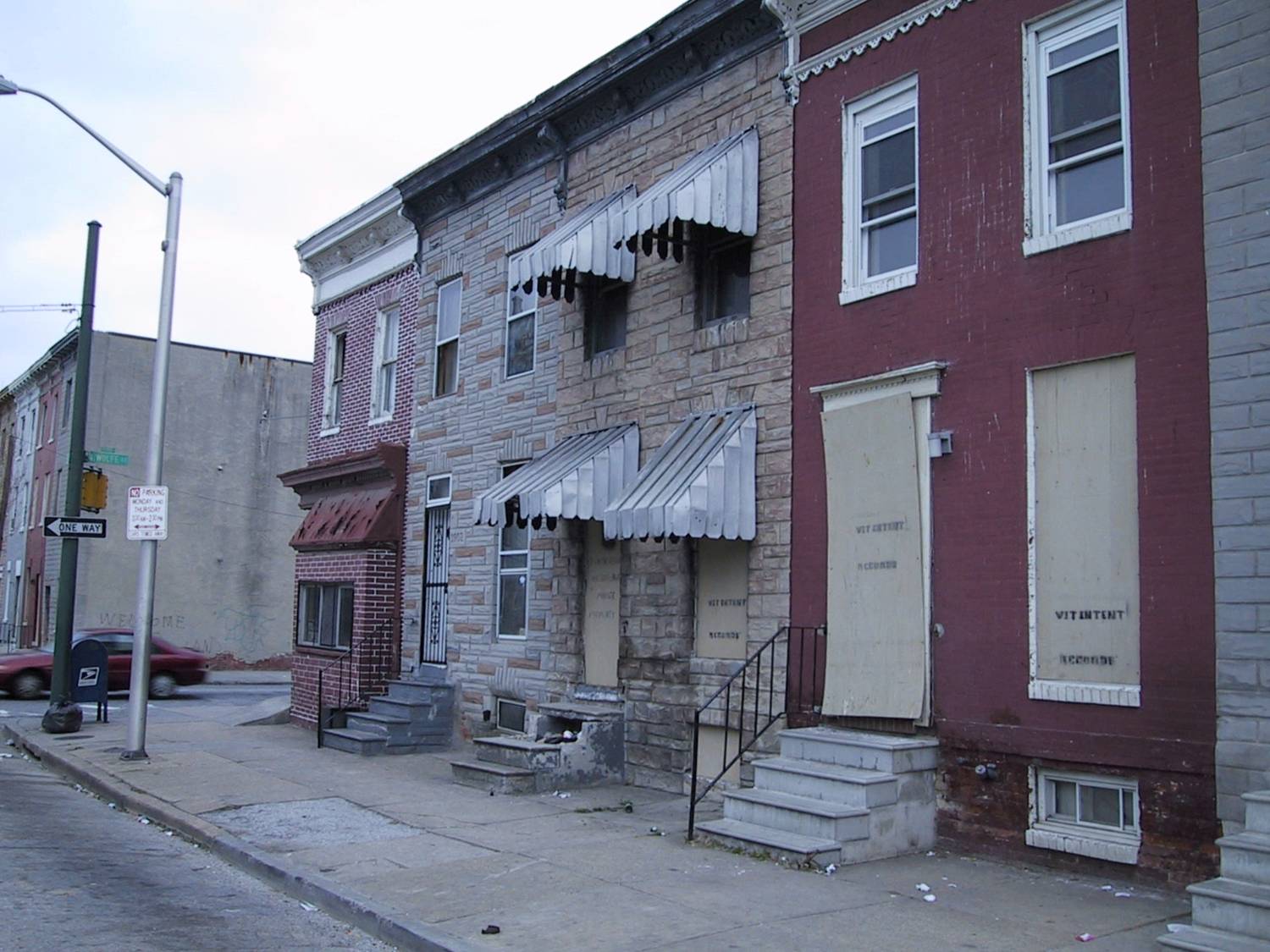
    #1) 1900 Block of E Eager. 1906 E Eager is the third house (with awning) from Mr. George’s corner laundromat. Two short blocks North of Johns Hopkins Hospital, this corner (Wolfe and Eager) is one of the “hottest” (but hardly the only) drug corners in the neighborhood, heroin and crack are sold around the clock, rain or shine. Most of the customers are locals, but a conspicuous minority of whites drive in from the poor suburbs looking for the purer heroin found in the ghetto. This neighborhood, built around the turn of the century and featuring typical Baltimore rowhomes, formstone, and marble stoops, was all white until the 1950s, middle class until the 70s and 80s, now it is mostly vacant, all black, and very poor. Hopkins and city own most of the property. Hopkins has since torn down most of this area.
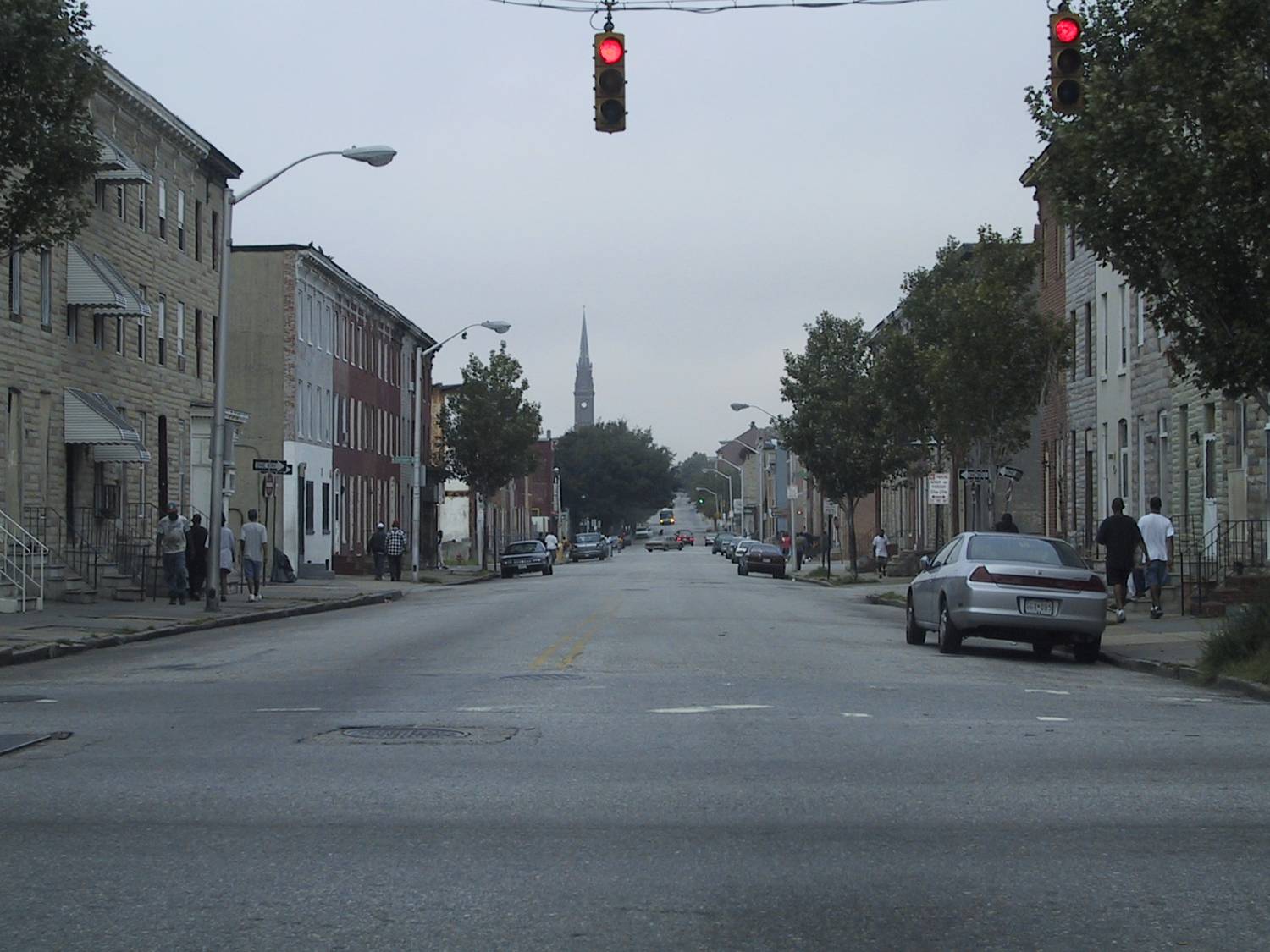
    #2) The corner looks deserted. It is just 7 in the morning. But a few moments earlier, there were dozens of people roaming about. But a funny thing happens when you part a police car in the middle of the intersection, turn off the motor (otherwise the picture is blurry), and take a picture. People scatter. Note how everybody is walking away. I didn’t take in personally.
    #3) Approaching the rear of 1906 E Eager from N Chapel St. I was looking for a location to observe drug sailes on the corner and out of one house in particular.
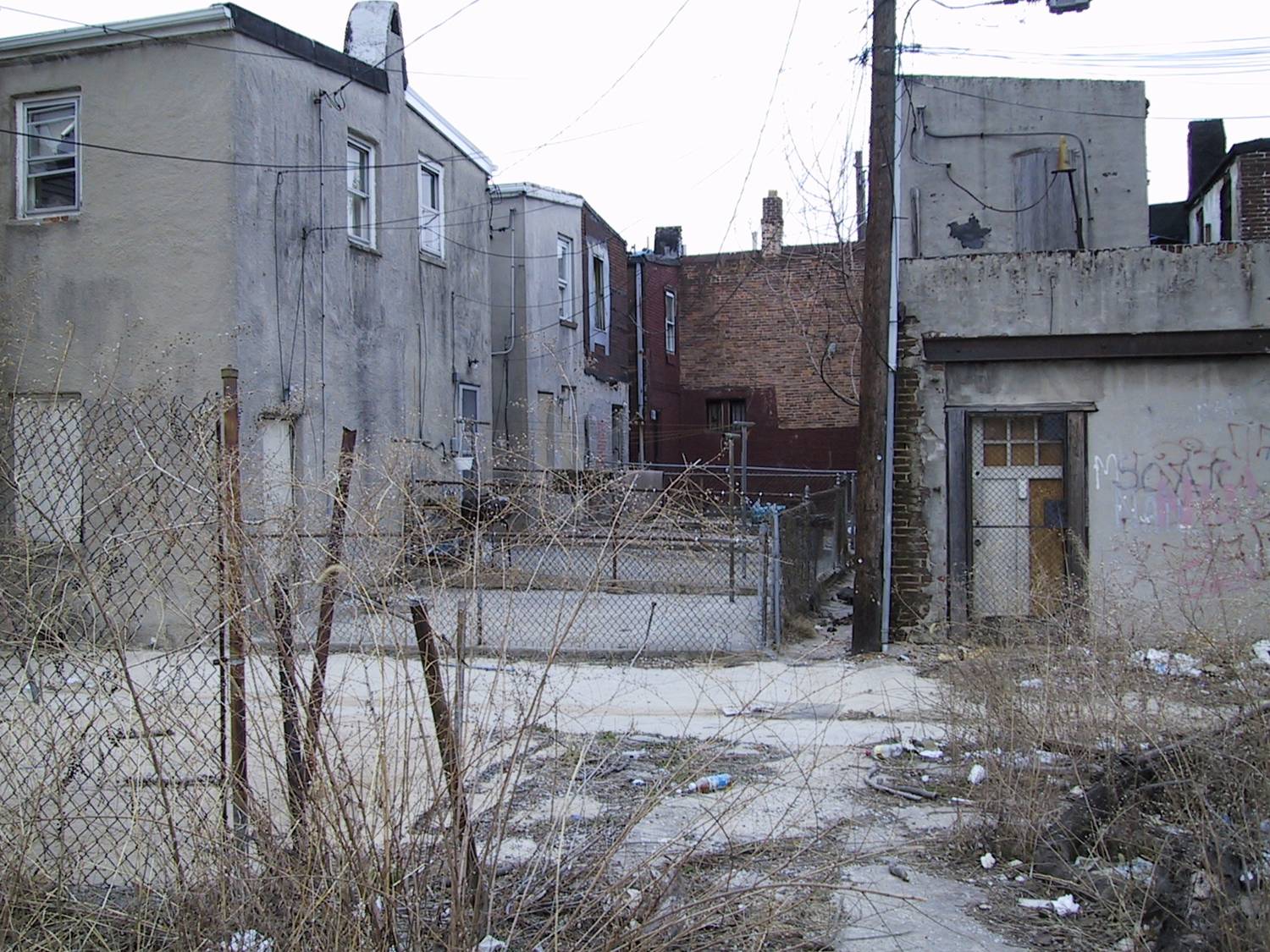
    #4) Most vacants are boarded up to prevent junkies from entering, or filled with too much trash and damage to let one safely enter. The Rear entrance of 1906 E Eager is wide open. The first, time, on official police business, I went in alone. The second time, to take pictures, I brought along a partner, just to be safe.
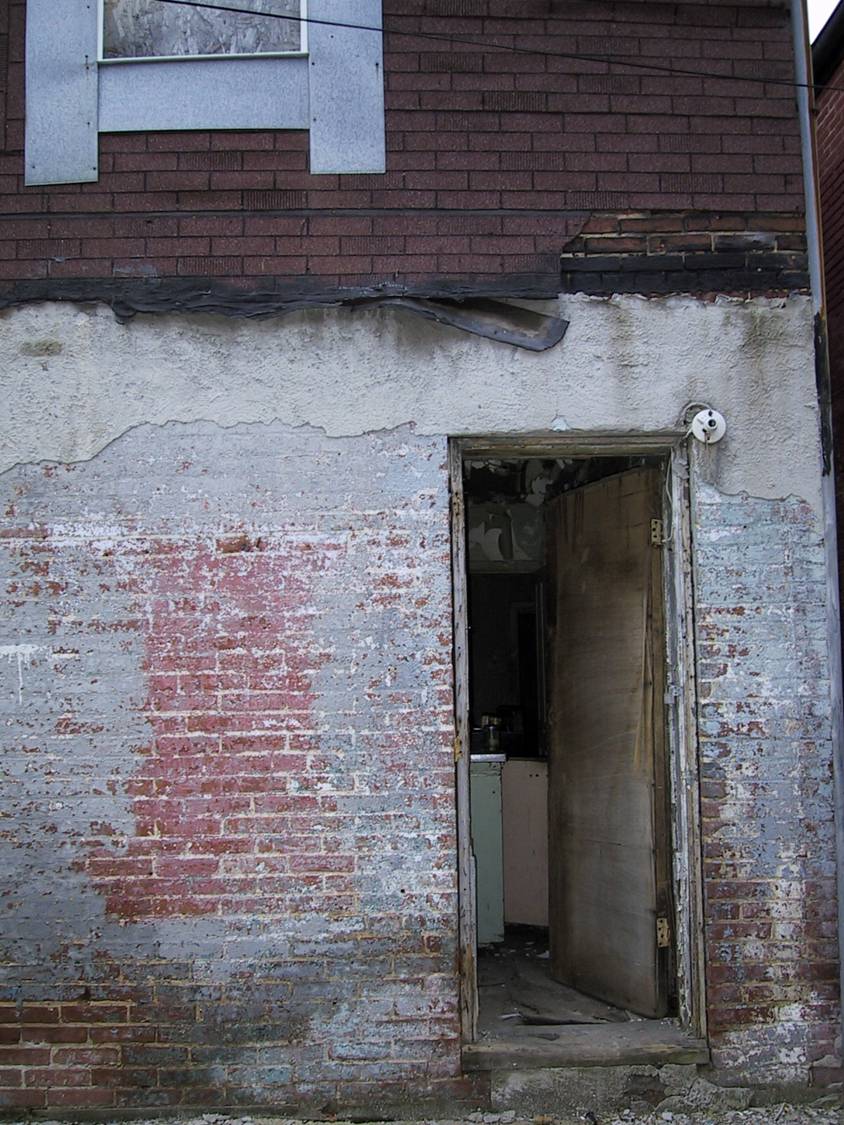
    #5) The rear room on the first floor is what used to be the kitchen. In the Northeast corner are old appliances, partially stripped and peeling lead paint, and remnants of alpine wallpaper.
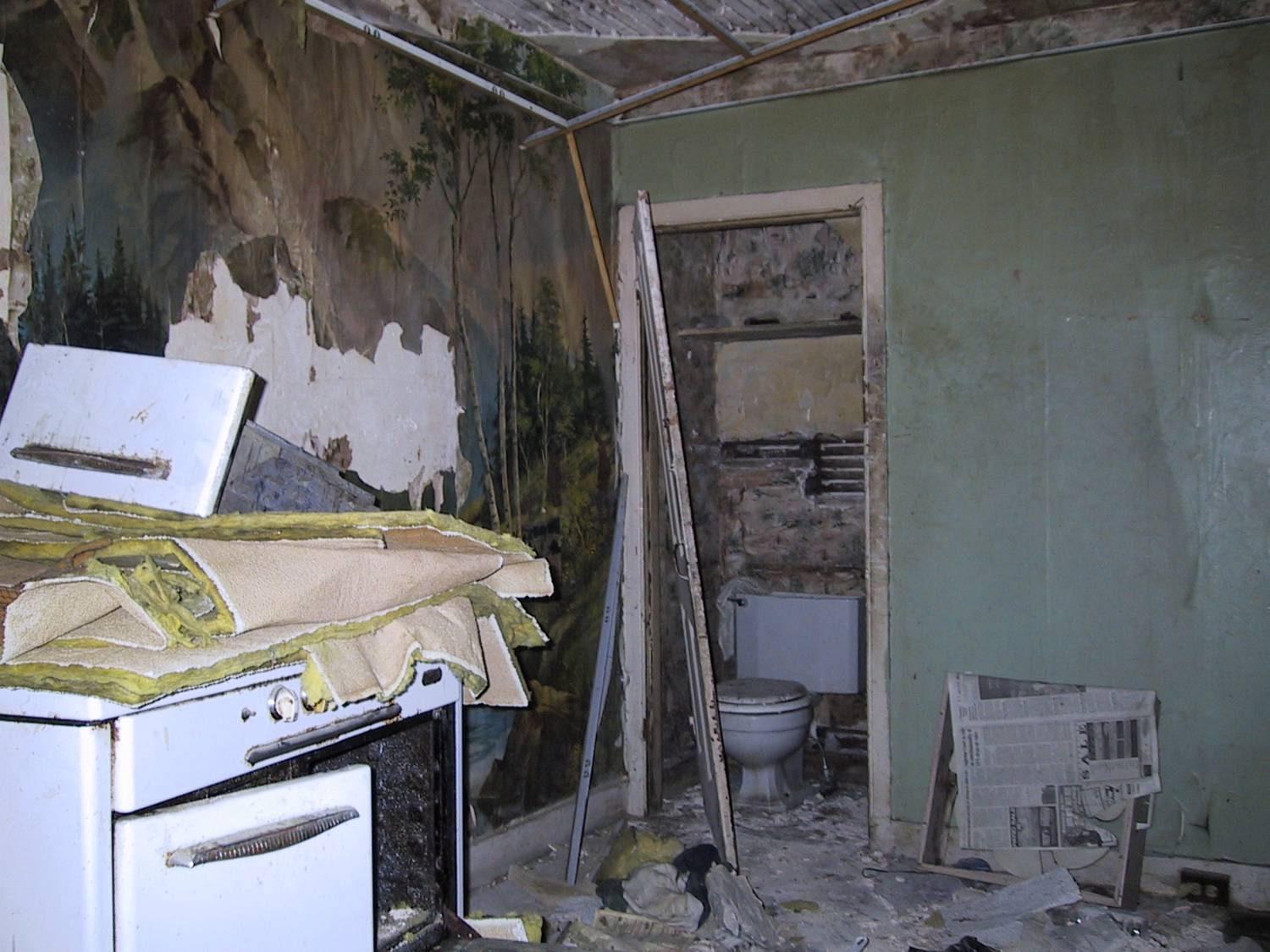
    #6) Another view of the alpine wallpaper
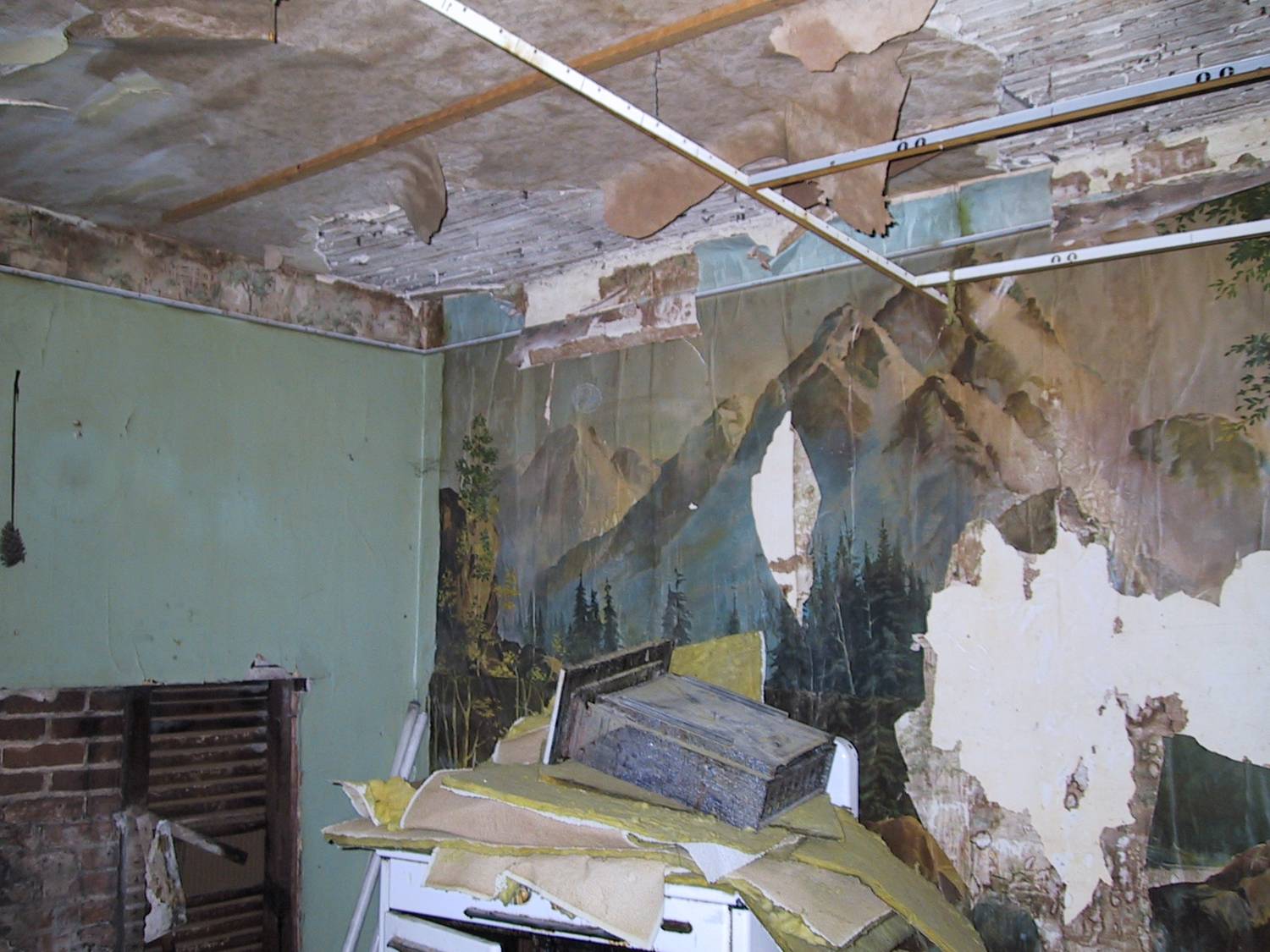
    #7) Looking Southwest in the kitchen, a few more appliances.
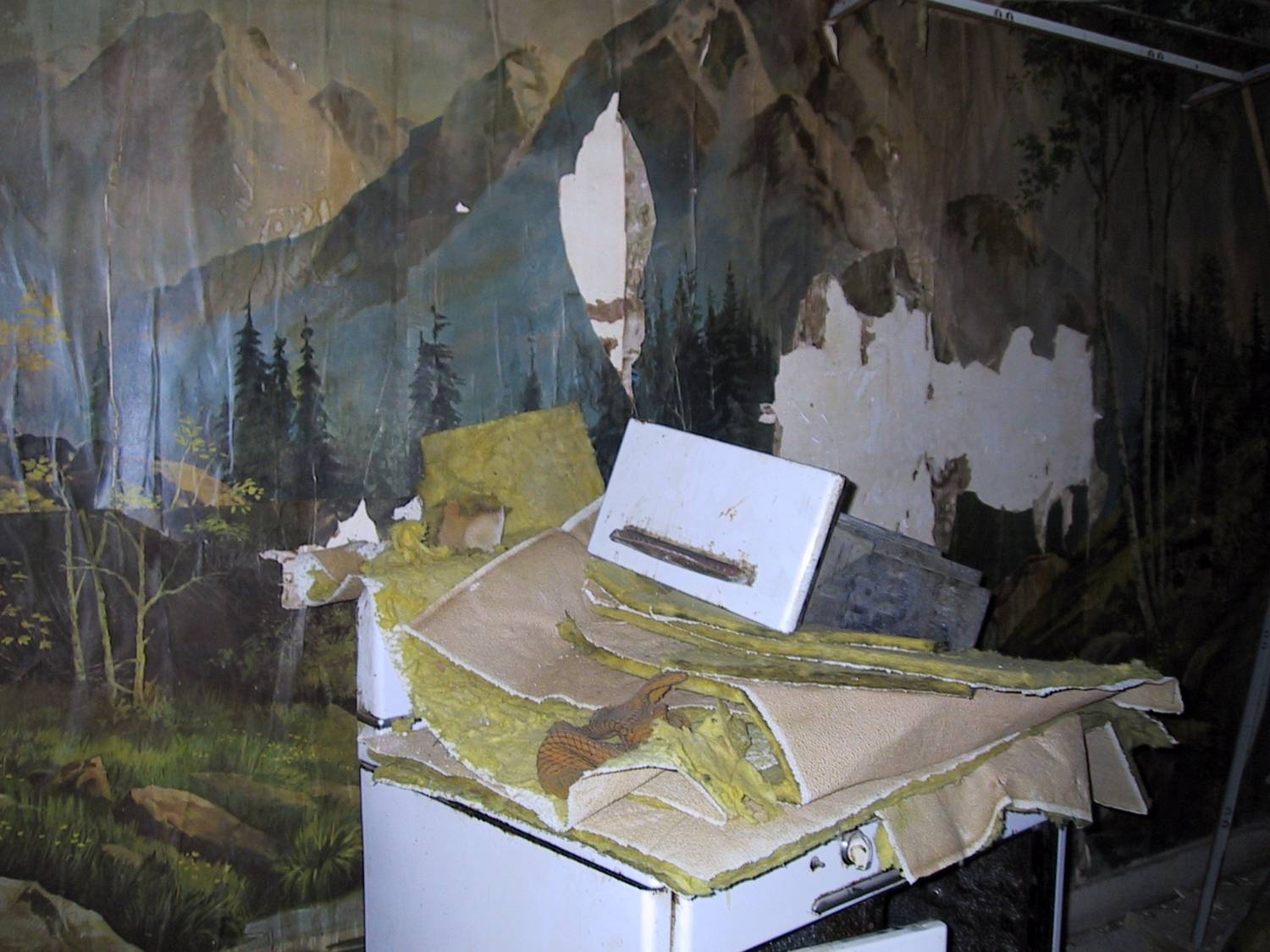
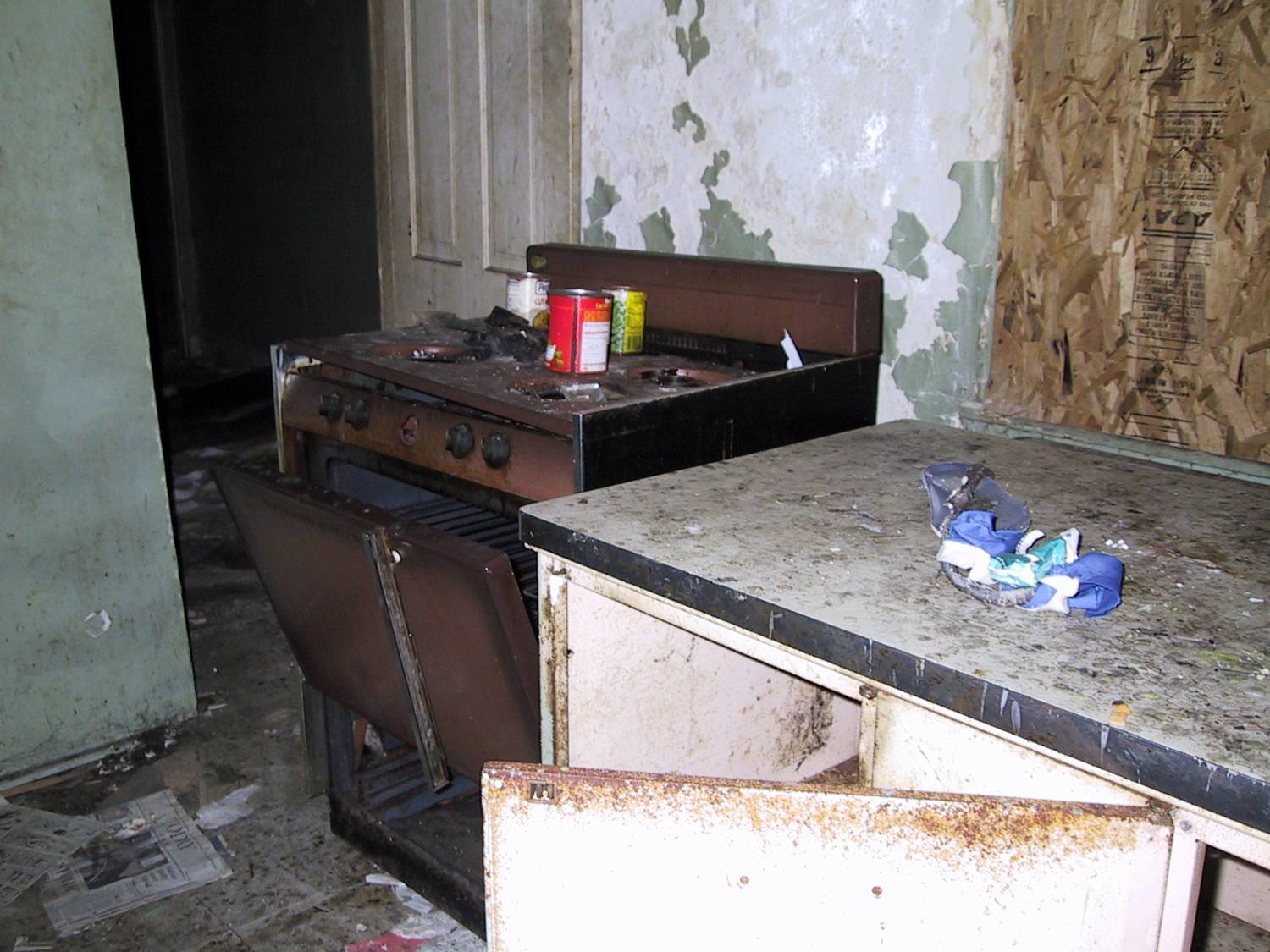
    #8) The Southeast corner of the kitchen. The iron stove top grates have long been sold for scrap. Almost all the metal has been.
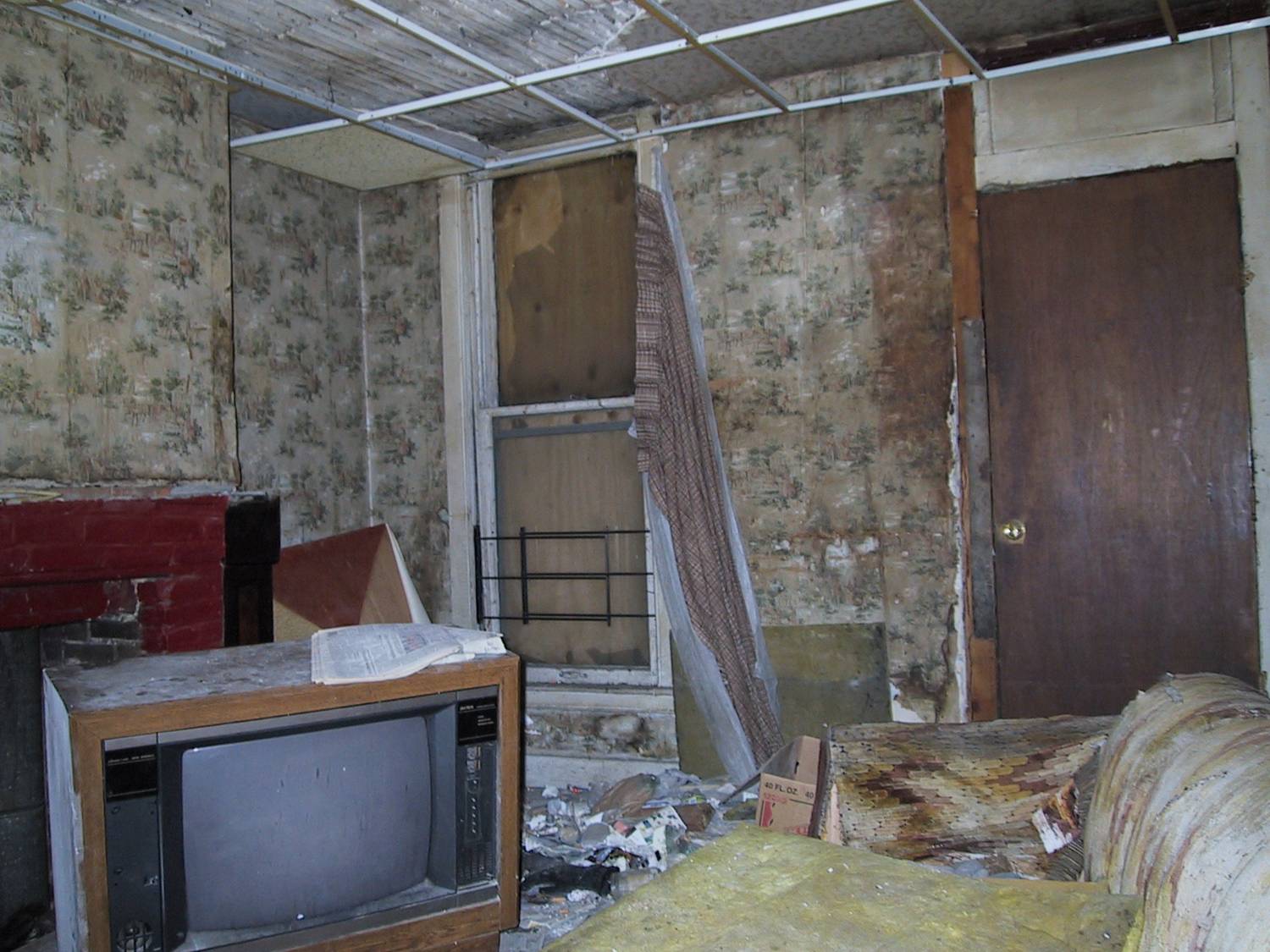
    #9) The front room is the living room. A TV and couch remain. Makes me think the home was occupied into the 1990s. The front door is on the right. It’s interesting to me that a big color TV, once somebody’s prized possession, is no longer worth anything.
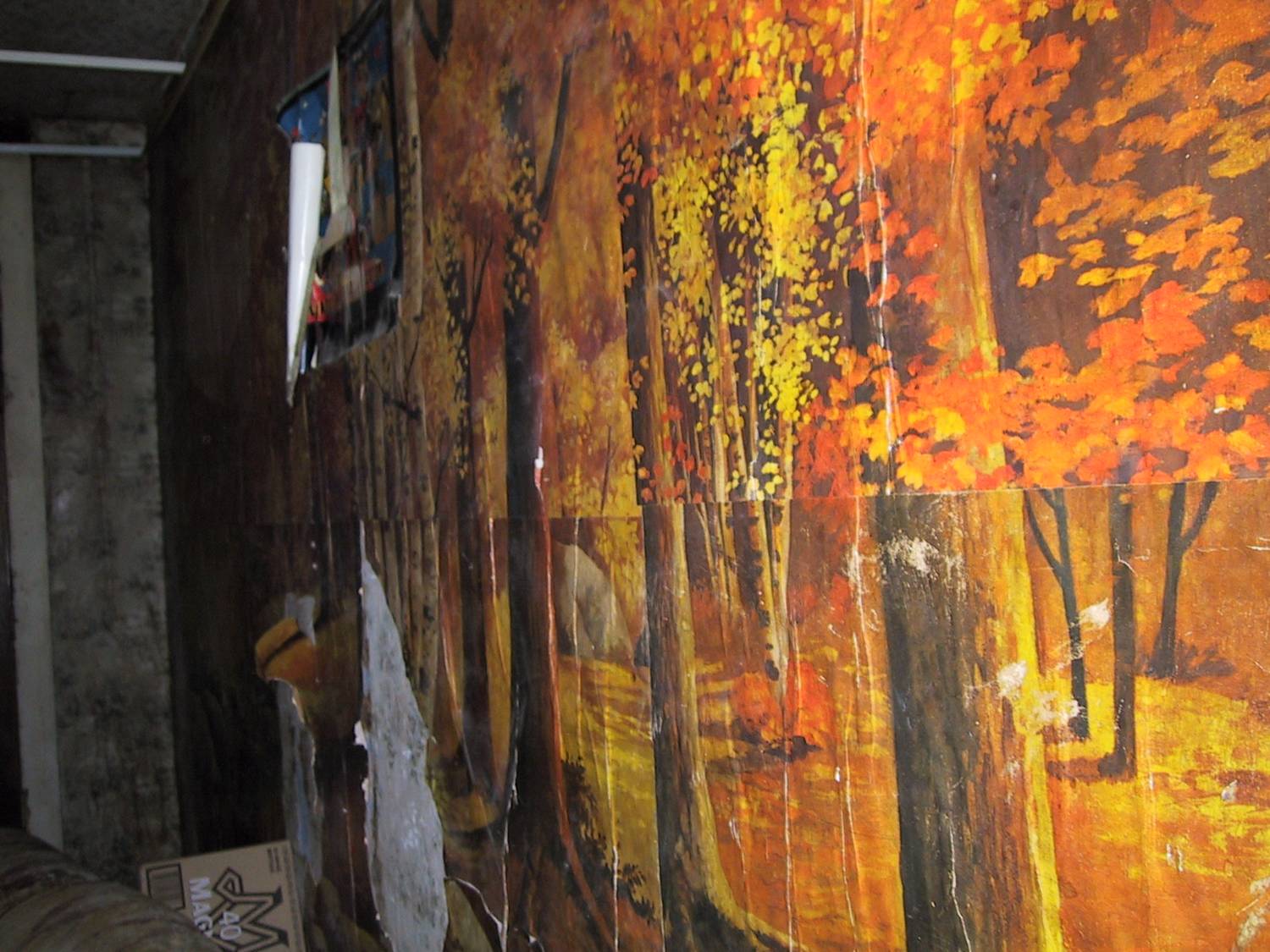
    #10) The front door is on the left. Vivid woodland wallpaper remains.
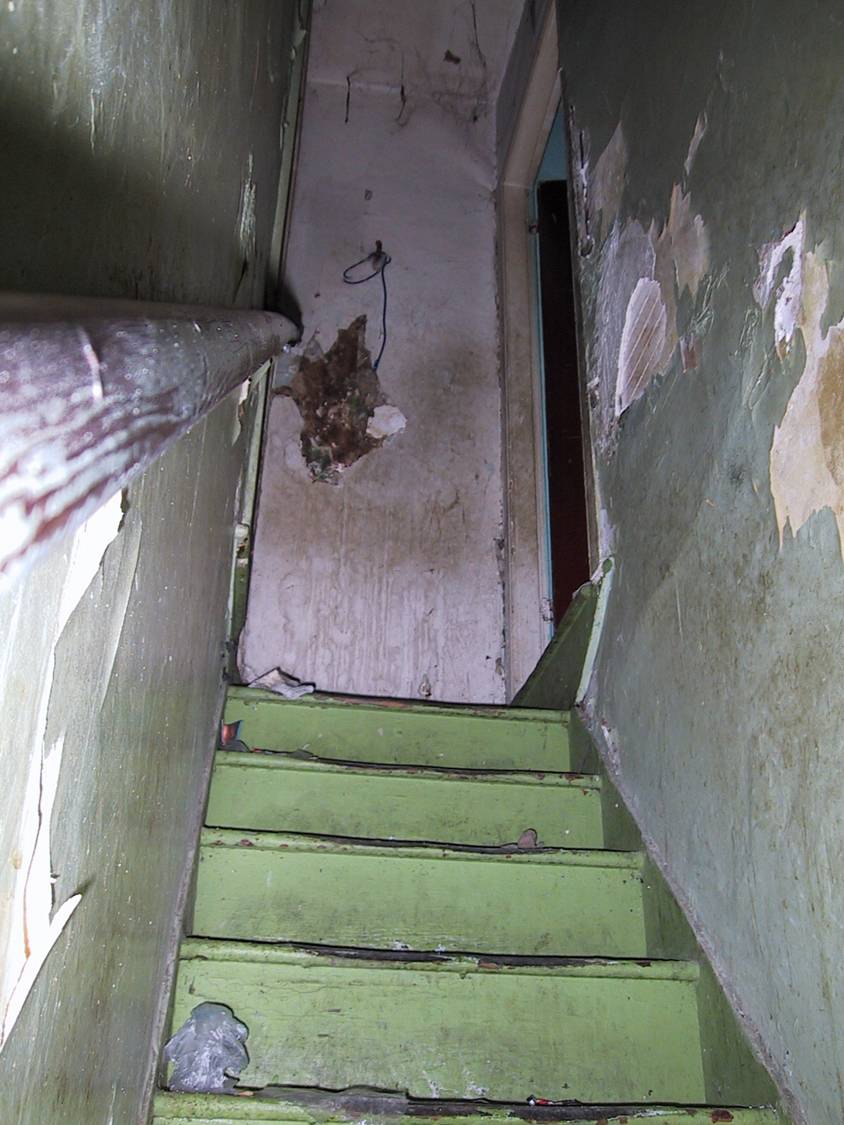
    #11) Looking up the staircase between the rooms. One of the stairs is rotted through, but the rest are in pretty good shape. This is a typical staircase for a rowhome. It’s horrible for police. Often there’s no handrail, and you can easily be pushed down. At the top, suspects could be in either or both directions. They don’t teach you about this in the police academy.
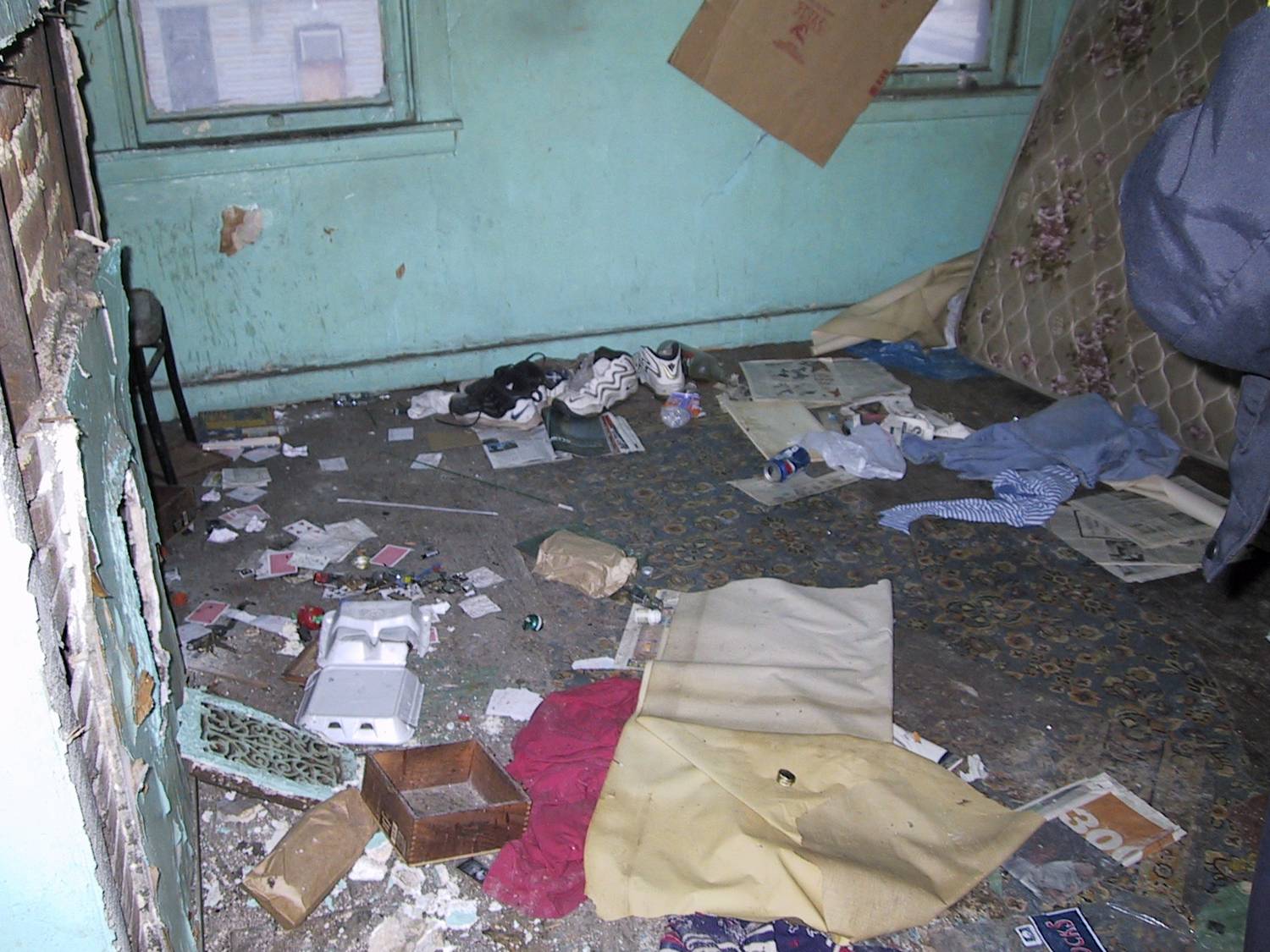
    #12) 2nd floor front room. Nice windows for surveillance of the dealers katty-corner across Wolfe St. Otherwise trash, some drug paraphernalia, a mattress against the wall, two pairs of shoes, and a nicely patterned linoleum floor remain.
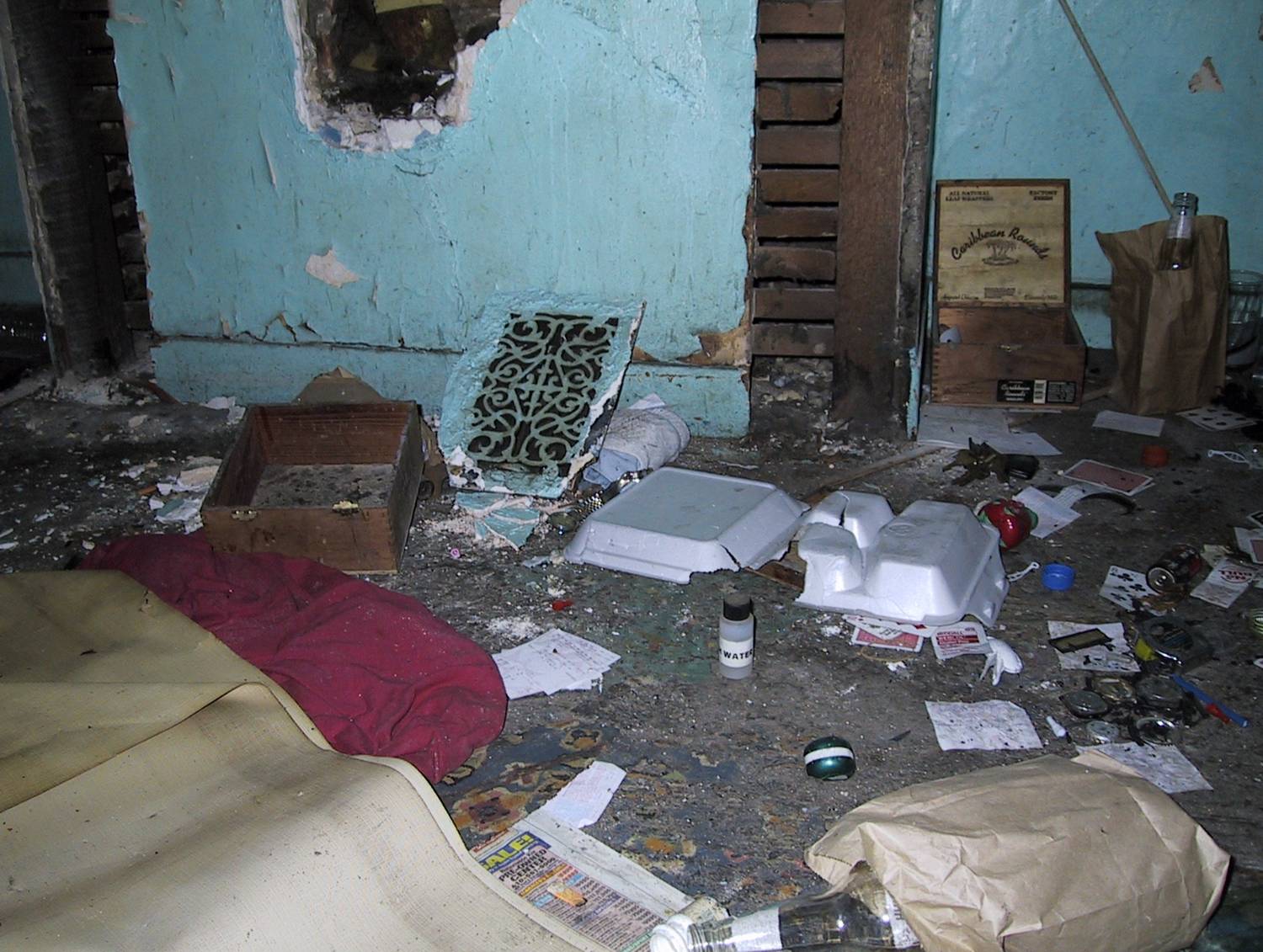
    #13) Looking East in the upstairs front room. A nice old heating grate, removed from the wall, hasn’t been taken to sell for scrap. A small water bottle (nicely labeled “water”) is on the floor. This water would be mixed with heroin and heated with lighter in a metal bottle cap from a 40oz bottle of malt liquor. The mixture is then injected. The only thing is these pictures I manipulated is the water bottle. I turned it so I could photograph the word, “water.” I love how it’s neatly labeled.
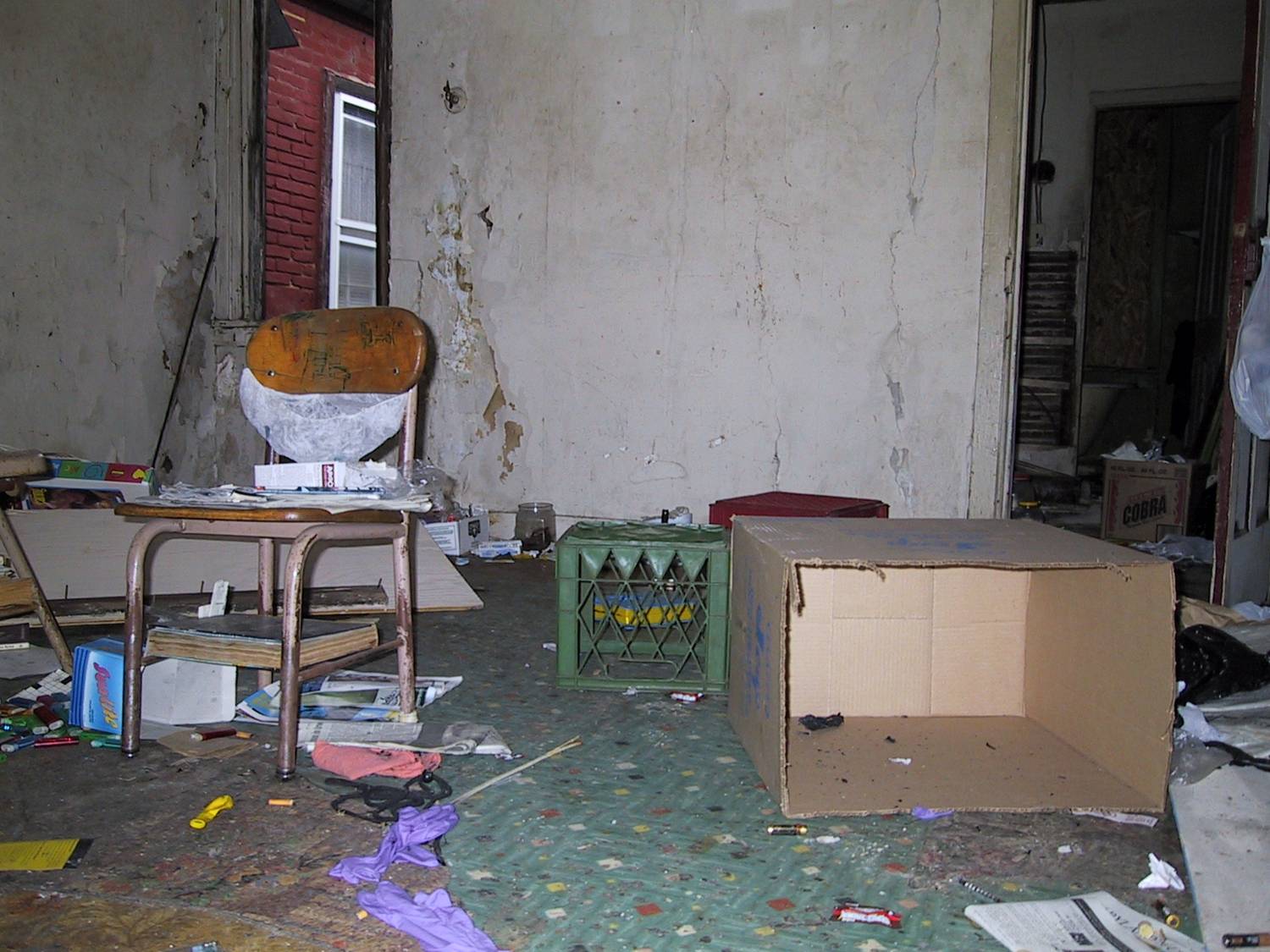
    #14) Rear room second floor. View looking rear from the stairs. Two layers of floor cover are visible, along with purple latex gloves, and a black tourniquet to make veins bulge for easier injection. An empty container of cornstarch is on the chair. Cornstarch can be put into empty crack vials and repackaged as “burn,” or fake drugs to sell for a quick buck, mostly to whites coming into the neighborhood. Some of these whites then call the police and tell us they were robbed (always of $10 or $20). They don’t get much sympathy. Locals would know not to buy from local junkies. But selling burn is not without risk as selling burn to the wrong person can get you beat up or killed.
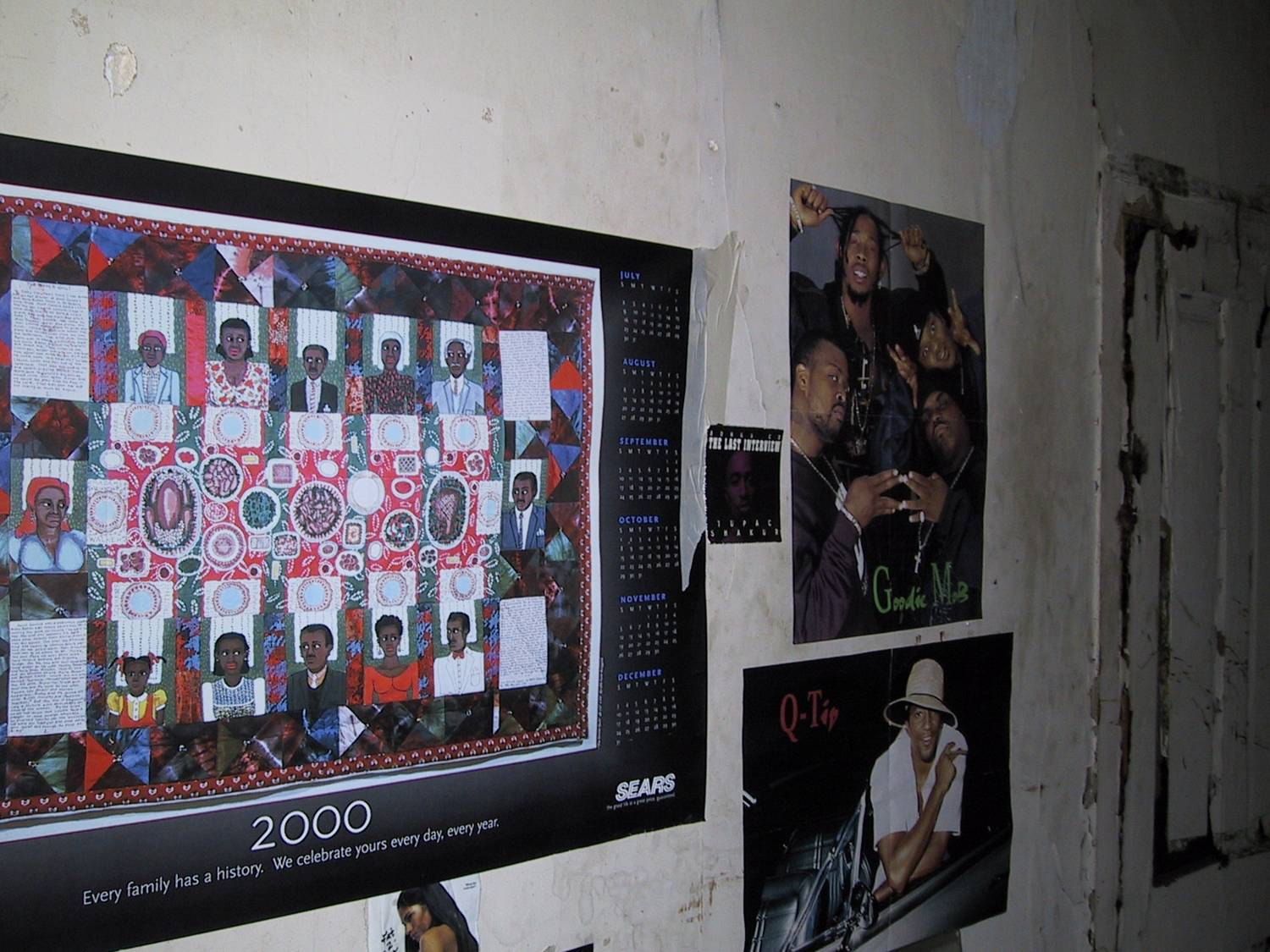
    #15) Looking towards the front in the rear room. Mirrors and black pride posters increase the positivity and create a much nicer overall environment. Tupac, Goodie Mob, and Q-Tip. An almost empty bottle of Pepto Bismal lies on the ground, showing that indigestion can strike anyone.
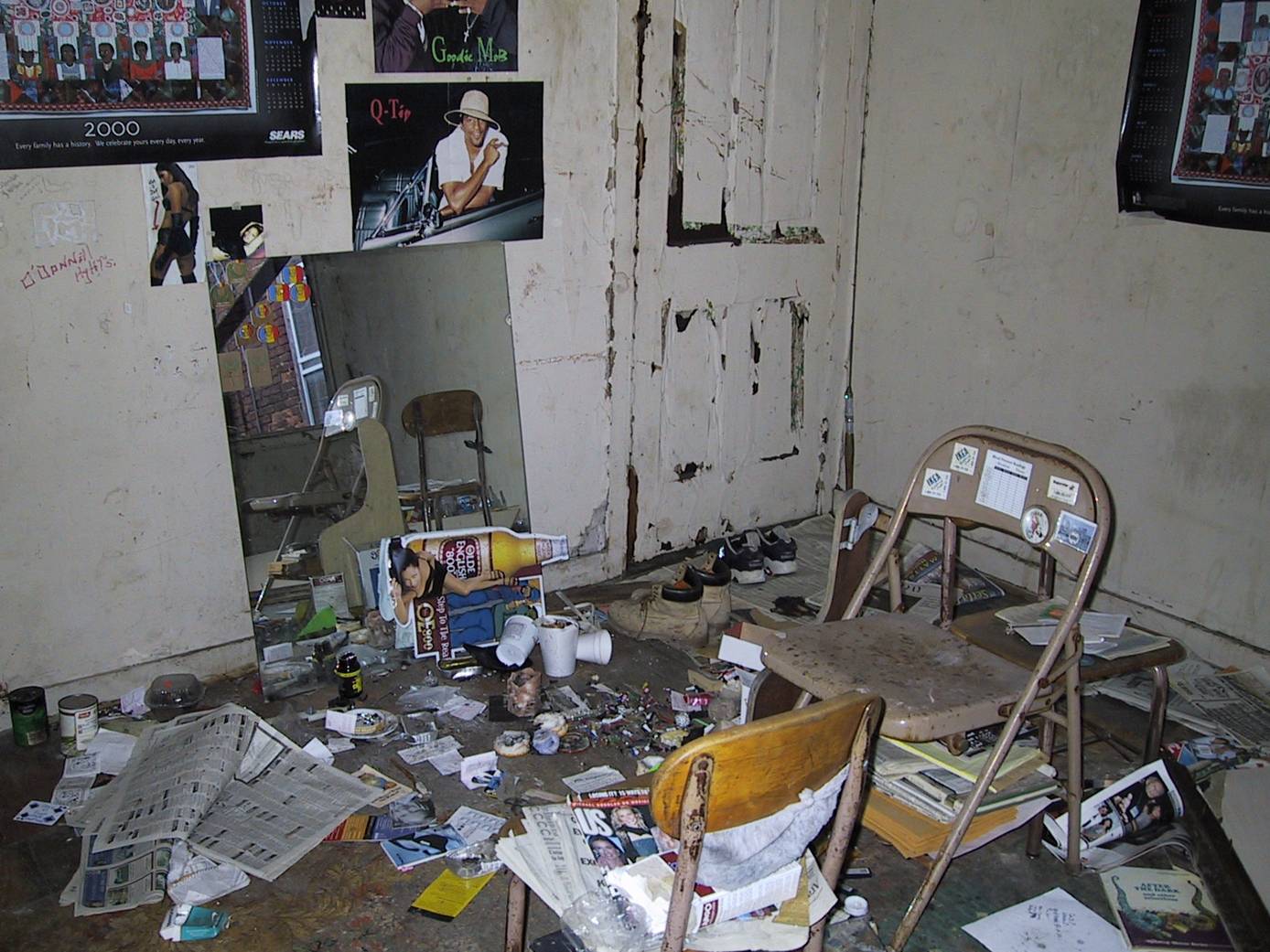
    #16) A poster and broken clock on one wall is just of above the bottles of piss and cans of shit neatly kept in the corner (unfortunately my partner knocked over that board you see on the lower right corner, tipping everything over. It smelled really rank after that.)
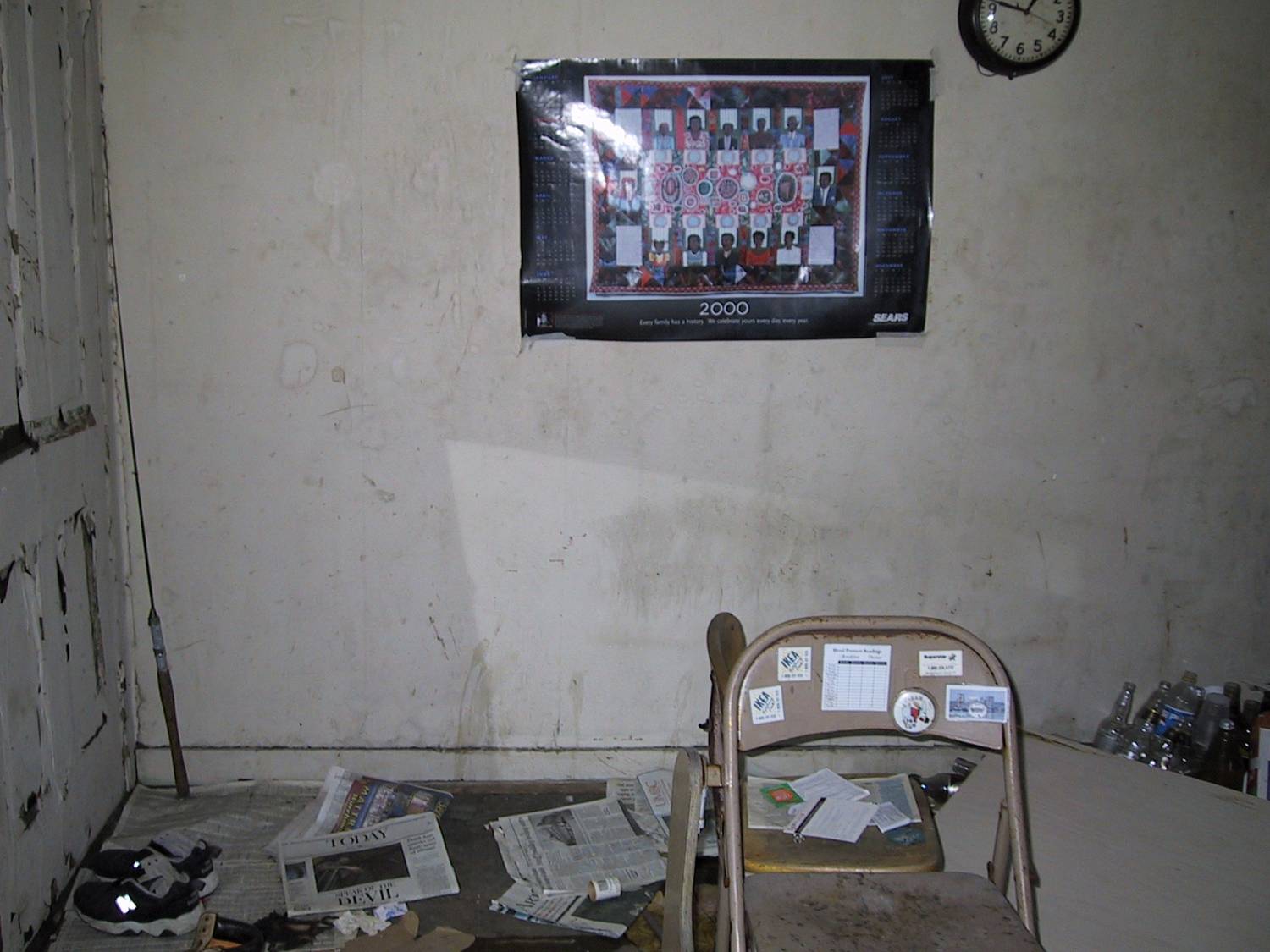
    #17) A 2000 Sears poster celebrating Black History claiming it’s not just for February anymore: “Every family has a history. We celebrate yours every day, every year.”
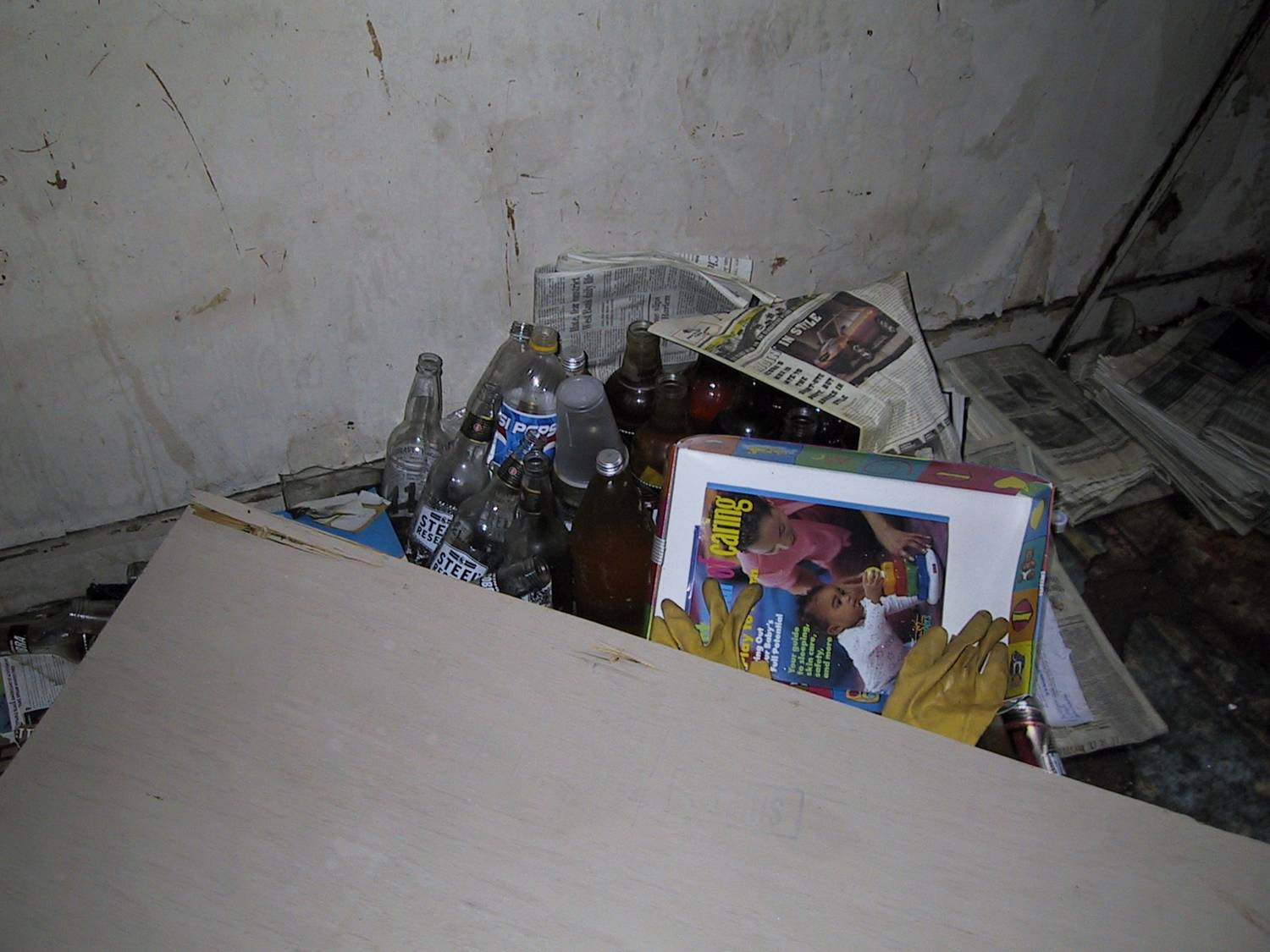
    #18) Bottles of piss sit in old malt liquor bottles. Next to it is a free parenting magazine and a toy box. My partner accidentally knocked the loose door on to the bottles of human waste. This spilled a lot of piss. We left the place worse than we found it. This wasn’t low-impact policing. Sorry.
    #19) Another view of the main lounge and work area. Given the conditions, this is not where serious drug dealers do their work. This is a place for addicts to shoot up, relax, and scheme how to come up with their next $10 hit.
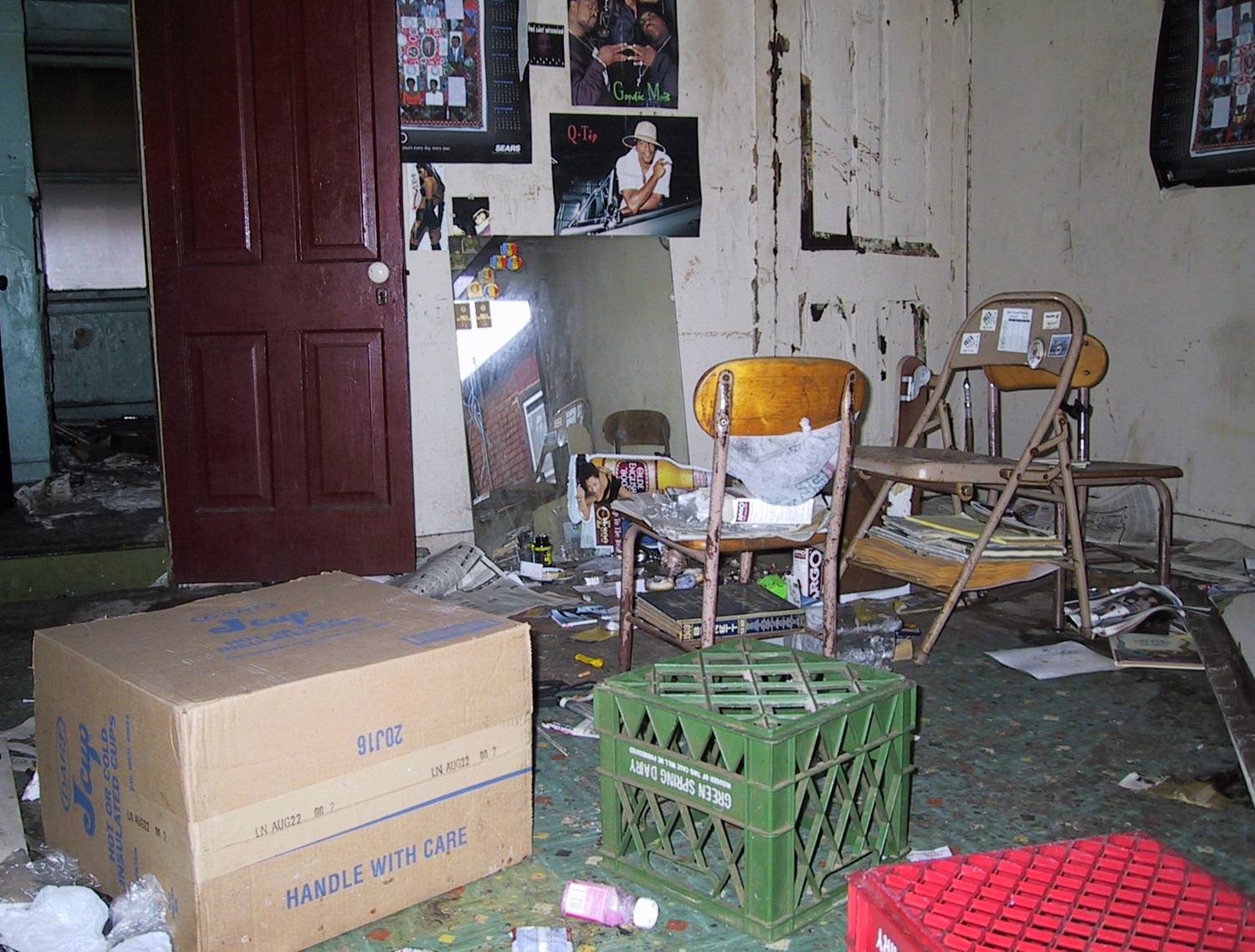
    #20) A few chairs are set around a collection of empty crack vials. There are also more shoes. Why all the shoes?
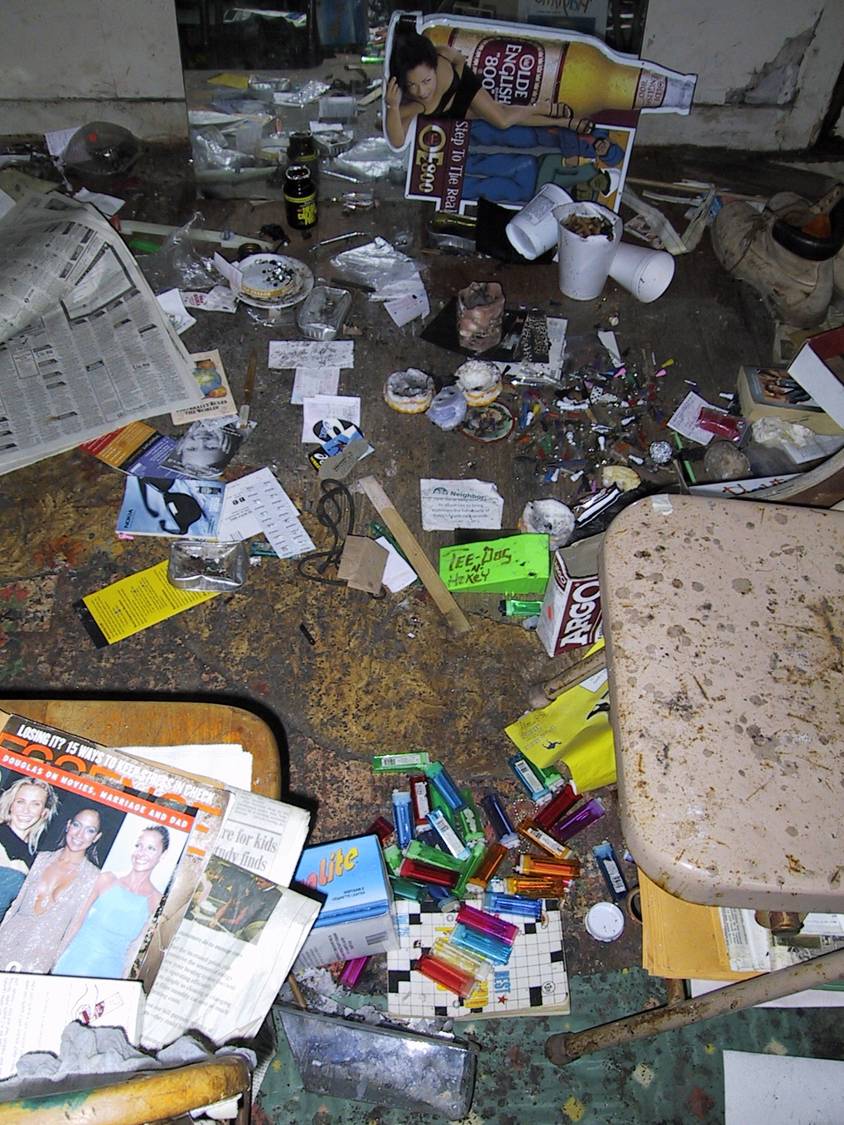
    #21) Looking closer, there are dozens of empty crack vials. Every color of the rainbow. The legal use for these vials in for perfumes and oils. The color of the cap on the vial often becomes a sort of brand name: red tops, blacks tops, or orange tops. Other good brand names: Uptown, Bodybag, Capone, and the more generic Ready Rock. Also on the floor are candles, cigarette butts, lighters (lots of them), tin foil, and bottle caps. Heroin and coke is an ever popular mix. John Belushi overdosed on it. Sugar, in the form of candy bars and tasty cakes can take some of the edge of the beginnings of heroin withdrawal.
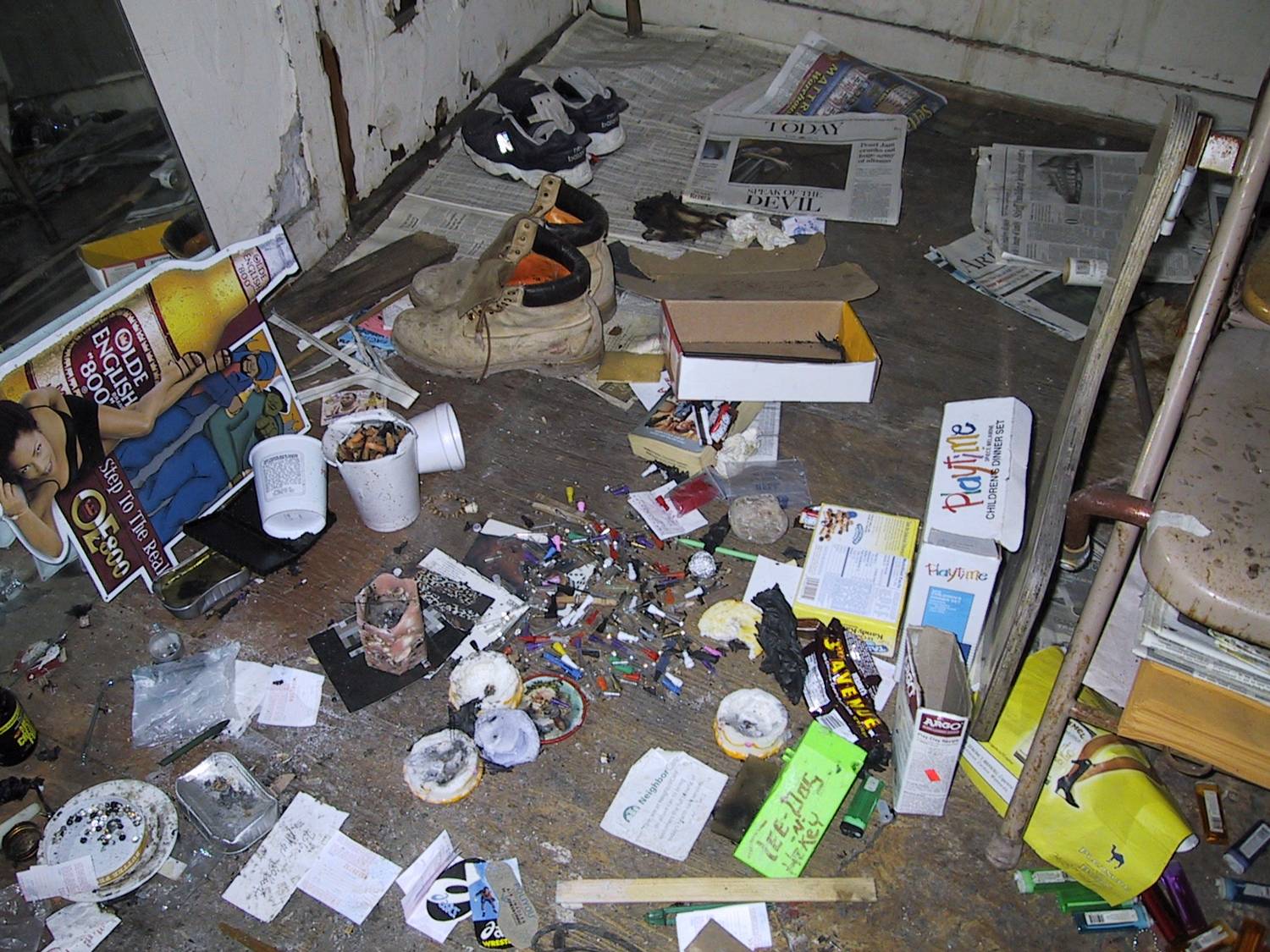
    Notice that the cup being used as an ashtray is standing and in use. The shoes are lined up. Paper is on the floor. In this disorder, there is order. But it’s almost inevitable that at some point in time they’ll burn the place down. And when that happens, you don’t want to be the neighbor next door.

    These pictures were taken in early 2001.

  • Some Gave All

    Some Gave All

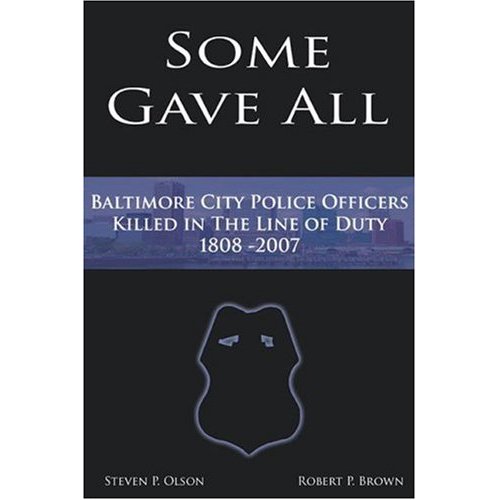
    I recently received Some Gave All: A History of Baltimore Police Officers Killed in the Line of Duty, 1808-2007 by Steve Olsen and Robert Brown.

    It’s a very nice work of history and a wonderful homage to those who died serving Baltimore City. While details on recent police deaths tend to be relatively well known, even I leaned some things about the circumstances about the death of my friend, Crystal Sheffield, to whom my book is dedicated.

    Some Gave Allreally shines in the history, going way back in the 19th Century. Most of thesenames have been forgotten. This book gives all these men (and one woman) who gave their lives the respect they deserve.

    There’s also an interesting story out of this. I recently received an email from the author, Sgt. Olsen, about a manuscript he found:

    In the same vein as your work, I have an original manuscript from 1974 by an officer who did exactly the same as you. His work, however, was suppressed by the Command at the time and it wasn’t discovered until 2008. (We found it in a retired Major’s locker.) It was called “The Socialization of the Urban Police Officer.” It’s a pretty neat read.

    We found what appeared to be the only copy sealed in an envelope. In 1975 the notes written on the outside of the envelope it said “Review and Hold” and initialed by someone that’s illegible. 10 years later, the note said, “Someday, somebody should read this.” So, what do police do? We ripped it open and read it!

    Turns out I’ve already read it. It’s by a guy name Mike O’Neil. It was his Masters Thesis at Brown. Later he got his PhD at Northwestern and who do you think signed off on his dissertation? None other than my father!

    Before I finished my dissertation in 2004, Mike got in touch with Howard Becker, because of their common interests in jazz music. Professor Becker told Mike about our parallel stories and Mike got in touch with me. Mike was nice enough to send me a copy. He’s no longer involved in the police world or academia, and doing just fine.

    In 2004 Mike wrote me this:

    Cherry Hill was close to the worst when I was there. Only redeeming feature, the city refused to license a bar in the area. That helped. Pomerlou was chief. Think the pay was about $8,000. Perhaps $5 for court (I don’t remember). The old cops back then also said the job wasn’t as good as the “good old days.” I suspect that that is a universal.

    More recently Mike corrected the record:

    By the way, it was never “suppressed” by the command. I doubt they ever knew about it. I shared it, as I recall, with two civilian police academy instructors and the judge in the Southern district. None officially.

    I recall this advice [about drugs] from my Sgt in Cherry Hill: “We don’t have the time to get involved with that shit. If you see something, go to a pay phone and drop a dime and call the Narcotics Unit; let them deal with it.”

    So it seems that at least in some ways, times certainly have changed.

  • Less overtime = More murder?

    Messing with police overtime is like messing with a dog’s food. You better makes sure it doesn’t come back to bite you. “It’s like our heroin,” one cop says in Cop in the Hood, “it’s just something we need.”

    The root of the problem is that half the department is assigned to patrol, chasing radio calls. So when it comes to officers that have the freedom to do police free from 911 calls for service–and we all know that 911 is a Joke–cutting overtime can have a huge impact on the kinds of policing that can actually prevent crime.

    Justin Fenton writes the story in the Sun:

    Killings rose as police cut OT
    Despite official denials, union chief sees effect on city safety

    Baltimore’s deadliest month of 2008 coincided with substantial reductions to the Police Department’s overtime budget – cuts that the police union president says are interfering with investigations and diminishing neighborhood patrols.

    Prompted by a directive from Mayor Sheila Dixon to cut more than $21 million this year amid the worsening economy, the department spent $800,000 less for overtime in November than in the same month the previous year, according to former homicide Detective Robert F. Cherry, who was elected union president this fall.

    The month saw 31 homicides, the worst November in nine years. The trend has continued, with six killings in the first six days of this month.

    “Detectives are being told, you can’t finish working a case, you have to go home. We can’t put foot men in a certain area, it will cost overtime. And district commanders are being beaten down if they spend over,” Cherry said. “You’re lying to the public if you say we’re attacking all forms of crime, and you’re lying if you say the budget cuts have no effect.”

  • Good Taser Use

    I’ve said that Tasers are overused and too often lethal. But here is a perfect use–as an alternative to lethal force. Well done, BPD. The Baltimore Sunreports:

    Baltimore police use Taser to subdue armed woman

    November 17, 2008

    Baltimore police used a Taser last night to disable a woman who was wielding a handgun in front of a house in the 200 block of W. Lorraine Ave. in the Remington community, said a Northern District shift commander. Sgt. Michael Hennlein said the woman, who is in her 20s, and a girlfriend were arguing in the house about 9:30 p.m. when the woman fired a shot that shattered a window but missed the other woman. Hennlein said several people in the house ran outdoors, followed by the armed woman. During the incident, someone called police to report a shooting. Hennlein said that when officers arrived, the woman was standing outside, bleeding from cuts caused by broken glass and threatening to shoot herself and others. After officers warned her to drop the gun and she failed to comply, one of the officers fired a Taser, striking the woman in the upper body with 50,000 volts, he said. The woman was taken by ambulance to a hospital for treatment of the lacerations and the effects of the Taser. He said charges were expected to be filed against the woman upon her release from the hospital and that no other injuries were reported.

  • From the Brass

    From the Brass

    Colonel (Ret.) Margaret Patton is the highest ranking woman in the Baltimore City Police Department. Back in 2000, when I was a cop, she was in charge of the Northern District. I don’t think we ever met, but I knew her by reputation, and it was good.

    A few months ago, when I was having an exchange with retired police who refused to read my book on principle (apparently, for some, ignorance is not a problem but a principle). Out of the blue, Colonel Patton wrote to tell me what she thought. Let me tell you, I may be a slouched-over academic now, but when I get a letter from a colonel, I sit up straight and at attention, ma’am!

    But she put me at ease. She thought it was unfair for people–people she knew and respected–to criticize me for a book they wouldn’t read. She resolved to buy my book, read my book, and let me know what she thought. I already had respect for Colonel Patton as a police officer; I quickly gained respect for Maggie (as she insists I address her) as a person.

    Months passed. I thought perhaps she hasn’t written because she had nothing nice to say. A few days ago I sent her a note asking if she had finished my book and again asking for her thoughts. Here is her reply (reprinted with permission):

    Hi Peter,

    Yes, I certainly did finish your book and enjoyed it very much. I would have sent my “critique” back to you but I thought you were only being nice. I always consider it a privilege to be asked to comment on someone’s work. I pulled your book off my shelf and realized that I had even taken notes while reading it.

    Let me first say that I think that the book should be made mandatory reading for every recruit in the Balto. City Police Academy. I would love to be in the classroom listening to the conversations and debates sparked by your experiences. I believe that this dialogue would help to lessen the feelings that nothing of substance is taught or learned while in the academy. The command staff would certainly learn much by readingCop In The Hoodbecause command does forget a lot with each rank they achieve. Granted, they learn a lot with each experience of rank but much is forgotten.

    You mentioned that stats should be maintained for recovered drugs and not just for drug-related arrests. I couldn’t agree more and I’m sure that the Lab would have these stats but I have never seen them used for tactical purposes. It would give the city a better understanding of how prolific drugs are and it would help in providing necessary funding for treatment beds and enforcement.

    On pages 108 and 109 you discussed the problem with the dispatch of calls for service including foot patrol and rapid response. You are just so on the mark with these observations.

    I am so sorry that you didn’t have the opportunity to work for Major Lewandowski. He was way beyond everyone in his thinking. He took the “good police” out of their cars and put the inexperienced and lazy ones in the cars. This, of course, was met with resistance because everyone wanted a car. He would sit by the computer and re-assign calls for service putting some on hold because of more serious calls waiting. You can just imagine how the dispatchers felt about this. He ran into much resistance because the system was not set up for this type of strategy. His dream was for officers to be provided with real time crime information at roll call – now it can be done. You two would have made a fantastic team!
    […]
    If I had been your editor I would have liked to have seen you personalize your story more, maybe even bordering on an autobiography. … BUT, your book as written, is perfect for the academy.

    It would have been interesting to read about your parents and your upbringing. Why did you decide to become a sociologist and why did you decide to go to Harvard? Did your girlfriend think that she was getting involved with an academic and then you went off to become a police or did she think that she was getting involved with a police who then turned into an academic. How do your students react to you as a former police?

    You are interesting because of the decisions you made and it would be interesting to see how you were influenced along the way to make these decisions (as a child, young adult, student, police trainee, police and now professor). The book could be titledProfessor Outside The Hood.[…]
    If the present police commissioner was smart, he would bring you down to run the police academy although I am sure it would be a step down for you. Your insight into the drug world and law enforcement is outstanding and I hope that this is not the last book you write.
    […]
    Again, I enjoyed your book and I am so proud that you were a Baltimore Police Officer and a good one.

    Personally, I would love to hear conversation and debate in the police academy on any subject. But, alas, that’s not the role the academy plays.

    When I was there, I offered to lecture to my class during any of the many downtime hours that filled those 6 months. I thought why not? So much time was spend doing nothing. And I’ve lectured on crime and deviance at Harvard. If nothing else it would relieve myboredom. But nobody took me up on the offer.

    I could never figure out why so much time is spent “learning” how to write reports in a classroom when that kind of knowledge can be learned so quickly on the street.

    I think 911 and the police car are the two biggest obstacle to real positive change in any police department. I was talking about foot patrol in my class last week and one of the N.Y. police officers said, “It will never happen!” And this the day after a black man was elected president of the United States.

  • Dirt bikes in Baltimore

    If you don’t live in Baltimore, it’s hard to understand just how big of a problem this is. If you do live in Baltimore, you may not realize that this problem doesn’t really exist anywhere else, at least not like it does in Baltimore.

    The bikes themselves weren’t illegal. But riding them is. It’s a strange Rite of Spring in Charm City.

    You may remember a story last year [update: the original story is lost, but in the follow up, the kid’s mom lost her lawsuit.] about Baltimore Police (in the Eastern District) locking up a 7-year-old black child for “sitting on a dirt bike.” Some had a field day talking about the “racist” policing and “zero-tolerance policing.”

    We’re not talking pedal bikes; we’re talking motorcycles and motorized 4-wheeled all terrain vehicles. And we’re talking packs of them, doing wheelies, zooming on streets, sidewalks, and through parks. They’re loud and dangerous. People have been killed. People whose cars have been hit have been beaten.

    What proceeded the kid’s detention was the kid’s mother calling 911 to say her son had been assaulted by police… after police had the nerve to stop the 7-year-old from driving an A.T.V. down the street. He wasn’t “riding,” says the mom; the motor was off. He was just “rolling down the street.” The kid was 7. On a motorized ATV that can start with a key. So the police do their job and take the kid off the bike.

    She wins the bad parenting award for 2007.

    So police go back and take the boy to the Eastern. What else can you do?

    We couldn’t do anything else illegal motor bikes about it because police aren’t allowed to pursue. If they crash, they die. And then the police and the city are in big trouble. And if you did catch a bike, the rider would run. If you took the bike, the owner would just come back and reclaim it. From the Baltimore Sun:

    A law took effect last month that allows police to seize any unlocked dirt bike – in an alley, driveway, front yard or street. A court can then order the bikes forfeited, and they are later destroyed. “The fact of the matter is that these dirt bikes drive people in neighborhoods nuts,” Police Commissioner Frederick H. Bealefeld III said. “We’re not talking about filling jails full of dirt biker offenders. We’ll seize the bike, and it is game over.” Stories of lawlessness jam e-mail inboxes of City Council members, who have struggled with the city’s dirt-bike problem for at least a decade. Councilman William H. Cole IV recalls finding a website purporting to organize city rides. He skims YouTube for video clips of Baltimore riders showing off. Councilwoman Belinda Conaway recalled a group repeatedly circling Lake Ashburton as if patrolling it. The level of lawlessness can escalate. In April, a 19-year old man was sentenced to a 45 year prison term, with 10 suspended, for firing at city police officers who were trying to stop him from riding his dirt bike in the 1300 block of Pennsylvania Avenue.

    Read the whole story in the Sun.

    There’s a good chance this will work.

    [Update: It didn’t]

  • Homicides down in Baltimore

    Good news from Charm City.

    Justin Fenton of the Sun describes the impact of one police unit. If all this is police’s doing, and it might be, note just how much 250 officers can accomplish (out of a police force of less than 3,000 in a city of 650,000 people).

  • Crime or no Crime?

    Peter Hermann of the Baltimore Sun has an interesting article about discharges… that is, shots fired but nobody hit. No harm, no foul.

  • 27 drug raids in one night

    A federal a local task force, HIDTA (“High Intensity Drug Trafficking Area”) busted down 27 doors in what must have been a very long night’s work. I hope people feel safer.