2008: I just got this pic of the corner from Durham and Eager in the Eastern. I love the new PR campaign: “My New East Side is Stylish.” “Clean.” “Innovative.” “United.” “Exciting.” “The Future.” “Family.” I hope it works. It looked nothing like this when I was there. In 2000 the corner looked like the picture below, which is of Eager and Chapel, 2 very short blocks away. Basically, both pictures were taken from the same spot, looking in opposite directions.
 Google Earth still has an imagine from before the demolition. It’s interesting because the block of Durham south of Eager was still filled with homes. But you can see other blocks entirely vacant. Eager is the east/west street in the middle. The house above with the feather duster on the door is still visible center right. The last home before an otherwise empty city block.
In all fairness, I should show a similar shot of a nicer part of the Eastern. Below is part of Sector 3. The Eastern District police station is at the top right. Homes below are owner occupied and well kept up. It even looks neat. Street violence is rare. Of course… I didn’t work in Sector 3.
Tag: Baltimore
-
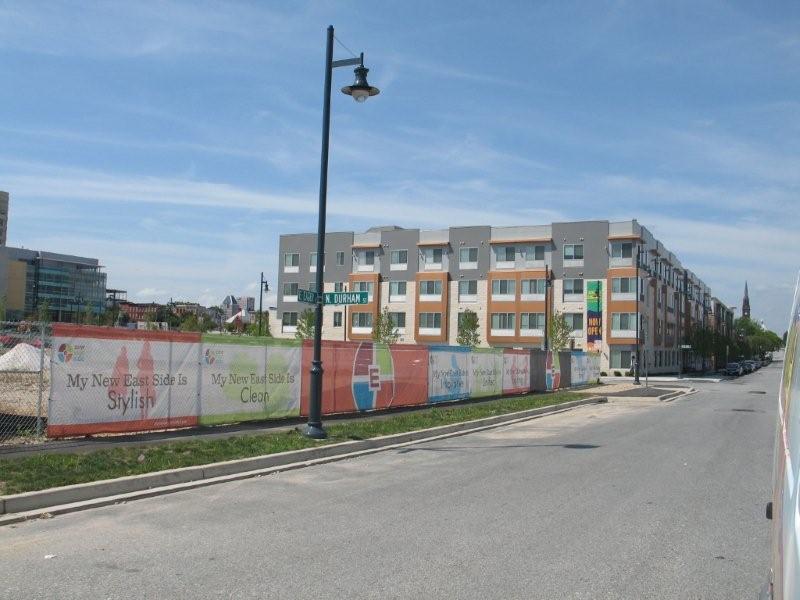
Durham and Eager: Stylish? Clean?
-
Police arrest ‘Wire’ actress
Felicia “Snoop” Pearson, the actress who played a cold-blooded killer of the same name on the HBO series The Wire, was arrested on minor drug charges yesterday after police picked her up for refusing to cooperate as a witness in a murder trial, records show.
The whole story in The Sunis here.
-
Baltimore City juries less likely than suburban juries to convict, study says
No shit, sez I.
Here’s the Baltimore Sunstory by Julie Bykowicz.
People talk about how the criminal justice system is biased against blacks. And it is. If it weren’t, nearly half the people in prison wouldn’t be black.
But, dot dot dot, if you are going to be arrested for drugs, it’s far better to be arrested in Baltimore City (where most people are black) than in the surrounding counties (where most people are white).
I talked about this in my book (which by now I hope you’ve read). This is from the Sun’sstory:
Among the findings: In the three counties, 45 percent of defendants were convicted and 27 percent acquitted. The remaining 28 percent were convicted of some charges and acquitted of other charges. Those numbers were different in Baltimore, where 23 percent were convicted, 43 percent acquitted and 34 percent given “combination verdicts.”
Conviction rates also vary between the city to the counties depending on the charges. In the city, 57 percent of drug defendants and 57 of defendants charged with personal offenses (such as murder, assault or robbery) were convicted. Those numbers in the counties were 95 percent and 69 percent, respectively.
[…]
The “starkest difference,” […] was that jurors in nearby counties are 30 times more likely than their city counterparts to convict a defendant of the most serious charge against him. The probability of a conviction on the top count is 2 percent in the city and 63 percent in the counties, the report says.Baltimore State’s Attorney Patricia C. Jessamy doesn’t like the report. But I, like any Baltimore City Police Officer, don’t like Patricia Jessamy.
Why won’t Baltimore City juries convict criminals? There are three basic reasons:
1) People who make up Baltimore City juries don’t like or trust police because they’ve had bad experiences with Baltimore City police.
2) People who make up Baltimore City juries have friends and/or relatives who have been accused of crimes and the jury members they simply refuse to believe are guilty. So they are quick to give the benefit of the doubt to the suspect. It’s not “us” versus “them.” It’s us versus us.
3) Some members of Baltimore City juries are simply stupid.
-
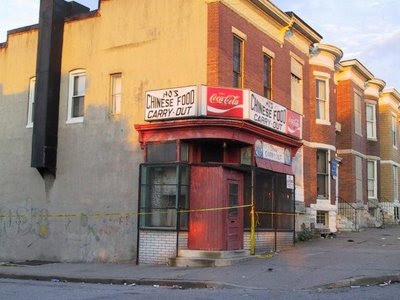
Drug Dealers vs. Business
A liquor store in Baltimore is being forced to close because a man was killed there and drug dealers congregate. Here’s the story in the Sun. I’m of mixed feelings. Liquor stores in the ghetto are hardly the most sympathetic businesses. But if they were all shut down, it’s not like the neighborhood’s problems would suddenly disappear.
It’s a shame there aren’t more locally run business in the ghetto. In many ways, the Eastern District is typical. Here’s a quick, perhaps inaccurate, and certainly unpolitically correct history of business life in the Eastern.
In the old days, or so I hear, many of the local businesses were run by Jewish people. At least that’s how the story is told on the street. Were they exploitive? Some think so. But, no, I don’t. Are all businesses exploitative? I don’t think so. Many of these Jews had grownup in the neighborhood. Many had stayed in the neighborhood when other whites fled. Yes, they were there to make money. But they also spoke English and hired locals to work in their stores. In hindsight, these were the good old days.
After the riots in the late 1960s, many of these store owners felt betrayed by the anger, left broke by the destruction, and realized that a little profit wasn’t worth their life. A lot of businesses packed up or closed for good.
Over the next 30 years, more businesses closed. And not an insignificant number of these after the owner got killed in a robbery.
Today there’s not much left. Monument St is still filled with stores. And there’s a excellent (black owned) produce store that deserves special mention (Leon’s Produce, 1001 N. Washington St.).
Other stores include laundromats, bars, Chinese takeout (called “yakamee” in Baltimore), and corner stores. The corner stores are now mostly run by Koreans (who are still referred to as “Chinamen”). If the store owners can’t afford a home in the suburbs, they may they live upstairs, in sort of a castle-like fortress setup.
I can see the causes for resentment on both sides. At it’s worst, think L.A. riots and Koreans guarding their stores with guns. The store owners sit all day behind plexiglas selling overpriced crap. Many don’t speak English. Most hate their customers. And because they’re behind glass and won’t come out, they can’t control what goes on in the lobby of their own store. And unlike the old days, these store owners, by and large, couldn’t care less about the well being of the neighborhood. Still, and this is important to remember, the bigger problem in the neighborhood is too few stores, not bad store owners. Besides it’s not easy to run a business in the ghetto. That’s why so few people do it. I wouldn’t. If running a store in the ghetto were such an easy way to make money, why don’t you do it?Now I don’t know Mr. Yim, the owner of the closed liquor store. But my guess is 1) he felt helpless to control what went on in and around his store, 2) he was helpless to control what went on in and around his store, and 3) he didn’t really care as long as his 1,000 daily customers kept giving him money so he and his family could survive.
From the story: “More than 300 residents signed a petition in the spring asking the city liquor board not to renew the store’s license…. “With those doors locked, [the drug dealers] don’t have a place to hide anymore.”
But here’s the problem: with the doors locked, the drug dealers will still have places to hide. Drug dealers don’t want stores. Business owners are a pain in their ass. Business don’t want drug dealers scaring customers. Businesses call police… until eventually the business owner wins gives up.
For drug dealers, a vacant building is better for business than a store. Vacants don’t attract who don’t want to buy drugs. Vacants don’t call police. Vacants are good places to hide your stash. You can run away from police through a vacant. You can fuck your girl in a vacant. Every time a store closes, the drug dealers win. And by and large, the drug dealers have won a lot.
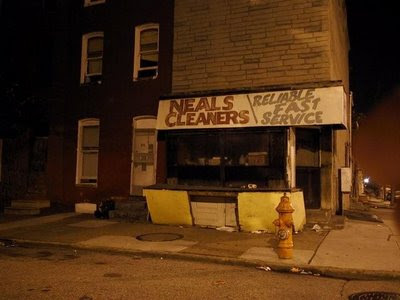
I was friends with a local man man who ran a corner laundromat. From behind the glass we’d drink coffee and talk about politics and race and I’d chuckle at the junkies who came in and paid 50 cents for a cup of sugar with a little coffee. The owner believed he was doing good. He was. If he closed, how would the old people on the block do their laundry? He was right. He also closed around 2pm because it was too dangerous after that.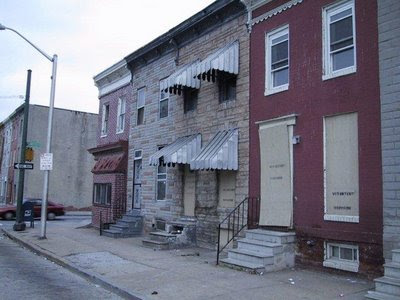
His corner was a bad drug corner. The worst we had in Sector 2. And that’s saying a lot. For a while he called police because of drug dealing on his corner. When police pulled up, the dealers would run into his store (and cause trouble). After a while, police became convinced that he was a drug dealer. Because whenever police pulled up, there were drug dealers in his store. There’s a certain logic to that, except it’s wrong.As much as I can guarantee anything, I can guarantee that this man was not dealing drugs. But what was he to do? He stopped calling police and continued to yell at dealers when they came in his store. There’s nothing the dealers would have liked more than him closing for good. And that’s why it’s sad whenever a business closes. The bad guys have won.
-
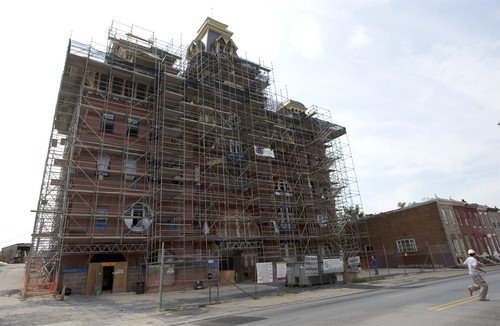
Life for the American Brewery Building
Last time I was in town I noticed the scaffolding around the building from the train. That had to be good news. I think it might be the most beautiful building in the world. It just happens to be in the Eastern. It was a bad shape when I roamed around it in 2000. Now it’s being fixed and saved.

I written about this building before.
Today the Sunhas this story.
-
Man suspected of selling drugs on bicycle hit by car
Oops. Sorry.
Not really.
The story from the Baltimore Sun is here.
This is Sector One in the Eastern, for those who care.
-
I love you, Baltimore!
You know what I love about Baltimore? When I’m there, very often I want to burst out singing, “I love you, Baltimore!” just like Tracy Turnblad from “Hairspray.”
Usually, I resist the urge.
These past two days in Charm City were no exception. I never felt so welcome moving to a city as I did when I moved to Baltimore. Now, years later, when I go back, I still feel at home. And there’s always a couch and a cold beer waiting for me.
I go back every year for a Crab Feast at my sergeant’s church. The past two years the crabs weren’t as good as they should be. This year, I’m proud to say, they’re back up to par!
Now if you live in Baltimore, you might wonder why New Yorkers would travel six hours to eat Maryland steamed crabs. There’s nothing like it here! (Nor do we have Bull and Oyster Roasts, for that matter.)
In truth, we can and do steam blue crabs here (from Louisiana). And it is about the crabs. But a church Crab Feast is so much more than just steamed crabs. And just $37 gets you all this.
First the wait to get in. The entry process always moves slowly, even though everybody already has their ticket. It’s like waiting for a roller coaster. But only if, when waiting for a roller coaster, you could smell Old Bay and got to laugh at the role of aluminum foil hidden in the bag of the people in front you to facilitate easy (and prohibited) take out.
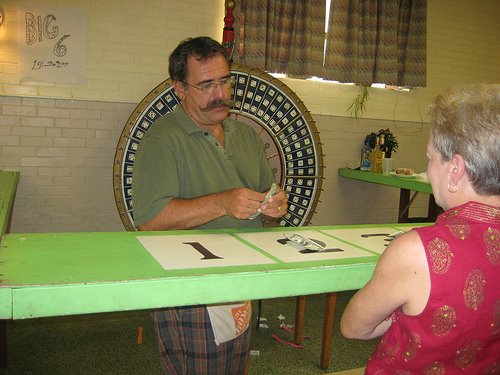
When you get close to the basement doors, you can hear the tok-tok-tok of the raffle wheel. That’s usually when I realize where I am!

Given our large group, we had part of two tables. But there’s an old lady (with an amazing hairdo) in one of our seats. She doesn’t seem to like us so we get the priest to sort this out. She won’t move, not even for man of God. First she said, “because my walker is here.” The priest offered to move her walker. “No,” she said, “I’m not moving!” How can you argue? And I’ll be damned if she didn’t move. Not for four hours. Not till she got up to go and sneak a few leftover tidbits in her purseWe went to Plan B and squeezed 12 of us around a table for 10 without any further problem.
And by the time my eyes get used to the florescent lights, everything has come together: the friends, the tok-tok-tok, the Old Bay, the music from the band.
 I navigate what I call the “decoy table” (I ain’t eating no celery sticks and macaroni salad at a crab fest! But I do like one sloppy-joe like BBQ beef sandwich and a cup of crab soup). When I get back, the buckets of beer are filled.
 And then, what we’ve all been waiting for: a 13-year-old boy dumps the first batch of steamed crabs on our craft-paper covered table.


 This year, I even won 3 bottles of booze for a $5 raffle investment. It’s not just the booze I like, it’s also fun to take bottles and be able to say, “Thank you, father!”
Four hours after we came. I couldn’t eat another crab (and I did try). Thank you, ladies, for all your hard work. And see you next year! We went back to my sergeant’s house for a bit and then my wife and New York friends went home. I stayed behind. We went to a bar or two. A few hours later, after nearly 10 straight hours of eating and drinking, I was ready for bed.
I was careful not to drink too much because I didn’t want to be hungover for my radio interviews. I succeeded. The next day, Monday, I did two radio interviews in succession. One with Dan Rodricks. The other with Ron Smith. It was my third time on the Ron Smith show, but the first time in studio, which is always nicer. They went well.
After the second interview, I took the light rail from Television Hill down to Lexington Market. I got there at 4:45, 15 minutes before Faidleys closes. As last call goes out, I order two backfin crabcakes for there, 10 uncooked ones to go, and a Natty Bo. While standing and eating (there are no seats), I see a softshelled crab come out all golden and delicious. I say to no one in particular, “I forgot all about that!” The man asks if I want one. Yes! And with that, a few minutes after closing, the very last item goes in the deep fryer.
An female employee explains in wonder, “two backfin cakes and a softshell?! The last time I saw somebody eat like that, they were smoking the wacky weed!” I assured her there was no weed, just a homesick man from New York. Luckily, this woman was long gone and didn’t see me by the time I hit the oyster stand on the way out for a little “desert” (in the form of 4 oysters, 3 clams, and another beer–together that last order cost less than $10, half of what it would cost in NYC).
The were 4 of us slurping our oysters and one shucker.
Somehow, the barbershop-like conversation of black men (and me) turned from smoked pigs feet to road rage:
“…But she got outof her car to knock on my window to tell me I was an asshole!”
“Was she white or black?”
“She was a white woman! Can you believe that?!” [this was not a small man]
“She-it.”
“Maybe you should have told her you cut her off just to meet a woman like her,” I said.
“Yeah, Tell her you’ve been waiting for a woman like her all your life!”
“Man, I ain’t waiting for that shit! With her lazy eye, I couldn’t even tell who she was looking at.”
“That’s so when you get out the car, she can say ‘I wasn’t talking to you! I was just talking [pointing in opposite directions] to him and him!’”
Eventually the man next to me and I got back to talking about food and the proper heat and moisture needed to smoke meat and fish. He took a liking to me when I agreed with him and could tell him why cows are best grass fed (“…because they’re not madeto eat corn!”).
I expressed skepticism that a standard pork chop could ever be good. “They’re too lean to be good,” I said.
“I know. That’s why you gotta put bacon-grease on a pork chop! All the good soul food places do that. They just won’t admit it.” Brilliant! He also recommended rubbing pork loin in red wine before smoking.
One pleasant terrorist fist jab, a run for the the light rail, and 30 minutes later, I was happily half-sleeping on a train back to NYC.
Baltimore, you mean well.
And yes, I love you, Baltimore!
-
Apologies in flex squad case
Annie Linskey writes in the Sun. The full story is here.
City settles, calls supervisor a ‘law-abiding officer’Two and a half years after allegations surfaced that an elite Baltimore police unit had become a rogue operation, the city did an about-face, agreeing yesterday to pay the squad’s supervisor a six-figure settlement and issuing a rare public apology, calling him “a law-abiding” and “dedicated” police officer.
The move was an extraordinary development in a probe into the Southwest District’s “flex squad” that began when a woman accused an officer of raping her in a police district station in late 2005. The police commissioner disbanded the squad, launched annual audits of flex squads citywide and suspended six officers, including three who were indicted on criminal charges.
Ultimately, one officer was acquitted of rape, criminal charges against others were dropped and the city is now paying $290,000 to Sgt. Robert L. Smith, former Officer Vicki Mengel and their attorney to settle a $1.5 million civil suit the accused officers had filed against the police department.
-
Good stuff!
I received this email a while back from a Baltimore Cop who transferred elsewhere. I’m protected his identity (of course) by blocking out a few details with ****. (By the way, I think the “proper” spelling of “screet” is with a K, but that’s a minor issue.) This is good stuff. perhaps even better than my book:
Much like a person’s upbringing in life influences some of their behavior and personality, my training, or “upbringing” as a cop, if you will, in Baltimore will continually influence how I police. I find myself very different from many of my current co-workers. I am more jaded and uncompassionate. I want every suspect to go to jail (which rarely happens here in ****).
Thug life and the ghetto is another aspect of Baltimore I will never forget. Again, I grew up in **** and graduated with 5 or so African Americans out of 225. Not much contact. However, after 4 years in Baltimore, I am fluent in “ghettoese” (p62). “Peoples” “Hair-ron” “bounce” “up the screet” “on the corna” and “hoppers” are among my favorites.
In regards to the ghetto, from my * years in Baltimore, I agree with the thought (p39) about not blaming poverty and racism for the ghetto life and wanting to “napalm the whole area” (I wish I had a dollar every time I heard that). It was hard as a white upper-middle class conservative male to feel sorry for African Americans there, but in the same light, I agree with the “hate everybody philosophy”(p40). My partner (white male) and I, knew when we saw a white junkie in the ghetto, they were getting locked up for something. Fair or not, that is how I played the game.
One of the thoughts I am in agreement with many of the other officer’s in the book is the negative opinion of “junkies.” Drugs never had an impact on anyone in my family, any of my friends family growing up, or for that matter even in our community (it was unheard of). I took that with me to Baltimore. I was naive, but also cold and uncompassionate, and to this day I still am.
My opinion of junkies (pp43-46) is that they are, “not even considered people … Who gives a flying fuck about a junkie!?” (My wife actually got mad at me during the reading of the book because I continually interjected my thoughts about this issue: “****, you are not in Baltimore anymore, let it go,” she says). It’s difficult to let it go, especially when you experience it firsthand and are so disgusted with it. I will never forget stopping a male junkie (Pennsylvania Avenue market, heroin shop), telling him to give me his tools, whereby he proceeded to bend over, spread his butt cheeks and show me a capped needle shoved into his anus. And people wonder how I got to be so bitter.
Departmentally, I found your thoughts and opinions on point. Without a doubt, there is an unwritten quota at work. In flex it never bothered me because I locked a lot of people up, but regardless, we still heard about having to beat the other flex and bike squads in stats. During the latter part of my career in Baltimore, officers were temporarily transferred to other districts as punishment for poor stats. Yeah, that makes sense, send a poor producing officer to an unfamiliar district and ask them to produce. Command staff, you are genius!
District and Circuit Court was a joke. Officer’s working until 3 or 4 am and then expected to be in court by 9am. And they wonder why officer’s FTA’d[failure to appear].I had court 5 days a week sometimes. I was never one for overtime; I wanted my free time. Talk about burnout. Court was one of the top reasons I wanted to leave Baltimore after my four years.
I could write a lot more about the book, but I think it would be easier to just say I am in agreement with your thoughts about Baltimore policing, and leave it simply at that. I recommend this book to people curious about “real”(?) police work!