Tag: body cameras

  • “Why’d you have to shoot that criminal with a gun?”

    So much of the body-cam debate, releasing or not releasing videos, comes down not to police behavior but to this:

    I know, as a lifelong police officer, that I see people on the worst day of their lives. People shouldn’t feel like when the police come to your house that what’s happened to you is going to be splashed all over the Internet.

    But it will.

    I’ve long advocated punting the releasing of video and privacy issue to the ACLU. If police take the lead on this, no matter what they choose, they will be faulted. There needs to be a policy based on something other than public outrage. And generally I’m all for erroring on the side of transparency. And that’s probably the way it has to be as long as people are willing to say people are holding books when they’re holding guns.

    As my colleague says:

    “What you’re seeing is basically a policy of appeasement,” said Jon Shane, a professor at the John Jay School of Criminal Justice in New York City and a former police captain in Newark, N.J.

    Shane said state legislatures should decide the rules for making recordings public. In California, lawmakers have repeatedly failed to draw up statewide policies on the issue.

    There’s also this factor:

    Beck acknowledged the anger surrounding the weekend’s shootings and said he believed some of the reaction has been compounded by other police killings around the country.

    “We have all seen police-involved shootings that defy justification in other municipalities. I have seen them where I am at a loss to understand why,” he said. “I think that affects what happens on the streets of Los Angeles.”

    This concerns the shooting of Carnell Snell Jr. in Los Angeles.

  • The truth will set you free

    Another case where body cams help police officers avoid false accusations of brutality from a viral video.

  • “Downside of Police Body Cameras: Your Arrest Hits YouTube”

    Interesting article about police body cameras and privacy in the New York Times.

    [Thanks to JdC]

  • Videotaping police isn’t quite as legal as you thought

    Honestly, my eyes glazed over a little bit reading (most) of this. But you should still read it. In much of the country, it’s still kind of a legal gray area about whether or not you can record police.

    I did an L.A. radio show a while back and a cop called in with a very insightful comment: older cops are still bothered by people filming them or taking their picture. Younger cops think it’s pretty normal for people to be holding up their phone when something interesting in happening.

    Regardless, the advice I would give to police officers is that it will undoubtedly be legal and protected in the future. So stop fighting it and get used to it.

  • Body Cams and the mean streats of Basingstoke

    Body Cams and the mean streats of Basingstoke

    The BBC has a short (2 min) and surprisingly informative clip on body cameras. But the real reason I’m posting this is because this attack on a police officer took place in Basingstoke, England. Now you may know Basingstoke for its roundabouts (traffic circles)… actually you probably have never heard of Basingstoke. And that’s OK. But I know Basingstoke because the wonderful people of the Hampshire Constabulary let me walk and bike around with them in the fall (autumn) of 2011. I was at Bramshill, the National Policing College. Good times. (Bramshill was recently and shamefully sold to save money.)

    Sgt. Kerry Lawrence was attacked last July. According to the BBC, she has since resumed full duties. I wish her the best.

    For what it’s worth, I remember asking a police officer in Hampshire, “when was the last time a Hampshire officer was killed on duty?” Whomever I asked pondered for a moment (and asked if car crashes counted. I said no) and then, taking a sip from his cuppa, replied, “I don’t think ever.” That is pretty typical for over there. It’s not that there’s no crime or violence in Basingstoke, but on Halloween, one big worry is the illegal sale of flour or eggs to people under 16.

    For what it’s worth, the unprovoked and near fatal attack on Sgt Lawrence received a sentence of three years. That low (for America) sentence length is also pretty typical over there.

    The quoted reaction by Hampshire police officers:

    “I know it was an extremely traumatic experience for Sgt Lawrence and her family and it also had a significant impact on her team and others at Basingstoke Police Station.

    “I am pleased that the courts have recognised the seriousness of this offence in the sentence passed today.”

    “Police officers accept that they perform a dangerous and unpredictable job.

    “I am pleased that the judge has given an appropriate sentence for this vicious and unprovoked attack on PS Lawrence.”

    Things are different in foreign lands, I tell you.

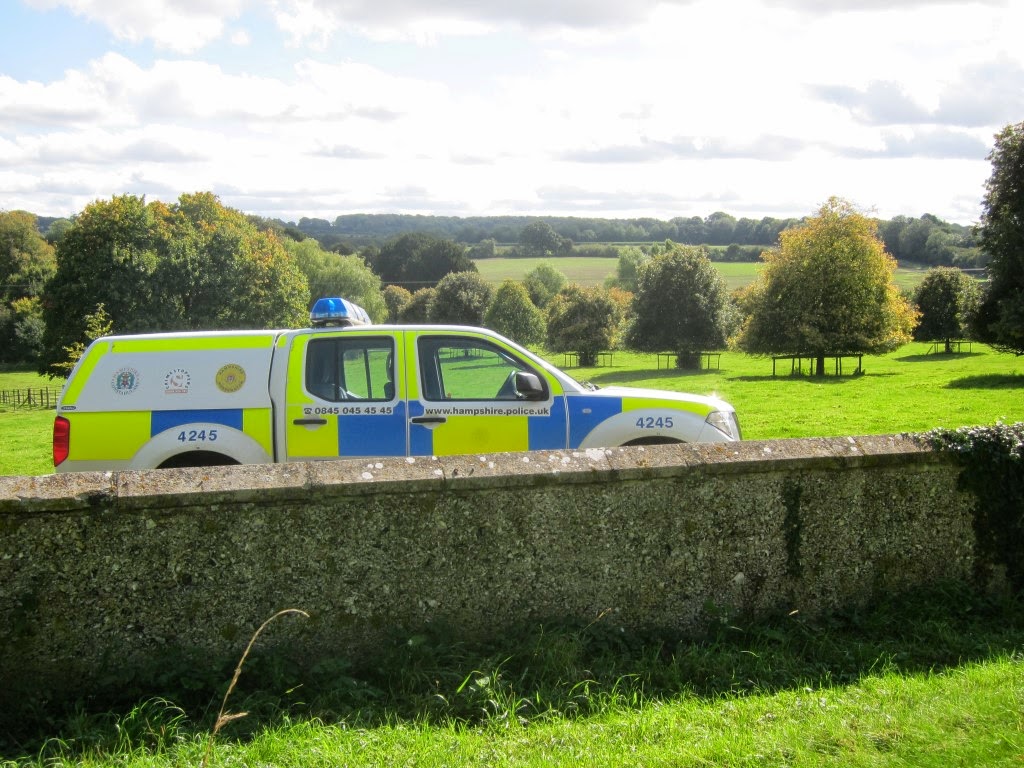
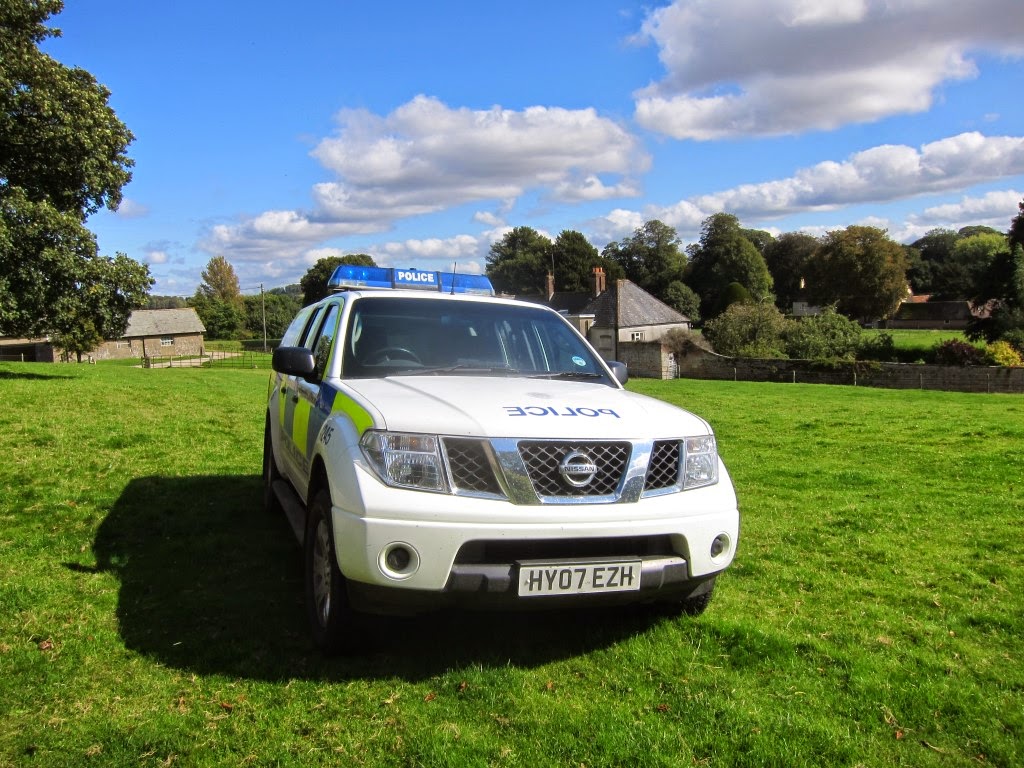
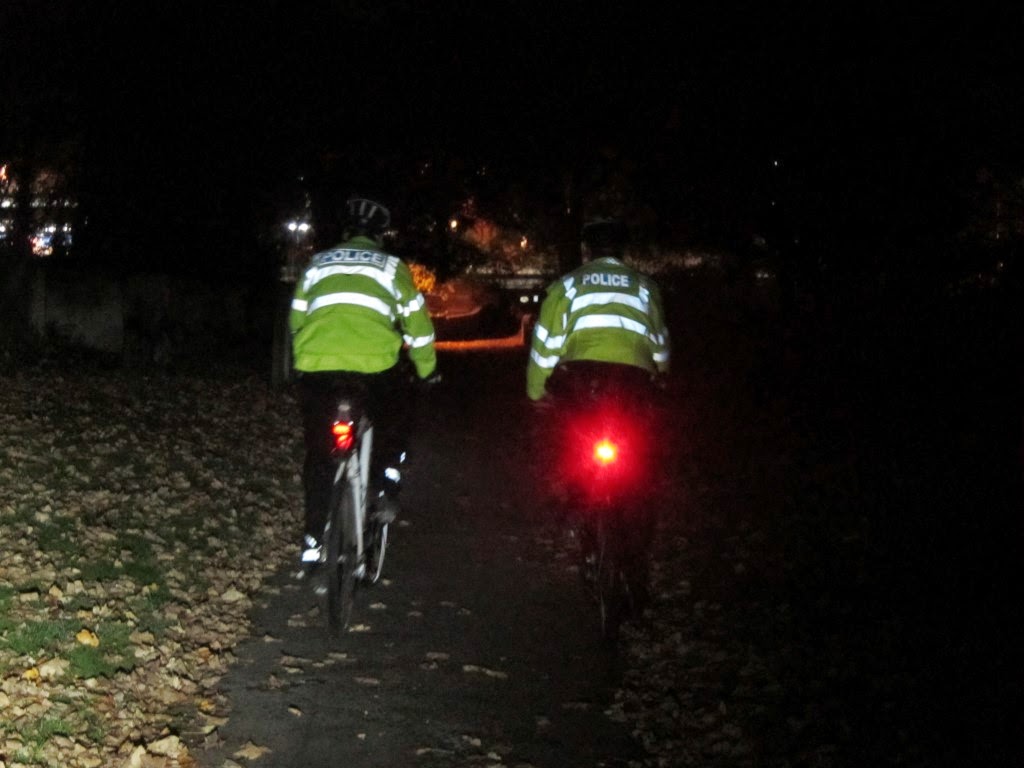
    Here are few pics I took back in 2011. Only the bikes are in Basingstoke. The others are in the surrounding rural area, which looks like a friggin’ magical kids’ story book!


  • Strike against cop cameras

    When I was cop, boy did I joke about things I wouldn’t want seen on youtube.

    It might be a tad overgenerous to say what I said were even jokes. But I laughed. I still do. When I get a message on my answering machine that says, “Pete, will you stop touching little boys and pick up the phone!” I know who it’s from. And I’m pretty sure my wife knows I’m not a pedophile. But can references to raping innocent children ever be funny? Well, I think so. And you are free to think less of me, but what I and my friends say in private really is none of your business. Besides, does anybody not say things in private that would be inappropriate in the public sphere?

    So two cops in Austin are recorded on a tape made public, while in their squad car, making tasteless comments about rape (and a few other things). Now that this video is public, you need to react accordingly. But you also need to keep things in perspective. Is what these officers said serious? No. Threatening? No. Did it affect their job performance. I doubt it. And truth be told, this is positively mild compared to things I have said. Let me confess that I too have made tasteless jokes, in private, about sex, race, crime victims, ethnic origin, religion, sexual orientation, and quite frankly every other possible taboo subject I could think of.

    Now cops, more than most people, have a obligation to refrain from bad taste in public, and especially when dealing with the public. But that’s not what happened here. When you’re riding in a car with somebody for eight hours, you get bored. You talk about a lot of things. You joke. You make tasteless jokes. Of course it depends on whom you’re riding with and the camaraderie and relationship you have with your fellow officers. Yes, I can be crude and insensitive in private and caring, compassionate, and professional in public.

    Some of this is gallows humor. And police (and paramedics and firefighters) need it because they have to deal with a lot of unpleasant stuff. But you also need to joke to bring up subjects that would be otherwise be taboo. And police joke because a lot of people you deal with — the vast majority — lie to you. Some lie to you about robbery. Some lie to you about rape. Some lie because they think it will benefit them, they want revenge, or power. Some lie because they can’t tell or don’t know the truth. And cops have to listen to all of them. So back in the car you make jokes.

    A lot of police humor is at the expense of “victims” because a lot (most?) victims aren’t actually “innocent victim.” Now in the current climate of political correctness (especially with regards to sexual assault and rape), it’s not acceptable to even bring up the phrase “innocent victims” because the alternative places some blame on the victim. But police need to make such judgements because the freedom of other people, sometimes innocent victims themselves, is at stake.

    Outside of crimes where the victim isn’t doing anything illegal and doesn’t know the person who committed the crime, there are a million shades of gray. And police need to talk about these shades. And one way to discuss nuances is by joking and making tasteless comments. In private, there’s nothing wrong with that. It’s how you learn. It’s how you cope. On the street cops need professionalism and discretion. In private, police use humor, and sometimes it’s not funny.

    Take two different rape cases. One was a nurse walking to work at Hopkins Hospital who was grabbed and raped by a stranger at knife-point. The other was a prostitute who engages in consensual sex but wasn’t paid the agreed amount. When the former happened, it was all hand on deck. A few days later the guy was caught. But for “failure to pay”? I once helped a supposed rape victim by doing little more than retriving her three jackets. It was cold outside.

    Or take a guy robbed while buying drugs. There were “real” robbery victims. You would know that when you saw a guy running barefoot wearing nothing but his tighty-whities. Now that was a robbery. And we would treat it accordingly. (Mind you, it still wasn’t “an innocent victim,” because he was still there to buy drugs… but the robbery was real.)

    But more than once I got a call for a robbery at the corner of Wolfe and Eager (then a 24/7 drug corner). On scene, the “victim,” a poor addicted white guy, would say he was minding his own business, jumped, and robbed of $20. Well, officer, what do you do?

    Generally people minding their own business don’t like being being taken for a drug dealer by some junkie too cheap to buy drugs in his own neighborhood. So this “victim” asks the first young black male he sees if he’s selling. The pissed-off non-drug dealer says, “sure” and takes his order, his $20, and continues on his merry way. The “victim” calls the police.

    I would try to keep a somewhat open mind on the off chance the “victim” was actually telling the truth. But do I start canvassing the neighborhood, stopping people who “meet the description.” Of course not. So I would conduct a brief investigation, perhaps by asking an old timer if he saw anything unusual, like an armed robbery (something beyond the usual chaos of an open-air drug market). If he nodded “no” with a look of, “you know how that white boy had it coming,” case closed. Call unfounded. Adam-No.

    And then, back in a parking lot, I would meet with a squademate and crack jokes. The guy running in his tighty-whities? “He was fast.” “Or slow.” “He had it coming… did you see what he was wearing?” “Exercise is important.” “I saw you looking at his package.”

    We would joke about anything. We needed to joke about everything. We didn’t joke because we didn’t care. We joked to stay sane. We joked to relieve the boredom. We joked to counter the cruelties of a very harsh and random world. We joked because the only real alternative would be despair. If you care too much — if you breakdown in a situation where any normal person would be unable to do anything but curl up in a fetal position and cry — you’re not a real police officer. We joked because laughing is good for the soul.

    So in this video one officer is telling another how to properly fill out a robbery report. And they they segue to insensitive comments about that robbery and then about about rape. They joke about fighting crime. They joke about ignoring crime. It was said in private, to each other. So I have no problem with it. Police should have a reasonable expectation to privacy when in private, even while on the job. And short of conspiring to commit a crime, there’s very little that should be off limits.

    Here are people who disagree with me. From Buzzfeed, the Huffington Post, and you can google a dozen others. And this news broadcastgives some good context.

    The lesson I see: police need to be more careful about the record button. And I still believe that cameras will be a net plus for police.
  • Score one for cop’s camera

    KOB Albuquerque reports how a lapel camera protected an officer against a woman’s false accusations that he sexually assaulting her.

  • Stop making sh*t up!

    Here are a few cases were cameras have backed up the police version.

    One case I’d like to highlight is the Reverend Bill Godair who claimed a North Carolina officer was aggressive in a traffic stop. The good reverend said, “I refuse to sit back and not do anything, not say anything until Ferguson, Missouri becomes a reality here in Salisbury.” And: “My wife was in my vehicle when this incident occurred and was scared by his actions. We honestly thought that I would be arrested.” There was even a little press conference and everything! From PoliceOne: “The head of the NAACP chapter has called for Chief Collins to step down or face protests over the excessive force claims.”

    But my point isn’t that the police version is always the truth (though it usually is). I’d prefer, if you don’t like cops, to imagine what you would think if you heard this accusation against police and there were no camera present. And if you are a cop, why would you not want a camera to document what happened? As my colleague John DeCarlo likes to point out, “the police are the only ones out there without a camera!”

    The reason I like this little example much is because of just how unremarkable the traffic stop was. It most cases something actually does happen, and you have to sort out what happened. But this was a traffic stop. No voices were raised. A ticket was issued.

    But while we’re at it, this incident in Celina, Texas is interesting because you see two very different perspectivesfrom two very different cameras. In one shot, the cop looks bad, tackling a compliant suspect for no apparent reason. In the other (which starts at 1:40), you see the guy bolting before the cop tackles him. Job well done, officer!

    And there’s also a guy in Austin who blogged about “babysitting while white” (he was with his black granddaughter):

    The officers got out with Tasers drawn demanding I raise my hands and step away from the child. […] I complied, and they roughly cuffed me, jerking my arms up behind me needlessly. Nine police cars plus the deputy constable all showing up to investigate the heinous crime of baby-sitting while white.”

    Except that is not happened. There were no Tasers. There was frantic call about the girl being kidnapped. The guy was detained for 13 minutes before being let go.

    Said Police Chief Acevedo (quite boldly and accurately, along with pointing out that most kidnappers are not strangers but relatives): “Had that been a real legitimate kidnapping. And we would have responded with one or two officers in a nonchalant manner. The same exact critics that are criticizing us now would be saying that the Austin Police Department does not care about an African America little girl being kidnapped from the Millennium Center.”

    [thanks to Sgt B for the initial link]

  • Utah shooting of unarmed man justified

    Dillon Taylor was another unarmed white boy shot and killed by police. In (mostly) conservative circles, Dillon Taylor was compared to Michael Brown of Ferguson, Missouri. In some liberal circles, people believe police only shoot and kill black people. But Taylor, who is white, got almost no press (and I think the officer who shot him was hispanic). Michael Brown was black (and shot by a white officer). There were protests about both shootings (no looting in Utah), but unless you make an effort to follow these things, you’ve probably never heard of Taylor.

    Comparing Taylor and Brown, one person wrote:

    But they are alike in this important way: Neither young man deserved to die that day. Neither Michael Brown nor Dillon Taylor was convicted of a crime related to their activities on their last days, and even if they were, it wouldn’t be a capital crime. And this doesn’t appear to be an uncommon mistake.

    Well leaving aside what “common” means, a police officer does not shoot you because of the crime you did or did not commit. You are justifiably shot because a reasonable police officer believes you to be an imminent and potentially lethal threat

    To be clear, Taylor was not armed (nor was Brown). But Taylor sure doesn’t act like like he’s no threat. Taylor was — and acted like — an armed criminal. Still, knowing only that Taylor did not have a gun when he was shot, anti-police folk went out and filled in their ignorance with their ideology. The inevitable conclusion: police are to blame.

    But comparing the homicide of Taylor and Brown, there is one important difference: the officer who shot Taylor was wearing a body camera! As is usually the case, the video shows exactly what police claimed to have happened. We’ll never for sure what happened in the moments before Brown was shot: Here’s the Taylor shooting:

    The shooting was declared justified. This is maybe not the best shooting, as Taylor was eventually raising his shirt, presumably to show he wasn’t armed. I also can’t see Taylor’s right hand, which could change things. But at some point it seems to me that Taylor is doing the old “life your shirt to show you’re not armed” thing. So it does seem unfortunate to shoot a guy when he finally does comply with “getting his hands out.” But there was a period of non-compliance. And then there sure was a quick move from a concealing waistband. And had Taylor been armed, and I think a reasonable officer had good reason to believe Taylor was armed, then yes, this is a justified shooting.

    There are certain things you have to take on the job: dumb people; dirty people; violent people. But a depressed criminal idiot (perhaps with a death wish), playing “I might have a gun on me” is not one of them. Still, though I’m willing to give the officer on scene the benefit of the doubt, well, like I said, it’s not the best shooting. But yes, I think it is justified.

    Many people don’t realize how many idiots police deal with. As a police officer, more than once I was approached by a kid (always on a bike) who would quickly reach into his waistband and act like he was pulling a gun to shoot me. Honestly, driving toward them, I never had time to react. Also, they were young teenagers. And unarmed. Still, it’s the kind of dumb move that can get you killed.

    And yet when I’ve told seemingly smart people (who are far removed from ghetto policing) that this happened a few times, they stare at me in disbelief. They simply can’t believe that anybody, much less a unarmed young black male, would do something so potentially lethally stupid as pretend to pull a gun out and shoot a cop. And yet that attitude was routine enough that I didn’t even deem it worth mentioning it in my book. It was just some real life FATS training, I suppose.

    It was more common, it might be worth pointing out in this post, for young men to routinely (and without any prompting from me) raise their t-shirts to show they were not armed. That move would baffle ride-alongs.

    [For what it’s worth, I strongly suspect that police who work in violent areas — and though those officers will be involved in more shootings overall — those same officers will shoot fewer unarmed people because those officers are acculturated to a certain level of danger. Those cops who work the tough beat have more experience and less fear. I have no idea how to test this killer hypothesis.]