Tag: books

  • “Bad Cop” Good Book

    “Bad Cop” Good Book

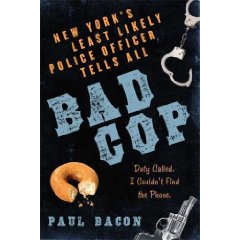
    Paul Bacon’s Bad Cop: New York’s Least Likely Police Officer Tells All is a good book. It’s a quick read and a nice look inside the NYPD.
    My problem is that the hits a little too close to home. Bacon is a self-professed liberal who only stayed in the police department a few years. Errrrr… Sounds like me. But I quit because I wanted something better. Bacon quit because he couldn’t hack it. Bacon was, as he readily admits, a bad police officer. And by the end of the book, I was convinced.

    That doesn’t sound like me. At least I hope not. Even worse, Bacon seems to blame his lack of policing ability on being a (gasp!) Liberal. I couldn’t disagree more. I’m generally of the belief that a lot of people could make good police officers. Paul Bacon does not help me make this case.

    Bacon’s problems didn’t come from his political beliefs, it is the fact that deep down he’s a slacker. A beach bum. His general mellowness and belief that everybody can just get along if just left alone is not liberal. It’s lazy. It turns out Bacon is a good at hanging out on the beach and being a dive-instructor. Perhaps it is those very qualities that made him a bad cop.

    All that said, I really liked the book. It’s a great read, if a bit “lite” (but a hell of lot deeper than most other lite cop reads). Bacon (and yeah, he already knows that’s a funny name for a cop) has a wonderful perspective on the daily life of police officers and some of the absurdities of policing in the NYPD. Plus it’s only $10 on Amazon. How can you go wrong?

  • Beyond Hope?

    Michael East is a veteran police officer in Saginaw, Michigan. He’s also an excellent writer. He has a new book coming out. Beyond Hope?

    Saginaw, not that you’d know, is a pretty messed up place of rusted industry and abandonment. It’s lost about half its population. Even Habitat for Humanity is helping tear it down.

    Mike’s book is great. I read an early draft. But it won’t be on sale for a few weeks.

    This isn’t even in the book. It’s from an email from Mike. But it gives you a good feel:

    Last Devil’s Night, a few thousand volunteers roamed the city to help prevent Saginaw’s residents from burning down these houses. We had numerous cops on overtime. My partner and I were assigned an East Side district and were told to check every abandoned house we could find and make sure the arsonists weren’t setting them up to burn (wood piles, gasoline, etc). At one house we opened the door, saw most of the floor missing and said: “Fuck this, let’s just do an outside perimeter check.” We did and moved on.

    Three days later some kids playing in the neighborhood went into the same house and found a woman who had been reported missing the week prior. She had walked inside, fell through the open floor, but her leg caught on a floor beam and it snapped her leg. She hung there, upside down, for God knows how long and died a slow death. She was inside, dead, the night we decided to skip that house. Creepy.

    Good stuff.

  • Life and Death in New Orleans

    Life and Death in New Orleans

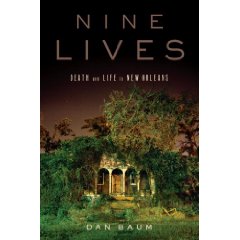
    My friend Dan Baum has written an excellent book about New Orleans. Nine Lives: Death and Life in New Orleans. Baum was the New Yorker reporter covering the aftermath of the flood.

    And it’s not just me who says this book is great. The New York Times gave it a great review. You can read an excerpt here. Then go buy it. You’ll be happy you did.

  • The Company of Others

    The Company of Others

    When I was a cop in Baltimore, I kind of assumed I was the only active police officer going for a PhD at one fo them fancy graduate schools. I wasn’t.
    I’ve also assumed I’m the only former Baltimore police officer to write a book based on time in the Eastern District. I’m not.

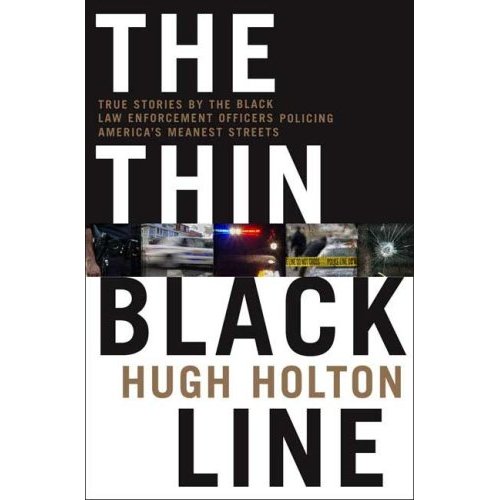
    I’m not certain why I only heard about Daniel Shanahan’s Badges, Bullets, & Bars recently. Professor Edith Linn (retired NYPD) told me about it at the ASC conference in St. Louis. She’s written a great book herself, Arrest Decisions. In it, she quantifies many of the points about arrest discretion I make in my book.

    I’ve ordered Badges, Bullets, and Bars and look forward to reading it. You can read the 1st chapter here. It seems pretty hard core.

    The book is dedicated to:

    “All the excellent Law Enforcement officers who shortened their careers by crossing the thin blue line and venturing into the wrong territory; sometimes into criminal territory. Therefore permanently tarnishing their badge, reputation, family, and all the good that badge stands for. This book is for the police officers that could not find their way back, wanted to make a difference, and unfortunately, could have.”

    Yikes! I imagine most police stayed far away from Shanahan. The stories of mentally unstable cops are legendary and usually great for a laugh… until somebody gets hurt.

    But I’ll withhold further judgment till I read his book. He certainly does not seem like a man you would want to cross.

    You know, if you like police books, there’s a great web site: Police-writers.com. If I checked it more often, I would have know allthe books written by Baltimore police officers.

  • True Confessions

    True Confessions

    A review written by me of The Thin Black Line: published in the Washington Post’s Book World.

    It’s a collection of stories told by black law-enforcement officers. Not a great book, unfortunately. But the review is well worth reading:

    THE THIN BLACK LINE: True Stories by Black Law Enforcement Officers Policing America’s Meanest Streets.

    By Hugh Holton.

    Reviewed by Peter Moskos.

    The stories police officers tell each other often don’t amuse outsiders. While fellow cops laugh, an outsider is left thinking, “Is it funny that a man bleeds to death?” or “You took crutches away from a one-legged homeless man?” But police don’t tell these stories to entertain outsiders. A story is more than a way to bond over a beer after work; it’s an essential tool of the trade.

    Stories provide sense to situations that lack it. Laughing at gore, the softness of human flesh and the misfortune of others isn’t necessarily a sign of an uncaring cop. Gallows humor is a way to compartmentalize, to maintain one’s sanity, to reserve empathy for situations in which emotion might be more productive.

    Before I was a police officer, I loved the TV show “COPS.” But after a few nights in a police car, I realized that “COPS” wasn’t the real deal. The dialogue was stilted, on guard, seemingly self-censored for the more politically correct masses. The Thin Black Line, a collection of 28 oral histories of black law enforcement officers in U.S. cities from coast to coast, is similarly restrained. I’m certain these officers have great stories to tell. They just don’t tell them here.

    Read the whole review here.

  • The Beautiful Struggle

    Two nights ago I read Ta-Nehisi Coates The Beautiful Struggle: A father, two sons, and an unlikely road to manhood (Spiegel and Grau). It’s about a man, a black man, growing up in Baltimore. Despite the horribly sappy title, it’s neither horrible nor sappy. In fact, it’s quite good and is written with a very strong 1st-person voice.

    If you think “The Wire” is hard to understand at times, you’ll have to read parts of Coates’s book very slowly. He uses Baltimore slang like it’s straight from Noah Webster’s mouth. But the style of speech adds a lot to the book. And overall it’s a good quick read.

    I’m not a huge fan of memoirs because they often lack a point. So I tried to figure out a point to this book. It seems to me that the main problem that leads to so much bad in places like West Baltimore begins with young kids getting jumped by other kids while walking to and from school.

    This made me think of Geoffrey Canada’s Fist Stick Knife Gun. I read Canada’s book over 10 years ago and don’t remember it that well. But I think he talks about and identifies the same problem.

    At first, these aren’t fights, or muggings, or even beefs. They’re just kids banking other kids because they can. It’s about dominance, power, respect, and just for the hell of it because it’s fun.

    I’m sure this in oversimplifying things somewhat. But maybe not. You get jumped. You start hanging around others for protection. Things escalate.

    So my question is this: In neighborhoods like East and West Baltimore, how can we stop little gangs of little (and not so little) kids from jumping and terrorizing other little kids?

    Here’s an excerpt from Coates’s book:

    …Painfully I’d come to know that face must be held against everything, that flagrant dishonor follows you, haunting every handshake with all your niggers, disputing every advance on a jenny. Shawn was, at first, true to his better nature, and backed down and held up open hands. But I’d come too far to be gracious. I stuck my finger in his grill—

    That’s right. ’Cause you a bitch-ass nigger.

    —and walked out.

    Nowadays, I cut on the tube and see the dumbfounded looks, when over some minor violation of name and respect, a black boy is found leaking on the street. The anchors shake their heads. The activists give their stupid speeches, praising mythical days when all disputes were handled down at Ray’s Gym. Politicians step up to the mic, claim the young have gone mad, their brains infected, and turned superpredator. Fuck you all who’ve ever spoken foolishly, who’ve opened your mouths like we don’t know what this is. We have read the books you own, the scorecards you keep—done the math and emerged prophetic. We know how we will die—with cousins in double murder suicides, in wars that are mere theory to you, convalescing in hospitals, slowly choked out by angina and cholesterol. We are the walking lowest rung, and all the stands between us and beast, between us and the local zoo, is respect, the respect you take as natural as sugar and shit. We know what we are, that we walk like we are not long for this world, that this world has never longed for us.