
Washington, D.C., 1918. “District of Columbia parks — park policemen.”
From Shorpy.
Happy Opening Day!
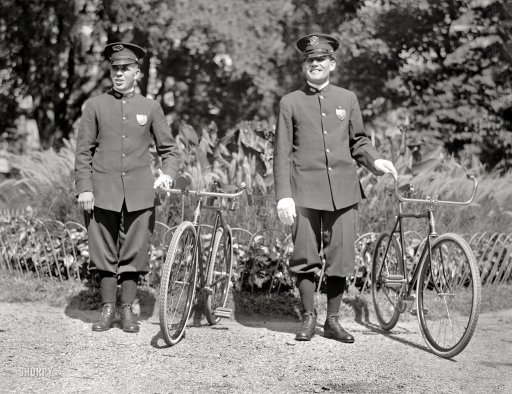
Washington, D.C., 1918. “District of Columbia parks — park policemen.”
From Shorpy.
Happy Opening Day!
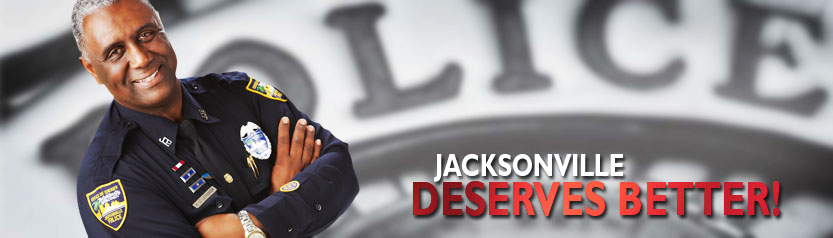
 Ken Jefferson of Jacksonville, Florida, that is. Now I’ve never met Ken Jefferson and I’ve never been to Jacksonville, but I did get this email from a professor at Florida State College at Jacksonville:
I thought you might like this story from my class, an Intro to Communication Class. The context is students are presenting brief plans for change and asking the legislative body (the class) to debate its merits along the conventional problem, cause, solution logic path.
A 17-year Navy veteran, African-American student from North Jacksonville (heavily black and where most crime takes place in Florida’s most dangerous city) relates how he was at the barbershop with the barbershop crowd and in walks Ken Jefferson, a 24-year veteran of the JSO (Jacksonville consolidated city & county governments 40 years ago) who was challenging the incumbent sheriff in Tuesday’s election.
Now, I was already impressed that this guy was taking his campaign to the barbershop, and so was my student. But then he started explaining what Jefferson’s plan for change was in the Jacksonville Sheriff’s Office: bringing back foot patrols.
And so that was this guy’s plan, shifting money from vice and gambling investigation to fund foot patrols…. And the whole class (or at least the black/lower class folks) are nodding their heads saying yes that’s just what we need and then someone says “can we get them bicycles” and I just lost it….
[And I loved] the beautiful moment of a man practicing what he’s preaching by promoting foot policing in the corner barbershop.
I immediately donated $50 to his campaign. But it will do little to even the odds: Jefferson has raised $18,000 compared to the incumbent’s $203,000.
I think the election is today. So all you Jacksonville readers (er… well, there’s at least one) get out there and vote for Jefferson!
[Update: Jefferson lost, with 37% of the vote.]
The usual. State and federal tax cuts. Local budget cuts. Union workers get screwed. The full story is here.
Because of the city’s ongoing budget woes, no police academy classes are scheduled for next year, which means that instead of the 1,861 sworn officers who were working for the department in July 2010, retirements and resignations will drop that number to 1,745 by June 2012
…
“I can’t say that the crime rate will rise because we lose officers … but all creative ideas will be on the table,” [Interim Chief Jeff Godown] said.
…
The department could even be forced to eliminate its popular community policing foot beats and “put the officers back in cars to answer radio calls.”
Well that’s not very creative. Why is foot patrol (and mounted) always the first thing to go? Partly because most cops don’t take foot patrol seriously. It’s just “hug a thug.” And horses area bit for show (but what a show!).
Foot patrol officers can answer calls, too. And they should. I’d even be for mounted units on radio patrol. Why not? I thought we needed to be creative. Are two-person units on the table (does S.F. uses two-officers per car? I don’t know)? Have one officer per car. If I policed solo in the Eastern District, you can do it, too. And if you need to cut units, why not less car patrol? That’s always the last to go. I wonder why.
I think I know:
The public don’t notice if you cut a few patrol cars. So it’s a pretty useless threat to make. But if you threaten to sell the horses to the glue factory… then everybody is up in arms. So when times are tough, the P.D. can’t say, “We’re going to cut cars, response time will go up slightly. It won’t affect crime.” Instead, the police department threatens: “You’re gonna cut police funding? Then you won’t see officers walking the beat. Cut us more? We’ll go back to reactive policing and nothing else. Still not enough? We close your police station.” It actually is a real threat. But it’s not real leadership.
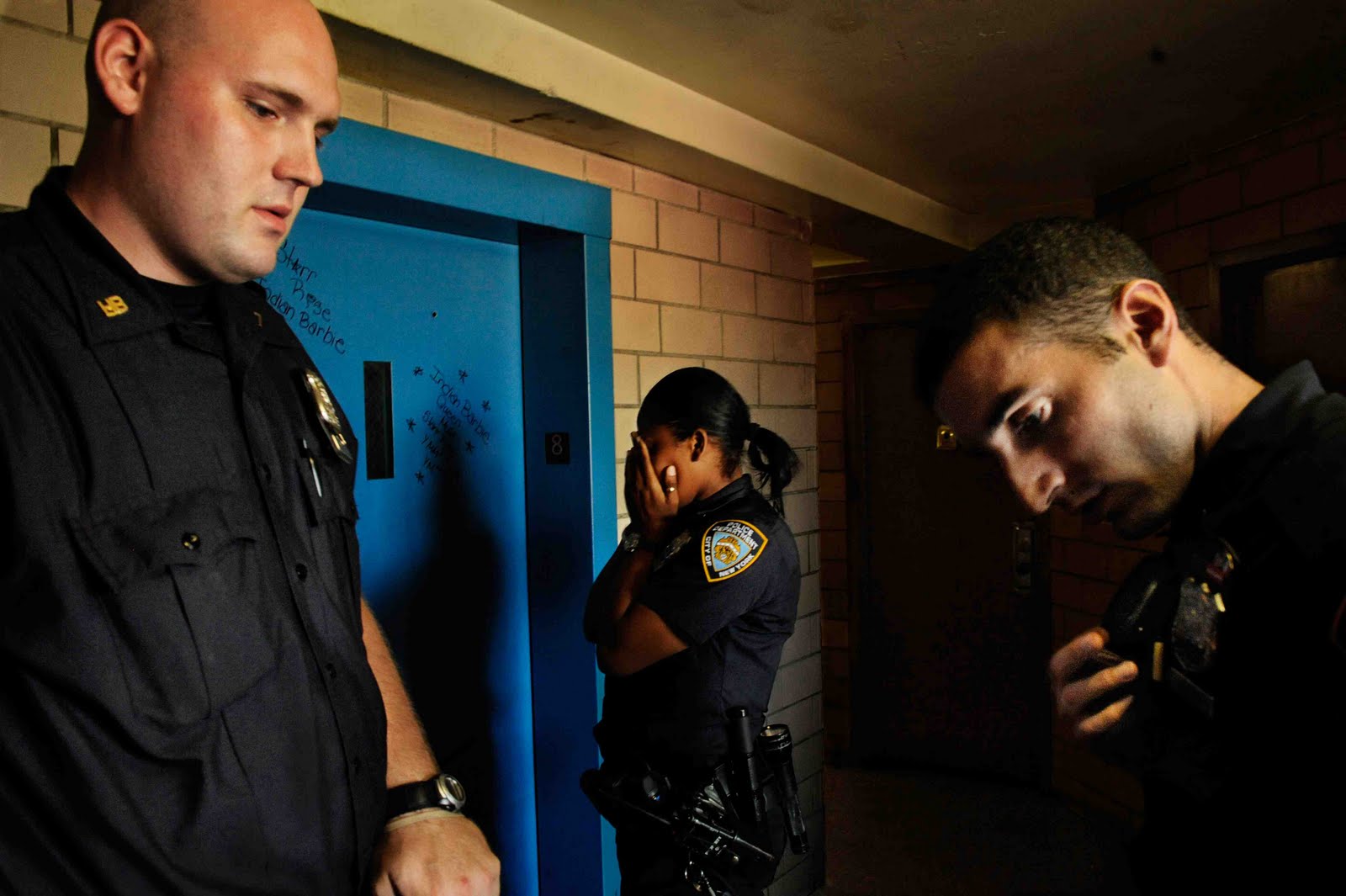
Under “portfolio,” check out NYPD Operation Impact (1 & 2), from former police officer and photographer Antonio Bolfo.
In an interview he says:
I really liked the story of Operation IMPACT in general: how new, inexperienced cops get sent to the most dangerous places, places where a cop really should know what he is doing.
. . .
I was very worried that people [in France, seeing my photography] would view the story as propaganda because of my background in law enforcement. But fortunately that was not the case. People showed a lot of empathy to the officers, which was quite surprising to me because I am used to people hating the police, since New York is a very anti-cop city. Operation IMPACT is not a political statement but a human story of individuals who choose to be police officers in a very dangerous place. And I am pleased that message came across.

The Haiti pics are pretty intense, too.
(Thanks to a former student of mine)
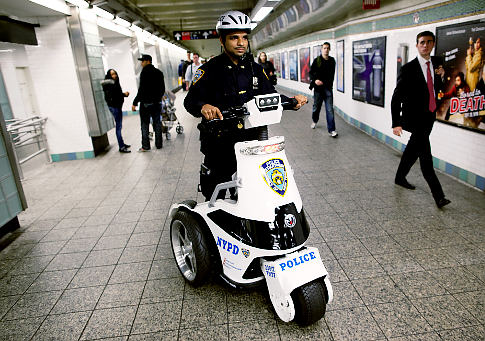
Does anybody believe this is a good idea for subway patrol?
 Granted with only 13 the NYPD isn’t making a major investment, but it’s still a big waste.
“Their biggest benefit is increased police visibility, as they put an officer heads and shoulders above the crowds, police said” in the Daily News. What? Actually, no. It puts police about six inches above their normal height. And if that were so important, hire taller cops. Or stand on a phone book. Or how about putting police in top hats? (personally, I would love to have an official NYPD top hat.)
The downsides of these overpriced toys are almost so obvious I feel dumb for even having to point them out–along with cops in bike helmets looking incredible dorky–what about stairs? What about turnstiles? What if the elevator to the street breaks? And God forbid an overweight cop is seen on one of these. I mean, really, cops are supposed to ride up and down one subway platform?
Once again, I’d like to point out there’s nothing wrong with walking!
It’s always tough when you knowsomething but can’t convince others.
I know foot patrol works. At least I think I know. I’ve done it.
But there’s so little research out there. There’s no reason we should all still be quoting a study from 30 years ago (which did show that foot patrol reduced public fear).
Foot patrol has worked in New York (it would work better without quotas). And now there’s some research by Jerry Ratcliffe coming out of Philadelphia. As reported in the Philadelphia Inquirer:
Temple’s study, which covered three months, showed a 22 percent drop in crime in areas covered by the foot patrols. Arrests were up 13 percent.
As in other major cities, crime has been on a decline in Philadelphia. Violent crime – down in all but three districts – dropped 7 percent citywide in 2009 compared with 2007, with homicide down 23 percent and aggravated assault down 4 percent.
News travels, even to Bangkok. The story in the Sun.
And while I’m at it, here’s a story about Commissioner Bealefeld wanting more foot patrol. Maybe he read my piece on foot patrol, “Angels in Blue: The Virtues of Foot Patrol.”
Continuing my conversation with Colonel (Ret.) Margaret Patton of the Baltimore Police department, I recently received this email:
I read your added chapter[the new chapter in the paperback edition of Cop in the Hood].You should be a police chief. The term “Policing Green” is very catchy and, more important, very smart.
Foot patrol is a key to addressing crime and working with the community in a positive manner. The idea of using a monetary carrot for the officer and linking it with the reduction of the use of gasoline was brilliant.
My husband, before he made sergeant, was a foot officer in south Baltimore before it was a trendy place to be but he loved his foot post. Cross Street Market was on his post and he still remained friends with many of the people he met during that time. I remember meeting the “Chicken Man” who sold chickens (of course) at the market soon after we married. Several of his friends from his foot post came to his funeral as well as his fellow foot officers from “way back when”.
My husband always said that he was sorry that he ever took the sergeant’s test because he enjoyed his foot post so much. He said that a foot post was one of the department’s secret gems (“gems” may be my word but you understand).
We speak, but who listens?
Here’s a great interview from Investigative Voice with Baltimore homicide detectives Irving Bradley and David Hollingsworth.
You had to be an actor. I had to convince you, what I was telling you to do was the right thing to do. Even though before I got you, you had torn out every window in the neighborhood, you had torn up somebody’s car, and threw a hatchet at somebody — all of this prior to my arrival. I had to convince you that fighting me was wrong, and that it would be better for you to come with me and let me lock you up so I could solve your problem.
You see, we were on our own; the community is who you depended on. Those neighbors, they knew who the assholes were in the neighborhood. When they saw you confronting them, they would get on the phone and call the police and say, “Officer so-and-so is out there and I’m sure some shit is going to happen.” And you would look around the corner and an officer would be coming for back-up, but that was initiated by the community. Because you protected them.
The worse thing they could have ever done is put everybody in a car and create this 911 system without proper instructions. Because what is an emergency to you is not necessarily an emergency to me. You call 911 and say, My cat is stuck up on the fire escape.” And another guy calls 911 and says, “I have stabbing in progress and if someone doesn’t get here soon he’s going to die.” Both are 911 calls.
But the officer in the car has got to go; he does not have the discretion to say, “Okay, that cat got up there, he can stay there.
…
You should know the players, you should know who is on your post. If you have a 64- year-old man on your post, I would know him. Like I said, it’s the basics that are lost.
“You really can’t arrest your way out of the problem,” Bradley says.
When I was a cop, I met the mayor in 2001. One meeting. One-on-one. Nice guy, I thought. I remember telling him, “You know, Mr. Mayor, you can’t arrest your way of the problem.” He looked at me quizzically and said, “Why not?”
On Zero Tolerance, Hollingsworth says:
Where’s the crime? They have no idea what a tolerable crime is, and what an intolerable crime is. It depends on the neighborhood. Your dog, you’re walking through Charles Village, and you have Foo Foo with you and Foo Foo craps on the ground, you put it in the bag and you keep walking. Well, on Mount Street, a guy is walking home with his bulldog and the dog craps in your yard… what are going to do, call a police officer and say, “He ain’t pulled that poop up?’ It all depends.
…
Get out of the car. Walk in the neighborhood. They would see a world of difference if they could get out of that car. Get out of the car and you’ll learn real fast.
These are real police. And they were Broken Windows when Broken Windows wasn’t cool.
Part I is here. Great stuff on community policing back in the old days. (But they’re actually wrong–not morally, but legally–about the requirements for frisks. I couldlegally frisk almost everybody on my post. Reasonable suspicion and the Terry Frisk go a long way to get me touching your pockets).
(And I’m glad Lt Peel is still raising hell. I liked that goof when he was just a crazy sergeant with a dirty shirt. Oh and the things he read! I couldn’t hang with him intellectually… and I was the Harvard Student! I got to send him my book. If you’re reading this, LT, will you get in touch with me? I’d love to hear what you’re reading this month.)
Part II is here.
[thanks to a Canadian reader]
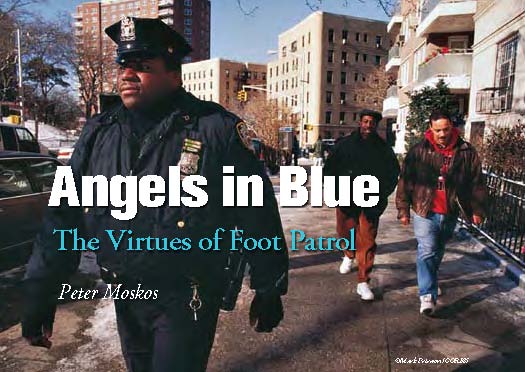
An article of mine, “Angels in Blue: The Virtues of Foot Patrol,” is being published in The American Interestmagazine. They’ve given me permission to spread the article around. But you have to buy the magazine to read all the other articles (seems only fair).
The article is adopted from a new chapter in the paperback edition of my book, Cop in the Hood, which is due out later this month.
The pattern today is when police start driving, they never “walk foot” again. That represents a loss for community and police alike. Foot patrol officers knew their neighborhood because in a real sense they were part of it. Beat cops watched people grow up, get jobs, or get in trouble.
…
Beyond a few token patrols, police chiefs say foot patrol is impossible nowadays because there simply aren’t enough officers to go around. But there aren’t fewer police officers than there used to be; they’re just assigned differently–riding in cars and chasing the radio. The reason police officers resists foot patrol is simple: They don’t like it. In a car culture, cars are status. Walking is bottom-of-the-barrel duty, and tough work–when it rains you get wet.
…
Just as overtime pay drives discretionary arrests, extra pocket money would change the very culture of patrol. Officers need towant to walk foot, and more money is a way to make them want it. Only with willing officers does foot patrol bring the best possible benefits.
Read the whole article here.