Tag: ghetto culture

  • Tough Baltimore arrest

    Tough Baltimore arrest

    Monument and Rose. 325 Post. Cop gets sucker punched trying to take a guy into custody.

    Anybody know if the original 30-1 got away? Was he backing up time? (email me at mail@petermoskos.com if you don’t want to post a public comment.)

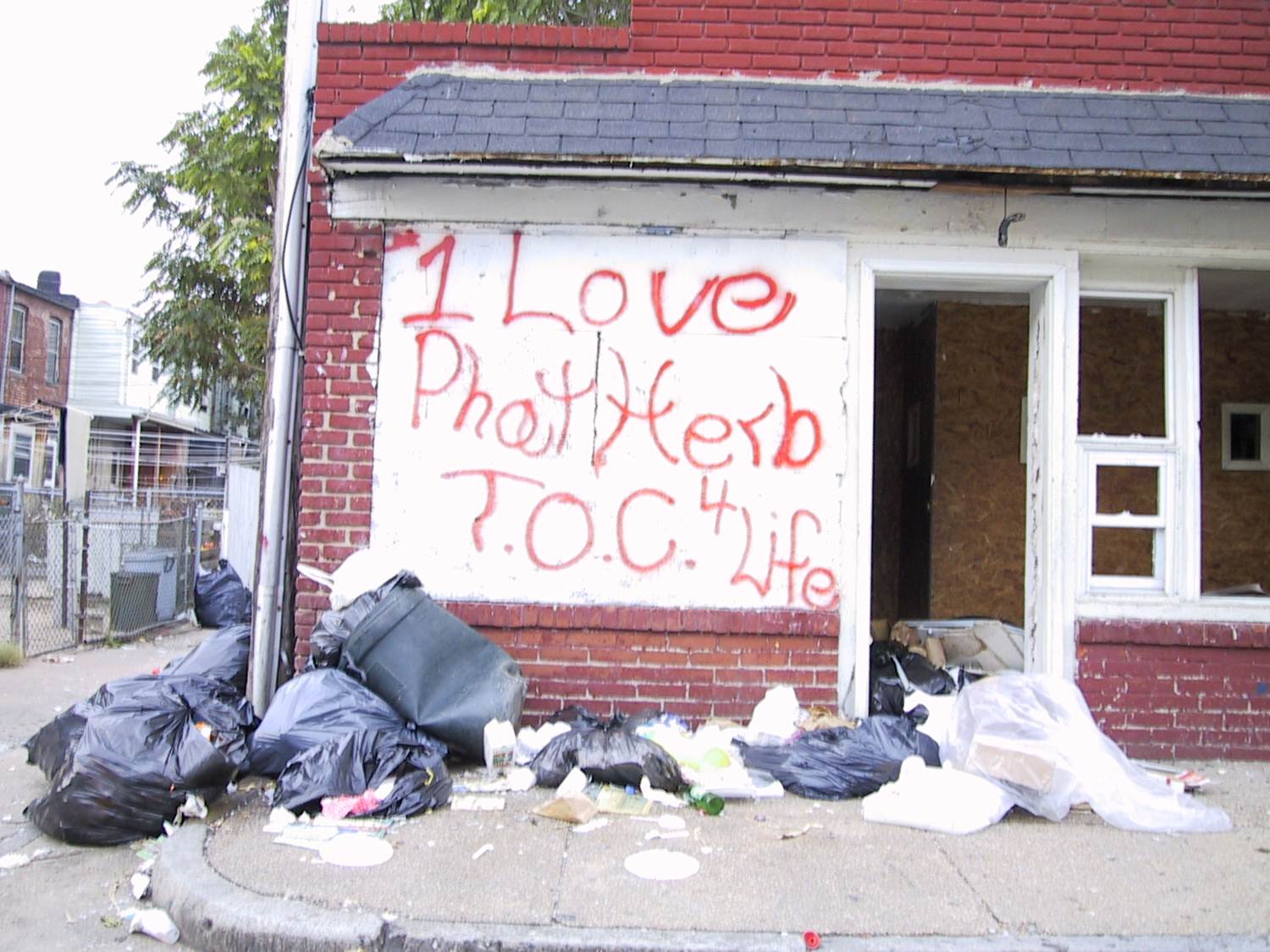
    30-2 is lucky he didn’t end up like like “Fat Herb,” 11 years ago.


    And is the term “30-1” still even used among Balto PD? Or was I, a G series, part of the last generation to use it, as we were the last to fill in a box 30-1?

    [thanks to Gotti and LvT for the link. The pic is mine.]

  • Street Justice

    Justin Fenton has a good article describing a killing and a revenge killing in Baltimore. It doesn’t provide the answers, but it does help clarify the picture as to why things are so damn F-ed up.

  • Alphabet City Memoirs

    When I re-posted those pics of a Baltimore crack house, I found one of the comments so interesting I asked the commenter to turn it into a guest post. Eddie Nadal, retired NYPD, graciously agreed. These are his words:

    I recently visited the Lower East Side in New York, the same LES where I was born, where my grandma lived for over fifty years, and where I worked as a cop for seven years in the 1980s. I felt like I’d stepped into an alternate universe. The Lower East Side that I knew back then was, to put it plainly, a drug-infested hellhole.

    At the first “feeding time” (the early morning hours when junkies venture out to get their first fix of the day), the streets looked like an open-air market. Drugs were openly bought and sold, and hundreds of people congregated on the four corners of Avenue B and 2nd street. The neighborhood was overwhelmingly Hispanic — the only time you saw a white person down there was if they were on their way to cop or leaving after copping.

    The city’s leaders announced that they’d had enough of the lawlessness and crime of the area, and to clean up the neighborhood, the NYPD started Operation Pressure Point in early 1984. The LES was flooded with cops who were given carte blanche to kick-ass first, take names later. I was one of those officers.

    Maybe I was just young and naive, but I truly believed that we were cleaning up the neighborhood for the benefit of the people who lived there, people like my grandma, people who were just trying to get by and live a decent life among so much squalor. Because despite the crime, junkies, and dealers on every corner, there was still life on those streets. There were still the corner bodegas, the panaderias with their delicious cafe con leche, the salsa music coming from open windows.

    Now those bodegas and panaderias are mostly gone, replaced with organic wine bars and trendy art galleries. As it turned out, real estate developers had had their eye on the area long before we moved in to clean it up, buying up properties at bargain basement prices and waiting for the moment when the neighborhood became safe enough to be profitable. Millions upon millions of dollars were made in the following years. The city had no intention of cleaning up the neighborhood for the decent people who lived there — there was too much money to be made by forcing out the poor and working class residents and instead turning those buildings into luxury apartments renting for $3,500 a month. Rent control and rent stabilization did exist, but not nearly enough to keep the neighborhood intact.

    The risks we took and the sacrifices we made back then were not to benefit the community I knew — a community that no longer really exists — they were to make money for the city and for the developers. Ihttp://www.blogger.com/img/blank.gift’s hard not to feel a bit resentful of that on some level. And to me personally, it’s upsetting to see that the neighborhood and culture I knew has more or less disappeared.

    Eddie Nadal has a new blog, 10-66 Unusual Incident. (Hmmm, 10-66 must be another one of them fancy NYPD terms I hear around town, like “perp,” “skell,” and “RMP”.)

    [update: here’s an article from the New York Timeswith a bit of the same theme.]

  • 1 in 4 leave Detroit in past 10 years

    I bet Baltimore’s Eastern District is no different. Because I do know that between 1990 and 2000, the Eastern lost 30% of its population, can’t imagine the last 10 years were any better.

    Here’s a story about Detroit. I’ve still never been there.

  • Movies: Adjustment Bureau & Precious

    Not that you asked (you didn’t), but here’s what I thought of two movies I just saw:

    “Adjustment Bureau.” Good stuff. I liked it. Cool. Great concept. Good New York movie.

    But really I’m here to tell you about the other one: “Precious.”

    What? “Precious”? Isn’t that so 2009? Yes, but I didn’t see it till 2011.

    Why? Because every time somebody told me it was good I would think: “Yeah, right, like I need to sink into a depression coma for two hours watching a fat, illiterate, HIV-positive Harlem girl get knocked up (twice) by her daddy, brutally battered by her mother and laughed at by a world eager to pound abuse on her 16-year-old ass.” Well it showed up via Netflix and we reluctantly put it on.

    Well, take it from Rolling Stonecritic Peter Travers, the above quote is from his review:

    When I tell people how good this movie is — and I can’t shut up about it — they flash me the stink eye. As in “Yeah, right, like I need to sink into a depression coma for two hours watching a fat, illiterate, HIV-positive Harlem girl get knocked up (twice) by her daddy, brutally battered by her mother and laughed at by a world eager to pound abuse on her 16-year-old ass.”

    Won’t you dickheads be surprised. . . . Sorry, haters, Precious is an emotional powerhouse, a triumph of bruising humor and bracing hope that deserves its place among the year’s best films.

    It’s true. But here’s what the reviews don’t tell you:

    1) The movie is really cool visually; it’s got style and energy. It’s not at all cinema verite faux-documentary and depressing lighting. What other movie would have a father banging his daughter and I’m thinking about bed springs and the cool wallpaper?

    2) It may be one of the most un-politically correct film made since Birth of a Nation. There’s a baby with Down Syndrome and the baby is called “Mongo.” Mongo? “You know, short for Mongoloid.” Ohhh…. More significantly there is a very-bad very-racist mother in this movie. She wants kids for their welfare. She’s also got good aim when chucking an ash tray. She happens to be black.

    It’s kind of amazing the movie gets away with everything it shows. Is the film realistic? Well, it’s certain not typical… but do such situations exist? Yes (though usually the various misfortunes are divided among a few more people). And police often end up picking up the pieces. Though police don’t make an appearance in the movie, police–or at least Baltimore police–will relate.

    Cops I know deal with this crap all the time. But when police start describing their little slice of reality, some people just call them racist. In some ways, watching this movie made me feel like I was back in some of the so-called “homes” I saw in Baltimore’s Eastern District.

    But don’t see the movie for the message or lack of message. See it because it’s an entertaining flick. From start to finish. The acting is great, and, as Bill Cosby used to say, “If you’re not careful you may learn something before it’s done.”

  • Stealing bricks right off off the buiding

    Sounds like a headline you might expect to hear out of Baltimore.

    But it isn’t! This story is out of St. Louis.

    (Though I’m a bit ashamed to mention that the only reason this probably isn’ta problem in Baltimore is because Baltimore brick isn’t particularly good. Hence Formstoneand painted brick. Baltimore brick is pretty enough, but kinda soft and easy to tunnel through, as many a burglar knows. Speaking of which, are they still stealing lampposts in Baltimore or has that somehow stopped?)

  • Lunch in Newburgh, NY

    Lunch in Newburgh, NY

    “Let’s bike over that bridge and have lunch in Newburgh.” That’s what I told my wife. It seemed like a good idea at the time. Unless you know Newburgh, NY. I didn’t.

    My wife and I were on a weekend biking getaway and found ourselves in Beacon, NY. Beacon is a pretty but depressed place (though it’s less depressing since Dia: Beacon opened in 2003). I figured Newburgh, on the other side of the river, must be the “nice part of town.” Mostly I wanted to bike over the two-mile bridge that crosses the mighty Hudson.

    The bridge is impressive. Over we went. And then we biked downhill and saw signs to a ferry. We were elated at the though of not having to bike back uphill. There are a few restaurants by the river, but they all looked new and touristy and none-too-inspired.

    We can do better, we said. So we locked our bikes, crossed under a train track, and headed up a grassy slope looking for some hipster cafe or yuppie coffee-shop.

    At this point, if you know Newburgh, you’re laughing.

    There are lots of “cute” towns on the Hudson. Newburgh isn’t one of them.

    We were greeting by old no-longer courthouse and rundown buildings. The black part of town, I thought. We made a right on Liberty Street looking for the business district of this very historic port city.

    I don’t mind run down and rough around the edges. In fact, I’m rather fond of it (for instance, two days earlier we had spent a very nice day in Peekskill, which you won’t find in any guidebooks). But this quickly got grim. Very grim. I’ve rarely seen such grim. It was kind of like Baltimore’s Eastern District, but the buildings and view in Newburgh are prettier.

    Like most urban ghettos, Newburgh is heartbreaking. There used to be city here. And Newburgh, if you squint hard enough, is beautiful — the view, the buildings, the history! But between the vacant lots and boarded up buildings live human beings with no jobs, little school, and no hope.

    An entire class of people forgotten and abandoned by everything but lame social services and the criminal justice system. Is it a failure of capitalism? Maybe. But regardless of who is to blame, it makes me a bit ashamed to be American. Can we really not do better?

    I was thinking all these heady thoughts and more but at some point I just had to ask, “What the hell are we doing here, and where are we going!?”

    Now I’ve found that most people in the ghetto are incredibly nice, especially to a polite lost white boy. But I’m still not going to ask directions from just anybody lounging about. So I stopped when I saw a very old man painting his house.

    “Excuse me, sir, but can you tell me where…,” I was kind of at a loss for words here, “downtown is?”

    The old man looked at me quizzically. I wondered if he could hear. I also realized how stupid my question was because I was literally in the down part of town. Newburgh is on a steep slope. We were standing at the bottom. And I’m asking which way is down. At this point words kind of failed me. What was I looking for? Luckily, the man figured me out, “You mean, where are the stores? The businesses?”

    “Yes. Where can we eat lunch?”

    “Broadway,” he said, “a few blocks back that way. You can’t miss it.”

    It was back in the direction we came from. So we went up a block (we try not to retrace our steps in any part of town) and headed back.

    “He’s not going to finish painting that house,” my wife said glumly.

    “Why not?”

    “He’s not going to last that long.”

    Who can say? But Broadway indeed could not be missed. It’s truly broad. And also sad. Nowhere non-ghetto to eat. Chinese take out. A very greasy dinner. Ninety-nine-cent pizza. There was a Mexican restaurant that seemed like the best option. But even that was a sad looking place with no customers.

    There’s a bit of immigrant influx in Newburgh. But not enough. I felt sorry for these guys standing on a corner waiting for a bus that runs once an hour (till 5pm). Can you imagine trudging across Mexico, risking your life to cross the border illegally, all while driven on by dreams of the promised land and a better life, and then ending up in Newburgh because rent is cheap?

    What I can’t get over, though, is all this good infrastructure abandoned. They built things to last back in the days. Train stations and ferry terminals and homes and streetcars. And rather than deal with problems, we just left them literally to rot as we built suburban roads and homes and malls and roads — all with government money — and left the city.

    I mean, even a parking lot was abandoned! How do you abandon a parking lot? Never before have I felt wistful nostalgia for a parking lot, but there was a great big old sign advertising “safe overnight municipal parking” pointing to a block of chest-high weeds.

    That grassy hill we climbed? Used to be beautiful buildings. Run down, but they could have been saved. Instead, in the 1970s, they torn them down for “renewal.” But they ran out of money before they could actual “renew” anything.

    Here’s a “then” picture. I think of Water at 2nd, looking north.

    And now:

    For what it’s worth, the homicide rate of Newburgh isn’t that high. It’s lower than Baltimore’s and a fraction of where I policed. But, I’ve since been told, it’s still the most dangerous city in New York State. I’m sure there are nice parts of Newburgh. But I didn’t see them.

    Then we worked our way over to Liberty Street on the south side of Broadway. It’s considered the newly “gentrified” part of town. I put that in quotes because it means a few stores have opened. And that’s better than nothing, I suppose.

    At one, an old lady missing some teeth ran out of her store when she saw us reading a flier in her window about an “Art Bus.” She told us about her wonderful cheesecakes. She didn’t have any that day because, “Business hasn’t been too good recently, and I don’t want things to sit around.” But she made us promise to come back. I doubt I will. But you never know.

    A list of art attractions that includes Razor Sharp Barber Shop does not inspire much confidence. And Hip-Hop Heaven was selling a bunch of white t-shirts. It was actually kind of funny to see “the uniform” on display. But I guess you gotta buy your white T’s somewhere.

    Ironically, we did end up having a very nice lunch in Newburgh. We ate at the Wherehouse and our glum spirits were lifted by Anita, the charming and ever-cheerful bartender.

    “One problem,” said Anita, “is that there are no art programs in school. Nothing to give kids the idea that there’s something bigger in this world. And then the few programs they do have, basketball and such, are all in school. What kind of kid wants to spend all day in school and then stay in school?”

    I wish I had the energy and willpower of others to make Newburgh a better place. But I don’t. Like most people, I don’t want my neighborhood to be a struggle or a place where I fear for my safety. Luckily, I have enough money to choose where I live. Not everybody is so blessed.

    And then we left. We walked back down the hill, got our bikes, and waited for the ferry. About to take a picture of the boat, I was told by the captain, “You can’t take pictures of the vessel. Homeland security.” Whatever. But he was nice enough about it, and I was too tired to question the logic or the absurdity of a terrorist putting Newburgh on their to-do list. But the picture I didn’t take of “the vessel” would have been better than this one I had already snapped.

    In the background, you can see a bit of the bridge we biked over. Newburgh faded into the distance.

    And the Hudson was beautiful as a storm passed nearby.

    A beautiful rainbow appeared in the east.

    And the captain saw no national security threat in me taking pictures of his cute dog.

    And here, for the hell of it, are a few other shots from our bike ride. New York City to Newburgh. Four days. Six counties. And a train ride back. No speed records were set.

    Beacon Falls.

    South Bear Mountain Pass.

    New York City drinking water. Sure tastes good.

  • Ghetto Mortality

    In the course of writing Cop in the Hood, I researched what I thought was the bombshell statistic that, conservatively estimated, more than 10 percent of the men in the Eastern District are murdered between the ages of 15 and 35 (pp. 219-220).

    That bomb sure was a dud.

    Maybe everybody already knew. I like to think that. Because the alternative is that nobody cares. It’s a sad thought that such a rich and powerful nation doesn’t mind that so many, thanks mostly to the bad luck of being born in a shitty place and/or to a shitty family, are more likely to be shot and killed than are soldiers at war.

    Do those murdered make some bad choices and do some bad things. Of course. But only in the ghetto does a bad choice or two lead so certainly to destruction and death. And only in the ghetto, even if you make good choices, do you so routinely get nothing for your efforts but a beat down.

    Anyway, I was thinking about this again because the New York Timeshas a bittersweet feel-good story about a cop running a boxing program in St. Louis. One of the kids seems to be making it.

    But overall the odds are horrible.

    Of the 30 children from the 1995 team, Cunningham, now 45, believes that nine may be dead (at least six are confirmed), with the rest roughly divided among prison, the Bloods and the Crips.

    One-third dead. One-third in prison. Most of the rest in gangs. Clearly, if I might restate the obvious, something isn’t working.

  • “I feel as though…”

    These are adopted from my field notes:

    It’s 1am and ______ and I are on the way to John’s Express to pick up a pizza I ordered 10 min. earlier. They said they’re closing at 1am. I’m hungry. We’re going south on Broadway past Monument and the Hopkins folks are waving to us. I wave back. But they really want us to stop. “Son of a bitch!” I say.

    The Hopkins security tells us that a woman with them there has been raped. I suspect she wasn’t. But it’s not an obvious failure-to-pay case so I think it may be real. I talk to the woman and ask her what happened. She was with a guy and says, “I feel as though I was raped.” The cop in me knows that the “I feel as though” means it didn’t happen. Still, it’s my job to figure out what did happen.

    She says, “We was just kicking it.”

    So I start asking the important questions. These questions might seem insensitive to some. But these are questions that need to be asked. And it’s my job to ask these questions. I can be sensitive, but I’m not a rape counselor. I’m investigating a potential crime.

    “What is he to you?” A friend.

    “Where did you meet him?” On Central.

    “How long have you known him?” I just met him.

    “What were you doing on Central?” Walking.

    “Where did this happen?” Over down there a few blocks.

    I ask some more questions. All in all, she’s pretty straight with me. And she doesn’t look bad for a 25-year-old (later I find out she’s 19). She tells me she wanted $20 and got $5. They have sex. It’s never clear to me exactly how consensual this was. But what she’s most upset about is not the perhaps forced sex but that he took her jackets before kicking her out. And not just one jacket, but three. It’s cold out.

    I ask her–sincerely, not sarcastically–what she wants. “I just want my jackets back,” she says. That’s not an answer I was expected. But at least this, I think, we can do.

    My partner and I go to the place where whatever happened happened. I knock on the door and someone else answers the door. Then the guy in question comes down stairs. I get him alone and say, “Look, this woman is saying some very serious things. [I don’t use the R-word because I want to cover my own ass, but I make it pretty clear] … She’s also saying all she wants is her jackets back. Why don’t you make this easy for all of us and find her jackets and give them to us. Then we can go and leave and everything is cool.”

    First the guy says he doesn’t know her. Then he says she was with his brother, who left [not very convincing]. Then he goes out the back [luckily he came back] and comes back with three jackets. We take the jackets and leave.

    We give the woman back her jackets and she thanks us.

    We tell the woman she should quit her crazy lifestyle and wish her the best.

    And then we go on our way. I make it to John’s Express at 01:20 and get my pizza.

    Best of all (from a cop’s perspective), because the call was on-view and not called in, there was no paperwork.

    Did I handle this by the book? No. Was the woman raped? Hard to say. Could I have locked him up? Yes. Could I have locked her up? Certainly. Should I have locked either up? I don’t know. But I didn’t.

    She wanted her jackets back and I got them for her. I felt strangely satisfied at how I handled this situation. Was I right?

  • Rape Claims in Baltimore

    While I was out, there’s been a bit of a brouhaha over a Sunreportthe fact that “since 2004, Baltimore has led the country with more than 30 percent of rape reports marked ‘unfounded’ by detectives, meaning police believed the victim was lying.”

    And though I applaud Bealefeld for his generally sensitive handling of this issue, forcing officers to call a detective or a sergeant whenever somebody utters the R-word isn’t really going to help matters.

    It’s not politically correct to say so, but of course many supposed rape victims in Baltimore are not, in fact, raped (more on that below). Certainly that’s no solace to those who areraped and not taken seriously by the police, but I suspect false reports of rape are related to Baltimore high level of poverty and heroin use more than anything else. Perhaps that is why Baltimore’s stats are so out of sync with other cities. I’d bet–if rape stats were reliable across jurisdiction, which they’re not–that false rape claims would be directly proportional to poverty levels, drug addiction, and thus the number of women turning tricks. Of course you could turn those stats around and say that cops just don’t care about poor drug-addict rape victims.

    It’s certainly true that some patrol officers cops are probably horrible at dealing with rape claims in the city. What can one really expect from some poorly paid 22-year-old macho guy straight out of the suburbs and the academy? And certainly a few cops can’t fathom that a prostitute on the job can be raped. And yes, most cops will do their best to talk everybody, potential rape victims included, out of going to the hospital because of the inevitable hours of waiting involved.

    But all that said, what too many non-police don’t realize is how many lies and how much gray exists in the work police deal with every day. That’s the real, un-politically correct world cops know all too well and navigate all the time.

    One time when I was police there was an actual stranger on young-woman-walking-down-the-street-going-to-work kind of rape. It’s the only one like that I can remember from my brief time on the street. I was surprised at how all we normally cynical cops swung into action and worked hard to catch the bad guy. At the time, I asked a few in my squad why they suddenly cared so much about this rape as opposed to all the others “rape” victims we deal with. “Because she really was raped,” was the generally answer. And the fact she was a working girl and not a “working girl” also mattered.

    So if this woman was “really raped,” what does it mean to be “not really raped”? The obvious example is a woman turning tricks who isn’t paid. She’s pissed off and says she was raped. It’s like the guy buying drugs, who gives money, gets nothing, and calls in a robbery. How often does this happen? Quite frankly, a lot. There may have been a crime, but it’s not what the call came out as. And it doesn’t help matter than the “victim” has also committed an arrestable offense.

    The “failure-to-pay” victim doesn’t really want to go through the rigmarole of being a rape victim. Hell, she wasn’t raped. She consented. She just wants her money. Short of that, she wants the guy who stiffed her to spend a night in jail. It’s a reasonable request morally, but not legally. What is the cop supposed to do?

    Another problem is that some women, at least in Baltimore’s Eastern District (especially those who are familiar with the system) simply don’t want to deal with hassle of being a rape victim. Going to a hospital to get examined and going through the ordeal of a “rape kit.” What’s the point? Especially if your attacker was an intimate or a John. These women want justice, but it’s not a kind of justice police can provide.

    Let’s say you’re having an affair and don’t want to leave. And then on the way home to your main man you sober up and realize your fling is going to talk. How often does this happen? More often than you probably think. Or let’s say you really are raped. You have a drinks and make out a little with your ex. When you want to leave but he says no and forces you to have sex. Either way you call police and an officer shows up.

    The officer asks some tough questions because the officers assumption is that you’re not telling the whole truth. Why? Because nobody tells the truth, the whole truth, and nothing but the truth. It’s the officers job to figure out some version of the truth. And when this happens, you, the rape victim, have a decision to make.

    Option one is to officially become the rape victim. You’re going to have to answer police questions, get intimately tested at the hospital, and then go through the criminal justice as a victim. Option two is to talk with friends or family or a councilor, maybe have a stiff drink or three, cry, and then take a very long shower and try and get some sleep. Which would you choose? Which is the better option? I have no idea.

    And when I was a cop, after I presented option one, I didn’t think it was my place to criticize a woman for choosing option two. If a woman says she doesn’t want to go through with testing and criminal prosecution, who was I, a young man, to tell her otherwise. What do I really know about such matters?

    What can or should the police do in these cases? It’s not police’s fault successful prosecution demands a rape test. It’s not police’s fault that crimes have to proved beyond a reasonable doubt. It’s not the fault of police that people sometimes lie.

    I may provide an interesting example tomorrow.