Tag: history

  • Those were the days… The Evanstonian

    This isn’t about policing in the old days. It’s about me. Or more specifically, my old high-school newspaper, the Evanstonian, in the late 1980s.

    I was just cleaning house (which, admittedly, is a rare activity) and stumbled across my old bound collection of Evanstonians.

    Sara Agahi (nee Rubin), my former student editor (before I became one), still likes to take credit for all my writing success. Perhaps she deserves it. So did Mr. Ronald Gearring, my sophomore English teacher (who I believe passed away a few years ago — Most amazingly, to anybody who knows ETHS, is that Mr. Gearring kinda secretly lived across the street, on the 1600 block of Dodge Ave… just a few doors down from the house from which a student on the high-school front lawn was shot in 1988).

    But pitty poor Mr. Rodney Lowe, the fine journalism teacher and faculty adviser of the Evanstonia. He took over from a legendary journalism teacher and had to deal with a declining school paper… and me.

    From the March 10, 1989 Evanstonian, I came across this line, written by me: “I have succeeded in my goal as a writer if people read my words and think, discuss, and questions — whether in agreement or opposition — the issues I raise.” I couldn’t agree more. But, hey now, what was that about?

    Well, in just two issues of the school paper, I had managed to insult a vengeful Dean (“Why doesn’t my dean use correct grammar? Or are double negatives and ‘ain’t’ just a post-modern liberal approach to student relations?”), bring attention to the Superintendent (“The day Robert Goldman tries to dry his hands with flimsy toilet paper will be the day all bathroom are stocked with paper towels.”), and, with this line, provoke a girl to track me down and seriously threaten me: “Does anybody out there have a Coach Sheehan photo album?”

    [Turns out this girl was the very same he took pictures of! In his defense, they did get married during his trial for child pornography, for which he was found guilty.]

    I went to a great high school. Seriously!

    But poor Mr. Lowe. What a pain in the ass I must have been. Mr. Lowe may not have loved what I wrote, but he did support me, and probably more than he wanted to. And should you read this, Mr. Lowe, thanks for getting me out of all those classes I ditched!
  • The more things change… January 25, 1830

    Don’t worry, the Department has your back! Yeah, right.

    No Police Constable shall take proceedings at law or by indictment for an assault upon himself, unless he has previously obtained leave in writing from the Commissioners. The Superintendents will in each case inquire into the circumstances, and report their opinion upon it to the Commissioners. The Constables will understand that their interests and safety are best consulted by a check being thus given to unnecessary or vexatious prosecutions, while they will at all times be efficiently protected by every legal means, in cases that require prosecution.

    Source: Metropolitan Police. Instructions Orders &c. &c.1836. London: W. Clowes & Sons.

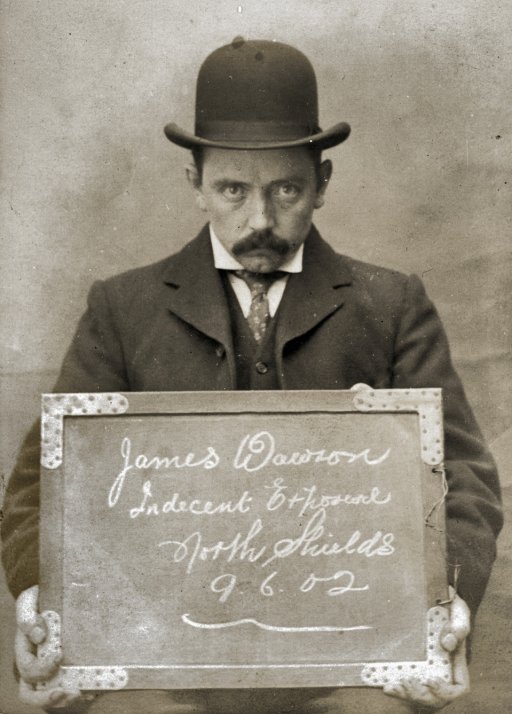
  • Old mug shot

    Old mug shot

    [old pics always taken from Shorpy]

  • The more things change… January 16, 1830

    After this date no Police Constable is permitted to apply for a warrant to apprehend any person for an assault upon him (the Constable) without first reporting the case to his Superintendent, and getting his permission in writing to make such application.

    Source: Metropolitan Police. Instructions Orders &c. &c.1836. London: W. Clowes & Sons.

    [I’m on break. Regular blogging will resume in February.]

  • The more things change… January 12, 1830

    Paperwork:

    The Superindendents of division will always in future, during Sessions, send into this office a list of the names and numbers of the men who are obliged to attend the Sessions the follow day, and a Serjeant will always take care to be sufficiently early at the Session-house, and each man will report to him his arrival and the nature of his business; the Serjeant will then endeavour to ascertain as nearly as possible how long each man is likely to be detained, and will make a note of the hour at which the business of each is finished, and will then order him to return to his duty.

    In the evening the Serjeant will send to the Superintendent of each division, in writing, the name of each man of that division who attended, and the hour at which he ought to have returned to his duty.

    Source: Metropolitan Police. Instructions Orders &c. &c.1836. London: W. Clowes & Sons.

    [I’m on break. Regular blogging will resume in February.]

  • The more things change… December 21, 1829

    The Constables are not, in any instance, to ask for a Christmas-box from any of the inhabitants upon their beats; if any money is offered to them as a Christmas-box they must report the circumstances to their superior officer, who will ask permission from the Commissioners for them to receive it as in other cases.

    What? No Christmas box?! Somehow it makes me think of the “no fruit cup” line from “High Anxiety.”

    Source: Metropolitan Police. Instructions Orders &c. &c.1836. London: W. Clowes & Sons.

    [I’m on break. Regular blogging will resume in February.]

  • The more things change… December 11, 1829

    Sick days and line-of-duty injury.

    The Secretary of State for the Home Department has directed that, in future when a Police Constable is certified sick by the surgeon, from that day till he is again certified by the surgeon fit for duty, “a deduction of 1s. shall be made from his pay each day.” In certain cases, however, of wounds received in the execution of their duty, and certified by the surgeon to that effect, orders will be given for the amount of stoppages to be returned when the man returns to his duty.

    Source: Metropolitan Police. Instructions Orders &c. &c.1836. London: W. Clowes & Sons.

    [I’m on break. Regular blogging will resume in February.]

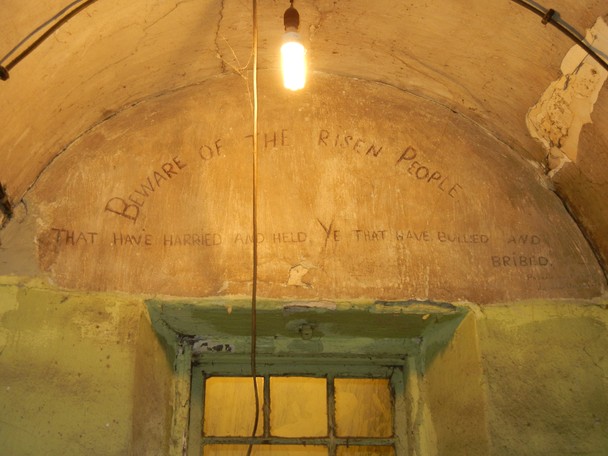
  • “Beware of the Risen People”

    “Beware of the Risen People”

    In Dublin, these neighborhoods with their uniform rowhomes remind me of Baltimore.

    The grittiness of Dublin was a bit of a refreshing shock after the pastoral beauty of rural Hampshire. Even though I have nothing but nice things to say about the English, in Ireland I felt like I was back on home ground. From where I’m from (Chicago, Boston…) England feels more like a foreign country.

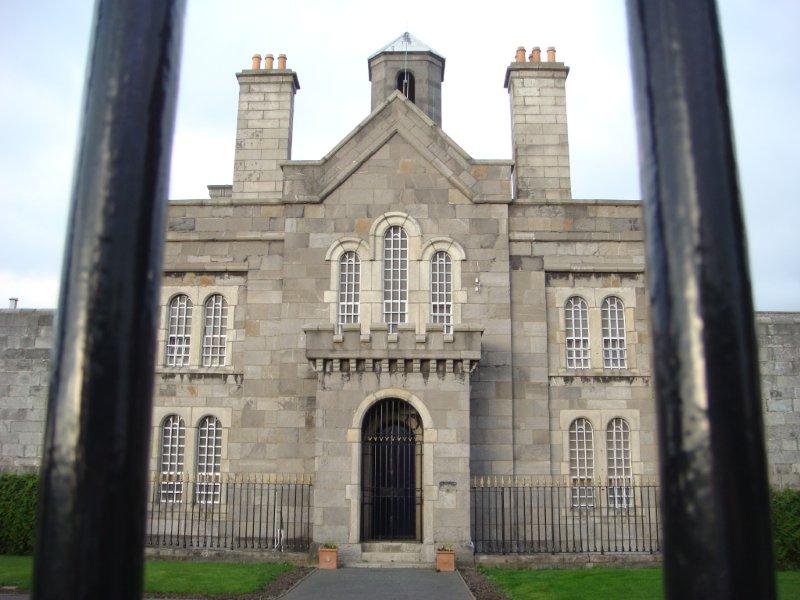
    My friend in Dublin lives next to Aubourn Prison.

    “Holds pedophile priest,” she assured me (but not, I should note, from the Greek church next door).

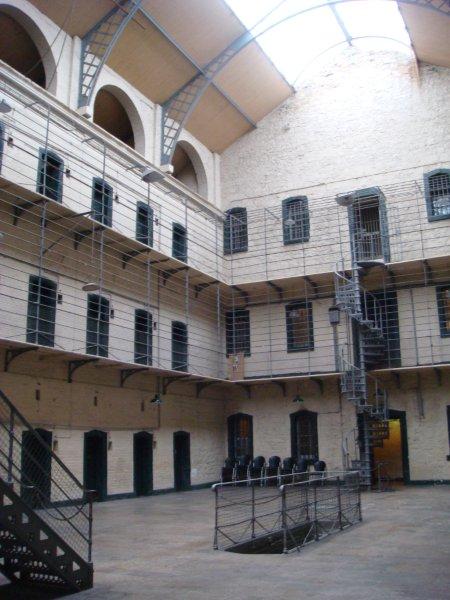
    A short walk past leads to the old Kilmainham Jail. It closed in the 1920s and stands today as a museum, but less to prisons than to the “Heroes of 1918” and Irish independence. Suffice it to say my knowledge of Irish history is a bit thin up top. 1918? Revolution? Civil War? Indeeeeed…

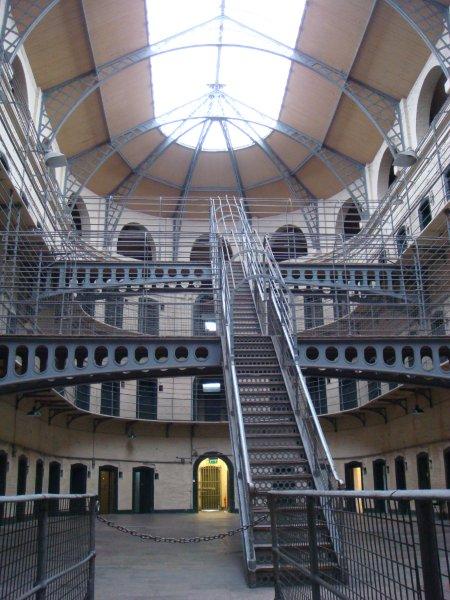
    But I was keen to go to this prison because it claims to feature a Panopticon.

    Actually it’s not a Panopticon because it’s not, well, round with a centrally located guard post designed to provide constant potential surveillance inside each prison cell….

    But Kilmainham Gaolwas, with its multi-tiered layout, inspired by Bentham’s evil concept. And the architecture is cool.

    Typical of early prisons, starvation was used as a tool in place of corporal punishment. More humane, said the Progressive thinking of the time. In 1884 C.S. Parnelltestified at the Royal Commission on Prisons in Ireland:

    One thing that struck me in Kilmainham was the semi-starved aspect which all the convicted prisoners presented. They seemed to be utterly dejected and weak, and unable to undergo any amount of physical fatigue…. I do not think that we are entitled to enfeeble the bodies of prisoners in order to reform their minds, or with a view of maintaining discipline amongst them.

    Unlike contemporaneous American penitentiaries like Auburn and Sing Sing (which, unlike Kilmainham, are still operational), Kilmainham’s cells didn’t have plumbing. So prisoners in Ireland had to “slop out.” Even more amazing, today, in 2011, the practice of slopping out is still practiced in at least one Irish prison.

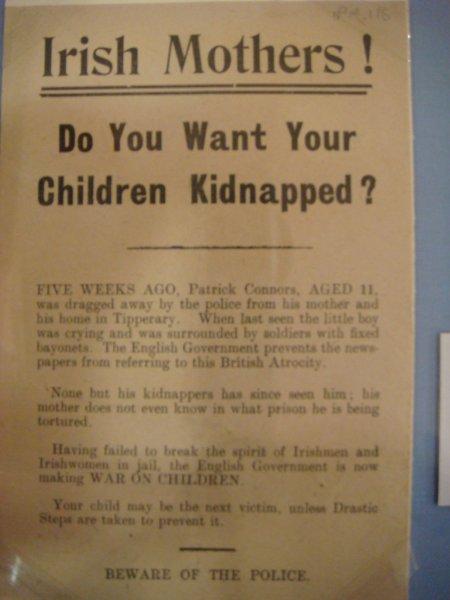
    Meanwhile, from the museum at Kilmainham, I’m always a sucker for revolutionary propaganda.

    Johnny-come-lately lately Republicans:

    I didn’t see ye out there fightin’ in 1921, now did I?

    And Irish Mothers, Do You Want Your Children Kidnapped?:

    “Beware of the Police”The highlight of the trip, however, unrelated to prison, must have been hearing Travelers sing while we were “on the Batter.”

    Beware of the Risen People.

  • The more things change… October 20, 1829

    The Commissioners wish to remind the constables that, in every case when it is judged necessary to dismiss any man, the whole of his pay accruing from the last pay-day will be forfeited.

    Source: Metropolitan Police. Instructions Orders &c. &c.1836. London: W. Clowes & Sons.

    [I’m on break. Regular blogging will resume in February.]

  • The more things change… October 17, 1829

    The paperwork begins.

    Some instances of rudeness on the part of individuals of the Police towards persons asking them civil questions have been reported to the Commissioners of the Police. the Commissions therefore call upon the Superintendents to instruct their officers and men.

    The Superintendents will receive a book of instructions for every man and officer of their respective Companies; each man’s name will be written , and it is to be produced to the Inspector at least once a week, and the Superintendent will take care that those books are taken from the men that are dismissed, and are given to the men that replace them.

    The Police Constables are desired to pay attention to that part which immediately concerns their own Duty, and having made themselves well acquainted with it, they may, by studying the others, endeavour to fit themselves for promotion.

    The Superintendents of divisions will take special care that all orders given out are carefully read from time to time, when it may appear necessary, to impress on the minds of the men the several subjects to which orders relate.

    Source: Metropolitan Police. Instructions Orders &c. &c.1836. London: W. Clowes & Sons.

    [I’m on break. Regular blogging will resume in February.]