Tag: LEAP

  • 1.7 Million Drug Arrests in 2008

    LEAP says:

    A group of police and judges who want to legalize drugs pointed to new FBI numbers released today as evidence that the “war on drugs” is a failure that can never be won. The data, from the FBI’s “Crime in the United States” report, shows that in 2008 there were 1,702,537 arrests for drug law violations, or one drug arrest every 18 seconds.

    “In our current economic climate, we simply cannot afford to keep arresting more than three people every minute in the failed ‘war on drugs,’” said Jack Cole, a retired undercover narcotics detective who now heads the group Law Enforcement Against Prohibition (LEAP). “Plus, if we legalized and taxed drug sales, we could actually create new revenue in addition to the money we’d save from ending the cruel policy of arresting users.”

    Last December, LEAP commissioned a report by a Harvard University economist which found that legalizing and regulating drugs would inject $77 billion a year into the struggling U.S. economy.

    Today’s FBI report, which can be found at http://www.fbi.gov/ucr/cius2008/arrests/index.html, shows that 82.3 percent of all drug arrests in 2008 were for possession only, and 44.3 percent of drug arrests were for possession of marijuana.

    Pointing to the collateral consequences that often follow drug arrests, LEAP’s Cole continued, “You can get get over an addiction, but you will never get over a conviction.”

    Law Enforcement Against Prohibition (LEAP) is a 13,000-member organization representing cops, judges, prosecutors, prison wardens and others who now want to legalize and regulate all drugs after witnessing horrors and injustices fighting on the front lines of the “war on drugs.”
  • Deep Undercover

    Kristina Goetz of the Memphis Commercial Appealhas this story about an officer doing “deep undercover.”

    She also had to restrain her police instincts to break up a fight at a convenience store or call social services if she saw a dealer hit his child because being caught would compromise the larger goal.

    And what larger goal was more important than preventing physical child abuse? I would sue the police department if I were an assault victim and a police officer present did nothing.

    But such is the nature of the war on drugs. Locking up a drug dealer (not preventing drug use) is more important than preventing injury or the beating of a child.

    All the evils she saw? Those weren’t caused by drugs. They were caused by bad people in bad conditions. And people who commit bad crimes should get locked up.

    So let me get this right. All the crimes you saw, the poverty, the desperation, the tricks, the violence, the child abuse? You saw people in f*cked up situations doing bad sh*t. And you were a police officer and you let it happen? You let all that slide because you were fighting some bigger fight? You rationalized that you needed to let some crimes slide so that you could go “up the ladder” and maybe even lock up some “kingpins” and win the war on drugs?

    Did you?

    In a year’s time, this officer’s work “resulted in more that 280 arrests — from low-level drug peddlers to big-name dealers.” And is Memphis safer? Have murders gone down? Has drug use gone down? By being “deep undercover,” you ignored your oath as a police officer to defend the laws and the Constitution of our land.

    Look, it’s not like this officer didn’t give her all. So did LEAP founder Jack Cole. They just gave it for the wrong reasons. Like Jack Cole, perhaps she too will speak out against the war on drugs. Maybe she’ll wonder if some of the people she locked up weren’t really that bad. Maybe she’ll feel bad that some people are in prison because they were in bad situations and they trusted her. They thought she was their friend. And for all I know, she might have been their friend. And then she ratted them out.

    That would be a heavy weight on my shoulders.

  • Maryland Morning

    Along with Neill Franklin, I’ll be broadcast on Baltimore’s “Maryland Morning” tomorrow (Friday) at 9:05am (Eastern Time). In Charm City WYPR is 88.1 FM. Or you can listen to live streaming here.

  • A Radical Solution to End the Drug War: Legalize Everything

    A Radical Solution to End the Drug War: Legalize Everything

    Esquire.com just published a nice piece by John Richardson about my op-ed co-author, Neill Franklin, on violence in the drug war.

    We’ve heard a lot about the terrible death toll Mexico has suffered during the drug war — over 11,000 souls so far. This helps to account for the startling lack of controversy that greeted last week’s news that Mexico had suddenly decriminalized drugs — not just marijuana but also cocaine, LSD, and heroin. In place of the outrage and threats that U.S. officials expressed when Mexico tried to decriminalize in 2006 was a mild statement, from our new drug czar, that we are going to take a “wait and see” approach.

    Still, we’ve heard nothing about the American death toll. Isn’t that strange? So far as I can tell, nobody has even tried to come up with a number.

    Until now. I’ve done some rough math, and this is what I found:

    6,487.

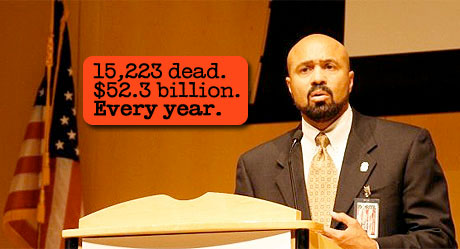
    To repeat, that’s 6,487 dead Americans. Throw in overdoses and the cost of this country’s paralyzing drug laws is closer to 15,000 lives.

    Read the whole article here.

  • Just Say Yes

    The Washington Post has an op-ed written by me, Peter Moskos, and Stanford “Neill” Franklin.

    It’s Time to Legalize Drug

    Drug manufacturing and distribution is too dangerous to remain in the hands of unregulated criminals. Drug distribution needs to be the combined responsibility of doctors, the government, and a legal and regulated free market. This simple step would quickly eliminate the greatest threat of violence: street-corner drug dealing.

    We simply urge the federal government to retreat. Let cities and states (and, while we’re at it, other countries) decide their own drug policies. Many would continue prohibition, but some would try something new. California and its medical marijuana dispensaries provide a good working example, warts and all, that legalized drug distribution does not cause the sky to fall.

  • Washington Post Op-Ed

    Stanford “Neill” Franklin and I have an op-ed scheduled to run in Monday’s Washington Post. Needless to say, details will follow.

    Major Franklinwas the commanding officer at the Baltimore police academy when I graduated in 2000. Who would have thought, nine years later, we’d be writing newspaper pieces together?

    I don’t think we ever even spoke to each other back then. But we ran into other at an SSPD conference in Maryland last year.

    [update: probably pushed back till Tuesday]
    [update: back running tomorrow, Monday. You drug warriors are going to love this one.]

  • That’s the way it was

    That’s the way it was


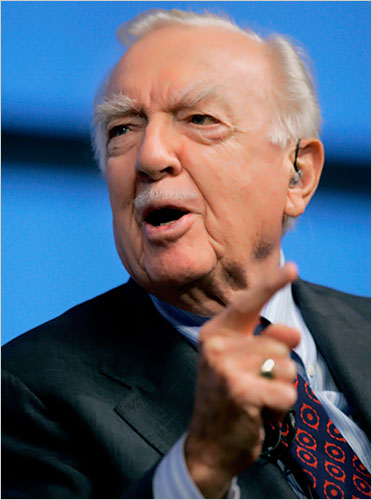
    Walter Cronkite died Friday. He was 92. On his 90th birthday he told the Daily News, “I would like to think I’m still quite capable of covering a story.”

    He was known for knowing a failed war when he saw one. Not just Vietnam. He was against the War on Drugs and a friend of LEAP.

  • A bunch of old potheads?

    Eight-term Iowa Republican Congressman Tom Latham is asked about LEAP, a group of former law enforcement agents who support drug legalization. He responds, “They’re probably a bunch of old potheads.”

    Don’t like the message? Disparage the messenger. That’s what they call an ad hominem attack. Maybe he should get to know us.

    Of well, you know what they say: any publicity is good publicity.

  • $815,000 for fired Seattle-area cop

    Mike Carter of the Seattle Timesreports:

    A former Mountlake Terrace police sergeant whose views supporting the decriminalization of marijuana led to his dismissal in 2005 has won his job back and an $815,000 settlement from the city and Snohomish County.

    However, Sgt. Jonathan Wender will not return to the streets. In addition to the financial settlement, the city has agreed to keep him on administrative leave and to pay him a $90,000-a-year salary for the next two years, when he will be able to retire after 20 years with the department.

    In addition, he won back pay dating to when he was fired and the restoration of his retirement benefits, said his lawyer, Andrea Brenneke.

    In a lawsuit, Wender, 42, had claimed the city and county violated his right to free speech by targeting him for his political beliefs. Wender, who holds a Ph.D., teaches full time at the University of Washington and has written and lectured extensively about police work and drug policy.

    Read the whole story here.

    Officer Wender’s is a fellow member of LEAP (though I don’t know him). Too bad I couldn’t get wrongfully fired when I was a cop! But then that might not have been the wisest career move at the time.

    Officer Wender’s dissertation title was, I’m not making this up: “Policing as Poetry: Phenomenological and Aesthetic Reflections Upon the Bureaucratic Approach to Human Predicaments.” Wow… that title is straight out an Onionparody on PhD dissertations! On the other hand, the line, “There is a tragic beauty in working the streets, [and] I miss the intimacy of making order out of chaos,” iskind of poetic.

  • The Solution to the Failed Drug War

    Jack Cole, the founder of LEAP, has an op-ed in today’s Boston Globe.

    WAR AND RACE dominate the presidential campaign, but one nation-shaping war with profound racial consequences eludes the political radar: the drug war.

    I was a frontline soldier in this self-perpetuating, ineffectual effort that has swallowed more than a trillion tax dollars and currently yields nearly 2 million arrests every year for nonviolent offenses. I helped incarcerate some 1,000 young people as part of this irredeemably wrongheaded attempt to arrest our way out of our drug problems. Those arrests will follow them to their graves.

    I know they follow me.

    Read the whole article here.