Tag: less-lethal weaponry

  • I still like the baton

    Maybe this is minor in the bigger picture of what people are saying about Michael Wood Jr, but I have to disagree with Wood’s dislike of the baton. In a radio interview he said he didn’t carry his because he couldn’t imagine hitting somebody with it. In the Balko interview he says cops used them to dent doors.

    I loved my baton. I still have it. Right by the front door, just in case. The straight baton I’m talking about, not the asp. Wood never had a straight baton (BPD phased them out in 2001). The straight baton can do so much more than the asp. It’s defensive. You can wack a leg or arm. You can thrust forward and back. You can hold it in multiple positions (some more benign than others). You can twirl it. (One of my great regrets was trying and failing to master the espantoon.)

    The old-fashioned baton gives you a certain gravitas when you walk the beat.

    Unlike most cops I carried my stick with me to almost every call. I wanted to avoid being in a situation where I might be on the losing end of a fight and have to kill somebody. And partly because of my willingness to carry it (combined with the general view on the street that cops carried a baton only when they planed on using it) I never actually did have to strike anybody.

    But I sure did use it to knock on doors. Did I dent any? I don’t know. Not intentionally. But how else are you going to be heard knocking on a door? The door bell hasn’t worked in decades. I learned pretty quickly that my knuckles aren’t hard enough. There’s loud stuff going on. And I don’t want to waste everybody’s time — they did, after all, call 911 — not knowing whether or not you heard me knock the first time. Also, I wanted to make damn sure you knew that police were at your door. When you’re a cop you knock like a cop. You take a step to the side, rap a few knocks loud as hell (once), and say “PO-lice.” Worked every time.

    I wrote more in defense of the straight baton in 2011.

  • LRAD: Long Range Accoustical Device

    I was a little too generous in my previous post when I said we don’t know harm this device causes. From a 2012 NYPD briefing on the LRAD (Long Range Acoustical Device), also known as a sound cannon, via the Gothamist.

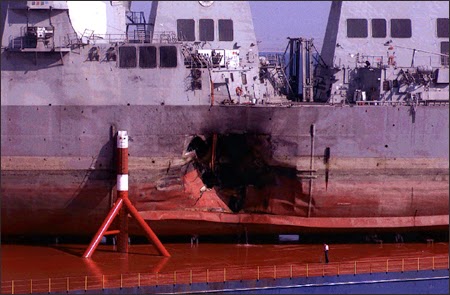
    In addition to having “loudspeaker” capabilities, the device can also be used, in a special mode, to propel piercing sound at higher levels (as measured in decibels) than are considered safe to human ears. In this dangerous range (above 120 decibels), the device can cause damage to someone’s hearing and may be painful. It is this technology that device was designed for a USS Cole attack-type scenario. … The device could be used to send out sound at a dangerously high level causing attackers to turn away, or at least, to cause pain/hearing damage to try and repel
    the attack.

    The LRAD devices … were deployed during the RNC in 2004, for use as loudspeakers…. The device was used as a louspeaker to make announcements to the crowd of protesters, with mixed results. No injuries were sustained.

    Again from the Gothamist:

    While there might be situations where police have a legitimate use for the device, such as dispersing a large and violent group, [Alex Vitale] says this wasn’t such a situation. “LRADs should be used to avoid having to do a baton charge,” Vitale says. “This was used to scatter already scattered protesters.”

    And these devices were tested by the NYPD, in an empty parking lot.

    Also (and correct me if I’m wrong) the decibel scale is logarithmic: going from 1 to 10 is a ten-fold increase while going from 1 to 20 is a 100-fold increase. But this is the amount of power or energy in sound, which goes up 10 times every time decibels go up 10 units. But the volume of this sound, the way sound is perceived by the human ear, roughly doubles for every 10 decibel increase. 120 decibels sounds twice as loud as 110 dB (as does 110 compared to 100 dB). So 120 decibels sounds something like 64-times as loud as 60 dB, which is volume of normal speech.

    In Test #1, spoken voice commands were given. 20 feet away, sound was measured at 102 dB. In Test #2, noise burst were used, and sound was measured at 110 dB. Now 320 feet is a pretty long distance. It’s the length of a football field. Or half the length of an NYC subway platform (yes, the NYC subway trains really are 600+ feet long). The NYPD LRAD tests were done on cold windy winter day at the beach in The Bronx. Sixth Avenue in Manhattan, an urban canyon with hard sides, is less than 100-feet wide (including sidewalks). You can’t get more than 40 or 50 feet from the center of the street. So… what were the results of the NYPD test at a  distance of 50 feet? “Potential danger area. Not tested.” In fact, nothing closer than 320 feet was tested. It might be dangerous.

    This is a lawsuit waiting to happen. But the NYPD won’t have to foot the bill. It’s going to be paid for by me and other resident taxpayers.

    (Link to the sound cannon and its first use in 2009 in Pittsburgh. And about the military purpose and history of this potential weapon.)

  • I can’t hear you!

    I can’t hear you!

    In 2004, the NYPD bought two “long-range acoustic devices” ($35,000 per) and said that during the convention, “they would be used only for announcements, and that their shrill deterrent function would not be employed.” I didn’t believe that would last. Because, as is always the case, if you give cops toys, they will play with them. Which is why you should be worried about military hardware going to police departments.

    Well this is military hardware. And of course they have now been deployed against US civilians.

    By my account, it was first used by police against US civilians in 2009.

    Look, maybe sound devices are an effective use of crowd control. Maybe it’s better than tear gas and batons. I don’t know. But first don’t you think we might want to be learn if sound cannons cause about lasting permanent damage? We simply do not know because we didn’t care. They were to be used again terrorists we don’t give a damn about.

    These weapons are a tool used to keep terrorist boats away from Navy ships, to prevent another attack like happened to the USS Cole.

    All I can think of while watching this clip is science fiction movies that portray the US in a depressing dystopian future.

    So now — without any public debate or decision-making by elected politicians — equipment designed to defend our troops against terrorists abroad is being used by civilian police departments against the public, some of whom who are “interfering with vehicular traffic.”

    Taking the totality of the situation, I say “fuck ‘vehicular traffic’.”

    (More on the sound cannon from it’s first use in 2009 in Pittsburgh. To its lack of adequate testing.)

  • “Unarmed” man not shot by police

    One of the things that keeps coming out of the Ferguson shooting is that Michael Brown was “unarmed.” As if “unarmed” people cannot be a threat to cop.

    That’s bullshit.

    Now I’m not talking about whether Michael Brown was or was not a threat. I do not know. But the fact that he was “unarmed” does not mean he wasn’t a threat.

    This is a video (from 5 months ago) of an “unarmed” man on the whom I think the police officer should have shot. But the cop didn’t. I guess the officer didn’t feel his life was in danger. Kudos to him. Seriously. But I think his life was in imminent danger. And I think I would have shot the guy.

    Just based on the description of the video (and the fact that the train isn’t leaving and a police officer is involved), let’s assume guy threatened to shoot subway passengers. A cop responded. The guy attacks the cop. That’s where the video starts.

    The cop tries to retreat. Then the cop maces him at 0:15. There’s a nice deflection at 0:17. (Shazam! Jujitsu shit.) The asp comes out at 0:21. [Wack.] Little if any effect. The guy keeps coming at the police officer. Notice how few seconds have passed.

    The grappling continues. The guy keeps coming. What would you do?

    Now when you can use lethal force is not cut and dried. It’s up to the police officer. And I can’t read this police officer’s mind. But he didn’t use lethal force. That was the choice he made. Maybe he never felt his life was in danger.

    But I’m telling you I think I would shot guy point-blank at 0:45.

    Would this have been a “good” (ie: justified) shooting. Abso-fucking-lootly.

    I’ve been in fights. And I haven’t shot anybody. For whatever reason (backup, for instance) I never felt my life was in danger. I won’t say this cop should have shot the guy. He felt he didn’t need to. And he turned out to be right. But had he shot him, I would defend that shooting (as would the law).

    But what if there’s no video? What if the cop does shoot? What if, as would happen, some “eyewitness” on the subway says “the guy had his hands in the air [which, actually, he kind of did]. And he was surrendering when the cops shot him for no reason!” Then what do you assume?

    Because when cops hear of a cop shooting an “armed person,” they assume something like this happened. Cop know, based on everything they have done and seen, that police do not shoot people for no reason. Cops think: there but for the grace of God, go I.

    Also note there is a train of people, not one of whom helps the cop. (Or you could say it’s good nobody helped the other guy, who was asking for help).

    So this subway cop showed amazing (and perhaps even unwise) restraint in use of force. But yes, in hindsight, it’s clearly better that nobody got shot.

    So did this officer receive any kudos for his bravery or his restraint? I don’t know. Should he? Yes. Did he? I doubt it.

  • ABQ Police Protests

    “Check it out, esse…. shit’s going dowwwn.” (That’s an Albuqueque accent, just FYI, as dictated to me by my Albuquerquean wife).

    There are some anti-police protests in the Duke City.

    A police-involved shooting of James Boyd, caught on police video, sparked the protests.

    If you’re right wing, watch this version:

    If you’re left wing, watch this version (if you’re in the middle, watch the right-wing version because it provides more dialogue.):

    It’s also good to watch both versions and see the political convergence of right and left come together in the face of what is a pretty morally indefensible police-involved killing.

    Perhaps how this is how police are now trained, but I hope not. I do not like what I see.

    These are not effective tactics (though it worries me that the officers seem well trained). This shooting also demonstrates why we should not provide police with military weapons willy nilly. The police use almost every toy at their disposal. What’s the point of having less-lethal weaponry if you never get to use it? The desire to use less-lethal weaponry — flash grenade, dog, “bean bag”  — contributes to a bad death. When police shoot a guy with a knife (or two), I’m generally pretty sympathetic to police. But not in this case. I know the 15-foot rule, but this guy wasn’t about to go billy-goat ninja on the side of a mountain.

    First of all, and I know we didn’t see the first few hours, but this guy was complying. At least until police fired a less-lethal round near here. But regardless, one the guy is down, you can go up to the guy with a night stick and wack him if he moves. You don’t need to fire three less-lethal rounds at his ass and sick the dog on him. Sure, he might be playing possum, but I think you can assume he won’t be fighting at 100%, if you know what I mean. You’ve already shot him and you’ve got lethal cover.

    There’s something particularly morbid about shooting a dying guy with a bean bag and letting a dog bite him because he failed to comply… after you done shot him.

    I’ve written about this “hands-off” movement in police training, and I do not like it. When did cops become such wimps?

    I’m also not at all clear why police fired a flash grenade at a complying individual. In all seriousness, could somebody please explain to me what is the S.O.P. now in training and the use of flash grenades? Is compliance no longer enough to prevent use of force?

    Since 2010, ABQ police officers have been involved in 37 shootings, 23 of them fatal. By comparison, the NYPD has been involved in perhaps about 70 shootings since 2010. But, just to remind you, New York City has far more than 10 times the population of fair Albuquerque. In terms of police-involved shootings, Albuquerque is roughly on par with Baltimore, but Baltimore has much more crime.

    I think this was a bad shooting.

    But what really worries me is that perhaps the officers performed exactly as trained. If so, we need to change police training (and not make scapegoats of the officers).

  • “Sound Cannon” used in Pittsburgh

    Whoa…

    In the afternoon, protesters who tried to march toward the convention center where the gathering was being held encountered roaming squads of police officers carrying plastic shields and batons. The police fired a sound cannon that emitted shrill beeps, causing demonstrators to cover their ears and back up; then the police threw tear gas canisters that released clouds of white smoke and stun grenades that exploded with sharp flashes of light.

    City officials said they believed it was the first time the sound cannon had been used for crowd control. “Other law enforcement agencies will be watching to see how it was used,” said Nate Harper, the Pittsburgh police chief. “It served its purpose well.”

    That’s from this story in the New York Times.

    The Washington Times reported back in March, 2004:

    The equipment, called a Long Range Acoustic Device, or LRAD, is a “nonlethal weapon” developed after the 2000 attack on the USS Cole off Yemen as a way to keep operators of small boats from approaching U.S. warships.

    Now the Army and Marines have added this auditory-barrage dispenser to their arms ensemble. Troops in Fallujah, a center of insurgency west of Baghdad, and other areas of central Iraq in particular often deal with crowds in which lethal foes intermingle with civilians.

  • T[aser] is for Torture

    More good discussion from the comments of marginal revolution.

    I’ll call this: Ask Officer Pete!

    Q: Peter, I have an issue with you comments about police use of force. Your argument that the use of “muscle,” physical strength and holds, will lead to less excessive force issues in contrast to Tasers or other less lethal uses of force, needs to be substantiated. Officers who go over the line, in my experience prefer to use physical strength and intimidation. It gives them a better “high;” that feeling of control and power. It has been my experience with the modern Tasers, … that trained Officers are more likely to stay within the bounds of Departmental policy and the Law. Additionally, do we as a society want to expose our law enforcement officers to MORE danger by not allowing them the advantage of distance? Officers and suspects are less likely to be injured if there is no physical force used. This has multiple “good” effects.

    A: You very well might be right. What you say is certainly the modern and progressive thinking of the day. But I still disagree. I’m not talking about officers who want to use excessive force. I’m not talking about abuse by “bad” officers. I’m talking about torture by otherwise “good” officers.

    I have three main problems with Tasers: 1) they’re used too readily, 2) the pain they cause isn’t geared toward the compliance I want, and 3) people die.

    Nine times out of ten officers exercise more restraint that allowed by departmental policy and law (See Dave Klinger’s book Into the Kill Zone for lots of examples of this). In Baltimore I didn’t have a Taser, but the use-of-force guidelines for Tasers and mace (actually pepper spray) is generally the same–for compliance. That’s too low a bar.

    If I followed departmental policy, I could have maced about 3 people a shift. Instead, I maced one person in 14 months. Mace has a natural check and balance: it goes everywhere. No officer quick with the mace will be popular in the department for long.

    Physical force can often be done without too much pain. And the pain caused is directly proportional to your resistance. For instance, I need you to put your hands behind your back. I use force. Force isn’t the same as pain. It might hurt if you fight it. But as soon as you stop resisting, any pain is over.

    Officers use Tasers quicker than they otherwise would apply hands-on force. “Comply or I Taze you.” You don’t comply so I Taze. Clean and legal. But wrong because it’s not necessary. Departmental regulation be damned! It’s too easy to press a button.

    We’re talking about pain compliance… hurting somebody. Tasers cause pain as punishment. That’s not right. We shouldn’t pretend that causing pain is clean process. It never is.

    Force is part of the police job. No suspect puts handcuffs on himself.

    Without a Taser, I just say “Comply.” You don’t. So I keep talking to you, cajoling you, ordering you, threatening you. But the point is I’ll work harder trying to convince you to comply if my only alternative is hands-on force. Officers *should* be reluctant to use force. You don’t want to use physical force because there is some danger… and also you break a sweat–something you always want to avoid while wearing body armor.

    When I do use hands-on force, at least my force is geared toward getting you to do what I want (like getting your arms behind your back so I can cuff you). With a Taser, it’s just about disabling pain. That’s torture. And consider this, it’s not easy to follow instructions after being in the greatest pain of your life. So you get tazed again.

    I worked in a rough district. I want to police to be safe. But the danger police face isn’t really from officers working to put handcuffs on one suspect or get that suspect out of a car. That’s just part of the job.

    Besides, I trusted my squadmates because I knew they could handle themselves in a fight. I don’t care how hand-off people try and make policing in theory and in the academy, on the street, it’s hands-on. I want to work with officers who aren’t afraid to use their hands. Reluctant, yes. But afraid, no.

    And oh yeah, Tasers kill people.
  • Don’t Taze me, bro!

    I know my classes are topical, but I wish people didn’t have to die to make it so. Yesterday I class I talked a police-involved shooting in Brooklyn and the overuse of Tasers. Today a bunch of students sent me these links about a man’s death in Vancouver after being Tasered. Proving exactly what I said in class:

    Since Tasers can kill people (though very very rarely), Tasers (and other less-lethal weaponry) should only be used in situations where you’re willing to use lethal force (or where there’s no clearly less lethal force practical).

    The CNN report.

    And one from Breitbart TV(Canadian).

    This man should not have died. Nor should he have been Tasered. There were four cops. Why the hell can’t they take the guy down with muscle? Is the Taser emasculating police officers? Tackle the S.O.B.! You know the guy isn’t armed (it was a secure area of the airport).

    Andrew Meyers shouldn’t have been Tasered either.

    Also worrisome is that the Mounties lied and said the guy was fighting. That didn’t pan out when the video went public.

    I don’t like the idea of people, police included, being able to cause pain at the press of a button. It makes it too easy to torture. I’ve said it many times: policing is a hands-on job. If you need to hurt somebody, it is best to do it with hands (or stick). Hurting somebody with your hands is a natural check and balance to excessive force. Physical force takes effort, reminding you of the consequences. And being close to somebody means you might get hurt, which also is good to keep in mind. It’s just too easy to press a button.

    I also don’t like that Taser is a private for-profit company. That’s not inherently a bad thing. But for makers of less-lethal munitions and prisons, it may be. They shouldn’t have P.R. and lobbyers. Or studies saying how great and safe their product is. At least for other forms of munitions, there’s healthy competition and generic products. It’s just a red flag. Plus, their slick website looks like something out of the movie Starship Troopers.

    What does a Taser do? Here’s an amusing video of cops getting Tasered. Always good for a laugh.