Tag: LRAD

  • LRAD: Long Range Accoustical Device

    I was a little too generous in my previous post when I said we don’t know harm this device causes. From a 2012 NYPD briefing on the LRAD (Long Range Acoustical Device), also known as a sound cannon, via the Gothamist.

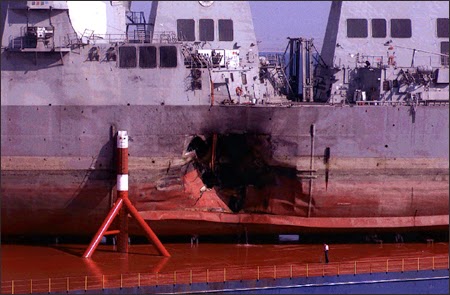
    In addition to having “loudspeaker” capabilities, the device can also be used, in a special mode, to propel piercing sound at higher levels (as measured in decibels) than are considered safe to human ears. In this dangerous range (above 120 decibels), the device can cause damage to someone’s hearing and may be painful. It is this technology that device was designed for a USS Cole attack-type scenario. … The device could be used to send out sound at a dangerously high level causing attackers to turn away, or at least, to cause pain/hearing damage to try and repel
    the attack.

    The LRAD devices … were deployed during the RNC in 2004, for use as loudspeakers…. The device was used as a louspeaker to make announcements to the crowd of protesters, with mixed results. No injuries were sustained.

    Again from the Gothamist:

    While there might be situations where police have a legitimate use for the device, such as dispersing a large and violent group, [Alex Vitale] says this wasn’t such a situation. “LRADs should be used to avoid having to do a baton charge,” Vitale says. “This was used to scatter already scattered protesters.”

    And these devices were tested by the NYPD, in an empty parking lot.

    Also (and correct me if I’m wrong) the decibel scale is logarithmic: going from 1 to 10 is a ten-fold increase while going from 1 to 20 is a 100-fold increase. But this is the amount of power or energy in sound, which goes up 10 times every time decibels go up 10 units. But the volume of this sound, the way sound is perceived by the human ear, roughly doubles for every 10 decibel increase. 120 decibels sounds twice as loud as 110 dB (as does 110 compared to 100 dB). So 120 decibels sounds something like 64-times as loud as 60 dB, which is volume of normal speech.

    In Test #1, spoken voice commands were given. 20 feet away, sound was measured at 102 dB. In Test #2, noise burst were used, and sound was measured at 110 dB. Now 320 feet is a pretty long distance. It’s the length of a football field. Or half the length of an NYC subway platform (yes, the NYC subway trains really are 600+ feet long). The NYPD LRAD tests were done on cold windy winter day at the beach in The Bronx. Sixth Avenue in Manhattan, an urban canyon with hard sides, is less than 100-feet wide (including sidewalks). You can’t get more than 40 or 50 feet from the center of the street. So… what were the results of the NYPD test at a  distance of 50 feet? “Potential danger area. Not tested.” In fact, nothing closer than 320 feet was tested. It might be dangerous.

    This is a lawsuit waiting to happen. But the NYPD won’t have to foot the bill. It’s going to be paid for by me and other resident taxpayers.

    (Link to the sound cannon and its first use in 2009 in Pittsburgh. And about the military purpose and history of this potential weapon.)
  • I can’t hear you!

    I can’t hear you!

    In 2004, the NYPD bought two “long-range acoustic devices” ($35,000 per) and said that during the convention, “they would be used only for announcements, and that their shrill deterrent function would not be employed.” I didn’t believe that would last. Because, as is always the case, if you give cops toys, they will play with them. Which is why you should be worried about military hardware going to police departments.

    Well this is military hardware. And of course they have now been deployed against US civilians.

    By my account, it was first used by police against US civilians in 2009.

    Look, maybe sound devices are an effective use of crowd control. Maybe it’s better than tear gas and batons. I don’t know. But first don’t you think we might want to be learn if sound cannons cause about lasting permanent damage? We simply do not know because we didn’t care. They were to be used again terrorists we don’t give a damn about.

    These weapons are a tool used to keep terrorist boats away from Navy ships, to prevent another attack like happened to the USS Cole.

    All I can think of while watching this clip is science fiction movies that portray the US in a depressing dystopian future.

    So now — without any public debate or decision-making by elected politicians — equipment designed to defend our troops against terrorists abroad is being used by civilian police departments against the public, some of whom who are “interfering with vehicular traffic.”

    Taking the totality of the situation, I say “fuck ‘vehicular traffic’.”

    (More on the sound cannon from it’s first use in 2009 in Pittsburgh. To its lack of adequate testing.)

  • “Sound Cannon” used in Pittsburgh

    Whoa…

    In the afternoon, protesters who tried to march toward the convention center where the gathering was being held encountered roaming squads of police officers carrying plastic shields and batons. The police fired a sound cannon that emitted shrill beeps, causing demonstrators to cover their ears and back up; then the police threw tear gas canisters that released clouds of white smoke and stun grenades that exploded with sharp flashes of light.

    City officials said they believed it was the first time the sound cannon had been used for crowd control. “Other law enforcement agencies will be watching to see how it was used,” said Nate Harper, the Pittsburgh police chief. “It served its purpose well.”

    That’s from this story in the New York Times.

    The Washington Times reported back in March, 2004:

    The equipment, called a Long Range Acoustic Device, or LRAD, is a “nonlethal weapon” developed after the 2000 attack on the USS Cole off Yemen as a way to keep operators of small boats from approaching U.S. warships.

    Now the Army and Marines have added this auditory-barrage dispenser to their arms ensemble. Troops in Fallujah, a center of insurgency west of Baghdad, and other areas of central Iraq in particular often deal with crowds in which lethal foes intermingle with civilians.