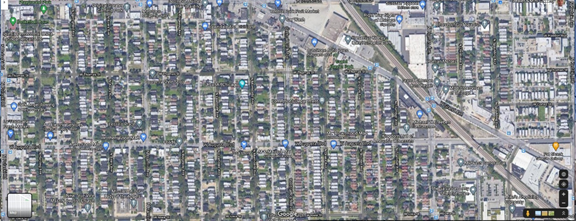
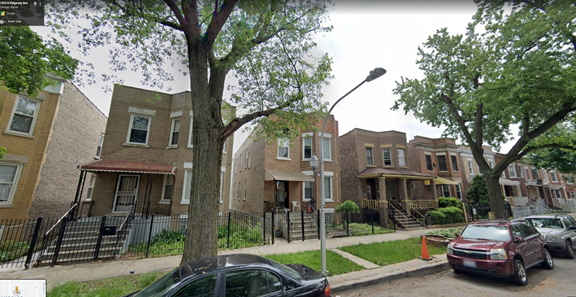
There’s an article by Frank Main in the Chicago Sun-Times about the deadliest police district in Chicago. It’s a small area on the West Side of Chicago. My eyes went to the blue area, below. About 3 by 15 square blocks. Maybe 34 of those blocks are residential. Perhaps about 650 houses in all. Nice housing stock. Maybe 5,000 residents? I don’t know. Just a guess. (3,000 or 10,000 people is a big difference, but it doesn’t really matter.) There were 18 people murdered this year. Many more shot. And many more shot, this year.
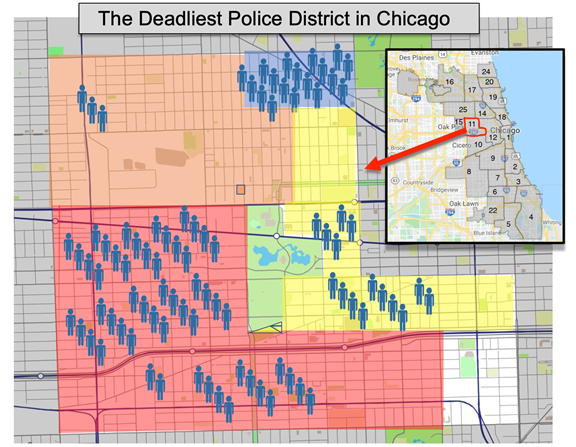
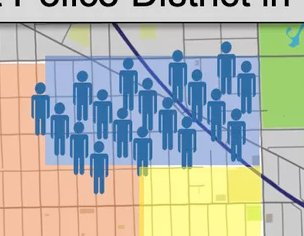
Note that even within this one part Chicago, violence is strictly demarcated. Dramatically so. That, as they say, is a clue. The murders happen north of Chicago Ave, in a more hispanic area. South of Chicago Ave (orange and yellow, above) is almost 100% black. There are no murders there.
Now even a dozen or active shooters among 5,000 residents is a lot. But we’re probably talking about just 20 or so men, 15-35, that are literally killing the neighborhood. They’ve all probably been arrested for violence before. So why not focus on those 20 men?
The increase in shootings this year has happened only where there are shooters. That might sound obvious, but it matters. Programs that target cities, demographics, neighborhoods, and even parts of neighborhoods are too broad. Most people don’t kill. To reduce killings, focus on killers.
Chicago Police, meanwhile, have been diverted from violent neighborhoods to protect the mayor’s house and also to act as scarecrows standing in The Loop and N. Michigan Ave. Should police be deployed like that? I don’t know. That’s a political decision. But people are dying.
Of course it’s easier to say “focus” on the shooters than it is to actually focus. Your typical shooter is in his late 20s. After-school programs won’t much help prevent violence (which is not a reason not to do it, if it’s good on its own.)
Arresting a killer after he’s killed is good. Clearance rates matter. But that involves incarceration. And racial disparities. And conviction isn’t easy. Nor does it bring back the dead.
So you’re left with preventing violence. This nebulous but needed concept of pro-active policing. How do you “target” a killer? Well, you identify him. Because of past crimes. And then go after him for whatever you can.
Going after illegal gun possession is good. But it needs to be prosecuted and punished. That seems harder to do, politically. Going after offenders for other crimes, drug dealing and minor offenses, can work, too. But now do you see the problem? These are “non violent” offenses.
If you go after major players for minor offenses, well, when it comes to gun violence, it leads to racial disparity. Mind you, even when the disparity is consistent with the shooting population, it won’t be with the city’s general population. And now the ACLU sues to stop it. Of course policing also affects the innocent. You want to minimize that, but innocent people will be stopped. As will targeted offenders on a drug corner who aren’t arrested. (I mention this because the ACLU counts them too as “innocent.”)
It kind of comes down to this: if you’ve got somebody who is a known violent repeat offender, is that guy deserving special police attention? Or is that racist police harassment? Policing has trade offs. Is it worth it? Generally, I’d say yes. But I’d also say it’s not for me to decide. Why? Because—this is important—I don’t live there. So listen to those who do live there. And not just those “harassed” by police, but those afraid to leave their home.
If residents want more policing, and I guarantee you most do, don’t listen to out-of-touch people who don’t live there clamoring for less policing in minority neighborhoods against the wishes of the residents.
Of course it can’t be just policing. But policing plays an essential role. A service, even. But policing will never be perfect. It can be better, though. We need to minimize bad policing and promote good policing. But more policing is needed. And it will save lives.
Imagine if this neighborhood had 18 covid deaths this year? If the area (because of demographics) has a COVID fatality rate 50% more than Cook County in general, which it might. And if there are 5,000 people (a big if), there would have been 13 COVID deaths this year. Now if we were talking about COVID, we would be talking about racial disparity, but we’d also be talking about doctors. Of course doctors don’t prevent COVID, but they’re an important part of saving lives.
Permit me to compare COVID to shootings; masks and social distancing to social programs; doctors to police. Right now it’s popular to talk about how to reduce violence without police. That’s a great discussion. Sort of. And there are ways. But not in lieu of police. Public safety without police is like health care without doctors. Yes, preventive care is important. But doctors play a role in that, too. Can I _imagine_ a health care system of diet and exercise and no doctors? Sure. But why would I want to? And what if I have a tumor?
There’s an element of police abolitionists that is a bit like anti-vaxxers. They’re so convinced they’re on to something. And yet so wrong. And so harmful to others. Though anti-vaxxers also put themselves at risk, whereas anti-policers usually theorize from very safe homes.
For most people, a safe neighborhood without much policing is the life they live and see every day. It doesn’t mean everybody has that privilege. It would be like being healthy and telling a sick person, “You don’t need a doctor. Maybe you should try yoga and eating organic?”
Yes, some neighborhoods need more policing that others. Some people need to be policed. And some more than others. Many more people need good policing around them. That is the world we have. And people who live with daily gunshots rightfully expect public agencies to respond.
But that’s where we are with violence and police. There’s more violence and there’s less policing. You could say our health care has failed, as demonstrated by COVID. It doesn’t mean we should #defund hospitals. That’s where the academic discussion is right now with violence and policing. Anything but police. Sure I can “reimagine” public safety without police. But it will be less safe world. This doesn’t mean we can’t _also_ fund programs that don’t involve police. We absolutely should. But most won’t work well without safe streets.