Tag: pictures

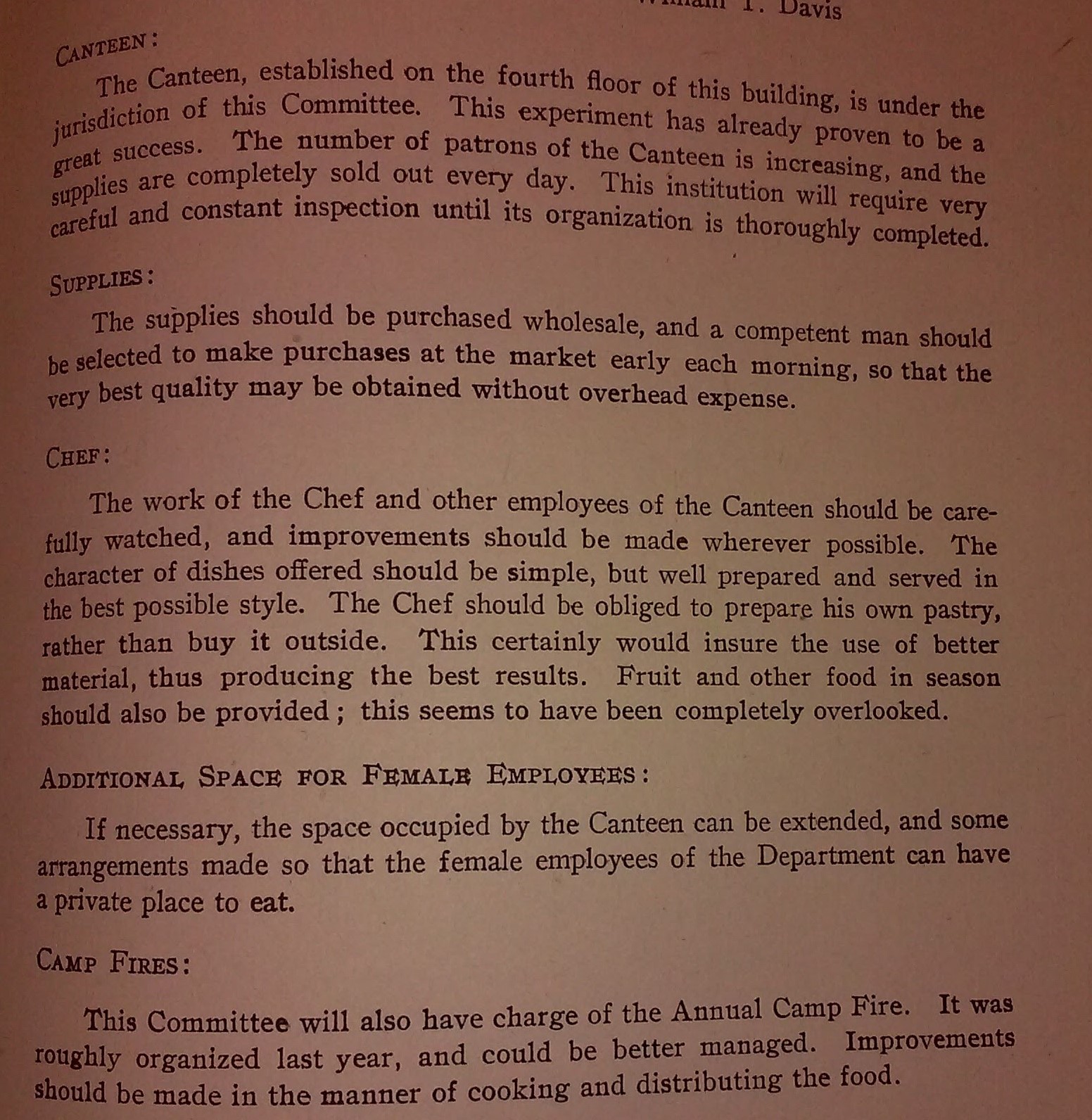
  • “Fruit and other food in season… seems to have been completely overlooked”!

    “Fruit and other food in season… seems to have been completely overlooked”!

    The good ol’ days…

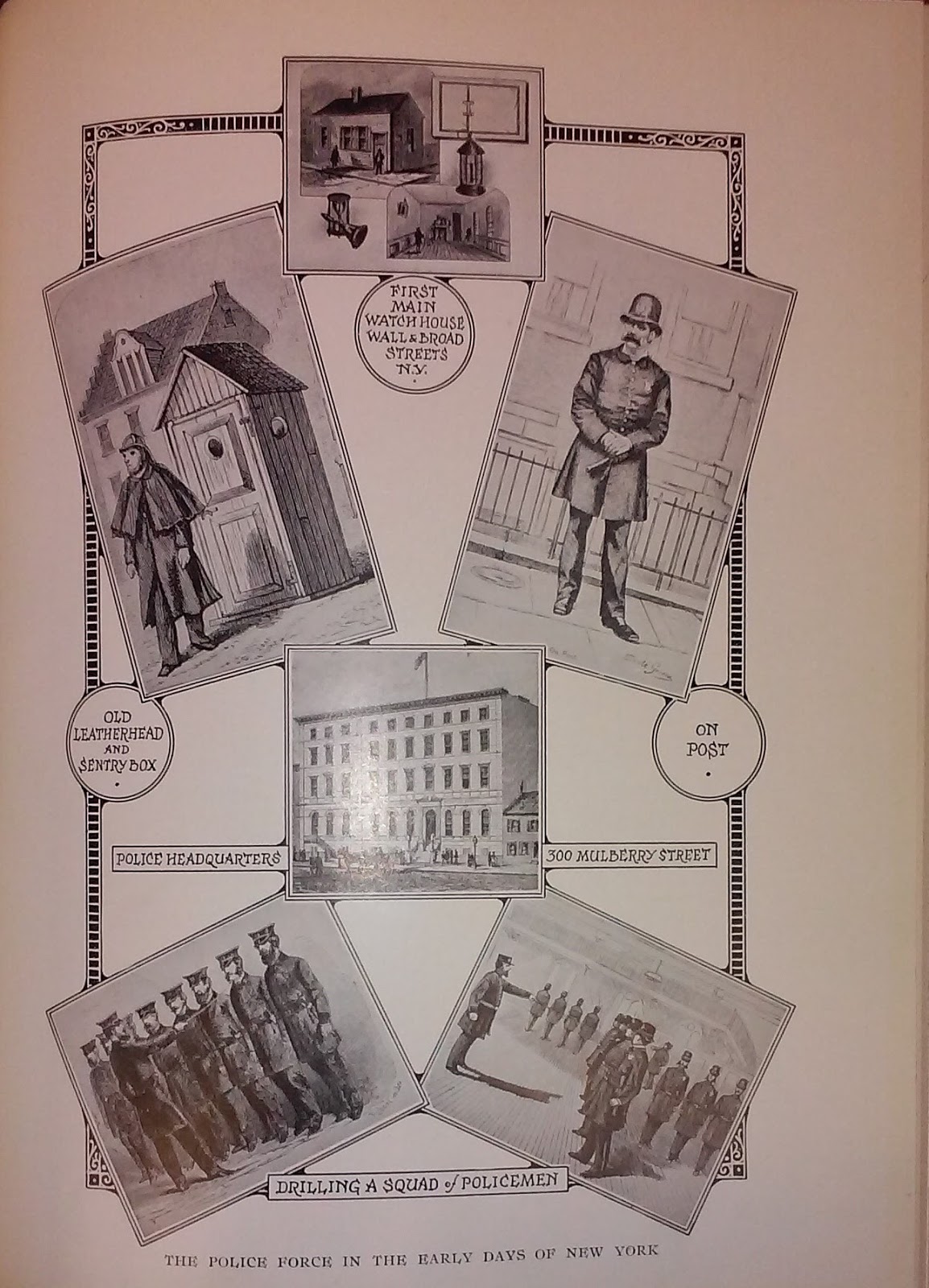
    I love spending time in John Jay College’s great Lloyd Sealy Library browsing NYPD annual police reports from 100 years ago. Even older ones are available to the public online.

    In 1912 the total force was 10,371 plus 268 civilian.

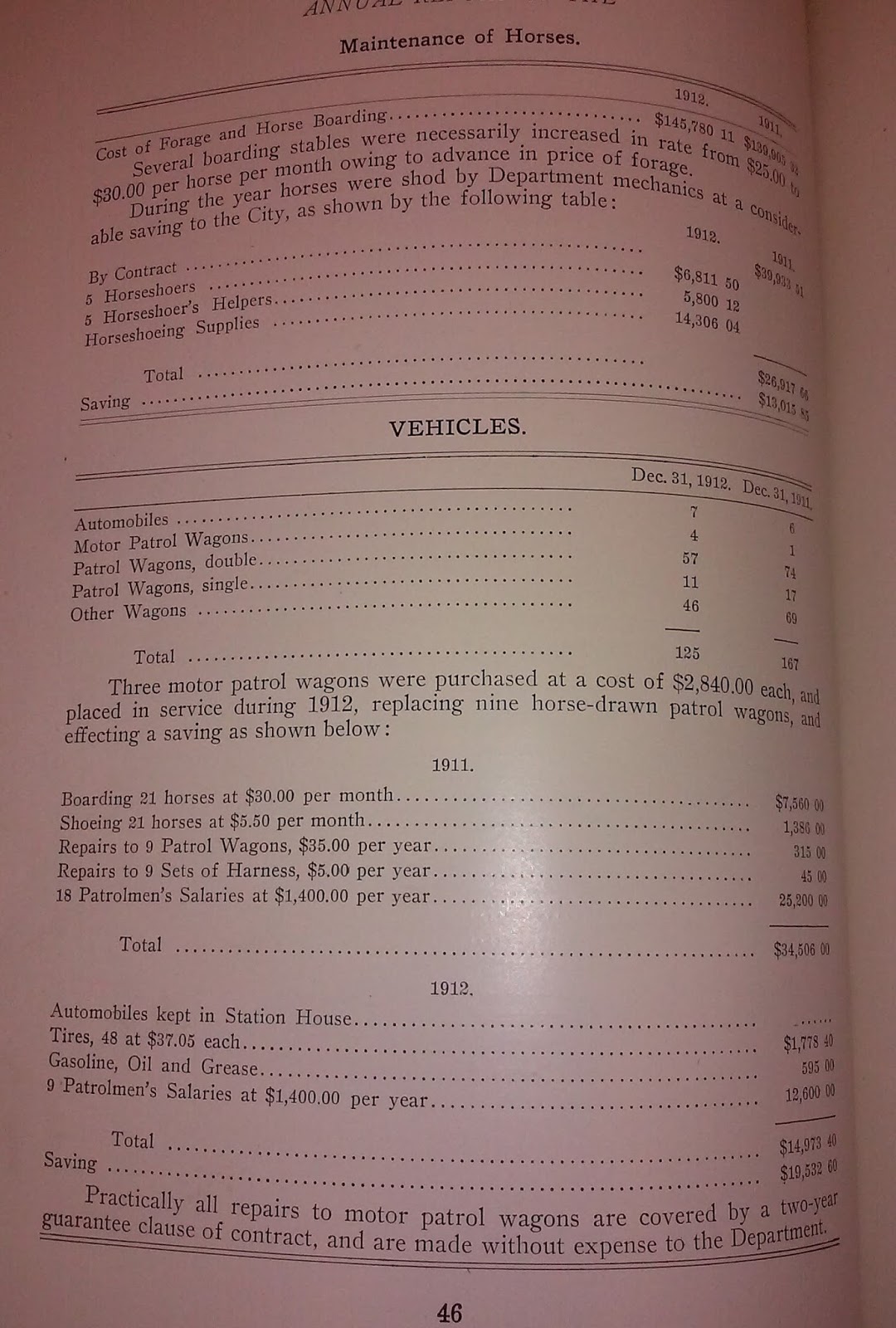
    Three motor patrol wagons were installed during the year 1912 [making 4]. It is proposed to immediately purchase ten additional wagons of the same type. Each of these vehicles replaces three horse-drawn wagons. The savings in salaries of the drivers alone pay for the original cost of the vehicle [$2,840] in about six months.

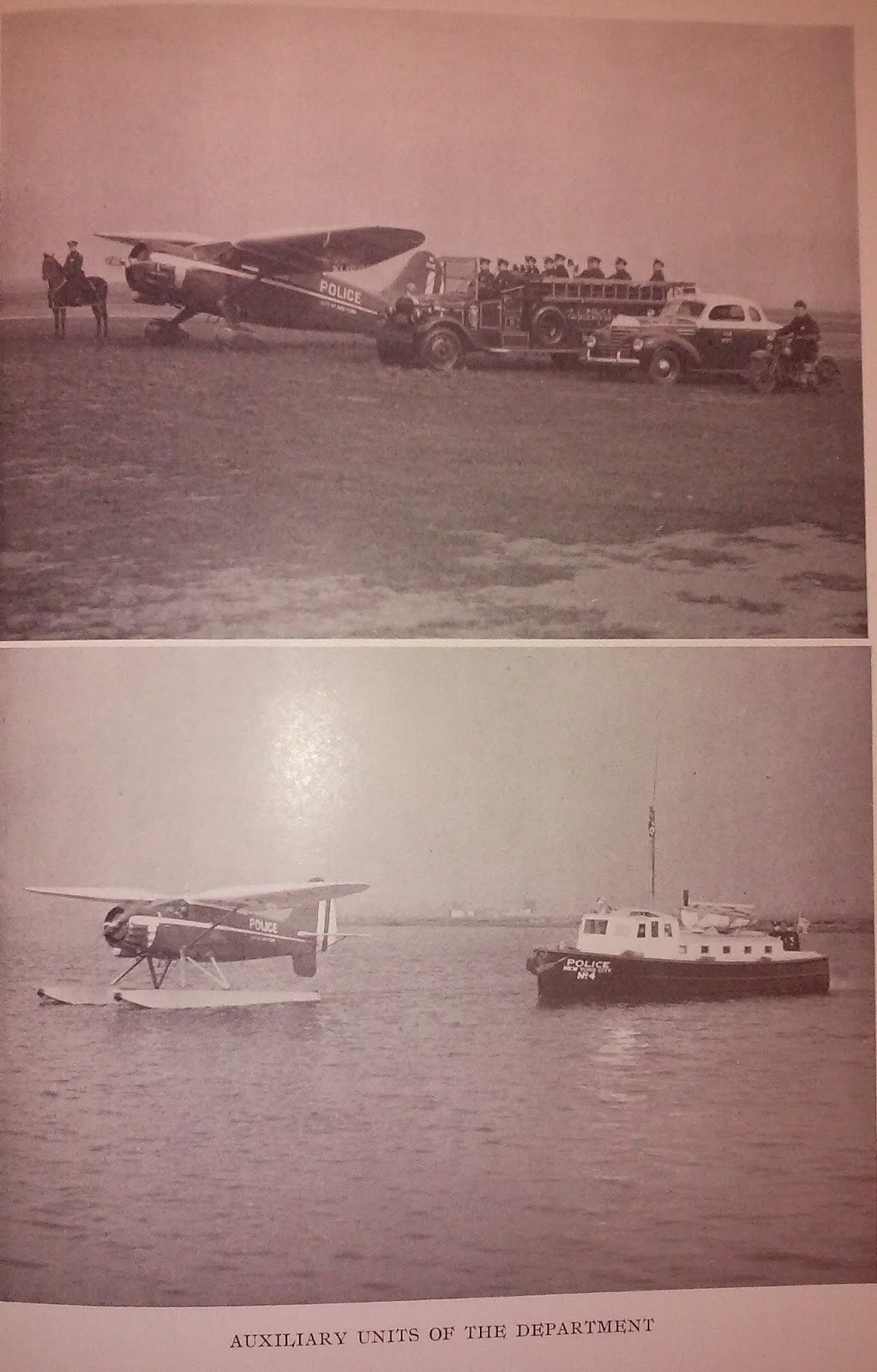
    There were the 25 motorcycles, 55 bicycles, and 679 horses (139 patrol wagon, 483 saddle service).

    Crime and arrests: 300 homicides, 107,227 misdemeanor arrests (60,493 for intoxication and/or disorderly conduct), and 18,780 felony arrests (242 for cocaine, 2 for opium).

    Pay was to be not less than $1,000 for a patrolmen. Pension was requested to be 2% per year after 25 years of service.

    In 1919 NYC had 5.6 million people and 10,000 cops, the ratio of which was considered a big low compared to other cities.

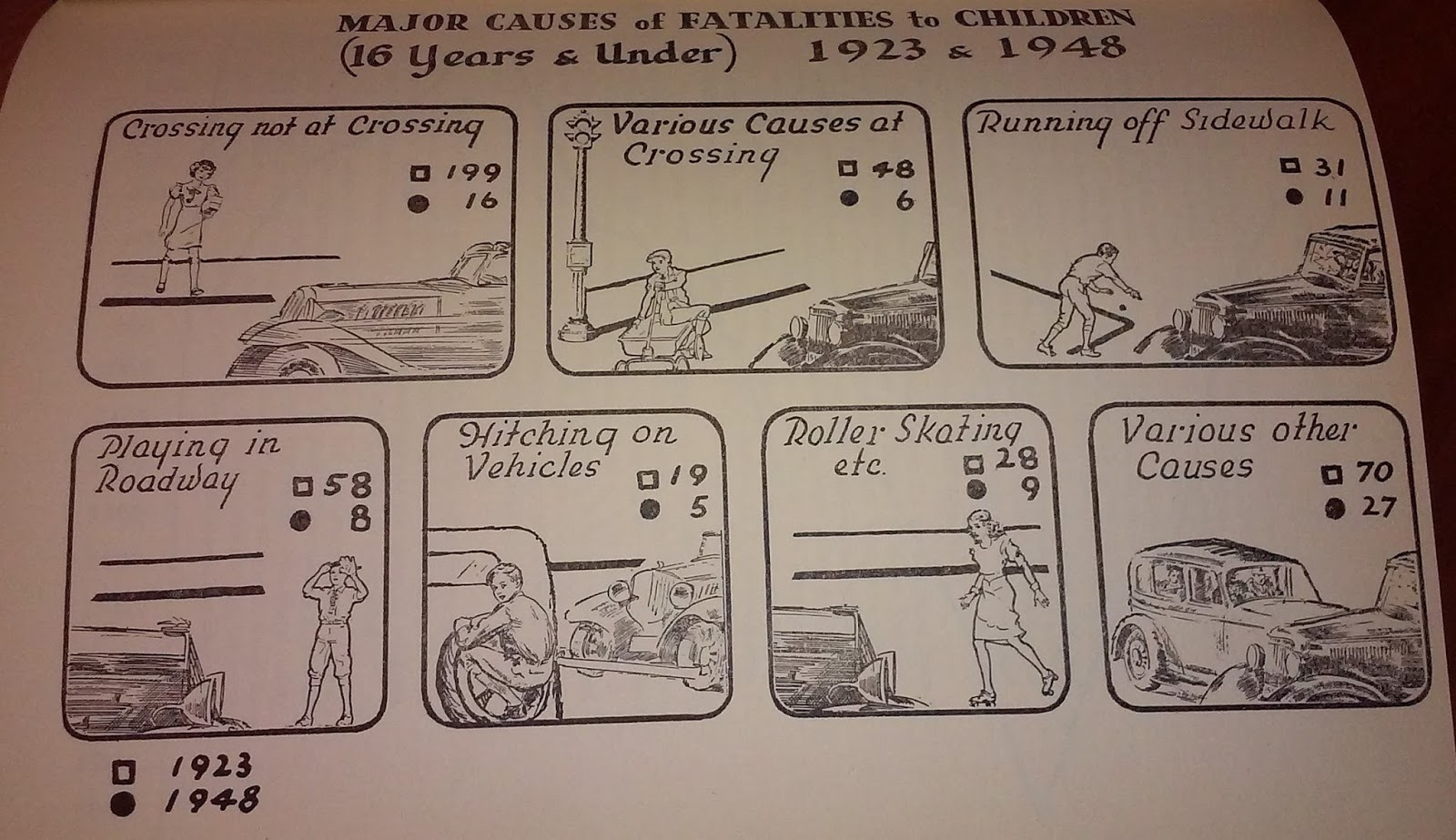
    In 1925, 453 children 16 and under were killed by cars and trolleys. That’s a lot! By 1948 this number was brought down to 82. In 2015 there were 250 people of all ages killed by traffic. I guess the 1920s was the first time in human history when kids weren’t supposed to play in the streets.
    I love the category of “roller skating, etc.”

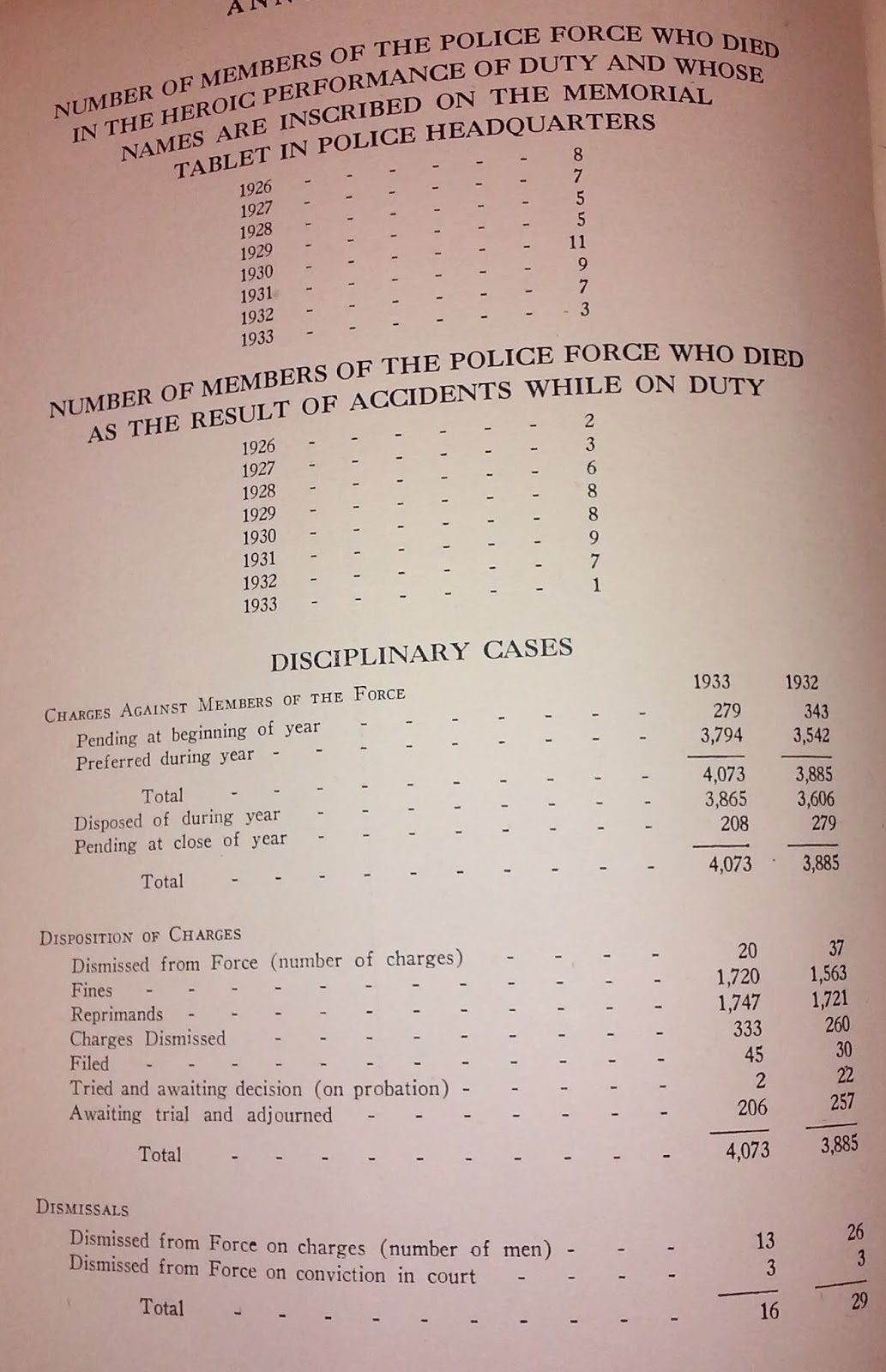
    From 1926 to 1933, an average of 7 officer a year “died in the heroic performance of duty.” An additional 5.5 died “as the result of accidents while on duty.” There were just under 19,000 uniformed personnel.

    In 1933, at the end of prohibition, there were 431 murders: 6 homicides from bootleggers’ dispute (down from 16 in 1932), 3 narcotic disputes, 3 slot machine disputes, and 2 prostitution disputes. 997 traffic fatalities. Total arrests 460,484.

    There were 12 motorcycles with side cars, armored. 64 2-passenger radio equipped coupes were purchased. There were 240 2 passengers, radio equipped “runabouts.” 123 had no radio. Keep in mind there were one-way radios! “Standard equipment, seven tube super-heterodyne radio receivers have been installed in four hundred Department automobiles.” Radio Motor patrol made 2,162 arrests.

    Under the great Mayor LaGuardia, police re-entered the social welfare game:

    The Unemployment Relief Bureau was established to function in connection with the work of obtaining aid and relief for the unemployed.

    Members of the Force were assigned to investigate applications for the relief cases of distress, visit owners of property whose tenants were in arrears in payment of rent with a view of obtaining monetary relief from the Mayor’s Official Committee.

    Food checks were issued to families requiring assistance.

    The nature of relief rendered through the Mayor’s Official Committee was as follows:

    A) monetary assistance

    B) distribution of food tickets

    C) Distribution of fuel

    D) distribution of clothing

    E) Securing positions for unemployed

    F) cases referred to other agencies.

    1,780,600 lbs of coal distributed. 16,334 articles of clothing, 220,000 food tickets (redeemed at authorized stores) worth $684,814, $70,799 in cash.

    31,094 (!) pistol licenses were issued (bringing in $286.50). 74 tear gas permits (?!) issued along with 418 religious permits (30 were disapproved). Other permits that the Pistol License Bureau could issue were: “auctioneers, bail bond agents, candidates for admission to the Bar, Hotel runners’ license, loud speaker permits, masque ball permits, massage operators, massage institute license, miscellaneous investigations, piston license, religious permits, tear gas permits, various investigations for the Department of License.”

    By 1939 homicides in the city dropped to 291 (78 shooting, 96 cutting, 85 assault). There were still 326 motorcycles and 375 horses in service.

    In 1948 there were 315 murders. 93 were shootings and 59 were categorized as “marital or passion.”

    My favorite part goes comes from the 1913 report and the complaint about the lack of “fruit and other food in season” at the canteen, something “that seems to have been completely overlooked”! Well, I say, the Chef does need to up his game!
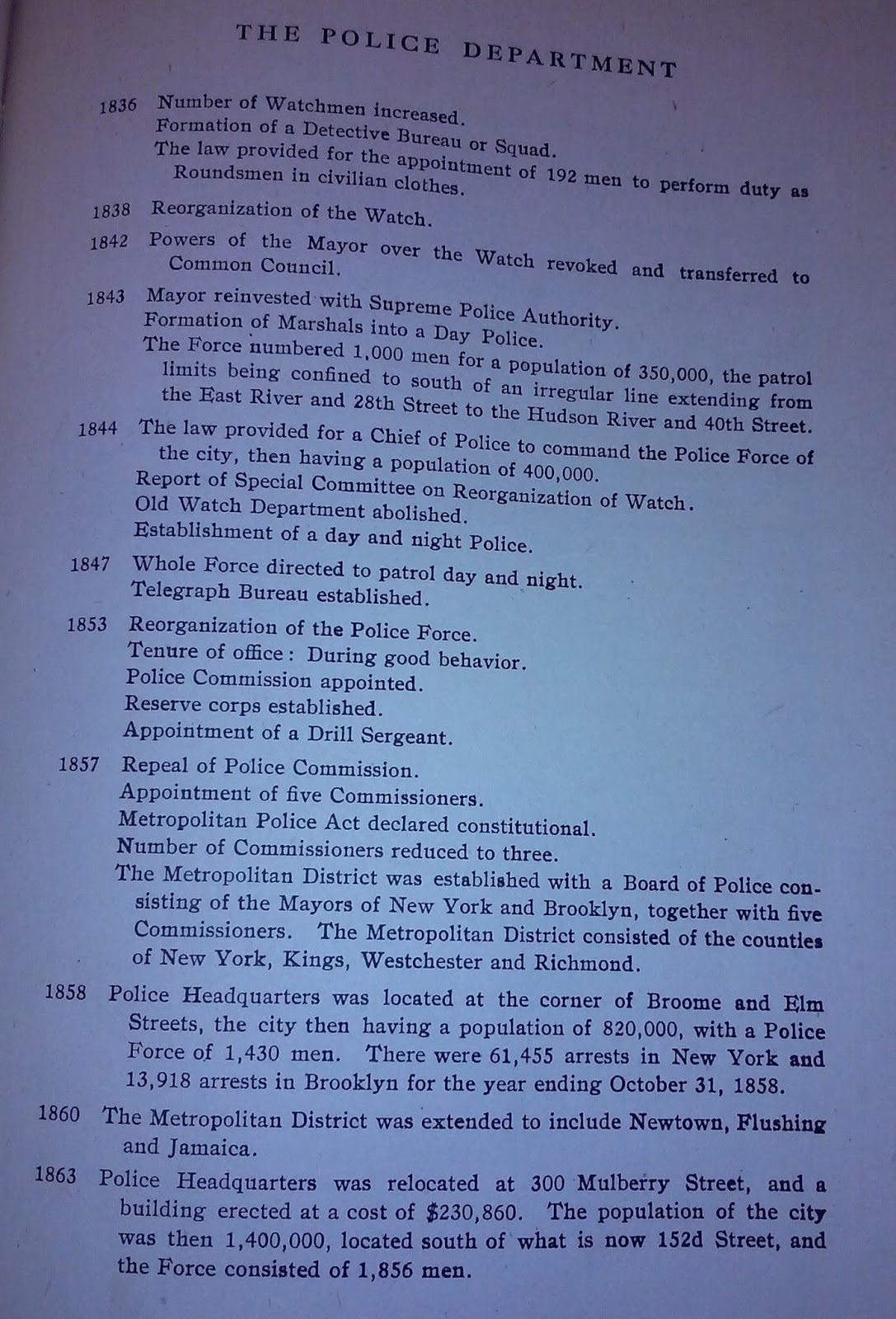
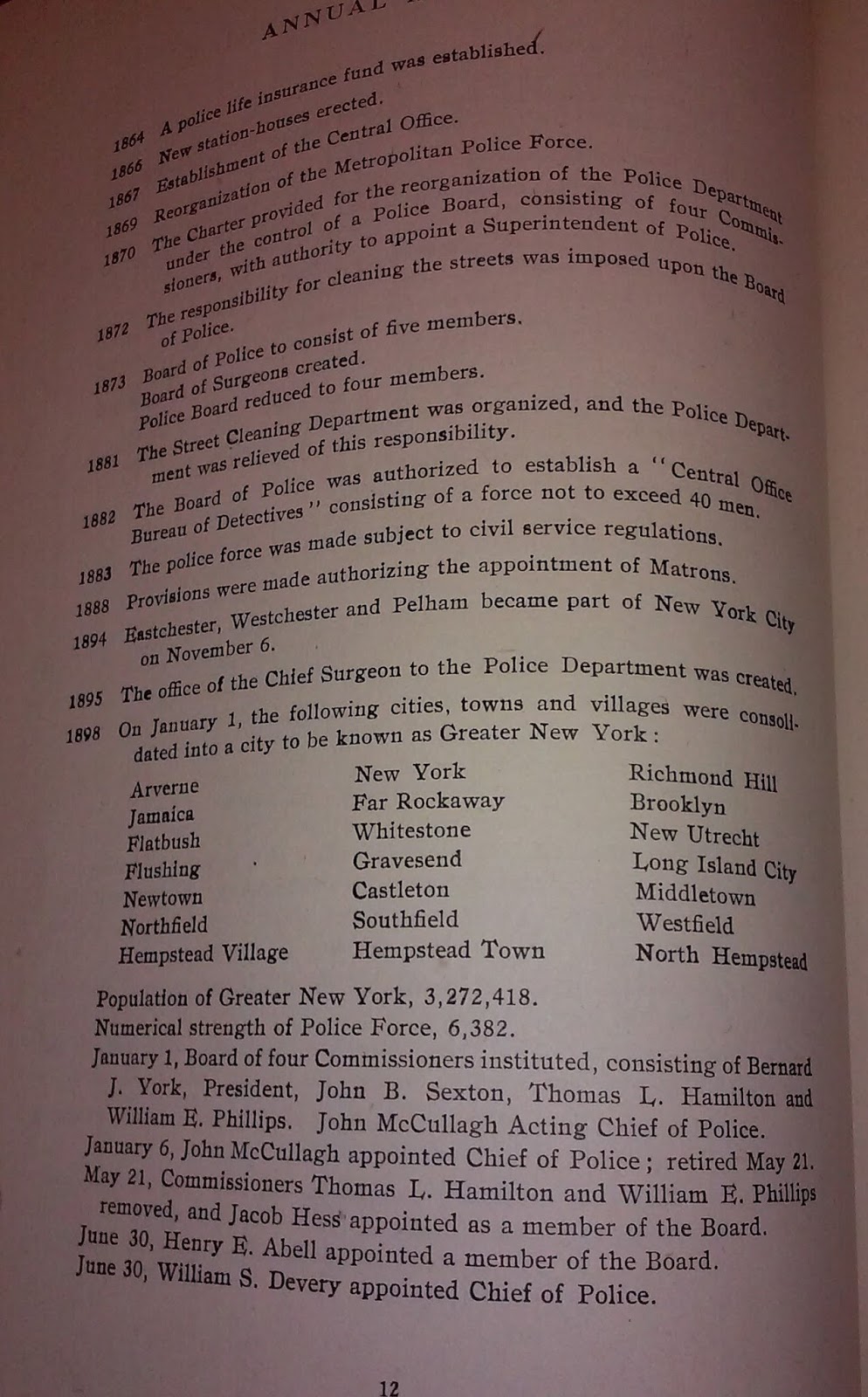
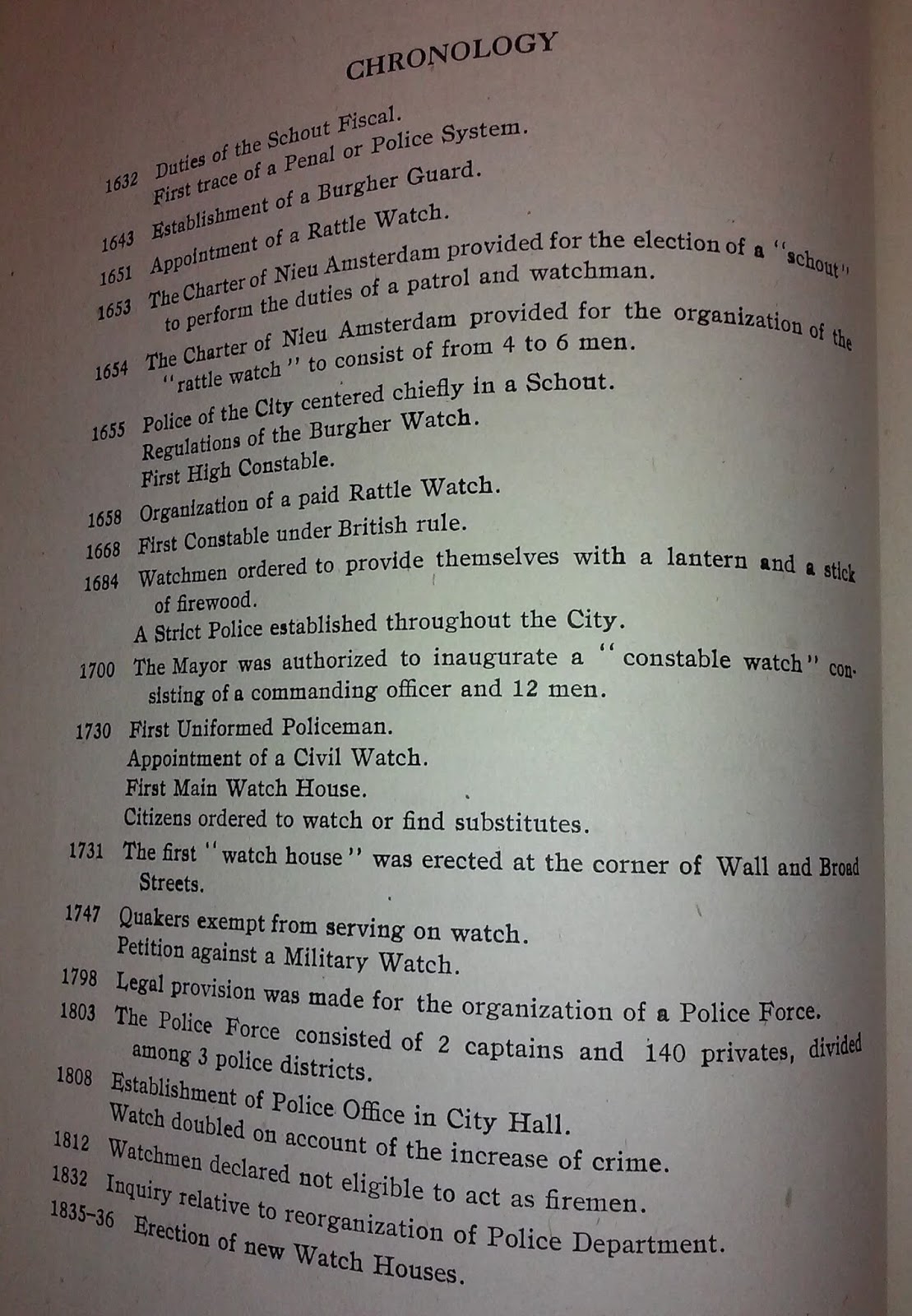
    And here’s the official chronology of the NYPD, up to 1900:


  • The fire-bombing of 324 car

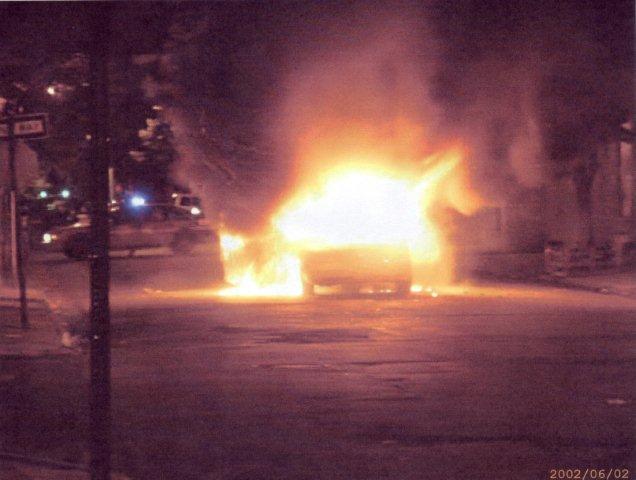
    The fire-bombing of 324 car

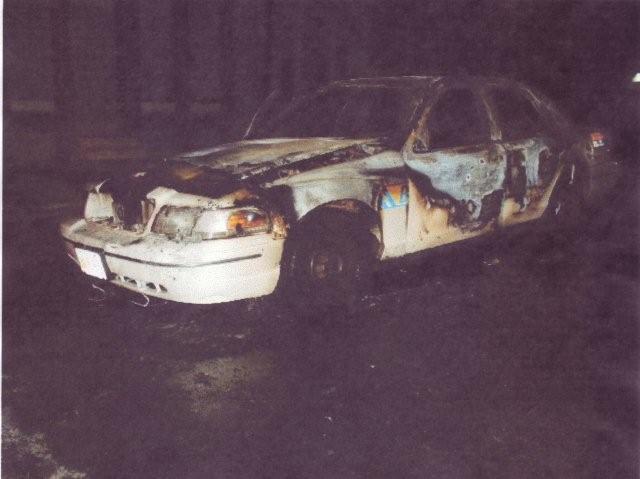
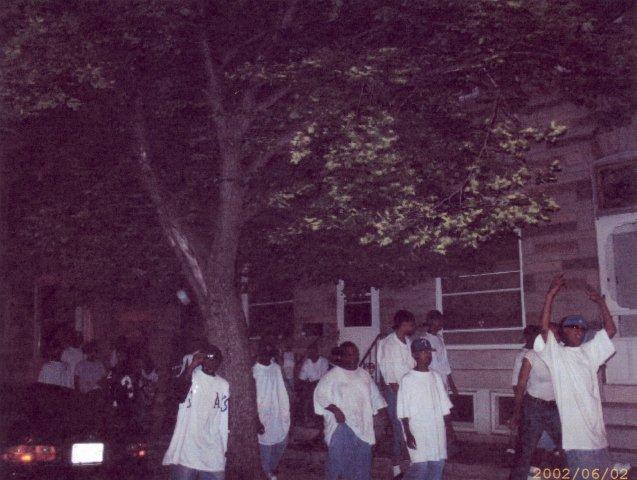
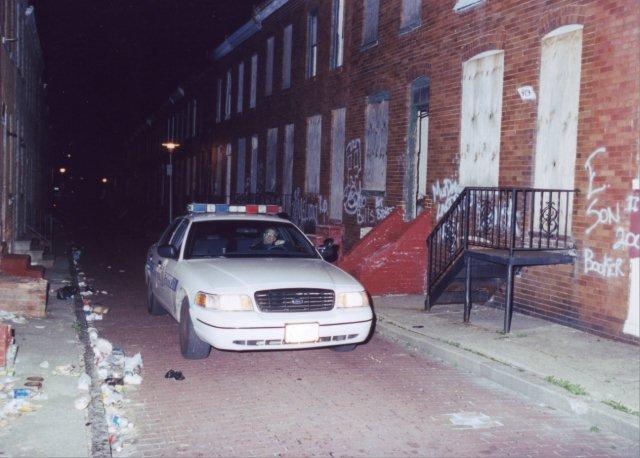
    About a year after I left the B.P.D., this happened. 324 car got firebombed. Some locals didn’t like the officer driving it because he could outrun and catch anybody in the district who tried to run from him. Somebody led him on a foot chase while his friends torched the car. It was our best car, too. The only one with a computer.

    It got torched.

    And burnt-out shell.

    The yo-boys celebrating their victory. What can you say about a group of mostly kids, all in white T-shirt and jeans, celebrating their victory? It’s 1AM, do you know where your child is?
    [originally posted 9/07]

  • Cops love toys

    Cops love toys

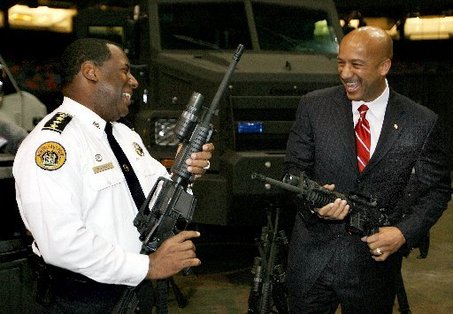
    So much bothers me about this storyfeaturing this picture by Eliot Kamenitz of The New Orleans Times-Picayune The captain reads:

    Mayor Ray Nagin and NOPD Superintendent Warren Riley try out a pair of the NOPD’s new M-4 rifles Tuesday at the Superdome. Money from the state also provided 600 bullet-proof vests.

    The storybegins:

    New Orleans Mayor Ray Nagin and Police Superintendent Warren Riley on Tuesday used the floor of the Superdome to display more than $1 million in new armament and other equipment, largely for use by the SWAT squad in emergency and riot situations, including a fully equipped mobile command post, two armored cars and modern assault rifles.

    Nearly all of the equipment was financed from a $6.6 million state allocation to New Orleans police that was earmarked for crime-fighting items or strategies, Riley said.

    The city officials said the new equipment reflected a determination by the Police Department to root out and arrest criminals and make New Orleans safer, as well as to help police handle any emergency situation encountered.

    The money will also pay for 600 bullet-proof vests.

    The 27- and 14-ton armored cars, costing about $380,000 and $270,000 respectively, will provide cover to officers in SWAT situations and help them safely evacuate citizens from dangerous situations, Riley said.

    How this will reduce the murder rate, I’m not sure. Actually, I am sure. It won’t.

    This money should be spent on more police, on better police, on a pay raise, on foot patrol, and on giving language classes so police can communicate with the growing Spanish-speaking community. The bullet-proof vests are good. Half-a-million dollars on armored cars isn’t

    Automatic weapons and swat teams don’t stop muggers. They do lead to innocent people getting killed and cops busting down the wrong doors in drug raids.

    Congrats, Mr. Mayor and Mr. Superintendent! Have fun playing with your new toys. But Mr. Mayor, one bit of advice: you really shouldn’t “laser” a police officer. Pointing a gun at a police officer will likely get you killed.

  • Baltimore crack house

    Baltimore crack house

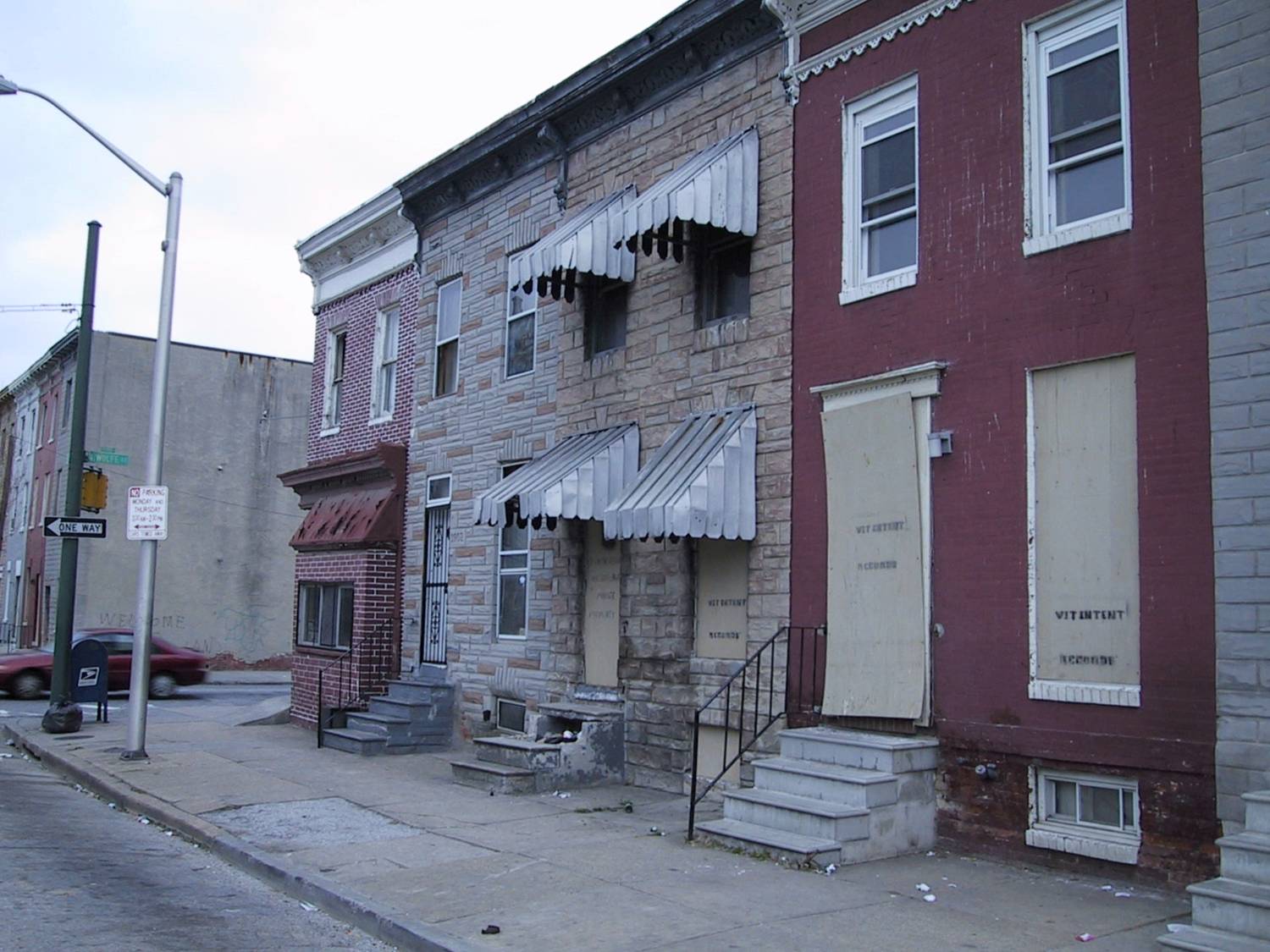
    #1) 1900 Block of E Eager. 1906 E Eager is the third house (with awning) from Mr. George’s corner laundromat. Two short blocks North of Johns Hopkins Hospital, this corner (Wolfe and Eager) is one of the “hottest” (but hardly the only) drug corners in the neighborhood, heroin and crack are sold around the clock, rain or shine. Most of the customers are locals, but a conspicuous minority of whites drive in from the poor suburbs looking for the purer heroin found in the ghetto. This neighborhood, built around the turn of the century and featuring typical Baltimore rowhomes, formstone, and marble stoops, was all white until the 1950s, middle class until the 70s and 80s, now it is mostly vacant, all black, and very poor. Hopkins and city own most of the property. Hopkins has since torn down most of this area.

    #2) The corner looks deserted. It is just 7 in the morning. But a few moments earlier, there were dozens of people roaming about. But a funny thing happens when you part a police car in the middle of the intersection, turn off the motor (otherwise the picture is blurry), and take a picture. People scatter. Note how everybody is walking away. I didn’t take in personally.

    #3) Approaching the rear of 1906 E Eager from N Chapel St. I was looking for a location to observe drug sailes on the corner and out of one house in particular.

    #4) Most vacants are boarded up to prevent junkies from entering, or filled with too much trash and damage to let one safely enter. The Rear entrance of 1906 E Eager is wide open. The first, time, on official police business, I went in alone. The second time, to take pictures, I brought along a partner, just to be safe.

    #5) The rear room on the first floor is what used to be the kitchen. In the Northeast corner are old appliances, partially stripped and peeling lead paint, and remnants of alpine wallpaper.

    #6) Another view of the alpine wallpaper

    #7) Looking Southwest in the kitchen, a few more appliances.

    #8) The Southeast corner of the kitchen. The iron stove top grates have long been sold for scrap. Almost all the metal has been.

    #9) The front room is the living room. A TV and couch remain. Makes me think the home was occupied into the 1990s. The front door is on the right. It’s interesting to me that a big color TV, once somebody’s prized possession, is no longer worth anything.

    #10) The front door is on the left. Vivid woodland wallpaper remains.

    #11) Looking up the staircase between the rooms. One of the stairs is rotted through, but the rest are in pretty good shape. This is a typical staircase for a rowhome. It’s horrible for police. Often there’s no handrail, and you can easily be pushed down. At the top, suspects could be in either or both directions. They don’t teach you about this in the police academy.

    #12) 2nd floor front room. Nice windows for surveillance of the dealers katty-corner across Wolfe St. Otherwise trash, some drug paraphernalia, a mattress against the wall, two pairs of shoes, and a nicely patterned linoleum floor remain.

    #13) Looking East in the upstairs front room. A nice old heating grate, removed from the wall, hasn’t been taken to sell for scrap. A small water bottle (nicely labeled “water”) is on the floor. This water would be mixed with heroin and heated with lighter in a metal bottle cap from a 40oz bottle of malt liquor. The mixture is then injected. The only thing is these pictures I manipulated is the water bottle. I turned it so I could photograph the word, “water.” I love how it’s neatly labeled.

    #14) Rear room second floor. View looking rear from the stairs. Two layers of floor cover are visible, along with purple latex gloves, and a black tourniquet to make veins bulge for easier injection. An empty container of cornstarch is on the chair. Cornstarch can be put into empty crack vials and repackaged as “burn,” or fake drugs to sell for a quick buck, mostly to whites coming into the neighborhood. Some of these whites then call the police and tell us they were robbed (always of $10 or $20). They don’t get much sympathy. Locals would know not to buy from local junkies. But selling burn is not without risk as selling burn to the wrong person can get you beat up or killed.

    #15) Looking towards the front in the rear room. Mirrors and black pride posters increase the positivity and create a much nicer overall environment. Tupac, Goodie Mob, and Q-Tip. An almost empty bottle of Pepto Bismal lies on the ground, showing that indigestion can strike anyone.

    #16) A poster and broken clock on one wall is just of above the bottles of piss and cans of shit neatly kept in the corner (unfortunately my partner knocked over that board you see on the lower right corner, tipping everything over. It smelled really rank after that.)

    #17) A 2000 Sears poster celebrating Black History claiming it’s not just for February anymore: “Every family has a history. We celebrate yours every day, every year.”

    #18) Bottles of piss sit in old malt liquor bottles. Next to it is a free parenting magazine and a toy box. My partner accidentally knocked the loose door on to the bottles of human waste. This spilled a lot of piss. We left the place worse than we found it. This wasn’t low-impact policing. Sorry.

    #19) Another view of the main lounge and work area. Given the conditions, this is not where serious drug dealers do their work. This is a place for addicts to shoot up, relax, and scheme how to come up with their next $10 hit.

    #20) A few chairs are set around a collection of empty crack vials. There are also more shoes. Why all the shoes?

    #21) Looking closer, there are dozens of empty crack vials. Every color of the rainbow. The legal use for these vials in for perfumes and oils. The color of the cap on the vial often becomes a sort of brand name: red tops, blacks tops, or orange tops. Other good brand names: Uptown, Bodybag, Capone, and the more generic Ready Rock. Also on the floor are candles, cigarette butts, lighters (lots of them), tin foil, and bottle caps. Heroin and coke is an ever popular mix. John Belushi overdosed on it. Sugar, in the form of candy bars and tasty cakes can take some of the edge of the beginnings of heroin withdrawal.

    Notice that the cup being used as an ashtray is standing and in use. The shoes are lined up. Paper is on the floor. In this disorder, there is order. But it’s almost inevitable that at some point in time they’ll burn the place down. And when that happens, you don’t want to be the neighbor next door.

    These pictures were taken in early 2001.

  • Dog fight

    Dog fight

    So Michael Vic apologized for dog fighting. I don’t believe him. He likes dog fighting. He’s not the only one. There’s lots of dog fighting in the Eastern District. That’s just the way it is.

    Many cops I worked with were very upset at animal mistreatment. One time I answered a call for a pit bull on somebody’s stoop. The dog wasn’t causing any trouble but was quite large and in no mood to leave. He just sat there and took in the scene. One family couldn’t leave their home. From behind the screen door, they had no idea where the dog came from and why it was on their stoop. We stayed very near our car for our protection.

    The dog had clear scars on his face from fighting. My partner said, “It’s sad that I feel more for the dog than the people here. . . What did the dog do to deserve this?… I mean, I can rationalize and say that the people choose to live this way. But the dog?”

    I don’t feel more for dogs than people. Seeing a lot of human suffering makes me less concerned about animals. In poor neighborhoods and countries, when faced with mistreated people, it bothers me less to see mistreated animals. That’s just the way it is. It would be great if no human or animal had to suffer but in the meantime it’s all about priorities. People matter more.

    It shouldn’t be a zero-sum world. It’s not that one tortured dog means one person living better. You should care about all living things. But a lot of things bother me when people are “shocked” about dog fighting. Why aren’t more people shocked about the misery peoplesuffer? I wish that people would take some of the sympathy they have for a suffering dog and transfer it to a suffering person. If you already care about suffering people, than by all means worry about dogs, too.

    And why are people so shocked that there is a dog fighting culture? All they would have to do is ask anybody with any connection to the ghetto. But the people who are *shocked* have no connection with the ghetto. And that’s why it bothers me that they pass judgment so quickly and so passionately. They have no clue.

    I don’t like dogfighting. But what if I did? I’ve had an urge to breed fighting game cocks (I will resist) ever since I read Alex Haley’s beautiful description of Chicken George in Roots. I mean, that man loved his chickens. And he fought them. That’s why he loved them. It was beautiful. At least in the book.

    I’ve been in countries (and states) where chicken fighting is legal. I haven’t seen a cock fight yet. But who am I to judge? I feel like it’s none of my business. Cock fighting, dog fighting, is there a big difference? Yeah they’re both bad. To you and me.

    As a cop, I wish there were fewer laws, not more. It’s not right to want to outlaw something just because you don’t like it. A lot of people don’t like that I eat meat. I don’t want them outlawing animal slaughter. The whole point of live and let live is to let people do what they want, even when you don’t like it. Just like free speech only matters when somebody says something offensive.

    Some people want to fight dogs. And some dogs want to fight. That’s what they’re raised for. Is it worse than dog racing? Is it worse that factory farming and slaughter? Is it worse than eating meat? The answer to all those is probably yes, but what if I’m wrong? How can I feel smug saying dogfighting is horrible while waving a hamburger for emphasis?

    I’m always skeptical of judgmental middle-class America outlawing the recreational choices of poor America. There’s a long history of that. Nine times out of ten, when poor people start getting into something, we make it illegal. Everything from drinking to drugs to gambling to prostitution to kids playing stickball in the street. We love telling poor people what they can’t do. And then we lock them up for doing it.

    I saw a lot of messed up dogs in Baltimore (pronounced “dugs,” by the way). And small packs of wild dogs roam the streets at night. The packs actually looked pretty happy and healthy, but it can’t be good for property values.

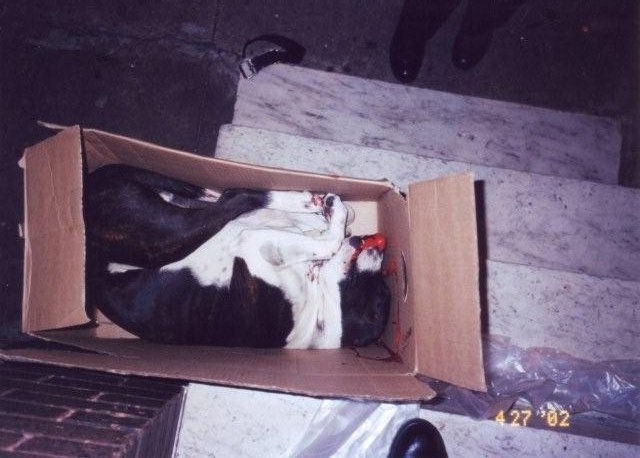
    Here’s a dead dog left in a box on a stoop. Poor dug.

  • Pictures

    Pictures

    Some of the blight of the Eastern

    RIP graffiti:

    You can’t outrun a mural.

    Pig on pig.

    Ladies…

    After a cutting.

    After being cut.

    It could have been me… but it wasn’t! (I blurred their faces)