Tag: policing protests

  • LRAD: Long Range Accoustical Device

    I was a little too generous in my previous post when I said we don’t know harm this device causes. From a 2012 NYPD briefing on the LRAD (Long Range Acoustical Device), also known as a sound cannon, via the Gothamist.

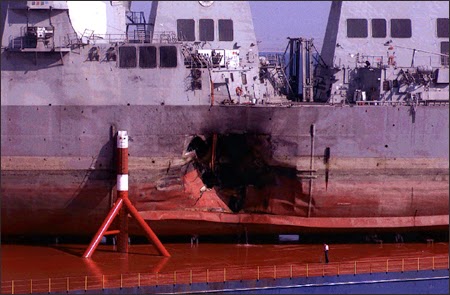
    In addition to having “loudspeaker” capabilities, the device can also be used, in a special mode, to propel piercing sound at higher levels (as measured in decibels) than are considered safe to human ears. In this dangerous range (above 120 decibels), the device can cause damage to someone’s hearing and may be painful. It is this technology that device was designed for a USS Cole attack-type scenario. … The device could be used to send out sound at a dangerously high level causing attackers to turn away, or at least, to cause pain/hearing damage to try and repel
    the attack.

    The LRAD devices … were deployed during the RNC in 2004, for use as loudspeakers…. The device was used as a louspeaker to make announcements to the crowd of protesters, with mixed results. No injuries were sustained.

    Again from the Gothamist:

    While there might be situations where police have a legitimate use for the device, such as dispersing a large and violent group, [Alex Vitale] says this wasn’t such a situation. “LRADs should be used to avoid having to do a baton charge,” Vitale says. “This was used to scatter already scattered protesters.”

    And these devices were tested by the NYPD, in an empty parking lot.

    Also (and correct me if I’m wrong) the decibel scale is logarithmic: going from 1 to 10 is a ten-fold increase while going from 1 to 20 is a 100-fold increase. But this is the amount of power or energy in sound, which goes up 10 times every time decibels go up 10 units. But the volume of this sound, the way sound is perceived by the human ear, roughly doubles for every 10 decibel increase. 120 decibels sounds twice as loud as 110 dB (as does 110 compared to 100 dB). So 120 decibels sounds something like 64-times as loud as 60 dB, which is volume of normal speech.

    In Test #1, spoken voice commands were given. 20 feet away, sound was measured at 102 dB. In Test #2, noise burst were used, and sound was measured at 110 dB. Now 320 feet is a pretty long distance. It’s the length of a football field. Or half the length of an NYC subway platform (yes, the NYC subway trains really are 600+ feet long). The NYPD LRAD tests were done on cold windy winter day at the beach in The Bronx. Sixth Avenue in Manhattan, an urban canyon with hard sides, is less than 100-feet wide (including sidewalks). You can’t get more than 40 or 50 feet from the center of the street. So… what were the results of the NYPD test at a  distance of 50 feet? “Potential danger area. Not tested.” In fact, nothing closer than 320 feet was tested. It might be dangerous.

    This is a lawsuit waiting to happen. But the NYPD won’t have to foot the bill. It’s going to be paid for by me and other resident taxpayers.

    (Link to the sound cannon and its first use in 2009 in Pittsburgh. And about the military purpose and history of this potential weapon.)
  • I can’t hear you!

    I can’t hear you!

    In 2004, the NYPD bought two “long-range acoustic devices” ($35,000 per) and said that during the convention, “they would be used only for announcements, and that their shrill deterrent function would not be employed.” I didn’t believe that would last. Because, as is always the case, if you give cops toys, they will play with them. Which is why you should be worried about military hardware going to police departments.

    Well this is military hardware. And of course they have now been deployed against US civilians.

    By my account, it was first used by police against US civilians in 2009.

    Look, maybe sound devices are an effective use of crowd control. Maybe it’s better than tear gas and batons. I don’t know. But first don’t you think we might want to be learn if sound cannons cause about lasting permanent damage? We simply do not know because we didn’t care. They were to be used again terrorists we don’t give a damn about.

    These weapons are a tool used to keep terrorist boats away from Navy ships, to prevent another attack like happened to the USS Cole.

    All I can think of while watching this clip is science fiction movies that portray the US in a depressing dystopian future.

    So now — without any public debate or decision-making by elected politicians — equipment designed to defend our troops against terrorists abroad is being used by civilian police departments against the public, some of whom who are “interfering with vehicular traffic.”

    Taking the totality of the situation, I say “fuck ‘vehicular traffic’.”

    (More on the sound cannon from it’s first use in 2009 in Pittsburgh. To its lack of adequate testing.)

  • Recipe for Outrage

    If you want to be outraged, I find the lack of more public protest over the police-involved killing of Akai Gurley odd. I mean, if you’re looking for an honest victim killed by police for no reason at all, why not focus on an honest victim killed for no reason at all (instead of say, a guy who robbed a store and then, almost assuredly, attacked a cop)?

    Gurley was a guy walking down some dark stairs where he lived (the Pink Homes, NYC public housing). Next thing you he’s struck in center mass by a police officer’s bullet and dead. Just like that. Boom. Game over.

    Seems like a rookie cop couldn’t open a door without accidentally firing his gun (either that or he was so scared of being in the project stairwell that he fired blindly). This is an obvious, blatant, unambiguous, fuckup. And yet compared to Brown and Garner, you hear very little about Akai Gurley. Not to say there’s been no coverage of his death, but is it even national news?

     Just imagine: the aftermath of Gurley’s killing has been so non-controversial that we haven’t even yet seen any attempt to personally besmirch the victim! I mean, come on now, I’m sure Fox News can dig up some previous incident or facebook picture that portrays Gurley in an unflattering light.

    So why the lack of more outrage? I can think of three reasons — lessons, you might even say — as to how to handle a bad police-involved shooting.

    1) We’ll never know all the details. But apparently Commissioner Bratton felt like he knew enough to say right away that police messed up:

    Bill Bratton characterized the incident as an “unfortunate tragedy” and an accident. Officials said Liang was holding a flashlight in his right hand and a Glock 9-mm. in the other when he opened the door to the eighth-floor landing.

    Here’s what Commissioner Bratton did not say, “I’m not commenting until we know all the details. An investigation is underway. Until we know all the details, we need to let the justice system work. But let me add that Gurley was no alter boy.”

    2) Sharpton has been pretty quiet about this. From last week’s NY Post:

    [Sharpton] muscled his way into the arrangements — and even put out press releases promising to deliver the eulogy — without ever consulting the family or offering to foot the bill.

    But Gurley’s relatives told Sharpton to stay away rather than turn the somber ceremonies into a spectacle.

    “Who made you the spokesperson of our family? We just want to bury our nephew with dignity and respect.”

    “How can you do a eulogy for someone you don’t even know? It’s heartbreaking,” she said. By late Friday, Sharpton accepted a rare defeat and backed off, though he blamed it on “confusion and division” within the Gurley family.

    Well that lessens the Sharpton Effect. Say what you want about Sharpton, but he does get media attention. Sharpton gives voice to the tree that otherwise just falls in the woods. And without anger, a perceived cover up, or a tone-deaf police department, there’s little news story. Tragic mistakes are just a one-day story in the news.

    3) The officer wasn’t white. This matters, though I’m not certain how much. Last I checked, Asians can be racist, too. And other police-involved shootings involving non-white officers have become issues because of the race of the victim (Sean Bell, for instance). But certainly an “officer of color” (as they say) removes some of the typical boilerplate narrative.

    So you’ve got an unquestionably innocent guy, and instant apology, a non-white cop, no Al Sharpton, and a justice system that hasn’t (yet) let the shooter completely off the hook. All you’re left with is some disembodied, vague fear of a rookie cop. That fear is probably more racist than anything that happened in the Ferguson shooting or Eric Garner’s choking, but because it’s all in an officer’s mind until the gun gets fired, there’s not much story.For public outrage — and I wish there were some way of addressing issues of racial justice and politics without focusing on individual ambiguous police incidents — but maybe you need ambiguity to create conflict and allow people to disagree and project their moral ideology.

    So here’s my recipe for outrage (feel free to substitute some of the ingredients):

    Take one beefy white cop and combine with an ambiguous hands-on police situation, a stonewalled inquiry, and a glug of bureaucratic tom-foolery. Do not apologize. Set aside. Place Al Sharpton in front of media cameras while at the side of the victim’s family. Stir in some militarized police over-response (to taste) and add a twist of judicial inaction. Let simmer till everything bubbles over. Do not remove from heat.

    Prep time takes years. But this handy recipe can be prepared in one day. Serves thousands.

    [thanks to ZLO]

  • Policing protests

    Just a few examples of effective policing with regards to protesters. From Kriston Capps at Citylab:

    In essence, Nashville’s police department made a decision to treat the
    protests like a parade, an event at which the law enforcement role is to
    provide security, not confront danger.

     Police even shut down a highway for the protesters when protesters were going to walk on it:

    Anderson further noted that arresting protesters one by one would have
    taken hours; instead, after about 25 minutes, police reopened the
    highway, and protesters continued on their way.

     In Richarond, California:

    Police chief Chris Magnus went further: He actually joined protesters
    this week. When about 100 demonstrators assembled downtown on Tuesday,
    Magnus stood with them, in full police gear, carrying a sign reading
    #BlackLivesMatter. “I spoke with my command staff, and we agreed it
    would be nice to convey our commitment to peaceful protest and that
    black and brown lives do matter,” Magnus told the Contra Costa Times.

    In both cities the protests ended with no violence and a great PR coup for police officers.

    You know, somewhat to my surprise, I’m actually like the new protest tactic of shutting down roads. When you’re protesting you want to make a scene. If you want to protest, standing in a barricaded corral doesn’t cut it. The question is what kind of scene. And breaking windows and burning shit is good for nobody. So let’s let protesters shut down a road for a bit. What’s the big deal?

    Keeping roads open is a strange line-in-the-sand for police departments to draw. Sure it sucks to be stuck in a traffic jam for an hours. But so what? Traffic jams cause you to be stuck in traffic. Traffic accidents shut down roads and freeways. So does the occasional marathon. So do, I should point out, police funerals.

  • “Sound Cannon” used in Pittsburgh

    Whoa…

    In the afternoon, protesters who tried to march toward the convention center where the gathering was being held encountered roaming squads of police officers carrying plastic shields and batons. The police fired a sound cannon that emitted shrill beeps, causing demonstrators to cover their ears and back up; then the police threw tear gas canisters that released clouds of white smoke and stun grenades that exploded with sharp flashes of light.

    City officials said they believed it was the first time the sound cannon had been used for crowd control. “Other law enforcement agencies will be watching to see how it was used,” said Nate Harper, the Pittsburgh police chief. “It served its purpose well.”

    That’s from this story in the New York Times.

    The Washington Times reported back in March, 2004:

    The equipment, called a Long Range Acoustic Device, or LRAD, is a “nonlethal weapon” developed after the 2000 attack on the USS Cole off Yemen as a way to keep operators of small boats from approaching U.S. warships.

    Now the Army and Marines have added this auditory-barrage dispenser to their arms ensemble. Troops in Fallujah, a center of insurgency west of Baghdad, and other areas of central Iraq in particular often deal with crowds in which lethal foes intermingle with civilians.