Presidential hopeful and former New Mexico governor Gary Johnson calls (once again) for an end to the war on drugs.
Tag: war on drugs
-
…Stop Digging!
From the AP:
The number of homicides in Mexico rose by nearly a quarter in 2010 compared to the year before as the drug war intensified across the country, Mexican statisticians said Thursday.
The National Institute of Statistics and Geography recorded 24,374 homicides over the course of last year, a 23 percent increase from 19,803 in 2009. Last year’s figure represented 22 killings for every 100,000 residents in the country.
Another way to look at this: Mexico’s homicide rate is still about half of Baltimore’s.
-
$90 Billion and Counting…
Crime & Justice News reports on this story:
As Congress debates border-security funding and as governors demand more assistance, the Associated Press investigated what taxpayers spend securing the U.S.-Mexico border. Using White House budgets, reports obtained through Freedom of Information Act requests, and congressional transcripts, the tally is $90 billion in 10 years. For taxpayers footing the bill, the returns have been mixed: fewer illegal immigrants but little impact on terrorism, and certainly no halt to the drug supply.
-

The Elusive Search for “Mr. Kingpin”
 The LA Times reports that the ATF Director is expected to resign over the “Fast and Furious” gun program. It sure does seem a little strange for law enforcement to watch guns being sold to criminals and not acting.
 The operation marked a rare instance in which ATF agents allowed guns to “walk” into the hands of criminals, ostensibly with the goal of catching higher-ups in gun-trafficking organizations.
But is this any more strange than watching drugs be sold and not acting in the name of gathering evidence, going up the ladder, and building a case?
Ah, the illusive search for “Mr. Kingpin.” If only we could nab him, the whole criminal enterprise would tumble. Witness how we’re all safe from terrorism after the killing of Osama bin Laden. And notice how the drug war in Mexico has been won after the death or arrests of not one but at least six drug kingpins: one, two, three, four, five, and six!
Update: This just in! Another kingpin has just been arrested! Seven is the charm.
Mr Calderon described the capture as a great blow to organised crime…. Mexico’s security spokesman Alejandro Poire said the arrest had “destroyed the chain of command” of the cartel.
This drives me to drink, but excuse me if I don’t break out the champagne!
-
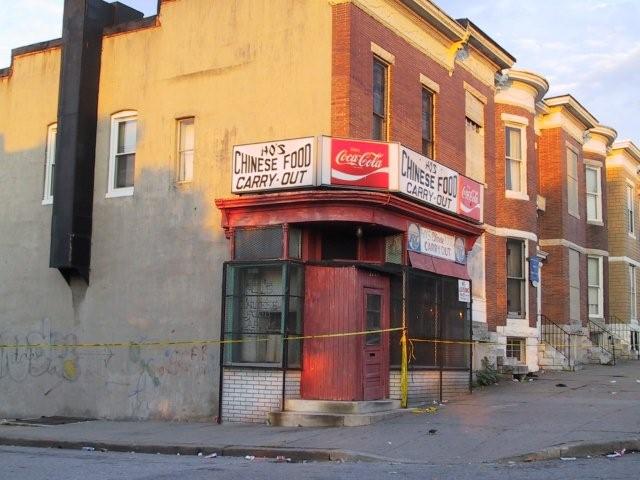
Drug Dealers vs. Business
[I just stumbled across this postfrom 2008 and rather liked it (if I do say so myself). I don’t really remember writing it. And since I don’t remember writing it, I figure you don’t remember reading it! So here it is again:]
A liquor store in Baltimore is being forced to close because a man was killed there and drug dealers congregate. I’m of mixed feelings. Liquor stores in the ghetto are hardly the most sympathetic businesses. But if they were all shut down, it’s not like the neighborhood’s problems would suddenly disappear.
It’s a shame there aren’t more locally run business in the ghetto. In many ways, the Eastern District is typical. Here’s a quick, perhaps inaccurate, and certainly unpolitically correct history of business life in the Eastern.
In the old days, or so I hear, many of the local businesses were run by Jewish people. At least that’s how the story is told on the street. Were they exploitive? Some think so. But, no, I don’t. Are allbusinesses exploitative? I don’t think so. Many of these Jews had grownup in the neighborhood. Many had stayed in the neighborhood when other whites fled. Yes, they were there to make money. But they also spoke English and hired locals to work in their stores. In hindsight, these were the good old days.
After the riots in the late 1960s, many of these store owners felt betrayed by the anger, left broke by the destruction, and realized that a little profit wasn’t worth their life. A lot of businesses packed up or closed for good.
Over the next 30 years, more businesses closed. And not an insignificant number of these after the owner got killed in a robbery.
Today there’s not much left. Monument St is still filled with stores. And there’s a excellent (black owned) produce store that deserves special mention (Leon’s Produce, 1001 N. Washington St.).
Other stores include laundromats, bars, Chinese takeout (called “yakamee” in Baltimore), and corner stores. The corner stores are now mostly run by Koreans (who are still referred to as “Chinamen”). If the store owners can’t afford a home in the suburbs, they may they live upstairs, in a sort of a castle-like fortress setup.
I can see the causes for resentment on both sides. At it’s worst, think L.A. riots and Koreans guarding their stores with guns. The store owners sit all day behind plexiglas selling overpriced crap. Many don’t speak English. Most hate their customers. And because they’re behind glass and won’t come out, they can’t control what goes on in the lobby of their own store. And unlike the old days, these store owners, by and large, couldn’t care less about the well being of the neighborhood. Still, and this is important to remember, the bigger problem in the neighborhood is too fewstores, not bad store owners. Besides it’s not easy to run a business in the ghetto. That’s why so few people do it. I wouldn’t. If running a store in the ghetto were such an easy way to make money, why don’t you do it?Now I don’t know Mr. Yim, the owner of the closed liquor store. But my guess is 1) he felt helpless to control what went on in and around his store, 2) he washelpless to control what went on in and around his store, and 3) he didn’t really care as long as his 1,000 daily customers kept giving him money so he and his family could survive.
From the story: “More than 300 residents signed a petition in the spring asking the city liquor board not to renew the store’s license…. ‘With those doors locked, [the drug dealers] don’t have a place to hide anymore.’”
But here’s the problem: with the doors locked, the drug dealers willstill have places to hide. Drug dealers don’t want legitimate stores. Business owners are a pain in their ass. Business don’t want drug dealers scaring customers. Businesses call police… until eventually the business owner gives up.
For drug dealers, a vacant building is better for business than a store. Vacants don’t attract people who don’t want to buy drugs. Vacants don’t call police. Vacants are good places to hide your stash. You can run away from police through a vacant. You can party and fuck your girl in a vacant.
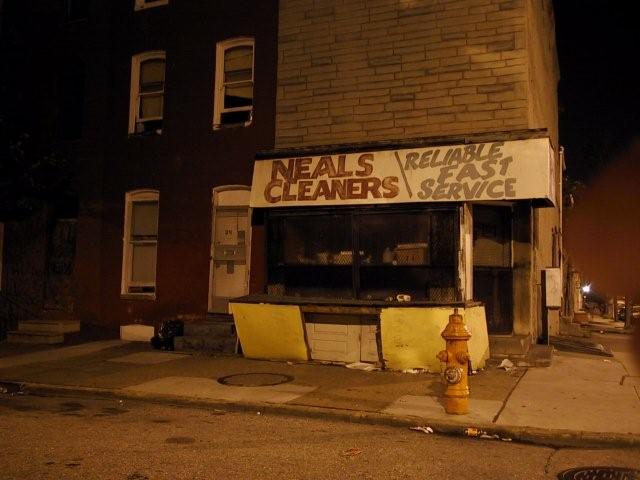
I was friends with a local man man who ran a corner laundromat. From behind the glass we’d drink coffee and talk about politics and race and I’d chuckle at the junkies who came in and paid 50 cents for a cup of sugar with a little coffee. The owner believed he was doing good. He was. If he closed, how would the old people on the block do their laundry? He was right. He also closed around 2pm because it was too dangerous after that.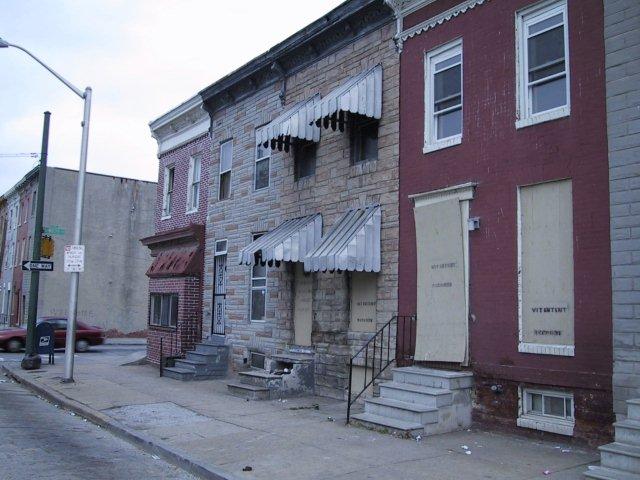
His corner was a bad drug corner. The worst we had in Sector 2. And that’s saying a lot. For a while he called police because of drug dealing on his corner. When police pulled up, the dealers would run into his store (and cause trouble). After a while, police became convinced that hewas a drug dealer. Because whenever police pulled up, there were drug dealers in his store. There’s a certain logic to that, except it’s wrong.As much as I can guarantee anything, I can guarantee that this man was not dealing drugs. But what was he to do? He stopped calling police and continued to yell at dealers when they came in his store. There’s nothing the dealers would have liked more than him closing for good. And that’s why it’s sad whenever a business closes. Every time a store closes, the drug dealers win. And by and large, the drug dealers have been winning a lot.
-
The Voices Grow Louder: End the Drug War
Jimmy Carter writes in the New York Times.
And Cook County Board President Toni Preckwinkle tells it like it is. And before you dismiss a Cook County Board President, consider that Cook County (Chicago) is larger than some 30 states. And in the article there are some very good words from the new Chicago Police Superintendent, Garry McCarthy (whom I’ve been impressed with when I’ve heard him speak at John Jay College):
“It becomes the issue of mass incarceration,” he said during an interview…. “There is an issue here. And law enforcement has gotten this wrong. Narcotics use is a criminalized social issue. It causes crime. Drug dealers get into violent disputes over turf. It’s about the money.”
He added: “It’s been so twisted up that law enforcement looks at narcotics as the crime, when it’s not. It’s the cause of the crime. So, we’ve had this wrong for a long time in law enforcement.”
Bold.
-
Narcotics Officer Says End War On Drugs
Neill Franklin was my commanding officer when I graduated from the police academy. Now we’re co-authors and friends. Here, on WBAL, he talks about ending the drug war.
You can also read a good article about Neill Franklin in The Fix.
-
A Sixth Season of The Wire…
…As soon as the Department of Justice is “ready to reconsider and address its continuing prosecution of our misguided, destructive and dehumanising drug prohibition.”
-
U.S. can’t justify its drug war spending, reports say
Duh.
But what gives this report a little twist is that it comes from the U.S. Government. Despite the obvious, “Obama administration officials strongly deny that U.S. efforts have failed to reduce drug production or smuggling in Latin America.” What is it about being President that makes one keep fighting a failed drug war?
From the LA Times.