Category: Police

  • *Let’s* Monday Morning Quarterback

    *Let’s* Monday Morning Quarterback

    Imagine, say, you get a call for an armed person waving a gun in a park.

    Here’s what you don’t do: drive right up to that person on muddy slippery ground to put your partner in an unprotected and defenseless position a few feet from the suspect.

    I feel sad for the officer involved. He does have to live with shooting what turned out to be a non-lethally armed 12-year-old boy in Cleveland, Tamir Rice.

    The problems here abound. The dispatcher didn’t relay information that the caller said the gun was “probably fake.” That could have have changed things. By my main problem with the police here is driving right up to an armed suspect. The only reason to do that is to drive into the armed suspect.

    Why would you drive in a snowy park to put yourself on slippery turf within feet of an armed suspect?! It makes no sense. You should do everything you can so you do not put yourself in what James Fyfe called a “split-second decision.” Because that is when mistakes are made.

    So you park your friggin’ car half a block away and approach on foot. Why? Because your aim is probably better than his. Why? Because you can suss the situation. Why? Because you can issue commands with distance on your side. Why? Because you might notice that it is a 12-year-old kid. And while that may mean nothing, it increases the chance you notice it’s a fake gun. Why? Because you shouldn’t be a lazy f*ck, you lazy f*ck!

    So this was bad policing. But that doesn’t make it a bad shooting.

    You wave a gun, you get shot. That is the way it works. Because you can’t — or at least I wouldn’t — roll the dice with your own life. You can’t give the person a chance to shoot you because then it’s too late.

    Also, what the hell is a 12-year-old doing out alone on a cold day pointing an illegal fake gun at people?! (It’s illegal because the orange “safety” tip has been stripped off)?! Where did he get this gun? Could it be from his wife-beating father or drug-dealing mother? I don’t know. Hey, didn’t somebody ask: where’s junior?

    Oh, he’s playing in the park.

    I know it’s not politically correct to blame parents. But seriously, shouldn’t we blame these parents who did a lethally bad job supervising their son? Instead we blame the cop who had the bad luck to get a bad call and be riding shotgun with a another cop, the driver, who was pretty effing stupid. But the parents had far more time to make far different choices, you know, so their 12-year-old son wouldn’t be out in public on a cold day waving a gun around. Shame shame shame.

    Some have criticized the officer for saying the guy he shot was around 20. It’s interesting to me that the 911 caller also never mentioned that the suspect was a kid. Here’s the 911 call.

    The video can be seen here.

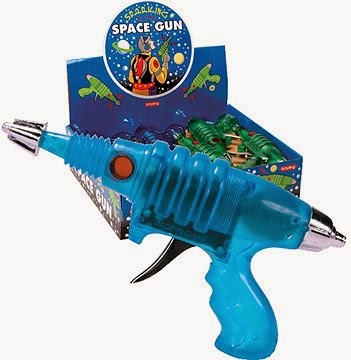
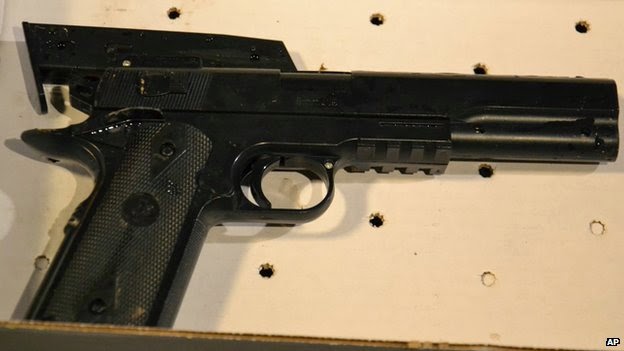
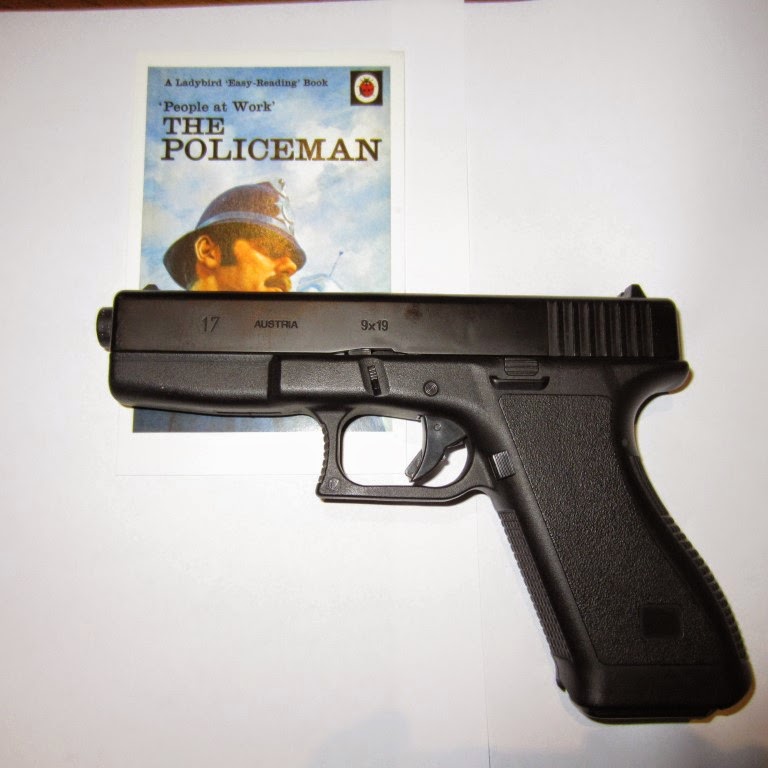
    What the video won’t do is convince you how real a fake gun can look. But if it looks real. It needs to be treated as real. Not convinced, take a look at this gun. Real or toy?

    Why it’s a plastic toy. Can’t you tell? No? Well, neither can cops.

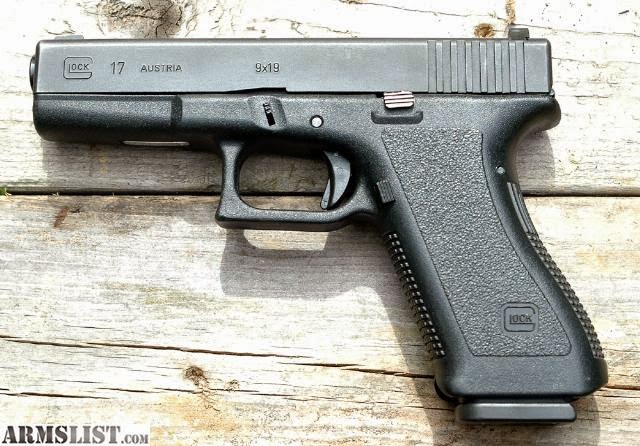
    That’s a replica of my service weapon. It’s probably pretty similar to what the kid had. And here’s real Glock 17.

    Can’t tell the difference? Well, neither can cops!

    So please do correct anybody who says this kid was shot while holding a “toy gun.” This is a toy gun.

    Update: from Campbell’s comment, this is the gun that the kid had:

    Except that keep in mind that part sticking up in back would be in the gun.

    [Update: here’s a later poston this subject]

  • Unarmed man kills police officer

    This happened back in March, so it’s not news. But still, the number of similarities between this case and the killing of Michael Brown are interesting, especially if you are one of those who think that “unarmed” suspects cannot ever really threaten police officers to the point where lethal force might be necessary.

    Here’s gist: An unarmed man attacks Johnson City, NY, police officer Dave Smith when Officer Smith is still in his a police car. This guy, Clark, gets control of the officer’s gun and kills the cop. Then the killer gets shot six times by another cop. Then, after being shot six times by another cop, the killer fights that second cop, who shoots him two more times. Now, after being hit by eight .40-caliber rounds, the cop killer grabs the second’s cops gun, rendering it inoperable after another bullet flies into a church parking lot. Two civilians help the cop and three of them manage, with difficulty, to handcuff Clark. Clark fought and ranted all the way to the hospital.

    From the Binghamton Press & Sun-Bulletin:

    When [Officer} Smith arrived, witnesses said, Clark rushed out to the police cruiser, approaching it from behind. It was unclear who opened the door, but Clark began fighting with Smith as soon as the patrolman exited his vehicle, witnesses said.

    One witness told police Smith was still sitting in the car and just starting to get out when Clark punched him in the head. Smith tried to push the door open in an attempt to get out, and the two began to struggle.

    Within seconds, Clark was on top of Smith, holding his service weapon.

    “I saw the man practically inside the cop car driver’s door — on top of the cop,” a witness who was leaving work nearby about 7 a.m. that morning wrote in a deposition. “It looked like he was punching and swinging at the cop.”

    [Officer] Smith weighed 205 pounds and was 6 feet 2 inches tall, according to reports, while Clark weighed 225 pounds and stood 5 feet 10 inches.

    Clark fired two shots at [Officer] Smith’s head, killing him instantly.

    Once Officer Cioci could take a clear shot, he fired 10 shots at Clark, striking him six times in the torso, leg and face.

    Clark fell to the ground. Then he climbed back to his knees, ranting.

    When [Officer] Cioci approached Clark, [Clark] grabbed the officer by the leg and pulled him face-down to the pavement where the two began to wrestle.

    Clark climbed onto Cioci’s back, reaching around to his front in an attempt to grab the service weapon, police reports state. The officer pushed himself off the ground with one arm while using the other to fire at Clark, striking him a seventh and eighth time, both in the torso.

    After he was struck the eighth time, reports state, Clark inserted a finger into the trigger guard of Cioci’s weapon, sending a bullet into a nearby church parking lot but rendering the gun inoperable because his hold of the weapon interfered with the recoil action.

    “It took all three people to handcuff Clark, who was still fighting, eyes open and ranting the entire time.” [Even as he went into the ER.]

    The entire incident took place in less than five minutes, according to police reports.

    In a great understatement, Chief Zikuski added that Clark’s behavior “after being hit by eight shots from a .40-caliber weapon is also unusual.”

    Had Officer Smith managed to maintain control of his gun and had he shot and killed Clark, would the headlines have said, “Cop Kills Unarmed Man”? This is pretty similar to what happened to Darren Wilson, except, according to Wilson’s testimony, Wilson managed to retake control of his gun and shoot the suspect. Officer Smith, rest in peace, wasn’t so lucky. He was killed by an unarmed man.

  • “A fairer, safer city”

    I stumbled across this column by Harry Siegel yesterday in the Daily News while getting my shoes shined. It’s bar far the best thing I’ve read in a while about the current state of crime and New York City. Read the whole thing. But here are some highlights:

    Pay no mind to the shrill voices on the left warning of a creeping police state. Or to those on the right shrieking about urban anarchy around the corner.

    Almost everyone lies about crime and cops, because no one knows exactly how the two relate and almost no one cares to admit an obvious truth: that safety and justice are often competing interests.

    Still, former Commissioner Ray Kelly sounded ridiculous insisting hundreds of thousands of stops and frisks of New Yorkers, the vast majority young men of color who had done nothing wrong, were crucial to keeping guns and blood off the streets. And his critics sounded equally ridiculous insisting those stops had no impact on crime, never deterred anyone from taking their guns to town.

    But it’s the police unions — who complained bitterly about Kelly’s quotas and numbers-driven approach and now are muttering about a work slowdown in response to Bratton’s calls for cops to exercise “discretion” on pot arrests and more generally — who sound most ridiculous of all.

    How many bad stops are worth a saved life? There’s a reason cops and critics have both ducked that question for a decade now.

    But, as de Blasio has rightly stressed, broken windows is based on officer discretion, and only stopping people suspected of a crime. Stop-and-frisk-based policing, on the other hand, was based on stopping huge numbers of people, mostly black and brown young men, who had done nothing wrong.

    The bottom line: Crime is down. Stops are down. The new mayor — politically accountable in ways his billionaire predecessor was not — and his commissioner are living up to a wonderful, difficult promise to deliver a “fairer, safer” city.

  • Free Doug Williams!

    The Feds are really out to get the man who tells the truth about lie detector tests, that they’re bullshit. They’ve been out to get him for a while, as I’ve previously written.

    Here’s the thing, Willam’s may or may not be guilty as charged. Honestly, he probably is. From the Journal:

    Prosecutors alleged that Mr. Williams “trained an individual posing as a federal law enforcement officer to lie and conceal involvement in criminal activity from an internal agency investigation.” He’s also accused of training another person “posing as an applicant seeking federal employment” to trick a pre-employment polygraph examination.” The Justice Department says the two individuals paid Mr. Williams for the services and were instructed by him to deny having receiving his training.

    But that is beside the point. Williams is clearly somebody the feds want to get because he is telling the truth about a messed up system. So William’s message needs to be told, and told loudly: the polygraph test is bullshit!

    It wouldn’t matter so much if the agencies that gave this test didn’t put credence in them. Yes, you can lie and pass. More troublesome is that you can tell the truth and fail. This is why such tests are not allowed in court. They are also not allowed as a condition of employment…. except by the government. Let me say this loudly: IT DOES NOT MATTER IF YOU ARE TELLING THE TRUTH. I know too many sad stories of people, students of mine, whose life dreams were shattered because they believed in the system, told the truth, and failed the test. These false positives prevented good people from getting good jobs they would be good at. The system suffers when hiring is dependent on a bad test.

    If you need to take the polygraph test, absolutely buy and read Doug William’s How to Sting the Polygraph.

  • “Cops fucking love overtime”

    I’m quoted in Vice Magazine’s article, “New York City’s Biggest Marijuana Problem Is the Police.” Of fuckety fuck. Do I really swear that much?

    And here’s another unrelated story about the corrosive effects of overtime.

  • “Where the Summer of Love Never Ends”

    “Where the Summer of Love Never Ends”

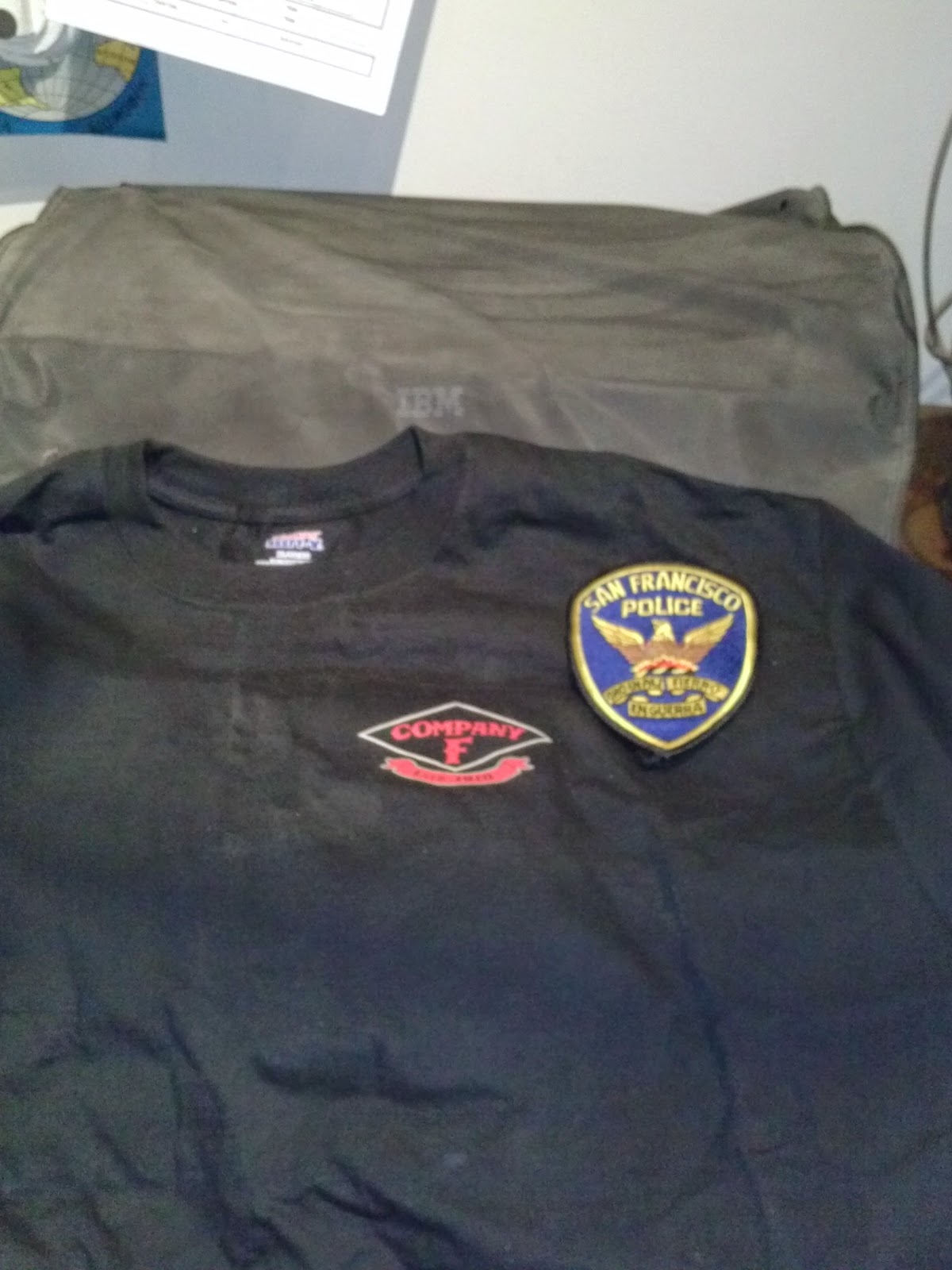
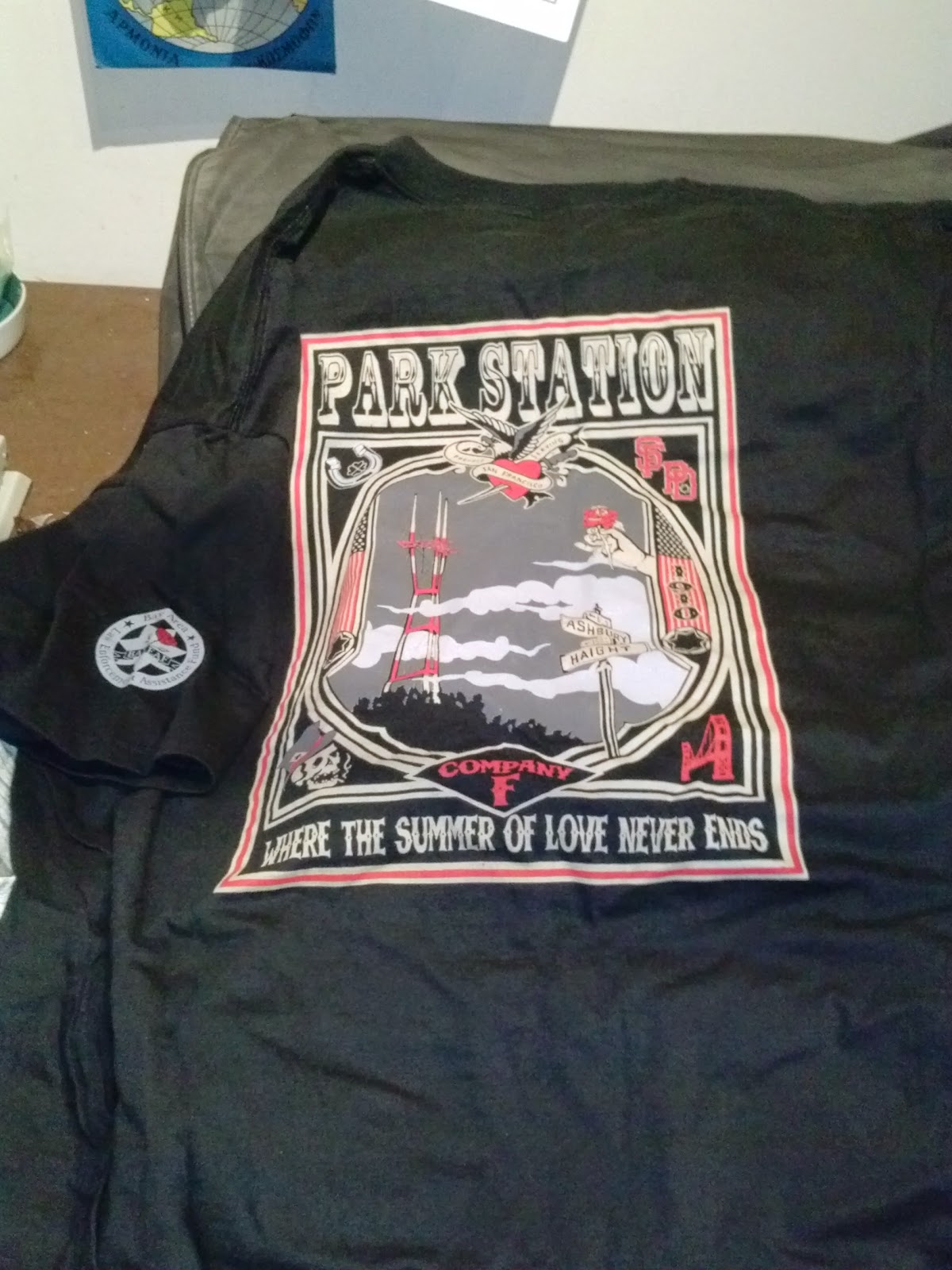
    I’m not that into police memorabilia… but your San Fran cop friend (and fellow Princeton grad) gives you a SFPD patch and the coolest ever cop-designed police t-shirt, what’s not to like? Long live Park Station Company F!

  • But Dan Aykroyd was on a mission from God

    Actor and Cubs fan Bill Murray on the subject of police, from Rolling Stone:

    I remember Danny Aykroyd saying a long time ago, “I embrace the police,” and I thought that was the funniest thing ever. It was so nuts, because he’s such a crazy person. But when you’re a teenager, the police are only going to get you in trouble. But now I see police, and at the top of their game, they’re there to serve and protect. It’s like, where’s a cop when you need one? Well, you are going to need a cop sometime. You need a cop, and you need safety, and you need order. There can’t just be chaos.

  • Just following the law

    Just following the law

    The major final ordered the police commissioner to order the department to follow New York State and not arrest people for small-scale possession of marijuana. This has actually been the law since 1977. But the NYPD has subverted the law, especially in the past decade, by arresting people anyway. And we’re talking tens of thousand of people per year. And yes, of course it’s racial unfair (since whites smoke just as much if not more weed than blacks, but don’t get arrested for it).

    The Times account is here. The Post’s is here.

    The union reps issued their usual tone-deaf disbelief. Which is their right, I suppose, but it would be better if the union reps kept to things like pay and working conditions rather than promoting their uniquely conservative ideological world view. From the SBA head; “People are asking: ‘What is going on? Is this department losing its mind? Has the city lost its mind?’”

    Answer: A liberal mayor wants cops to stop arresting minorities when the crime is marijuana posession.

    The head of the city’s Detectives’ Endowment Association: “I just see it as another step in giving the streets back to the criminals. And we keep inching closer and closer to that.” But here’s the thing, we’re not giving the streets back to criminals (at least not yet)….

    And besides, most of you guys didn’t vote for the mayor. And not just because you hate him, but because you don’t live in the city. But the citizens of New York City did elected the mayor. And so de Blasio does, to a great extent, actually reflect the represented will of the people. And besides not arresting people for small-scale possession of marijuana has been the law since friggin’ 1977! It’s just that since the late 1990’s, police officers just decided to subvert the law.

    Here is the rule: don’t arrest people for small-scale possession of marijuana. I’m not certain why that is so radical. You don’t arrest people for a lot of things. You don’t arrest people for jay walking. You don’t arrest people for littering. Hell, you don’t arrest drivers for killing people with their cars! Just add marijuana to the list.

    Now you can still stop people. You can still run them. You can still cite people for possession. But you cannot arrest them. Guys, I’m sorry you don’t like it. But them’s the breaks.

    So what does this mean? Well, it could mean a lot fewer arrests for police officers. That’s not bad if you’re a taxpayer or a fan of the bud. But what if anything can police do compensate for the lost overtime? I don’t know.

    Here’s the thing: cops do not and did not actually give a shit about marijuana any more than than they do about jaywalking. Cops wanted to make arrests. And stopping people and finding weed because a way to make arrests. And we’re talking a good chunk (like 1 in 7) of all arrests in New York City. Up to 50,000 a year! So we’ll see if something else takes the place for such discretionary arrests. But probably not.

    This could actually be a pretty major shift in police culture. But it has been argued that marijuana arrests became a thing in New York because of arrest pressure combined with the drop in crime. So will something else because the new reason to arrest when there’s no other good reason to? I hope not. Probably, in the long run, the past 20 years of massive marijuana arrests will be seen as the aberration. Just another crazy bit of New York City history. Like the 2nd Avenue L, the New York Giants (baseball), and the 6-shot revolver.

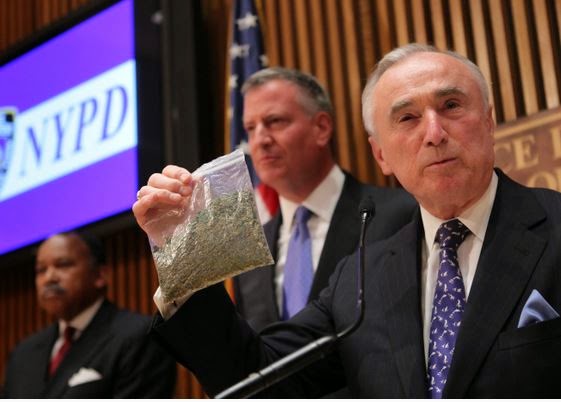
    [Also, based on this picture, 25 grams (0.88 ounces) is a lot more weed than I thought it was.]

  • “Stop arresting people for weed” is 5 words long

    You’d think it would be easy to tell cops to stop arresting people for small scale possession of marijuana. But not a police department.

    Every now and then I try to write about paperwork, because it’s such an integral part of the job and such a key negative motivator of police officers and good police work. But who the hell wants to read about paperwork?

    Well, anyway, it’s my blog, damnit! And to understand police you need to understand police paperwork. Here is the Order that tells cops to not arrest people for marijuana. It is 21 steps, 5 pages, and 1,652 words long. And yes, this is typical. And yes, there are literally thousands of others. And yes, they come out about once per week. And indeed, they are all not followed because nobody knows them all. And yes, if you fail to follow them correctly, it could be your ass in the jackpot. Also, believe it or not, this order is designed to reduce the amount of paperwork and time police officers have to spend on the matter.

    Figure out a legal and efficient way to reduce paperwork in police
    departments and the police will beat a path to your door… er… but in
    a good way!

    OPERATIONS ORDER

    SUBJECT: ENFORCEMENT OF CRIMINAL POSSESSION MARIJUANA, FIFTH DEGREE, SUBDIVISION ONE

    DATE ISSUED: 11-11-14

    NUMBER: 43

               1. This Order allows for the issuance of a Criminal Court summons, in lieu of arrest, to people found in possession of a small amount of marijuana – defined as 25 grams or less – in a public place and open to public view. Eligible, properly identified people will be issued a Criminal Court summons for Unlawful Possession of Marihuana, a violation, rather than arrested for Criminal Possession of Marihuana, a misdemeanor. The Criminal Court summons will be issued for the lesser included offense of Unlawful Possession of Marihuana (Penal Law 221.05).

               2. This Order will apply only to people found in possession of a small amount of marijuana open to public view, in a public place, that is consistent with personal use. A person found in possession of marijuana burning in a public place will be arrested and charged with Criminal Possession of Marihuana in the Fifth Degree, subdivision one (Penal Law 221.10 (1)), a misdemeanor. Additionally, a person found in possession of marijuana in public view in a manner that is inconsistent with personal use will be arrested and charged with the appropriate degree of Criminal Possession of Marihuana.

               3. Therefore, effective November 19, 2014, at 0001 hours, members of the service will adhere to the following procedure when they apprehend people for violating Penal Law section 221.10 (1), Criminal Possession of Marihuana in the Fifth Degree, subdivision one – possession in public view only:

    PURPOSE: To provide for the issuance of a Criminal Court summons (C-summons) in lieu of an arrest for eligible people apprehended for violating Penal Law section 221.10 (1), Criminal Possession of Marihuana in the Fifth Degree, subdivision one – possession in public view only.

    PROCEDURE: When a person is found in possession of 25 grams or less of marijuana in a public place and open to public view that is not burning and is consistent with personal use:

    UNIFORMED MEMBER OF THE SERVICE CONCERNED

    1. Confiscate contraband for subsequent testing and invoicing as per Patrol Guide Procedure 218-08 “Field Testing of Marijuana by Selected Uniformed Members of the Service within the Patrol Services and Housing Bureaus.”

    2. Determine if there is probable cause to believe that the person committed any other fingerprintable offense beyond the mere possession of marijuana in public view.     

    3. Inform person that he/she may be issued a C-Summons, if qualified.

               a. Disqualifying factors for a C-Summons issued in conformance with Patrol Guide Procedure 209-01, “Conditions of Service,” for Criminal Possession of Marihuana in the Fifth Degree, subdivision one – public view only are:

                          (1) Person has an active warrant

                          (2) Person is wanted in connection with an active INVESTIGATION CARD (PD373-163) labeled Perpetrator – probable cause to arrest

                          (3) Person is charged with other fingerprintable offenses

                          (4) Person is not properly identified.

    4. Establish person’s identity through observation of valid identification documents.

               a. For the purposes of this procedure, valid documents include:

                          (1) Valid Photo Driver’ License (From New York State, another state, or another country)

                          (2) Valid passport

                          (3) Citizenship or naturalization papers

                          (4) New York State Non-Driver’s Permit

                          (5) New York State Driver’s Permit

                          (6) Other government photo identification

                          (7) School identification card issued by high school, community college, college or university

                          (8) Birth certificate

                          (9) New York State Benefit Identification card

                          (10) NYC Department of Consumer Affairs Vendor Licenses

                          (11) A City, State, or Federal employee identification card

                          (12) Utility bill dated within the last three month, listing person’s name and current address.

               b. Members should note that these are general guidelines, and other forms of identification may be acceptable.

    5. Determine if the person has an active warrant or an active INVESTIGATION CARD labeled Perpetrator – probable cause to arrest by requesting a check through Communications Section, the local precinct, and/or through the use of a mobile device.

    NOTE: A person should be issued a summons in the field unless further investigation is needed or conditions warrant processing at a Department facility.

    IF THE PERSON IS ISSUED A CRIMINAL COURT SUMMONS IN THE FIELD

    UNIFORMED MEMBER OF THE SERVICE CONCERNED

    6. Issue the person a summons for the lesser included offense of P.L. 221.05 “Unlawful Possession of Marihuana,” as per Patrol Guide Procedure 209-09, “Personal Service of Summonses Returnable to Traffic Violations Bureau or Criminal Court.”

    7. Deliver marijuana to Desk Officer, precinct of occurrence

    DESK OFFICER

    8. Have marijuana invoiced as per Patrol Guide Procedure 218-08, “Field Testing Marijuana by Selected Uniformed Members of the Service within the Patrol Services and Housing Bureaus.”

    9. Ensure testing member prepares the MARIJUANA SUPPORTING DEPOSITION/ FIELD TEST REPORT (PD381-145) in accordance with P.G. 209-09, “Personal Service of Summonses Returnable to Traffic Violations Bureau or Criminal Court.”

    IF THE PERSON IS TO BE REMOVED TO THE COMMAND

    UNIFORMED MEMBER OF THE SERVICE CONCERNED

    10. Comply with appropriate arrest processing guidelines and remove person to precinct of arrest or a designated arrest facility and advise desk officer of facts.

    a. Determine whether the person should be issued a C-summons or processed as an online arrest.

    b. Include in Command Log entry that the circumstances of the summons or arrest were in conformance with the standards set forth in this Order.

    DESK OFFICER

    11. Question officer regarding circumstances that led to the apprehension of the person and the seizure of the marijuana.

               a. Determine whether the person should be issued a C-summons or arrested.

               b. Include in Command Log entry the circumstances of the summons or arrest.

    12. Allow person to contact a third party in order to obtain appropriate identification, when such identification is necessary for the issuance of a summons or Desk Appearance Ticket (DAT).

               a. Delay arrest processing a reasonable amount of time to allow the delivery of such  document(s).

    13. Determine whether the person’s identity has been verified. Determine whether the person has an active warrant or INVESTIGATION CARD.        

    14. Direct issuance of C-summons if appropriate.

    IF PERSON QUALIFIES FOR A CRIMINAL COURT SUMMONS AT THE STATION HOUSE

    UNIFORMED MEMBER OF THE SERVICE CONCERNED

    15. Issue the person a C-summons for violation of P.L. 221.05 “Unlawful Possession of Marihuana,” as per Patrol Guide Procedure 209-09,“Personal Service of Summonses Returnable  to Traffic Violations Bureau or Criminal Court.”

    DESK OFFICER

    16. Release person after C-summons has been issued.

    17. Make Command Log entry and process summons as per Patrol Guide procedure 209-09, “Personal Service of Summonses Returnable to Traffic Violations Bureau or Criminal Court.”

    18. Ensure marijuana is invoiced as per Patrol Guide Procedure 218-08, “Field Testing Marijuana by Selected Uniformed Members of the Service within the Patrol Services and Housing Bureaus.”

               a. Once a decision is made to issue a C-summons, do not delay the release of the person in order to field test the marijuana.

    19. Ensure testing member prepares the MARIJUANA SUPPORTING DEPOSITION/ FIELD TEST REPORT (PD381-145) in accordance with P.G. 209-09, “Personal Service of Summonses Returnable to Traffic Violations Bureau or Criminal Court.”

    IF PERSON DOES NOT QUALIFY FOR A CRIMINAL COURT SUMMONS AT THE STATION HOUSE

    DESK OFFICER

    20. Direct issuance of Desk Appearance Ticket (DAT) if person is properly identified and eligible.

               a. Disqualifying factors for a DAT for the charge of Criminal Possession of Marihuana in the Fifth Degree are:

                          i. Person refuses to sign the DAT

                          ii. Person has an active warrant

                          iii. Person is under the influence of drugs/alcohol to the degree that he may endanger himself or others

                          iv. Person owes DNA.

               b. If person has an active INVESTIGATION CARD labeled Perpetrator – probable cause to arrest:

                          i. Notify the Criminal Intelligence Section, Regional Intelligence Support Center (RISC) of active INVESTIGATION CARD

                          ii. Continue with DAT process and release person to responding detective

                          iii. Do not release person with an active probable cause INVESTIGATION CARD if no detective is available to re-arrest person. In this situation deny the DAT and process online.

    21. If person is not eligible for a C-summons or DAT ensure that the arrest is processed online as per existing Department procedures.

    ADDITIONAL DATA

    A GROUP OF PEOPLE SMOKING MARIJUANA

    If a group of people are observed smoking and passing a burning marijuana cigarette in public, all persons observed in possession of the burning marijuana may be arrested for Criminal Possession of Marijuana in the Fifth Degree, subdivision one (Penal Law 221.10(1)), a misdemeanor. Additionally, this type of incident does not constitute a sale or intent to sell under this Order. None of the people should be arrested and charged with selling marijuana.

    MARIJUANA IN A VEHICLE If marijuana is observed inside a vehicle with multiple occupants, every attempt should be made to identify the person in custody and control of the marijuana. Only that person should be issued a C-summons or be arrested for the possession of the

    marijuana. Normally the operator of a private vehicle would be considered in custody and control of any items in the vehicle, unless it is found on the person of a passenger or in such a manner that would lead an officer to believe that a passenger has custody and control of the item.

    PERSONS EXTINGUISHING MARIJUANA IMMEDIATELY PRIOR TO APPREHENSION

    An officer does not have to personally observe a person in possession of marijuana burning in public. If there is probable cause to believe that a person was in possession of burning marijuana in public (i.e., the unique smell of burning marijuana), yet the officer only observed the person in possession of an extinguished marijuana cigarette, that person may be arrested and charged with Criminal Possession of Marihuana in the Fifth Degree, subdivision one (Penal Law

    221.10(1)), a misdemeanor.

    4. Operations Order 49, series 2011, is hereby REVOKED.

    5. Operations Order 13, series 2013, is hereby REVOKED.

    6. Commanding officers will ensure that the contents of this Order are immediately brought to the attention of members of their commands.

    BY DIRECTION OF THE POLICE COMMISSIONER DISTRIBUTION

    All Commands
  • So I’m on the subway…

    So I’m on the subway…

    I’m on the subway looking at the ads and all their poorly photo-shopped clip-art.

    It kind of cracks me up. The Office Technology worker on the right? Looking very professional (nice window view, too). The Emergency Care Management guy? He’s got a medical bag and a smile. No problem there.

    So what does a “Homeland Security & Security Management” dude do? Apparently, walk in front of cabs and talk on his bluetooth earpiece. Hardcore, man. Hard effing’ core. Important business. National security at stake.