Copinthehood.com has moved to qualitypolicing.com

  • The Talented Tenth

    W.E.B. DuBois (pronounced doo-boyz, by the way, cause he wasn’t French) wrote about “The Talented Tenth.”

    DuBois was, among other things, a great American, a suffragist, a sociologist, and a Harvard grad. Had his groundbreaking The Philadelphia Negrobeen written today, I can only wonder if it would have been called, DuBois in the Hood.

    In contrast to the Talented Tenth, he wrote:

    At the bottom, of course, quibbles the mole with his eyes in the earth. Aye! truly at the bottom, at the very bottom; at the bottom of knowledge, down in the very depth of knowledge there where the roots of justice strike into the lowest soil of Truth.

    This came to mind after reading that 1 in 10 criminal youths in Illinois are held longer than their sentence because they have no place to go.

    Notes in the records tell sad stories. “Youth has no family that will take him,” reads the comment in the case of one downstate boy who was sent to prison for aggravated robbery and was still there two months beyond his scheduled release.

    “Placement denied 5X w/relatives,” reads the status report on another case.

    “Aunt denied by parole. Uncle has refused. Working on other (extended) family,” one document reads.

    In another case, in which a 20-year-old was more than a year past his ARD, the comment reads: “Youth had approved parole site; mother had change of heart, site denied. Mother seeking other resources.”

    It’s sad (though sometimes perfectly understandable) that nobody, not even parents, wants responsibility for some of these kids. I know that no person should be thrown away at such a young age. But I also have no illusions that all people, just because they’re younger than eighteen, are angels that can be redeemed. I arrested of few pretty bad youngsters myself.

    Sometimes they had no home to go to (in which case I did have some sympathy for the kid… I mean, given the choice between living in a f*cked up “home” like the ones I saw or slinging on the corner, I know what I would choose).

    Certainly the problems in part–sometimes a small part and sometimes a large part–rest with the parents (or lack thereof). But placing blame isn’t always enough. And some times the family was, if anything, too tough and strict–though who am I to cast doubt? If you raise three good kids and fourth is a f*ck-up… I don’t know, maybe you’ve done a good job. What are the odds we expect in neighborhoods where most boys end up doing time?

    DuBois had an answer: education. It’s a good one. But in the shorter term, what isthe answer?
  • Dutch “coffee shop” fined 10 million euros

    Ahhh, the joys of drug regulation and the strange wonders of Dutch drug policy.

    The ultimate crime seem to be that this place got too big for its britches. But they nailed them for keeping a stock of more than 18 ounces of marijuana. That is a limit that most if not all coffee shops violate. But this place was busted with 440 pounds of weed in house.

    I honestly have never heard of Terneuzen. But I am off to Amsterdam tomorrow for Spring Break to visit family (my brother, his wife, and kids), friends, and boats.

    Stay safe. I’ll try and stay out of trouble.

  • The Battery

    The Battery

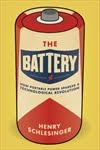
    I just finished a excellent book by Henry Schlesinger, The Battery: How Portable Power Sparked a Technological Revolution. You may remember Schlesinger as the co-author (with Joe Poss) of the wonderful non-fiction police story Brooklyn Bounce.

    The Batteryis all about, you guessed it, batteries. Turns out they have a fascinating history and Schlesinger tells it well.

    One interesting police note:

    In the late 1800s, Conrad Hubert … [and] his American Ever-Ready Company teamed up with a David Missell.

    Missell and Hubert’s innovation was to house their product around what would become known as the D cell battery in a tubular design, making them lighter than square wooden or metal cases of bicylce lights and easier to carry.

    Lacking neither ambition nor nerve, the partners promoted their flashlights by giving them away to New York City policemen and then collected testimonials from the patrolmen to use in advertising. The light was an unqualified success. (pp. 181-182)

  • A Whiff of Taser

    From a reader: “So, following the memo to pick your targets carefully when employing the Taser, Taser invents a device to fire wildly into a crowd.”

  • Two Balto Officers Shot, Suspect Killed.

    On the 2600 block of McElderry. Here’s the storyin the Sun.

  • Overrated Careers

    I’m proud to announce that “professor” has joined the list of overrated careers that already includes “police officer.”

    Boy, I sure know how to pick them!

    So says U.S. News and World Report.

  • Police Priorities

    Evidently, the MTA (New York’s subways and buses) could raise enough money to prevent massive service cuts if they could only collect the fare from 27 million dollarsof fare evaders.

    Meanwhile, the NYPD arrests more people for misdemeanor drugs possession (half of those for the lowest level of marijuana possession) than it does for fare evasion. That’s an interesting take on our city’s priorities.

    I have a suggestion for Mayor Bloomberg and Mr. Kelly…

  • Police, Ethography, Sociology, Crime, and How Things Work

    I always like academics who can explain things simply. I rarely find any greater knowledge or meaning hidden behind esoteric words and jargon-filled academic prose.

    Here’s Professor Jay Livingston on the difference between ethnography and survey research. While it’s not a distinction that most non-academics give two-beans about, it’s a great description. From A Shot of Ethnography:

    Survey research shows the relation between variables. Ethnography tells you how things work. Ethnography is about knowing who the players are and how they think. I remember Robert Weiss saying that if you’re a survey researcher and you want to know about cars, you get a sample of cars, and you discover that a car has an average of 5.38 cylinders, 164.7 horsepower, etc. (this was so long ago that he also included something about carburetors). But if you’re an ethnographer, you get a car, you open the hood, and you try to figure out how all those parts fit together.

    I might also add that a participant-observer would watch a car race.

    A quantitative-methods person would try and tell you everything about cars, despite never actually having seen one in person.

    A journalist would sit in the passenger seat go for a ride.

    And to really understand cars? You’ve got to get in the driver’s seat and go!

  • New Development in Rev. Ayers Case

    Turns out that Billy Shane Harrison, the officer who killed Ayers, didn’t (and doesn’t) actually have police powers. He let his firearm training lapse. Oops (and from TV news).

    Maybe if this drug officer had had proper training, oh, I don’t know, he could have figured a better tactical way of stopping an innocent man for questioning without causing a situation where a good man gets killed while trying to get away from armed men he didn’t know were police!

    Now we don’t need to get into another debate about the shooting. But all you fools (I mean folks) who think this killing was somehow justified, ask yourself this: Can you imagine any police-involved shooting that isn’t justified? (short of cold-blood premeditated murder–which this was not.)

    It’s one thing to say, “Cops sometimes make mistakes. And sometimes a whole bunch of dumb-ass mistakes. And sometimes they comes together and, well, sorry. But mistakes aren’t crimes and we always need to give police the benefit of the doubt.” OK, fair enough. But if you go beyond that and think that allpolice-involved shootings are justified, then why even have this discussion?

    [I can think of only one shooting that was as bad as this one. After doing nothing wrong and following the orders of one FBI agent, poor Joseph Schultz gets shot in the face by the agent’s partner (a scared agent who probably never walked a beat, cleared a corner, or made a car stop in his life). And he got away with it, too! Turns out only the taxpayer got punished for their professional ineptitude.]

    [Thanks to Peter Guither’s excellent drugwarrant.com.]

  • It’s back!

    This was taken down for a while but is now back up. The funniest YouTube video I’ve ever seen. Maybe it’s only hilarious if you are or were a cop and don’t speak German. But I think it’s probably funny regardless.