Copinthehood.com has moved to qualitypolicing.com

  • “A fairer, safer city”

    I stumbled across this column by Harry Siegel yesterday in the Daily News while getting my shoes shined. It’s bar far the best thing I’ve read in a while about the current state of crime and New York City. Read the whole thing. But here are some highlights:

    Pay no mind to the shrill voices on the left warning of a creeping police state. Or to those on the right shrieking about urban anarchy around the corner.

    Almost everyone lies about crime and cops, because no one knows exactly how the two relate and almost no one cares to admit an obvious truth: that safety and justice are often competing interests.

    Still, former Commissioner Ray Kelly sounded ridiculous insisting hundreds of thousands of stops and frisks of New Yorkers, the vast majority young men of color who had done nothing wrong, were crucial to keeping guns and blood off the streets. And his critics sounded equally ridiculous insisting those stops had no impact on crime, never deterred anyone from taking their guns to town.

    But it’s the police unions — who complained bitterly about Kelly’s quotas and numbers-driven approach and now are muttering about a work slowdown in response to Bratton’s calls for cops to exercise “discretion” on pot arrests and more generally — who sound most ridiculous of all.

    How many bad stops are worth a saved life? There’s a reason cops and critics have both ducked that question for a decade now.

    But, as de Blasio has rightly stressed, broken windows is based on officer discretion, and only stopping people suspected of a crime. Stop-and-frisk-based policing, on the other hand, was based on stopping huge numbers of people, mostly black and brown young men, who had done nothing wrong.

    The bottom line: Crime is down. Stops are down. The new mayor — politically accountable in ways his billionaire predecessor was not — and his commissioner are living up to a wonderful, difficult promise to deliver a “fairer, safer” city.

  • Free Doug Williams!

    The Feds are really out to get the man who tells the truth about lie detector tests, that they’re bullshit. They’ve been out to get him for a while, as I’ve previously written.

    Here’s the thing, Willam’s may or may not be guilty as charged. Honestly, he probably is. From the Journal:

    Prosecutors alleged that Mr. Williams “trained an individual posing as a federal law enforcement officer to lie and conceal involvement in criminal activity from an internal agency investigation.” He’s also accused of training another person “posing as an applicant seeking federal employment” to trick a pre-employment polygraph examination.” The Justice Department says the two individuals paid Mr. Williams for the services and were instructed by him to deny having receiving his training.

    But that is beside the point. Williams is clearly somebody the feds want to get because he is telling the truth about a messed up system. So William’s message needs to be told, and told loudly: the polygraph test is bullshit!

    It wouldn’t matter so much if the agencies that gave this test didn’t put credence in them. Yes, you can lie and pass. More troublesome is that you can tell the truth and fail. This is why such tests are not allowed in court. They are also not allowed as a condition of employment…. except by the government. Let me say this loudly: IT DOES NOT MATTER IF YOU ARE TELLING THE TRUTH. I know too many sad stories of people, students of mine, whose life dreams were shattered because they believed in the system, told the truth, and failed the test. These false positives prevented good people from getting good jobs they would be good at. The system suffers when hiring is dependent on a bad test.

    If you need to take the polygraph test, absolutely buy and read Doug William’s How to Sting the Polygraph.

  • “Cops fucking love overtime”

    I’m quoted in Vice Magazine’s article, “New York City’s Biggest Marijuana Problem Is the Police.” Of fuckety fuck. Do I really swear that much?

    And here’s another unrelated story about the corrosive effects of overtime.

  • “Where the Summer of Love Never Ends”

    “Where the Summer of Love Never Ends”

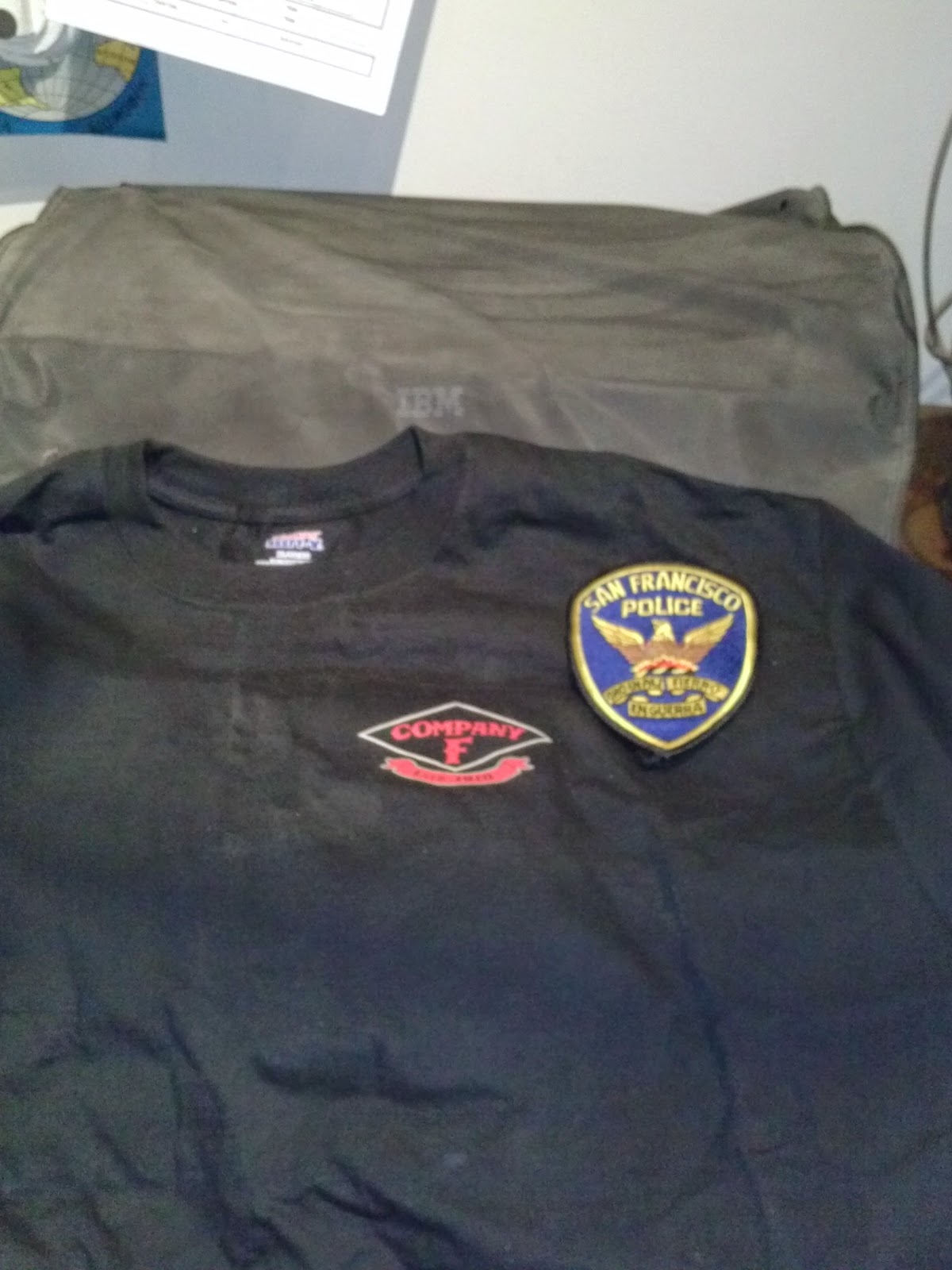
    I’m not that into police memorabilia… but your San Fran cop friend (and fellow Princeton grad) gives you a SFPD patch and the coolest ever cop-designed police t-shirt, what’s not to like? Long live Park Station Company F!

  • But Dan Aykroyd was on a mission from God

    Actor and Cubs fan Bill Murray on the subject of police, from Rolling Stone:

    I remember Danny Aykroyd saying a long time ago, “I embrace the police,” and I thought that was the funniest thing ever. It was so nuts, because he’s such a crazy person. But when you’re a teenager, the police are only going to get you in trouble. But now I see police, and at the top of their game, they’re there to serve and protect. It’s like, where’s a cop when you need one? Well, you are going to need a cop sometime. You need a cop, and you need safety, and you need order. There can’t just be chaos.

  • Just following the law

    Just following the law

    The major final ordered the police commissioner to order the department to follow New York State and not arrest people for small-scale possession of marijuana. This has actually been the law since 1977. But the NYPD has subverted the law, especially in the past decade, by arresting people anyway. And we’re talking tens of thousand of people per year. And yes, of course it’s racial unfair (since whites smoke just as much if not more weed than blacks, but don’t get arrested for it).

    The Times account is here. The Post’s is here.

    The union reps issued their usual tone-deaf disbelief. Which is their right, I suppose, but it would be better if the union reps kept to things like pay and working conditions rather than promoting their uniquely conservative ideological world view. From the SBA head; “People are asking: ‘What is going on? Is this department losing its mind? Has the city lost its mind?’”

    Answer: A liberal mayor wants cops to stop arresting minorities when the crime is marijuana posession.

    The head of the city’s Detectives’ Endowment Association: “I just see it as another step in giving the streets back to the criminals. And we keep inching closer and closer to that.” But here’s the thing, we’re not giving the streets back to criminals (at least not yet)….

    And besides, most of you guys didn’t vote for the mayor. And not just because you hate him, but because you don’t live in the city. But the citizens of New York City did elected the mayor. And so de Blasio does, to a great extent, actually reflect the represented will of the people. And besides not arresting people for small-scale possession of marijuana has been the law since friggin’ 1977! It’s just that since the late 1990’s, police officers just decided to subvert the law.

    Here is the rule: don’t arrest people for small-scale possession of marijuana. I’m not certain why that is so radical. You don’t arrest people for a lot of things. You don’t arrest people for jay walking. You don’t arrest people for littering. Hell, you don’t arrest drivers for killing people with their cars! Just add marijuana to the list.

    Now you can still stop people. You can still run them. You can still cite people for possession. But you cannot arrest them. Guys, I’m sorry you don’t like it. But them’s the breaks.

    So what does this mean? Well, it could mean a lot fewer arrests for police officers. That’s not bad if you’re a taxpayer or a fan of the bud. But what if anything can police do compensate for the lost overtime? I don’t know.

    Here’s the thing: cops do not and did not actually give a shit about marijuana any more than than they do about jaywalking. Cops wanted to make arrests. And stopping people and finding weed because a way to make arrests. And we’re talking a good chunk (like 1 in 7) of all arrests in New York City. Up to 50,000 a year! So we’ll see if something else takes the place for such discretionary arrests. But probably not.

    This could actually be a pretty major shift in police culture. But it has been argued that marijuana arrests became a thing in New York because of arrest pressure combined with the drop in crime. So will something else because the new reason to arrest when there’s no other good reason to? I hope not. Probably, in the long run, the past 20 years of massive marijuana arrests will be seen as the aberration. Just another crazy bit of New York City history. Like the 2nd Avenue L, the New York Giants (baseball), and the 6-shot revolver.

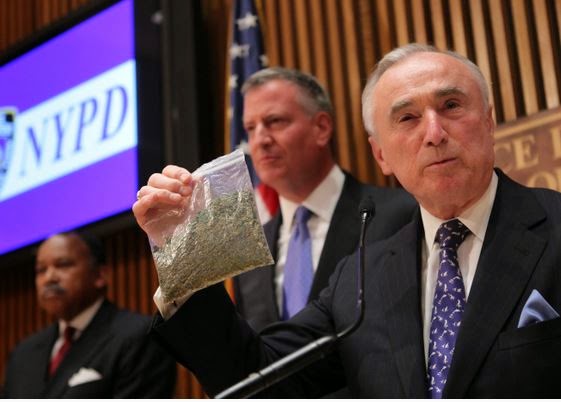
    [Also, based on this picture, 25 grams (0.88 ounces) is a lot more weed than I thought it was.]

  • “Stop arresting people for weed” is 5 words long

    You’d think it would be easy to tell cops to stop arresting people for small scale possession of marijuana. But not a police department.

    Every now and then I try to write about paperwork, because it’s such an integral part of the job and such a key negative motivator of police officers and good police work. But who the hell wants to read about paperwork?

    Well, anyway, it’s my blog, damnit! And to understand police you need to understand police paperwork. Here is the Order that tells cops to not arrest people for marijuana. It is 21 steps, 5 pages, and 1,652 words long. And yes, this is typical. And yes, there are literally thousands of others. And yes, they come out about once per week. And indeed, they are all not followed because nobody knows them all. And yes, if you fail to follow them correctly, it could be your ass in the jackpot. Also, believe it or not, this order is designed to reduce the amount of paperwork and time police officers have to spend on the matter.

    Figure out a legal and efficient way to reduce paperwork in police
    departments and the police will beat a path to your door… er… but in
    a good way!

    OPERATIONS ORDER

    SUBJECT: ENFORCEMENT OF CRIMINAL POSSESSION MARIJUANA, FIFTH DEGREE, SUBDIVISION ONE

    DATE ISSUED: 11-11-14

    NUMBER: 43

               1. This Order allows for the issuance of a Criminal Court summons, in lieu of arrest, to people found in possession of a small amount of marijuana – defined as 25 grams or less – in a public place and open to public view. Eligible, properly identified people will be issued a Criminal Court summons for Unlawful Possession of Marihuana, a violation, rather than arrested for Criminal Possession of Marihuana, a misdemeanor. The Criminal Court summons will be issued for the lesser included offense of Unlawful Possession of Marihuana (Penal Law 221.05).

               2. This Order will apply only to people found in possession of a small amount of marijuana open to public view, in a public place, that is consistent with personal use. A person found in possession of marijuana burning in a public place will be arrested and charged with Criminal Possession of Marihuana in the Fifth Degree, subdivision one (Penal Law 221.10 (1)), a misdemeanor. Additionally, a person found in possession of marijuana in public view in a manner that is inconsistent with personal use will be arrested and charged with the appropriate degree of Criminal Possession of Marihuana.

               3. Therefore, effective November 19, 2014, at 0001 hours, members of the service will adhere to the following procedure when they apprehend people for violating Penal Law section 221.10 (1), Criminal Possession of Marihuana in the Fifth Degree, subdivision one – possession in public view only:

    PURPOSE: To provide for the issuance of a Criminal Court summons (C-summons) in lieu of an arrest for eligible people apprehended for violating Penal Law section 221.10 (1), Criminal Possession of Marihuana in the Fifth Degree, subdivision one – possession in public view only.

    PROCEDURE: When a person is found in possession of 25 grams or less of marijuana in a public place and open to public view that is not burning and is consistent with personal use:

    UNIFORMED MEMBER OF THE SERVICE CONCERNED

    1. Confiscate contraband for subsequent testing and invoicing as per Patrol Guide Procedure 218-08 “Field Testing of Marijuana by Selected Uniformed Members of the Service within the Patrol Services and Housing Bureaus.”

    2. Determine if there is probable cause to believe that the person committed any other fingerprintable offense beyond the mere possession of marijuana in public view.     

    3. Inform person that he/she may be issued a C-Summons, if qualified.

               a. Disqualifying factors for a C-Summons issued in conformance with Patrol Guide Procedure 209-01, “Conditions of Service,” for Criminal Possession of Marihuana in the Fifth Degree, subdivision one – public view only are:

                          (1) Person has an active warrant

                          (2) Person is wanted in connection with an active INVESTIGATION CARD (PD373-163) labeled Perpetrator – probable cause to arrest

                          (3) Person is charged with other fingerprintable offenses

                          (4) Person is not properly identified.

    4. Establish person’s identity through observation of valid identification documents.

               a. For the purposes of this procedure, valid documents include:

                          (1) Valid Photo Driver’ License (From New York State, another state, or another country)

                          (2) Valid passport

                          (3) Citizenship or naturalization papers

                          (4) New York State Non-Driver’s Permit

                          (5) New York State Driver’s Permit

                          (6) Other government photo identification

                          (7) School identification card issued by high school, community college, college or university

                          (8) Birth certificate

                          (9) New York State Benefit Identification card

                          (10) NYC Department of Consumer Affairs Vendor Licenses

                          (11) A City, State, or Federal employee identification card

                          (12) Utility bill dated within the last three month, listing person’s name and current address.

               b. Members should note that these are general guidelines, and other forms of identification may be acceptable.

    5. Determine if the person has an active warrant or an active INVESTIGATION CARD labeled Perpetrator – probable cause to arrest by requesting a check through Communications Section, the local precinct, and/or through the use of a mobile device.

    NOTE: A person should be issued a summons in the field unless further investigation is needed or conditions warrant processing at a Department facility.

    IF THE PERSON IS ISSUED A CRIMINAL COURT SUMMONS IN THE FIELD

    UNIFORMED MEMBER OF THE SERVICE CONCERNED

    6. Issue the person a summons for the lesser included offense of P.L. 221.05 “Unlawful Possession of Marihuana,” as per Patrol Guide Procedure 209-09, “Personal Service of Summonses Returnable to Traffic Violations Bureau or Criminal Court.”

    7. Deliver marijuana to Desk Officer, precinct of occurrence

    DESK OFFICER

    8. Have marijuana invoiced as per Patrol Guide Procedure 218-08, “Field Testing Marijuana by Selected Uniformed Members of the Service within the Patrol Services and Housing Bureaus.”

    9. Ensure testing member prepares the MARIJUANA SUPPORTING DEPOSITION/ FIELD TEST REPORT (PD381-145) in accordance with P.G. 209-09, “Personal Service of Summonses Returnable to Traffic Violations Bureau or Criminal Court.”

    IF THE PERSON IS TO BE REMOVED TO THE COMMAND

    UNIFORMED MEMBER OF THE SERVICE CONCERNED

    10. Comply with appropriate arrest processing guidelines and remove person to precinct of arrest or a designated arrest facility and advise desk officer of facts.

    a. Determine whether the person should be issued a C-summons or processed as an online arrest.

    b. Include in Command Log entry that the circumstances of the summons or arrest were in conformance with the standards set forth in this Order.

    DESK OFFICER

    11. Question officer regarding circumstances that led to the apprehension of the person and the seizure of the marijuana.

               a. Determine whether the person should be issued a C-summons or arrested.

               b. Include in Command Log entry the circumstances of the summons or arrest.

    12. Allow person to contact a third party in order to obtain appropriate identification, when such identification is necessary for the issuance of a summons or Desk Appearance Ticket (DAT).

               a. Delay arrest processing a reasonable amount of time to allow the delivery of such  document(s).

    13. Determine whether the person’s identity has been verified. Determine whether the person has an active warrant or INVESTIGATION CARD.        

    14. Direct issuance of C-summons if appropriate.

    IF PERSON QUALIFIES FOR A CRIMINAL COURT SUMMONS AT THE STATION HOUSE

    UNIFORMED MEMBER OF THE SERVICE CONCERNED

    15. Issue the person a C-summons for violation of P.L. 221.05 “Unlawful Possession of Marihuana,” as per Patrol Guide Procedure 209-09,“Personal Service of Summonses Returnable  to Traffic Violations Bureau or Criminal Court.”

    DESK OFFICER

    16. Release person after C-summons has been issued.

    17. Make Command Log entry and process summons as per Patrol Guide procedure 209-09, “Personal Service of Summonses Returnable to Traffic Violations Bureau or Criminal Court.”

    18. Ensure marijuana is invoiced as per Patrol Guide Procedure 218-08, “Field Testing Marijuana by Selected Uniformed Members of the Service within the Patrol Services and Housing Bureaus.”

               a. Once a decision is made to issue a C-summons, do not delay the release of the person in order to field test the marijuana.

    19. Ensure testing member prepares the MARIJUANA SUPPORTING DEPOSITION/ FIELD TEST REPORT (PD381-145) in accordance with P.G. 209-09, “Personal Service of Summonses Returnable to Traffic Violations Bureau or Criminal Court.”

    IF PERSON DOES NOT QUALIFY FOR A CRIMINAL COURT SUMMONS AT THE STATION HOUSE

    DESK OFFICER

    20. Direct issuance of Desk Appearance Ticket (DAT) if person is properly identified and eligible.

               a. Disqualifying factors for a DAT for the charge of Criminal Possession of Marihuana in the Fifth Degree are:

                          i. Person refuses to sign the DAT

                          ii. Person has an active warrant

                          iii. Person is under the influence of drugs/alcohol to the degree that he may endanger himself or others

                          iv. Person owes DNA.

               b. If person has an active INVESTIGATION CARD labeled Perpetrator – probable cause to arrest:

                          i. Notify the Criminal Intelligence Section, Regional Intelligence Support Center (RISC) of active INVESTIGATION CARD

                          ii. Continue with DAT process and release person to responding detective

                          iii. Do not release person with an active probable cause INVESTIGATION CARD if no detective is available to re-arrest person. In this situation deny the DAT and process online.

    21. If person is not eligible for a C-summons or DAT ensure that the arrest is processed online as per existing Department procedures.

    ADDITIONAL DATA

    A GROUP OF PEOPLE SMOKING MARIJUANA

    If a group of people are observed smoking and passing a burning marijuana cigarette in public, all persons observed in possession of the burning marijuana may be arrested for Criminal Possession of Marijuana in the Fifth Degree, subdivision one (Penal Law 221.10(1)), a misdemeanor. Additionally, this type of incident does not constitute a sale or intent to sell under this Order. None of the people should be arrested and charged with selling marijuana.

    MARIJUANA IN A VEHICLE If marijuana is observed inside a vehicle with multiple occupants, every attempt should be made to identify the person in custody and control of the marijuana. Only that person should be issued a C-summons or be arrested for the possession of the

    marijuana. Normally the operator of a private vehicle would be considered in custody and control of any items in the vehicle, unless it is found on the person of a passenger or in such a manner that would lead an officer to believe that a passenger has custody and control of the item.

    PERSONS EXTINGUISHING MARIJUANA IMMEDIATELY PRIOR TO APPREHENSION

    An officer does not have to personally observe a person in possession of marijuana burning in public. If there is probable cause to believe that a person was in possession of burning marijuana in public (i.e., the unique smell of burning marijuana), yet the officer only observed the person in possession of an extinguished marijuana cigarette, that person may be arrested and charged with Criminal Possession of Marihuana in the Fifth Degree, subdivision one (Penal Law

    221.10(1)), a misdemeanor.

    4. Operations Order 49, series 2011, is hereby REVOKED.

    5. Operations Order 13, series 2013, is hereby REVOKED.

    6. Commanding officers will ensure that the contents of this Order are immediately brought to the attention of members of their commands.

    BY DIRECTION OF THE POLICE COMMISSIONER DISTRIBUTION

    All Commands
  • So I’m on the subway…

    So I’m on the subway…

    I’m on the subway looking at the ads and all their poorly photo-shopped clip-art.

    It kind of cracks me up. The Office Technology worker on the right? Looking very professional (nice window view, too). The Emergency Care Management guy? He’s got a medical bag and a smile. No problem there.

    So what does a “Homeland Security & Security Management” dude do? Apparently, walk in front of cabs and talk on his bluetooth earpiece. Hardcore, man. Hard effing’ core. Important business. National security at stake.

  • Quote of the Day

    As more and more states legalize marijuana, New York City still leads the world for arrests for possession of the evil weed. You might wonder who actually thinks it’s a good idea to arrest people for a decriminalized amount of marijuana. Sergeants Benevolent Association president Ed Mullins: “If the current practice of making arrests for both possession and sale of marijuana is, in fact, abandoned, then this is clearly the beginning of the breakdown of a civilized society.”

    Dude, get some perspective. Mullins continued, “If we’re not making marijuana arrests, then we may not pop someone who has a warrant on them or who committed felony crimes…. If the department doesn’t want us to make marijuana arrests, they should introduce legislation to change the law.” Seems fair enough, but there are a few problems here. First, you can run somebody and see if their wanted. If not, you don’t need to arrest them misdemeanor marijuana.

    Second, small scale possession of marijuana is just a violation (not an arrestable offense) until the marijuana is in “public view.” And I don’t want to imply anything, but how the marijuana gets into public view is open to debate. But I think it’s safe to say most of the tens of thousands of people arrested aren’t walking around holding dime bags in their hands.

    Finally, and this is important to policing, back in the old days, hell, even the days I policed, real police would be ashamed to come in with such a crappy arrest. Off the street for hours for what?! If you come across weed, you can throw it in a sewer. Or hell, you could even hand it back. (It’s happened.) There are lots of minor violations that do not deserve zero-tolerance. In the absence of other crimes, in the absence of a person being wanted a warrant, you can warn, you can admonish, or you could even turn a blind eye. Police have a lot of discretion. Use it. If anything will lead to the “breakdown of civilized society,” it won’t be police officers doing their job and using their brain.

  • Better Policing Equals Less Crime

    This is a no-brainer to many, but a lot of people — usually those who don’t like police — still deny or diminish it: cops matter. And national trends are the result not some crime-related miasma but of the collective work in individual cities and neighborhoods.

    Camden, NJ, is worth paying attention to. I haven’t been following it too closely, but what I do know (in part due to my colleague John DeCarlo) is very interesting. Then:

    In January 2011, the state slashed the budget for the city’s police department by nearly 23 percent. The police union was dissolved after half of the uniformed officers were let go. The department – criticized by some as incompetent and ineffective – was then reconstituted as a county-run enterprise. But until new recruits could be brought on, the city suffered under the draconian cuts. There were nights when only 12 officers patrolled the entire nine square miles of the city.

    And now:

    The city – frequently labeled “America’s Most Dangerous” – has recorded as of Friday the fewest homicides in a year going back to at least 2010.

    In addition, during the first six months of 2014, the number of gunshots in the city fell nearly 50 percent over the previous year….

    Despite two fatal shootings in quick succession this week, the number of killings is less than half of that two years ago. By Halloween 2012, Camden had buried 55 victims. This time last year, it had 43. As of Oct. 31, the city had seen 24. In 2010, at this point, there were 30.

    By civilianizing or outsourcing every job that does not require a gun or a badge, the county-run force bolstered the number of boots on the ground.

    Police walking beats are supplemented with “virtual patrols” by civilians, who monitor 120 surveillance cameras bolted to light poles. An additional 40 to 60 private security guards, sporting yellow-and-blue vests, roam the business district, calling in reports to the command center.

    Of course some people still complain, but haters are always gonna hate.

    Meanwhile…

    Vallejo [California] has struggled for years. Crippled by high pension costs and public-employee salaries, it filed for bankruptcy in 2008. Things didn’t get much better after the city emerged from Chapter 9 in 2011: Crime was bad and the city’s police department was perpetually short-staffed. There were 10 murders in 2010, 14 in 2012, and 24 in 2013.

    Obviously both cities cannot simply be reflective of some “national trend.”