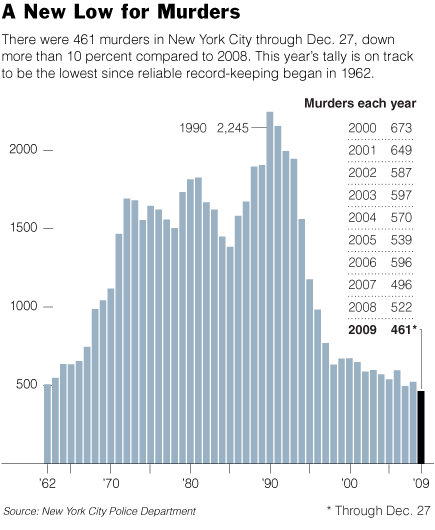
More murders in Chicago. Fewer in NYC. Clearly something is going on. But generally you’ll hear nothing but crickets (or winter winds) blow through the ivory towers. It’s a real shame. These days, most academics will (almost reluctantly) concede that effective policing may play a roll in reducing homicide. And yet still very few academics would dare consider the hypothesis that aggressive — yes sometimes even unpleasant — policing may actually prevent homicides. (And, yes, you can and should be polite and respect the law and state and federal Constitutions at the same time as policing effectively and aggressively. Police work is harder and more dangerous when police go out of the their way to piss off people).
As some academics may be afraid of digging deeper because they’re afraid of what they’ll uncover. Better to round up the usual suspects of poverty, gangs, racism, drugs, etc. But the NYPD does itself no favors by not giving a damn what people think: “Everything is under control. No need to look here. Keep moving.” But academics and the NYPD need each other. Certainly they do if any lessons are to be learned from the NYPD and applied elsewhere.
You can’t just “do it like they do in New York” because we don’t know what about what they do in New York works. Is it Compstat? Stop and frisk? Broken Windows? Foot patrol? Zero Tolerance? College-educated police officers? Community policing (whatever that means)? Hot spots (actually, we do know that this works)? Better public housing? Mandatory prison time for illegal gun possession? Decreased incarceration? More immigrants? More eyes on the street? Getting rid of lead? Who knows? But let’s say that one thing the NYPD does pretty well these days in keep homicide numbers low. Well one thing academics do pretty very well is test theories and break things down into parts. There’s a lot going on here. It would be nice to systematically figure out what works. We need to understand these parts so that effective police tactics and strategies can spread to other cities.
In the meantime, it’s like we’re swinging at a piñata, blindfolded. We took a few swings and feel some contact. But in the end all we see is candy in the floor. So we scoop some up and forget about what we actually did.