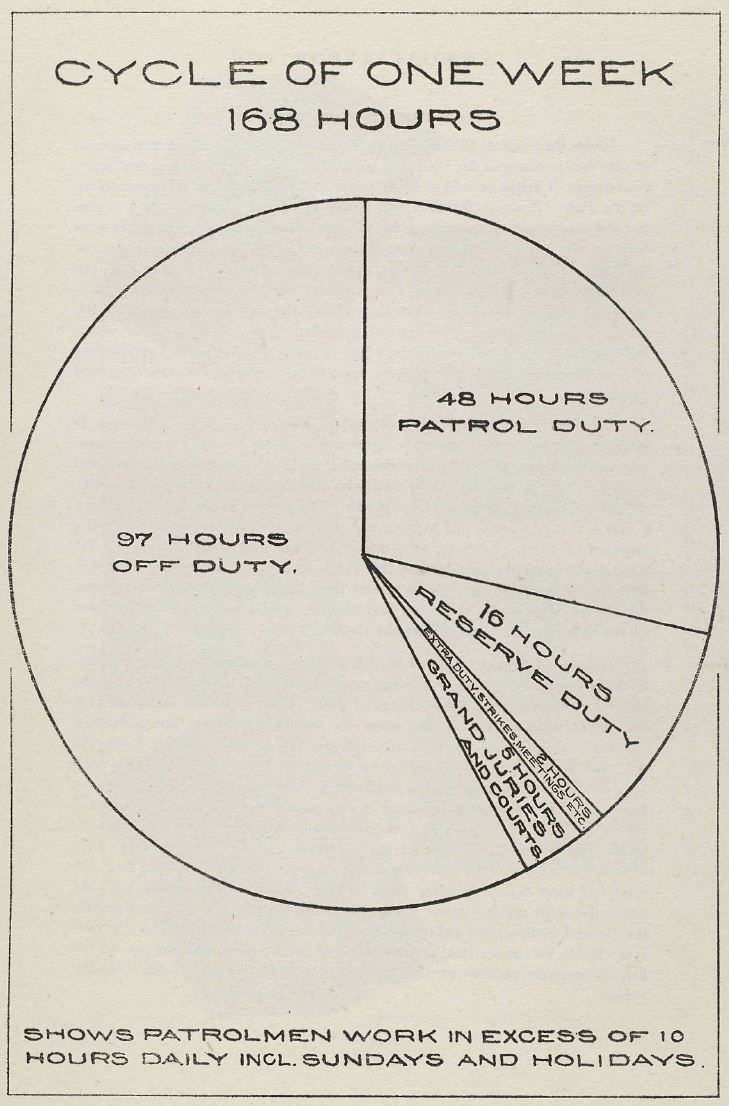
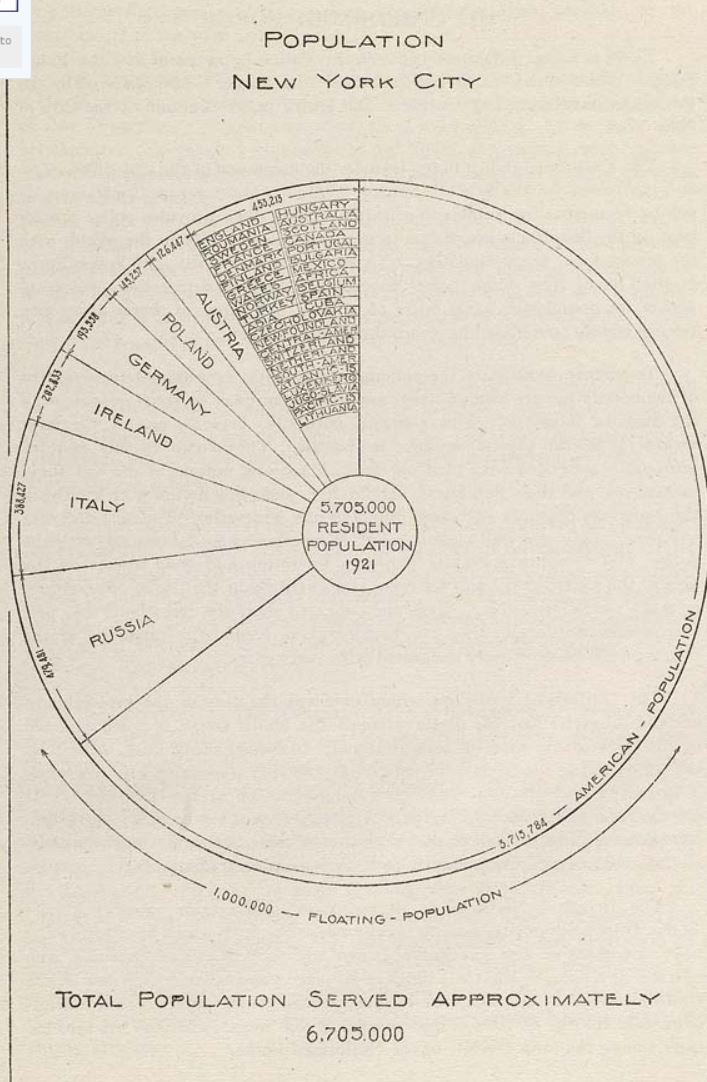
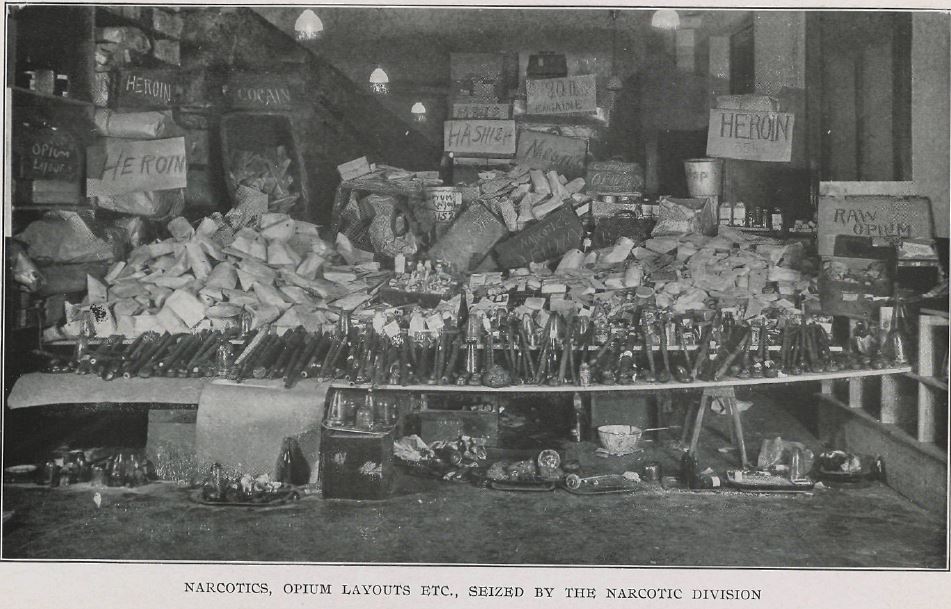
Just browsing the 1921 Annual NYPD Report, as you do.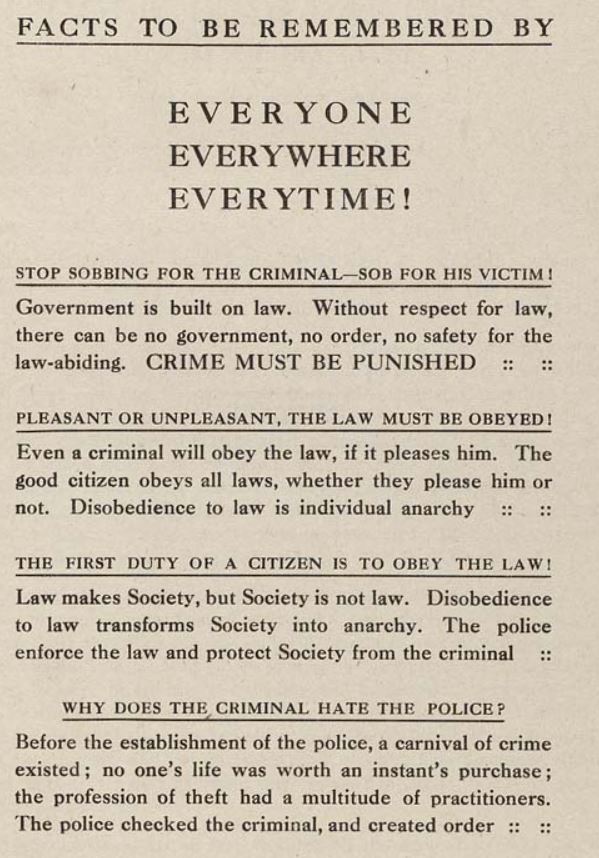
Tag: NYPD
-
“Stop sobbing for the criminal–Sob for his victim!”
-
Crime is/isn’t up!
Jarret Murphy over at City Limitspoints out that crime has increased plenty of times in NYC in the past 15 years. And nobody really raised an alarm. This year it’s not even clear that crime is up, despite news accounts saying so. So there’s this a narrative of crime being out of control: Murders are up 5 percent!!! (Maybe a bit more after a bloody weekend.) But 5 percent is pretty statistically minor. And we are coming off a record low year.
Do you remember the bloody year of 1999? I don’t. But the FBI says the number of murders in New York City rose 6 percent that year. How about scary 2006, when the number of killings jumped 10.6 percent? Do you recall the fear with which we all tiptoed through 2008, when the city saw a 5 percent rise in slayings? Don’t get that mixed up with 2010, when the city reported a 14 percent increase in murders.
Somehow, “Bloody Ninety-Nine” didn’t smudge Rudy Giuliani’s reputation as America’s greatest crimefighter. Nor did the four increases in the annual murder count during Michael Bloomberg’s 12 years in office dent his image as a cool and competent manager. In fact, none of these significant spikes in bloodshed triggered the kind of public concern about crime now gripping columnists and some elected officials.
…
Indeed, if de Blasio is guilty of politicizing the actual crime statistics, it’s mainly because his opponents are guilty of politicizing the imaginary crime stats they derive from news headlines, gut instinct and their pre-written narrative that de Blasio is really just John Lindsay standing on his tip-toes.
Maybe it’s good we’ve become less tolerant of crime increases. And maybe the sky will start to fall. But it’s not falling yet.
-
NYPD Discipline
Some stats about the NYPD in the New York Times. Bratton is giving more discretion to local commanders for disciplining cops for minor offenses. That’s good. It’s another move away from the micro-managed overly top-down approach of former Commissioner Ray Kelly. The article then tries to say Bratton is not applying Broken Windows within his own department… but that once again mistakes Broken Windows for Zero Tolerance.
Seemingly arbitrary and pernicious discipline is a major cause for low officer moral. The idea that you can get punished for wearing the wrong color socks just as easily as excessive force, for instance. (Though seriously, I hate seeing cops with white socks. They make black cotton sports socks. Go buy some. A pick up a few more white t-shirts while you’re at it.)
Arrests dropped to 388,368 in 2014 from 394,537 in 2013.
Summonses fell to 359,202, from 424,850.
Street stops plunged to 46,235, from 191,558.
Those stats are not hard to find. But these don’t surface as often:
The number of officers suspended without pay each year hovers around 200. A total of 172 were suspended last year and 117 have been suspended so far this year, through Friday. Those put on desk duty, or “modified”, reached 134 last year and number 98 so far this year.
Last year, 96 officers were arrested, mirroring an average of about 100 each year, a majority of them on drunk driving and domestic violence charges, the department said. (An arrest automatically leads to a suspension so all of the arrested officers are among those counted as suspended.)
That means that about 70-75 NYPD officers are suspended without pay at the department’s discretion. For those who believe in some mythic Blue Wall of Silence, how do you account for an NYPD officer being arrested, mostly by other NYPD officers, every 4 days? (About one in every 350 officers is arrested each year, which seems like a lot to me. For non-police, the number is about 1 arrest for every 20 people).
I leave you with this quote:
“Chief got kicked; chief kicked inspector; inspector kicked captain; captain kicked lieutenant; lieutenant kicked sergeant; sergeant kicked cop; cop kicked civilian. This is what Bratton has to undo.”
-
“It’s Showtime NYC”
Interesting conceptreported in the New York Times to get subway dancers out of the subway. An arrest based approach wasn’t working (not the first time you’ve heard that):
Arrests alone — though drastically increasing — were not solving the problem, Mr. Bassin said. He said many of the dancers interviewed in the planning stages of the new effort viewed being arrested as part of the cost of doing business. The statistics appear to bear that out: A quarter of those arrested in 2015 for dancing on the subway had previously been arrested for the dancing
I should mention I know Mr. Bassin, a lawyer in the mayor’s office. This is a very Broken Windows approach:
Ian Bassin, approached the Police Department with an idea for addressing the problem — which results in regular complaints from passengers — by providing an alternative to the criminal justice system.
And I like that even de Blasio is getting better at understanding Broken Windows:
“Broken windows doesn’t mean simply arresting our way out of every minor infraction,” Mr. de Blasio said in a statement. “It means focusing on quality of life while providing pathways for all New Yorkers to reach their full potential.”
One reason I like this program is it does not limit police discretion. It’s still up to the officer. But now cops can actually help solve the problem (and most people, myself included, think it is a problem) rather than just choose between basically no enforcement and arresting a kid for dancing on the subway:
Though officers may still pursue arrests or issue summonses for soliciting on trains, they have been urged to consider the alternative approach: handing out the cards with information about the dance initiative.
Every transit officer now carries the small, brightly colored square cards. Roughly 200 have been handed out to dance groups since officers began the effort in May.
“It’s very refreshing for us and our officers to have another alternative when we’re out there,” said Joseph Fox, the chief of the Police Department’s Transit Bureau. “What this program has given us is something in between warning and admonish, and enforcement.”
As a result, Chief Fox said, arrests of dancers are down, 185 through late August, compared with 264 over the same period in 2014. (There were 153 arrests of dancers in all of 2013.)
Also of note:
Chief Fox said he and Mr. Bassin looked into the backgrounds of the men who were arrested or given summonses for dancing on the trains and found that, while a large number had had some contact with the criminal justice system, it was mostly for minor offenses such as fare beating. A smaller fraction, roughly 25 percent, had been previously arrested for a serious crime like robbery, burglary or felony assault.
The jury is still out on whether the program is working. And success can be judged a few way: fewer complaints on the subway, fewer conflicts on the subway (I’ve seen a dancer punch a guy for not moving out of the way on a busy train), more people being able to enjoy the right to get home without illegal distractions, fewer people entering the criminal justice system, and potentially more dance potential. Some of the guys do have serious skillz, but they’re probably not going to be “found” on the subway. They might be in a city-sponsored public performance space.
Now if only they could make a city-sponsored public performance space for all the subway beggars…
-
CCRB and the NYPD
A new report from the New York’s CCRB (civilian complaint review board) is out.
There are some interesting things here. Much more video evidence means more complaints are being substantiated. But overall complaints are down substantially (22%) from one year ago.
And this:
From January 2014 through June 30, 2015, one percent of identified officers on the force were responsible for 18% of all misconduct claims, five percent were responsible for 52%, and 10% were responsible for 78% of claims during this period. Five percent of officers were responsible for generating 100% of force complaints. Significantly, 86% of officers had no CCRB complaints during this period of time.
That’s on page ix. There are another 62 pages after that I skipped.
-
Baltimore Equals New York City in Homicides
I often joked about this, but I really never thought this day would happen.
On August 16, both New York and Baltimore had 208 murders. Baltimore has added another 8 since then. I’m not certain about NYC. New York City has 7.5 million more residents than Charm City.
-
Cops rat out cops. Cops get punished.
Nineteen New York City police officers assigned to a station house in the Bronx face disciplinary action after being charged on Friday by department lawyers with wrongdoing, including incorrectly classifying crimes and downgrading criminal complaints, the police said.
The administrative charges against the officers, from the 40th Precinct, follow an internal audit that uncovered 55 crime reports that were improperly processed during a four-month period last year, the police said.
It’s worth observing that a cop called Internal Affairs to rat out other cops for their misdeeds. The cops investigated and did an internal audit. The investigation concludes there is a problem, and some action is taken.
The system may not be perfect (it isn’t). And lives were not at stake. But in the end, this is one way the system is supposed to work. Sometimes it sort of does.
-
The Kelly Legacy of Micromanagement
Cops would complain about this all the time when Kelly was chief. After a decade in power, the stories of his micromanaging were legendary. This is the kind of stuff the public never really understands or appreciates, even when it dominates internal police culture.
A long overdue article, from the veteran Murray Weiss at DNA.info:
An aide approached [Bratton] with a request for the transfer of “a single police officer.” The aide said the move required his signature and that the NYPD’s “Office of Management and Budget” had already been involved.
[Bratton] was incredulous.
“The transfer generated between nine and 14 pages of paperwork,” the commissioner recalled.
And
There had been a fatal shooting.
…
Bratton asked what [Deputy Inspector Raul Stephenson] was going to do to prevent the violence. The commissioner was stunned at what he heard.
Stephenson explained that he wanted to shift “Impact Zone” officers from their mandated posts to the part of the precinct where the crew resided.
But he said he first had to put the request in writing and send it to his Borough Commander who, in turn, would send it up to the Chief of Patrol’s office where it would be forwarded to the commissioner’s office at Police Headquarters for final approval.
“Can you imagine how long that request took to go up the chain of command and then back down the chain before the inspector could do what he wanted?” Bratton said.
“Something was happening in real time and our commander, who knows who is responsible, was unable to move personnel.
Sure this is a bit of fluff piece, and it’s never that simple. But it’s exactly what can make a difference within a department.
-
Low Morale
The NY Post reports an NYPD study that says: “More than half of city cops have bad feelings about being a police officer because of their bosses.” It goes on:
The findings also revealed 85 percent of cops feared being proactive on the street because they are wary of civilian complaints.
More than two-thirds say they have not taken lawful activity against criminals because they feared being sued.
…
Only 15 percent of cops thought they were trained well in crisis intervention and 18 percent in management.
The highest training rating was given to firearm training — and even that was at only 50 percent. Only a third of cops thought they were trained well in officer safety.
And training in both investigations and domestic violence was also rated badly, at a pitiful 26 percent.
-
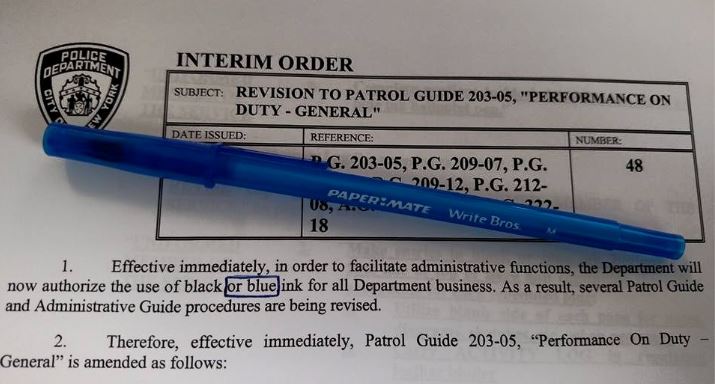
Policing Will Never Be The Same
This is huge: The NYPD has authorized, effective as of 0001 hrs, 4 June 2015, the use of — are you seated? — black OR BLUE ink for all department business.
Too much. Too soon.
It’s gotta be DeBlasio’s fault. For sure.