Tag: NYPD

  • Shootings up in NYC

    The recent crime numbers in NYC will soon come out, and they’re not good. Homicides this week are way up compared to last year. Of course that’s just one week… till it’s not. Shootings are up in NYC. Not Baltimore up. But up. People are dying. It is time to ring the alarm. Maybe not the crazy 5-alarm fire for Baltimore. Maybe a simple 1-alarm would do NYC. But more people are dying.

    So what might be the cause? A lot of things of course. One factor may be people’s willingness to carry heat. Word on the street is that guns are back in town. As I was told: “People are now shooting into crowds more often, doing drivebys, more often, and shootings as teams more often. The risk for carrying a gun in nearly zilch. Bottom line: cops aren’t stopping people, and young black men are paying for it with their lives.”

    Stop and frisks are down roughly 95%. Now we could debate whether certain police tactics are legal, constitutional, or moral. We should debate these things. Maybe it’s OK to have 50 more dead bodies in NYC if hundreds of thousands of other young black men aren’t stopped by police for no good reason. So let’s have that debate. What bothers me is the disingenuousness of those who refuse to grant criminals any agency in crime. Like Broken Windows is the root of all evil. Like it is inevitable that 2015 would see a 10 to 20 increase in shootings in Brooklyn. And it must have been written by the Almighty that some in Baltimore would riot on April 27, and then the homicide rate would skyrocket.

    Criminals don’t leave their guns at home because they’re asked politely by community leaders. It is possible that force and coercion might, in some cases, keep people alive. Remember (before we forget) that the arguments against stop, question, and frisk weren’t only that it was illegal, unconstitutional, and morally reprehensible. It was that it didn’t work — that stop, question, and frisk was actually counterproductive with regards to crime prevention. (I never quite understood that argument, but it was said.)

    The role of guns in NYC homicides is surprisingly varied. It wasn’t that long ago (well, the 1970s) that guns were used in less than half of all murders in NYC. In 1960, at least according to one source, guns were used in just 20 percent of homicides. But that changed in late 1960s and 1970s.

    By 1990, guns in NYC out of control. 1,650 killed by guns, 75% of all murders, higher than the national average (not including NYC) of 67%. (All these percentage may be a bit low based on “other and unknown”.)

    So along with all murder going down in NYC, gun murders went down in particular.

    In 2000 65% of murders in NYC involved guns. (Compared to 66% in the rest of the nation. UCR data, all.)

    In 2005 61% in NYC. (Rest of nation: 68%.)

    In 2010 60% in NYC. (Rest of nation: 68%.)

    In 2013 59% in NYC. (Rest of nation: 70%.)

    Meanwhile, the percentages of gun homicides in other cities is much higher: 84% in Chicago; 79% in Los Angeles; 81% in Baltimore. So New York looks all the more impressive.

    This was a little heralded victory against gun crime in NYC. While the rest of the country saw a small increase in the percentage of homicides involving guns, NYC saw a decrease.

    I asked my friend, Dan Baum, who insisted on being identified as “a liberal Democrat Jewish gun owner who wrote Gun Guys: A Road Trip“. Baum can write. (Too bad you didn’t buy his book.)

    Anyway, I asked Baum about what changed in the 1960s. Gun violence increased 50% in the 1960s (five times more than other/non-gun violence). He said:

    What changed in the early 1960s? JFK was shot, and the liberals began their long love affair with gun control. Until 1968, you could buy guns through the mail. Guns were things that people owned, but they weren’t a cultural marker, a badge of belonging to a particular subculture.

    The liberals changed all that, by relentlessly pushing the bubbas into a corner. Suddenly, people were in a panic to buy all the guns they could, because they never knew when the liberals were going to ban their sale altogether. The NRA, taken over by the loonies in 1977, pushed that narrative. The number of guns circulating in private hands exploded exponentially, with predictable results. Not only that, a tremendous amount of anger was injected into the national discussion around guns — also not a good thing.

    So I’d argue that we have the liberals, and gun control, to thank for the huge increase in gun murders. Guns are way more prevalent than they used to be, because the liberals made them a thing. Had they not done that, we’d be back in 1960 America — guns being a thing that some people own, that have no cultural/political/spiritual significance.
  • Well done, NYPD. What’s your secret?

    The national average, the rate of people killed by police (as they define it, which is pretty loose, but OK) is 0.36 per 100,000. This is over the past 23 months. That’s roughly 1,135 killed per year.

    This is based on these data from May 2013 to April 2014. I believe it’s similar to (but a bit messier than) killedbypolice.net. But it’s got city and county data, which isn’t at killedbypolice.net.

    Now we already knowthat the rate of being killed by police is a hell of a lot higher in Oklahoma, New Mexico, and Arizona (0.8) — five times higher — than it is in New Jersey, Michigan, and New York (0.15).

    But states are big and have hundreds of police departments. I want to break it down by city. The rate in California is twice the national average. I don’t think San Francisco police are shooting a lot of people. So who is?

    Well, Bakersfield (rate = 2.1, which includes killing in the city killings both by the Bakersfield PD and the Kern County Sheriff Dept.), Salinas (2.0), Stockton (1.4), Fresno (1.1), and Santa Ana (0.9) come to mind. These are crazy high rates.

    Super high seem to be Kansas City, MO (rate = 2.0), Oklahoma City (1.7), St Louis (1.5), Tulsa (1.4), Phoenix (1.2), and Albuquerque (1.1). Remember all these figures are rough. So I don’t mean to rank order, but I do mean to group these cities together.

    Bakersfield? Salinas? Maybe it’s been a bad two years, but there are only 363,000 people who live in Bakersfield. Between 2012 and 2013, the NYPD killed 21 people. And in the past 23 months 15(!) people have bit the dust in Bakersfield? Do correct me if I’m wrong. The stats may be a fluke. Or maybe it was a bad two years. Or maybe the numbers are wrong. But it’s still a hell of a red flag!

    The rate in Los Angeles 0.5. That’s not quite twice the national average… but it’s one-forth of Bakersfield and Salinas. Baltimore’s rate is 0.9. Chicago comes in at 0.6.

    The NYPD? The big bad NYPD? The killers of Diallo, Gurley, Bell, Garner, and so many other?

    Zero-point-one-three. New York City’s rate is 0.13. The rate of people killed by police in one-third the national average. This is amazing.

    Put another way, Chicagoans are 5 times as likely to be killed by police. Baltimoreans 7 times as likely. And Bakersfield? Lovely Bakersfield? In the streets of Bakersfield you’re 16 times more likely to be killed by police than you are in New York City. [Update 2017: This is no longer true. The number of people killed by police in Bakersfield has declined greatly. But the overall numbers for small- to medium-sized cities west of the Mississippi are still very large.]

    [Update: See Nick Selby’s description of those shot and killed by police in Bakersfield. Maybe the streets just really are meaner.]

    Think of this, too, as my NYPD friends do. Shootings by NYPD may be tragic, but compared to the rest of the nation, they really do seem to fall in the category of isolated incidents. Whatever the NYPD is doing to shoot so few people seems to be a case of best practices. Maybe the focus should be not to criticize the NYPD but to learn from it. The systemic problems seem to be out west. And maybe people who want to protest police shootings should protest police who really are shooting too many people.

    Go west, young man, go west. There is health in the country, and room away from our crowds of idlers and imbeciles.

    [I want to emphasize these results are primarily, not double-checked, and based on unverified data. But the even as just ballpark figures, the differences are too dramatic to ignore.]

  • Crime up in NYC (this time for real)

    Compared to last year, shootings and homicides in NYC are up 20 percent. Twenty percent is a real increase.

    Here’s the compstat page and also a link to last week’s summary (no matter when you click the link).

    I don’t know why crime is up. But… I can’t help but think it’s part of (or some combination of) everything that has happened in NYC in the past year. I mean, I know what most cops think is the cause: stop and frisk has stopped; marijuana arrests have plummeted; there’s more oversight of cops; De Blasio is mayor; Obama is president; Eric Holder is Attorney General; cops find it preferable to do too little rather than do to much (“if you don’t work you can’t get in trouble”).

    Some of that is just ideological sour grapes. But some of it, part of it, is true.

    What I find amazing is I don’t hear any critic of the NYPD sounding any alarm. Oh well, I guess 60 extra murder victims per year — 54 of whom, based on passed statistics, will be black or hispanic men — is a small price to pay to keep innocent people from getting harassed by the police. I for one don’t buy that equation.

    Those who opposed past police practices (and to be clear it’s not like I loved everything the NYPD was doing) seem to be very silent right now. Shouldn’t the increase in murders lead to a discussion about what police should be doing?

    I guess the same people who think the police had little if anything to do with the crime drop now just think it’s preordained that crime goes up. But it is not “written.” Why don’t I hear debate? Instead I hear a lot of silence.

  • Shootings up in NYC

    Shootings are up 20 percent this year. Bratton is blaming marijuana. I doubt it. But maybe. I’m certainly willing to consider the idea. Most liberals, I find, never ever consider the idea that their advocacy might have unintended consequences, like more young black men getting murdered.

    That said, Bratton pointed to drug dealers getting killed. That was illegal last year and remains illegal this year. So I’m not certain how not arrested people for small scale marijuana possession really changes anything. (For public safety or Broken Windows, that is. It certain matters for the guy getting arrested or not.) If the increase is as Bratton describes it, these killings seem more like old-fashioned Prohibition killings than decriminalization killings.

    But… it could be that criminals are more brazen in response to less aggressive policing. And maybe some robber smoking a joint last year would have gotten stopped by the po-po. But not so in 2015. I’m not saying that is the reason. But it’s possible.

    Here’s the story in the Times. Worth reading if you’re into this kind of thing.

  • Broken Windows in question

    This article in the Times is worth reading. Of note: the most discretionary arrest in NYC, Dis Con, down 91 percent. Meanwhile the courts are close to empty.

    “This proves to us is what we all knew as defenders: You can end broken-windows policing without ending public safety,” said Justine M. Luongo, the deputy attorney-in-charge of criminal practice for the Legal Aid Society.

    I love how it took the police union and police (in)action for police officers to prove what Legal Aid lawyers have been saying along. But are they correct?

    Stupid arrests are not part of Broken Windows. And they have been part of NYC policing. And by “stupid” I mean giving tickets or summonses to non-criminals using a park at night, riding the subway, riding a bike on a bike path/sidewalk, and walking through a park at night to get home (p 207 of Cop in the Hood). Now I don’t think those BS things were the majority of arrests and summonses, but they did happen. And they happened because pressure from compstat and community meetings got passed down through the chain of command. And there didn’t seem to be any way to stop these abuses from happening. Until now!

    Any time discretionary arrests go down 90 percent without crime going up, it’s noteworthy. First it was stop and frisk going down and now it is arrests. Maybe this is good. There have always been too many arrests in American policing because policing in American has for too long been defined by making arrests. And that’s a shame (see p 144 of Cop in the Hood). You don’t need to arrest people to use Broken Windows. Indeed, you shouldn’t need to. That’s been the disconnect here in NYC. This takes a major shift in police mentality. One that is hopefully happening right now. The optimist in me likes to think of this as a clean slate, where a police department and can get its priorities in order and police officers can be left to use discretion and do their job. The realist in me knows better.

  • Blue Flu (II): Arrest “only when you need to”

    Conor Friedersdorf has a excellent piece in The Atlantic, “The NYPD’s Insubordination—and Why the Right Should Oppose It.” [And just for the record I did scoop the New York Post, albeit only be a few hours.] There’s lot here that doesn’t fit in our normal political divide. And I love that cognitive dissonance!

    You’ve got union blue-collar workers, and the left that hate them. You’ve got union blue-collar workers, and the right says that says they can do no wrong. You’ve got an elected mayor cops (many non-residents) are saying doesn’t represent the people of New York City (De-legitimize the mayor — even though De Blasio got more votes than Bloomberg ever did). And you’ve a police union that other unions (mine included) do not like and insist is not a real union (de-legitimize the workers’ voice). You’ve got some cops who would love to see crime go up, just to prove their anti-liberal political point. And these same cops aren’t working too hard in the name of safety. Even though the worst thing for cop safety would be an increase in crime.

    I love it when my head hurts!

    And then you’ve got the Zero Tolerance vs. Broken Windows angle. This is important and will probably get lost in the shuffle. But right now the police are doing exactly what opponents of police (though they would prefer to be known as supporters of police reform…) have been advocating for years: having police do less. Because if you see police as overly aggressive tools (or, more extremely, state-sponsored tools of oppression) who do more harm than good, you welcome a police slowdown. If you think police have little or nothing to do with crime — and many academics, generally those who hate Broken Windows, still believe this (it all goes back to root causes and society) — there’s no downside to fewer arrests and tickets. (Though I don’t want to be too dismissive about fewer arrests and tickets. I’m all for police discretion and more informal enforcement of public order.)

    A lot of what the NYPD has been doing the past decade or so is Zero Tolerance: write tickets, stop people, arrest people, no discretion. A lot of what police need to do is Broken Windows: problem solve, identify quality of life issues, reduce public fear, maintain public order, cite and arrest as a last resort.

    If you, like me, think police matter, then you want the good without the bad. It’s not easy, but it’s certainly possible. You want police maintaining public order without stopping people without good causes. You want police discretion without police quotas (also known as “productivity goals”). You actually don’t care so much about response time and are more interested in anything that gets police out of cars and dealing with the public — good people and criminals alike.

    So if cops stop making arrests that aren’t absolutely necessary. That’s fine with me. Arrests should never be a measure of police productivity! But if police stop policing…. well, that would be bad.

    From Friedersdorf’s piece, here’s Scott Shackford from Reason.com:

    Well, we can only hope the NYPD unions and de Blasio settle their differences soon so that the police can go back to arresting people for reasons other than “when they have to.” The NYPD’s failure to arrest and cite people will also end up costing the city huge amounts of money that it won’t be able to seize from its citizens, which is likely the real point. That’s the “punishment” for the de Blasio administration for not supporting them. One has to wonder if they even understand, or care, that their “work stoppage” is giving police state critics exactly what they want– less harsh enforcement of the city’s laws.

    And here is Friedersdorf’s take on that:

    That’s how some policing reformers see it. Others, like me, don’t object to strictly enforcing laws against, say, public urination, traffic violations, or illegal parking, but would love it if the NYPD stopped frisking innocents without probable cause or even reasonable suspicion, needlessly escalating encounters with civilians, and (especially) killing unarmed people, goals that are perfectly compatible with data-driven policing that targets actual disorder. Keep squeegee men at bay–and leave innocent black and Hispanic men alone.

    That last sentence there is good. And Friedersdorf concludes (read the whole thing):

    The right should greet [pro-police rallies] with the skepticism they’d typically summon for a rally on behalf of government workers as they seek higher pay, new work rules, and more generous benefits. What’s unfolding in New York City is, at its core, a public-employee union using overheated rhetoric and emotional appeals to rile public employees into insubordination. The implied threat to the city’s elected leadership and electorate is clear: cede leverage to the police in the course of negotiating labor agreements or risk an armed, organized army rebelling against civilian control. Such tactics would infuriate the right if deployed by any bureaucracy save law enforcement opposing a left-of-center mayor.

    It ought to infuriate them now. Instead, too many are permitting themselves to be baited into viewing discord in New York City through the distorting lens of the culture war, so much so that Al Sharpton’s name keeps coming up as if he’s at the center of all this. Poppycock. Credit savvy police union misdirection. They’re turning conservatives into their useful idiots. If the NYPD succeeds in bullying De Blasio into submission, the most likely consequence will be a labor contract that cedes too much to union negotiators, whether unsustainable pensions of the sort that plague local finances all over the U.S., work rules that prevent police commanders from running the department efficiently, or arbitration rules that prevent the worst cops from being fired. Meanwhile, Al Sharpton will be fine no matter what happens. Will the law-and-order right remain blinded by tribalism or grasp the real stakes before it’s too late? Look to National Review and City Journal before laying odds.

  • Blue Flu

    Word on the street is that NYPD summonses are down almost 95% and arrests by two-thirds since officers Ramos and Liu were killed (and the PBA was vocal with their opinion).

    Let’s see what impact this has on crime. It would be interesting if the answer were zero. But since I believe police matter, I don’t think this is good.

    But what I don’t get — along with the immoral nature of telling cops not to do their job — is that the best assurance for police officer safety is low crime. Right now so many police officers (and unions) want crime to go up. Many police would be happy to see the city go to hell just to stick it to liberals in general and De Blasio in particular. I don’t like that. More crime means more hurt cops. And I’m not willing to accept that.

    All that said, I’m a quit sympathetic to cops actually “following the rules.” The public doesn’t realize how absurd so many rules are. Pick up a copy of the Patrol Guide (“General Orders” in Baltimore), if you can (it’s heavy). Rules are not there for effective policing or crime prevention, but rather to arbitrarily punish cops when the department wants to get you. Rules don’t tell police what to do. They’re just all the ways you can get in trouble if you piss off the wrong person.

    It’s not fair to expect and ask cops to violate the rules some of the time (and I’m talking about rules, not laws). I’m for anything that brings together formal and informal rules. So yes, inspect those cars as required. Fill out all the paperwork. Wait for supervising officers to sign God knows what. But for God’s sake, answer your calls!

  • RIP Officer Rafael Ramos

    RIP Officer Rafael Ramos

    NYPD Officer Ramos was just buried. Here is Commissioner Bratton’s

    eulogy.

    In honor of Officer Ramos, I’m reprinting some of what I’ve written about police funerals in Baltimore. I went to too many of them:

    Twenty months in Baltimore wasn’t very long, but it was long enough to see five police officers killed in the line of duty. And there were other cops, friends of mine, who were hurt, shot, and lucky to live. A year after I quit the force, my friend and academy classmate became the first Baltimore policewoman killed in the line of duty, dying in a car crash on the way to back up another police officer.

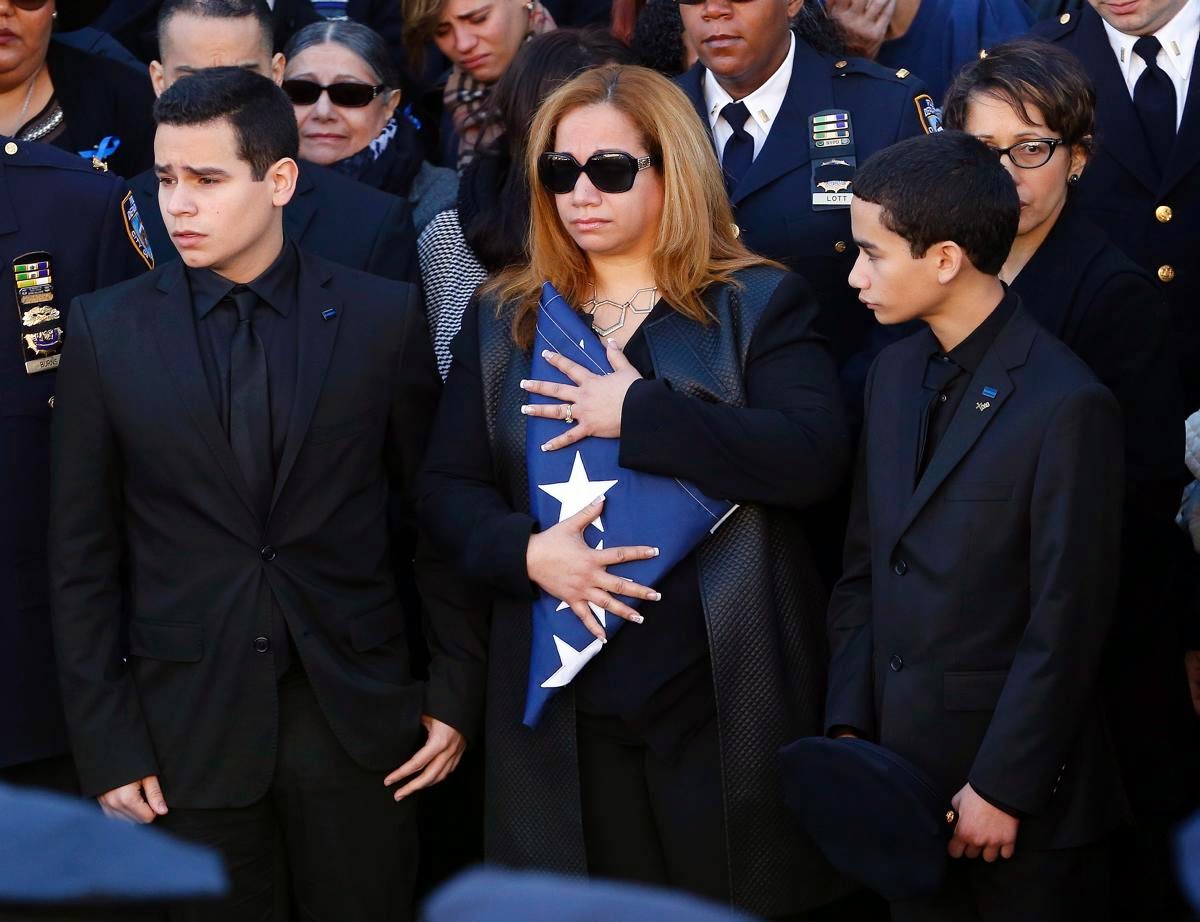
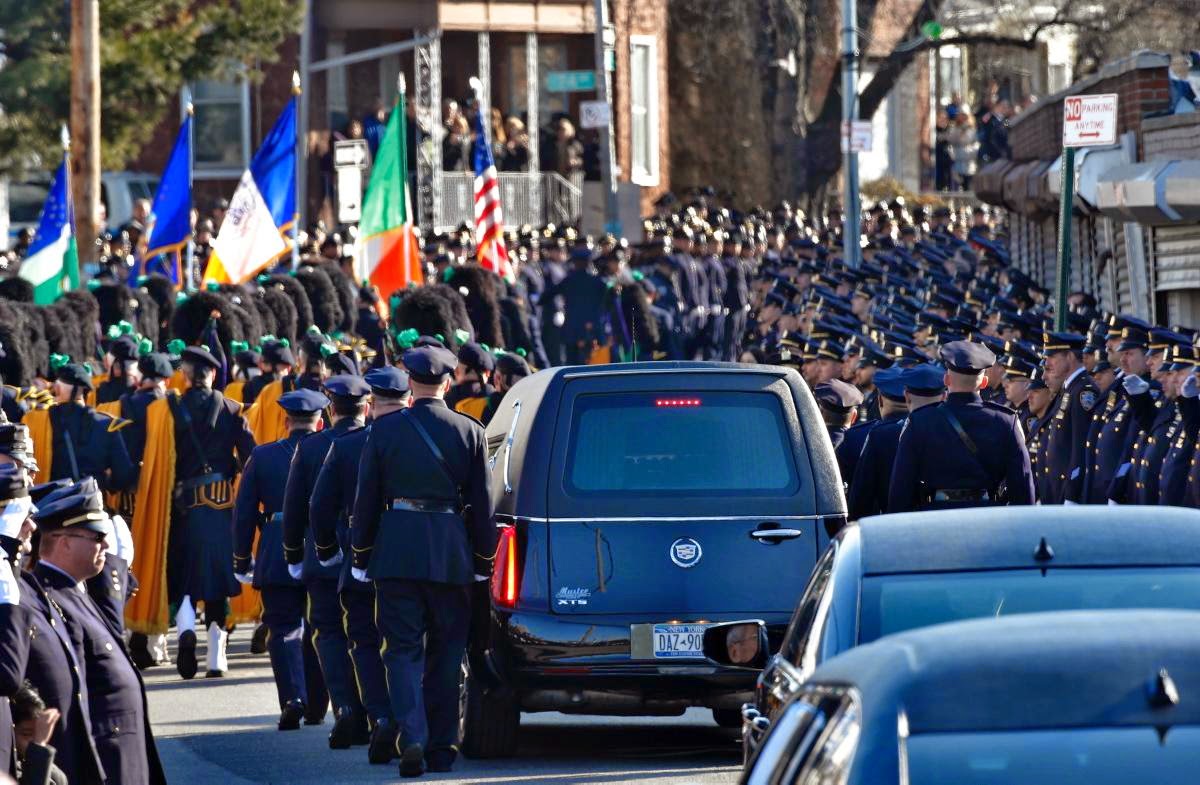
    Crystal Sheffield patrolled opposite me in the Western District. Occasionally I would switch my radio over to the Western District channel to see what she was up to. When she died, I returned to Baltimore, hitched a ride in a police car from the train station to the funeral, and stood in the cold rain at attention in my civilian clothes with my uniformed fellow officers. Police funerals are one of the few events that bring together law enforcement personnel. Funerals give meaning to that often clichéd concept of Blue Brotherhood. At an officer’s funeral, police-car lights flash as far as the eye can see. Thousands of police officers wearing white gloves and black bands on their badges stand at attention. Guns are fired in salute. Bagpipes are played. A flag is folded. The coffin is lowered into the ground.

    At the end of a Baltimore police funeral, a dispatcher from headquarters calls for the fallen officer over all radio channels. The response, of course, is silence. After the third attempt the dispatcher states the officer is “10- 7.” Ten-seven is the rather unsentimental radio code for “out of service.” Ten-seven usually refers to a car, an officer handling a call, or an anonymous murder victim on the street. To hear your friend and colleague described as 10-7 is heartbreaking. In this way the few officers left working the streets know the burial is complete.

    A few seconds later a routine drug call is dispatched or one bold officer reclaims the radio airwaves for some mundane police matter. A car stop. A warrant check. A request for a case number. The show goes on. Sometimes it just don’t make sense.

  • Thinking beyond “the Thin Blue Line”

    Read my whole piece at CNN:

    Most citizens can be forgiven for going through their day without thinking of anarchy or barbarians storming the gates. But many police, especially in New York City, see themselves as a thin blue line besieged by both a liberal and criminal world, neither of which they particularly like or understand. Large protests, especially when they’re anti-police, solidify this belief because police see firsthand just how thin their blue line actually is.

    Police know they are outnumbered and sometimes outgunned, even while presenting a front of dominance and control.

  • “Right now there’s nothing I’d rather be than a Brooklyn cop”

    A friend (and former student) of mine, Officer Musorov, just posted this on facebook. You might see him on the streets of Crown Heights. He makes me proud!

    “When the Rhetoric of scandal — rogue cops, racist cops, and so on —
    becomes the received idea, when we are so engrossed by exceptions that
    they seem like rules, we still send cops out, in ones and twos, into
    angry crowds, fighting families, and darkened alleys, though stripped of
    a measure of defense” -Edward Conlon

    The above statement was
    written seven years ago, but it’s just as true today as it ever was. I’m
    not going to blame anybody for what happened today, except the person
    that pulled that trigger. But when you have had weeks of people on the
    streets chanting that they want dead cops, it creates an atmosphere that
    leads to just that. Nobody should kid themselves and think that
    rhetoric like that cannot possibly harm us. Anywhere in this city, if
    somebody calls us, we will come. That’s ALWAYS dangerous, but especially
    so when you have people literally calling for blood on the streets.

    But anybody who thinks they can intimidate any of us should think
    again. We will still answer every call for service as we always have. I
    work with some of the greatest people ever, and right now there’s
    nothing I’d rather be than a Brooklyn cop.

    Thank you to everyone
    who extended their sympathies, and thank you to my extended family in
    the 71, who I know I can always count on.