While I haven’t posted here a couple months, I’ve done a bunch of interviews and you can listen and/or watch them at the Quality Policing Podcast.
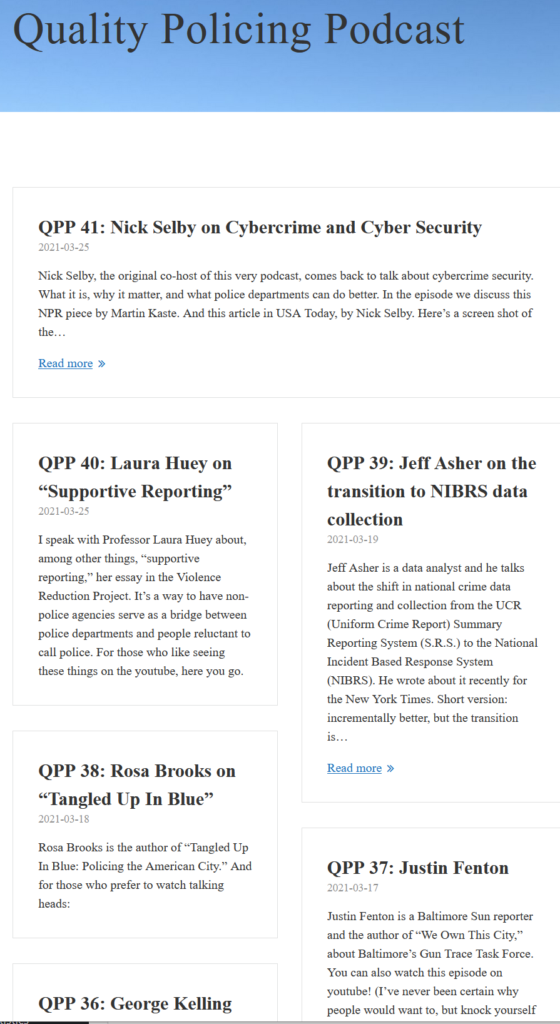
While I haven’t posted here a couple months, I’ve done a bunch of interviews and you can listen and/or watch them at the Quality Policing Podcast.
You’d think after the Capitol Storming and a general year of protests, politicians would be talking about the best tactics in terms of safety and effectiveness in terms of crowd control. But best I can tell, the calls are simply to ban every police tool used.
Police (really through no fault but their own) have trended to no longer using batons. This is a big mistake. Especially as crowd control, they’re great as a deterrent and for keeping distance, which is really important when police are outnumbered. https://www.policemag.com/340095/do-we-still-need-batons
People have called for the banning tear gas. Certainly it’s use should be limited and regulated, but it does usually work at crowd dispersal. If not tear gas, what then? https://www.sciencealert.com/tear-gas-is-so-often-abused-it-should-be-banned-researchers-argue
Last year a judge temporarily banned Detroit police from using batons, shields, gas, rubber bullets, chokeholds or sound cannons against Black Lives Matter protesters. OK, but what should police do when a crowd turns on them? https://www.freep.com/story/news/local/michigan/detroit/2020/09/04/chokehold-police-tactics-against-protesters-temporarily-banned/5721952002/
In LA, there’s been a call to ban the use of police horses as a form of crowd control. Horses are really effective, especially as an alternative to tear gas. If not horses, what is Plan B? https://www.latimes.com/california/story/2021-01-22/lapds-use-of-horses-at-protest-condemned-by-civil-rights-leaders
New York City criminalized police use of choke holds. OK. (As a citizen, you can still use them.) At the same time, though, they banned pressure on the _diaphragm_ in the course of an arrest. That makes arresting a resisting suspect nearly impossible. https://www.law.com/newyorklawjournal/2020/10/06/manhattan-judge-upholds-city-law-banning-nypd-use-of-choke-holds-in-suit-filed-by-police-unions/?slreturn=20210025111507
DC recently banned OC spray (AKA mace) and all chemical irritants at protests. Also banned were less-lethal projectiles, like rubber bullets. So what does that leave? https://www.npr.org/local/305/2020/06/25/883283633/would-d-c-s-police-reform-bill-have-stopped-m-p-d-from-pepper-spraying-protesters
Police is the US don’t use water cannons and dogs on crowds. That’s our deserved legacy for Civil Rights Era police brutality. But other countries do use these tools, and water cannons can be very effective. But we don’t use them. https://www.dutchnews.nl/news/2021/01/riot-police-use-water-cannon-tear-gas-to-break-up-demos-in-eindhoven-amsterdam/
NYPD sometimes claims it doesn’t even know what “kettling” is, which is odd, since they do. Now it’s not technically “kettling” if people can get out, which matters. But kettling is also an effective tactic in some circumstances. Should it never be used? https://www.amny.com/news/nypd-denies-ever-using-kettling-tactic-against-protesters/
If police can’t use any crowd control tactic, crowds won’t be controlled. Eventually the public will say “enough.” But outrage is bad way to make policy. https://nypost.com/2021/01/22/portland-seattle-residents-slam-weak-response-to-antifa/
You can’t ban every tool in the police officer’s belt and then tell police facing a hostile crowd, “OK, now just do your job and don’t hurt anybody.” Inevitable, things like this will happen. https://www.thenewstribune.com/news/local/article248729060.html
Tasers have a role. But they’re vastly overused. And they are not a silver bullet. They’re also all but useless in crowd control situations. And what happens when Tasers fail? Which is a lot of the time. Then what? https://www.ctinsider.com/news/nhregister/article/Tasers-fail-more-often-than-they-work-with-fatal-15002785.php
People, politicians, and police need to have a serious discussion about crowd control tools, tactics, and techniques. How and when they’re used. How to hold police accountability for their misuse. We need to be having these discussions now, before and not after police face the next angry mob. None of this is happening.
Baltimore is one of the only cities in America that didn’t see a rise in murder in 2020. (The other being Newark, NJ.) That’s the good news. The bad news is that murder in Baltimore increased by 2/3rd after the riots of April 27, 2015 and a subsequent change in policing (“depolicing”) as demanded by “reformers.” The rise in violence was not “just a blip.” It became the new normal. It’s stayed at that high level ever since.
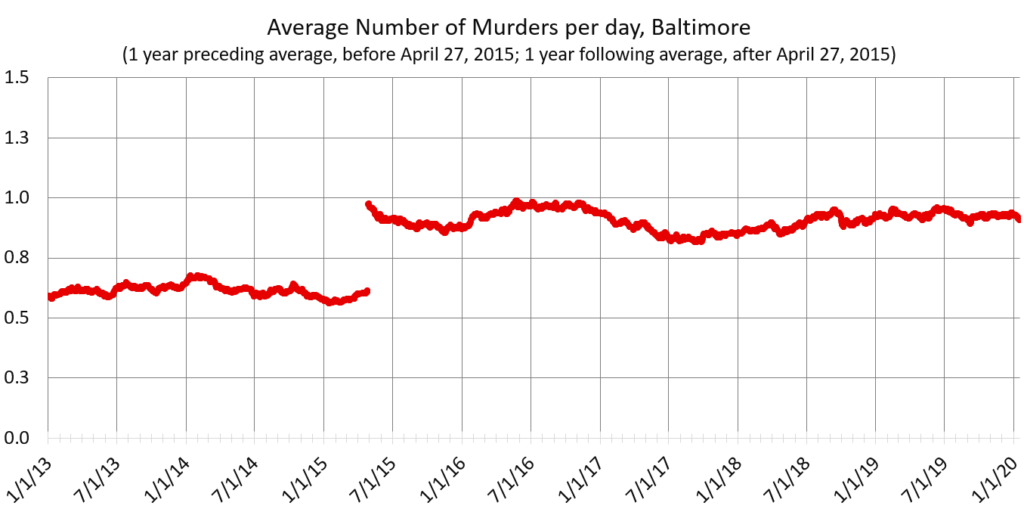
It is possible that there is a certain level of violence that any given city might see with proactive policing. And other without proactive policing.
What this might mean is that the increase in shootings and murder almost every city saw in 2020 — the largest one-year increase American has ever seen — is likely here to stay. I hope I’m wrong. But I wouldn’t expect any improvement unless police get back to policing repeat violent offenders, and unless prosecutors prosecute those offenders even for non-violence crimes. And unless some of the offenders are held in jail.
Let us not forget that for well over a decade America managed to bring down both crime and incarceration. But you would never have known that listening to reformers push for ever less policing and ever less prosecution and jail. They seemed unaware of the progress that had and was being made. Politically, criminal justice reform can only happen when there a basic level of public safety and public order. More importantly, just because somebody calls it “reform” doesn’t mean it’s automatically a good idea.
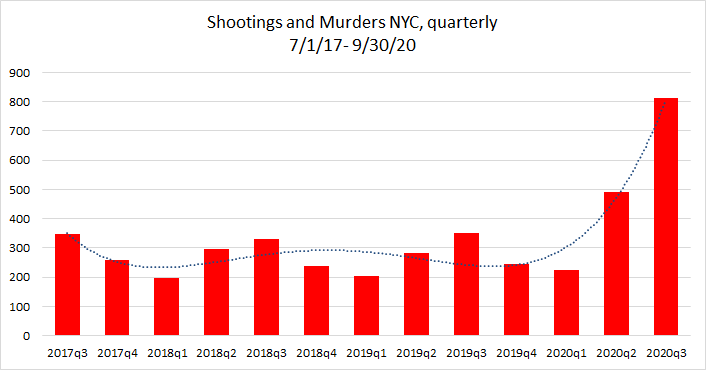
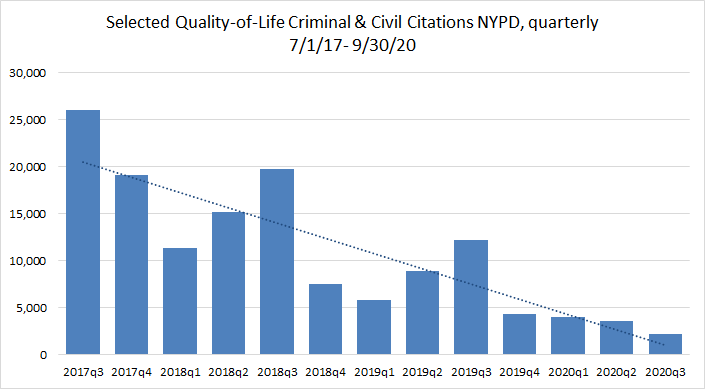
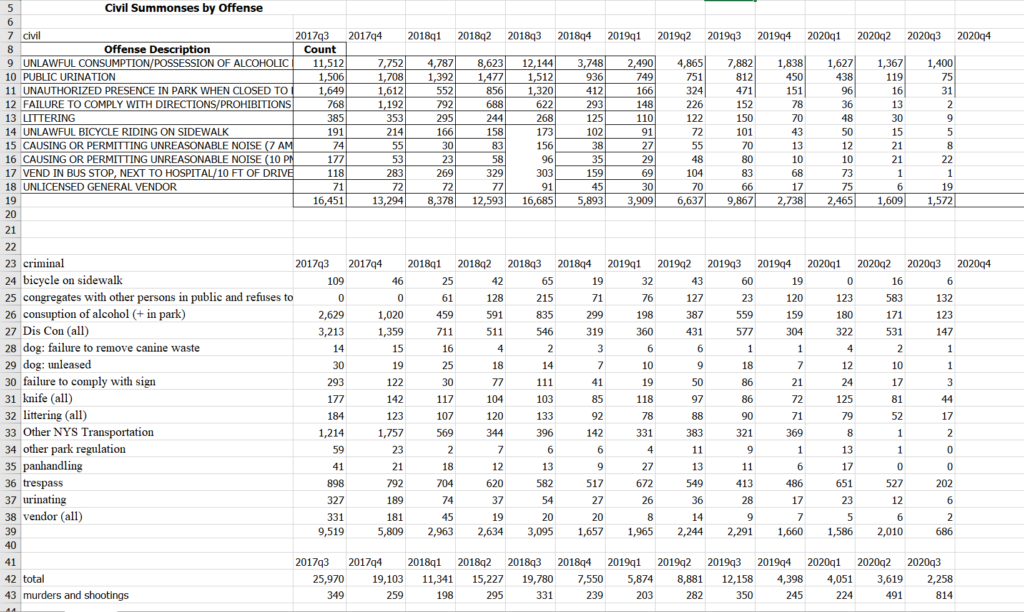
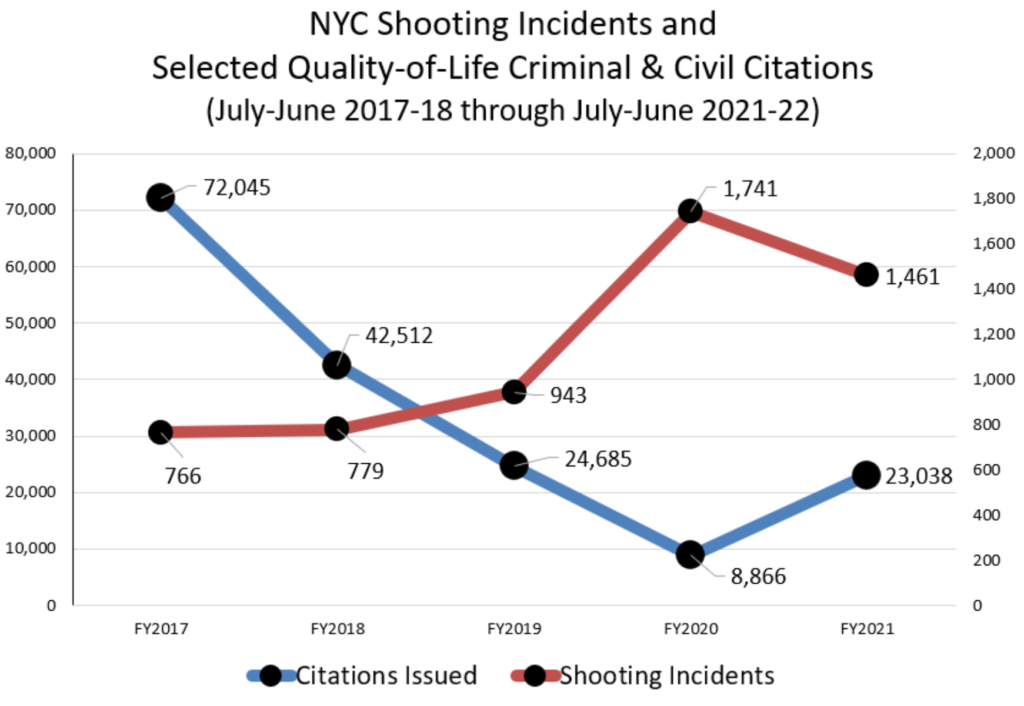
Quality of life / Broken Windows policing has basically ended in NYC. There simply is no proactive enforcement. Every category is down, from open container to public pissing to being in a park after hours. Collectively all these categories (listed below) resulted in tens of thousands of police public contacts. It correlates with the largest increase in violence in New York City history. It might be just coincidence. It seems like more than that, though. These weren’t arrests, mind you. They were civil and criminal citations. The former is a ticket. That latter is a ticket plus, and requires a court appearance.
In the 3rd quarter of 2017, NYPD issued 11,500 summonses for open container and 1,500 tickets for urinating in public. In the 3rd quarter of 2020 these were down to 1,400 and 75, respectively.
If one goes back further (the public data doesn’t go back further in such detail), the enforcement was far greater. Perhaps too great. But at some point there was a sweet spot. No enforcement isn’t working.
Data from https://www1.nyc.gov/site/nypd/stats/reports-analysis/c-summons.page
Civil citation including are: Unlawful consumption/possession of alcoholic beverages, Public urination, Unauthorized presence in park when closed to public, Failure to comply with directions/prohibitions on signs, Littering, Unlawful bicycle riding on sidewalk, Causing or permitting unreasonable noise (7 am to 10 pm), Causing or permitting unreasonable noise (10 pm to 7 am), vend in bus stop, next to hospital/10 ft of drive, subway, crosswalk, Unlicensed general vendor.
Criminal citations included are: bicycle on sidewalk, congregates with other persons in public and refuses to disperse by lawful police order, consumption of alcohol (+ in park), Dis Con (all), dog: failure to remove canine waste, dog: unleased, failure to comply with sign, knife (all), littering (all), Other NYS Transportation, other park regulation, panhandling, trespass, urinating, vendor (all).
Update:
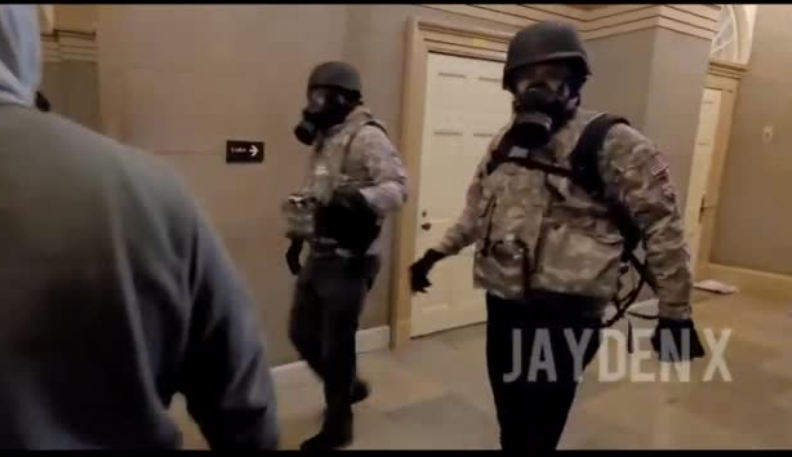
The these clips are all taken from a 40-minute video by John Sullivan, aka Jayden X. (He was clearly into this, by the way, assisting and cheering along. But document he did.) I’ll taken some clips from his video.
The full video is here. It’s worth watching, because these events always are about the passage of time, and not just the incidents.
1) The gates are broken down. (0:10. this is the approximate time in the original 40 video, to give a sense of passage of time.)
2) The barbarians storm the walls. This is an unbelievable scene. I think the last time so many stormed the walls of civilization was 1453 “Tear gas. Mace.” “Woo Woo” “It’s ours. It’s ours. Come on. Let’s go. Listen to at ’em all back there. Fucking patriots.” (2:50)
3) “They starting shooting at us.” “Rubber bullet.” “Who cares. Just a rubber bullet. It does hurt. No reason to run.” “I’ve got one. Yeah dude.” It takes very little force to turn people back. That said, there are hundreds if not thousands behind them. (5:20)
4) The building is breached. Entry is made. (6:08)
5) Cops pushing people out. It’s actually not that hard to do. It looks like many of these people have never been a fight. (8 min)
6) Five or six cops holding a line against many. The manage to hold the line for about 3 minutes. (10 min)
7) Another breach, after about 3 minutes of holding off the mob as injured colleagues are being carried past. (12:30)
8) In terms of potential bomb planters, I’d try and ID and investigate these two guys. They seem very much on a mission. And they’re wearing gas masks. (picture from 13:26) https://pic.twitter.com/BqI3t7fAGf
9) Some time passes. There’s just some sightseeing. It sure is a beautiful building. Too bad they don’t seem to know Capitol is a public building and gives free tours. (15:30)
10) After ~6 min of wondering and gawking, the crowd reaches another line of maybe 10 cops. There’s some more brass here. They stop the crowd. But our man is correct: this mob won’t be stopped. Police seem unwilling to use force. Policy or self preservation I do not know. (19:00)
11) More time passes. ~7 minutes later, during which time the crowd has been held back by police. But then the mob surges forward once again. (27:00)
12) At this point this reminds of Sleep No More. Our man is trying to figure out where the main action is. Oh, hey, look, over there! (32:00)
13) And then we get to the scene of the shooting. Where a cop from behind the barricade fires one shot at the first person who breaches. That kills a woman and 1 shot seems to end things. The video goes for 5 more minutes (and I’ve posted the after shooting before) (35:00)
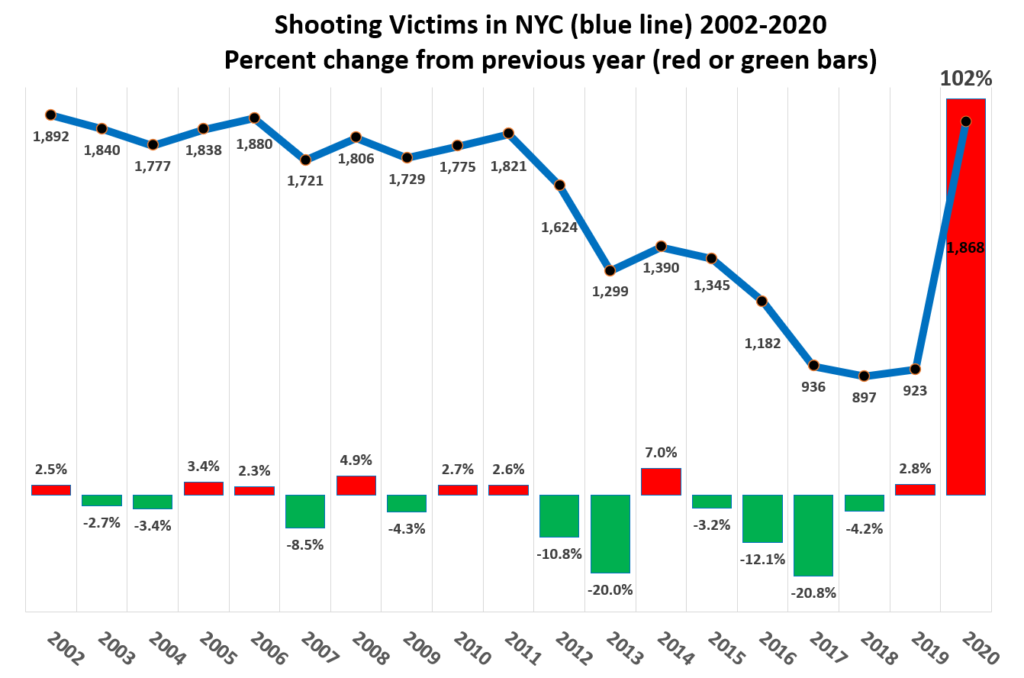
I’m just playing with charts and data presentation. If I graphed the number of people shot in NYC and the percent change on the previous year, it’s a challenge when a number that is between -20 and +7 suddenly goes to 100best I can come up with is something like this.
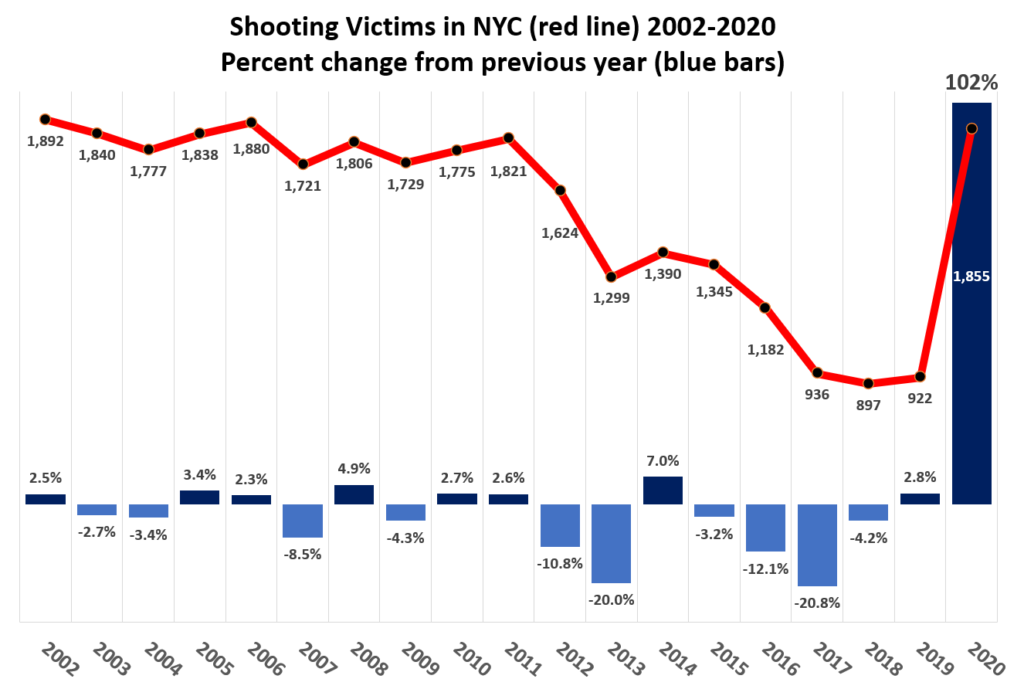
Without 2020 it’s much easier to do.
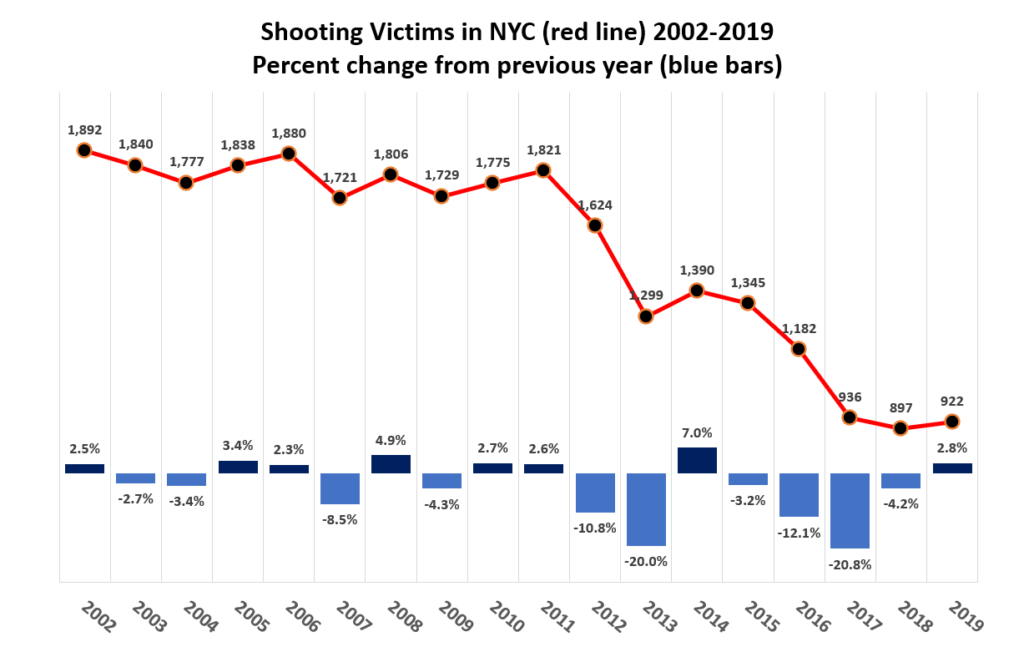
Though without knowing about 2020, I’d probably use a more traditional format and not even include percentage change. (Plus I could go back one more year, to as far back as I this data.)
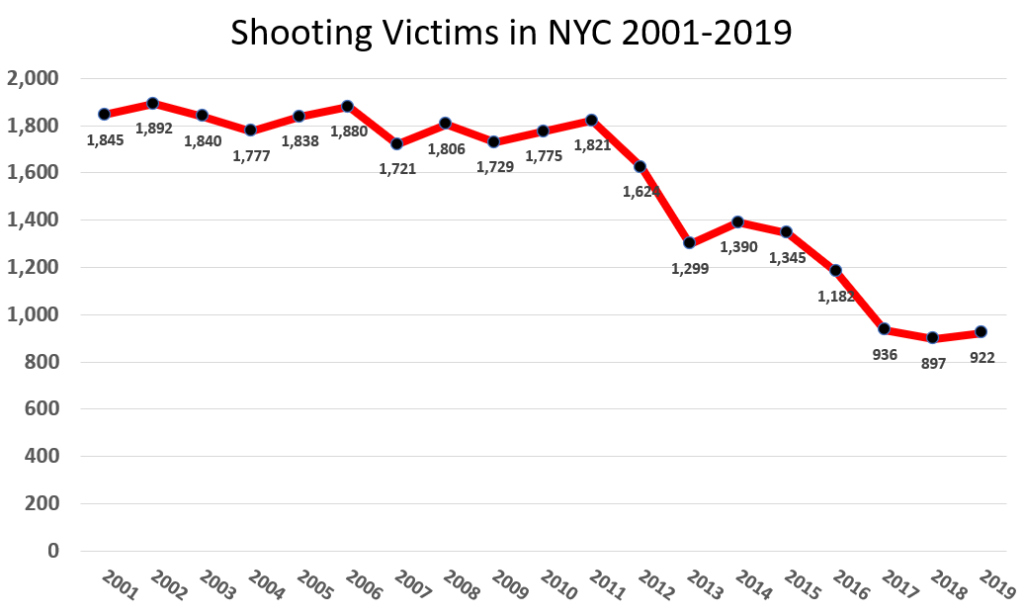
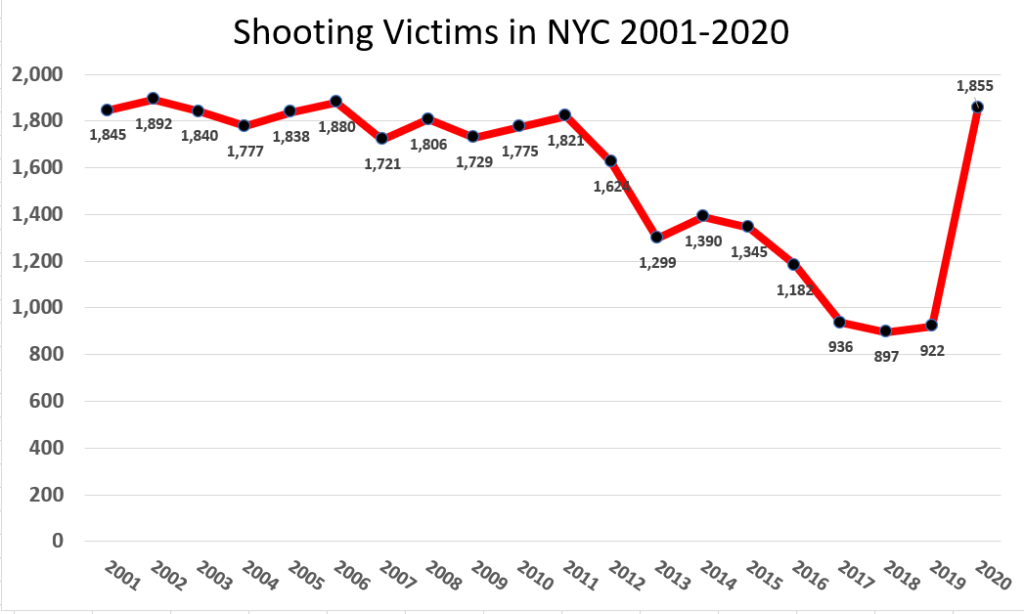
Add 2020 to the simple chart and you get this. But I think it’s important to show just how absolutely absurd the percentage increase in shootings was last year. The last time there was even a 10% increase in shootings was probably 1990. My NYC shooting data only goes back to 2001. Though I read somewhere reliable that 5,866 people were shot in 1993.
It’s up. It’s live. It’s a bunch of smart people and their ideas about what to do about violence, right now.
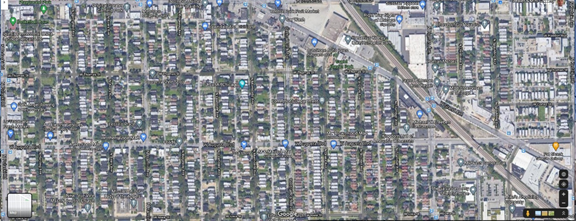
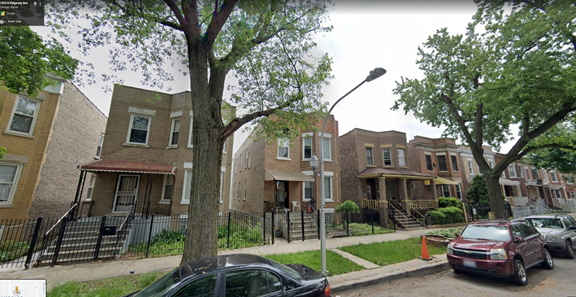
There’s an article by Frank Main in the Chicago Sun-Times about the deadliest police district in Chicago. It’s a small area on the West Side of Chicago. My eyes went to the blue area, below. About 3 by 15 square blocks. Maybe 34 of those blocks are residential. Perhaps about 650 houses in all. Nice housing stock. Maybe 5,000 residents? I don’t know. Just a guess. (3,000 or 10,000 people is a big difference, but it doesn’t really matter.) There were 18 people murdered this year. Many more shot. And many more shot, this year.
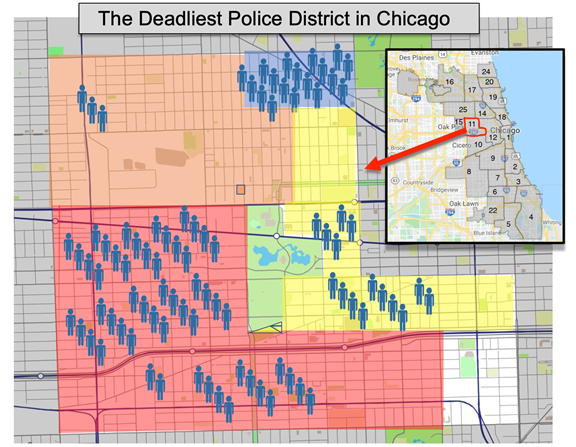
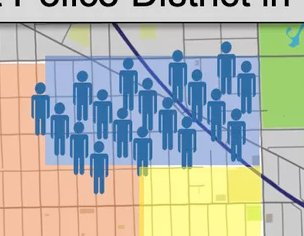
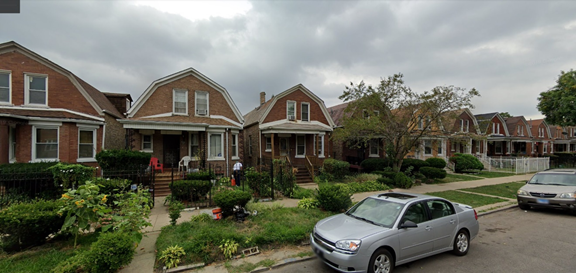
Note that even within this one part Chicago, violence is strictly demarcated. Dramatically so. That, as they say, is a clue. The murders happen north of Chicago Ave, in a more hispanic area. South of Chicago Ave (orange and yellow, above) is almost 100% black. There are no murders there.
Now even a dozen or active shooters among 5,000 residents is a lot. But we’re probably talking about just 20 or so men, 15-35, that are literally killing the neighborhood. They’ve all probably been arrested for violence before. So why not focus on those 20 men?
The increase in shootings this year has happened only where there are shooters. That might sound obvious, but it matters. Programs that target cities, demographics, neighborhoods, and even parts of neighborhoods are too broad. Most people don’t kill. To reduce killings, focus on killers.
Chicago Police, meanwhile, have been diverted from violent neighborhoods to protect the mayor’s house and also to act as scarecrows standing in The Loop and N. Michigan Ave. Should police be deployed like that? I don’t know. That’s a political decision. But people are dying.
Of course it’s easier to say “focus” on the shooters than it is to actually focus. Your typical shooter is in his late 20s. After-school programs won’t much help prevent violence (which is not a reason not to do it, if it’s good on its own.)
Arresting a killer after he’s killed is good. Clearance rates matter. But that involves incarceration. And racial disparities. And conviction isn’t easy. Nor does it bring back the dead.
So you’re left with preventing violence. This nebulous but needed concept of pro-active policing. How do you “target” a killer? Well, you identify him. Because of past crimes. And then go after him for whatever you can.
Going after illegal gun possession is good. But it needs to be prosecuted and punished. That seems harder to do, politically. Going after offenders for other crimes, drug dealing and minor offenses, can work, too. But now do you see the problem? These are “non violent” offenses.
If you go after major players for minor offenses, well, when it comes to gun violence, it leads to racial disparity. Mind you, even when the disparity is consistent with the shooting population, it won’t be with the city’s general population. And now the ACLU sues to stop it. Of course policing also affects the innocent. You want to minimize that, but innocent people will be stopped. As will targeted offenders on a drug corner who aren’t arrested. (I mention this because the ACLU counts them too as “innocent.”)
It kind of comes down to this: if you’ve got somebody who is a known violent repeat offender, is that guy deserving special police attention? Or is that racist police harassment? Policing has trade offs. Is it worth it? Generally, I’d say yes. But I’d also say it’s not for me to decide. Why? Because—this is important—I don’t live there. So listen to those who do live there. And not just those “harassed” by police, but those afraid to leave their home.
If residents want more policing, and I guarantee you most do, don’t listen to out-of-touch people who don’t live there clamoring for less policing in minority neighborhoods against the wishes of the residents.
Of course it can’t be just policing. But policing plays an essential role. A service, even. But policing will never be perfect. It can be better, though. We need to minimize bad policing and promote good policing. But more policing is needed. And it will save lives.
Imagine if this neighborhood had 18 covid deaths this year? If the area (because of demographics) has a COVID fatality rate 50% more than Cook County in general, which it might. And if there are 5,000 people (a big if), there would have been 13 COVID deaths this year. Now if we were talking about COVID, we would be talking about racial disparity, but we’d also be talking about doctors. Of course doctors don’t prevent COVID, but they’re an important part of saving lives.
Permit me to compare COVID to shootings; masks and social distancing to social programs; doctors to police. Right now it’s popular to talk about how to reduce violence without police. That’s a great discussion. Sort of. And there are ways. But not in lieu of police. Public safety without police is like health care without doctors. Yes, preventive care is important. But doctors play a role in that, too. Can I _imagine_ a health care system of diet and exercise and no doctors? Sure. But why would I want to? And what if I have a tumor?
There’s an element of police abolitionists that is a bit like anti-vaxxers. They’re so convinced they’re on to something. And yet so wrong. And so harmful to others. Though anti-vaxxers also put themselves at risk, whereas anti-policers usually theorize from very safe homes.
For most people, a safe neighborhood without much policing is the life they live and see every day. It doesn’t mean everybody has that privilege. It would be like being healthy and telling a sick person, “You don’t need a doctor. Maybe you should try yoga and eating organic?”
Yes, some neighborhoods need more policing that others. Some people need to be policed. And some more than others. Many more people need good policing around them. That is the world we have. And people who live with daily gunshots rightfully expect public agencies to respond.
But that’s where we are with violence and police. There’s more violence and there’s less policing. You could say our health care has failed, as demonstrated by COVID. It doesn’t mean we should #defund hospitals. That’s where the academic discussion is right now with violence and policing. Anything but police. Sure I can “reimagine” public safety without police. But it will be less safe world. This doesn’t mean we can’t _also_ fund programs that don’t involve police. We absolutely should. But most won’t work well without safe streets.
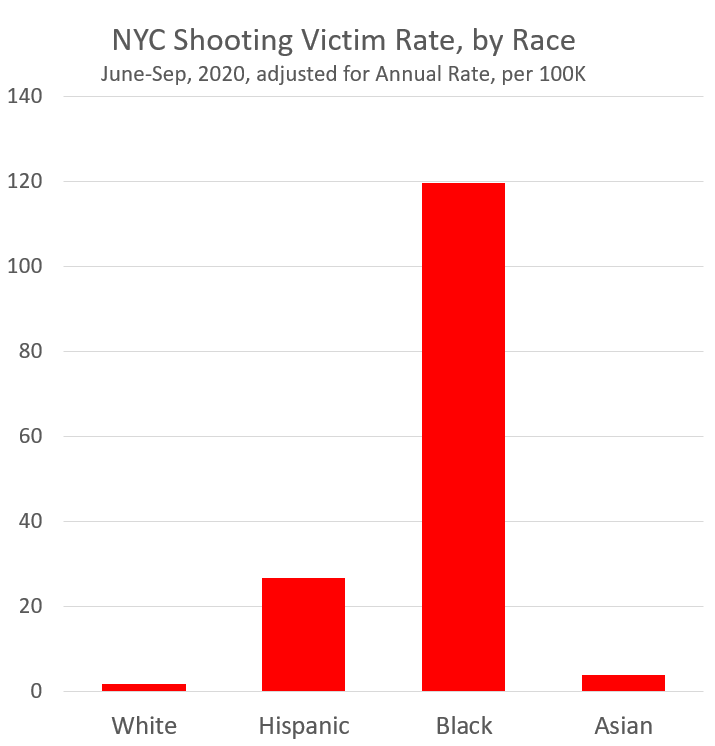
The recent increase in racial disparity in violence victims in NYC is getting worse. The disparity was always large. Nut now it’s worse. This year, through September, 1,430 New Yorkers have been shot. Five months between January and May, 366. Four months between June–September, 1,064. 1,064 is 2.6X compared to June–September last year.
Over these past four months, a black New Yorker has been 63 times (!) more likely to be shot than a white New Yorker. It seems to be the only racial disparity people refuse to address. In 2019, the black-to-white disparity (June–September) was 38 : 1. In 2020, it increased to 63 : 1.
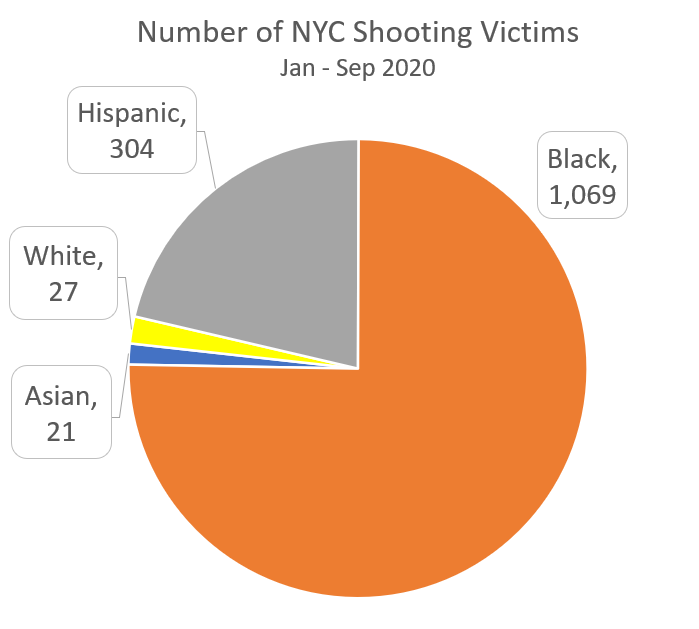
Up through the end of September 2020, there have been 1,430 shooting victims this year. Of those 27 have been white, 304 Hispanic, 1,069 Black, & 21 Asian. These groups represent 32%, 29%, 24%, and 14% of the NYC population, respectively.
I don’t where else you find a disparity like that. And in what other situation such a disparity would it be ignored. But if we can’t speak of this disparity, how can we address it, much less fix it? Far smaller disparities in policing and health car get far more attention. But when it comes to victims of violence, as long as it’s not a cop who does it, there’s silence. Immoral silence.
Back in 1988, Benjamin Ward, the NYPD’s first Black police commissioner, addressed a group of journalists and called this racial disparity: “Our dirty little secret. . . . We are the victims and the perpetrators. . . . We should not try to hide it. We have to speak out about it.” Ward was criticized for his comments, as he would be today, more than 30 years later.
If the violence of the past 4 months becomes the new normal, more than 1 in every 1,000 black New Yorkers will be shot over the course of a year. 90% of these shooting victims will be men. The median age of an NYC shooting victim is about 27.
To put 1 in 1,000 of a group getting shot in a year in perspective. It’s a lot, but ~1 in 350 New Yorkers have died from COVID this year. Approximately 1 in 7,500 Americans get killed every year in a car crash.
I know defund police police and prison advocates ignore this kind of case and accuse those who mention this of “sensationalizing” crime. But somebody was murdered. And if we don’t talk about this, how do we prevent it from happening again?
As reported in the Daily News: “The diminutive 5-foot-tall Armand … was ordered by Judge April Neubauer to attend a mental-health treatment program, authorities said. Armand was released from jail to attend the program, and her sentencing was adjourned until she finished.” So far so good.
“In April, Armand was charged with felony assault after she went into a post office, asked for mail and sprayed a clerk in the face with pepper spray. When cops tried to arrest her, she kicked and punched and broke one of the officer’s body worn cameras.” Not so good.
“Prosecutors in Manhattan asked for $30,000 bond, but she was released without bail. That case is still pending… Ms. Armand has since failed at several programs, and at each instance an (Assistant District Attorney) recommended the jail alternative be imposed, but it was not.”
“Neighbors in Washington Heights said Armand had a violent streak and this past winter, a gun was fired from inside her apartment, wounding someone on the street.” See, it’s not just about Armand. It also needs to be about the community. The neighbors are almost always ignored.
A 60-year-old neighbor said: “She threatens people with a Taser daily. She fights….This person is being allowed to do too many things. If she comes back, I’m leaving. I didn’t sign on for this.” You may not live next to Armand. But this guy does. What about him?
When Armand was supposed to go to court for sentencing for her old crime, she doesn’t. And instead she ends up murdering Fateema Boston, who comes to her apartment (perhaps sent by Fateema’s ex girlfriend).
Reformers need a better alternative than silence. Armand got “services” and a 2nd (and 3rd) chance. Policy should not be dictated by one bad example. One side says, “lock her up!” The reform side needs a better alternative. But you can’t just let violent people wreak havoc.