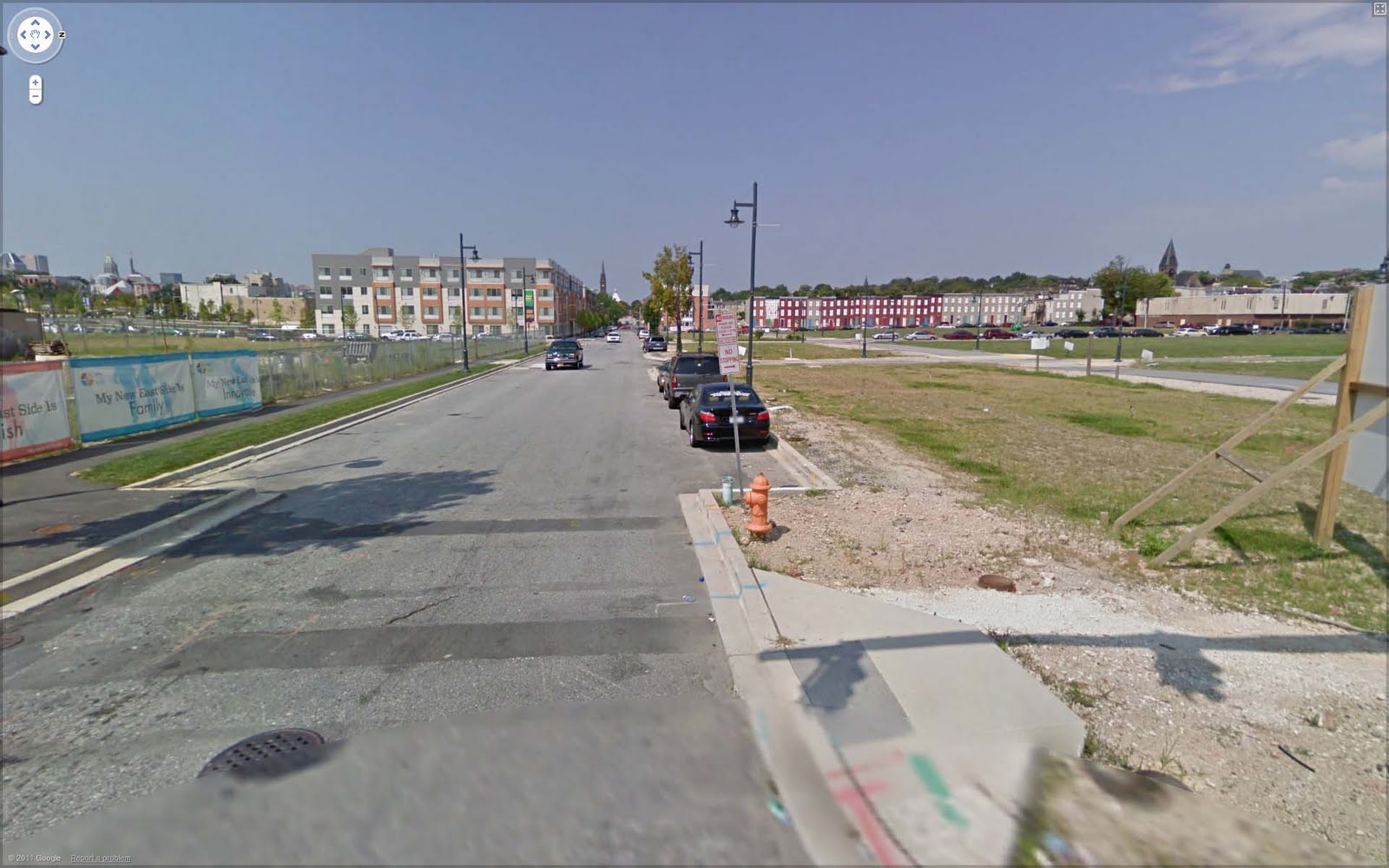
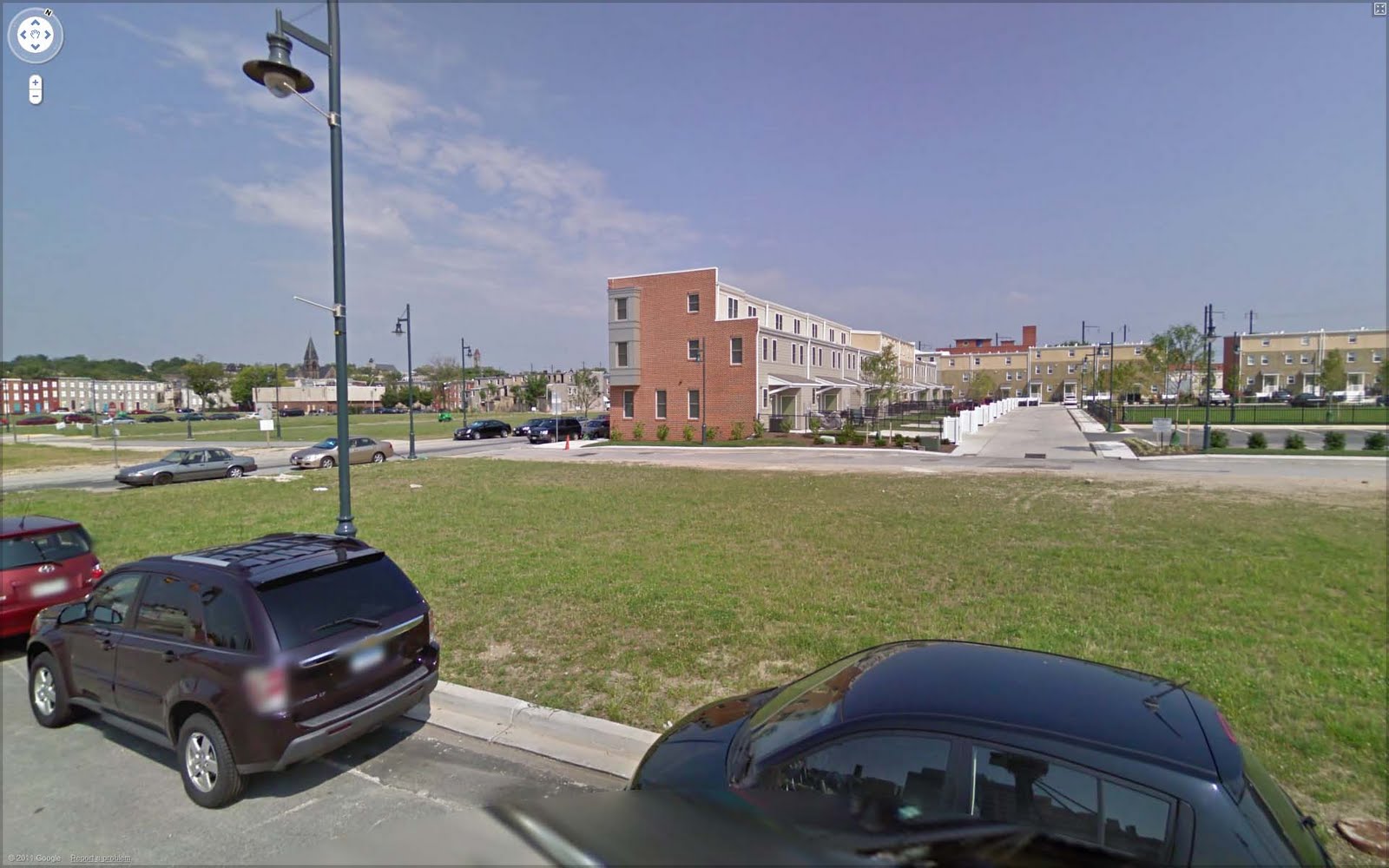
One of the nice things about being a police officer is you can explore places that normal people fear to tread (or would get arrested if found). Back in 2001, I wanted a good view to conduct surveillance of a drug corner. So I entered this vacant building. This block has since been torn down.
#1) 1900 Block of E Eager. 1906 E Eager is the third house (with awning) from Mr. George’s corner laundromat. Two short blocks North of Johns Hopkins Hospital, this corner (Wolfe and Eager) is one of the “hottest” (but hardly the only) drug corners in the neighborhood, heroin and crack are sold around the clock, rain or shine. Most of the customers are locals, but a conspicuous minority of whites drive in from the poor suburbs looking for the purer heroin found in the ghetto. This neighborhood, built around the turn of the century and featuring typical Baltimore rowhomes, formstone, and marble stoops, was all white until the 1950s, middle class until the 70s and 80s, now it is mostly vacant, all black, and very poor. Hopkins and city own most of the property. Hopkins has since torn down most of this area.
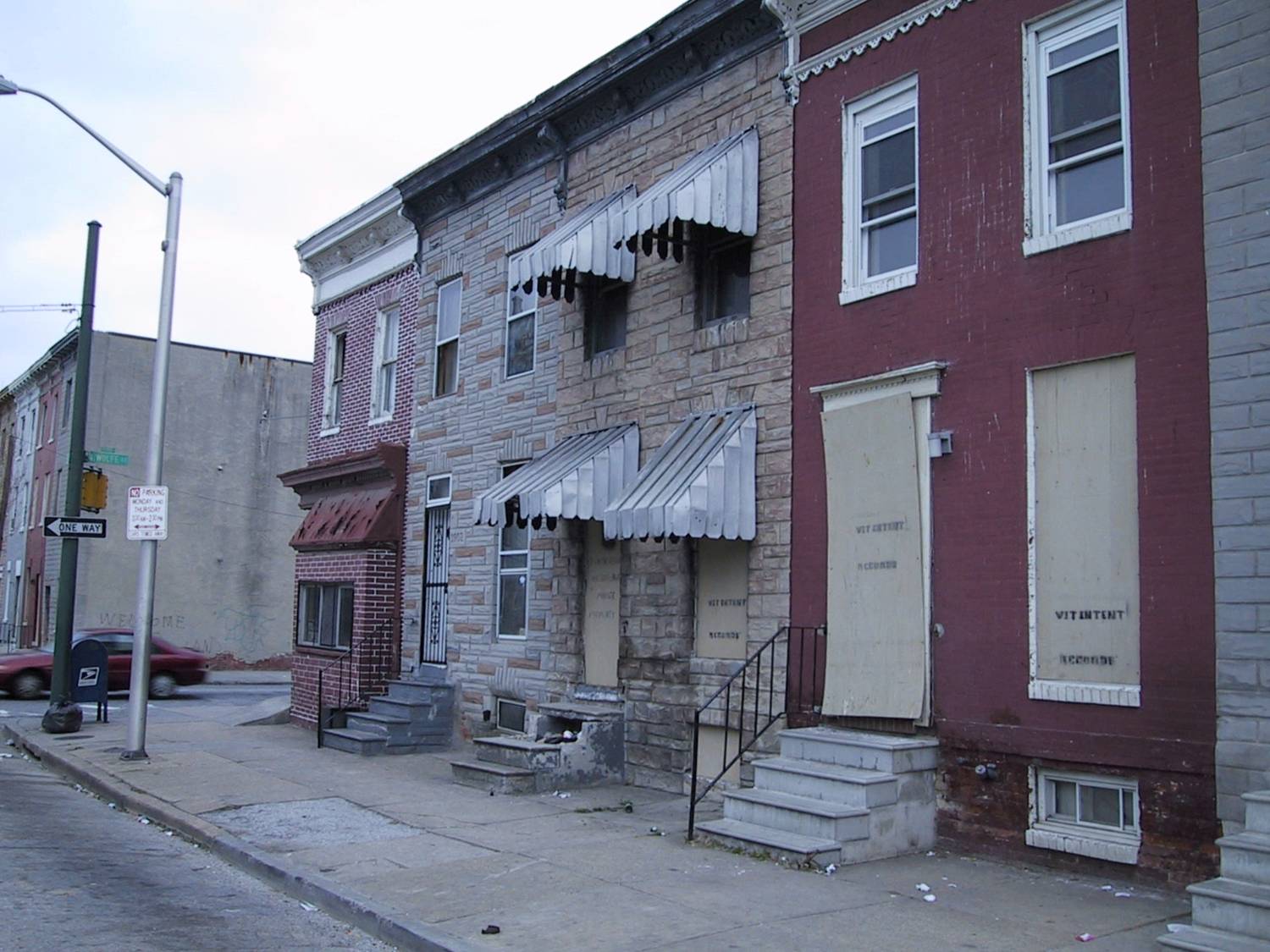 #2) The corner looks deserted. It is just 7 in the morning. But a few moments earlier, there were dozens of people roaming about. But a funny thing happens when you park a police car in the middle of the intersection, turn off the motor (otherwise the picture is blurry), and take a picture. People scatter. Note how everybody is walking away. I didn’t take in personally.
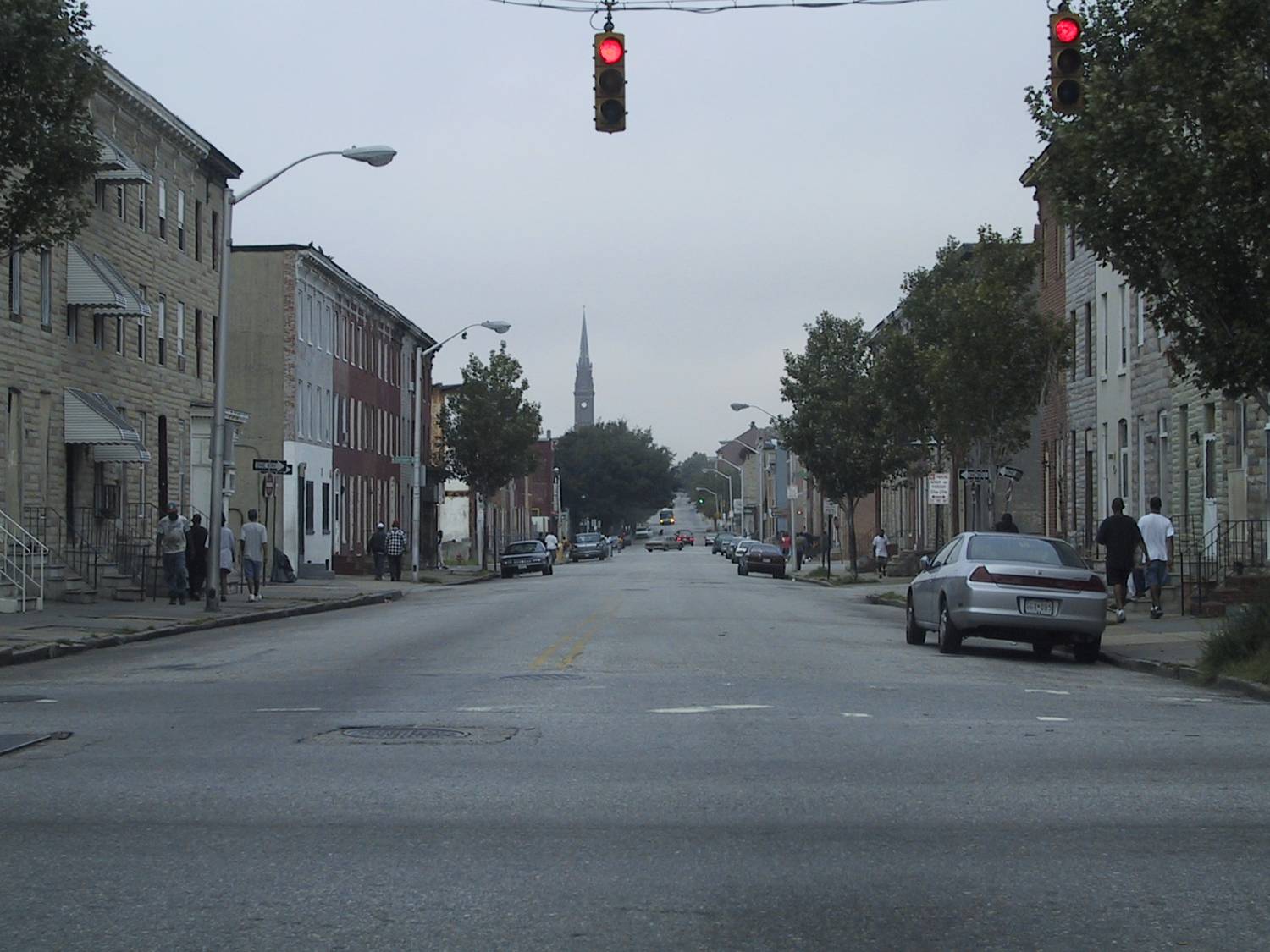 #3) Approaching the rear of 1906 E Eager from N Chapel St. I was looking for a location to observe drug sales on the corner and out of one house in particular.
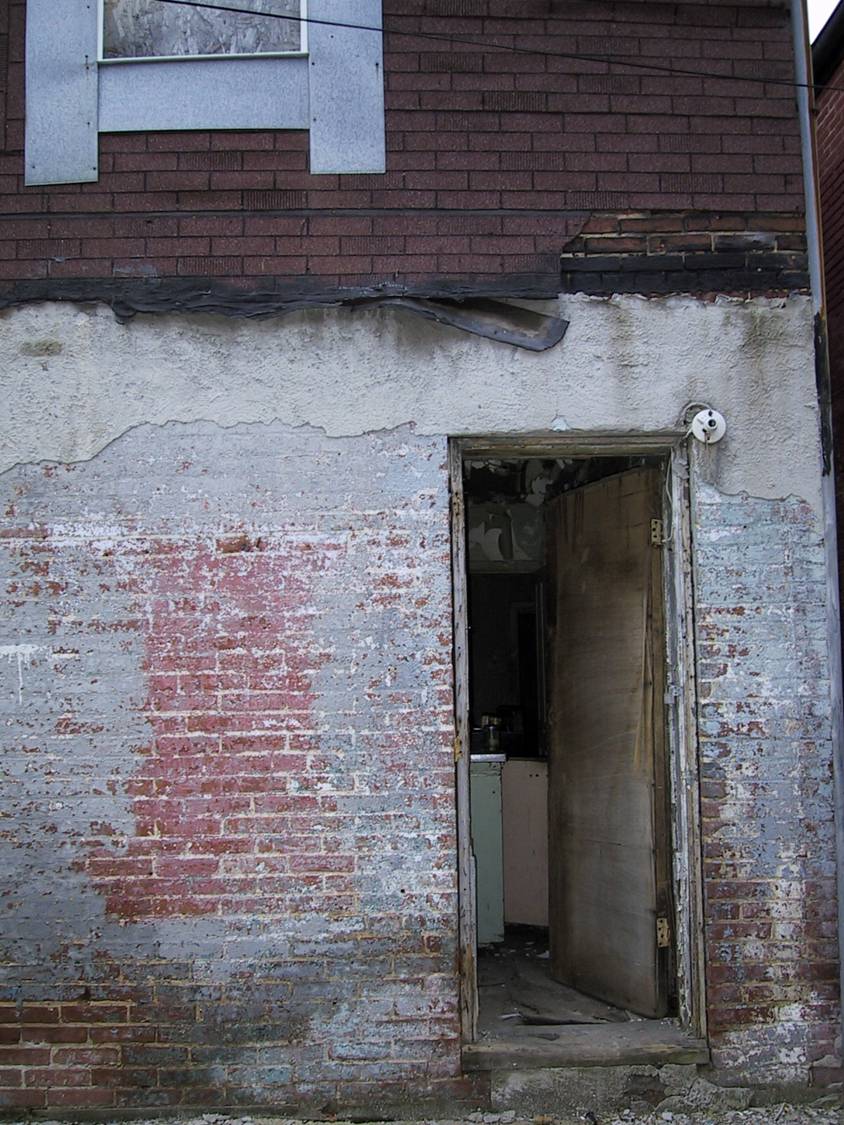
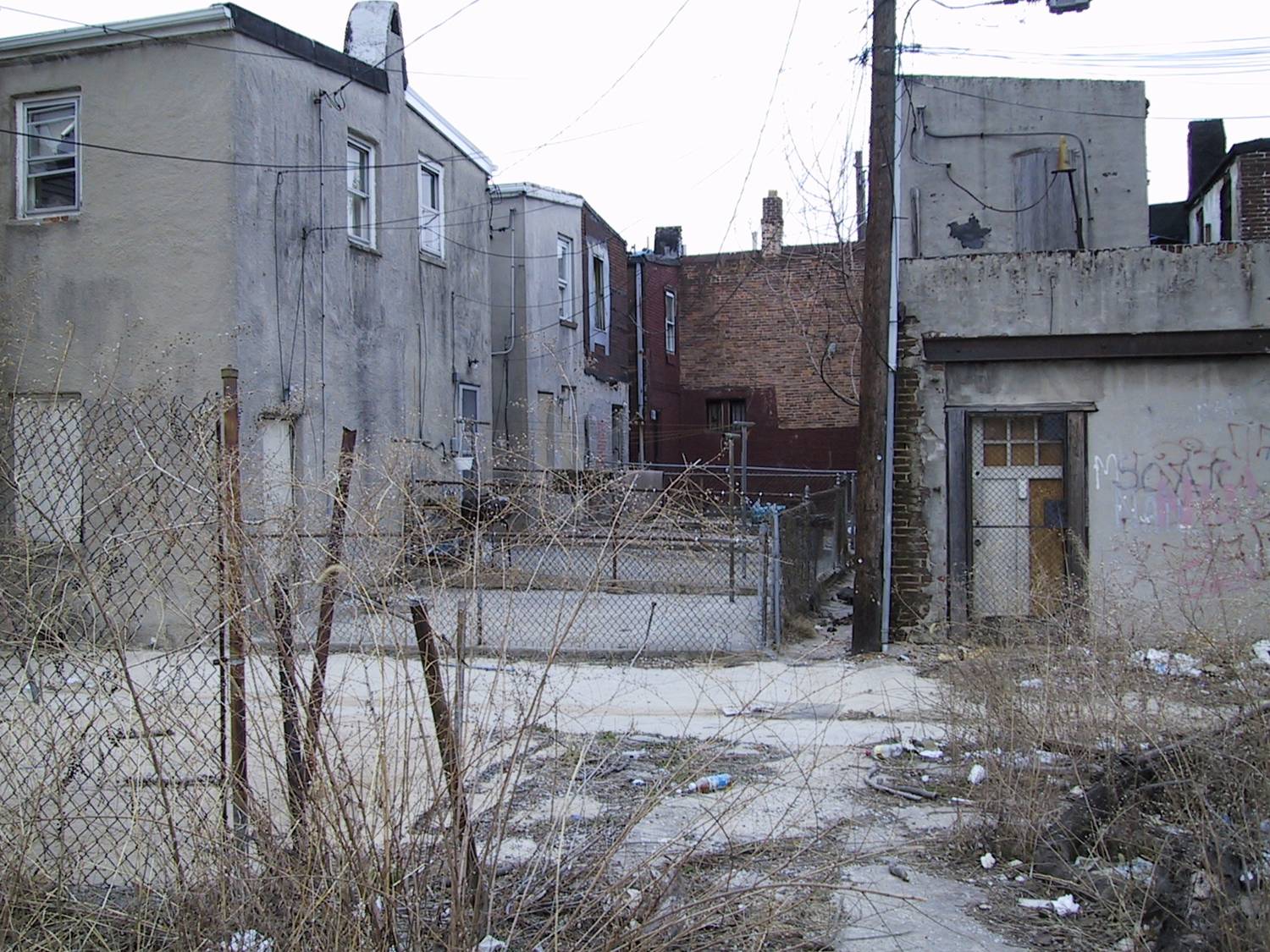 #4) Most vacants are boarded up to prevent junkies from entering, or filled with too much trash and damage to let one safely enter. The rear entrance of 1906 E Eager is wide open. The first time, on official police business, I went in alone. The second time, to take pictures, I brought along a partner, just to be safe.
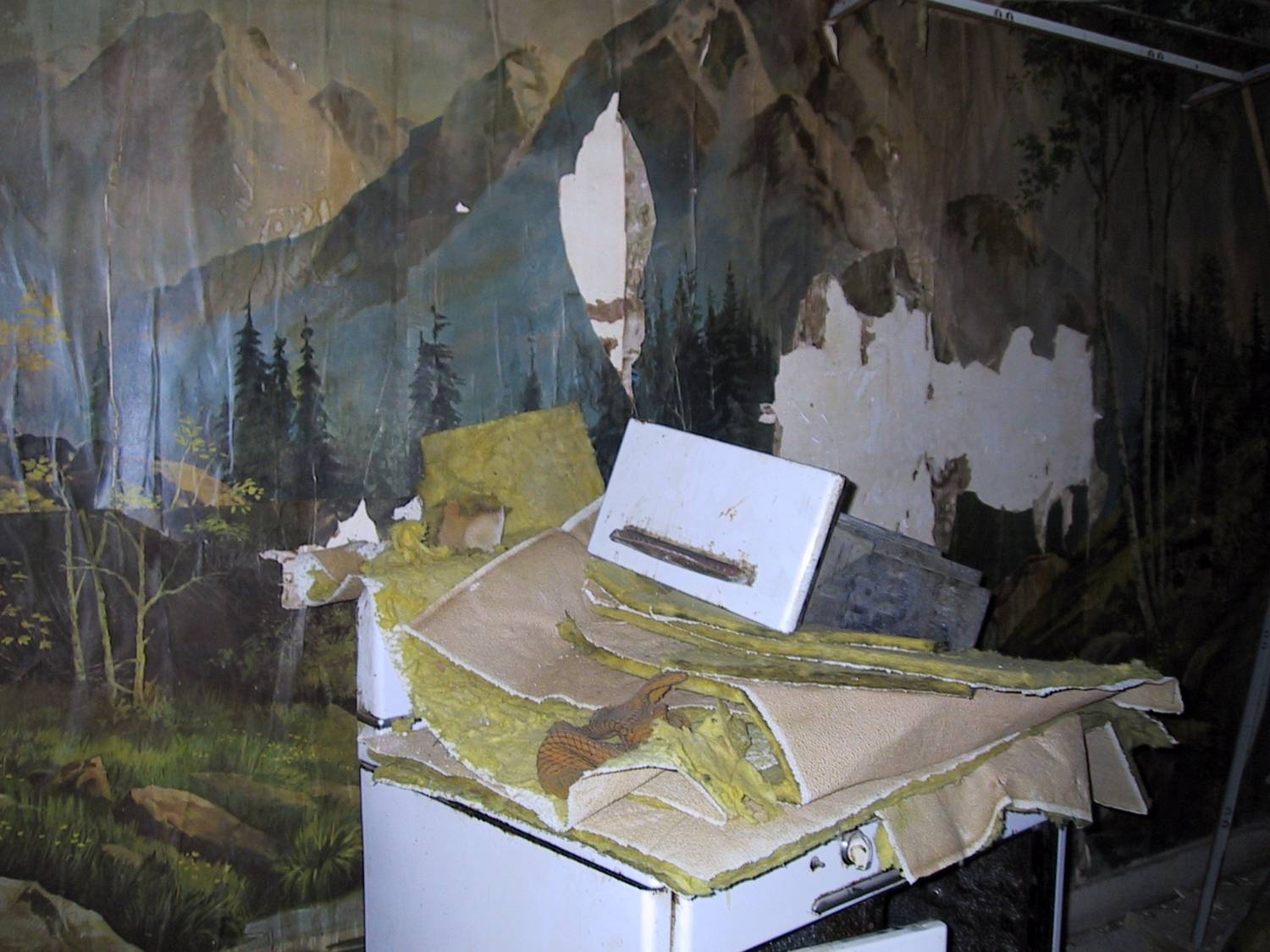
 #5) The rear room on the first floor is what used to be the kitchen. In the northeast corner are old appliances, partially stripped and peeling lead paint, and remnants of alpine wallpaper.
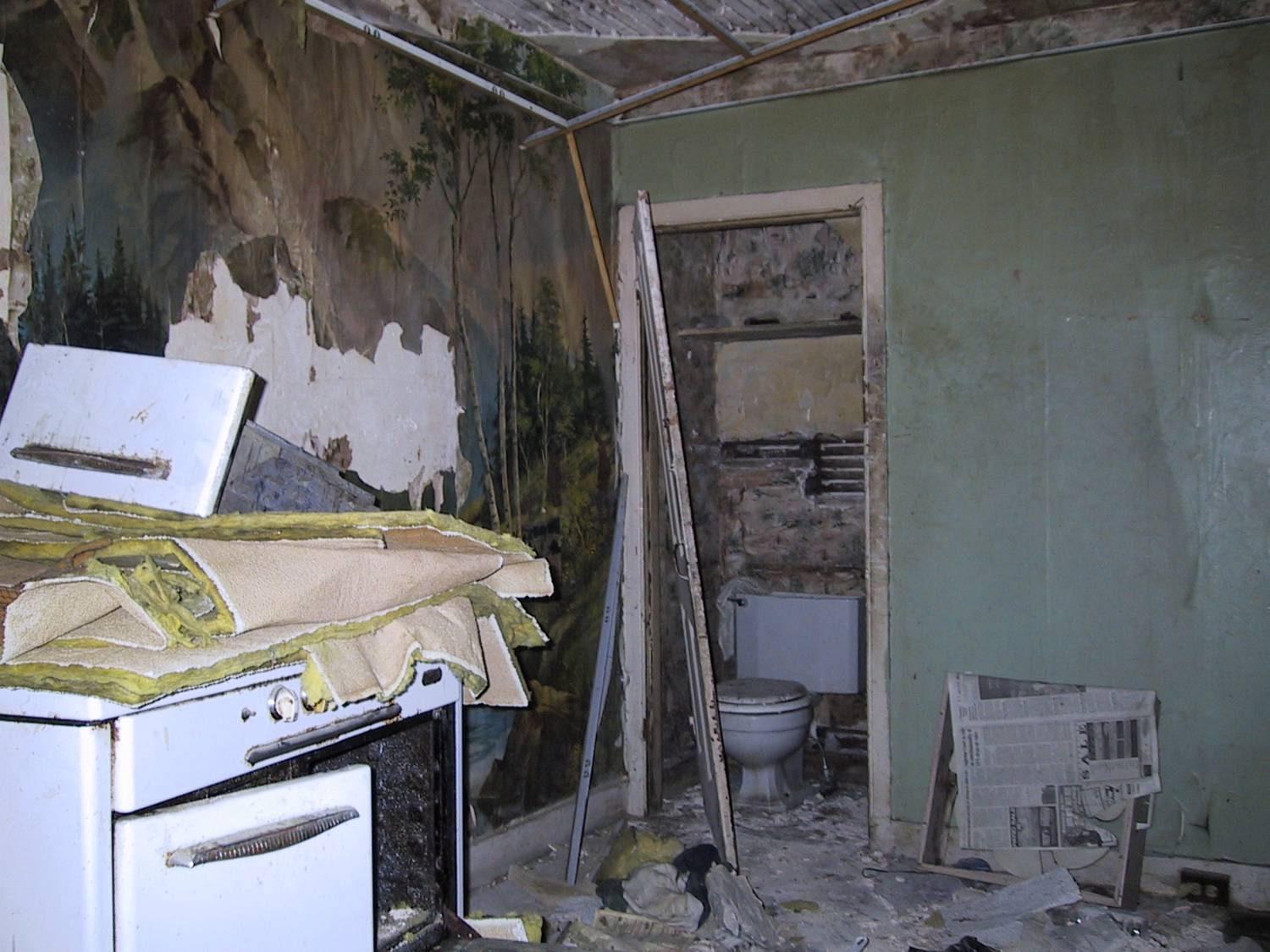 #6) Another view of the alpine wallpaper.
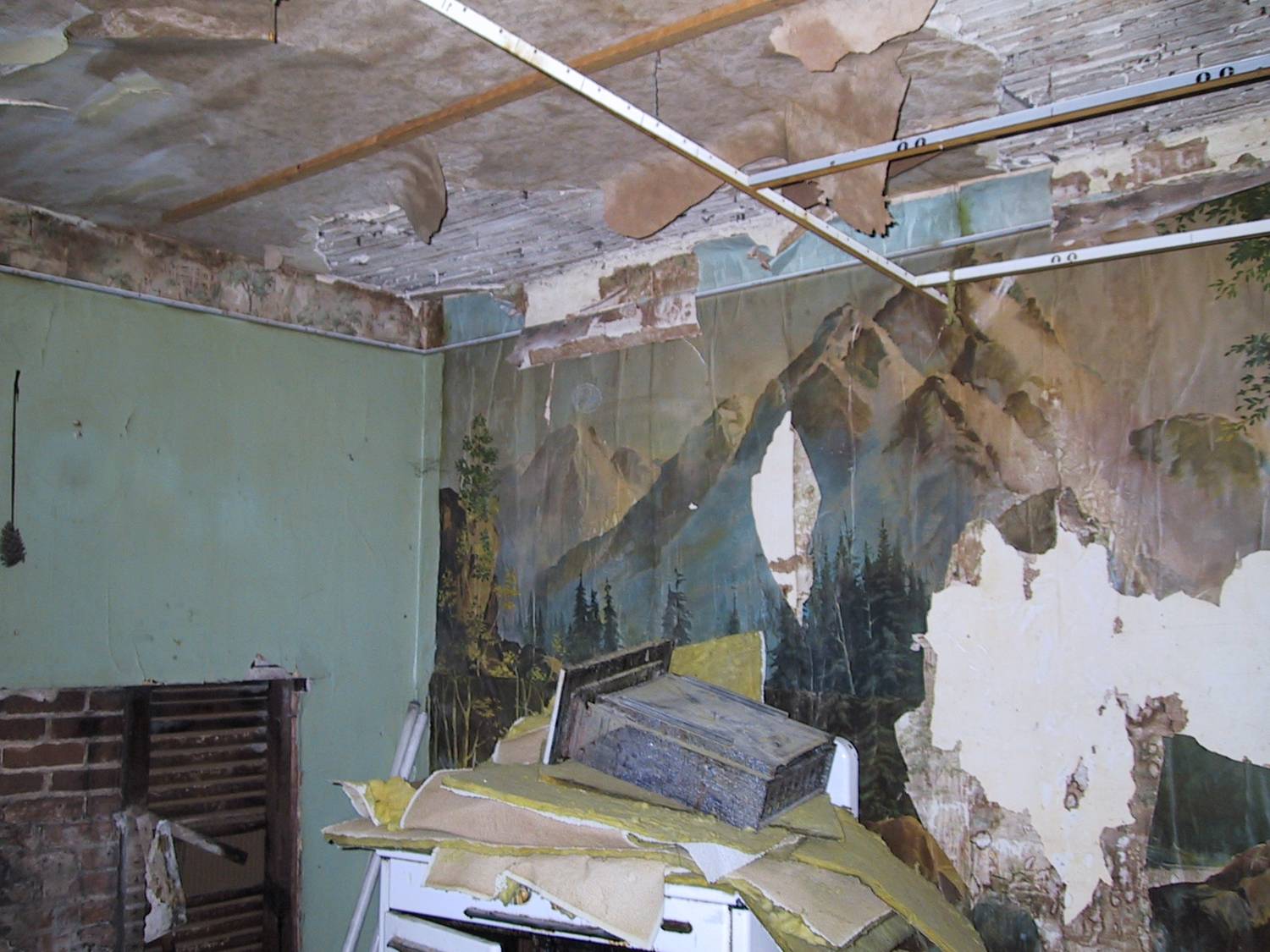 #7) Looking southwest in the kitchen, a few more appliances.
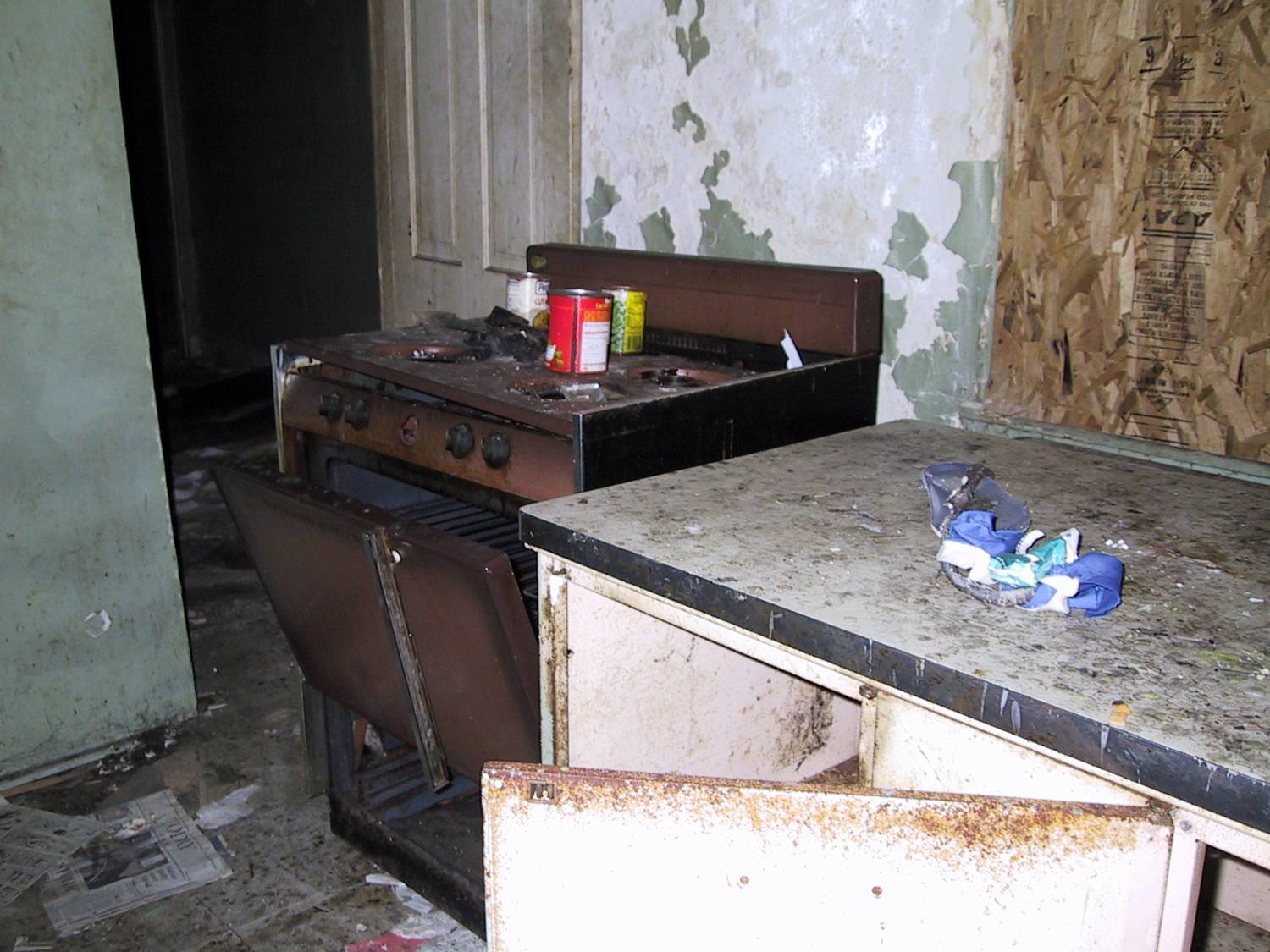
 #8) The southeast corner of the kitchen. Like almost all the metal, the iron stove top grates have long been sold for scrap.
 #9) The front room is the living room. A TV and couch remain. Makes me think the home was occupied into the 1990s. The front door is on the right. It’s interesting to me that a big color TV, once somebody’s prized possession, is no longer worth anything.
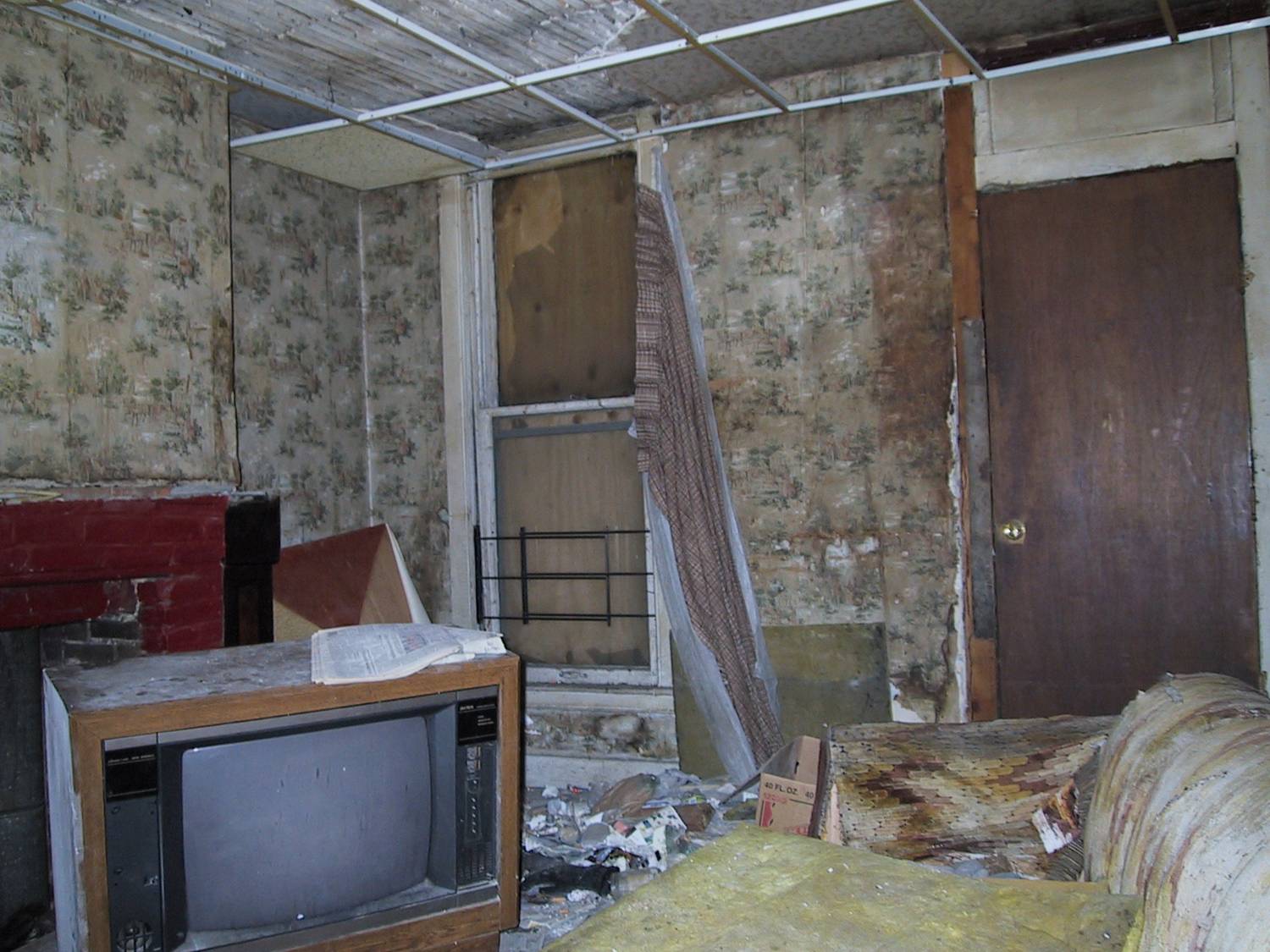 #10) The front door is on the left. Vivid woodland wallpaper remains.
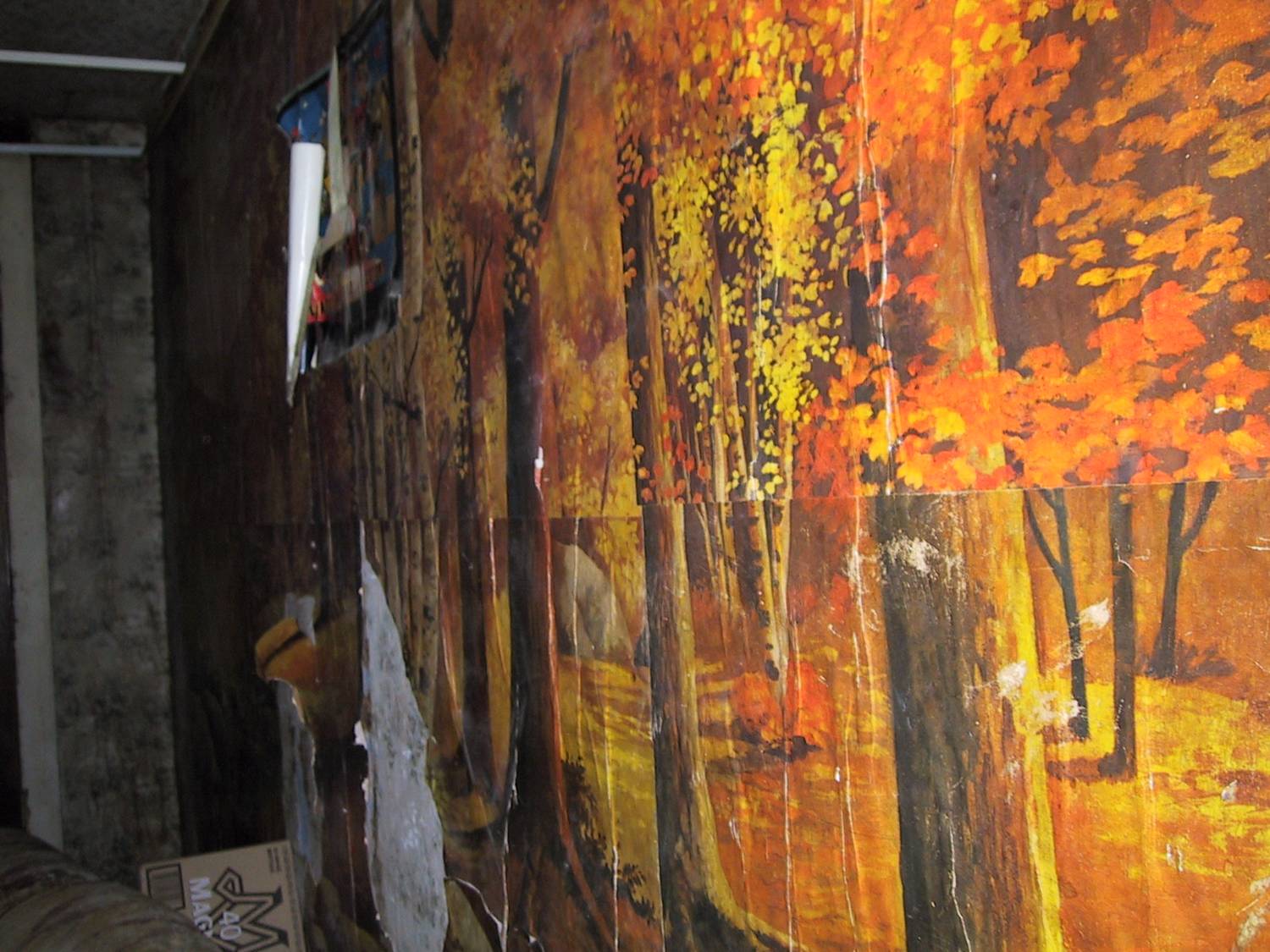 #11) Looking up the staircase between the rooms. One of the stairs is rotted through, but the rest are in pretty good shape. This is a typical staircase for a rowhome. It’s horrible for police. Often there’s no handrail, and you can easily be pushed down. At the top, suspects could be in either or both directions. They don’t teach you about this in the police academy.
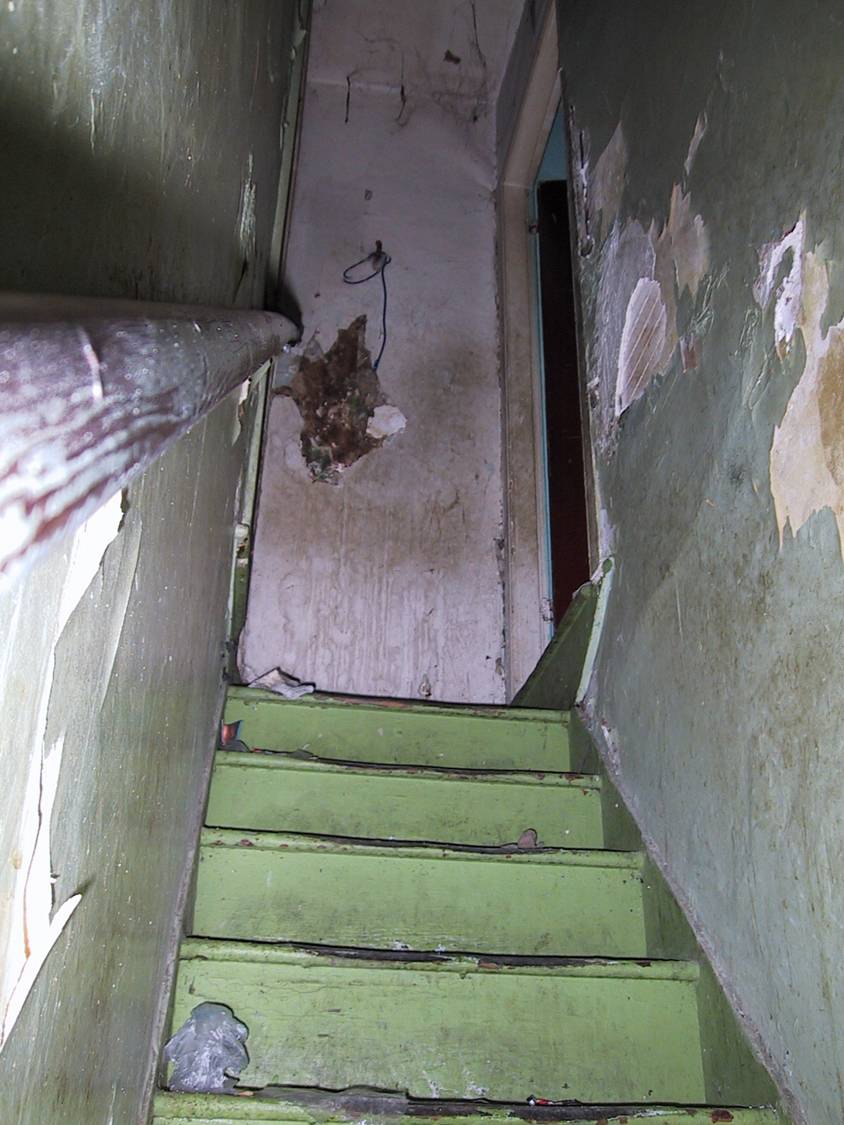 #12) 2nd floor front room. Nice windows for surveillance of the dealers katty-corner across Wolfe St. Otherwise trash, some drug paraphernalia, a mattress against the wall, two pairs of shoes, and a nicely patterned linoleum floor remain.
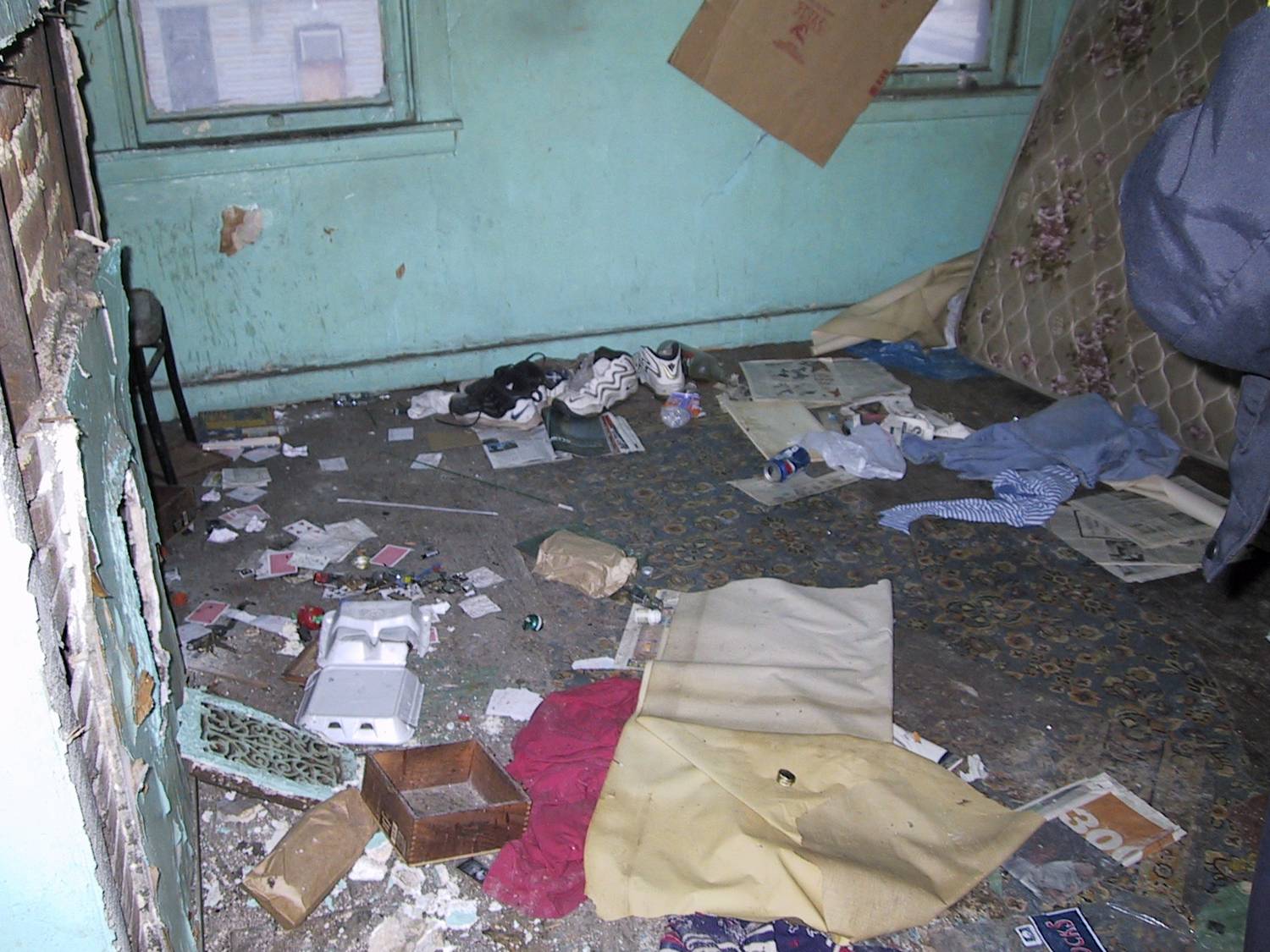 #13) Looking East in the upstairs front room. A nice old heating grate, removed from the wall, hasn’t been taken to sell for scrap (or to an antique store in Fells Point). A small water bottle (nicely labeled “water”) is on the floor. This water would be mixed with heroin and heated with lighter in a metal bottle cap from a 40oz bottle of malt liquor. The mixture is then injected. The only thing in these pictures I manipulated is the water bottle. I turned it so I could photograph the word, “water.” I love how it’s neatly labeled.
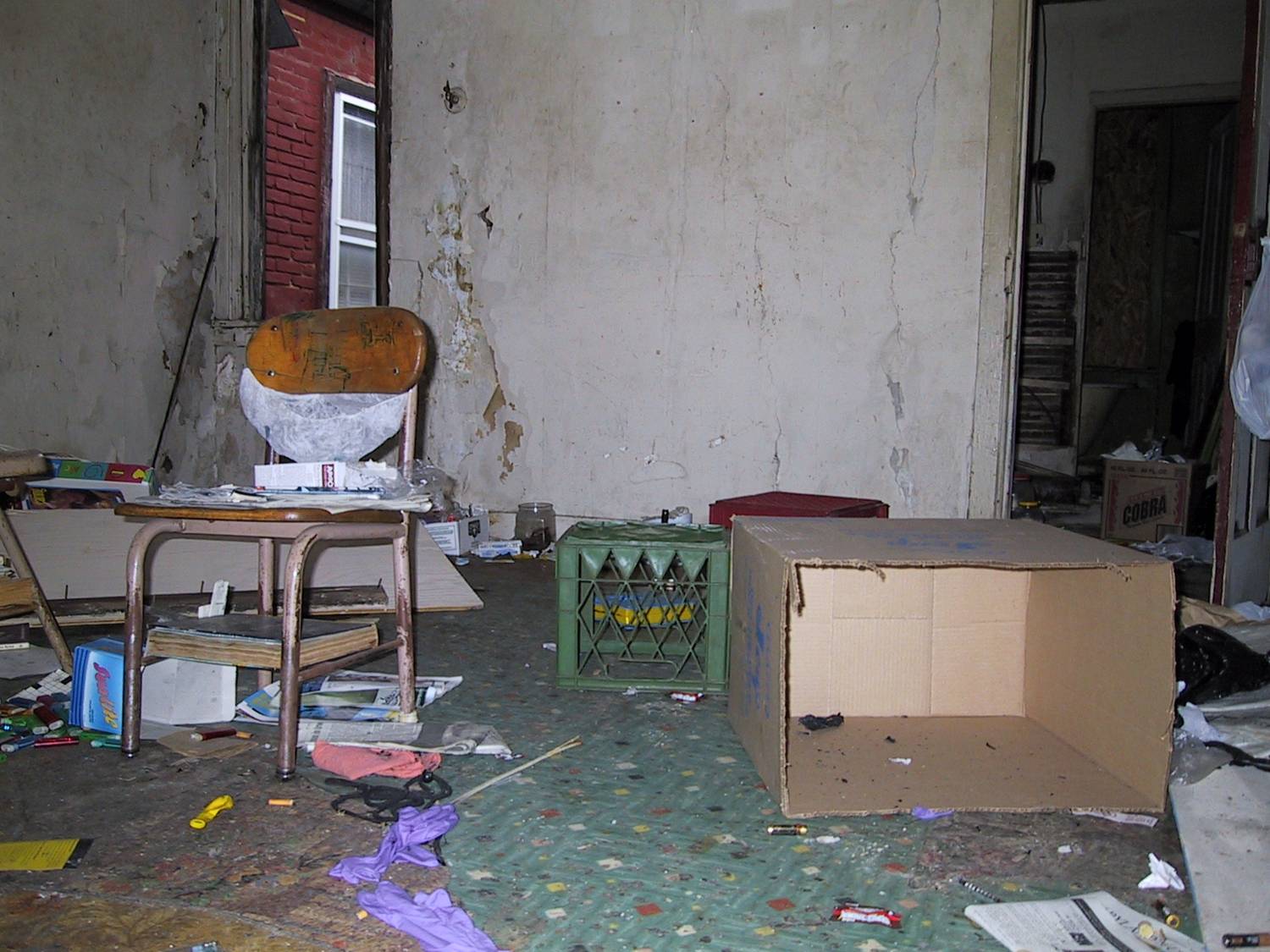
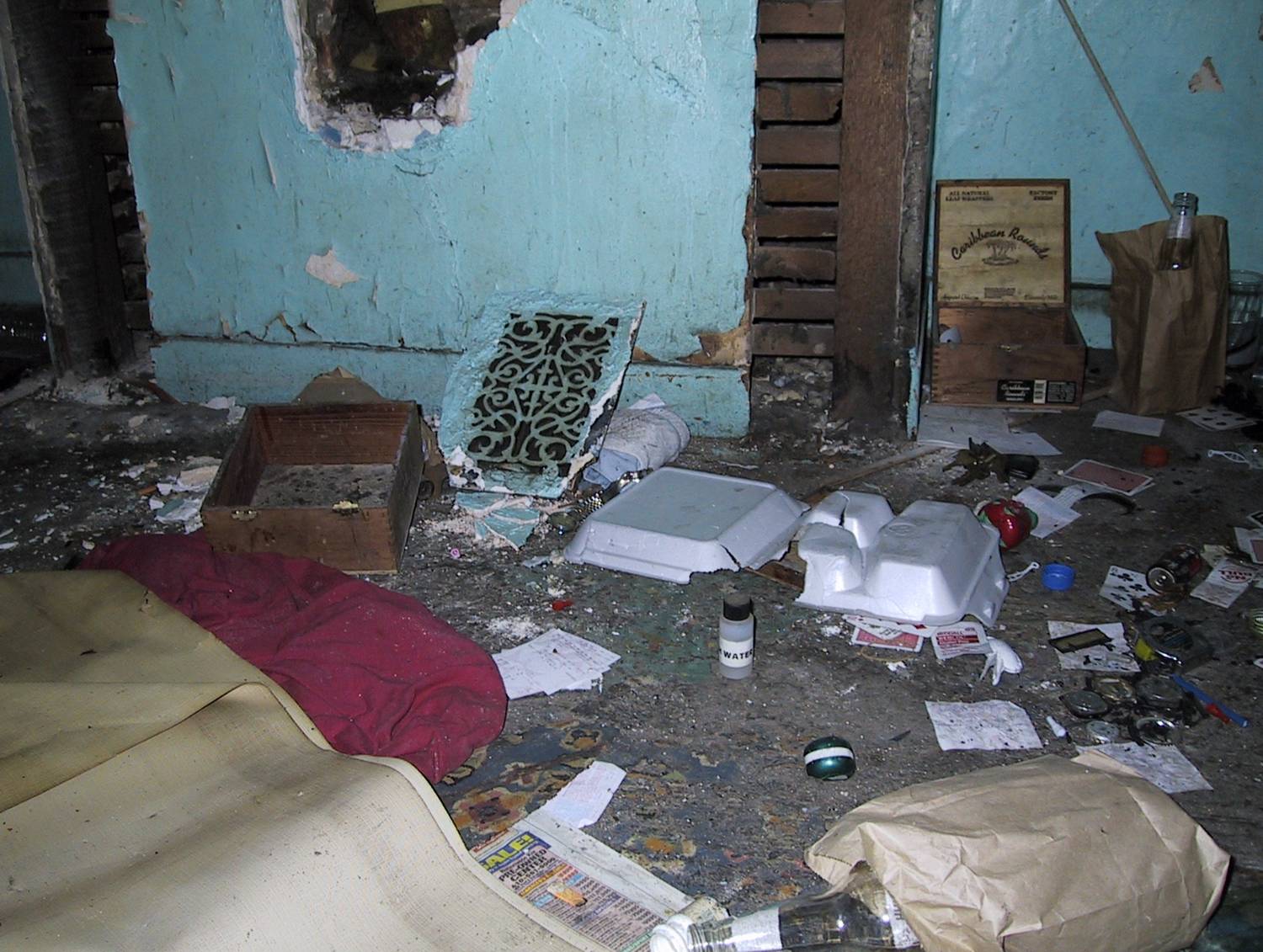 #14) Rear room second floor. View looking rear from the stairs. Two layers of floor cover are visible, along with purple latex gloves, and a black tourniquet to make veins bulge for easier injection. An empty container of cornstarch is on the chair. Cornstarch can be put into empty crack vials and repackaged as “burn,” or fake drugs to sell for a quick buck, mostly to whites coming into the neighborhood. Some of these whites then call the police and tell us they were robbed (always of $10 or $20). They don’t get much sympathy. Locals would know not to buy from local junkies. But selling burn is not without risk as selling burn to the wrong person can get you beat up or killed.
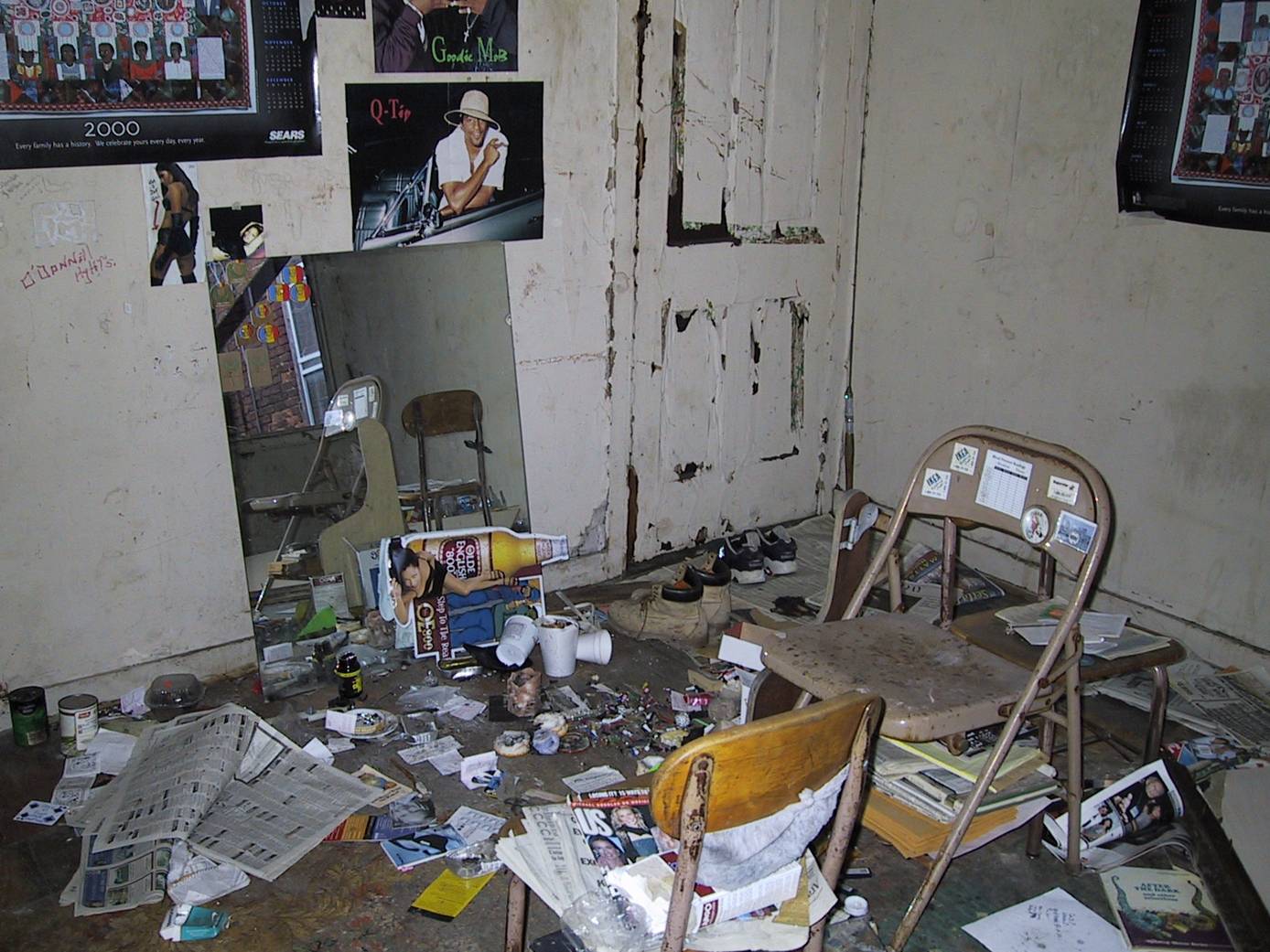
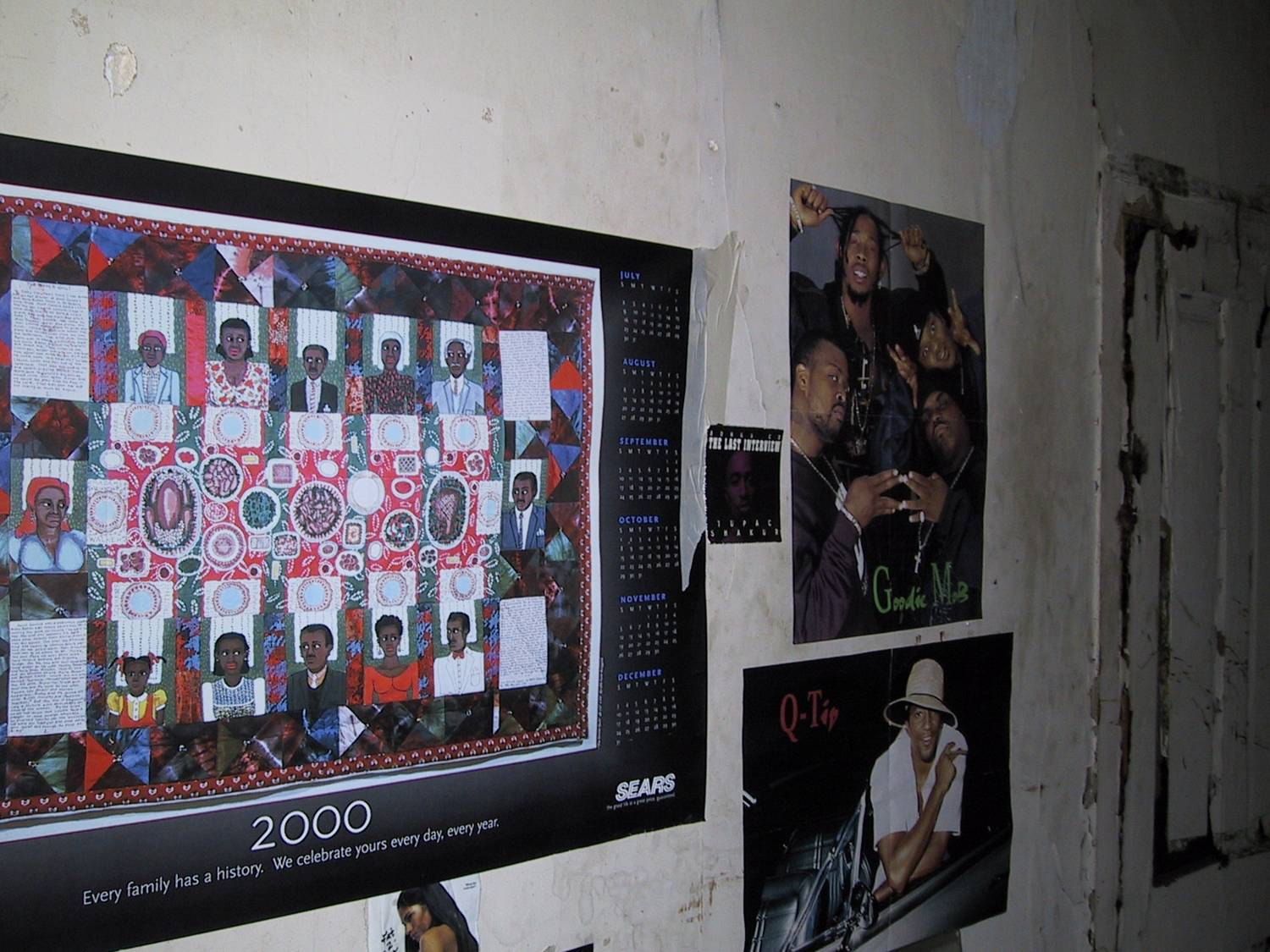
 #15) Looking towards the front in the rear room. Mirrors and black pride posters increase the positivity and create a much nicer overall environment. Tupac, Goodie Mob, and Q-Tip. An almost empty bottle of Pepto Bismal lies on the ground, showing that indigestion can strike anyone.
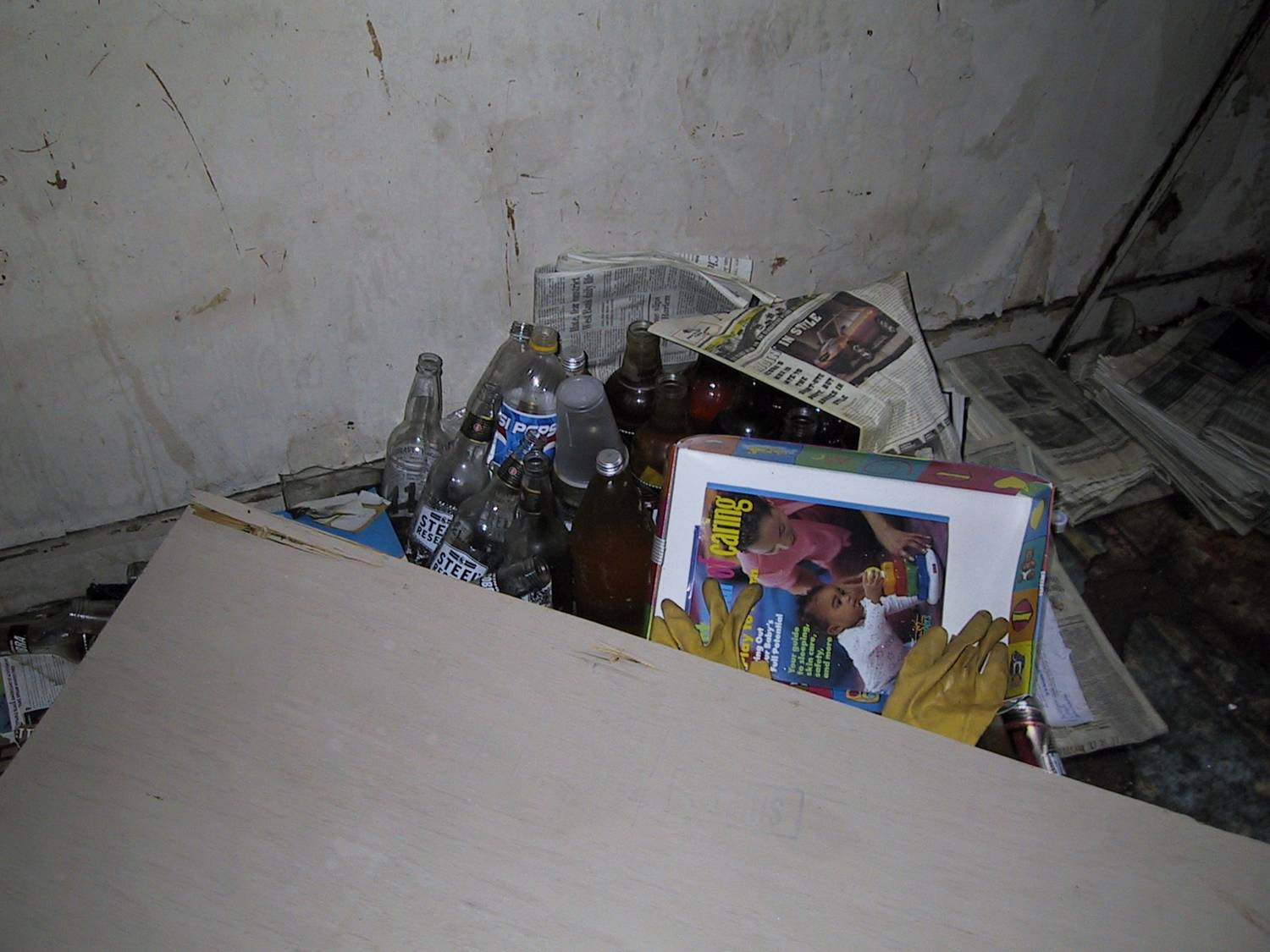
 #16) A poster and broken clock on one wall is just of above the bottles of piss and cans of shit neatly kept in the corner. (Unfortunately my partner knocked over that door you see on the lower right corner, tipping everything over. I’m guessing the loose door was positioned for privacy. It spilled a lot of piss and really smelled really rank after that. We left the place worse than we found it. This wasn’t low-impact policing. Sorry.)
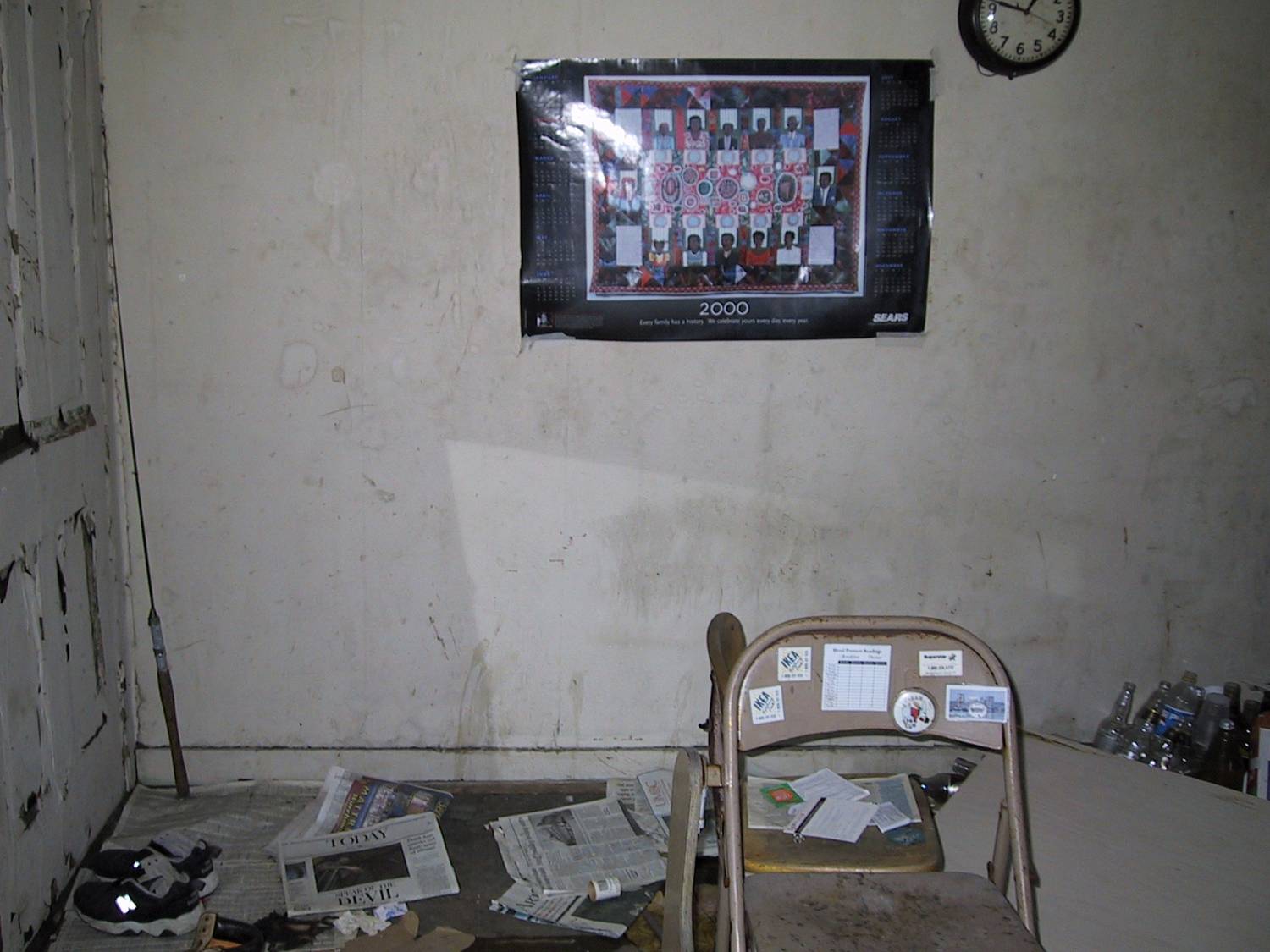 #17) A 2000 Sears poster celebrating Black History claiming it’s not just for February anymore: “Every family has a history. We celebrate yours every day, every year.” I don’t think this is what they had in mind.
 #18) Bottles of old malt liquor bottles are filled with piss. I have no idea if any of the plumbing worked. Probably not, but it wouldn’t have surprised me if it did. Finding bottles of piss in people’s home was not uncommon. Next to the bottles is a free parenting magazine and a toy box.
 #19) Another view of the main lounge and work area. Given the conditions, this is not where serious drug dealers do their work. This is a place for addicts to shoot up, relax, and scheme how to come up with their next $10 hit.
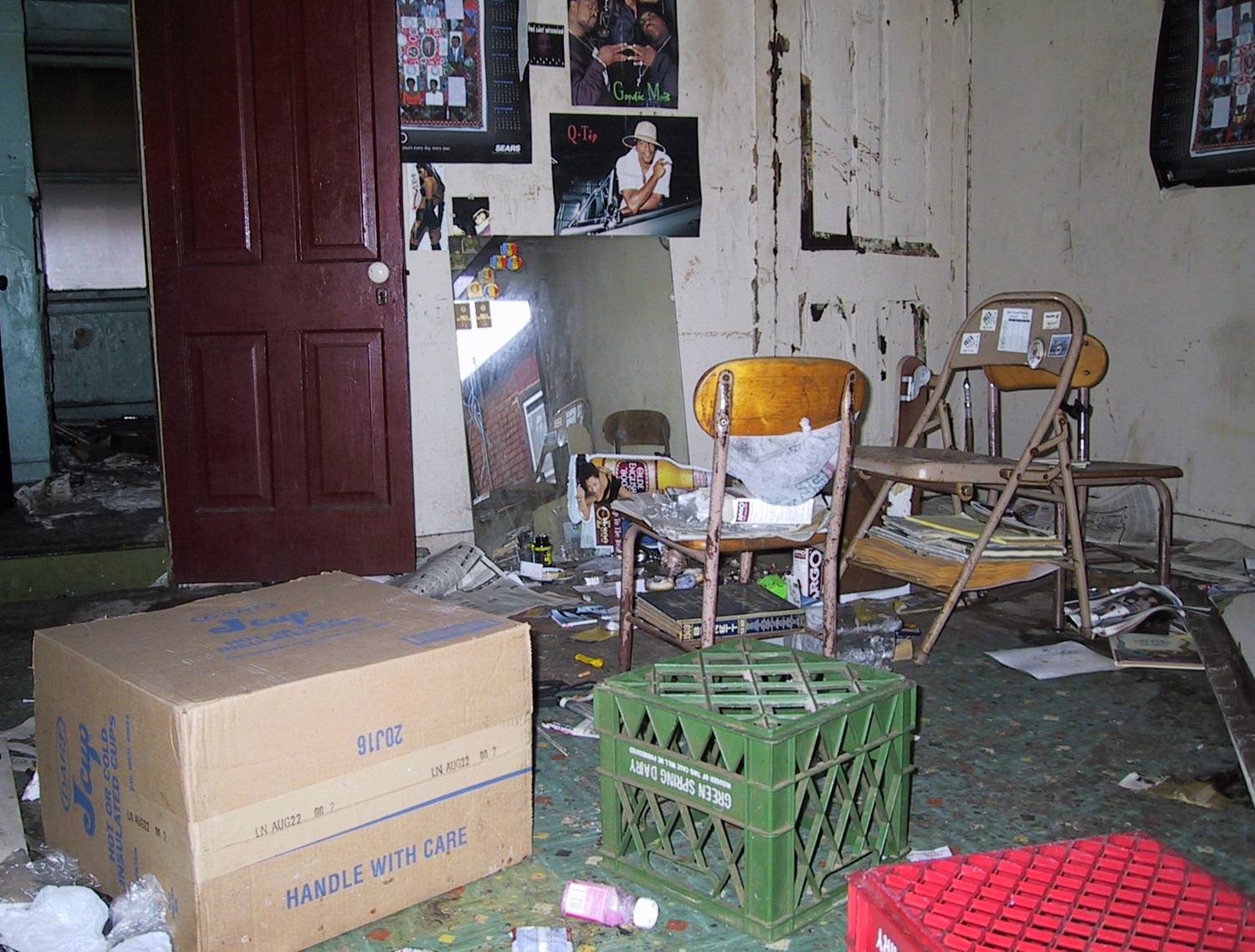 #20) A few chairs are set around a collection of empty crack vials. There are also more shoes. Why all the shoes?
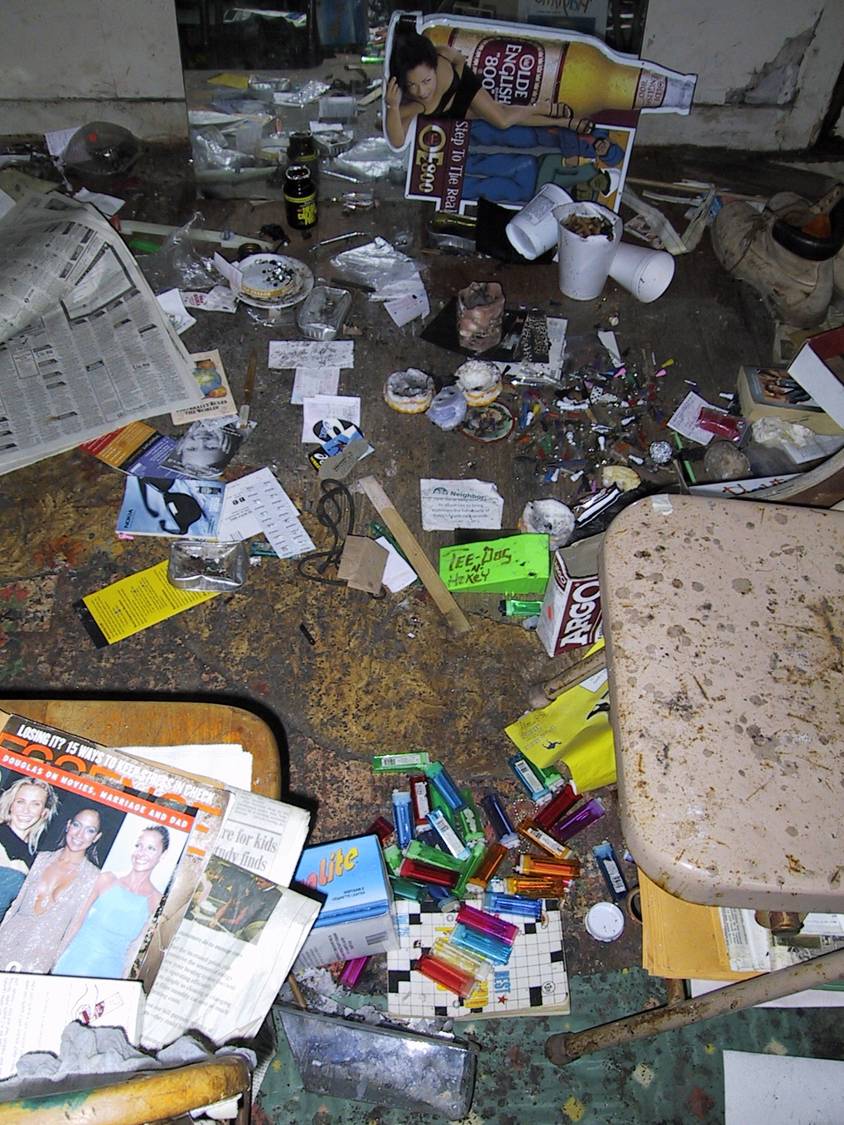 #21) Looking closer, there are dozens of empty crack vials. Every color of the rainbow. The legal use for these vials in for perfumes and oils. The color of the cap on the vial often becomes a sort of brand name: red tops, blacks tops, or orange tops. Other good brand names: Uptown, Bodybag, Capone, and the more generic Ready Rock. Also on the floor are candles, cigarette butts, lighters (lots of them), tin foil, and bottle caps. Heroin and coke is an ever popular mix. John Belushi overdosed on it. Sugar, in the form of candy bars and tasty cakes, can take some of the edge of the beginnings of heroin withdrawal. Or so they say.
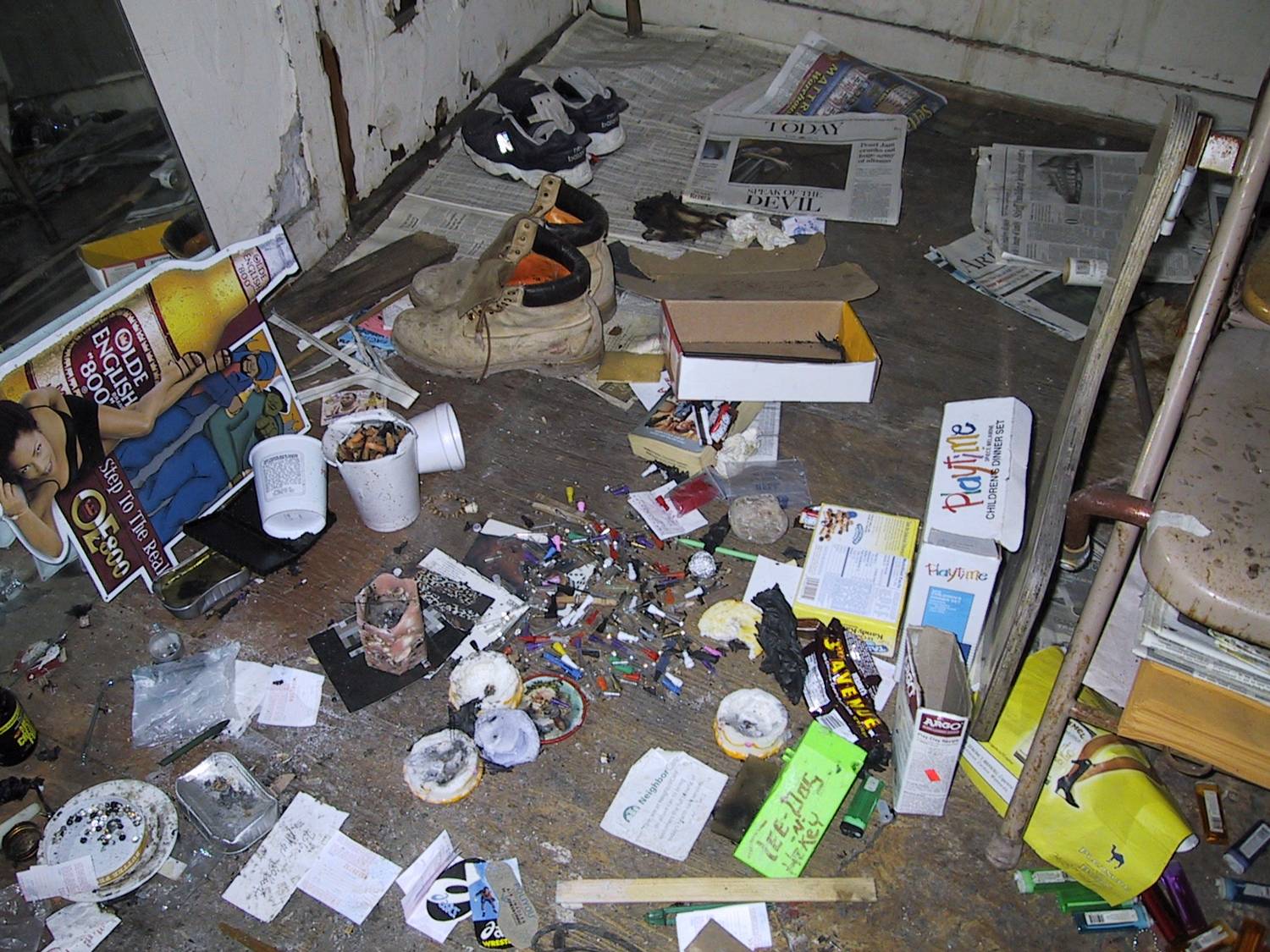
Notice that the cup being used as an ashtray is standing and in use. The shoes are lined up. Paper is on the floor. In this disorder, there is order. But it’s almost inevitable that at some point in time they’ll burn the place down. And when that happens, you don’t want to be the neighbor next door.
Update: Here’s what those first two pictures look like today (or the last time google drove through):
[If you just stumbled across this blog for the first time, consider buying one of my books: Cop in the Hood and In Defense of Flogging. Talk about great Father’s Day presents. Christmas, too!]