Category: Police

  • Seven Shots

    Seven Shots

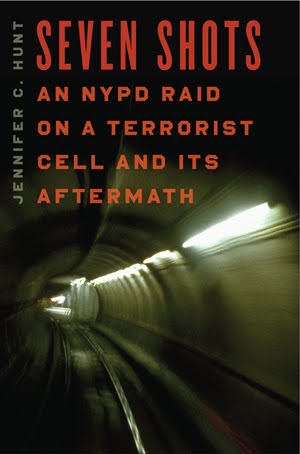
    I read this book by Jennifer Hunt. I loved this book. I’ll tell you more about this book… but only when I’m done writing mybook.

    On July 31, 1997, a six-man Emergency Service team from the NYPD raided a terrorist cell in Brooklyn and narrowly prevented a suicide bombing of the New York subway that would have cost hundreds, possibly thousands of lives.

    In the meantime I’ll leave you with my breathless blurb they put on the back of the book (I had an advance copy):

    Seven Shots uncovers the stories, rivalries, and human beings behind the New York City police officers who defused the subway bomb attack that foreshadowed September 11th. With unparalleled access, Hunt uncovers the never-before-told stories of heroism, September 11th, and petty rivalries that drive and destroy life in the NYPD. This is a true-life crime story that shows, warts and all, the unrequited love of good police officers toward an organization that doesn’t love them back. At times gripping, tragic, and theoretical, Seven Shots penetrates deep into the police world. Seven Shots vividly brings me back to my own policing days with laughs, tears, excitement, and adrenaline-filled moments of sheer terror. A groundbreaking, page-turning work.

    [I just wish they had edited the redundancy out of the “unrequited love… toward an organization that doesn’t love them back” part. There’s no other kind of unrequited love. Things like that bother me more than they probably should.]

    It’s a great book and a wonderful ethnography with amazing insight into the police culture. Plus it tells a story about a big bomb that almost wan.

    You can buy it here.

  • A well worn Maglite

    A well worn Maglite

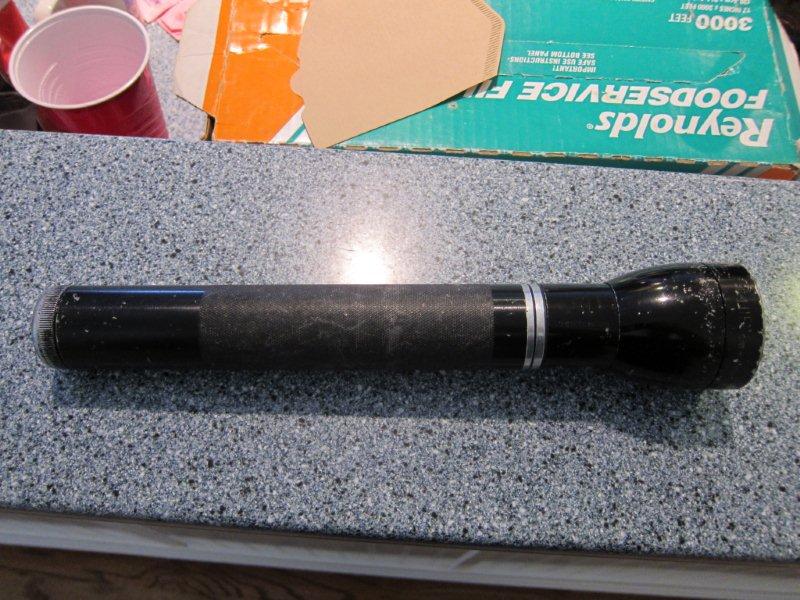
    “My God,” I said on seeing this over the weekend, “how many people you hit with that thing?”


    “A bunch!”

    He reckoned he picked up this baby in 1985. It got twenty years of service after that. When I was police, this gentle and soft-spoken man had been a cop longer than I’d been alive.

    And over it his home on the Eastern Shore this weekend, a few of us, including about half a dozen from my old squad got together and ate crabs, drank beer, and told stories. A good time was had by all.

    Before:

    After:

    And here’s a shot from the pier at night. The stars at night are big and bright, deep in the heart of Delmarva.

  • Where your tax money goes

    Where your tax money goes

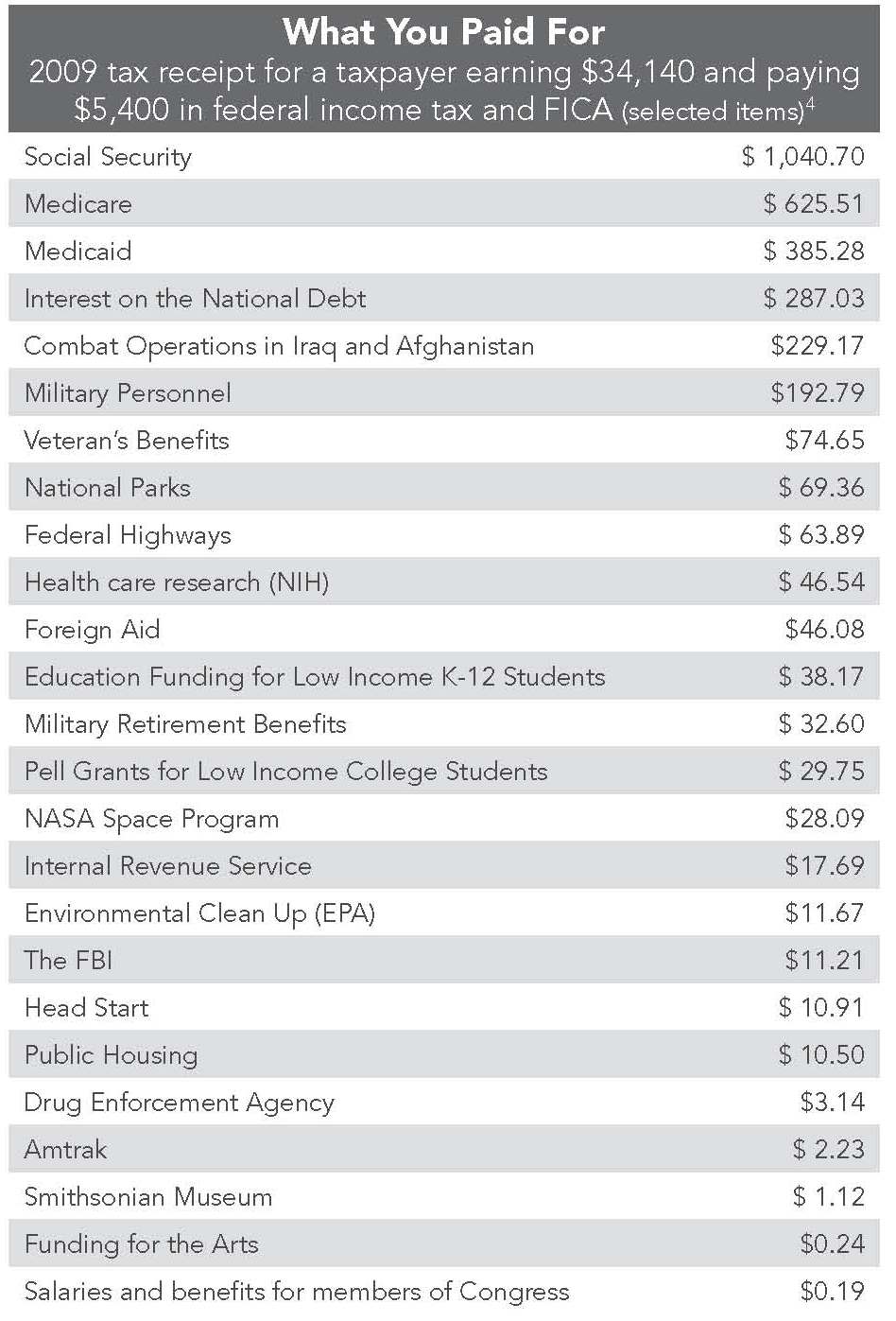
    This has been making its rounds on blog (I got it from Ta-Nehisi but the original source is The Third Way.)

    So if you want to balance the budget without raising taxes, where would you start? If wikipedia happens to be factually correct at this moment, we’re spending more on mandatory programs than we get it total revenue. In other words, it is legally impossible to balance the budget without raising taxes.

    A deficit of $1,500 billion is not going to be closed by cutting congressional pay and Amtrak, that’s for sure.

    And is case you’re wondering, if TANF (aka: welfare) were put on this chart, it would fall (if my math is correct) at around $25, just below NASA (the TANF budget is about $16.5 billion).

  • Tyranny?

    Any thoughts on Radley Balco’s post?:

    So yeah. Tyranny. If there’s more tyrannical power a president could possibly claim than the power to execute the citizens of his country at his sole discretion, with no oversight, no due process, and no ability for anyone to question the execution even after the fact . . . I can’t think of it.

  • Prop 19

    Here’s Neill Franklin, executive director of LEAP. He’s also my former commanding officer, friend (though not when he was my former commander), and co-author.

  • Gladwell on Strong and Weak Ties

    I’ve written:

    It’s to our shame as [academic] writers that the average Malcolm Gladwell New Yorker piece is more thought provoking than 95 percent of journal articles. If we can’t explain ourselves to others in a style both illuminating and interesting, we won’t and don’t deserve to be taken seriously.

    Here’s that kind of article. Gladwell talks about strong a weak ties. It’s straight of out a sociology textbook… but talks about Twitter, is interesting, doesn’t involve a single statistical regression, and has real world applications. What else could you ask for?

  • Looking back from the future

    “Whether a country that was truly free would criminalize recreational drug use is a related question worth pondering,” says Princeton professor Kwame Anthony Appiah in the Washington Post.

    Thinking of that, Pete Guitherobserves:

    I think it’s clear that the drug war is one of those travesties that will be reviled in some way by future generations. How is uncertain. Will it be like the horrible disgust we have hearing about the burning of witches? Or will it be like the Hayes code silliness, where we reminisce about how they used to have to show married couples in separate beds on TV?

    Appiah concludes:

    We will all have our own suspicions about which practices will someday prompt people to ask, in dismay: What were they thinking?

    Even when we don’t have a good answer, we’ll be better off for anticipating the question.

  • A fresh start with a new State’s Attorney?

    People normally don’t get very excited over the elections of a State’s Attorney. But the recent election lose of Patricia Jessamy (and victory for Gregg Bernstein) is the most exiting crime-fighting development in Baltimore in many years.

    Peter Hermann has a good story in the Sunabout the potential for corporation between police and prosecutors.

    In my last poston this, people asked for examples of why Jessamy was no good. I give some in my book, Cop in the Hood. And Hermann provides more examples of the typical B.S. that came from her office:

    Another minor and long-forgotten skirmish in what has been a years-long war between Jessamy and most if not all of the six police commissioners who ran the department during her 15-year tenure as Baltimore’s elected top prosecutor.

    She kept a list of officers she deemed untrustworthy and unable to take the witness stand, effectively ending their careers, even if nothing was ever proved.

    She once required a minimum 30 rocks of crack cocaine or vials of heroin to bring a felony drug charge.

    And she had a standing practice of not prosecuting homicides and some other crimes in which police had only one witness, even if there was other evidence.

    [In one case] Her staff agreed to a plea deal and a suspended sentence … even though the victim begged to testify at a trial…. The suspect got out of jail [and two-years later was] charged with robbing three women at gunpoint and abducting a college student.

    A few months ago, a prosecutor dropped a robbery charge against a man…. The suspect was later charged with fatally stabbing Johns Hopkins researcher Steven Pitcairn in Charles Village.

    Read the whole story here.

    Now Everything Jessamy said and did wasn’t crazy. Sometimes she was right. Sometimes police are deserving of criticism and need a little slap to keep them honest and grounded in reality. But it’s possible to criticize police and still be pro-police. Jessamy wasn’t. With her constant harassment, Baltimore cops didn’t work better. We get demoralized and wondered why we’re putting our life on the line. I worked hard and her office let people walk. Why bother?

    Think about this: Al Sharpton is at times a lying libelous self-aggrandizing anti-police buffoon. But the NYPD probably does a better job because of his existence. Still, I wouldn’t want Al Sharpton to be District Attorney (New York’s equivalent of the State’s Attorney). Baltimore doesn’t have an Al Sharpton. Maybe it needs one, but that anti-police attitude shouldn’t come from the Office of State’s Attorney.

    She’s the prosecutor. She’s supposed to partner with police and be anti-criminal.

  • DMV with barbed wire and guns

    There are really two philosophies in running prisons. Some wardens and officers feel that the sentence is the punishment, not the way they treat them, and that they should treat the inmates as human beings, and that they have a future, and that they need to be prepared to return to the community. These wardens take the word ‘correction’ seriously. [By contrast] there is a whole other group that are basically bureaucrats. … Take a DMV office, string barbed wire around it, and give the clerks guns.

    So says Pat Nolan of the Prison Fellowship Ministries, quoted in the Nieman Watchdog.