Category: Police

  • Legal summary of the Baltimore trials

    This isn’t new, it was just hard to figure out. And I wanted to add it to my Baltimore Primer.

    What exactly was argued in the acquittal of Officer Nero was hard to figure out. Mostly because the State’s Attorney, Mosby, has repeated changed her story. Initially she claimed the stop of Freddie Gray illegal and the arrest was illegal. But that wasn’t true. There was clear reasonable suspicion for the stop, and the knife is probably illegal — or at least a reasonable officer could believe so, as saidby a court commissioner — so the arrest was legal. (And no, despite what Mosby has argued, cops don’t have to ask about the legal justification for a foot pursuit to join in.)

    So what the prosecution tried to argue, which is really quite absurd, is that because of the length and style of the detention — the time when Gray was already in handcuffs (as is standard after catching a fleeing suspect), at some point during the period between the legal stop and the subsequent arrest — at some point the stop became an arrest before the knife was found. And at the point of arrest, the legal standard needed by police would rise from “reasonable suspicion” to “probably cause.” So if an arrest happened before the knife was found, police officers would not have had probable cause for an arrest. This is an amazing, novel, and almost incomprehensible legal argument. And it rightly failed in the trial of Officer Nero.

    The other issue that will come into play, especially in the Goodson trial, is denied medical care. It’s not clear that this happened at a criminally negligent level. But even if there was no crime, at least the basic legal argument here makes sense.

  • Is this what the Ferguson Effect looks like?

    Take this fightat North Avenue Beach in Chicago. Seems like mostly a bunch of stupid frat bro’s, one wearing an SAE tank top. (“These people” also have problems.)

    Why does does this have to do with the Ferguson (or “Viral Video”) Effect? Well, if you’re looking for an example of how fear or negative publicity can impact policing and create disorder and crime, this is a good example.

    I mean, unless you’re in Chicago, you probably haven’t seen this video because there are no police to be seen. I hate to think this is future of policing. But in terms of limited bad policing, lack of police really does completely solve the problem.

    But there should have been police here. I used to bike by here quite frequently as a kid. There was always a phalanx of cops hanging around the beach areas, flirting and keeping order. Had there been, maybe the fight never would have happened. Maybe it never would have gotten out of hand. Or maybe a half-dozen cops would have entered the fray and physically restored order — fists, pepper spray, maybe a billy club — and a few idiots would be led off in cuffs. But then we would have criticism of police excessive force — maybe a lawsuit by the ACLU, definite discourtesy, somebody would say police were the instigator, “stop” paperwork would not have been filled out — and the focus wouldn’t be on the idiots fighting but on the nature of the police response. But what if there is no police response and nobody calls 911? Problem solved, at least from a viral police video perspective. Like it never happened:

    CPD says they did have officers in the area, but did not get any reports of fights on the beach. No arrests were made.

    Crime even goes down (at least by the official stats). That’s what happens when you don’t have proactive policing. See, officially, this never happened. No arrests were made. (Though later reports do say a few arrests were made along with a few going to the hospital.) Luckily, nobody had a gun and started shooting.

    And, best of all, nobody can fault the police.

    If you want police, just call 911. An officer will be with you shortly. Crime is up. Boy, is it up in Chicago. But of course, say some, we really have no idea why. No clue. Meanwhile… Chicago police are understaffed. Recruitment is down. Chicago police fear lawsuits from the ACLU. Paperwork requirements tell cops never to “stop” people unless absolutely necessary. Chicago police officers don’t want to be in the next viral video. Police are not being proactive. Chaos ensues.

    But really, who can say for sure?

  • All in the Family

    Here’s another one for the record books.

    This isn’t the first time somebody has been shot at a funeral. Kevin Rector and Justin George of the Sun observe, “Gunfire has marred other services in recent years to mourn deceased victims of violence in Baltimore.”

    And this is probably not even the first time a father has been shot at his son’s funeral. Gosh, you might be thinking, what could possibly be worse?

    Well… how about being shot at your son’s funeral by your own son, the deceased brother.

    Antonio Addison was killed on May 25 in West Baltimore (less than a mile from where Freddie Gray was arrested). And today, at Antonio’s funeral, Antonio’s father was shot by his own son. Yes, Antonio’s brother done shot their pa.

    Police said the older Addison and his father got into an argument over an obituary written by a family member for the younger Addison brother. The older brother’s name was omitted, his grandfather, Charles Addison told The Baltimore Sun on Tuesday.

    Classy. (Update: Though I bet there’s more to the story, maybe this is what happens when everybody in the family has the same name.)

    Police spokesman T.J. Smith said called this, an “open and shut” case. He added:

    I can’t even begin to explain and categorize how ridiculous some of the stuff that we have to respond to is. And this certainly underscores that.

    Call me judgemental, but I’m going to go out on limb and say this behavior is wrong. I mention this no-brainer because I can hear cops — white and black alike — say, “something is fucked up with these people.” And then I can hear tender outsiders gasping in a politically correct way, saying, “I can’t believe they just said ‘these people’!” So people don’t say anything and violence continues.

    There are these people — not all of any group, race, or neighborhood — who choose to do dumb violent shit. And cops (and nurses and teachers and paramedics) have to deal with these people every day. Really, what else can you say about a family that shoots each other at a funeral? Go ahead: blame racism, poverty, unemployment, lead, under-education. Sure, those all matter. But no, none of those actually makes you bring a gun to your brother’s funeral and shoot your father.

    A lot of people somehow manage to grow up with less than nothing — on the short end of the stick, without a full deck of cards, holding an empty bucket that leaks, with nothing put a broken spork in their mouth — and still don’t shoot anybody, much less their father. See, this is the culture/pathology issue that is all but taboo to bring up in polite society. But if we don’t consider culture and the inter-generational transmission of violence as a negative force, we cede this discussion to right-wing kooks and racists. I don’t know what the answer is, but ignoring bad culture won’t make it go away.

    [This may be as good as killing your brother over a Turkey drumstick on Thanksgiving.]

    Update: Antonio Addison Sr, the shot father (DOB 2/1969), has 33 cases in his rap sheeting including: attempted murder, kidnapping, murder, drug dealing, armed robbery, handgun.

    Antonio Addison Jr (DOB 12/1990) presumably Antonio’s brother and the shooter (you read it here first) of Antonio Sr, 23 cases: Assault, carjacking, drug dealing, resisting arrest.

    Antonio Deandre Addison III (DOB 7/1993), presumably the deceased: 26(!) traffic violations in two years, domestic violence, child support, drug dealing, child support, drug dealing, drug dealing, and — this is my favorite — spitting in a public place. That’s the kind of ticket I might give to a drug dealer in order to legally arrest him for being an asshole. The case was dismissed.

    And collectively, with no listed date of birth, there are another 25 or so cases against one of these Antonio Addisons. This is a family of violent drug dealing criminals.

    So when the Addisons are out on the corner doing their thing, what exactly do you want police to do? And when somebody runs from their drug corner, should police just let them be? And when the press interviews one of these guys (because when the press goes slumming and looks for people to say something about Freddie Grayand police, these are the people you’ll find hanging out) why in the world would you believe what they have to say?

    Maybe it’s more productive to ask how we can possibly help the next generation. But if you were a teacher, would you want 6-year-old Antonio Addison IV in your class?

    [Update: my next “all in the family” installment.]

  • Good News From NYC, Not-Bad News From Baltimore, Horrible News from Chicago

    In New York City, year to date, murders continue to be lower than last year (124 vs 140) and higher than record-low 2014 (112). Given the rise of homicide in so many other cities, this is great news.

    In Baltimore there were 26 murders in May. It’s hard to call this exactly “good news.” But last year, post riot, there were 42 murders in May. In previous years, May typically saw about 21 murders. Year to date (though May) 110 murders is not particularly good news. But it could be worse.

    In 2014 Chicago saw about 155 murders through May, last year there 173, and this year about 265 (just through May). Coinciding with this huge increase in murder is the fact that Chicago police are shooting far fewer people than ever! In 2014 CPD shot 45 people. This year they’re on pace for 15. The obvious conclusion is that police are less likely to proactively engage with violent criminals. This is great news for the police-are-racist-harassers-of-innocent-black-men camp. But not great news if you happen to be a young black man in Chicago getting shot.

    Yes, there might be a real trade-off between 30 people not shot by police and 1,400 more people shot by criminals. I’m not saying it’s direct cause-and-effect (it’s not like police were shooting all the bad guys) as much as mutual causation (police are interacting less with potential criminals).

    This certainly doesn’t fit the narrative from the left that police use-of-force is the paramount criminal justice issue of the day. But while the streets run red some people’s faces will go blue saying, “we don’t know why crime is up in Chicago!” What we do know is that no other standard factor has changed so much in Chicago in the past two years.

    If one happens to think, as I do, that most police-involved shootings are justified, this isn’t good news. Seems to me that police are not proactively engaging with potential murderers, and this matters. (And it matter more than, say, reducing the racial disparity in juvenile arrests based on population demographics.)

    I bet arrest numbers are down, too. [Well, I know they are, but why is it so hard to get Chicago arrest numbers?] Best I can find is this from 538.com.

  • The New York Times goes to the Hood

    I applaud any effort to focus on the victims of violence in America. Too often nobody knows or cares about this real carnage in this country.

    So over Memorial Day weekend the New York Times went to the bad parts of Chicago to sightsee:

    [We] dispatched a team of reporters, photographers and videographers to virtually all of the shooting scenes across the city. Working around the clock through the three-day weekend, The Times interviewed relatives, witnesses, police officers and others, and captured how much violence has become a part of the city’s fabric.

    After that self-congratulatory moment (wow, did they really work “around the clock” on a “three-day weekend”?!) I really did have high hopes for this 5,000-plus word article. But I was left feeling empty. Though I can’t quite put my finger on the problem, let me try.

    Murder victims should be humanized. You’re not just a homicide victim. You’re a real living human being with lives and stories and loves and problems. (And also, as cops know all too well, with soft flesh and blood and sometimes spattered brain matter.)

    This weekend, among the six killed are a father, Garvin Whitmore, who loved to travel but was scared of riding on roller coasters; and Mark Lindsey, whose outsize personality brought him his nickname, Lavish. The oldest person struck by a bullet is 57. The youngest person to die is Ms. Lopez, a high school student and former cheerleader.

    And so the logic of one Chicago mother, who watches another mother weep over her dead son in their South Side neighborhood, is this: She is glad her own son is in jail, because the alternative is unbearable.

    “He was bound to be shot this summer,” she says.

    That last part is powerful. Let’s be clear: a mother says she’s happy because her son is in jail, because otherwise he would probably be killed. As Yakov Smirnoff says, “what a country“!

    The Times reports that one victim was just watching the Newlywed Game on TV. Another has an “outsize personality.” (Though I’m not certain what that means, his nickname of “Lavish” raises my eyebrow. And how can you a “former cheerleader” at age 15? But maybe I protest too much….) I’m torn between my usual line, “damnit, these victims are Americans we should care about!” and “damnit, this is tear-jerking PC bullshit!”

    I quibble with this Times’ portrayal because most murder victims in Chicago (and other cities) are not just normal hard-working people with normal jobs who happen to be in the wrong place at the wrong time. Sure, sometimes the street draws in kids despite loving moms. Maybe mom is too busy working poorly paid jobs to keep an eye out on her child. But too many never had a loving parent when they needed to be brought up right.

    Cops see this all the time: living situations where little kids are growing up without any structure, much less electricity or a functional loving parent. Dad might be dead or in prison; mom might be turning tricks to support her addiction. Then what? What happens to the kids sleeping around mice and roaches, three to a bare mattress? Nobody talks to the kids, much less reads to them. Kids are simply ignored or neglected, ineffectively raised by siblings and cousins. What if you parents try to sell you for drug money? [Update: What if your dad shoots your grandfather at your uncle’s funeral?] How do you think you’re going to turn out?

    These things need be discussed, but the Times doesn’t want to go there. You might say I’m blaming the victim (because I am), but my point is not that “these people” deserve to get shot and killed (call me a pinko-lefty, but I’m firmly in the camp of those who believe that nobody deserves to be shot and killed). The problem is that if we don’t accurately address the real problem and characters involved — if we only romanticize victims and blame bad luck — we’re never going to get at effective solutions.

    This gets more at the truth:

    Sometimes only minutes after the gunshots end, a computer system takes a victim’s name and displays any arrests and gang ties — as well as whether the victim has a rating on the department’s list of people most likely to shoot someone or be shot.

    Police officials say most shootings involve a relatively small group of people with the worst ratings on the list. The police and social service workers have been going to some of their homes to warn that the authorities are watching them and offer job training and educational assistance as a way out of gangs.

    Of the 64 people shot over the weekend, 50 of them, or 78 percent, are included on the department’s list. At least seven of the people shot over the weekend have been shot before.

    For one man, only 23 years old, it is his third time being shot.

    As a cop, this makes me question the operational effectiveness of the “strategic subject list.” But as an editor, I would say this point needs to be more developed.

    You can’t say with certainty that an individual who is shot is also a shooter, but you can hazard a bet that a 23-year-old who has been shot on three separate occasions has also pulled the trigger a few times. On the front end of every murder is a murderer. Collectively the pool of murder victims is the pool of murderers. An exclusive focus on victims as victims glosses over the fact that many of the victims are the problem. They are murderers. (And, as the article points out, these murderers are not being arrested.)

    The Times quotes a Mr. Hallman:

    “Why did I gang bang?” asks Johnathan Hallman, 28, who lives on the South Side. “Just to be around something, like just to be a part of something, man. Because when you growing up, man, you see all these other people, older people that’s in the gang life or whatever. They making they little money and they doing they thing. You see the little ice, the car they driving. It’s just an inspiration, man.”

    Mr. Hallman says he joined a gang at a young age, but eventually decided it was not all he thought it would be. He got out, he says.

    Is he a good guy because he got out of the game? Hell if I know. But what about all the people who never got involved in the first place? Even in bad neighborhoods, it’s not normal to gang bang, shoot people, or be shot.

    Or take Mr. Roper, 24:

    who grew up in the Englewood neighborhood, says he had occasionally carried a gun to protect himself from being robbed, but never used it. “I have to have a gun to scare them off,” he says.

    Poor Mr. Roper. Personally I’m thinking that Mr. Roper is part of the problem. Does the Times really think Chicagoans should carry illegal guns for protection? Their editorial board has certainly preached to the contrary. Are young men who don’t carry guns irrational or somehow wrong? So what is the Times position on people’s needs to carry guns in Englewood?

    And then there’s Ashley Harrison, 26. She and her fiancée, Mr. Whitmore

    had been sitting in the car outside a liquor store, in a South Side neighborhood accustomed to gunfire, when, in broad daylight, shooting started. Mr. Whitmore was fatally shot in the head.

    “Broad daylight!” Like shooters don’t even have the common courtesy to kill at night. But it’s the intransitive almost-passive voice that kills me: “shooting started.” Like nobody actually shot a gun. Those guns, they just start shooting. And poor Mr. Whitmore got shot. And in “broad daylight”!

    So what would you do if you were with your fiancée in a car, and he gets shot? I suspect you wouldn’t be as bad-ass as Ms. Harrison, who grabbed her illegal gun, jumped out of the car, and popped off a few “warning shots” in return. (She has since been charged.)

    This is not the normal urbane behavior one might expect in a civilized society. But it goes unquestioned by the Times.

    By my count, the article talks about 12 of the 64 victims. What about the other 52? So far it doesn’t seem to be a random sample. Eight of the weekend’s 64 victims are 39 years or older. The Times mentioned four of them (out of the 12, total). The median age of the victims in the Times is 32. That’s more than 5 years older than the average murder victim over the weekend. Except for the 15-year-old “former cheerleader” — and to mention the youngest is pretty much obligatory — what about the other 21 victims under age 23?

    Who are these young black (and occasionally hispanic) men? The Times doesn’t tell us. I suspect this is because most of these young victims are less sympathetic than those who “love to travel but are afraid of roller coasters.”

    I don’t know if this is superficial reporting, a desire to avoid being “judgmental,” or something else. Is it because older victims are more sympathetic? Is it because younger victims would not talk to reporters? Is it because reporters couldn’t or were afraid to approach the younger victims and their friends? I don’t know.

    The Times mentions “52 of the shooting victims are black, 11 Hispanic and one white.” Just one white? Think of what that means for policing. The black/white disparity in shooting victims this weekend was 52(!)-to-1! And yet when police hassle/stop/arrest/shoot more blacks than whites, the Times and others scream bloody murder about racist policing and implicit bias. When I highlighted this racial disparity to explain/defend/justify racially disproportionate policing, I was called (by the Times no less) a “denier.”

    Jose Alvarez, 28 — AKA “Chi Rack Alvarez” (red flag!) — is mentioned. There’s a video of Chi Rack flashing signs disrespecting a gang. He was on the receiving end of 15 shots.

    The police describe Mr. Alvarez as a gang member and say he may have been the intended target of the shooting.

    You think?

    Mr. Alvarez insists that the police are wrong in labeling him part of a gang.

    Well, I bet the police are right. But who am I to judge?

    There’s Mark Lindsey (AKA Lavish), whom a friend calls, “one of the success stories.” “Lavish” was targeted in his car. (The last sentence on “Lavish” mentions, just barely, that he was arrested the previous day on domestic battery and released on bond. Hmmm, that is, as we say in the police business, “a clue.”)

    Or take Calvin Ward, 50. Two young men come up the street and fire is his direction six times. One bullet goes inside a home and hits his wife. Ward says he has no idea why people would shoot him, “I ain’t no gangbanger or nothing.” But Ward was “convicted several times of battery and aggravated unlawful use of a weapon.” I’m thinking that he may not be fully out of the game. But what do I know?

    If we want to reduce violence — and we do — police need to be more aggressive and focus on on the criminals who are linked to violence. When somebody gets killed there’s almost always a link to public drug dealing (even if the actual murder stems from some more mundane beef).

    If the goal of the Times is to show that murder victims are people too, great. That should be done. But most murder victims in Chicago are young black men who never realistically had a chance. They grew up with absent or bad parents (this point cannot be stressed enough). They dropped out of school (and you, gentle reader, have worked damn hard to make sure your precious little angels aren’t even in the same school buildingas them). These cast-offs are functionally illiterate. They have no mainstream social skills. They’ve never had a legal job. Nobody wants to hire them. They have no money. They hustle to get by. Then one day their luck runs out, and they’re slow on the draw. Rather than shooting someone, they get shot. This is reality that most of American and the Times still won’t touch.

    Statistical postscript: The Times also refers to a poll (an interesting poll by the way) in which 54 percent of blacks say calling the police will “make the situation worse or won’t make much difference.” That sounds damning. What do you think that means?

    The same poll also says — the same damn question! — that 84 percent of blacks say calling the police will “make the situation better or won’t make a difference.” Given those two statements (both are true because 42 percent say “calling police won’t make much difference”), how would you summarize the results?

    Their analysis is either statistical ignorance or intellectual dishonesty. Statistically and logically, it makes more sense to take out the middle (“won’t make a difference”) and observe that blacks are 3.5 times more likely to think police make the situation better than make than the situation worse (42 percent to 12 percent).

    This question isn’t a Likert scale, where a 3 is halfway between 1 (“strongly disagree”) and a 5 (“strongly agree”). These are three distinct non-linear answers. Hell, I called police in New Orleans even though it wouldn’t “make a difference” simply because because calling police is the right thing to do.

    The poll also has some interesting data that go beyond the scope of this post or their article, but they’re worth mentioning in light of the “progressive” context much police-related reporting.

    Compared to blacks, a greater percentage of whites have “had interactions with police officers in the past 6 months” (and this does not include close friends or family members). If this is true, what is going on? Given the level of violence in black Chicago, this is odd and even problematic.

    Thirty-seven percent of blacks (a plurality) say that “lack of strong family structures” plays the biggest role in Chicago’s high crime rate. The Times won’t touch this with a 10-foot pole. (Next on the list is “lack of good jobs.”)

    Also, even though 72 percent of blacks in Chicago consider themselves Democrats (compared to 53 percent of whites), blacks are just as likely to be “conservative” as “liberal” (compared to 17% conservative, 40% liberal breakdown for white Chicagoans. “Progressives” always seem to know what is best for other people, but they and their Bernie supporters doggedly refuse to acknowledge that collectively, blacks aren’t actually liberal like them. (Blacks are also much more likely than whites to be religious and go to church. And I never arrested any kid who went to church.)
  • Burgled in NOLA

    Burgled in NOLA

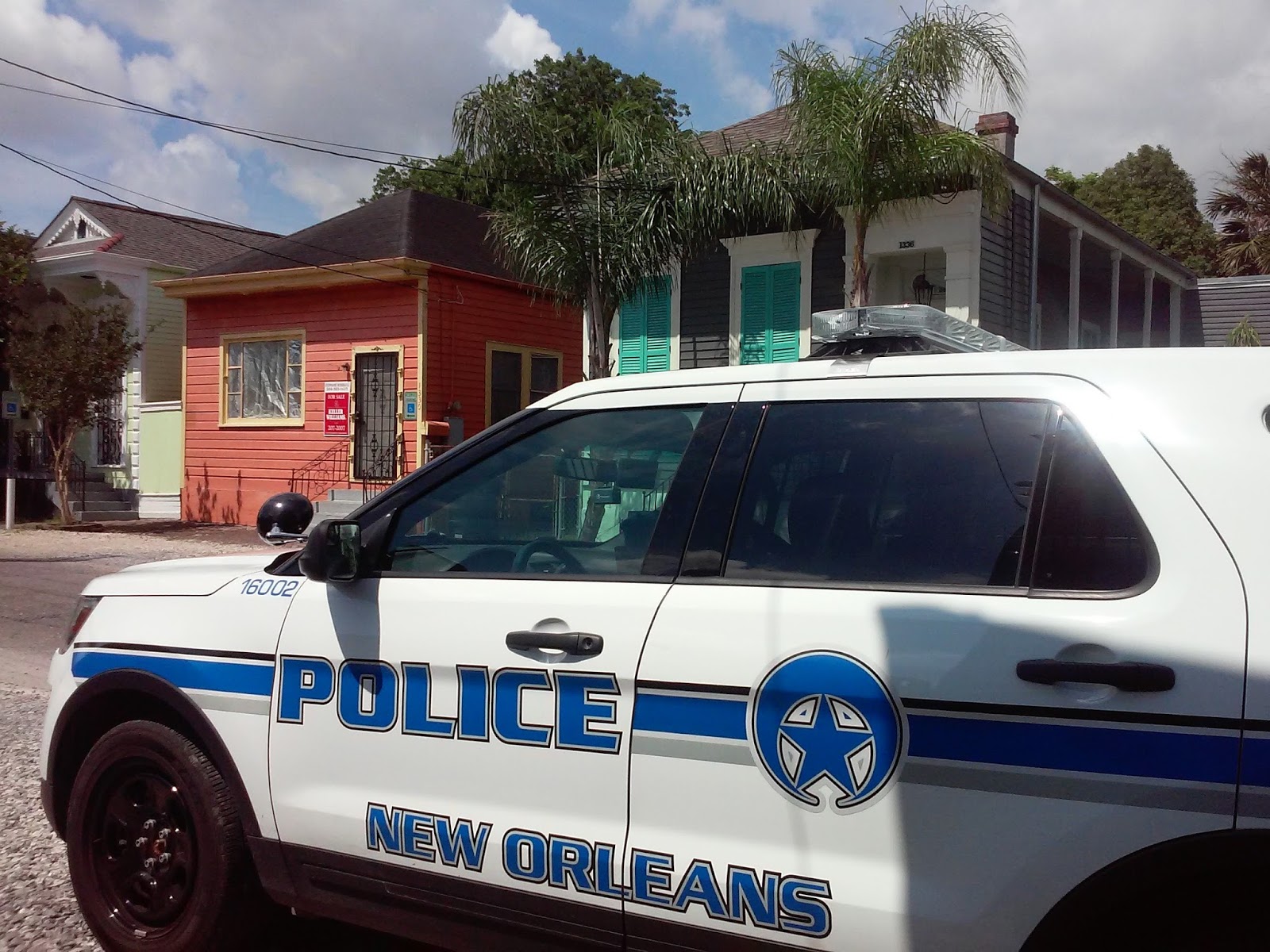
    We were burgled while out eating dinner in New Orleans.

    Not that I knew it then, but right before we left the home, somebody in the St. Roch League of Non-Aligned Residents reported:

    A 30ish black male about 5’6″ wearing a blue t shirt and gold shorts on a light colored bike (off white, I think) was hopping fences on N. Villere and Elysian checking out people’s back yards. I just saw him go down Marigny toward St. Claude. Thought I’d let y’all know.

    (Our neighbor, who was home, told me about this later.)

    Could be worse, thinking of all the things he didn’t steal and the greater mess he could have made (like, he didn’t leave a pile of shit on the floor). The only thing that seems to be gone is my (new but cheap) laptop.

    Could be better, too, needless to say.

    There’s always some irony when I’m on the other end of police services. And now, like any citizen, I can bitch that it’s been over three hours since I called 911. Some good research shows that a long response time doesn’t piss people off as much as waiting around not knowing if cops will ever show up. I can confirm that. I guess I’ll go to bed.

    This is probably all I’ll post till I’m back home next week.

    For the record, I would have liked police to stop this guy before he came in through our window.

    Update: After an 8(!)-hour wait, NOLA police service was most excellent. The officer was a thoughtful New Orleanian with 19 years on. We investigated. We waited for crime lab. We chatted about policing. We learned two neighbors also got hit. The officer read my op-ed in the Sun. In this house, crime lab got prints and DNA off a can of energy drink the burglar took from the fridge, drank half of, and left on the counter. And they also prints from the window that allowed entry. Another neighbor has a camera on this building, so there should be nice video of the guy coming in. All in all, were it not for the actual burglary, it was a very pleasant way to spend a couple hours.

    It’s amazing how much stuff wasn’t taken (Zora’s computer, camera, NYC house keys, power tools). And luckily, right before we left for dinner, I went back inside and locked our bikes together (my very expensive folding bike and Zora’s rental) saying, “well, this will make it harder for a burglar to walk away with these.”

    The only part that really bothers me is an 8-hour response time. I called 911 at 01:43, again at 03:24, and a cop showed up at 09:45. Seriously? I wouldn’t have minded if they told me when I called the first or second time, “an officer will be there between 9 and noon tomorrow.” No problem. I’ll go to bed. There’s something be said for waiting for light, anyway.

    But if you say an officer in “on the way,” a reasonable person might expect an officer to be, well, on the way. Are we supposed to wait up? I did, for far too long. Are we supposed to disturb the crime scene to go to bed? Eventually we did. Should I close the window in which he came? (I had to, after the world’s loudest morning mosquitoes wouldn’t let me sleep even after I gave up waiting.) There has got to be a better way.

    The other weird thing is the burglar riffled through the books. Burglars never do that.

    Update! They caught him.

  • “Nero Should Never Have Been Charged”

    Writing in the Baltimore Sun, co-authored with my friend, Leon “HL Mencken” Taylor:

    Mr. Nero, who had but a tangential role in Gray’s detention, should never have been charged. He committed no crime.

    The prosecutor, in her desire to achieve “justice” for Freddie Gray, wanted somebody — anybody it seems — to pay for his death. But justice doesn’t work that way. And the ill-conceived effort to pin the blame on these six officers has at best distracted from and at worst exacerbated Baltimore’s most pressing problems.

    Let us prevent the next prisoner’s death. There are safe, modern, camera-equipped prisoner transport vehicles. Replacing Baltimore’s entire prisoner transport fleet would cost less than the payout to Gray’s family. But Baltimore either lacks the money or leadership to invest in them.

    The trouble is, the political leadership in Baltimore is more interested in votes than addressing the deeper issues of the poorest Americans.

    The mayor taps anger fueled by failed social policy and malign neglect. But we’ve never seen her or any Baltimore politician ride in a police car to see what officers see every day.

    Politics and policy put Freddie on that drug corner and also gave police the task of moving him off of it. The failure of Freddie Gray is a collective failure. So why does “justice” depend on convicted police officers? Baltimore elected officials need to focus on the city’s real problems, which do not take legal acrobatics to explain.

    After the April riots, the murder rate doubled. Last year in Baltimore 304 black men — 131 more than in 2014 — were murdered. That’s roughly one in every 220 black men aged 15 to 35 murdered in one year. Think of those odds. Americans shouldn’t have live and die like this.

    There are actual criminals in Baltimore. Those who pick up an illegal gun and pull the trigger to kill a fellow man. Police deal with them every day. So when criminals are seen as the victims and police are made out to be the problem, it’s as if the inmates have taken over the asylum.

  • “Baltimore’s Dangerous Prosecutors”

    The latest from Page Croyder. It’s all good, but this is the part that clarified what exactly was being argued:

    They argued to trial judge Barry Williams that in the 2-3 minutes after Gray was handcuffed, but before the illegal knife was found on him, Nero, by not instantly finding out why the supervisor wanted Gray detained, committed a crime. In other words, the mistake they made was neither in the chase (for which they had reasonable suspicion) nor in the arrest for the knife (for which they had probable cause.) In was in the extremely short delay before finding the knife in which they hadn’t pulled out all stops to find out why they were asked to detain Gray.

    And the ominous (yet justified) conclusion:

    So, Baltimore, when one of your citizens is a victim of crime, don’t be surprised if the police do nothing more than take a report. Detaining a suspect puts them in legal jeopardy under the Mosby regime. And don’t expect the prosecutor’s office to help you out, either. Their leaders are either watching the Gray trials (Mosby) or spending the first two years of their administration inventing new crimes for which to convict its police officers.

    But click through and read it all, especially if you haven’t been following as closely as you should have been.

  • “The Chop Leaves the City”

    Here is one person’s decision to pack up and leave the city. It’s well worth reading. It’s a short move, two miles north, to the burbs. And he’s taking his tax dollars with him. This is especially worth reading if you think the biggest problem facing Baltimore is racism and policing. Or if you’re privileged enough to live in a city where you get to gripe about hipsters, gentrification, and racism and policing in Baltimore.

    Yes, it’s all about crime. But it’s also about bad parents and a political leadership that doesn’t get it.

  • Officer Nero Acquitted on all Charges

    Good. Judge Williams used the law. There was no case. I don’t find this surprising. But then I’ve learned to be surprised by these absurd trials.

    And I was speaking to a friend here in New Orleans who, naturally, assumed the officers are guilty. She hadn’t read my primer and had no idea this trial had nothing (except politics) to do with Freddie’s death.

    Judge Williams ruled that Nero had nothing even to do with Freddie Gray’s arrest.

    Update: I generally discount the “anti-cop mainstream media” hype you hear from a lot of people. But I just received a call from a station out west and told them what I thought about the verdict. I was told, “I totally agree with what you’re saying, but we’re looking for a more ‘agnostic’ guest.” I’m not sure whether “agnostic” mean ignorant or biased. But facts be damned, they won’t be satisfied until they get “both” sides of this story equally represented. It’s how false narratives are built.