Category: Police

  • Incarceration

    Incarceration

    Nothing new here. But it’s good to have a refresher course every now and then. It’s too easy for prisoners to be out of sight and out of mind.

    (plus these are the neatest diagrams I’ve found in the subject)

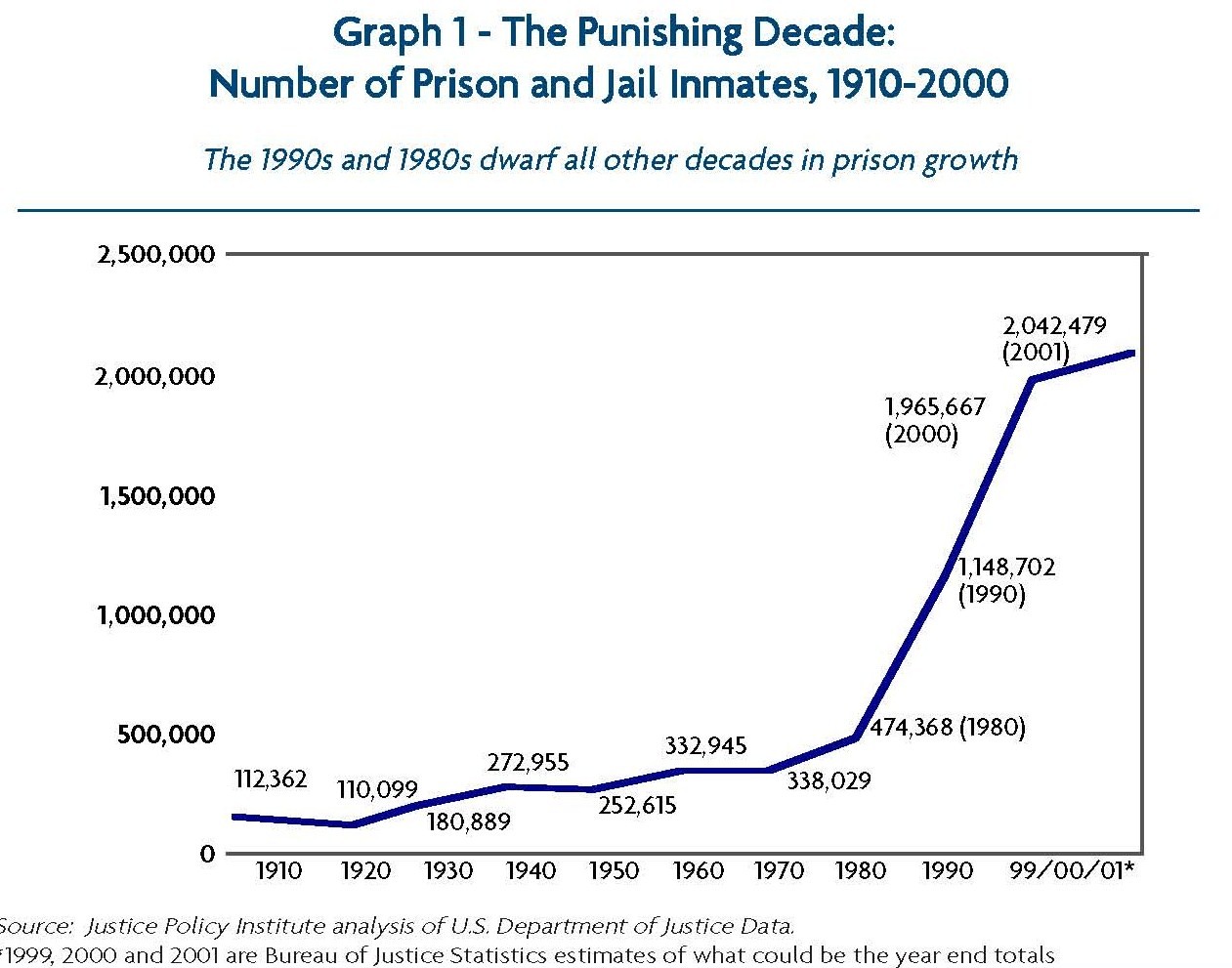
    Now it’s 2,300,000 behind bars.
    The increase is all since 1970 and the war on drugs.
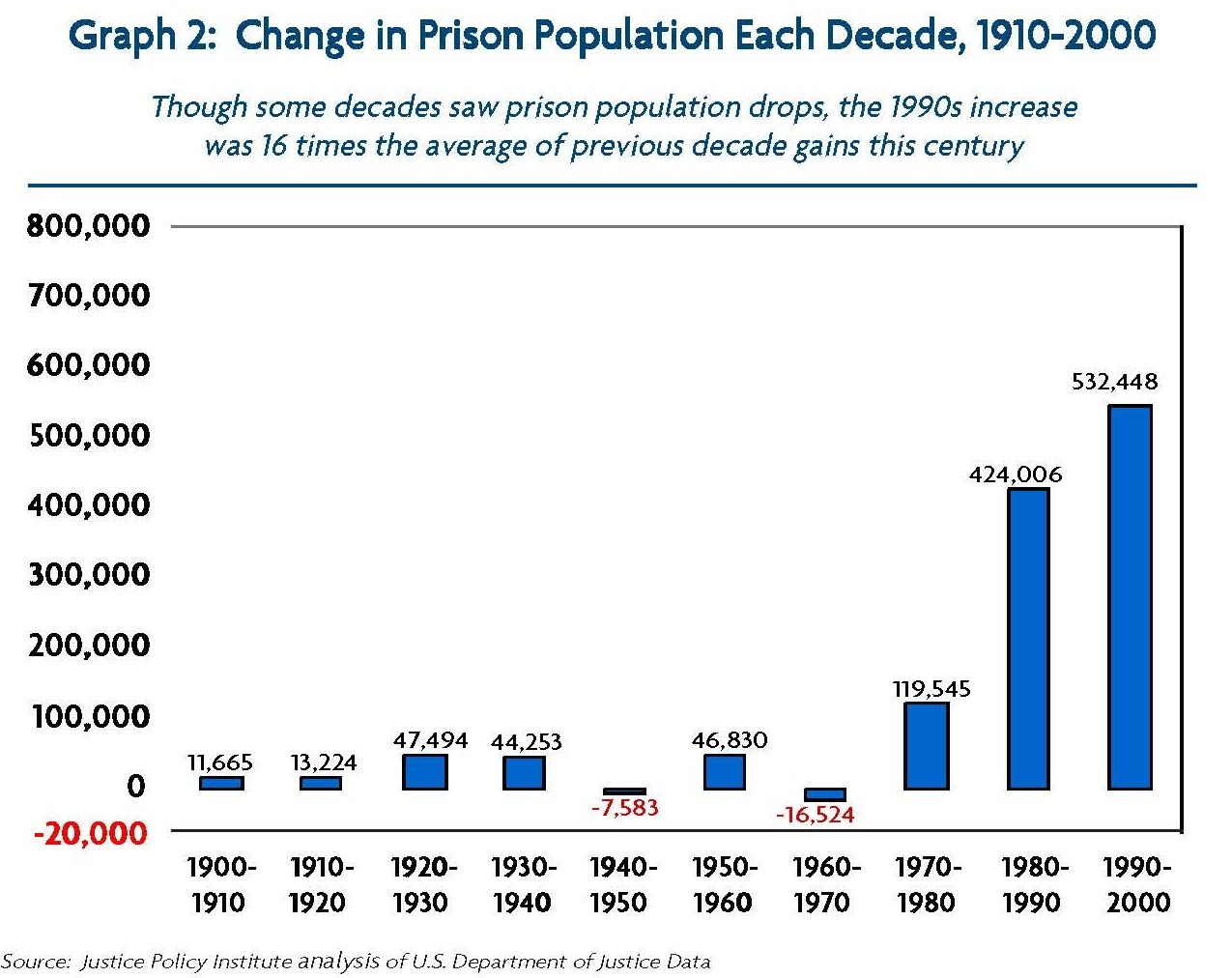
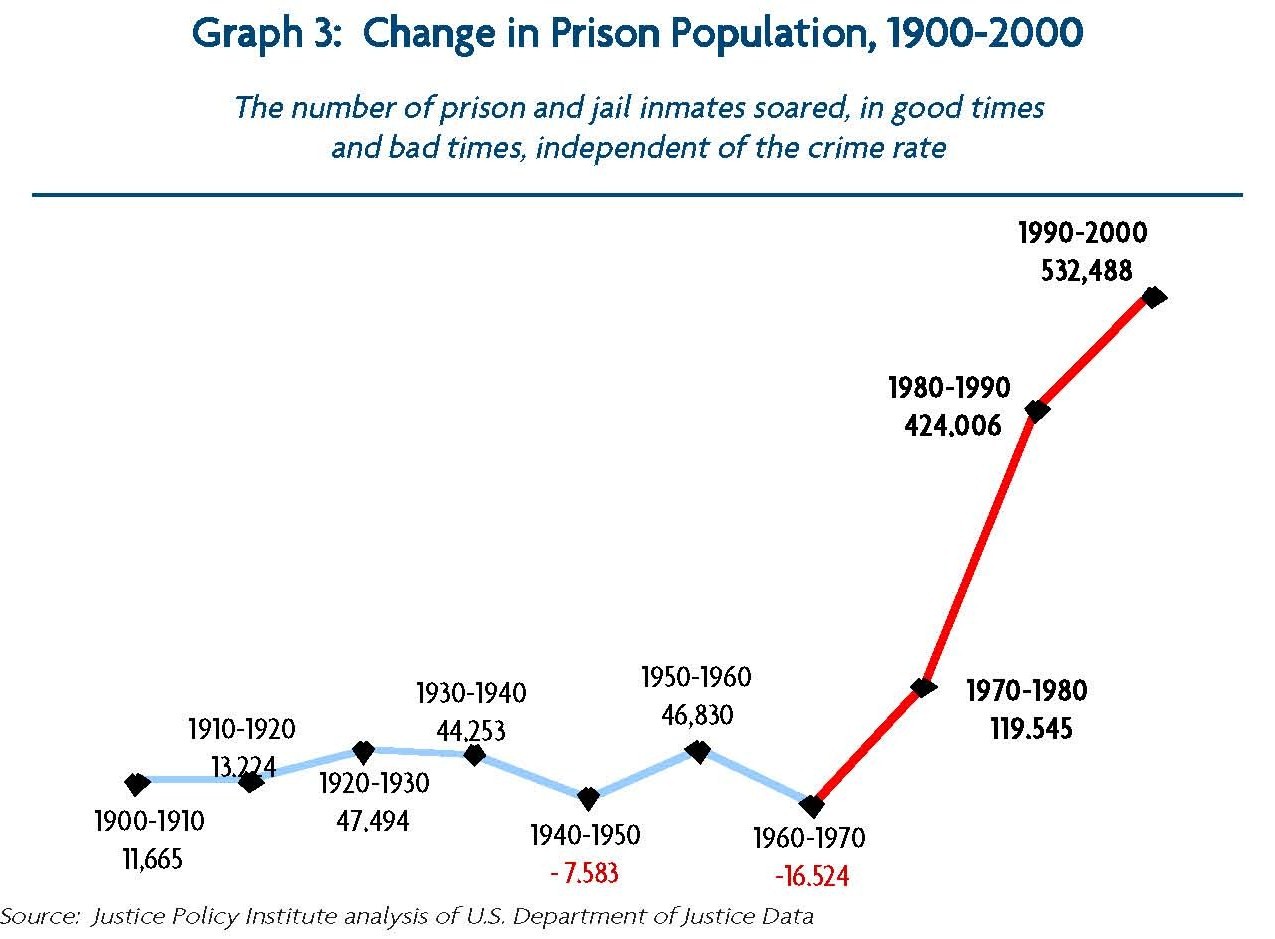
    It has little relationship to the crime rate. This is important. Because people generally don’t have a problem with locking up criminals because there’s more crime. We’re just locking up more people. And the crime rate doesn’t change because of it.
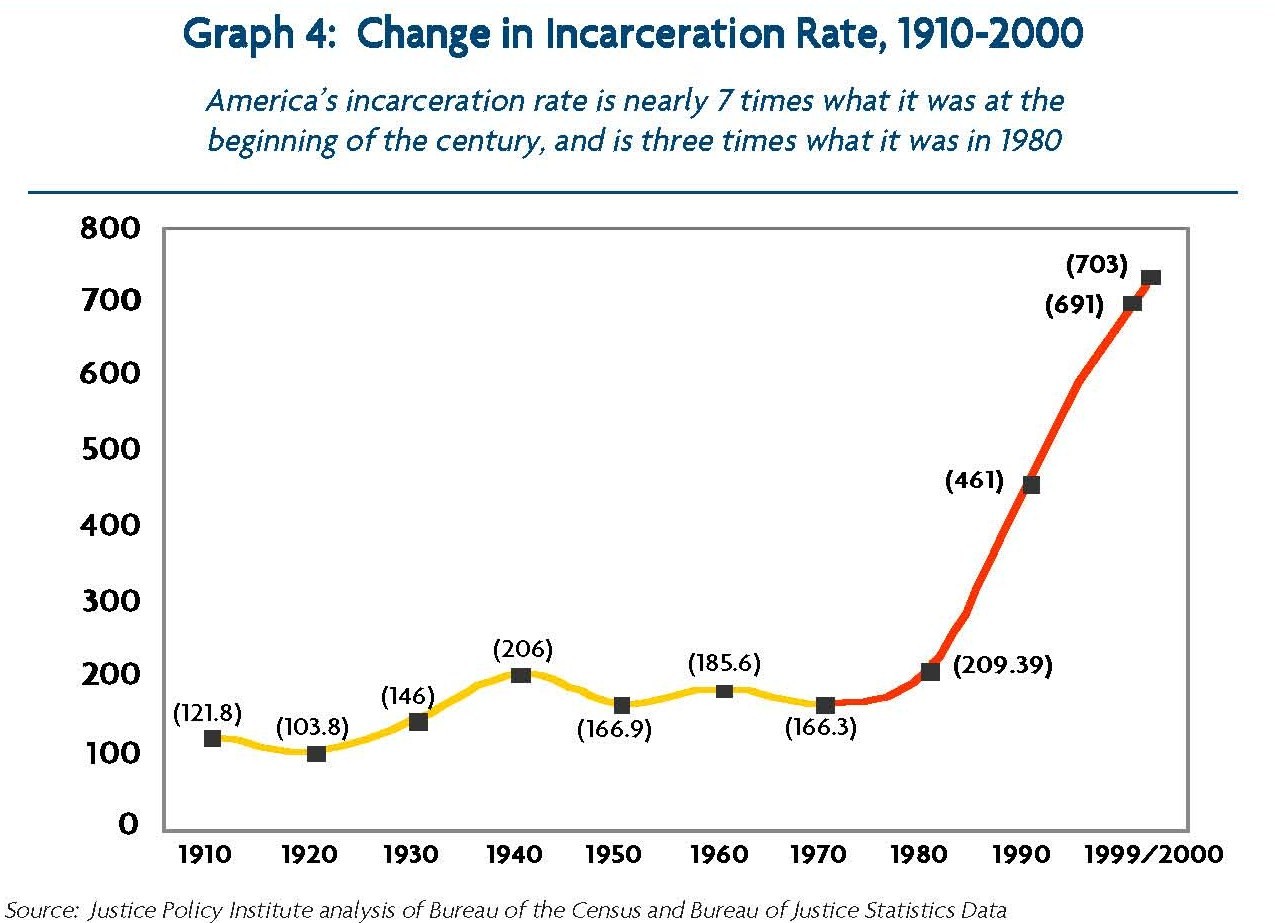
    The incarceration rate is going still going up. Now it’s above 750.
    You can read the complete Justice Policy Institute report here. It’s from 2000, but the later reports don’t have the pretty diagrams. The latest report, Prisons in 2007, can be found here.

  • End of an Era: As of 2012, no more Crown Vics

    In June, Ford Motor Co. invited the heads of some of the nation’s largest police fleets to Dearborn to talk about the future of police cars.

    For nearly two decades, that market has belonged to Ford’s Crown Victoria — a vehicle that departments from coast to coast have come to respect for its toughness and reliability. Now the Crown Vic is running out of road.

    “They told us that 2011 would be the last year they build the Crown Vic,”

    About 85 percent of the approximately 75,000 police cars sold in the United States each year are Crown Vics.

    The story by Bryce Hoffman in the Detroit News

    The Crown Vic has my car (it’s also the NYC cab). There was still one or two Chevy Caprices rattling around, but they were in sad shape. Now you see a fair number of Chevy Impalas.

    Back in Baltimore, I was warned that front-wheel drive isn’t practical here because they’re not as tough. And nothing in the world is driven more roughly than a non-take-home cop car.

    As a cop, I was shocked by how horrible Crown Vics handle. Especially in the rain or snow, you really had to be really careful. Plus they’re big, which makes them harder to get through tight spaces and alleys. In Amsterdam, the cops had souped-up Volkswagen Rabbits. Not very American, but man those things could fly.

  • Here’s the to 4th Amendment

    “One of the reasons we fought a bloody war against Britain was we didn’t like these soldiers stopping people on the street willy-nilly….We went to armed revolution against the strongest nation in the world in order to have these protections against unreasonable searches and seizures. They’re not technicalities. They’re real.

    Indeed, the ability to seize a person’s private property is among the most awesome powers a government can wield. The authors of the Constitution cemented that notion in the Bill of Rights, decreeing in the Fourth Amendment that our right against unreasonable search and seizure “shall not be violated.”

    This afternoon, a joint legislative panel will convene at the Capitol to review a pair of reports that say some officers of the now-defunct Metro Gang Strike Force committed behavior that was “shocking” and listed a litany of abuses.

    One issue legislators must wrestle with is fundamental: Was the gang task force a good idea badly executed by dishonest cops and supervisors who looked the other way, or was the whole concept — including the state’s administrative forfeiture law — fatally flawed?

    By the time lawmakers re-created the elite unit as the Metro Gang Strike Force in 2005, it had become largely self-funding, through seizures and forfeitures. The more money and property the cops from the unit’s member agencies seized, the more fiscally sound the unit was.

    Not only did it put the profit motive in police work, the cops came to look at seizures as the key to the unit’s survival, the Luger report said.

    It is definitely worth reading David Hanners’ entire article in the Pioneer Press. It’s a good piece of journalism

  • Fed-up business people respond to robbery spree

    [He] was in the middle of a string of 17 robberies of city business in 22 days, police say.

    [In 2005] Lomax was sentenced to 21 years in prison, but the conviction was overturned on appeal. When the case came back to court on June 22, Baltimore Circuit Judge John Addison Howard gave Lomax 15 years, suspending all but five. The judge made the sentence retroactive to 2005, and Lomax was set free.

    Police say the latest crime spree began shortly thereafter

    The story by Justin Fenton in the Baltimore Sun.

  • 1,000 cameras ‘solve one crime’

    The BBC reports that one crime was solved for every 1,000 police cameras in London last year.

    The internal police report found the million-plus cameras in London rarely help catch criminals.

    David Davis MP, the former shadow home secretary, said: “It should provoke a long overdue rethink on where the crime prevention budget is being spent.”

    He added: “CCTV leads to massive expense and minimum effectiveness.

    “It creates a huge intrusion on privacy, yet provides little or no improvement in security.

    A spokesman for the Met said: “We estimate more than 70% of murder investigations have been solved with the help of CCTV retrievals and most serious crime investigations have a CCTV investigation strategy.”

    Read the story here.

  • Argentina Decriminalizes Marijuana

    Out of the blue (at least to me), the BBC reports:

    The supreme court in Argentina has ruled that it is unconstitutional to punish people for using marijuana for personal consumption.

    The Argentine court ruled that: “Each adult is free to make lifestyle decisions without the intervention of the state.”

    Supreme Court President Ricardo Lorenzetti said private behaviour was legal, “as long as it doesn’t constitute clear danger”.

    “The state cannot establish morality,” he said.

    It also marks a shift a dramatic regional shift to the decades-old US-backed policy of running repressive military-style wars on the drug trade, she adds.

    Read the whole story here.

  • Stop the war on pot smokers

    An op-ed by Tony Newman in the New York Daily News.

    While New York has a reputation as a tolerant and open-minded city and New York State effectively decriminalized simple possession of up to 25 grams of marijuana more than 30 years ago, Gotham has made so many pot arrests that it now has the unfortunate distinction of being the marijuana arrest capital of the world.

    Prior to 1997, the lowest-level marijuana arrests were 1% of all arrests in the city. Since 1997, marijuana arrests have averaged 10% of all arrests in the city.

    If possession of marijuana is supposed to be decriminalized in New York, how does this happen? Often because, in the course of interacting with the police, individuals may be asked to empty their pockets, which results in the pot being “open to public view” – which is, technically, a crime.

    New York City’s marijuana arrests show stark racial disparities. In 2008, 87% of those charged with pot possession were black or Latino. These groups represent only about half of the city’s population, and U.S. government surveys consistently find that young whites use marijuana at higher rates than blacks and Latinos. Yet blacks and Latinos are arrested for pot at much higher rates, in part because officers make stop-and-frisks disproportionately in black, Latino and low-income neighborhoods.

    Read more.

  • Teach Grammar!

    Stanley Fish gets to the issues on teaching the craft of writing in “What Should Colleges Teach?

    I was blessed to have good English teachers throughout my Evanston public-school education. I also had good and literate parents. Collectively, they somehow taught me skills I use pretty much every day: write, type, and edit (though I must have been sick on the day spelling was taught).

    I think I’m pretty good at getting my ideas across in writing. I wouldn’t say I likewriting (does anybody?). It’s work. But I think I’m pretty good at it.

    So I never know what to do with students’ basic bad writing. I’m not an English teacher. Yet I often feel like I’m playing one in my classroom. Doesn’t anybody teach grammar and syntax? This does not seem to be an appropriate subject matter for my “Seminar in Police Problems.” Yet teach basic grammar I must. Why do I ever have to remind college seniors–as I do every semester–that sentences need a subject, verb, object, and then a period. Why is subject/verb agreement so difficult? Why do my students, class after class, insist on capitalizing the words “police officer” and many other nouns (is there some Germanic underground I don’t know about)?

    To argue that grammar and basic writing (not thought-provoking composition) should be taught in elementary and high-school is besides the point. College is a great place for teaching. And what’s more important than teaching how to write?

    Read Stanley Fish’s piece in the New York Times.

  • “People have got to get indignant”

    [Detroit Police Chief] Evans reiterated his sense that people feel Detroit is supposed to have crime. He said he goes out two nights a week and works the streets, stopping motorists who rarely have driver’s license, registration, insurance.

    “What I say is: ‘Do you drive north of 8 Mile like this?’ And they say, ‘Hell no! They’ll lock you up.’ Your conduct can be whatever you want it to be in the city of Detroit. It’s a safe haven for BS. When people feel that way about minor things, that’s the way they’ll feel about bigger things.”

    Evans cites a consent decree that has governed Detroit for six years. The decree, designed to curtail police misconduct, has led to reluctance to arrest.

    “Over 1,100 people being shot is getting kind of Third World to me.”

    Of course, comparing Detroit to the third world isn’t really doing justice to the third world. Third-world cities tend to have far lessviolence.

    The column by Rochelle Riley in the Detroit Free Press.

  • Bad News with Shake and Bake Meth

    “New formula lets meth users make drug in soda bottles, avoid anti-drug laws.”

    The AP story by Justin Juozapavicius.