Category: Police

  • Homicides and Race

    The New York Times has a nice map of homicides in the city. You can select by various variables, but unfortunately not more than one at a time.

    The Baltimore Sun has a similar but better map.

    I’m always a bit surprised by just how few white homicide victims there are. Or, conversely, how many of the victims are minority. In NYC since 2003 there are about 43 white homicide victims per year out of a population of about 3,700,000. That’s a very low homicide rate of 1.16 per 100,000. That’s a lower rate than Canada!

    Among blacks in NYC, there are about 329 homicide victims a year and 2,240,000 people. That’s a homicide rate of 14.7.

    Meanwhile in Baltimore, in 2007, there were 14 white homicide victims (a rate of about 7) and 252 black victims (a rate of about 60).

    Update: I crunched a few more numbers because, well, I’m curious.

    Overall in the U.S. rate is about 5.6 per 100,000. It’s about 3.3 for whites and 20 for blacks.

    Many other countries have homicide rates under 1. Most civilized countries have rates under 2. We don’t even come close. But America has always been a violent place. I guess the real question is why is white New York City so non-homicidal?

    And in talking about race and crime, I feel compelled to mention gender and crime. Murder really is a guy thing. In NYC just 8% of murderers (and 17% of victims) are women. And most of those are domestic situations. What is it about men? Can’t we all just get along?

  • Boston Dispands Mounted Police

    The nation’s oldest (1870) mounted unit was disbanded in Boston this month. I know police on horses are of limited use, but what they dodo cannot be done by other police. It’s just eleven horses and about the same number of officers. Seems like a bad way to save money. How about shutting down a few patrol cars instead?

    The storyby Michele McPhee in the Boston Herald.

  • Baltimore Crime Stats

    Peter Hermann writes about playing with the numbers and the problem of accurate reporting.

    “I would suspect this goes on in most police departments,” Busnuk told me. “Others don’t have the crime problem that we do and don’t have the political pressure. But this kind of reporting is built into the DNA of the police system.”

    Kind of like how Detroit accidentally forgot to tell the FBI about 117 murders last year. Oh… those 117 murders!

    Those 117 Detroit killings are significant in that they push Balto from the not-so-coveted big-city homicide winner’s circle. Once again, Baltimore is number two and, in the words of some police, “shooting for number ones.”

  • Off-duty action

    I was required to carry my gun off duty within the city limits and permitted to carry (and did) within the State of Maryland. So yes, I carried my Glock 17 when I went jogging and when I took out the trash.

    Generally it’s strongly discouraged for police to take action off-duty (in the next post there are some comments on the subject). But deep down the city seems to like the idea of off-duty cops being like plain-clothes cops working for free. It’s one of the reason many police don’t like to live in the city they work.

    Outside of people pissing in my alley (which happened to be the only way I could enter my apartment), I rarely if ever took police action off-duty.

    One time I parked outside Whitey’s Newsstand on Broadway–I had a little side-business buying and selling vintage 1960s “adult” books (ie: smut paperbacks)–and a well-dressed hispanic guy came up to me offering to sell me weed. I think it was something about the TransAm I drove that made people think I was a good target.

    I politely showed him my badge and gun and in no uncertain terms told him how that was very bad idea. But I didn’t take any police action. I didn’t want the hassle. But it sure would have been an easy lockup. He apologized and explained how he “didn’t mean any disrespect.”

    And one time in Brooklyn, New York, I badged a bum harassing a female bartender. That is the type of situation you don’t want to escalate, because I was unarmed and without any police power. But the bluff worked and he quickly left the bar.

    But I think the highlight of my off-duty police action was taking a beer away from some crazy belligerent fat lady on the bus.

    When I was about to get on the bus a lady got off and said, “Hallelujah! It’s a zoo in there.” The Number 10 bus often was. In the back of the bus, a woman was going on and on, shouting and yelling about everything in general and white people in particular. She would end a few comments by saying: “Bet that scared all you white people!”

    She asked a lady she seemed to know for $2 but didn’t get it. Then she popped a 40. I was dressed for court downtown. Without a word, I went up to her, showed my badge, took her bottle and deposited it outside the bus.

    “I knew he was police!” she shouted, almost with glee.

    I thought with the smug satisfaction that came from knowing she didn’t have money to buy another: “Oh, no, you di’int!”

  • I’m Back

    I’m back from two weeks in Spain… but I’ll spare you the details except to say there was hiking in the Alpujarras involved. And very sore feet. And lots of pork.

    Meanwhile, I was just quoted in a widely read article (the AP is great for that) about dirty narcs in NYC. Though I don’t condone it, I don’t have a lot of sympathy for criminals when they get framed. But there really is nothing worse than framing an innocent man.

    And an off-duty black NYPD officer, Omar Edwards, was killed by fellow police officers.

    Do white officers ever get killed in similar circumstances? Rarely. I know of only one case, in Florida, when a white officer was shot and killed accidentally by police. He was undercover and busting a group of (gasp) underage college tailgaters.

    Part of the problem is that as a police officer chasing a criminal, when you hear police shouting, you don’t think they’re shouting at you. You know you’re police. You feel it. You’re used to hearing commands to show your hands and drop the gun. You shout such commands. You’re a cop. You don’t drop your gun. But you can’t see yourself and see you’re out of uniform and holding a gun. I don’t know what the answer is.

    In other news, Nicholas Kristof wrote a powerful piece in the New York Times, Drugs Won the War. He mentions LEAP prominently.

    And on Friday I’ll be in Chicago for an interview on WGN’s Milt Rosenberg show. 9 – 11 pm Chicago time. I’m very excited about that. You can listen here.

  • On Vacation

    I’ll be gone till the middle of June.

    Check back then.

  • Daughter Dearest

    Daughter Dearest

    More police lore in the making. Not quite a turkey drumstick, but similar:
    Police have arrested a 42-year-old woman who said a dispute over a dinner roll led to a fatal fight with her father.

    The woman reportedly told investigators she ate a dinner roll her father had been saving for later, even though it had a note telling her not to. Police said she also fired a gun, but apparently didn’t hit her father.

    The story in Grand Haven (Michigan) Tribune.

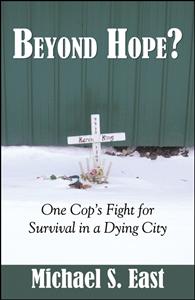
  • Beyond Hope?

    Beyond Hope?

    The glorious genre of Cop Lit has many notable contributors. The writing ranges from the driest academic tome to the cheesiest pulp fiction. There a pretty extensive list of police books at police-writers.com. A lot of them are crap. But many are good.

    Two of the best older police books are Jonathan Rubinstein’s City Police and Joe Poss and Joe Poss and Henry Schlesinger’s Brooklyn Bounce. The former was an academic who went native (nobody knows whatever happened to Rubinstein–rumor was he retired and ran a liquor store in Philadelphia). Poss and Schlesinger are doing just fine, living in NYC.

    Bad Cop and Badges, Bullets & Bars are two more good police books.

    (And of course there’s my book, soon to come out in paperback with a brand new chapter.)

    Now add veteran police officer Michael East’s Beyond Hope? to the list. It’s good. Very good.

    The best police books, whether academic or pop, have a few things in common: a confidence in the writing, a good voice, an awareness of one’s surroundings, humility in knowing one’s limitations, the ability to link the personal observation to greater truths, courage to face uncomfortable truths, and the ability to tell a good yarn. In other words, a good police book needs many of the same qualities of a good police officer. But most cops don’t write good books.

    Michael East has written a good book. Beyond Hope? is his story policing Saginaw, Michigan. I’ve never been to Saginaw, but it sounds grim. Kind of like a smaller, poorer, f**ked-up Baltimore.

    Beyond Hope? is finally for sale. I was able to read an advanced copy so that’s how I know it’s good. Buy it today! If you like cop stories (and if you’re reading this you do) or have a thing for cities in decline, this is a book for you.

  • It all goes back to the war on drugs

    I’m supposed to grading papers so I’ll keep this short. But what does the police beating in Birmingham and the foiled terrorist plot in New York have in common?

    Neither would have happened were it not for the war on drugs.

    Three of the four bad guys in New York were in prison… for drug offenses. In prison they “converted” and hatched their little plan.

    And the guy who tried to kill a cop in Birmingham was fleeing… because of drugs.

    We need to legalize drugs not because drugs are good, but because locking people up for drugs makes them worse.