Category: Police

  • Criminal Justice Reform in the Age of Trump

    Over at the Cato Institute, Steven Teles wrote a piece about conservatives and how we can de-incarcerate. A group of people, myself included, are writing response pieces. Here is mine:

    A few years back, for a brief while, it really did seem as if conservative Republicans were interested in reducing the number of prisoners in America. Teles argues that once conservatives get in a position of political omnipotence, they don’t have liberals to kick around anymore. Political control brings policy ownership. Without fear of political defeat or being labeled “soft on crime,” conservatives are free to judge prisons on cost, effectiveness, and even morality.

    There are indeed some extremely low-hanging fruits of de-incarceration, some truly nonviolent offenders and others who may have been ignorant of the crime they committed. [But] to return to pre-1980 levels of incarceration in America, 80 percent of prisoners would have to be released. This will not happen.

    On crime and police, the first steps in incarceration, Democrats in the past two years were eager to abandon 20 years of generally pro-police policy dating back to Bill Clinton and Al Gore. Trump’s victory could allow the left (at least the moderate left) to shift from the #BlackLivesMatter police-are-the-problem mentality to one more focused on actually preventing crime…. Had Hillary Clinton won the election, an unprecedented two-year 25 percent increase in nationwide homicide since 2014 would certainly have revived crime as a wedge issue and placed Democrats on the defensive. It still may. The coming days could be dark indeed.

  • “I took an oath to protect all”

    “I took an oath to protect all”

    Once again an excellent Facebook post from my friend. The words are his. The idea he got from a San Fransico Police Officer:

    Safety pins have become a symbol of solidarity with minority groups who feel threatened by events in this country. People are posting selfies with their pins, letting those minority groups know they have a friendly and safe face to look out for them.

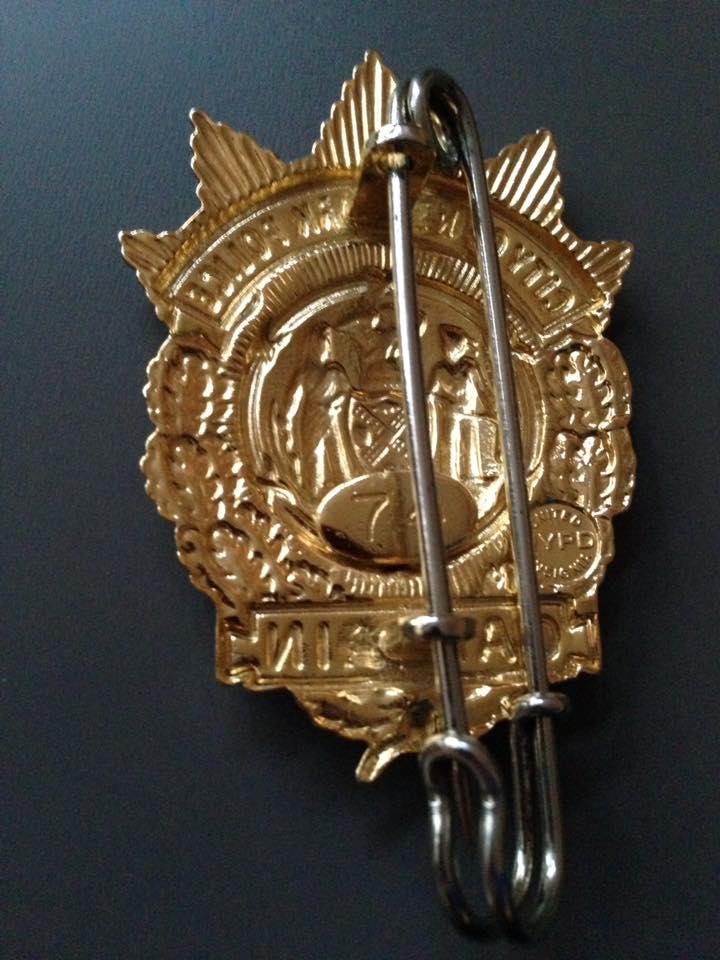
    Below is my pin. It’s on the back of my badge. I started wearing it in 2003 after I took an oath to protect all – regardless of race, religion, creed or sexual orientation. Regardless of current popular belief, I promise to continue to protect and watch out for all and be there for anyone who needs my help, along with my 800,000 safety pin wearing brothers and sisters in blue.

  • Homicide is up, and it’s not Trump’s fault yet

    Somehow, between the Cubs winning the World Series, the presidential election, friends and family visiting, and, you know, my job, I missed this.

    The Brennan Center, which has been repeatedly telling us not to worry about rising homicide, predicts that this year’s homicide increase will be even bigger than last year’s increase (last year’s was 10.4%, this year’s is predicted by the Brennen Center to be 13.1%). The Brennan center says “Nationally, the murder rate is projected to increase 31.5 percent from 2014 to 2016.”

    [Update/correction: Their math, as has been pointed out to me, does not add up. By my math, a 13.1 percent increase after a 10.4 percent increase is a 24.9 percent 2-year increase. I’ve changed a few things in this post to reflect the correct number.]

    Homicides up by 25 percent in just two years? This is the biggest two-year increase ever.

    Their conclusion:

    There is no evidence of a national murder wave.

    What the f*ck? I’m getting these numbers from their report! It’s like Bagdad Bob all over again. I wonder how long they can keep this up.

    Oh, but they do go on:

    Increases in these select cities [Baltimore, Chicago, and Houston] are indeed a serious problem.

    You think? But…

    most Americans will continue to experience low rates of crime. A few cities are seeing murders increase, causing the national murder rate to rise.

    Apparently, goes their logic, as long as homicide goes up more in some cities than others, it’s not really going up elsewhere, even though it is. To say the increase in homicide is due to a few “select cities” is simply not true.

    Chicago, Baltimore, and Houston are not at all creating the national trend. They’re just the leaders of the pack. One could remove “these select cities” — not that you should, mind you, but I have — and we’re still left with a huge increase in homicide, nationwide.

    [And the “most Americans” part really gets my goat. Like we didn’t to worry abut minorities at risk? I’d like to hear the Brennan Center tell that to everybody afraid after Trump’s victory.]

    And mark my words: when the official UCR data on this year comes out next year, those on the Left will be quick to blame Trump and everybody and everything except what has happened since 2014, post-Ferguson, locally with policing and nationally with the DOJ. These past two years have been an unprecedented and unmitigated disaster in terms of rising murder, particularly among poor young under-educated African-American men with guns. And the only person who even pretended to care (and based on his record, I seriously doubt his sincerity) just won the presidential election.

    Speaking of my words, a short while back I wrote this:

    Here’s what scares me right now more than guns: the potential right-wing law-and-order backlash. … It will be the largest [homicide] increase in decades. And yet the Left has been in denial about this (and/or discounts its significance). … we’re virtually conceding law-and-order issues to Trump and the fascist Right. Politically and morally, this is bonkers.

    And this:

    Politically, I don’t want to the only people responsive to rising crime to be Trump and the “law-and-order.” They scare me.

    And that’s the world we live in. The Left wouldn’t address this issue. Well, let’s see what happens now.
  • “Because we are sworn to protect those that can’t protect themselves”

    “Because we are sworn to protect those that can’t protect themselves”

    The funeral for Sergeant Tuozzolo just happened. My friend Ari Maas posted this on facebook after his death:

    For the second time this week, the law enforcement community suffered a great loss. NYPD Sgt. Paul Tuozzolo was shot in the head while attempting to arrest a very bad man. That bad man had 17 prior arrests and had just committed a home invasion in the Bronx at the home of his estranged wife.

    That bad man had a gun, a gun he used to take Paul’s life and attempted to take many others. Luckily a rookie officer, who was still in police academy field training, was able to put an end to that bad man’s rampage. But not before that bad man destroyed Paul’s family, leaving his wife a widow and his two children fatherless.

    I didn’t know Paul. We were both veterans of the 26th Precinct, but Paul was promoted just a few months before I was transferred from East Harlem to West Harlem. However, I see on my Facebook feed from my 26 family who worked with and were friends with Paul, that he was a great man, father, husband, and police officer. He had 19 years of service. 19 years of putting on that uniform every day to make New York City a better place. 19 years of working midnights, holidays, weekends and being away from his family. 19 years of selfless service.

    And even if I didn’t know Paul, I knew Paul. Paul was just like every one of us who puts on the uniform every day not knowing what to expect, but knowing we do what we do because we make a difference. Because we are sworn to protect those that can’t protect themselves. Because we have given so much and far too many of us, have given our all, in order to make the world even a little better place.

    Every time a cop gets killed, I change my profile picture to a badge with a mourning band on it, and I write a post. I do this not so much for myself or the other cops on my friends list, but rather, so that my friends from my other diverse groups can understand that we are human, we feel pain, and all we want is to do our job, make a difference, and go home to our families. And all of us are willing to pay the ultimate sacrifice to make this world better.

    But, I have come to realize that the Michael Marks, a Marine Corps veteran quote, “And maybe just remind the few, if ill of us they speak,that we are all that stands between The Monsters And The Weak” isn’t something we have to do. Because for anyone that has ever worn a uniform to work, not knowing what that day of work will bring (our Armed Forces, police, fire and EMS and others), it doesn’t really matter if people understand the evil we protect them from. What matters is that we can look at ourselves in the mirror every day, honor our lost brothers and sisters, and continue on, in their memory, in making this world a better place.

    Sgt. Paul Tuozzolo, Blessed is the True Judge. May your family, friends, the NYPD and the entire City of New York find comfort during these trying times. We will carry on your watch from here.

    Fidelis ad mortem. Faithful unto death.

    Rest in peace, Sgt. Tuozzolo. Rest in peace.

  • RIP NYPD Sgt Paul Tuozzolo

    RIP NYPD Sgt Paul Tuozzolo

    NYPD Sergeant Tuozzolo was killed in the Bronx after confronting a domestic break-in suspectwith a long history of criminal trouble:

    Rosales’ 50-year-old mother-in-law had called 911 when the man, who had 17 prior arrests in Suffolk County, forced his way into the apartment she shared with his estranged 29-year old wife and their 3-year-old son, minutes before the police chase ensued, O’Neill and sources said.

    Sgt Kwo and a rookie, three days out of the academy, returned fire. Kwo was shot and wounded. The cop killer was killed.

    Rest in Peace.

  • Press release for journalists

    From John Jay’s Crime Report:

    ATTENTION JOURNALISTS: The John Jay Center on Media, Crime and Justice, publisher of The Crime Report, is offering special reporting fellowships to attend the 12th annual Harry Frank Guggenheim Symposium on Crime in America in New York City on February 16-17, 2017. All U.S.-based media working on print, online and broadcast platforms are eligible to apply. Please circulate among your colleagues! For details and application forms, please visit the Center on Media, Crime and Justice.

  • Don’t sh*t where you live

    The Villiage Voice reportson how, after much effort, a guy got data on where NYPD officers live (the zip codes). There’s nothing too surprising here, but it is worth noting 1) the NYPD was reluctant to give it up, and 2) NYPD officers are forbidden to work in the precinct in which they live. This goes back to anti-corruption efforts, and it is at odds with community policing. (Not that many cops want to live where they work, but that’s another matter.)

    58 percent of cops live in the city, but just 45 percent of white compared with three-quarters of black and hispanic cops.

    Just under 30 cops live in my zip code in Queens. 114 cops live in 10940, Middletown, NY. That’s 70 miles to the city limits and a 2-hour drive to 1PP, police headquarters. Suffolk County to Western Queens can take just as long. A few cops live even further away. I don’t think that’s a healthy commute, especially for a job that requires flexibility and going to court. But what do I know?

  • “Number Two” at the range

    “Number Two” at the range

    Two days ago in the Bronx, an NYPD sergeant shot and killed Deborah Danner, a 66-year-old with schizophrenia armed with a baseball bat. Deborah Danner’s death is a tragedy. It is a failure of the system. But almost immediately, the officer who shot was stripped of his badge and gun and denounced by the mayor and police commissioner. DeBlasio — who according to the Times, “struggled to answer basic questions about the shooting” — felt he knew enough to throw the cop under the bus:

    The shooting of Deborah Danner was tragic, and it is unacceptable. It should never have happened. It is quite clear our officers are supposed to use deadly force only when faced with a dire situation. And it’s very hard for any of us to see that that standard was met here.

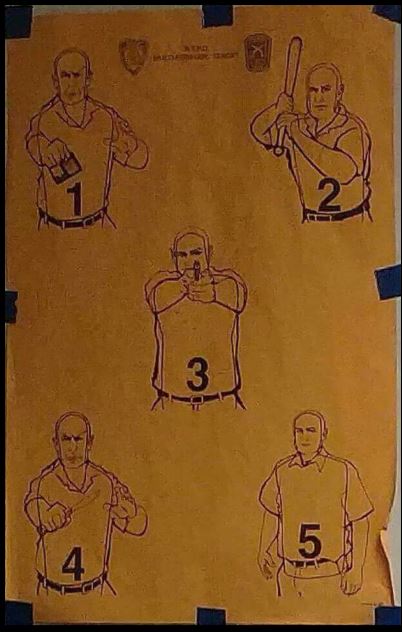
    Really? At NYPD target practice, there’s a simple shoot/don’t-shoot scenario. (This is something we did not have in Baltimore, which might help explain the NYPD’s overall extremely low rate of using lethal force.)

    The guy with a bat is known as “Number Two.” When you hear, “Number Two,” you’re supposed to see the guy with a bat and shoot Mr. Number Two. (Also Three and Four, but not Numbers One or Five.)

    I am not saying this was a good shooting. I am saying that if we don’t want cops to shoot people with baseball bats, why do we train cops to do just that?

    The mayor continued:

    There was certainly a protocol that called for deferring to the Emergency Service Unit (ESU). That was not followed. There was obviously the option of using a taser. That was not employed. We will fully investigate this situation and we will cooperate fully with any prosecutorial agencies. We need to know why this officer did follow his training and did not follow those protocols.

    [The New York State attorney general said he would not investigatethe shooting.]

    Protocol, so I hear, does say that officers confronted with an emotionally disturbed armed person (apparently initially naked and armed with scissors) should back off, close the door, and call for ESU and wait.

    I’m not convinced the department really wants this to happen all the time. This protocol, let’s call it Plan B, would tie up a few officers for a few hours in what would then be a barricade situation. It would also draw on the military-like resources of ESU.

    Plan A is for two cops to simply handle the inncident quickly and professionally, and get back in service to handle the next call. When violating “protocol” is routine, even encouraged, it’s not fair to only crack the whip when things go bad.

    But one thing about these events is they can change police culture quite quickly. ESU is now going to have a lot more work, for better or for worse. But wouldn’t be ironic if ESU responded to every call, especially in light of demands to de-militarize the police? And then what happens when ESU kills somebody? Then we blame ESU?

    Then who do we call? The really issue is that police shouldn’t be responding to this type of call at all.

    Here’s Alex Vitale (whom I’m actually agreeing with!) in the Gotham Gazette:

    The fact that police had to even be dispatched in the first place is a sign that something went wrong.

    Health officials knew about this woman’s condition…. Why was she returned to her apartment without adequate ongoing supervision or care?

    Yet thousands of profoundly disabled people continue to roam the streets and subways or idle away at home with little or no support, leaving police to deal with the crises that inevitably result.

    The mayor was wrong when he said that current training is adequate and this was just the mistake of a single officer. Ultimately, police are the wrong people to be responding to a person experiencing a mental health crisis.

  • “Chicago cop murders unarmed man after fender bender”

    That’s the headline that wasn’t.

    Instead we have this headline: “Officer Didn’t Shoot Attacker Because She Feared Backlash.”

    A 43-year-old female 17-year-veteran suffered this:

    The man had punched her and “repeatedly smashed her face into the pavement” until she was knocked out, police said. She suffered head trauma and multiple cuts to her face and head.

    When you’re a cop losing a fight and a man is bashing your head on the ground trying to kill you, it’s OK to shoot the guy. Can we agree on that?

    Fran Spielman in the Sun-Times:

    A “simple traffic accident” that turned ugly.

    “A subject who was under the influence of PCP attacked a female officer. Viciously pounded her head into the street as her partner was trying to get him off of her. This attack went on for several minutes,” [Chicago Police Supt.] Johnson told the assembled dignitaries.

    “As I was at the hospital last night visiting with her, she looked at me and said she thought she was gonna die. And she knew that she should shoot this guy. But, she chose not to because she didn’t want her family or the department to have to go through the scrutiny the next day on national news.”

    The superintendent said he plans to turn that around by “encouraging” his officers and assuring them he has their backs.

    “But, at the same time, we know we have to change this national narrative that the cops are the bad guys. The cops are actually the good guys trying to do a difficult job,” Johnson said.

    It took many cops to arrest this guy. And three of those cops were hurt. The female officer is still hospitalized.

    Tribune Columnist (and fellow Greek American) John Kass:

    She’s alive, but what if she had pulled her gun and used it?

    We’d be going through the old rituals we know by heart, angry activists, the dead re-created as the victim of state-sponsored racism, politicians cowering and turning their backs on her, the entire urban political liturgy we’ve seen so many times.

    Cops are getting in trouble for shooting armed suspects. You think she’s get a pass for killing an unarmed black man? (I’m not 100 percent certain the man is black, but the neighborhood is.)

    “She murdered an innocent unarmed man!” “They should have helped him after his accident.” “How could one man be a threat to multiple officers?” “They didn’t have to kill him!” And indeed, they didn’t. He was taken alive.

    Of course the guy who beat the cop is a violent felon. But who would hold that against him after being victimized by police? I’m sure there’s a nice picture of him and relatives willing to say how “he was turning his life around” and would “never hit a woman.” Who would believe Chicago cops?

    So this officer was willing to let herself be beat to unconsciousness in order to save her family and the department from the now inevitable “scrutiny” had she decided to use lethal force.

    So what should have she done? Honestly, I don’t know. I’m not convinced she made the wrong choice. The reality today is there would be hell to pay if she shot the guy. Her job and family might be ruined. There would be protests. Threats. She could lose her job or face criminal prosecution. She might have to move and take her family into hiding. She made her choice. But that is a choice no cop should ever have to make, especially at the moment when your face is smashed on concrete again and again and the world fades into darkness around you.

  • “Why’d you have to shoot that criminal with a gun?”

    So much of the body-cam debate, releasing or not releasing videos, comes down not to police behavior but to this:

    I know, as a lifelong police officer, that I see people on the worst day of their lives. People shouldn’t feel like when the police come to your house that what’s happened to you is going to be splashed all over the Internet.

    But it will.

    I’ve long advocated punting the releasing of video and privacy issue to the ACLU. If police take the lead on this, no matter what they choose, they will be faulted. There needs to be a policy based on something other than public outrage. And generally I’m all for erroring on the side of transparency. And that’s probably the way it has to be as long as people are willing to say people are holding books when they’re holding guns.

    As my colleague says:

    “What you’re seeing is basically a policy of appeasement,” said Jon Shane, a professor at the John Jay School of Criminal Justice in New York City and a former police captain in Newark, N.J.

    Shane said state legislatures should decide the rules for making recordings public. In California, lawmakers have repeatedly failed to draw up statewide policies on the issue.

    There’s also this factor:

    Beck acknowledged the anger surrounding the weekend’s shootings and said he believed some of the reaction has been compounded by other police killings around the country.

    “We have all seen police-involved shootings that defy justification in other municipalities. I have seen them where I am at a loss to understand why,” he said. “I think that affects what happens on the streets of Los Angeles.”

    This concerns the shooting of Carnell Snell Jr. in Los Angeles.