Copinthehood.com has moved to qualitypolicing.com

  • Initial thoughts on the DOJ Report on policing in Baltimore

    Update: The links have changed (oops!) since these were first published. Here are links to all my August 2016 posts on the DOJ report on the BPD.
    1 https://copinthehood.com/initial-thoughts-on-doj-report-on-2/
    2 https://copinthehood.com/the-doj-is-wrong-1-2/
    3 https://copinthehood.com/the-dojs-war-on-broken-window-2/
    4 https://copinthehood.com/cant-you-take-joke-2/
    5 https://copinthehood.com/the-doj-is-wrong-2-n-word-2/
    6 https://copinthehood.com/the-doj-is-wrong-3-that-damn-kid-on-2/
    7 https://copinthehood.com/the-doj-is-wrong-4-on-diggs-dig-2/
    8 https://copinthehood.com/the-doj-is-right-1-2/
    9 https://copinthehood.com/the-doj-is-right-2-actual-department-is-2/
    10 https://copinthehood.com/the-doj-is-right-3-actual-department-is-2/
    11 https://copinthehood.com/the-doj-is-right-4-actual-department-is-2/

    My take away is that the report is 1/3 spot on, particularly in describing some of the dysfunction in the department (e.g. pp. 128-137) and some (but not all) of the abuses of Terry, 1/3 crazy and wrong (that goddamn 2007 kid on a motorbike is brought up as racist evil policing), and 1/3 bullshit and errors of commission (like the black power structure and majority-minority status of the city and police department).

    The optimist in me hopes it will be hammer that improves the department and the lives of police officers and Baltimoreans. The report brings up problems I’ve spent over a decade bitching about. So good. Cops don’t want to work in a dysfunctional police department. Maybe this will change that. (One can dream…)

    And I hate zero-tolerance policing. But today’s politicians are trying to pass the buck to the past for present failures. Stop blaming “the early 2000’s” for what is going on today. And those horrible O’Malley days when I was a cop? Crime and homicide were lower; and there were no riots. That should count for something.

    Too many of the examples of bad policing are A) good policing or B) completely misinterpreted/misunderstand on a situational and legal basis. And it bothers me because this isn’t an undergraduate paper I can correct. It’s the friggin Department of Justice! Of course some anecdotes are examples of bad policing. But take that that damn dragging a seven-year-old kid off his bike incident from 2007. That was an example of bad parenting (and bad reporting), not bad policing. If that’s used against police, I don’t know which anecdotes I can believe. Too many Terry Stops do become illegal searches. I know that. And too many cops are rude to people. I know that, too. Preach on and spread The Word. But is every damn complaint lodged against police God’s unalterable truth? Get real.

    I’ll write more later, but for now I’m going to cut and paste (with permission) from my good friend Leon Taylor. He grew up in the Eastern. We were exchanging emails last night as we were both reading the report until I finished and went to bed under the glow of rosy-fingered dawn.

    Police are a crime fighting entity, not a cost effective social outreach unit. Teach every officer that they police communities. Stop hiring white police who feel they’re some sort of heroes, and whose friends laud them for working in a “war zone.” Stop hiring Black Police who don’t understand that they’ll be disciplined more harshly than White Police.

    Will somebody please own up to the fact that the same politicians who criticize Police are responsible for bettering the communities that Police serve?

    The report only pays lip service to the real problem of socioeconomic disparity. People think of “The Police” as a faceless, soulless entity, when in fact, the “Police” experience more of the human condition than most scholars and politicians. You say “Stop Police Trauma”; I say “Stop Traumatizing Police.”

    Police everywhere are a direct reflection of the communities they serve. It’s extremely difficult to have a functional police department in a dysfunctional community. We need to stop using police as a societal band aid to cover wounds that require complex surgical procedures and intense rehabilitation. There’s no use touting police reform as the panacea to all of our social ills if that ends political reform. Political reform will have a lasting positive effect on the communities most at risk in this country.

    Fuck community policing. It’s just for show.

    And this:

    I know we try so hard to be cavalier about it, but the truth is we’re not staying up all night reading this document because we don’t care. Quite the contrary. We do. You can’t police Baltimore the right way and come away from it unchanged. You can’t forget what you’ve seen. I could sleep better if I could. And I can’t imagine how those charged to improve the quality of life for Baltimoreans can sleep at all.

    One one think “healing the city” would be a simple enough task, given the mayor appoints both the Police Commissioner and the Director of Public Safety. I mean, they do report directly to the Mayor’s office.

    Maybe the real issue here isn’t to investigate the police in Baltimore, but to investigate the other social services services in the affected neighborhoods. If they’re not up to par or non-existent, there’s no way the police service can be up to standard. The level of dysfunction in the community is simply too overwhelming.

    I’m reminded of former PC Batts, knocking on doors to talk to residents in high crime neighborhoods, never understanding, as any BPD rookie knows, that that’s a good way to get someone killed. I’m reminded of Mayor Rawlings-Blakes’ “those who wish to destroy” comment which precipitated the riots last year. Both are examples of presumably well meaning but woefully uninformed assessments of the realities of life in some Baltimore neighborhoods.

    Ferguson and Baltimore are two completely different situations, but both play extremely well to the masses. You can’t police Baltimore like Beverly Hills. Ideally, you should be able to — that should be the goal — but I’m too much of a realist to suggest it’s even remotely possible. I’m all for making things better, call it police reform, if you will.

    But we also need political reform. We need a societal overhaul to even begin to address the issues that drive violent crime in places like Baltimore. Where else in the U.S. (or the world) would anything less than 300 homicides a year for a population of 620,000 be cause for celebration?
  • Prequel to the DOJ BPD report

    Dan Rodricks in the Sun:

    Anticipating the Department of Justice’s release of its civil rights investigation, Davis clearly staked out a position as the man who is trying to fix the department’s broken relationship with large sectors of the community it serves.

    Getting ahead of police reform is no easy task, but it’s much easier than getting ahead of all the shooting.

    When Mosby dropped all remaining charges in the arrest and death of Freddie Gray, she stood on a street in West Baltimore and angrily accused certain police officers of sabotaging the state’s case. She went further than that, asserting that police officers have an “inherent bias” when they investigate fellow officers. … The takeaway from her screed was this: You can’t count on cops to investigate cops. “As you can see,” she said, “whether investigating, interrogating, testifying, corroborating or even complying with the state, we’ve all bore witness to an inherent bias that is a direct result of when police police themselves.”

    Turns out, as Mosby spoke, Cagle was going to trial for shooting a burglary suspect who had already been wounded by two fellow officers. Those two officers testified against Cagle for his use of unnecessary force. That this happened shortly after Mosby’s angry declaration was remarkable. Not only did the Cagle jury hear the testimony of two officers, Isiah Smith and Keven Leary, it saw clear evidence — literally, from an interrogation video — of an earnest investigation by the Police Department’s Internal Affairs Division.

    Mosby knows, sooner or later, she’ll be judged by the same standards by which she asked voters to judge Bernstein. While some Baltimoreans will reward her for prosecuting cops, many more, sick of their city being one of the most violent in the country, want to see her get convictions of murderers and rapists. She needs a full partnership with Davis to make that happen.

    I’m on page 90 of DOJ report. I’ll finished it before I go to bed and write something about it tomorrow. It’s late.

  • Shooting at a moving vehicle

    Great (and thus rare) legal discussion by Whet Moser in Chicago Magazine: “Why It’s Legal for Police to Shoot at Someone During a Car Chase: CPD officers who shot at Paul O’Neal may have violated procedure, but Supreme Court decisions set a high barrier for legal liability”:

    Perhaps the law could evolve. Police departments are trying to limit high-speed chases, but right now the Supreme Court precedent is pretty clear. That alone doesn’t eliminate the possibility that, as Moskos suggests, that criminal charges could be filed. But as Steve Bogira pointed out after another shooting—in which an officer shot 16 times into the wrong car, nearly killing one of its occupants, leading to IPRA’s first recommendation that an officer be fired—criminal charges are incredibly rare. The case law surrounding deadly force and car chases would seem to make the possibility in this case rarer still.

  • “Unarmed” man shoots and kills store worker

    “Unarmed” man shoots and kills store worker

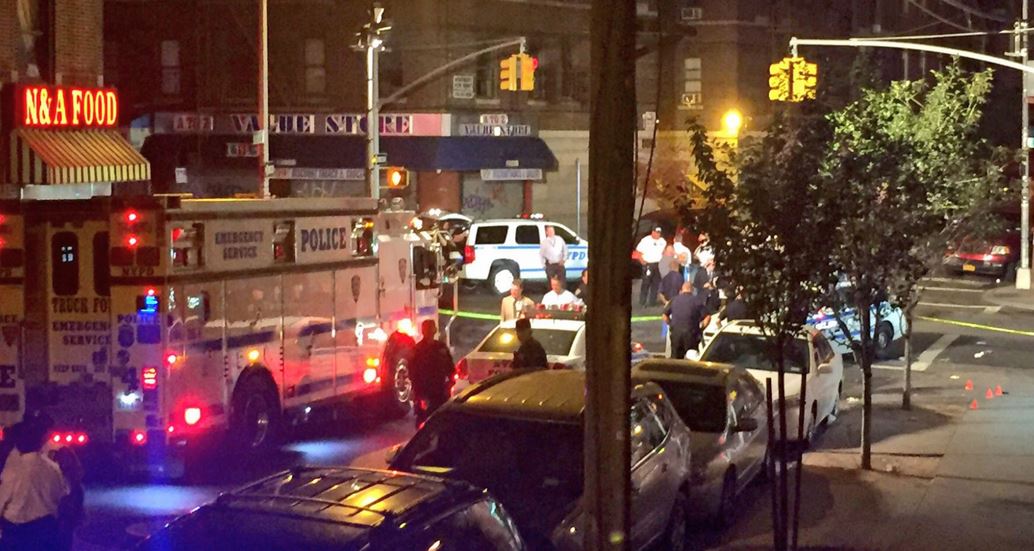
    Did you see the headline in today’s New York Counterfactual?: “NYPD Kills Unarmed Man in Bronx”:

    Protests erupted after police killed a hispanic man in a Bronx bodega. Efraim Guzman, 30, was unarmed when he was shot and killed by police. One round entering Guzman’s back.

    Police allege Guzman was engaged in a dispute at a store at 230 East 198th Street around 1 a.m. and was shot when he attempted to reach for an officer’s gun. Witnesses say the man was surrendering and surrounded by three officers when he was shot and killed in a Bronx bodega.

    Liam Murphy, the family’s lawyer, said, “A simple store dispute is no reason to kill a man. This is the kind of broken windows policing that is so lethal to young men of color.” Murphy also criticized police for confiscated the in-store video of the shooting and called the release of Guzman’s criminal record “a disgraceful attempt by police to justify this unlawful execution.”

    A store worker, 49-year-old Wally Camara, said that Guzman was being disruptive, but added, “police didn’t need to shoot him. I wish they could have resolved this some other way.”

    Pedro Moscoso, a friend of Guzman, said, “Effi was a good man, like a brother to me. He was turning his life around. He was there for you. I’ll miss his cooking. When he made mofongo, he would make extra, enough for anybody to just drop by.”

    Bronx District Attorney Darcel D. Clark said her office was investigating the shooting, and criminal charges against police could be pending. The officer who shot Guzman, a three-year veteran who has not been identifed, has been placed on administrative desk duty.

    Last year police nationwide shot and killed 18 unarmed hispanic men, according to data compiled by the Washington Post. Unarmed hispanic man are twice as likely to be killed by police as unarmed white men.

    Of course this isn’t what happened. Guzman did take a cop’s gun. And despite then being shot and wounded by police, he managed to squeeze off 15 rounds. One of those killed Wally Camara, a longtime worker at the store and immigrant from Africa.

    One of the officerslooked like he was trying to protect the civilian,” Nikunen told reporters. “He was shielding and trying to push him away as Mr. Guzman was firing shots in the store.”

    Investigators believe the victim was caught in the crossfire and not the intended target.

    Had police shot Guzman before he killed Camara, Guzman would have been another “unarmed” man of color killed by police; people would be angry. Instead Camara is another black men killed in the Bronx; people don’t care.

    So what should cops have done? Consider this, kind of like the that philosophical dilemma where a streetcar is barreling towards three men and you’re at switch-track and can flip the switch so only one man dies.

    You’re a cop. There’s a chaotic scene. Your partner is wrestling with a man. The man is reaching for your partner’s gun. At least that is what you think. Do you shoot him?

    If you do shoot, you will have killed an unarmed man of color and have to face the consequences: there will be protests; you will be on desk duty; you might face criminal trial for murder and lose your pay and your family’s health insurance. But thanks to your action, an innocent black man would still be alive.

    If you don’t shoot, a man will take your partner’s gun and kill an innocent black man. But you’ll be OK, more or less: there will be no protests; you’ll face to independent investigation; your life and job won’t be terribly disrupted.

    What would you do? Given this choice, what cop in his right mind would shoot the unarmed criminal and save a life? You’d have to be a martyr to make the morally correct choice.

    But in hindsight, knowing what we now know, of course the cops should have shot and killed Guzman before he got control of the cop’s gun. Had police had been quicker to shoot and kill Guzman, Camara would still be alive. Though we wouldn’t know that. But had this happened, would you be willing to defend the officer’s decision to shoot as correct? Or “justified.” Or at the very least “reasonable?” Unless you’re a cop, my guess is probably not.

    Guzman was a threat before he got shot, when he was still unarmed. Any time a man is trying to take a cop’s gun, cops are in a no-win pickle, since they’re fighting with an “unarmed man.” But being willing to kill a killer before he kills is not a flaw of policing; it’s a feature. By the time it was 100 percent clear Guzman was a lethal threat, it was too late. He got off fifteen rounds. Anybody on the block could have been shot and killed, but the fates picked Camara.

    The problem, the logical fallacy even, is you never know for sure what will happen. Cops sure don’t. And they have to make split-second decisions. But when a man is fighting for control of your gun, he needs to be shot. Sooner rather than later. But that is not the lesson of Ferguson. Cops are fully aware of the potential consequences of even good shootings. Some people call this “progress.” I doubt it’s any consolation to Camara’s family and friends.

  • If a protest against violence falls in a street without reporters, does it make a sound?

    Lois Beckett in the Guardian:

    But black Americans in neighborhoods that see constant gun violence do try to make their voices heard, in protests like the one Truehill helped organize: community led, often small and largely ignored by news organizations.

    Thirty people showed up on Friday, most of them black men and women in their mid-20s. Gun violence was deeply personal to them. One 24-year-old, Chris Head, said he had lost 30 friends. He was “blessed”, he said, that it was only that many.

    “At least I can count,” he said. “Some people can’t count.”

    The march and vigil lasted two hours, buoyed by waves and cheers from people along the route and honks of support from cars. No television crews or reporters from local news organizations showed up. The single reporter present had only learned about the protest by chance, from one of Truehill’s mentors, a local pastor.

    Four years ago I wrote:

    If you’ve never heard of any of these protests, might I suggest you ask yourself, “why not?” Perhaps you want to blame the media. Or perhaps you don’t care. That’s your right, I suppose. But it’s not your right to say other people don’t care just because you’re ignorant.

  • Paul O’Neal shot and killed by Chicago police

    Last week Paul O’Neal was fleeing from police in a stolen car. He crashed past one police car, and cops shot at him. He then veered head-on into another cop car, bailed, jumped over a fence (being more agile than any of the chasing cops), and was then shot at again. One (or more?) of these shots hit O’Neal in the back and killed him. O’Neal did not have a gun.

    I spent a few too many hours editing these videos down to an annotated good parts version. Here’s the timeline:

    0:00 1st police car passenger’s bodycam

    0:21 1st police car passenger’s bodycam, with comments

    1:47 1st police car driver’s bodycam

    2:01 1st police car driver’s bodycam, with comments

    2:50 rammed police car’s dashcam

    3:08 rammed police car’s dashcam, with comments

    It all does happen so fast. But it’s a bad shooting. And that’s before O’Neal is killed. The bottom line is that the first cop who shot — the passenger in the first police car struck — shot too quickly and unreasonably. His actions directly led to O’Neal’s death by creating what is known, in technical police circles, as “a complete clusterfuck.”

    This cop fucked up in so many different ways, it’s hard to count the ways. But I came up with eight, for starters:

    1) His gun is unholstered in the car (WTF?) before he even gets out.

    2) He shoots without an imminent threat to him or his partner.

    3) He shoots one-handed, while moving, without trigger control.

    4) He shoots at a moving vehicle (which goes against department policy).

    5) He came damn close to shooting his partner!

    6) Twice!!!

    7) He shoots at a fleeing felon (which goes against Tennessee v. Garner).

    8) He shoots downrange toward a light-flashing police car coming in his direction.

    And for what? A stolen car?

    And after the shootings, his most-vocalized worry was:

    Fuck, I’m going to be on the desk for 30 goddamn days now. Fucking desk duty for 30 days now. Motherfucker.

    Don’t worry. You won’t be sitting at a desk for long. You’ll be criminally charged with something, as you should be. Probably convicted, too. And I hope you’re fired for shooting at other cops. No cop will work next to this trigger-happy shooting-at-his-partners cowboy. The other officers on scene could only be so lucky if it turns out that the fatal bullet did come from his gun. See, despite having fired at at least 10 times, Officer 30-Goddamn-Days can’t be convicted of homicide because he probably never hit O’Neal! It would be fitting if they made him pay for the bullet hole in the car.

    The officer who fired the fatal shot probably shot O’Neal in the backyard, and there’s no video of this. He or she will have a reasonable defense. They had good (albeit incorrect) reasons to believe O’Neal was armed, dangerous, and shooting at cops. O’Neal was a felon who rammed a cop car head-on. The irony is that Cowboy Cop, by shooting, makes the subsequent officers’ actions more reasonable.

    This could turn out like the police-involved shooting of Amadou Diallo: a tragedy, a bad shooting, and a collective fuck-up, but still not a convictable criminal offense for cops thinking they’re under fire. “Reasonable” is the legal standard. (But it doesn’t do justice to Diallo to compare these shootings. Diallo’s death was worse because Diallo was innocent, compliant, not in a stolen car, and not fleeing from police.) This won’t be as open-and-shut obvious acquittal as, say, homicide by failure to seatbelt. But cops don’t have to be right; they have to be reasonable. And criminal cases need to be proved beyond a reasonable doubt.

    And yes, it should be said: kids, don’t steal cars!

    [I first saw the videos on Tanveer Ali’s article in DNAinfo. Unedited videos can be found at Vimeo under Log# 1081642.]

    [The one “good” shot, in my opinion, comes from the driver of the first police car. He gets out of the way of the car coming at him and takes fire (turns out from his stupid partner, but he didn’t know that). What he does know (even though it turns out to be wrong) is that a felon is shooting at cops and driving toward more police officers. You can shoot at a vehicle if you believe that vehicle to be an imminent threat is a form other than the vehicle itself. (The police passenger knew the car thief wasn’t shooting, so his shots were not good.) The police driver assumes a good shooting stance, aims, and fires once (or maybe twice), hoping to hit the driver in his back. Given what he knew right there and then, it’s a good shooting (even with the cop car downrange, but off-target). This is not the same as saying his shooting was right in hindsight. It wasn’t. But shootings can be legally justifiable even when hindsight proves them wrong.]

    Update (January 12, 2018) from the Chicago Tribune:

    Two Chicago police officers should be fired for shooting at a moving vehicle without justification during a chase and fatal police shooting in 2016, disciplinary officials ruled in a report obtained Friday by the Tribune.

    Officers Michael Coughlin Jr. and Jose Torres endangered the public and the lives of their fellow officers when they shot at 18-year-old Paul O’Neal as he tried to flee police in a stolen Jaguar convertible on a residential street in the South Shore neighborhood, according to the report by the now-defunct Independent Police Review Authority.

    The same report concluded that a third officer, Jose Diaz, who ultimately shot and killed O’Neal during an ensuing foot chase, was justified because he reasonably believed that O’Neal had a gun and had already fired shots at the police, even though O’Neal turned out to be unarmed.

    It was recommended, however, that Diaz be suspended for six months for kicking O’Neal and yelling “Bitch ass mother——, f—— shooting at us!” while the teen lay mortally wounded in a backyard.

    That same profanity-laced statement, which was captured on a police body camera, convinced investigators that Diaz “genuinely believed” at the time that O’Neal had fired at him, according to the report, obtained by the Tribune through an open records request.

    Further update, October 2018. Looks like both officers are going to be fired.

    Further more update, March 2020. They are being fired. I can’t believe it’s 4 years later.

  • All charges dropped against the Baltimore Six

    Marilyn Mosby said she is dropping all charges against the six Baltimore Police officers in the custody death of Freddie Gray. In the press conference she sounded like a petulant child who was caught out doing bad, and so blames everybody else instead. “Systemic issues,” she said. I think a voice of humility, noble humility, might have served her better. But then she’s not trying to get my vote.

    Former commissioner Batts, who lost his job over all this, was against criminal prosecution (or so went the rumor, now confirmed by Batts), hit back strongly against Mosby:

    “She’s immature, she’s incompetent, she’s vindictive and that’s not how the justice system is supposed to work.”

    Come on Anthony, tell us what you really think.

    “The justice system is supposed to be without bias for police officers, for African Americans, for everyone…. Don’t create more flaws in that broken system,” he said. “And you don’t do it on the back of innocent people just to prove that point.”

    OK. Remember, this is coming from a black chief who basically once called the entirety of Baltimore’s black police officers a bunch of Uncle Toms.

    And Batts continued:

    “There was no question that Freddie Gray should have gone home after that interaction. But sometimes when people are doing the job of police work, bad things happen sometimes.”

    “My heart bled for these officers as they went through these steps. I think Marilyn Mosby is in over her head… I didn’t see any malice in the heart of those police officers. I don’t think those officers involved are those you would put in the class of bad or malicious or evil police officers.”

    Batts said Mosby cannot make police her scapegoat by saying officers obstructed her investigation to protect their colleagues. “There was no obstruction,” Batts said. “I would have taken off anyone’s head if I knew they were obstructionist. … The judge said it: (The case) didn’t have merit and you can’t put that on anyone else.”

    Here’s my question, what changed in the past few days that led Mosby to her decision. She could have announced this weeks ago. But she did so today. So something changed. Despite her solace in prayer, I don’t think it was God telling her. Does anybody know?

    Two ideas:

    1) Word came from the top, perhaps the top of the Democratic party, perhaps via the mayor, Stephanie Rawlings-Blake, who is secretary of the national Democratic Party. Rawlings-Blake defendedthe judge and said she “certain [does not] agree” with Mosby’s comments disparaging the criminal justice system.

    Now Mosby is an independent elected official. Does she know it’s not normally wise to fight city hall?

    I like this theory more:

    2) Perhaps the new prosecuting team said they didn’t want to move forward. The whole State’s Attorney’s Office is facing lawsuits related to unethical prosecution. And the charges, whether they’re proved or not (I kinda doubt they will be) are not groundless. If you’re a lawyer, perhaps you really do have objections to prosecuting a groundless case. You certainly should. But even if not, why would you want to open yourself up for hassles, lawsuits, and potential disbarment in a losing case?

    Now we’ll see how the internal discipline process works out. I’d love to be a fly on the wall of Commissioner Davis’s office for these discussions.

  • 20 People Shot at Florida Nightclub (ho hum)

    From the Times:

    Two teenagers were killed and at least 18 people were wounded early Monday when attackers raked a crowd with gunfire outside a nightclub here that had been hosting a party for young people, the authorities said.

    Sound familiar? Yeah, because it is. But this isn’t even the main story of the day.

    It kind of started as news, but then, you see, the victims weren’t gay, or white, or blacks shot by cops, and the shooter (or shooters) wasn’t a “terrorist,” which really means he didn’t have an Arabic last name, nor a “troubled” white kid.

    Obama won’t speak about it; Trump won’t claim he can fix it. You know, it was just one of our “routine” mass shootings. The story is demoted to “Fort Myers shooting: 2 dead outside teen party at club,” like these lives don’t matter. Like this is acceptable in a civilized society. No matter a 12-year-old was killed, it’s just “ghetto” crime. Dog bites man.

    Just think of the news editors who really ask these questions before keeping “Convention Tension” as the lead story of the day.

    What a country.

  • “The False Promise of a ‘Conversation’ About Race”

    John McWhorter wrote this article about race and racial discourse. I doubt most readers here subscribe to the Chronicle of Higher Education. It’s behind a paywall, and you can’t access it back-door style through google. So though this excerpt doesn’t really do his whole argument justice, it’s better than nothing:

    After the horrific shootings in Baton Rouge, St. Paul, and Dallas, we are hearing again that America needs to have a national conversation about race….

    Indeed, America needs a new consensus on the relationship between black people and the police. Feeling under siege and in danger of being murdered by appointed peacekeepers is the keystone to black people’s sense that racism permeates life in modern America.

    But if America finally engages in this conversation, it would be wise to avoid the ideological distortions, idealizations, and missteps that have characterized previous entreaties for it….

    This idea that on race in America there is always a shoe that hasn’t dropped, that a certain vaguely articulated Great Day has yet to come in which whites realize their culpability in black people’s income, health, and educational disparities and in some way act upon it, is the fulcrum of almost all of today’s discussion of, writings about race.

    However, it’s not always clear that these thinkers understand what a radical proposition they are making. Much of the difficulty in convincing whites beyond an educated fringe that they are “on the hook” for black suffering is that, beyond the painfully stark episodes of police brutality, the lines of causation have become so tortuous.

    But for better or for worse, this kind of explanation is a tough sell beyond a certain mostly educated and highly sympathetic fringe of the American population.

    Some conversation advocates will claim that I distort their reasoning, but the question is: What else is it that you are hoping this conversation will be about? Again, police brutality is one thing, and needs to be discussed, but “conversation” advocates are calling for much more.

    This is hardly a call for giving up on the battle against black America’s problems…. However, nothing requires teaching white people that everything that ails black America is because of racism you can’t quite feel, taste, or see but is always nevertheless there.

    It has now been 50 years since the Black Power movement arose…. The Great Day has never shown the slightest signs of coming, it is time to admit that it isn’t going to happen. The “conversation” about race is thinking black Americans’ Great Pumpkin. What we have now is all there will ever be.

    Black people, then, need no “conversation” that isn’t aimed directly at concrete changes, such as eliminating the war on drugs, teaching poor children how to read according to methods proven scientifically to work, and providing as many women as possible with long-acting reversible contraceptives. That is, black America needs policy, not psychological revolution. All of those things could happen in an imperfect America where no “conversation” has taken place, where nonblacks continue to eat their hot dogs on the Fourth of July without a thought of what happened to black people in the past (a scenario that irritates Coates), where whites in psychological tests reveal themselves to have ugly little biases against black faces as opposed to white ones, where Donald Trump continues to pretend not to know what David Duke’s feelings about black people are, and where, in general, black people, like everyone else, grapple with a grievously less than perfect nation and try their best.

    That calls to get real things done rather than to hope for whites to “really understand” are now seen as uncharitable and backward is a testament to how deeply the post-Black Power ideology has permeated the consciousnesses of those seeking to create change for black America…. We need governing not with words, but with words rigorously linked to intended actions. There was a time when this was called activism.

  • “One Police Shift: Patrolling an Anxious America”

    From the New York Times: “Riding along with officers illuminated fears they confront, compassionate gestures from the public after two recent ambushes against the police, and varied responses to the Black Lives Matter movement.”