Tag: amsterdam

  • If only our cities were more like Amsterdam!

    If only our cities were more like Amsterdam!

    This comes from the The Netherlands Embassy in Washington, D.C.:

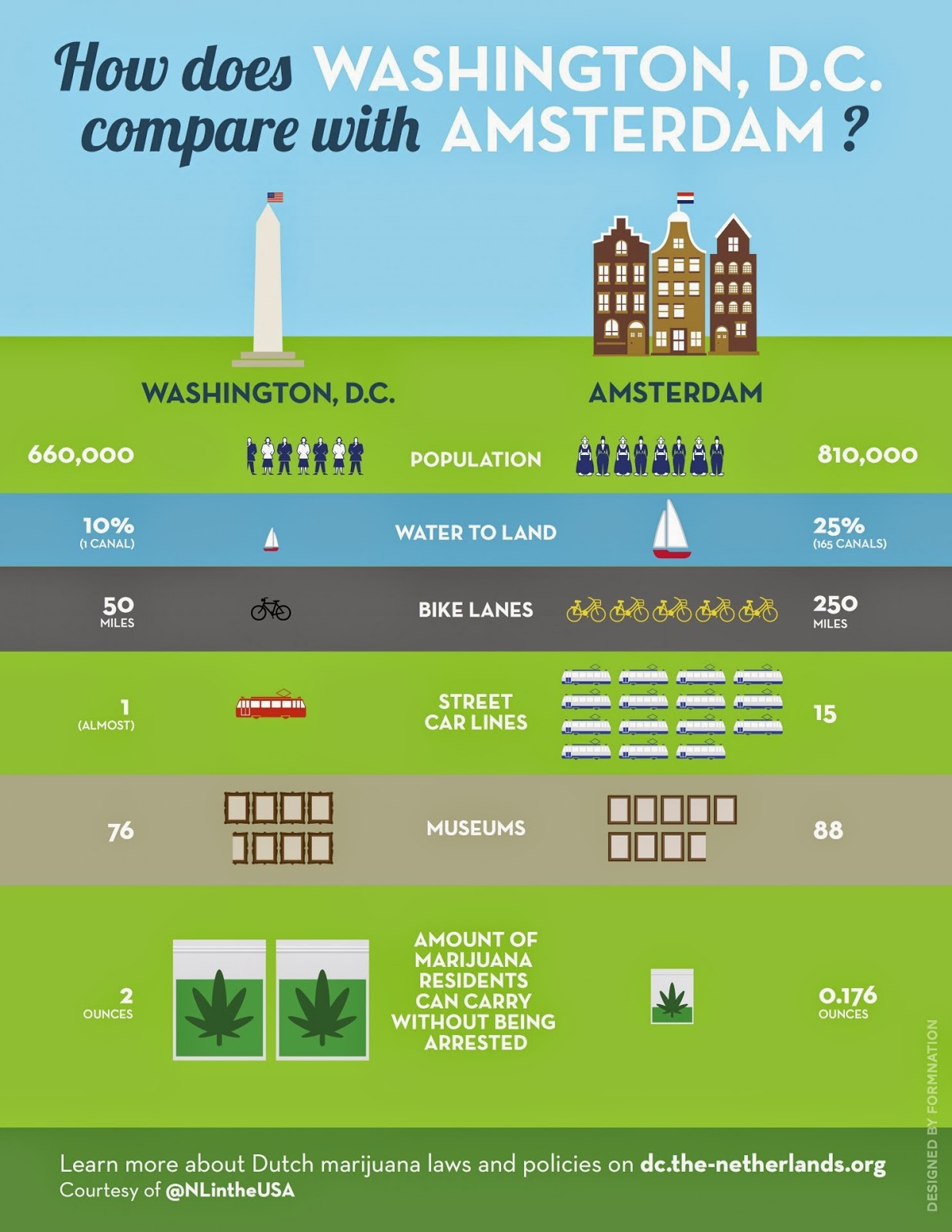
    Initiative 71 became law today, legalizing marijuana in Washington, D.C. under certain circumstances. Mayor Muriel Bowser said this week that the District will not become “like Amsterdam,” as though being “like Amsterdam” would be a bad thing. City Hall even refers to Amsterdam in their official Q&A. To give the people of Washington, D.C. an educated view of how D.C. compares to Amsterdam, the Netherlands Embassy in Washington offers this Q&A about Dutch marijuana laws and policies and an infographic.

    Click through for the Q & A. Here’s the infographic. It’s odd, our American tendency, to take something that works well enough in other countries — be it drug policy or health care — and simple assert that it’s a horrible system best avoided.

  • This is what rational drug policy looks like

    This is what rational drug policy looks like

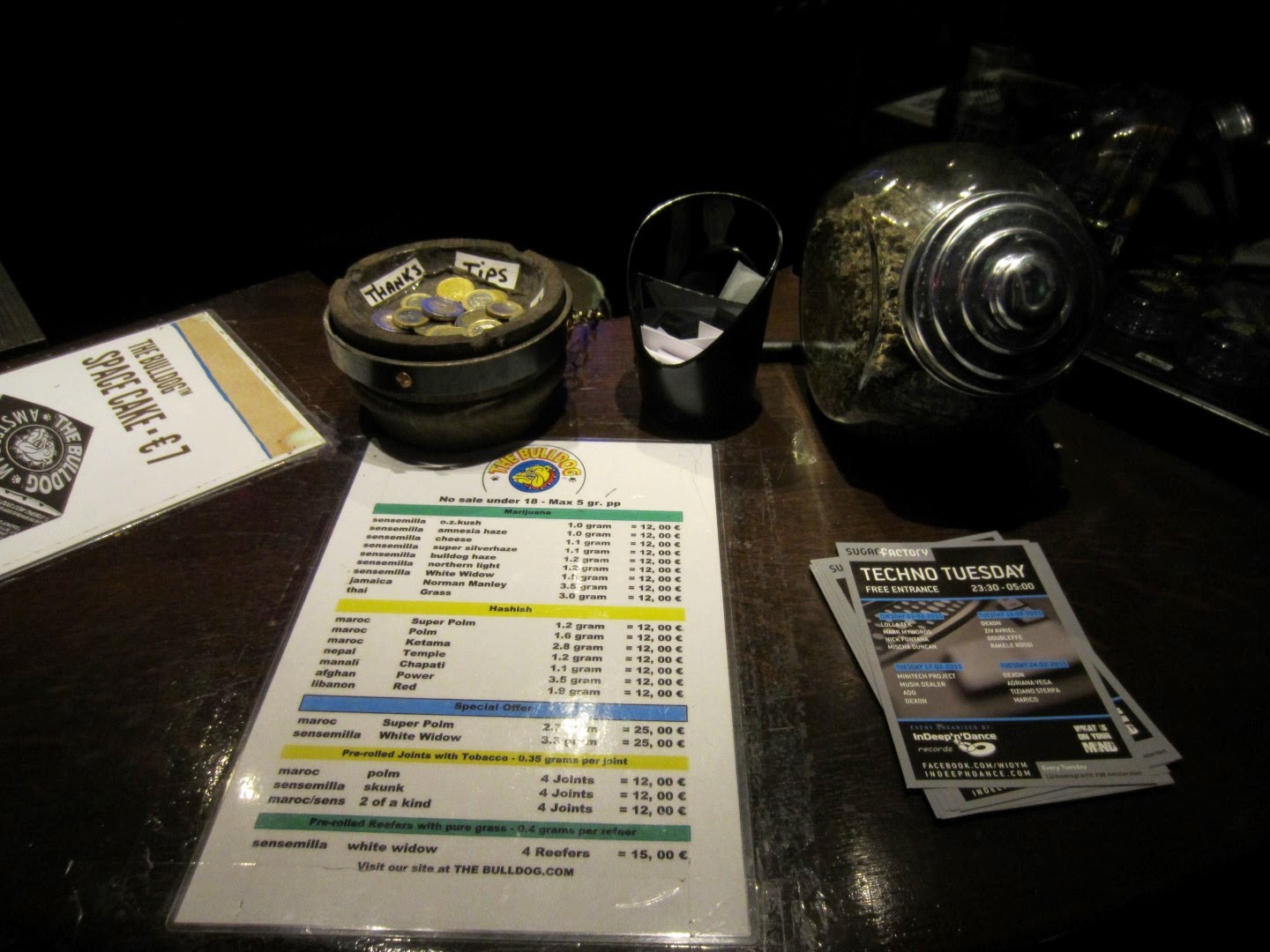
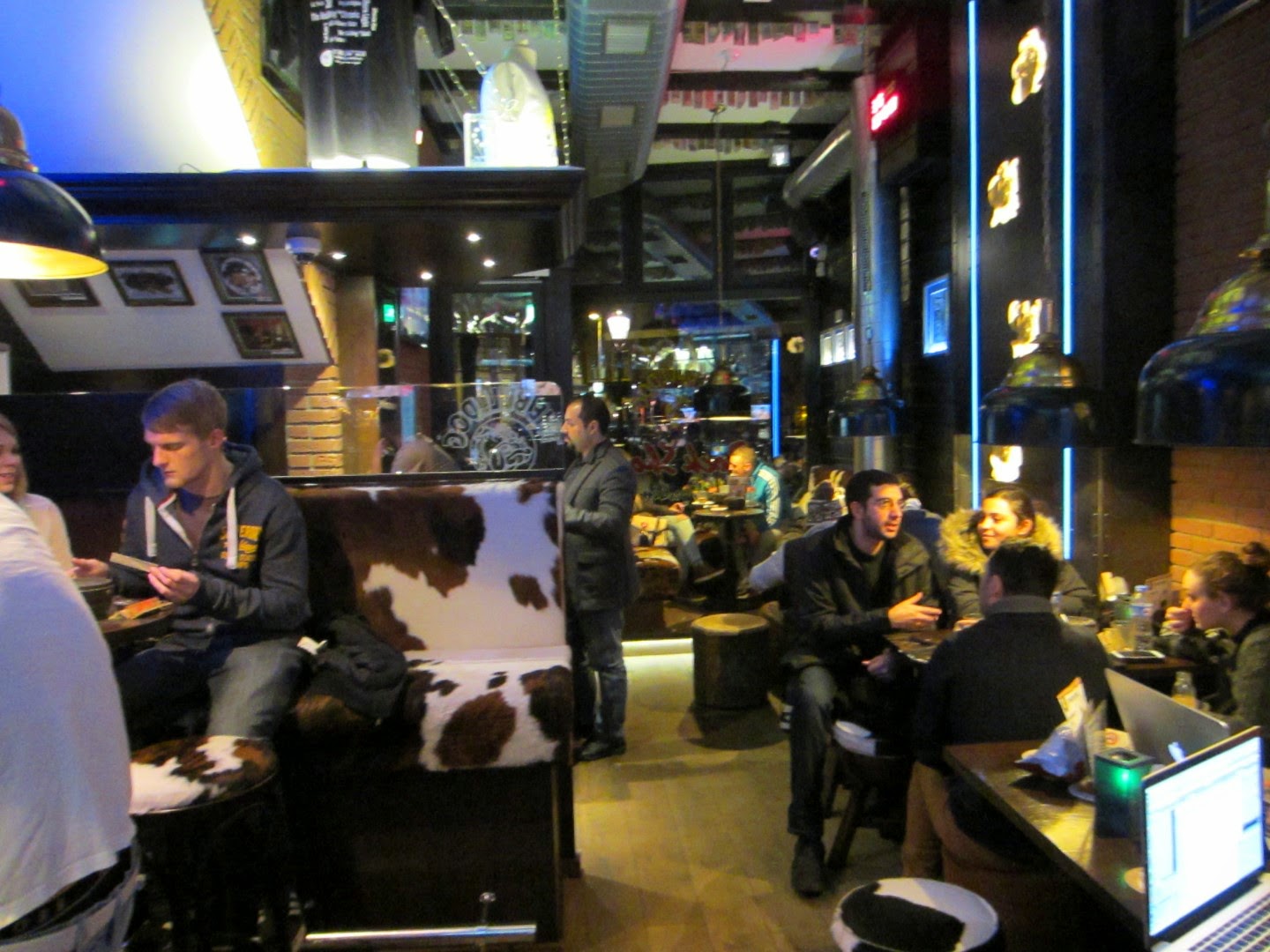
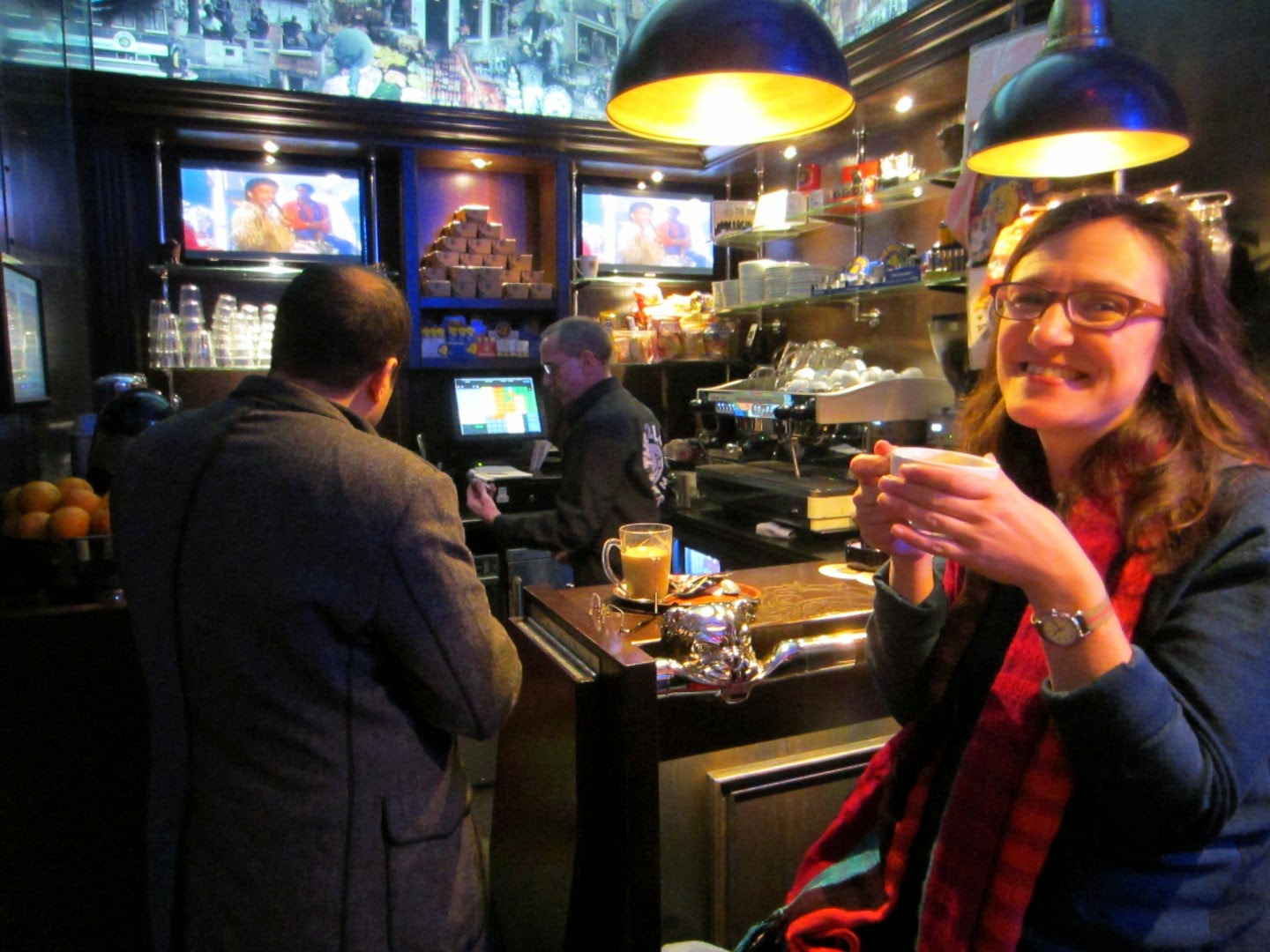
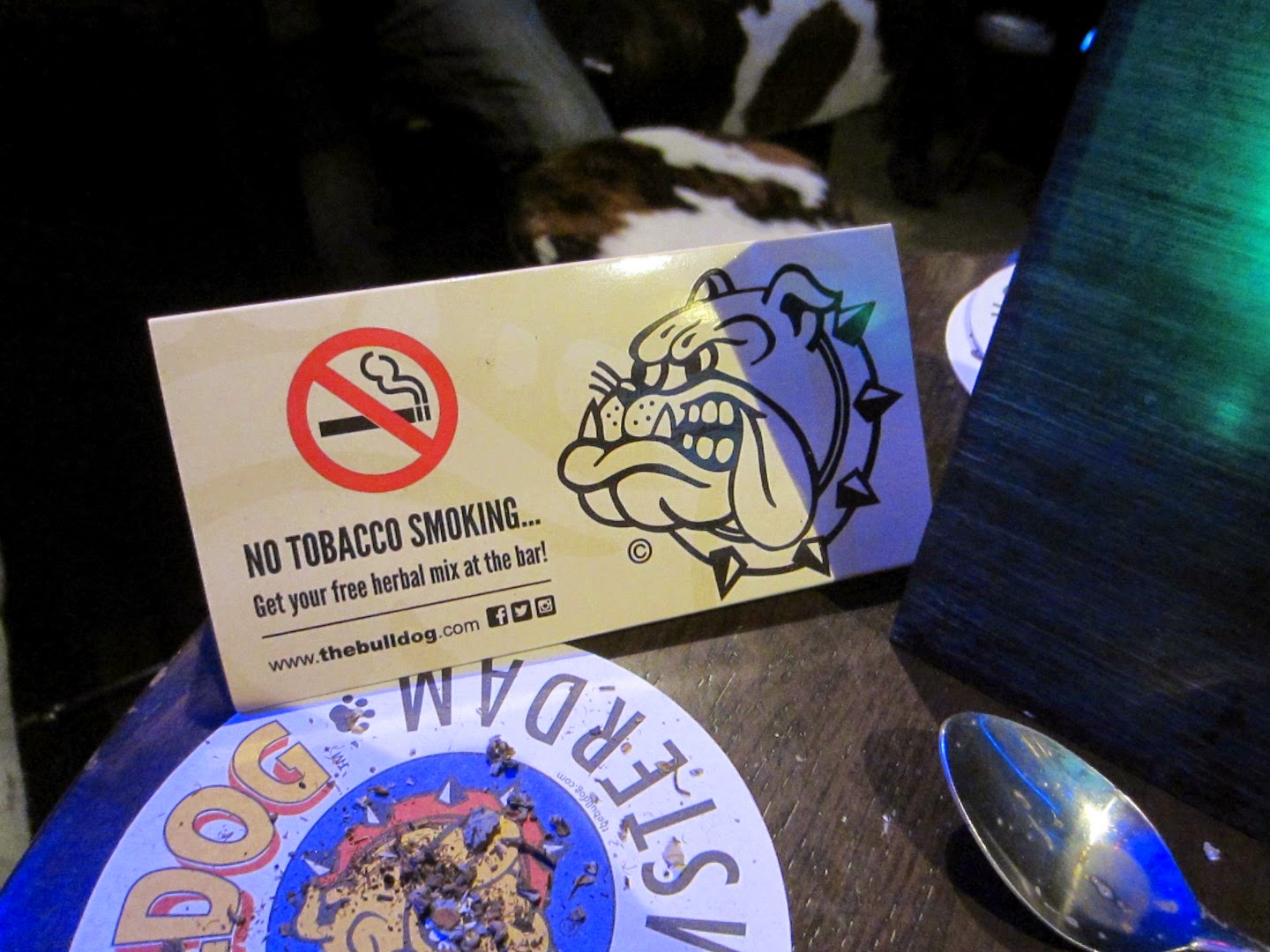
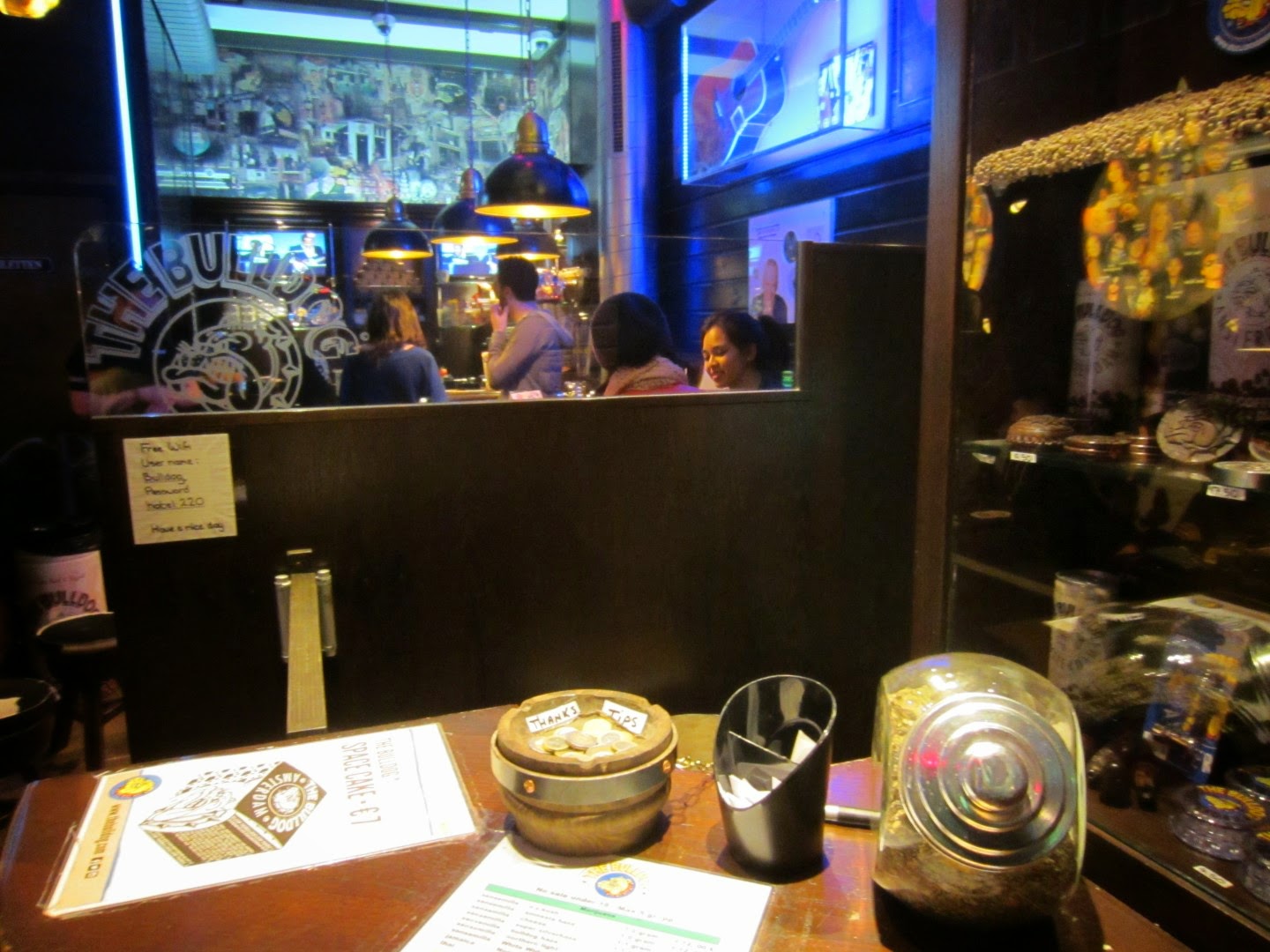
    The other day my wife and I visited a friend from way back who now works in a coffee shop. Actually a famous one, the Bulldog, which is soon to celebrate it’s 40th anniversary.

    Mostly I just love how a legal and regulated drug trade becomes, well, boring.

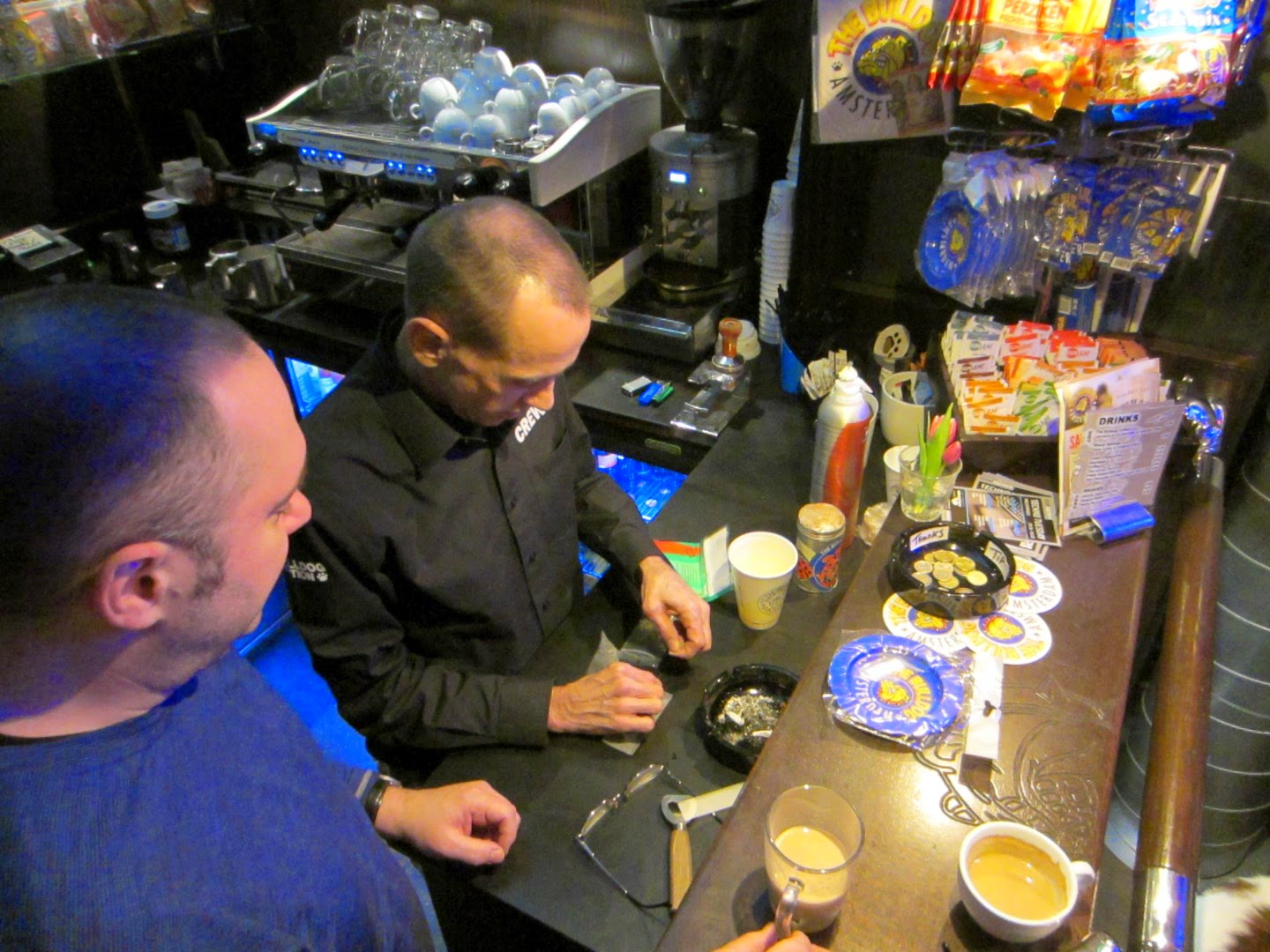
    There actually is a worker on duty who is registered by the city as a drug dealer. Along with having to get a standard cafe operator’s license, the city A) checked his criminal background and B) made sure his money is legit. That’s it. They also gave tips in the standard cafe license class (along with, you know, the usual: keep hot, hot, and cold, cold, and don’t cross-contaminate) on how to run a business and keep accounts and deal with labor issues. Here, as long as you play their game, they actually want you to succeed.

    What’s odd about the coffee shop business is that the business is legal, the drugs they sell are legal in all but name, but the store is only allowed to have 500 grams (1 lb) of weed in stock at any given time (that’s strange, but whatever). So they constantly get re-upped. And at that point in the supply trade, from the guy supplying the coffee shop and up the wholesale ladder, the drugs are illegal. Odd. Also, I think, now there has to be a dedicated drug dealer. Years ago you could order coffee and a joint from the same guy. Now, or at least here, one employee makes the coffees and handles all the business except the drugs. The other sells the drugs. Whatev… It works for the Netherlands. And yes, no tobacco smoking inside a business. That’s illegal.


    This looks a lot better than prohibition, even Dutch prohibition.

  • Don’t snort the white heroin!

    Don’t snort the white heroin!

    So a few months ago in Amsterdam, a couple British tourists died from a drug overdose. The Brits are kind of like the canaries in a coal mine of tourists. Brits are usually the first to somehow kill themselves, if given the opportunity. (It has to do with alcohol.)

    Anyway, they did die. It turned out that some guy on the street was selling heroin as cocaine. This is odd mostly because heroin is more expensive than cocaine, so the drug dealer probably didn’t know what he was selling. But the end result is people snorted heroin, many went the hospital, and a few died.

    So what do you as a tourist city do? Well most places would cover it up. Or make ads showing happy people having fun in the sun. Well there isn’t much sun here, but jokes aside, what they did in Amsterdam is very impressive. It’s what a rational drug policy looks like.

    First of all, hard drugs (heroin and cocaine) are illegal here. So you can’t go into a coffee shop and buy them. But as this city is a bit of a drug tourist destination, people come here wanting to do drugs. So like anywhere, they find a way to buy them.

    As I have written, police spend effort cracking down on fake drug sellers. But these real drugs. Prohibition deaths. Because both the buyer and seller thought they were buying and selling something else.

    So the city but up signs to warn tourists. It may seem like common sense, but what American city would do this? And it was an issue here too. I mean, who wants to see such signs in their beautiful city?
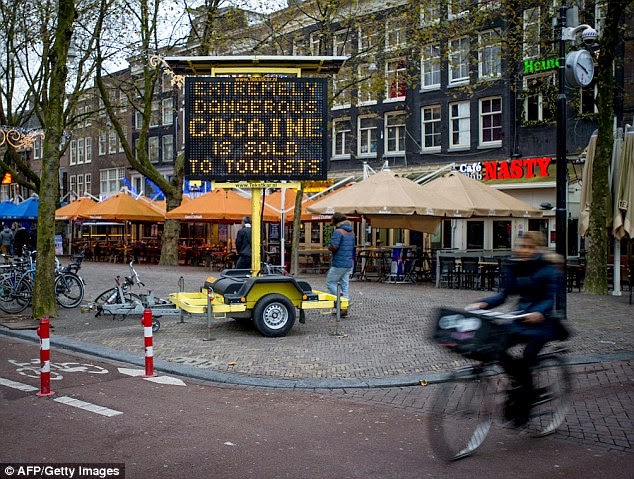
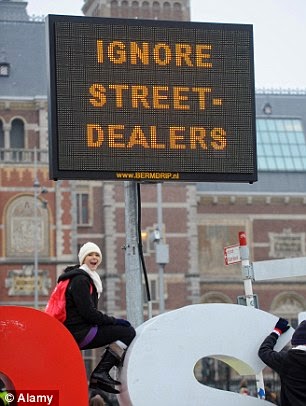
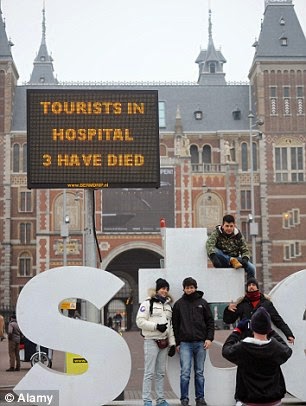
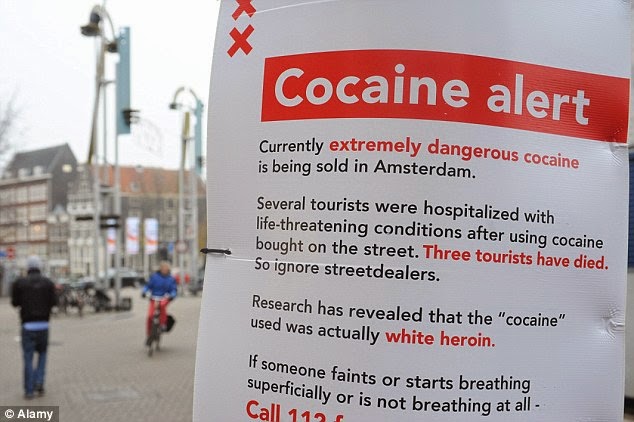
    Of course the campaign to warn tourist more than the actual deaths became international news. Is this good for the city’s image? Well, actually, probably, yes.

    And nobody else died. That’s kind of important.

    Here’s what the Mayor Van der Laan wrote on December 3, 2014. It’s very rational. It’s very Dutch:

    Cocaine alert and reputation

    For the past two months, seventeen predominantly young tourists fell victim to so-called ‘white heroin’. Heroin, sold as cocaine on the streets, that is much more dangerous and therefore potentially deadly. Three young Brits died. An indescribable loss to their family members and friends.

    People who say it is not allowed to use hard drugs are, of course, correct. Reality is, unfortunately, unruly. Many people do something illegal now and again. Even nice people, even people who could be our own family and friends. We cannot ignore that reality, and this is the foundation for our drug policy, which, at its core, takes drug usage as a health problem. Not criminalising it (as opposed to many other countries) makes room for education, safety testing and prevention. And this makes people who unexpectedly use too many or contaminated drugs, be able to apply for first aid, without worrying about being prosecuted.

    We hope the police will find the perpetrator soon. In the meantime, our campaign will continue. There are 35 matrix signs with warnings to tourists. We know most young weekend tourists often arrive on Thursdays or Fridays. Special teams distribute flyers at Amstel bus station, Central Station, Schiphol Airport, and in the city centre.

    In addition, we recommend the exclusion tests available at smartshops. They demonstrate whether or not you are dealing with heroin, but should not offer a false sense of security. This is why we are telling users very clearly that the test does not guarantee the drugs are safe to use.

    Tourists have let us know they appreciate these efforts. Many are surprised we openly warn them of the dangers these drugs entail. I get a lot of questions about that. Don’t you think it is bad for the city’s reputation, all those warning signs and (inter)national media attention? people want to know. The answer to that question is ‘no.’ I would find it bad for the city if we did not do this. Amsterdam wants to do everything to prevent new victims. That is the least we can do.
  • Dateline: Amsterdam

    Dateline: Amsterdam

    I’m in Amsterdam. It’s been three years since I’ve been here, which is the longest I’ve ever been away since 1991, when I first visited (and then lived in) this fine city.

    Like New York or Chicago, Amsterdam has gentrified. A lot. The city is also less interesting. It’s called vertrutting: dulling. There’s a movement to “stop the verturtting of Amsterdam.” It’s like “keep Austin weird.” It’s also pretty much a lost cause. Compared the mid 1990s, Amsterdam is cleaner. It’s more expensive. It’s a lot less scruffy. The squat scene, for instance — once a vital part of culture and nightlife (and housing) — is dead. It used to be legal. It no longer is. The Red Light District is getting smaller and smaller. There is pressure to close down coffee shops (where you buy weed). And coffee shops, despite the fact they’re here to say, are being shut down entirely in some areas (the Spui and Warmoestraat). Why? Nobody knows for sure. They’re also not being allowed within 250 meters of school (300 meters in the rest of the country). This is a solution to a non-existent problem. And yet despite this, the city abides.

    It’s hard to say this still isn’t a great place. Sure Amsterdam may be cleaner, richer, less working class, and less interesting. But I’m happy there’s less dog shit to step in. And things get decided rationally here, by and large. And hell, compared to when I lived here in the 1990s, perhaps I’m cleaner, richer, less working class, and less interesting. So who am I to complain?


  • Amsterdam Police Gay Pride

    Amsterdam Police Gay Pride

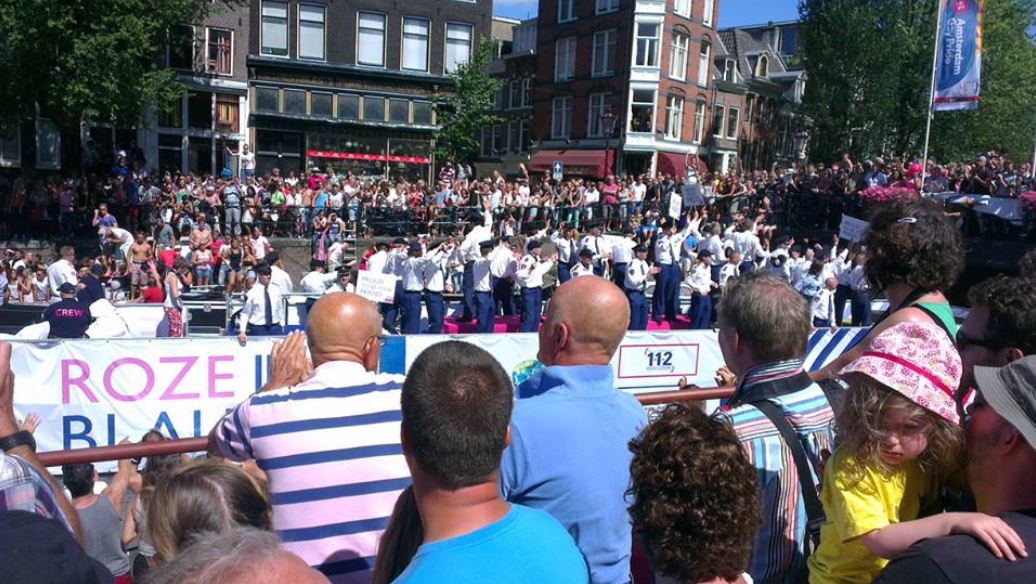
    People are always tickled to see the police boat representing at the annual Amsterdam gay pride boat parade.

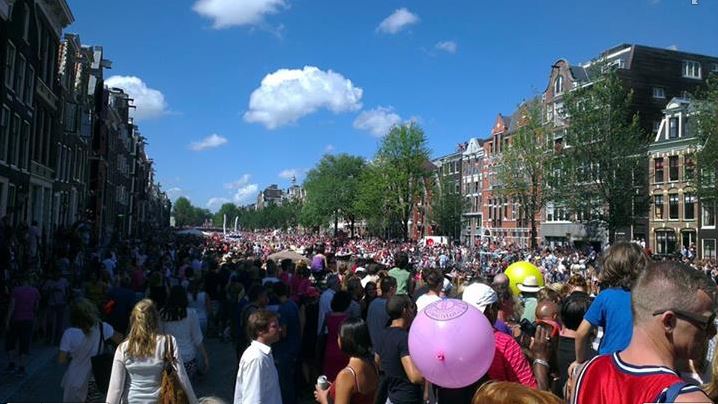
    What’s unusual about this photo isn’t that hundreds of thousands (including every straight family I know) turn out for the gay pride parade in Amsterdam, it’s that there’s a blue sky.

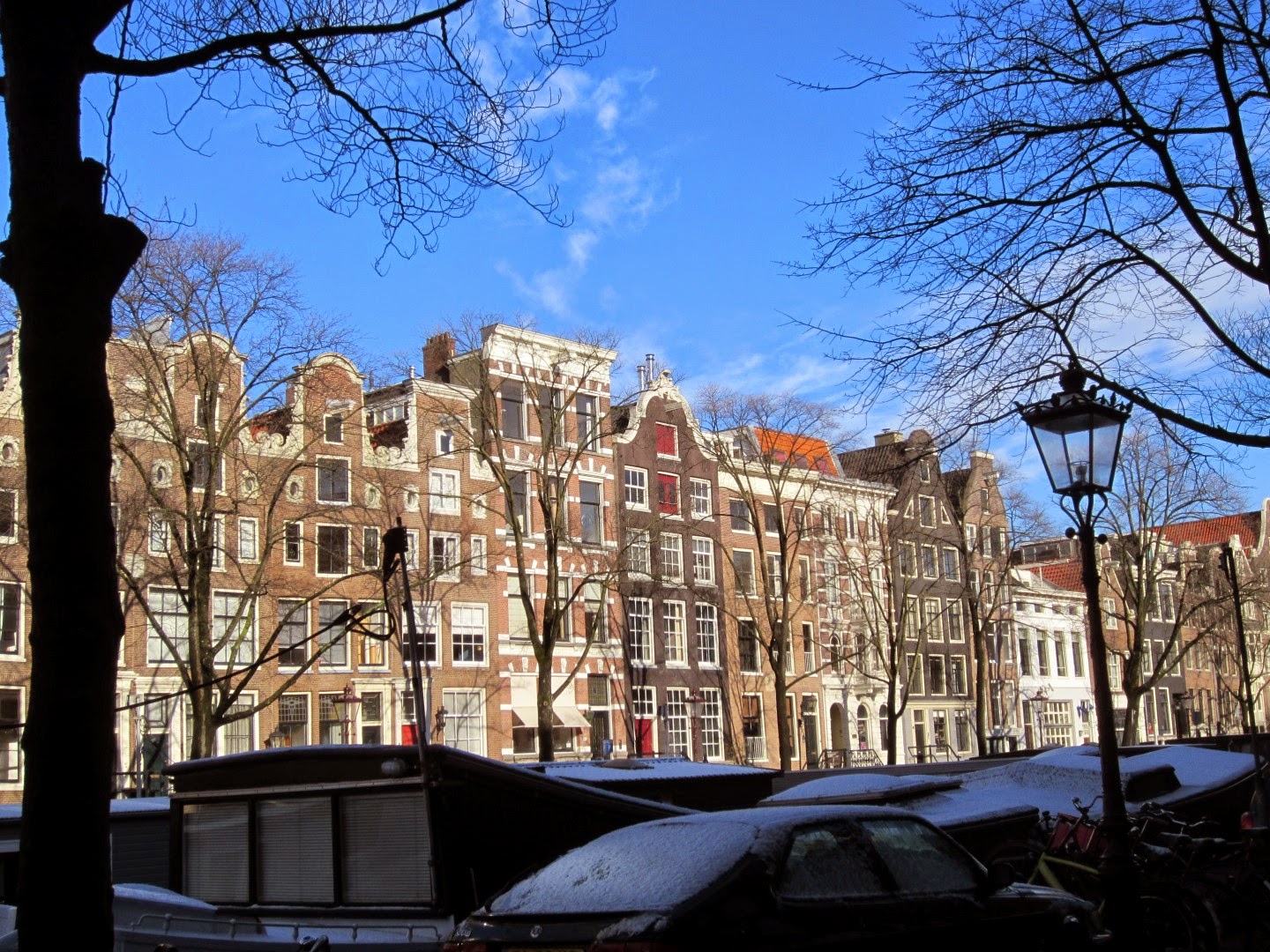
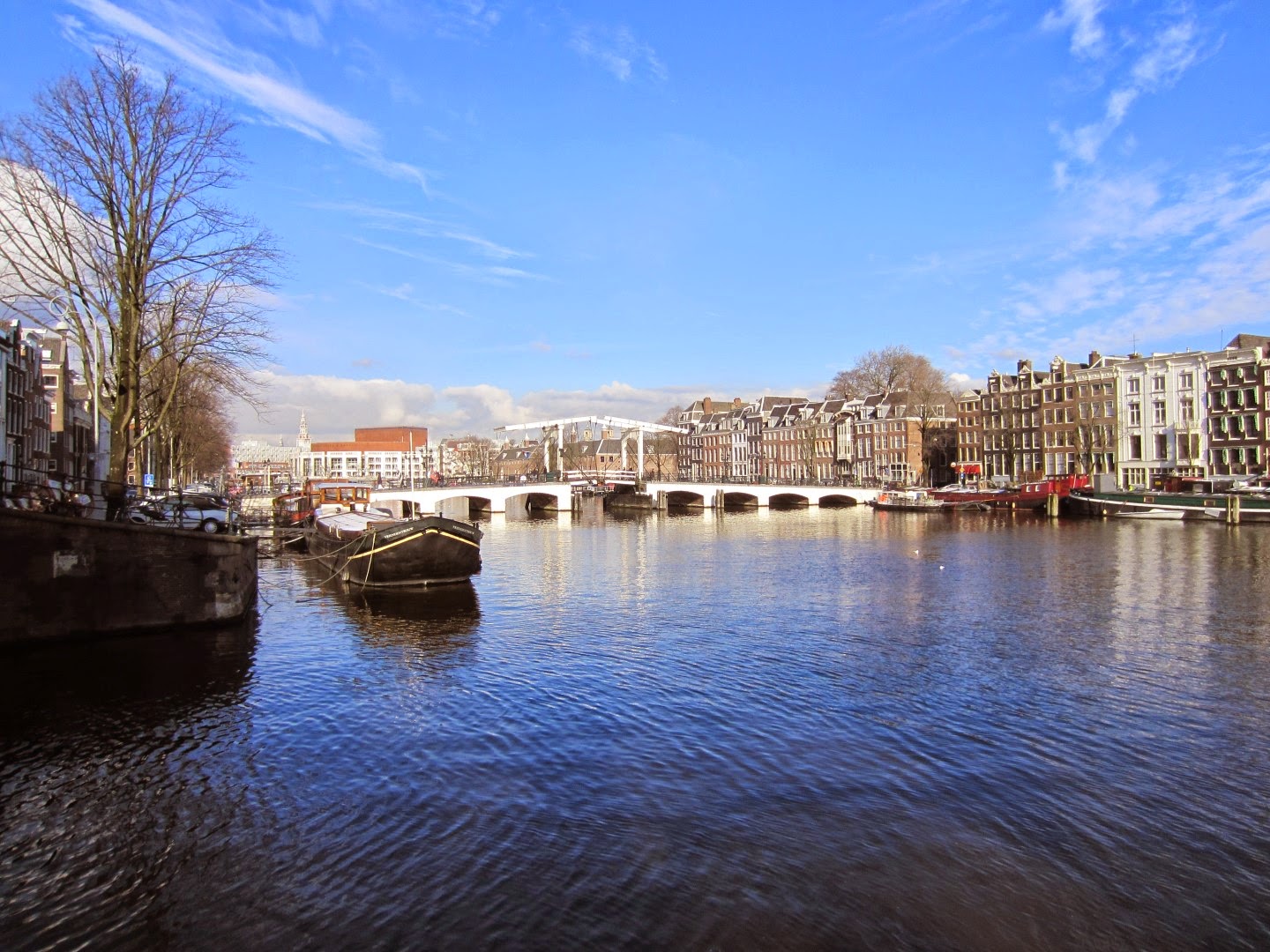
    No city is as beautiful as Amsterdam in the sun with little puffy clouds. It happens at least twenty times a year. 

    (Photo by Pep Rosenfeld, copied from facebook)

  • Dutch Regulate Marijuana

    In a stupid way, mind you. But what I love is that if the Dutch want to regulate drugs, they can! Our illegal drugs are unregulated.

    What’s ironic is that this isn’t actually about drugs. It’s much more about traffic and parking.

    Also, don’t count the kips (chickens) before they hatch. I’d be shocked if this comes into effect throughout the nation and in Amsterdam.

  • Right-Wing Lies (VI) – Dutch Euthanasia

    “The problem is if they just start lying.” That’s how Erik Mouthaan (Holland’s RTL News) puts it. Or, put less eloquently, this is what I’d say to Rick Santorum, who recently lied about the Netherlands, which seems to be a popular pastime (see, for instance) among US prohibitionists and conservatives. Said Santorum:

    People wear differ bracelets if you are elderly. And the bracelet is “do not euthanize me.” Because they have voluntary euthanize in the Netherlands. But half the people who are euthanized every year–and it’s 10% of all deaths–and half those people are euthanized involuntarily at hospitals because they are older or sick. And so elderly people in the Netherlands don’t go to the hospital. They go to another country because there are afraid because of budget purposes, that they will not come out of that hospital.

    Mr. Santorum, have you no shame?

    What isthe Dutch policy on euthanasia? Here’s a good, and factually correct, summary. Basically euthanasia has been decriminalized–meaning it’s technically illegal but the government will not prosecute–if certain conditions are met. These condition include your ability to make such a choice. You also have to be in unbearable pain without prospect of improvement. A doctor has to sign off on these condition (or risk criminal liability). And so does a second doctor.

    And Dutch people are not afraid to go to the hospital (nor do they have to worry about the bill, if they do).

    In 2009 there were 2,636 people (just under 2% of all deaths) in the Netherlands who wanted to (and did) end their lives. 80% of these patients died at home.

    There is nobody in the Netherlands involuntarily euthanized in the Netherlands. They have a word for that in Dutch, “moord”. It means murder. Even in Holland, homicide is still a crime.

    Update:I’d love it for a Santorum fan to comment. Could you please tell me which is the following is most true? Seriously.

    1) You don’t believe me. That is to say, Santorum was telling the truth. Dutch hospitals really do kill sick old people who have to wear bracelets if they want to stay alive.

    2) You think Santorum simply made an honest mistake. He thought it was true it was true at the time. The fact the he is so incredibly ignorant than he could believe such a thing a true? No big deal.

    3) You believe Santorum knew he was lying. But again, no big deal. They’re all lying bastards, but at least Santorum is yourlying bastard.

    Cause I can’t figure out it. But that’s probably because I went to college (but that’s a whole ‘nuther issue).

  • Geert Wilders is a Prick

    But his acquittal in Dutch court is an important victory for free speech in the Netherlands.

    As a side note, the Dutch legal system has some peculiarities from an American perspective, and not just the fact that somebody can be tried for what they say:

    The verdict had been expected as prosecutors themselves had called for his acquittal, arguing that the statements were directed “against a religion as such and not against individual persons or a group of people.”

    Under the case law… it was not possible to convict him….But the Muslim organizations that brought the case won a Court of Appeal ruling that it should go ahead over the objections of the prosecution.

    The complainants had little ground for appealing the case: “In our system, only the prosecution can appeal a judgment,” and that is “highly unlikely.”

  • Regulated Vice

    Legalizing and regulated vice sure makes things easier and safer.

    Here’s the latest story, from the BBC, on such matters as prostitution in Amsterdam.

    The war on prostitution doesn’t affect society like the war on drugs does. But it’s just as crazy! Of course prostitution should be legal and regulated. Duh!

  • “Legal to smoke it…”

    Boom Chicago over in Amsterdam (my brother’s theater) made a funny video about changes in Amsterdam and the drug scene.

    The guy in the video, Greg Shapiro, and I arrived in Amsterdam same year same time. He’s very funny. I poured his beers.

    The other videos are pretty good, too. Check out Tiger Woods’ Apology Outtakes.