Tag: Baltimore

  • Baltimore Bad Image Award

    I love Baltimore. I do. I hope my book makes Baltimore a better place to live and police. But one of my fears is that my book will just contribute to Baltimore’s image problem. I wish I could write a book that talks about the good food and good people and good neighborhoods of Charm City. But I didn’t. Instead I wrote a book about good police in a bad area.

    Slogans like Believe, The City That Reads, and Greatest City in America don’t seem to have much of an impact. My slogan: Baltimore–it means well. The next best slogan in undoubtedly John Waters’s: Baltimore–it’s shock you!.

    Anyway, I’m sure I’m missing some great contributers to Baltimore’s Bad Image. But anyway, here are my nominees for the 21st Century:

    The Baltimore Bad Image Award
    2000: Ray Lewis. Leads the Ravens to the Super Bowl. Lied to police about something he may have known about a murder investigation.
    2001: The Great Train Tunnel Fire. Burns for days. Cuts off the Northeast’s supply of concentrated orange juice (I don’t make this stuff up)
    2002: Darrell Brooks, firebombed the Dawson home, killed the whole family.
    2003: The Wire, Season 2
    2004: Ed Norris, former Police Commissioner (my police commissioner) goes to prison on felony charges.
    2005: Another season of the Wire
    2006: Ditto
    2007: Homicides increase to 282. This is the most since I was in the academy in 1999. Hopefully the “magic” 300 number will never be reached again.

    Here’s hoping Baltimore gets some good news in 2008.

  • Shooting in White and Black

    The Sun has an excellent interactive graphic that can display all the year’s homicide victims. You can select for different variables, so it’s fun to play with (if you’re a nerdy academic).

    One of the depressing things about homicide is the racial breakdown. Breaking violent crime down by race doesn’t get much press, probably because it treads on incredibly un-politically correct territory. But I’m not afraid of fact. According to today’s paper, the city’s homicide count rose to 277 (surpassing the 2006 total).

    If you go to the interactive graphic, select for all of 2007 and white. You get 13 victims. Three of those by shooting. Keep shooting selected and then select for black victims. It’s very, very depressing. It’s mostly clustered in the Eastern, Western, and part of the Northwest.

    Keep black and shooting and add “article, yes.” Look at those red dots disappear. Young black men shot and killed that you never even heard about. And that’s ifyou read the daily paper. Granted, most of the white victims didn’t make the paper either. But for whites in Baltimore, we’re talking maybe a dozen or so, not hundreds of lives a year!

    Most of the deaths are caused by the issues related to the illegal drug market. If we regulated drug selling (and who is for unregulated drug selling?), lives would be saved.

    When people ask me why things aren’t getting better, one of my stock answers is this: liberals refuse to talk about culture and conservatives are too greedy and don’t give a damn. Of course, that’s just my simplistic way to piss everybody off. So let me explain:

    Liberals refuse to think of anything other than “root causes.” This usually comes down to money and racism. If anything is going to get better, it will cost money. But money isn’t everything. Rich drug dealers (though most are poor) have money. And they’re part of the problem. And most poor people struggle buy without ever killing anybody.

    And racism matters. But if we wait till racism is over before moving forward, we’re going to be stuck a very long time.

    And let’s talk culture. Part of ghetto culture is screwed-up. There are a lot of bad parents out there. I’m not going to divide parents into either “good” or “bad,” but some parents simply do a crappy job of raising (or not raising) their kids. I’m not blaming the victim. I think there are good reasons people are screwed up. But screwed up they are.

    Just once I’d like to hear a liberal call anybody a “bad” parent. I’m not saying insulting parents is the answer, but sometimes a little truth is refreshing and helps clear the air (and may get conservatives to open their pocketbooks).

    Conservatives, at least the good ones, do give a damn. But too often they are greedy or ideologically blinded. They don’t want to spend money. We need to change attitudes and shift priorities. But this can’t be done without money. We could make things better. If we had the will, we would find the money.

    Say want you want about the risks of legalized and regulateddrug selling, but if we could save lives (and raise money), wouldn’t it be worth it? If you’re still for drug prohibition after all these failed years, ask yourself what is more important than saving the lives of poor young black men. If you have an answer, you need to look deep inside yourself. You may not like what you see.

  • Hope for the Eastern’s most beautiful building

    Hope for the Eastern’s most beautiful building

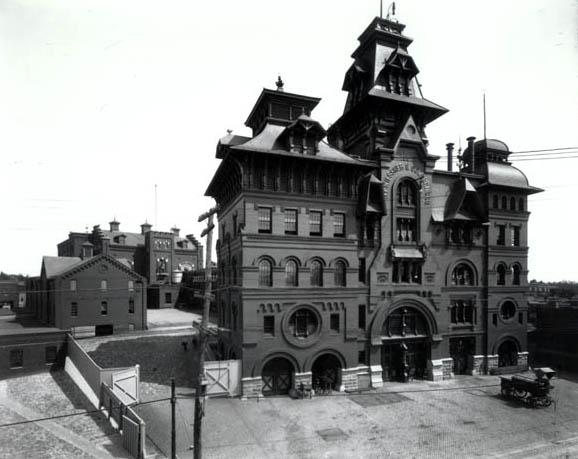
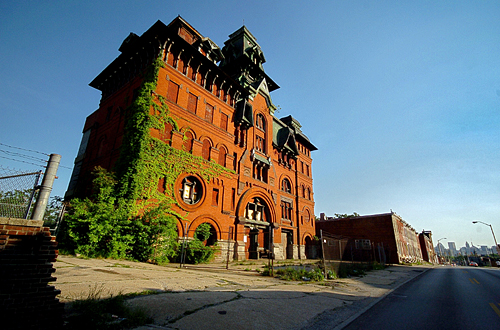
    The Sun reportsthat the American Brewery is getting money for development. This building is gorgeous, in the Eastern District, and in complete disrepair. $35 million to convert the five-story former brewery into office space for a nonprofit social service. It’s good their going for office space rather than residential. The Eastern District is littered with failed residential conversions (the old school just off North Ave being the worst failure).

    One of the nice things about being a cop is you can go explore any urban wreck you want. The interior is falling apart, there are feral fighting dogs living in part of it. And the upper reaches are caked in pigeon shit. It needs a lot of work. But these building also need love. They need to be saved because they will never be built again. Here’s a good 3rd-party account of exploring the building. Mind you, it was 10 years more decrepit when I explored.

    The brewery wasn’t in my sector, but I loved it every time I passed it on the way back to the district. The most veteran cop I worked with remembered when it was still making beer and the friendly brewmeister serving on duty cops at his house across the street. Those were the days…

    The Baltimore Sun did a great series on the neighborhood around the brewery.

  • The Eastern District today

    The Eastern District today

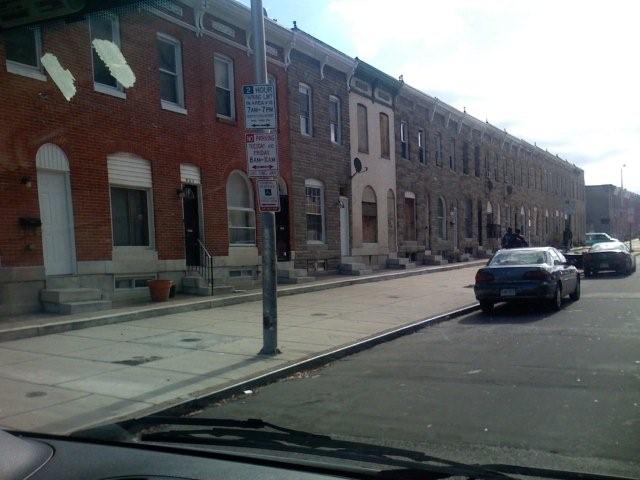
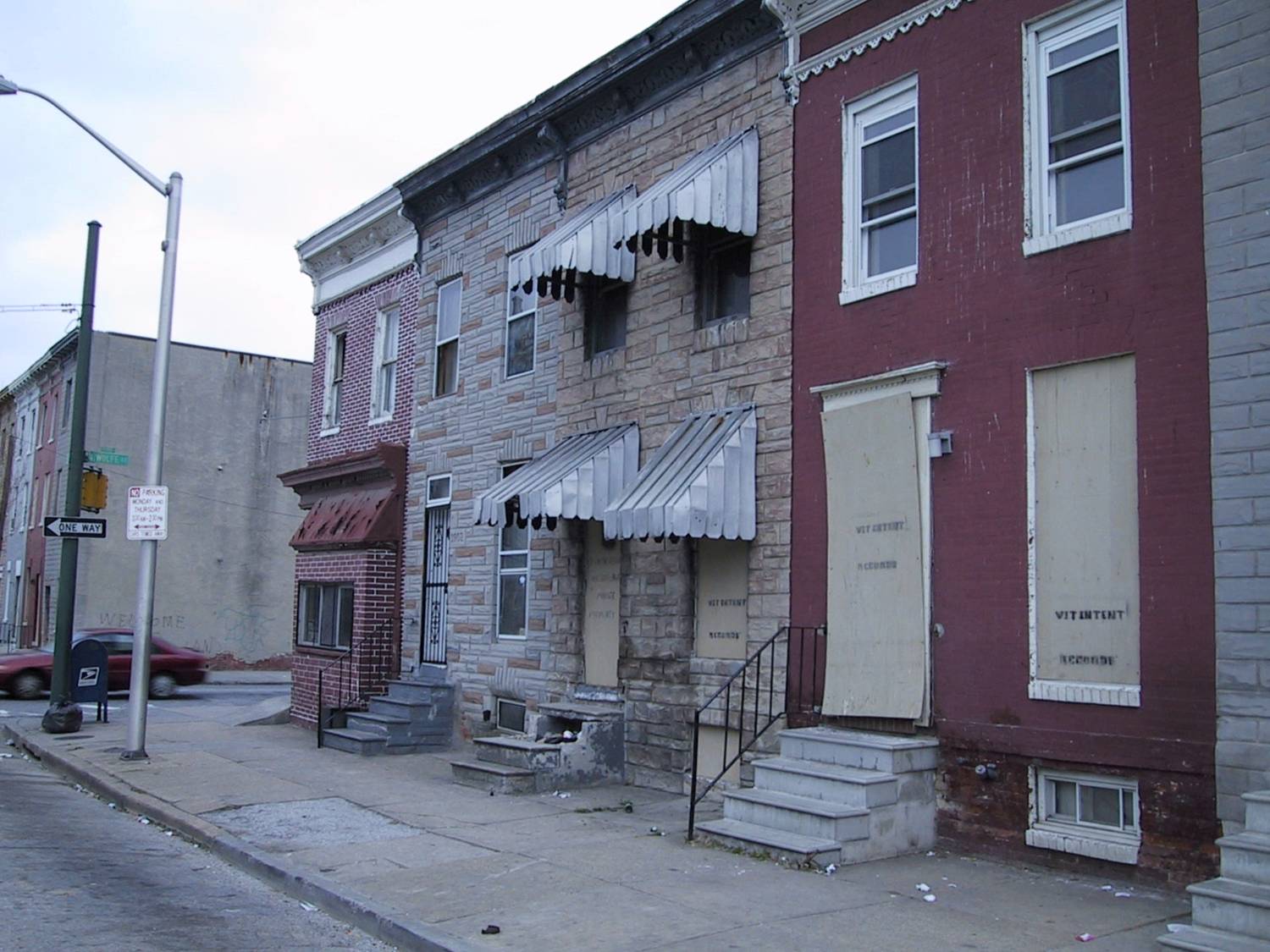
    A student of mine went down to Baltimore and took some pictures of the Eastern. I don’t get there much anymore, even when I go to Baltimore. I don’t know anybody who lives there.

    In most ways, the Eastern looks like it hasn’t changed at all. In one big way, it’s changing a lot: the expansion of Johns Hopkins Hospital (or “Hotkins,” as some say in the ‘hood). It’s a bit sad when even the community doesn’t really object to the destruction of their area.

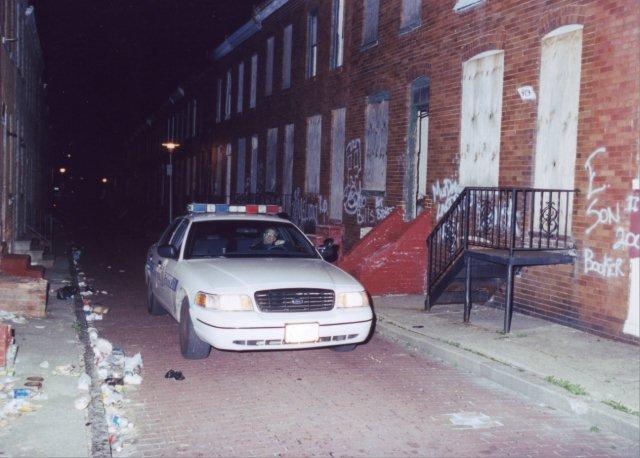
    Of course these pictures don’t show the homes well kept up. There are working people and good homes in the Eastern. These pictures don’t do them justice. Neither does my book. But when an outsider goes into the Eastern, it’s hard not to be shocked by the abandonment of virtually everything.

    Between 1990 and 2000, the District lost 30% of it’s population. And that’s just in these 10 years. I’d guess the District has probably lost three-fourth of its population since its peak, probably in the 1950s. When you take three quarters of the people out of an area, there’s lots of empty space left. Think of that vacant block Hampsterdam from Season 3 of the Wire. That was just west of Broadway, near the Amtrak tracks.

    The blocks just west of Broadway, the ones that haven’t been demolished, are interesting and a little scary. You get streets off of alleys. Even cops have a tough time finding Iron Alley (though many know it as the place a cop was shot and killed in 1985). And even I have to use to Google Earth to remember Hakesley Place and Lansing Ave.

    When most people who can afford to leave, leave, there’s a lot of concentrated poverty and crime left.

    Maybe the expansion of Hopkins will do so good. Maybe not. It’s not like they’ve been great neighbors in the past. And it’s not like I’ve got the answer, short of regulating drug selling and taking the profit out of the hands of criminals (or, even better, turning criminals into legal tax-paying businessmen).


    I like the idea somebody had to paint the boards on boarded-up buildings pretty colors. That way the neighborhood will look nice. This in just south of the market, if I remember correctly.
    These little bricked streets, if you squint enough, can actually look beautiful. I once saw a picture or postcard of this street from 1945. There was a big banner hanging over the street saying, “welcome home soldiers!” All the stoops where scrubbed clean with pumice stone, and every home was occupied. I believe that block had three occupied buildings when I worked there. I remember one burnt down when I was there. Now it’s probably completely unoccupied.

    This used to be the worst drug area in the district, conveniently locked next to Hopkins E.R. bad drug area. This is very strange. It’s all gone now. And they haven’t redrawn the post-boundaries, so 323 post has suddenly become a great post to police. I’m sure the dealers and junkies movie elsewhere. But I wonder what happened to the excellent (black owned and operated) produce stand on Washington St. and Mr. George and his Laundromat and Wolfe and Eager?


    They didn’t have these when I was a cop. I’m not sure if they do any good. I think printing the slogan “believe” on them may be going a little far. A friend of mine is the guy who sits on the police end of these cameras on the midnight shift, watching the cameras. Mind-numbing work, but he’s got no choice. He was forced to retire on disability after being shot and almost killed in the line of duty. He needs the money since he can’t live and support his family on his pension.
    I’m the type of guy who would have bought some ribs from this operation. Other cops thought that was a little funny.
    I think this is Lafayette or Lanvale, judging from the trees. These blocks were some of the prettiest in Sector Two.
    This is taken from Bond St, looking down the 1700 block of Ellsworth. I used to spend many mornings here, just behind where this was taken. It was the best view of the east. I could watch the sun rise and listen to Amtrak trains disappear in the tunnel toward Penn Station.

  • Cops 1 – Robber 0

    For all the press police-involved shootings get in New York City, there are a lot more shootings in Baltimore if you take the difference in population into account (almost an equal number if you don’t). Baltimore shootings don’t get much press because the city isn’t a media center and Al Sharpton doesn’t live there.

    Instead, the local chapter of the International People’s Democratic Uhuru Movement (who?) is protesting the latest shooting. I think they should pick their battles a little better.

    A man robbed a Burger King (not too far from where I lived) and, while making his getaway, pulled a loaded handgun out at police officers. He got killed. Damn right police shot. But perhaps only in Baltimore do family members of the dead robber wonder why morepolice didn’t shoot.

    The full story is here.
    Family demands answers in police shooting

    By Stephen Kiehl

    Baltimore Sun reporter
    December 15, 2007

    The family of a man killed by police last week asked yesterday why it still hasn’t received a written report on the shooting and said it is in the “beginning stages” of filing a complaint with the U.S. Civil Rights Commission.
    Relatives of Coby Brown, 23, said they have not received any response from police despite multiple requests for a full accounting of the Dec. 4 shooting in Upper Fells Point. They also question the use of such lethal force.
    “We are left wondering what happened, how it happened and if it needed to happen,” said Thomas K. Smith, Brown’s stepfather, during a small rally at the shooting scene. “We want the truth.”
    Brown was shot by police after he robbed a Burger King in the 2000 block of Eastern Ave. in Fells Point, police said. Officers on foot patrol gave chase. Another officer pursued in a vehicle. Brown shot at the officers and then stopped in front of a house on Gough Street, police said.
    When Brown pointed his gun at Officer Modesto A. Olivio Jr., police said, Olivio shot Brown in the stomach. Brown died the next day at Johns Hopkins Hospital.
    “This suspect made a choice when he pointed a loaded handgun at a police officer, and when he makes that choice, the officer is left with no choice,” said police spokesman Sterling Clifford.

  • He’s dead… cuff him

    The New York Times has an article by Al Baker, “Handcuffing the Wounded: Tactic Hits a Nerve.”

    I read that article with interest. Police don’t have the option to nothandcuff a suspect. I always thought that officers should have some (limited) discretion to not handcuff suspects. For instance, you’re patrolling, minding your own business, and a person comes up to you and says “I’m wanted, I’m here to turn myself in.” OK. You run his info and indeed, he’s 10-30 (In Baltimore, that means wanted or in custody).

    Let’s also say this person is wanted for a failure to appear in court for a non-violent crime. Why handcuff this guy in public? He’s turning himself in. It only serves to discourage others from doing the same.

    The part of the article that made the sense to me was the idea that after a shooting, there’s a lot to deal with, and you don’t even want to think about having a debate about whether or not to handcuff a suspect. Just do it and move on.

    I think the rules will change only if some doctors can show that handcuffing a suspect could threaten the life of a wounded suspect.

    There was one suspect I didn’t want to handcuff. I was just out of field training and Green, working the Artscape fair in Baltimore on three hours sleep. A young black man was playing the buckets. Buckets are easy to play poorly. But this guy was good. Loud and good.

    Some of the Artscape people complained. The paying vendors didn’t want the noise and were maybe jealous that he drew more people than they were. He wasn’t allowed to play in this area. People paid good money to set up shop.

    Two mounted cops said they weren’t going to tell him shit. My friend and partner wasn’t going to play bad cop either. The drummer had attracted a big crowd, who were enjoying his performance.

    I made the mistake of asking the sergeant what to do, hoping he would say leave him be. But he said to get him out of Artscape boundaries, so I had to do it. After his set, I approached him and, to the loud boos of the crowd, told him to pack up and leave the Artscape property. He couldn’t play in the area. I told him where to move and told him he didn’t have a choice. He agreed, I left.

    A few hours later I was with the same sergeant and the guy was playing again. Sarge said he was 10-30. “There’s the right way and the wrong way to handle these things,” he said. He didn’t put cuffs on him there, which was a smart move. Rather, buckets in hand, he was lead back to the police truck. I had to do the paperwork and write him a citation. I told him he was a good drummer. He was friendly and a little slow. Perhaps mildly retarded. He told me he was blessed. Maybe he was.

    He said made over $500 the day before. He could bang those buckets good.

    He was so compliant, even sweet, that I didn’t think to cuff him until one of the people in the truck said, “Is he 10-30? Then why isn’t he in h-a-n-d-c-u-f-f-s.” Oh yeah. It was a fair question. I was violating departmental regulation. I know there’s no guarantee that a sweet and compliant young man can’t turn violent. But I just didn’t think this guy needed to be cuffed. And though I still thought it unnecessary, I cuffed him.

    Things got worse. I couldn’t write him a citation because he had no ID. You can’t write a ticket if you don’t know how they are. So now he’s under arrest (technically detained to verify identity, but it’s the same thing). I thought he was 20, but it turned out he was only 17. So now there’s there extra hassle of juvenile paperwork.

    I had to count his money for inventory. He had about $170 on him. It was quite a sight later. Laid on the table, you’d think he was a big time drug dealer, except they were all one-dollar bills.

    I should have just let him go. It’s the only arrest I’ve ever regretted.

  • Baltimore crack house

    Baltimore crack house

    #1) 1900 Block of E Eager. 1906 E Eager is the third house (with awning) from Mr. George’s corner laundromat. Two short blocks North of Johns Hopkins Hospital, this corner (Wolfe and Eager) is one of the “hottest” (but hardly the only) drug corners in the neighborhood, heroin and crack are sold around the clock, rain or shine. Most of the customers are locals, but a conspicuous minority of whites drive in from the poor suburbs looking for the purer heroin found in the ghetto. This neighborhood, built around the turn of the century and featuring typical Baltimore rowhomes, formstone, and marble stoops, was all white until the 1950s, middle class until the 70s and 80s, now it is mostly vacant, all black, and very poor. Hopkins and city own most of the property. Hopkins has since torn down most of this area.

    #2) The corner looks deserted. It is just 7 in the morning. But a few moments earlier, there were dozens of people roaming about. But a funny thing happens when you part a police car in the middle of the intersection, turn off the motor (otherwise the picture is blurry), and take a picture. People scatter. Note how everybody is walking away. I didn’t take in personally.

    #3) Approaching the rear of 1906 E Eager from N Chapel St. I was looking for a location to observe drug sailes on the corner and out of one house in particular.

    #4) Most vacants are boarded up to prevent junkies from entering, or filled with too much trash and damage to let one safely enter. The Rear entrance of 1906 E Eager is wide open. The first, time, on official police business, I went in alone. The second time, to take pictures, I brought along a partner, just to be safe.

    #5) The rear room on the first floor is what used to be the kitchen. In the Northeast corner are old appliances, partially stripped and peeling lead paint, and remnants of alpine wallpaper.

    #6) Another view of the alpine wallpaper

    #7) Looking Southwest in the kitchen, a few more appliances.

    #8) The Southeast corner of the kitchen. The iron stove top grates have long been sold for scrap. Almost all the metal has been.

    #9) The front room is the living room. A TV and couch remain. Makes me think the home was occupied into the 1990s. The front door is on the right. It’s interesting to me that a big color TV, once somebody’s prized possession, is no longer worth anything.

    #10) The front door is on the left. Vivid woodland wallpaper remains.

    #11) Looking up the staircase between the rooms. One of the stairs is rotted through, but the rest are in pretty good shape. This is a typical staircase for a rowhome. It’s horrible for police. Often there’s no handrail, and you can easily be pushed down. At the top, suspects could be in either or both directions. They don’t teach you about this in the police academy.

    #12) 2nd floor front room. Nice windows for surveillance of the dealers katty-corner across Wolfe St. Otherwise trash, some drug paraphernalia, a mattress against the wall, two pairs of shoes, and a nicely patterned linoleum floor remain.

    #13) Looking East in the upstairs front room. A nice old heating grate, removed from the wall, hasn’t been taken to sell for scrap. A small water bottle (nicely labeled “water”) is on the floor. This water would be mixed with heroin and heated with lighter in a metal bottle cap from a 40oz bottle of malt liquor. The mixture is then injected. The only thing is these pictures I manipulated is the water bottle. I turned it so I could photograph the word, “water.” I love how it’s neatly labeled.

    #14) Rear room second floor. View looking rear from the stairs. Two layers of floor cover are visible, along with purple latex gloves, and a black tourniquet to make veins bulge for easier injection. An empty container of cornstarch is on the chair. Cornstarch can be put into empty crack vials and repackaged as “burn,” or fake drugs to sell for a quick buck, mostly to whites coming into the neighborhood. Some of these whites then call the police and tell us they were robbed (always of $10 or $20). They don’t get much sympathy. Locals would know not to buy from local junkies. But selling burn is not without risk as selling burn to the wrong person can get you beat up or killed.

    #15) Looking towards the front in the rear room. Mirrors and black pride posters increase the positivity and create a much nicer overall environment. Tupac, Goodie Mob, and Q-Tip. An almost empty bottle of Pepto Bismal lies on the ground, showing that indigestion can strike anyone.

    #16) A poster and broken clock on one wall is just of above the bottles of piss and cans of shit neatly kept in the corner (unfortunately my partner knocked over that board you see on the lower right corner, tipping everything over. It smelled really rank after that.)

    #17) A 2000 Sears poster celebrating Black History claiming it’s not just for February anymore: “Every family has a history. We celebrate yours every day, every year.”

    #18) Bottles of piss sit in old malt liquor bottles. Next to it is a free parenting magazine and a toy box. My partner accidentally knocked the loose door on to the bottles of human waste. This spilled a lot of piss. We left the place worse than we found it. This wasn’t low-impact policing. Sorry.

    #19) Another view of the main lounge and work area. Given the conditions, this is not where serious drug dealers do their work. This is a place for addicts to shoot up, relax, and scheme how to come up with their next $10 hit.

    #20) A few chairs are set around a collection of empty crack vials. There are also more shoes. Why all the shoes?

    #21) Looking closer, there are dozens of empty crack vials. Every color of the rainbow. The legal use for these vials in for perfumes and oils. The color of the cap on the vial often becomes a sort of brand name: red tops, blacks tops, or orange tops. Other good brand names: Uptown, Bodybag, Capone, and the more generic Ready Rock. Also on the floor are candles, cigarette butts, lighters (lots of them), tin foil, and bottle caps. Heroin and coke is an ever popular mix. John Belushi overdosed on it. Sugar, in the form of candy bars and tasty cakes can take some of the edge of the beginnings of heroin withdrawal.

    Notice that the cup being used as an ashtray is standing and in use. The shoes are lined up. Paper is on the floor. In this disorder, there is order. But it’s almost inevitable that at some point in time they’ll burn the place down. And when that happens, you don’t want to be the neighbor next door.

    These pictures were taken in early 2001.
  • Dog fight

    Dog fight

    So Michael Vic apologized for dog fighting. I don’t believe him. He likes dog fighting. He’s not the only one. There’s lots of dog fighting in the Eastern District. That’s just the way it is.

    Many cops I worked with were very upset at animal mistreatment. One time I answered a call for a pit bull on somebody’s stoop. The dog wasn’t causing any trouble but was quite large and in no mood to leave. He just sat there and took in the scene. One family couldn’t leave their home. From behind the screen door, they had no idea where the dog came from and why it was on their stoop. We stayed very near our car for our protection.

    The dog had clear scars on his face from fighting. My partner said, “It’s sad that I feel more for the dog than the people here. . . What did the dog do to deserve this?… I mean, I can rationalize and say that the people choose to live this way. But the dog?”

    I don’t feel more for dogs than people. Seeing a lot of human suffering makes me less concerned about animals. In poor neighborhoods and countries, when faced with mistreated people, it bothers me less to see mistreated animals. That’s just the way it is. It would be great if no human or animal had to suffer but in the meantime it’s all about priorities. People matter more.

    It shouldn’t be a zero-sum world. It’s not that one tortured dog means one person living better. You should care about all living things. But a lot of things bother me when people are “shocked” about dog fighting. Why aren’t more people shocked about the misery peoplesuffer? I wish that people would take some of the sympathy they have for a suffering dog and transfer it to a suffering person. If you already care about suffering people, than by all means worry about dogs, too.

    And why are people so shocked that there is a dog fighting culture? All they would have to do is ask anybody with any connection to the ghetto. But the people who are *shocked* have no connection with the ghetto. And that’s why it bothers me that they pass judgment so quickly and so passionately. They have no clue.

    I don’t like dogfighting. But what if I did? I’ve had an urge to breed fighting game cocks (I will resist) ever since I read Alex Haley’s beautiful description of Chicken George in Roots. I mean, that man loved his chickens. And he fought them. That’s why he loved them. It was beautiful. At least in the book.

    I’ve been in countries (and states) where chicken fighting is legal. I haven’t seen a cock fight yet. But who am I to judge? I feel like it’s none of my business. Cock fighting, dog fighting, is there a big difference? Yeah they’re both bad. To you and me.

    As a cop, I wish there were fewer laws, not more. It’s not right to want to outlaw something just because you don’t like it. A lot of people don’t like that I eat meat. I don’t want them outlawing animal slaughter. The whole point of live and let live is to let people do what they want, even when you don’t like it. Just like free speech only matters when somebody says something offensive.

    Some people want to fight dogs. And some dogs want to fight. That’s what they’re raised for. Is it worse than dog racing? Is it worse that factory farming and slaughter? Is it worse than eating meat? The answer to all those is probably yes, but what if I’m wrong? How can I feel smug saying dogfighting is horrible while waving a hamburger for emphasis?

    I’m always skeptical of judgmental middle-class America outlawing the recreational choices of poor America. There’s a long history of that. Nine times out of ten, when poor people start getting into something, we make it illegal. Everything from drinking to drugs to gambling to prostitution to kids playing stickball in the street. We love telling poor people what they can’t do. And then we lock them up for doing it.

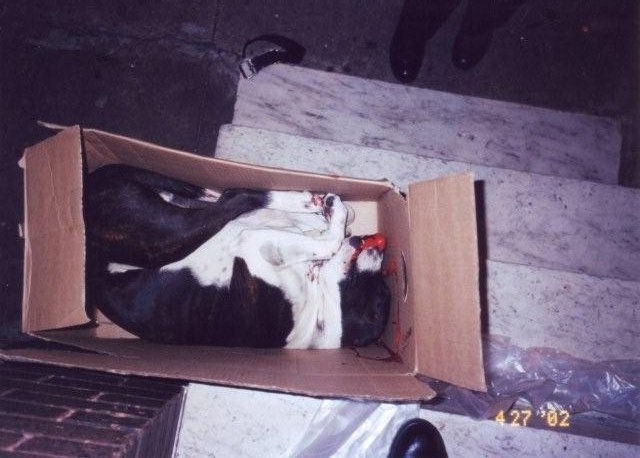
    I saw a lot of messed up dogs in Baltimore (pronounced “dugs,” by the way). And small packs of wild dogs roam the streets at night. The packs actually looked pretty happy and healthy, but it can’t be good for property values.

    Here’s a dead dog left in a box on a stoop. Poor dug.

  • Pictures

    Pictures

    Some of the blight of the Eastern

    RIP graffiti:

    You can’t outrun a mural.

    Pig on pig.

    Ladies…

    After a cutting.

    After being cut.

    It could have been me… but it wasn’t! (I blurred their faces)