Tag: broken windows

  • Broken Windows, Subways, and Crime

    The danger in New York City of subway cuts and transit fare hikes looms. Keeping the transit system in decent shape affects more than your commute to work. It’s a public safety issue. The proposed MTA “doomsday” service cuts puts the past 15 years of public-safety gains in jeopardy.

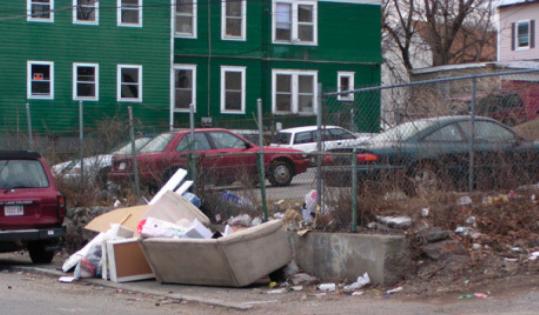
    Many factors contributing to New York City’s crime drop, but a huge part was better policing and a focus on minor and not-so-minor quality-of-life issues, the so called Broken Windows. New York City’s great crime drop was both unpredicted and unprecedented, and it started on the subways. Broken Windows, as formulated by James Q Wilson and George Kelling, says that an unfixed broken window, figuratively speaking, is a sign that nobody cares. This leads to increased disorder, fear, and crime.

    It’s easy to forget how bad things were in the early 1990s. The city was still seen as out of control and, as the New York Times wrote, fear was constant: “Crime, the fear of it as much as the fact, adds overtones of a New Beirut” in a city “bristling with beggars and sad schizophrenics tuned in to inner voices.” In 1990 2,245 were killed. Then crime started going down. It went down fastest in the subway.

    Then transit Police Chief William Bratton focused on the Broken Windows of the subway: turnstile jumping, aggressive begging, and homeless people—many with stunning hygiene needs—using the subway as a free 24-hour shelter. In 1991, crime dropped three times as fast underground as above. By 1994, the subways were safer. Much safer. Felonies had dropped by one-third in three years. Successes in the subway told the city’s tax-payers that they could beat the criminals The great crime drop had swung into gear. A tipping point had been reached.

    Over the past 25 years, many of the city’s broken windows have been fixed. As an improved transit system—started with investment and the virtual elimination of graffiti in the 1980s—lead the way. While academics continue to debate the causal link between disorder and crime, a Broken Windows’s approach resulted in a massively safer New York City and the simply concept that policing and quality-of-life issues matter.

    Since then, tourist spending in New York City has doubled to $29 billion per year. Compared to that, the $1.2 billion needed to close the MTA’s budget gap is a drop in the bucket. Just a few muggings and “random” crimes shown on YouTube will cost the city and state far more than what the MTA needs to keep moving forward.

    Dirtier stations, less maintenance, fewer station attendants, longer waits, and aggressive teenagers tell the public that nobody is in control. With increased fear, fewer people will use the streets and subways, giving criminals a greater opportunity to act. Fear and crime thrive in systems of disorder and decline. With crime and fear, suddenly a vicious cycle is born. That’s why the proposed cuts to MTA service are so dire.

    It is not inevitable that tough economic times bring more crime. Murders in New York were up last year to 523 from 496 in 2007. This is worrisome, but not so much because the numbers are bad. They’re not. But in tough times, it is particularly important to prevent a slide back to New York City’s bloody past. Crime could go down even further. Canada has a few more murders than New York City but with four times the population. With continued good policing and public funding, we could move in that direction.

    Or we could slip back. It is possible, with bad public planning and the self-fulfilling idea that crime and violence will increase. MTA service cuts affect more than service. The doomsday cuts can lead to a real doomsday with thousands of New Yorkers again being killed each year. In her classic book, The Death and Life of Great American Cities, Jane Jacobs wrote, “We must understand that the public peace—the sidewalk and street peace—of cities is not kept primarily by the police, necessary though they are. It is kept primarily by an intricate, almost unconscious, network of voluntary controls and standards among the people themselves.” Service cuts equal more disorder, fear, and crime.

    In tough economic times, the subway is the last service that should be cut, not the first. There’s no reason we can’t slide to New York’s dark ages. But it doesn’t have to be this way, but if we lose the subways, the city will follow. Subway cuts are the first step to breaking our city’s windows, the same windows that have so painstakingly been fixed over the past twenty years. And that will be the most costly mistake of all.
  • Cameras and Crime

    Here’s an article in the New York Timesabout the (weak) link between security cameras and crime prevention.

  • Broken Windows Works

    Broken Windows Works

    Researchers, working with police, identified 34 crime hot spots. In half of them, authorities set to work – clearing trash from the sidewalks, fixing street lights, and sending loiterers scurrying. Abandoned buildings were secured, businesses forced to meet code, and more arrests made for misdemeanors. Mental health services and homeless aid referrals expanded.

    In the remaining hot spots, normal policing and services continued.

    Then researchers from Harvard and Suffolk University sat back and watched, meticulously recording criminal incidents in each of the hot spots.

    The results, just now circulating in law enforcement circles, are striking: A 20 percent plunge in calls to police from the parts of town that received extra attention. It is seen as strong scientific evidence that the long-debated “bro ken windows” theory really works – that disorderly conditions breed bad behavior, and that fixing them can help prevent crime.


    Read the whole story in the Boston Globe. I’ll try and get my hands on the actual report.

    [Update: The article is Braga, Anthony A and Brenda J. Bond. 2008. “Policing Crime and Disorder Hot Spots: A Randomized Controlled Trial.” Criminology. Vol. 46(3).

  • Broken Windows in the Economist

    I got issues with this piecefrom the normally stellar Economist.I just happened to have lunch yesterday with George Kelling. He has issues, too.

    For one thing, Broken Windows is not Zero Tolerance.

  • Shot cops and turnstile jumping

    There’s more about that here. Also interesting (if it weren’t, would I post it?). “Officers Seeking Fare Evaders Often Find Worse Crimes.”

    And here’s a first hand account of the shooting from the L.T.

  • Bright light! Bright light!

    Bright lights don’t reduce crime. Goodlighting might. Too often people reflexively think that the brighter the street light, the safer the streets. I don’t buy it.

    Lighting sets the tone. Street lighting is no different. If you light the streets well at night (not just bright, but well), people will go out and, without even knowing it, help keep things safe.

    In Holland, they call the concept of creating a nice environment gezelligheid. I wish we would take this concept into account when planning lighting and public safety in our public spaces. Candles are gezellig. Florescent lights aren’t.

    Horribly bright orange sodium vapor lights are probably just as bad as having no light as all. You can’t have a romantic stroll under orange lights. You’ll never want to sip a drink under bad street lighting. Bad lighting makes people look ugly and tells them to go inside. Fewer eyes on the street make the streets less safe. Good lighting sooths people and lets you see the street, the stars, andthe moon. Good lighting makes you want to take an evening stroll and kanoodle.

    This came to mind while reading Eric Jay Dolin’s gripping Leviathan: The History of Whaling in America. Ever since I first read Moby Dick (like 4 months ago), I’ve been fascinated with whaling. In Dolin’s wonderful book, he quotes John Adams making what must be one of the earliest references linking dark streets to crime.

    In 1783, 46 years before Sir Robert Peel established the first metropolitan police force in London, Britain passed a tax that effectively banned American whale products. In 1785, John Adams made his appeal to the British to lift this ban:

    The fat of the spermaceti whale gives the clearest and most beautiful flame of any substance that is known in nature, and we are all surprised that you prefer darkness, and consequent robberies, burglaries, and murders in your streets, to the receiving, as a remittance, our spermaceti oil. The lamps around Grosvenor Square, I know, and in Downing Street, too, I suppose, are dim by midnight and extinguished by two o’clock; whereas our oil would burn bright till 9 o’clock in the morning, and chase away, before the watchmen, all the villains, and save you the trouble and danger of introducing a new police into the city. (Dolin 2007, p. 168)

    The appeal failed. Britain retained its protectionist policies. It’s interesting to think of the role whale oil (or the lack thereof) contributed to street crime and the establishment of modern-day police.

  • Fixing Broken Windows in Chicago

    Chicago Police Superintendent Jody Weiss says he plans more foot and bike patrol and an emphasis on “broken windows” policing. This is great news for Chicago… if it actually happens. It’s tough to get cops out of cars. But Weiss is certainly saying the right things. This is reported in the Sun Times.

    The point of getting tough on the little things isn’t just to get tough on the little things for no reason. It’s either because the little things are bad (like people pissing on your front door) or because the little things are part of a greater problem (like subway turnstile jumping was in New York City).

    Broken Windows is not Zero Tolerance. Broken Windows is a strategy that respects police officers (by encouraging officer discretion) and the community (by listening to the community). Broken Windows is about problem solving and reducing crime. Zero Tolerance is about enforcing rules to increase police “stats.”

    You can read the original 1982 Broken Windows article here. It’s a classic.