Tag: for academics

  • Why is Academic Writing So Bad?

    Stephen Walt in Foreign Policy:

    In the end, it comes down to what a scholar is trying to achieve. If the goal is just narrow professional success — getting tenure, earning a decent salary, etc. — then bad writing isn’t a huge handicap and may even confer some advantages. But if the goal is to have impact — both within one’s discipline and in the wider world — then there’s no substitute for clear and effective writing. The question is really pretty simple: do you want to communicate with others or not?

    Back in October I looked at Amazon’s top 40 books in sociology. You had to get to number 43 (Alone Together by Sherry Turkle) before you came across a sociologist. Foucault came in at #61.

    It’s not to say there wasn’t great sociology in the top 40. It’s just that this sociology isn’t being done by sociologists. Admittedly Amazon’s classification of “sociology” leaves a bit to be desired, but in the top 40 are 7 journalists, 3 moms, 2 CEOs, 1 priest, 1 aspiring model, 1 rapper, 1 liberal TV talk-show guy, 1 survivor of child abuse, 1 public speaker, and 1 community organizer / President of the United States. There were 8 professors selling in the top 40 of sociology: three economists, and one each from political science, computer science, law, clinical psychology, and business administration. Where are the sociologists?

    Here’s what’s weird. Sociologists assign many of these books in our classes. The outstanding work of Alex Kotlowitz comes to mind. He wrote There Are No Children Here and The Other Side of the River. Last weekend I heard him on This American Lifediscussing the horrible effect of gun violence in one Chicago high school (really worth listening to, especially for those who think the American playing field is level). I don’t know a single sociologists who doesn’t respect Kotlowitz’s as sociology. And yet his work, as written, would be rejected from every top sociology journal (poor guy has probably never ran a regression in his life). The same could be said for Malcolm Gladwell, Michelle Alexander, Eric Schlosser, Jane Jacobs, and Robert Putnam. Sociologists rightfully claim such excellent research and writing as sociology, and yet we do not reward sociologists who follow in their footsteps.

  • Now Hiring: John Jay College Dept. of Law & Police Science

    “Did you say tenured-track professor in New York City!?”

    Why, yes I did.

    My department at John Jay College of Criminal Justice (Law, Police Science, and Criminal Justice Administration) is hiring 3 (count ’em, three) tenure-track assistant-professor lines. Two are police-related; one a more general criminal-justice (or it might be the other way around, but that doesn’t really matter).

    You can read the job postings here (for police) and here (for criminal justice).

    You need a PhD or have to be on track to get one in the spring.

    Related, I and some of my colleagues will be at the ASC conference in Chicago this week (I’ll be there Wed-Sat). We’re looking for a few good men and women. Come find us and we can all tell each other nice things about ourselves.

  • How the iPhone Changed the Way We Do Ethnography: A Methodological Note

    In
    my partial blog-writing absence (though in case you’re worried, all is well
    here in Astoria, Queens, post storm — we’re high and dry and with electricity)
    I wanted to feature a few promising up-and-coming researchers I’m excited about.

    The first of the young-upstart rising-star whipper-snappers is Jan
    Haldipur (his email). Jan, an
    ethnographer from upstate New York,is a PhD Candidate in Sociology at the CUNY Graduate Center. He’s researching how the NYPD’s Stop, Question,
    and Frisk policies affect people in a South Bronx neighborhood.

    I
    had a few beers with Jan the other week, and (when I wasn’t trying to impress
    him with inferior Dutch-language skills) we got to talking about taking
    field notes.
    When I was a cop, being required to carry paper and pen makes initial note
    taking comparatively easy, at least during down-times. But if you’re doing research
    with people who, to put it politely, are more questioning of authority, whipping out a notepad can be rather
    conspicuous in a head turning and even potentially dangerous kind of way. And yet, memory
    being what it is, a researcher needs to take notes. Jan discovered a great way
    around the dilemma. These are Jan Haldipur’s words:

    Perched
    on the top of a bench in a small courtyard nestled in the South Bronx’s Jackson
    Houses, I sat with “Chaz,” one of my contacts in the neighborhood. It was my
    first month in the field. With temperatures nearing the triple digits, we clung
    to the shady side of the bench, nearest the trees. As I sat, wiping the sweat
    from my brow, he told me about a recent argument he had with his grandmother. Not
    wanting to miss some of the key details, I clumsily pulled a notepad out of my
    back pocket.

    Chaz
    stopped mid-story and asked me what I was doing.

    Jan:
    I have to write some of this stuff down…remember? Like we talked about.

    Chaz:
    I know that much…but you looking like the Feds with that notebook [laughs]. You
    see everybody looking at us now?

    Feeling
    as if time had just stopped, I looked up to see that we were on the receiving
    end of a set of glares from a group of teens sitting on an adjacent bench.

    In
    an attempt to stay true to my ethnographic forefathers, I had been jotting down
    notes in shorthand. Deep in the recesses of countless seminal ethnographies,
    one can usually find a footnote or appendix detailing the experiences one has
    collecting data. Everyone from Whyte to Venkatesh [ed note: and Moskos], it seems, has shared
    personal anecdotes on finding odd moments to jot down notes of what they
    observed, heard and felt. What these texts seemed to gloss over, however, is
    just how conspicuous one can look with a pen and pad in 2012.

    Not
    wanting to make the situation any more uncomfortable than it was already
    becoming, I fumbled around in my pocket and pulled out my iPhone, opened the “notes” section and began typing. In an age when most teens and 20-somethings
    remain glued to their i-devices, checking mail, or texting, I found that my
    fiddling with a phone while talking to Chaz was no longer “curious” behavior. In
    fact, it was seen as quite normal.

    Over
    the next few weeks and months, meeting with Chaz and an assortment of other
    community members, I made a conscious decision to leave my pen and pad at home.
    Instead, I relied almost purely on my phone, and, situation permitting, a voice
    recorder. The core of the “ethnographic process” remains intact. The means to
    achieve change with the times.

    The
    iPhone! It’s the kind of brilliant yet simple observation I love. And hopefully it will help other researchers out there in the field.

    [Update: In November, 2012, I was in Chicago for the ASC conference and was riding the Green Line on W. Lake Street toward the loop around 1AM (my, how Chicago has changed since I grew up there). There was one other person in the L car, an African-American man about my age at the other end of the car. I was standing up, in the middle of the car, checking out the fancy new L car. I was scribbling notes in my pad (as I am wont to do). The other guy got upset and told me to, “Stop doing that cop shit!” I told him I was a writer. We ended up on decent terms.]

  • Help Wanted

    My department at John Jay College of Criminal Justice (Law, Police Science, and Criminal Justice Administration) has three full-time assistant-professor tenure-track lines we’ll be hiring for in the fall. Two are for general criminal justice and one is for police. If you know of anybody — a promising PhD candidate or a professor who wants to move to what just might be the greatest city in the world — get in touch with me.

  • Food Deserts: Quantitative Research at its Sketchiest

    Food Deserts: Quantitative Research at its Sketchiest

    The New York Times reports today on a RAND study (behind the Great Damned Elsevier Pay Wall) by Ruopeng An and Roland Sturm about the lack of “food deserts” in poor neighborhoods. Or more precisely about the lack of link between food deserts and obesity. More specifically, it questions the very notion of food deserts. From the Times:

    There is no relationship between the type of food being sold in a neighborhood and obesity among its children and adolescents.

    Within a couple of miles of almost any urban neighborhood, “you can get basically any type of food,” said Roland Sturm of the RAND Corporation, lead author of one of the studies. “Maybe we should call it a food swamp rather than a desert,” he said.

    Sure thing, Sturm. But I suspect you wouldn’t think certain neighborhoods are swamped with good food if you actually got out of your office and went to one of the neighborhoods. After all, what are going to believe: A nice data set or your lying eyes?

    “Food outlet data … are classifıed using the North American Industry Classifıcation System (NAICS)” (p. 130). Assuming validity and reliability of NAICS occupational categories is quite a red flag. It means that if something is coded “445110,” then — poof — it’s a grocery store! What could make for easier analysis? But your445110 may not be like my445110. Does your supermarket look like this:

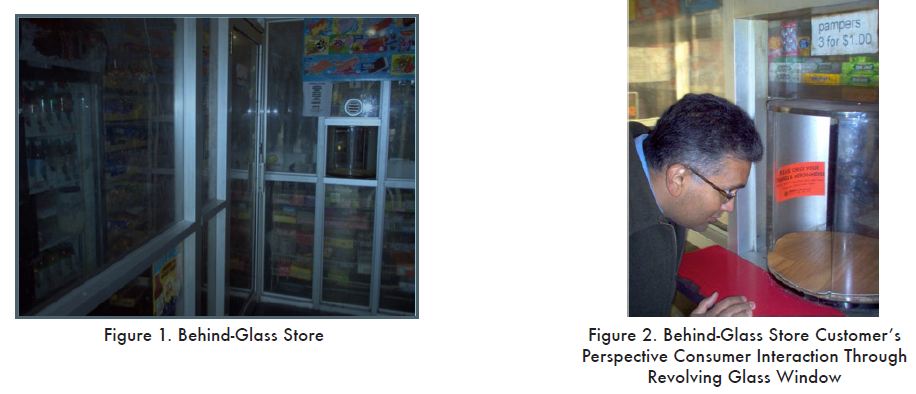
    Well the NAICS says it does because they’re both coded 445. New York is filled with bodega “grocery stores” (probably coded 445120) that don’t sell groceries. You think this matters? It does. And the study even acknowledges as much, before simply plowing on like it doesn’t. A cigarette and lottery seller behind bullet-proof glass is not a purveyor of fine foodstuffs, and if your data doesn’t make that distinction, you need to do more than list it as a “limitation.” You need to stop and start over.

    Here’s one way to do it: a fine 2010 Johns Hopkins study edited by Stephen Haering and Manuel Franco. They actually care about their data. Read the first page in particular for the problems of food-store categorization. It matters. And notice the sections titled “residents personal reflections on their local food environment” and “food store owners’ attitudes regarding stocking healthy food.” What a concept for researchers to actually talk to people! (The picture above is from this study.)

    I find this so frustrating because so much quantitative analysis is so predictably problematic, over and over, again and again, in exactly the same way. Here’s the mandatory (and then ignored) disclaimer (p. 134, emphasis added):

    Possibly even more of a limitation is the quality of the … business listings, although this is a criticism that applies to all similar studies, including those reporting significant fındings…. More generally, categorizing food outlets by type tends to be insufficient to reflect the heterogeneity of outlets, and it is possible that more detailed measures, such as store inventories, ratings of food quality, and measuring shelf space, would be more predictive for health outcomes. Unfortunately, such data are very costly and time consuming to collectand may never exist on a national scale.

    So let me get this right, because “all similar studies” use this flawed data, it’s OK? And because getting good data may be “very costly and time consuming to collect,” we’ll simply settle for what we have at hand? Bullshit!

    You know, perhaps we never will have good data on a national level about what produce is sold in each and every store in America. I can live with that. But it is neither very costly nor time consuming to simply go into every store in any one neighborhood and see what is there. Do a spot check. Or at least read and learn from the John Hopkins study. I just found it on google without even trying. They managed just fine. And if a corner store sells three moldy heads of iceberg lettuce and some rotting root vegetables, it is not the same as Whole Foods simply because they’re both coded 445!*

    Ironically, An and Sturm may still be right about their conclusions, but more by accident than design. Maybe the focus on food deserts is barking up the wrong tree. Perhaps obesity is notcaused primarily by lack of access to good food. Maybe people do not want to eat healthy foods. Or maybe people simply don’t know how to cook. Maybe we need to bring back Home Ec. I don’t know. Certainly, I think we can agree, culture matters. But quantitative people don’t like looking at culture because it’s so hard to count. And who has the time to do time-consuming ethnographies when we’ve all got to get our name on as many co-authored quantitative peer-reviewed journal articles as possible?

    There actually is (or was?) an excellent produce store in Baltimore’s Eastern District, Leon’s Produce. Conveniently it was right by a busy drug corner. Talk about one-stop shopping! Seriously, as a cop, I could suppress the corner drug market and buy onions and carrots. And yet people would indeed pass up this local family-run store to buy a cheesesteak or yakomee.

    Maybe the problem is intense neighborhood isolation. Drawing a geographic circle around somebody and saying a grocery store is “close enough” may not matter if you’ve never left your neighborhood, don’t have access to a car, or are afraid to walk down the block. Speaking of cars, Sturm also uses CHIS data in which “Only 3% of households … report not having access to a car.”

    Well there’s another red flag.

    What does “access” mean? I suspect to some it is gathering $10 for a gypsy cab or knowing somebody who may let you borrow their car in an emergency.

    The authors acknowledge the limitations of CHIS data, and then go right on using it: “The response rate … remains low, and the current study sample has a large proportion of missing values” (30%, in fact!). If you’re looking at the problems of poverty in America and believe data that say 97% of people have access to a car, you’ve got your head up your ass.

    And if you have bad data, it doesn’t matter what fancy quantitative methods you use. It’s putting lipstick on the damn pig of correlation. Garbage in, garbage out:

    The primary dependent variables (i.e., counts of food consumption) are regressed on the explanatory variables using negative binomial regression models, a generalization of Poisson models that avoids the Poisson restriction on the mean-variance equality.

    Wow! Negative binomial Poisson regression models to avoid the mean-variance equality restriction. I (to my shame) no longer have any idea what that means, even though Poisson regressions were all the rage when I was in graduate-school. But I do remember the fatal flaw of non-random missing data.

    I’m not against quantitative methods. I’m against bad research.

    And I also believe you need to talk to the people you’re studying no matter what methods you use. I don’t trust your study on poverty if you’ve never talked to a poor person. I don’t trust your research on police if you’ve never talked to a cop. I don’t trust your research on crime if you’ve never talked to a criminal. Nor do I trust your research on obesity if you don’t talk to a fat person. And if you’re going to write about food deserts, you’d better talk to some people who live in one. If you’re not careful, you may learn something before it’s done. Once you quant-heads actually talk to the people you’re studying, then you can go ahead and run all the regressions they want.

    *Update (April 29): As one commenter pointed out, a Whole Foods is not coded the same as a corner store (because the Whole Foods is larger). Indeed. But you still get my point.


    And here’s a picture of a corner “deli-grocery” in Crown Heights, Brooklyn (NYC):

    It was in the Daily News because 14 were arrested for a running a drug ring from it. I strongly suspect it wasn’t a good place for quality groceries.

  • Irving Louis Horowitz, Sociologist and Ideological Critic, Dies at 82

    From the New York Times:

    Irving Louis Horowitz, an eminent sociologist and prolific author who started a leading journal in his field but who came to fear that his discipline risked being captured by left-wing ideologues, died on Wednesday in Princeton, N.J. He was 82.

    Though many considered him a neoconservative, he professed no political allegiance. In a 2007 article, he argued that Fidel Castro, the Communist Cuban leader, and Francisco Franco, the conservative leader of Spain, were equivalent tyrants.

    In a journal article, he denounced leftist advocacy, writing, “You do not get good science by being politically correct.”

  • Police versus Disciples in Chicago

    There’s some good reporting by Frank Main of the Chicago Sun-Times. He goes beyond Police Supt. Garry McCarthy’s bombast (“We’re going to obliterate that gang,” he told police brass in a meeting in June. “Every one of their locations has to get blown up until they cease to exist.”) to talk to actual gang members. I’m generally tempted to dismiss “get tough” language as ineffective bombastic bravado, but I have faith in Superintendent McCarthy. And so far what police in Chicago are actually doingseems to be working.

    “Maniac Latin Disciples members are now under gang orders to keep violence to a minimum because of the police crackdown, the ranking member said.”

    Well now, isn’t that the idea? The gang member continues, talking about their cars:

    “Most of the shorties don’t have licenses or insurance,” the ranking member said. “They’re easy to pick off.”

    He said a lot of them aren’t reclaiming their seized cars because they don’t have the money. Some of the seized cars contained hidden guns the police didn’t find, he added.

    Asked if he thinks the police will let up, the gang member acknowledged, “Stopping the violence is the only way. They know we’ll always be selling drugs. The cops will tell you, ‘I won’t trip out about you having weed in your pocket to feed your kids.’ But when you start shooting across schoolyards and shooting little innocent kids and s— like that, they’re not going to tolerate that. I get mad. I’ve told the mother-f—— shorties in our mob to stop doing that f—— b——-. How do you think the parents feel? That’s our neighborhood.”

    Surprisingly, the gang member said he didn’t know police Supt. Garry McCarthy’s name — even though the superintendent is the source of the Maniac Latin Disciples’ recent troubles.

    But he does know McCarthy’s face from the TV news as the “top dog who gives the orders to the foot soldiers.”

    “All I know is that people are hiding under rocks because of him,” the gang member said.

    Between Jan. 9 and Feb. 5, for example, there weren’t any shootings in the district, compared to seven for the same period of 2011, police said.

    Beat 1423 saw calls for police service drop from 127 for the last six months of 2010 to 56 for the last six months of 2011.

    Let’s keep an eye on this and see whether it lasts. That’s what separates a dumb crackdown from smart policing. You can always flood an area with cops, and that will reduce crime. But you can’t afford to keep an area flooding with cops. And what happens after police leave is the real test. Violence stays down when police patrol and police intel and the DA and probation and patrol all get on the same page.

    I mention this because there’s a tendency among academics to fail to notice the key moment when police do something right. If violence does stay down, in a few year’s time the SPSS set will say, “Correlation doesn’t equal causation. We can’t say police were the cause because there was no proper control-group study (or any study at all).” And then later, looking back, you’ll hear, “well, the neighborhood got better” and “there were a multitude of factors” and “community efficacy really coalesced.” Sociologists will look at the community and might credit the positive transformation of gang culture; economists will notice a greater involvement of gang members in the legal workforce; teacher will credit themselves; preachers will credit God. Well, yes, but sometimes it all starts with the good, smart, aggressive policing.

    In effect, academics assert that if we can’t prove (to a level of 95-percent statistical certainty) that police are the cause of a crime drop, then it would be misguided (at best) to give police (or, God forbid, an individual police chief) credit. Think about it… we use our own ineptitude and short-sightedness to justify our dismissal of effective policing. That’s a nice little trick!

    The time to do research isn’t after the fact, from your office, but right now, on the streets around Humboldt Park, Chicago.

    Maybe what’s going on in Chicago isjust a few months of police overtime and a few extra arrests. Maybe next year everything will be back to normal and cops will be sitting in their cars waiting for the next shooting. But maybe not. It would be nice to know.

  • Ethical Imperialism

    Ethical Imperialism

    A quick shout-out to Ethical Imperialism: Institutional Review Boards and the Social Sciences, 1965-2009. It’s exactly what it says it is. And it does it well. It’s a book about the IRB. If you don’t know what an IRB is, it’s not your fault, it just means you haven’t done research at a university. (Trust me, then the book isn’t for you.)
    But if “Institutional Review Board” makes you wake up in a cold sweat or has made you do worse research (and that just about covers all social-science researchers), you owe it to yourself to buy and read this book.

    Zachary Schrag is a Professor of History at George Mason University and trust me, he’s thought much more about the IRB than you ever will. So thanks for schooling us, Zach.

    Amazon link here.

  • Five-oh on bike

    Five-oh on bike

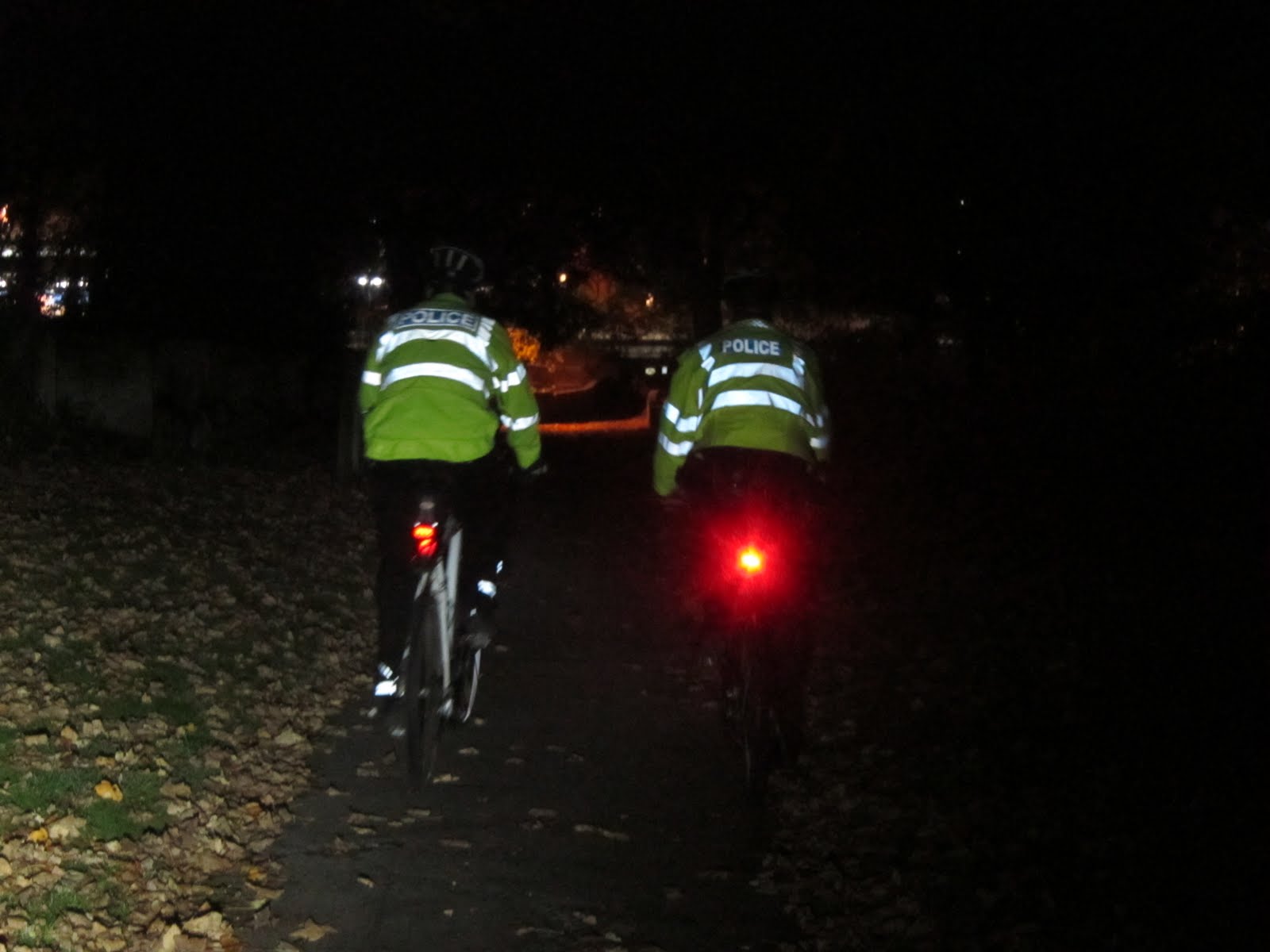
    What could be more fun than spending a few nights biking around the back alleys, roundabouts, and estates of Basingstoke with a bunch of cops? (One of whom tweets)

    Seriously. This ismy idea of a good time.

    Word on the street (or at least in the station) is that I’m the first observer to ever go on bike patrol in these parts.

    Actual word on the street, however, is more the sound of pesky youth laughing at my folding bike. Whatever. It did the job.

    And to answer the first question US cops will have: 1) No, (most) police do not carry guns; 2) Most do not want to. More than one has told me he’s consider quitting if he were ever ordered to patrol armed with a gun.

    There are 140,000 British police officer. Not one has been killed on duty since 2007. That level of officer safety is kind of hard for me to fathom.

  • The Principles That Never Were

    It turns out the Peel’s famous “Principles of Policing” are a fraud. I kind of always suspected that… but not so much that I didn’t quote them at length in the afterward to the paperback edition of Cop in the Hood. I should have known better because Susan Lentz and Robert Chaires had already published an article stating as much in 2007: “The Invention of Peel’s Principles: A study of policing ‘textbook’ history.” Journal of Criminal Justice. Vol. 35, pp. 69-79. But I only became aware of this article two days ago, thanks entirely to the ace library staff here at the National Police Improvement Agency at Bramshill, UK.

    I believed in Peel’s Principles. I still do. But I never was able to trace them earlier that Reith’s (1948) A Short History of the British Police. Reith cites Lee’s (1901) A History of Police in England, which I have (and the principles ain’t in them). This made me suspicious. But it’s not easy to get one’s hands on the original 1829 Patrol Guide: Metropolitan Police—Instructions to Police Officers. It turns out these instructions are all of 60 pages, which puts contemporary Patrol Guides or General Orders to shame.

    Well the original (or a copy of it) exists here at Bramshill, England, and I spend a day going through it. What does Peel say? Well, very little (and more likely Commissioner Rowan wrote it). It’s mostly nitty gritty details about what each rank (all four of them) is supposed to do. It’s interesting, mind you. Constables were paid 3 shilling a day and were expected to work 12 hours-a-day, half on the beat and half in the station as a reserve force. But it says nothing about “the police being the public and public the police.” There’s a whole lot about the importance of following orders.

    The guide does say, and I’ll quote at length because this is hard-to-fine source material:

    INSTRUCTIONS

    The following General Instructions for the different ranks of the Police Force are not to be understood as containing rules of conduct applicable to every variety of circumstances may occur in the performance of their duty; something must necessarily be left to the intelligence and discretion of individuals; and according to the degree in which they shew [sic] themselves possessed of these qualities, and to their zeal, activity, and judgment, on all occasions, will be their claims to future promotion and reward.

    It should be understood, at the outset, that the principal object to be attained is “the Prevention of Crime.”

    To this great end every effort of the Police is to be directed. The security of person and property, the preservation of the public tranquility, and all the other objects of a Police Establishment, will thus be better effected, than by the detection and punishment of the offender, after he has succeeded in committing the crime. This should constantly be kept in mind by every member of the Police Force, as the guide for his own conduct. Officers and Police Constables should endeavour to distinguish themselves by such vigilance and activity as may render it extremely difficult for any one to commit a crime within that portion of the town under their charge. (pp. 1-2)

    POLICE CONSTABLE.

    Every Police constable in the Force may hope to rise by activity, intelligence, and good conduct, to the superior stations. he must make it his study to recommend himself to notice by a diligent discharge of his duties, and strict obedience to the commands of his superiors, recollecting, that he who has been accustomed to submit to discipline, will be considered best qualified to command.

    He must readily and punctually obey the orders and instructions of the Sergeants, inspectors, and Superintendents. if they appear to him either unlawful or improper, he may complain to the commissioners, who will pay due attention to him; but any refusal to perform the commands of his superiors, or negligence in doing so, will not be suffered.

    [H]e is to be marched by his Serjeant to the Section. A particular portion of the Section is committed to his care: he will have previously received from his Serjeant a card with the name of the streets, &c. forming his Beat. he will be held responsible for the security of life and property, within his Beat, and for the preservation of the peace and general good order, during the time he is on duty.

    It is indispensably necessary, that he should make himself perfectly acquainted with all the parts of his beat or section, with the streets, thoroughfares, courts, and houses.

    He will be expected to possess such a knowledge of the inhabitants of each house, as will enable him to recognize their persons. He will thus prevent mistakes, and be enabled to render assistance to the inhabitants when called for.

    He should be able to see every part of his beat, at least once in ten minutes or a quarter of an hours; and this he will be expected to do; so that any person requiring assistance, by remaining in the same spot for that length of time, may be able to meet a Constable.

    This regularity of moving through his beat shall not, however, prevent his remaining at any particular place, if his presence there be necessary to observe the conduct of any suspected person, or for any other good reason; but he will be required to satisfy his Serjeant [sic], or superior Officers, that there was a sufficient cause for such apparent irregularity. He will also attend at the appointed times, to make a report to his Serjeant of any thing [sic] requiring notice.

    He is not to call the hour; and if at any time he requires immediate assistance, and can-not in any other way obtain it, he must spring his rattle, but this is to be done as seldom as possible, for though he is provided with one, and may sometimes find it necessary to use it, such alarms often creates the inconvenience, which it is intended to prevent, by assembling a crowd; thus giving an opportunity of escape to the criminals. He will be required to report to the Serjeant of his party, every occasion of his using the rattle. (pp. 37-40)

    On no pretence [sic] shall he enter any public house, except in the immediate execution of his Duty; such a breach of positive order will not excused: the publican himself is subject to a severe fine, for allowing him to remain in his house. No liquor of any sort, shall be taken from a publican, without paying for it at the time.

    He will be civil and attentive to all persons, of every rank and class; insolence or incivility will not be passed over. (p. 41)

    While on Duty, he must not enter into conversation with any one, except on matters relating to his Duty.

    He must be particularly cautious, not to interfere idly or unnecessarily; when required to act, he will do so with decision and boldness; on all occasions he may expect to receive the fullest support in the proper exercise of his authority.

    He must remember, that there is no qualification more indispensable to a Police Officer than a perfect command of temper, never suffering himself to be moved in the slightest degree, by any language or threats that may be used; if he do his Duty in a quiet and determined manner, such conduct will probably induce well-disposed by-standers to assist him, should he require it. (p.42)

    Certainly prevention of crime is at the core of Peel’s Principles. And the Instructions do mention treating all classes equally, keeping one’s cool, and gaining knowledge of one’s beat. But there’s more emphasis on staying sober, quiet, and following orders. The nine ideals? They simply don’t exist in Peel’s time. They were invented in the 20th century and have since achieved a life of their own (Lentz and Chaires, 2007).

    There are a ton of great documents here in the Bramshill library. For all you Broken Windows fans, one from 1901 specifically mentions “disorder” (Instructions for the Lancaster Borough Police Force. Leeds: McCorquodale & Co (p. B1): “The absence of crime and disorder will be considered the best proof of the complete efficiency of the Police.”

    The book I found most interesting (and it was wonderful to spend a day poring through old books in a library housed in a 400-year-old mansion) was the 1836 update to the 1829 guide from Peel and Company: Metropolitan Police. Instructions Orders &c. &c. This lists all the new regulations implemented after 1829. Why is that important? Because we don’t have a good idea about what police actually did 200 years ago. But you can tell damn well what some of them did by the rules they made. Every time an officer messed up, they made a rule. Some things never change!

    My next posts (mostly because I’ve already typed in the text, so this will be easy for me to do) will list these new rules, one by one, in real time, 182 years after the fact (the first was issued on September 29, 1829). Read between the lines and image being a police officer in the 1830s. Maybe it wasn’t so different after all.