Tag: ghetto culture

  • Marion Barry: set up again?

    Marion Barry: set up again?

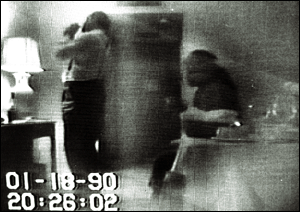
    Mr. Marrion “that-goddamn-bitch-set-me-up” Barry has been arrested… yet again. Except for the crack, the not filing his tax returns thing, and the alleged stalking, he sure is a great elected representative for his people.

    Here’s the storyabout his latest arrest. It’s complicated, of course. Who knows what really happened? Who cares?

    But does anybody out there have the AUDIO from the famous video of his arrest for crack? I can find the video, but not with sound. I want to show it in my class as an example of entrapment. Make fun of hizonnor all you want, but in that case that g*dd*mn b*tch really didset him up!

  • Court Dress Code

    My friend used to joke that the local criminals would come to court “dressed in their best sweat pants.”

    I was reading a David Sedaris book, When You Are Engulfed in Flames, on my flight back from Chicago and came across this passage:

    There were plenty of things that should have concerned me–the blood-spatter evidence, the trajectory of the bullets–but all I could concentrate on was the defendant’s mother, who’d come to court wearing cutoff jeans and aGhostbustersT-shirt. It couldn’t have been easy for her, but still you had to wonder: whatwouldshe consider a dress-up occasion?

  • Shirley’s Honey Hole Turns Bloody

    Shirley’s Honey Hole Turns Bloody

    Generally, the bars in the Eastern aren’t a source of trouble. The yo-boys are too cool to drink in a bar and stay on the corner drinking bottles of malt liquor. Many of them aren’t old enough to be served in a bar, either. The bars are for those willing to pay a dollar or two for a mere twelve ounce can of beer.

    The bars, like Shirley’s Honey Hole, are where the older heads hang out, listen to old R & B, and complain about kids these days. At these places, everybody does indeed know your name; cocktails are served with a heavy pour in those small, heavy duty, short, thick, stemmed glassware; and on holidays you know there’s always a good spread to enjoy. Father’s Day is a always a great time to do business checks on bars in the Eastern.


    According to Annie Linskey in the Sun, two men “walked up to the bar on the 2300 block of E. Oliver St. from North Patterson Park Avenue and fired without warning.” Six were shot, one fatally.

  • Beyond Hope?

    Beyond Hope?

    The glorious genre of Cop Lit has many notable contributors. The writing ranges from the driest academic tome to the cheesiest pulp fiction. There a pretty extensive list of police books at police-writers.com. A lot of them are crap. But many are good.

    Two of the best older police books are Jonathan Rubinstein’s City Police and Joe Poss and Joe Poss and Henry Schlesinger’s Brooklyn Bounce. The former was an academic who went native (nobody knows whatever happened to Rubinstein–rumor was he retired and ran a liquor store in Philadelphia). Poss and Schlesinger are doing just fine, living in NYC.

    Bad Cop and Badges, Bullets & Bars are two more good police books.

    (And of course there’s my book, soon to come out in paperback with a brand new chapter.)

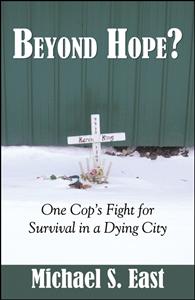
    Now add veteran police officer Michael East’s Beyond Hope? to the list. It’s good. Very good.

    The best police books, whether academic or pop, have a few things in common: a confidence in the writing, a good voice, an awareness of one’s surroundings, humility in knowing one’s limitations, the ability to link the personal observation to greater truths, courage to face uncomfortable truths, and the ability to tell a good yarn. In other words, a good police book needs many of the same qualities of a good police officer. But most cops don’t write good books.

    Michael East has written a good book. Beyond Hope? is his story policing Saginaw, Michigan. I’ve never been to Saginaw, but it sounds grim. Kind of like a smaller, poorer, f**ked-up Baltimore.

    Beyond Hope? is finally for sale. I was able to read an advanced copy so that’s how I know it’s good. Buy it today! If you like cop stories (and if you’re reading this you do) or have a thing for cities in decline, this is a book for you.

  • Get tough on black-on-black crime

    Bealefeld, Baltimore’s police commish, says:

    Those guys got fairly nominal sentences for some heinous stuff that they did to these kids, and if it happened in a white neighborhood in any other community in this state, we’d still be talking about it, and people would be talking about life sentences…. And these people get out essentially with a slap on the wrist. People need to be speaking out about this.

    True dat.

    The background and more in Justin Felton’s story in the Sun.

  • Police Officer Jokes About Murder Victim

    That’s just about as exciting a headline as “dog bites man.”

    I joked about murder victims. Of course you joke about murder victims. I mean, you do try and wait till you’re away from from the murder scene before joking about murder victims (though I didn’t even always pass that test).

    So after work after seeing another person take his last earthly breath, after looking at a dead criminal’s brain spatter all about, after seeing the bastard’s family break down over the death of their “baby,” after hearing witness after witness say they “didn’t see nothin’,” after sorting through the guy’s bloody and dirty clothes for evidence collection after all that you go have a few beers with your buddies and you tell stories. You laugh. You try and make sense out of world that makes no sense.

    This is what police do. Doctors and nurses and paramedics and firefighters do the same same thing. I bet undertakers have a wicked sense of humor, too. Why? Because they do it day after day. What are workers of death supposed to do? Cry every time they see a dead body? Workers who have to deal with trauma day in and day out need to be able to be a bit callous to trauma. It’s literally a job requirement. And humor and sharing are coping mechanisms.

    We literally police to come across horrible scenes at random and also observe minute details. And sometime we require them to take pictures. And then you we expect them to… what exactly? Buy flowers and the first silk-screened t-shirt in memory of the dead guy?

    It’s called gallows humor. And I support it. It’s cheaper than a shrink. Often times it is more effective, too. People who deal with murder victims need to be able to joke about murder victims. Otherwise they’d go crazy.

    Now an Erie police officer, James Cousins II, is being suspended for doing just that.

    Sure, this cop had a few too many. But we all have.

    So what exactly is the crime? He was off duty. Is the crime to think such things? or to say such things? Or to be recorded and posted without your consent on youtube? We all gossip and think and say insensitive things in private and to our friends that are not appropriate for public broadcast.The appropriateness of speech changes according to time and place. If he gave this speech to a news camera for the evening news, then that would be inexcusable. Even in semi-public environments like bars we deserve some protection of privacy and free speech. This wasn’t a racist tirade. He didn’t use the N-word (neither of which would be appropriate in any context). He’s a drunk cop telling a war story.

    And for the record, it is funny, even hilarious, to see a picture of a guy shot dead in the head right under a malt-liquor sign that says, “Take it to the head”! Swear to God. But yeah, you had to be there. Whether you wanted to be there or not.

    And that’s the thing.

    Next round is on me.

  • Say What?

    The Philadelphia Inquirer reports that, “A Philadelphia police officer has been put on desk duty after he was quoted spouting his disgust for the black residents in the community he patrolled.” And people wonder why cops don’t trust outsiders.

    The officer is said to have used the “N word” (though not at somebody). I won’t defend that. But I will defend other things the police officer supposedly said:

    “People in this neighborhood don’t care about each other,” Thrasher was quoted as saying. “They’ll shoot each other for drugs, for money, for bullshit. All they care about is their reputation. They want to look tough.” True.

    At another scene, where a man was shot in the back of the head by his daughter’s boyfriend, Thrasher said: “These people are . . . disgusting. It’s like they’re animals.” Sometimes.

    My book, Cop in the Hood, is filled with quotes like this. It’s not a white thing; it’s not a black thing; it’s a police thing. Police are coming across dead people with the brains blown out. People acting like fools. People killed for no good reason. What are we supposed to think?

    So what’s the bad part? To see these things? To think these things? To say these things? Or to say these things in front of a Temple University graduation student and then get quoted out of context.

    Is it not enough that we ask police to police in these neighborhoods while dodging bullets? But now police have to act like the B.S. they see is normal or acceptable behavior? And you wonder why police hate outsiders and the press? This is politically correctness gone haywire.

    The Guardian Civic League, an organization of black Philadelphia police officers, called for Thrasher’s firing. Maybe Thrasher is a mean S.O.B. I don’t know. I’ve never met the guy. Maybe he’s a good police officer. Maybe he’s not. But I guarantee you one thing: every member of the Guardian Civic League has said or thought the same things at some point.

  • Memories

    This is a story from way back when. I’ve never found a way to work it into anything I’ve written, but it’s too good to go to waste:

    Two cuffed men were seated on the curb on Bradford St. in front of their Lexus. We were all waiting for a wagon. I was helping guard them for the primary officer. They had broken out the car windows of one of their baby’s mothers. Another woman was pleading their case, “But you don’t know what shedid to him!” She was correct. We did not know. Nor did we care.

    As we waited, one of the prisoners said hello to a friend walking by and the two started talked casually. When the conversation was over and after good-byes were said, the primary officer asked the prisoner quite sincerely, “Let me ask you something. You’re sitting there in cuffs and you’re talking to that guy like nothing’s up? I don’t get it.” The prisoner responded, “That’s because we’re being arrest for nothing. So nothing’s up.”

  • He was a monster

    I spend a lot of time defending the media. That’s an unpopular position among 90% of police officers. Well I’m not going to defend the S.F. Chroniclehere. Just yesterday the paper decided they needed to report “both” sides of the cop killings in Oakland. In their story, to my great dismay, they did what what lazy or dumb journalists do too often: talk to the criminal’s family to present “both” sides of the story.

    Sometimes there aren’t two sides with the truth lying somewhere in between. It’s up to professional journalists to figure right from wrong. The original story by staff writers Demian Bulwa and Jaxon Van Derbeken reported:

    “He’s not a monster,” said his sister, 24-year-old Enjoli Mixon, who said her 4-year-old daughter’s bedroom in a small apartment on 74th Avenue was the scene of much of the bloodshed. It was there, police said, where Mixon fired through a closet wall at a team of SWAT officers, who then shot and killed him. “I don’t want people to think he’s a monster. He’s just not. He’s just not.”

    “We’re crushed that this happened,” added the gunman’s grandmother, Mary Mixon. “Our hearts and prayers go out to the officers’ families. … This shouldn’t have happened.”

    His family said that while he was behind bars, Mixon married his childhood girlfriend, Amara Langston, and worked briefly as a janitor in Hayward once he got out. He was most recently released from prison in November, his family said.

    Then, about three weeks ago, Mixon skipped a home visit from his parole officer, his family said. Mixon’s grandmother said he had gotten angry at his parole officer because the agent had missed earlier appointments.

    Mary Mixon recalled that her grandson said at one point that he was even willing to go back to prison as a way to get a new parole officer. She said, she did not know where her grandson had been staying for the past few weeks.

    Mixon was having a phone conversation with his uncle, Curtis Mixon, just before the first shooting. “He said, ‘The police just pulled up behind me. Let’s see what’s going on. I’ll hit you back.’”

    Curtis Mixon said, “He never hit me back.”

    Wow. Poor guy finally getting his life together after some bad breaks. Then he just flips.

    Of course that’s not the case. It turns out he isa monster.

    In the reporters’ defense, they’ve redeemed themselves somewhat with some good follow up stories. Jaxon Van Derbeken notes that Lovelle Mixon had been linked by DNA to a rape earlier this year.

    Mixon’s DNA was on file because of his conviction in 2002 for assault with a deadly weapon in an attempted carjacking in San Francisco, for which he served six years in prison.

    Oakland police had also considered Mixon a suspect in the December 2007 slaying of Ramon Stevens, 42, who was shot and killed on the street near the corner of 86th Avenue and International Boulevard. Mixon was detained on a parole violation in February 2008, but homicide investigators could not make a case.

    The victim’s sister said a witness had told her Mixon was the killer, authorities said. But Assistant District Attorney Tom Rogers said Monday that the witness did not want to cooperate, and Mixon was freed in November.

    In March 2002, Mixon and two other attackers tried to carjack a truck, fired a shot and pistol-whipped the driver on Mission Street near Sixth Street in San Francisco.

    In a sentencing report, San Francisco probation officer Yvonne Williams wrote that Mixon’s juvenile record was that of a “cold-hearted individual who does not have any regard for human life.” She said state prison was the only way to “to rein in this man’s proclivity for violence.”

    Demian Bulwa did a much better job following up with this story filled with interesting details about ghetto life:

    “We’ve got to remove the word ‘snitch’ from our vocabulary,” said the woman, who asked not to be identified because she fears retaliation.

    The woman said she was hesitant at first to be seen in public telling officers what she knew…. Finally, the woman said, she found an opportunity to give her information to an officer she recognized.

    She said she has been in trouble with the law in the past, but that on Saturday, “I wish I would have been a police officer.”

    Outside the apartment that SWAT officers stormed, a memorial for Mixon had flowers, candles and balloons. Notes read, “RIP Vell,” ” Money$” and “We gone miss u big cuzn.” A plainclothes police officer went up to it at one point, stared at it for a second and then walked away, shaking his head.

    Activists handed out flyers that invited people to a rally where they would “uphold the resistance” of “Brother Lovelle Mixon.”

    Many people rejected that sentiment, saying they were touched that officers had given their lives protecting others. They said they didn’t understand why some were defending Mixon.

    Police nailed a piece of plywood over the doorway of Mixon’s sister’s apartment early Monday morning, sealing it off. But curious neighbors pried it open and went inside to look around – infuriating Enjoli Mixon, who showed up later.

    One neighbor, who admitted he yanked open the plywood and went inside, said he counted more than a dozen bullet holes in the walls inside the apartment. There was blood in every room, he said. The hallway outside was also scarred by apparent bullet ricochets.

    Asked why he had gone into someone else’s home, the man said, “I wanted to see if it was an overkill.”
  • Gangsta Rap, Yo-Boys, and B-more.

    So I’m trying to write and Schoolly-D’s “A Gangster Story” comes on. I hear him say “B-more” and “yo-boy” and perk up.

    I’ve always liked slang and wondered about the term “yo-boy” because it’s so common in Baltimore’s ‘hood but I’ve never heard it outside of Baltimore (what’s a “yo-boy?” You gotta read my book. You have, right? If not, here’s a useful link to Amazon.com so you can buy Cop in the Hood). According to Schoolly, “yo-boy” was known to him in Philadelphia and used at least as far back as 1985. And yes, surprisingly(?) gangsta rap owes a bit of its existence to Charm City.

    Get schooled by Schoolly:

    I think it’s about time that we discuss, know what I’m saying, gangsta rap. The true story of gangsta rap, where it come from, actually. Settle down now. Roll up something. This is how it went, you know:

    Back in 1985 I made this song called PSK, right? That’s a bad mother fucker, know what I’m saying. Am now, too. Shiit.

    You know, I mean, this reporter fromSpinMagazine, right? He was doing this article on these little young gangstas down in B-more, you know what I mean, called the yo-boys. So, you know, he drove down there for the weekend to do this little piece.

    But all weekend long, and shit, right, they kept playing this song: “Boom Platt Boom Platt Boom Platt.” Right? Know what I’m saying? … All weekend long. What the fuck was that song? They was like, what? That was my man, Schoolly D, up there in Phili, man, shit, nigger (you know how a nigger says, talking shit).

    He goes back up to New York City and he’s doing this story. And he still can’t get this song out his head and shit. “Boom Platt Boom Platt.”

    So he starts thinking it, right, you know: Pistols, cheeba, cars, gold, bitches, fast money, the fast life. That was that that gangsta life and shit, man. Shit. Know what I’m saying? Ganstas, gangtsa music, rap. He put all that shit together and came up with the term “Gangsta Rap.”

    So, you know what I mean, that was when we first heard gangsta rap from that song PSK I did in ’85. And it’s still alive today.

    I’ve figured out that that Spinarticle is the 1986 piece by Barry Michael Cooper, “In Cold Blood: The Baltimore Teen Murders.”

    I hadn’t heard of Mr. Cooper. I should have. He’s still active and lives in Baltimore. Here’s a interesting interview of Barry Michael Cooper where he explains, among other things, how “crack made hip-hop very corporate.”

    Anybody got a copy of that Spin article I can read?