Tag: history

  • The Real Peel

    One of the reasons I like NYPD Commissioner Bill Bratton is that he is prone to quoting Robert Peel, the man who invented police as we know them back in 1829 London.

    Bratton has reprinted “Peel’s” principles online. Those nine principles are an excellent philosophical base for policing, they’re just not Robert Peel’s. And now the New York Times — the Grey Lady, the paper of record — has perpetuated this error. Not once but twice. (They don’t even seem to “regret the error.”)

    What are known as “Peel’s Nine Principles of Policing” do not come from Robert Peel. They come from a 1948 book on British Policing. Does this matter? I don’t know, but I do like to get my facts straight. Mind you, Peel might not disagree with the nine principles attributed to him, they’re just not his. (I’ve written about this before). And if you want a handy one-page easy-to-print pdf that I give to my students, here you go.

    So what are Peel’s actual principles? Based on the original 1829 Patrol Guide, I see five:

    1) The purpose of police is to prevent crime.

    2) Know your beat; patrol your beat.

    3) Maintain order.

    4) Use common sense and discretion.

    5) Be polite and control your temper (it may save your ass).

    Those aren’t bad rules to live by

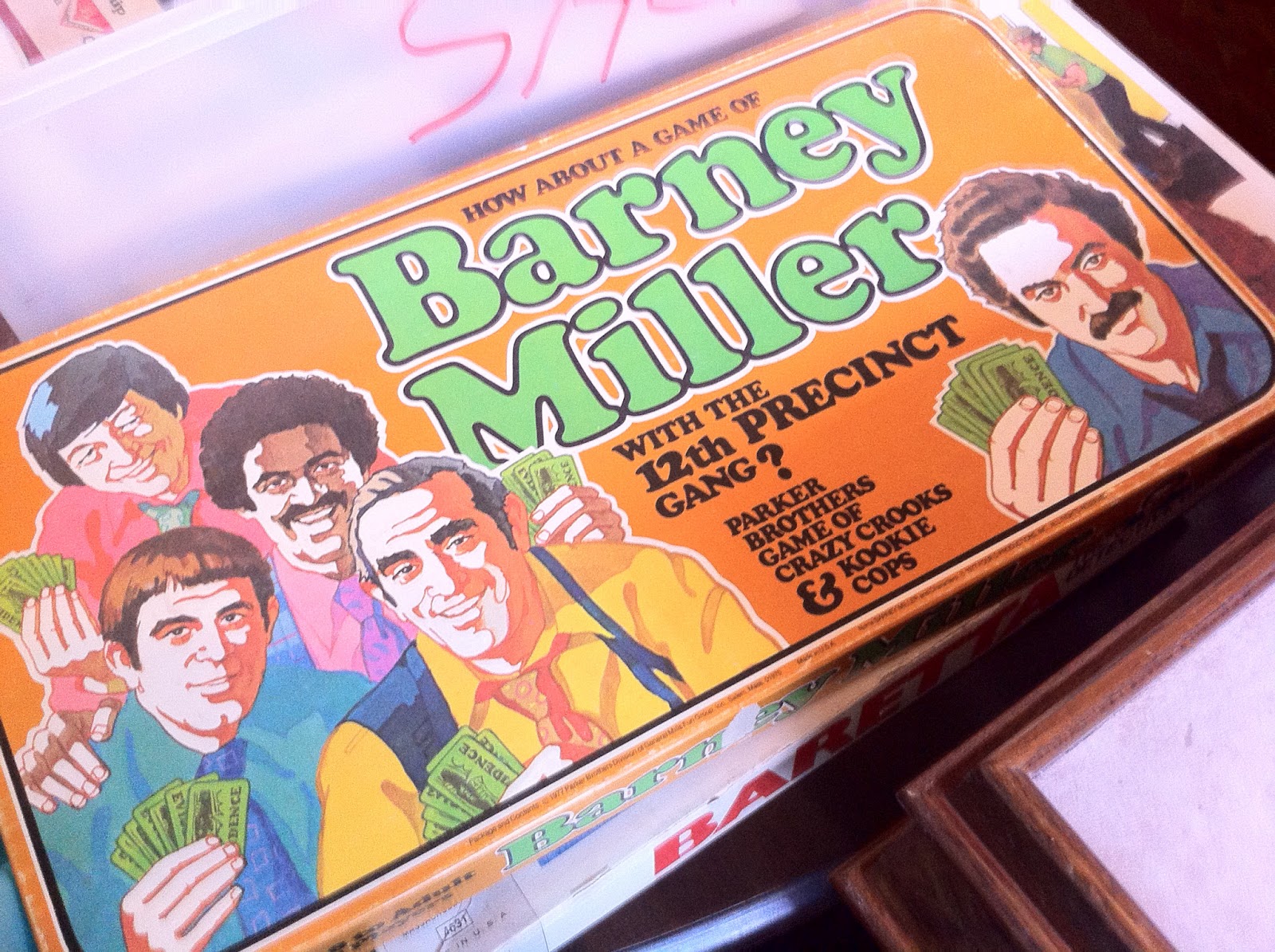
  • “Crazy Crooks & Kookie Cops”

    “Crazy Crooks & Kookie Cops”

    Seen at a thrift store in Silver City, New Mexico.

  • David Durk thought I was crazy…

    …at least at first.

    David Durk died last month. And I didn’t even know it. That really would have pissed him off.

    (My excuse for missing the obits was that I was en-route to a conference in Chicago. Here’s one. And another. And a third.)

    Let me take you back a bit. In October, 2009, there was this strange voice mail on my school office phone. Some gruff guy with no phones manners said, quite awkwardly: “Call me I want to talk about your book!”

    Hmmmm… No, thank you.

    But I did save the message because it was so strange.

    A month later a similar message comes over the phone. But now I’m sitting in front of my computer. He did actually spell his name, David Durk, D.U.R.K., so I punched it into google. The David Durk? I called him back the next day.

    He proceeded to talk my ear off for a good 40 minutes. He hadn’t read my book, but he had heard something I said that pissed him off, which seemingly wasn’t very hard top do. He thought I was crazy because I said something like, “the culture of police today isn’t corrupt.” What can I say? I call ’em like I see ’em. I didn’t know what else to tell him (nor did I ever get the chance to say much). But I did offer to send David Durk a copy of Cop in the Hood. And I did.

    A short time passes and he call me again saying, “I just finished reading the last footnote! Great stuff.” That blurb from him has been on the right column of this blog for a while now. I’m rather proud of it. We got along better after he read my book. I like to think he respected my integrity. Or maybe he just had a soft spot for a college-educated cop. I don’t know if I got in more than 50 words, edge-wise. Evidently, I later learned, I was not the first to experience this Durkian balance of conversation.

    But I considered it an honor to listen to David Durk ramble on. I mean, he’s David Durk for Christ’s sake, and my time isn’t that precious. But I never did invite him to speak to my classes or the school, which (before his health issues became more serious) he was keen to do. We never met. I didn’t really want to. We talked a few more times on the phone. These conversations each lasted about an hour. But over the phone, when push came to shove, I could simply hang up.

    What David Durk told me, again and again, was that the world was corrupt, policing was corrupt, and he was forced out to retire on an officer’s pension rather than the lieutenant’s pension he deserved. I couldn’t argue with any of that, because he would never give me the chance.

    By many accounts, David Durk was a difficult personality. He struck me as not at peace with himself or the world. Mind you, had he achieved some zen-like state of nirvana, he never would have accomplished what he did. I mean, David Durk — along with Frank Serpico — changed the friggin’ culture of modern police! I can’t think of any other two individual with so much positive impact on policing in the 20th century.

    Perhaps the most importantly change is that today (going back at least twenty years) an honest person can become an honest cop and lead a crime-free work-life for 20 years. No “pad”; no stealing from places already burglarized; no shaking down drug dealers; no shooting criminals just to teach them a lesson (not that Durk was opposed to a robbery squad that did just that, just FYI). It’s not that none of this ever happens, it’s that there’s no longer institutionalized criminal corruption in rank-and-file policing. We have Durk and Serpico to thank for that.

    But something odd happens when you quit policing. In the following years you assume nothing has changed. I know policing changed a lot from 1990 to 2001. And I suspect it’s changed as much if not more between 2001 and 2012. But not in my mind, which will forever be a bit stuck in a bit of a time-warp from 2001.

    David Durk lived his life thinking policing hadn’t changed much over the years. This was unfortunate. For a man not known for his humility, Durk couldn’t appreciate what he himself had done do make policing less corrupt. He told me things were just as corrupt in 2012 as they were in 1985, or even 1970. “But it ain’t so, David,” I would tell him, “It just isn’t.” For Durk, the world was never clean enough. The man tired me out. But I’m happy he found the time to do so.

    Rest in peace.
  • Ben Franklin and the first police force

    In his autobiography Benjamin Franklin wrote:

    On the whole, I proposed as a more effectual watch, the hiring of proper men to serve constantly in the at business; and as a more equitable way of supporting the charge the levying a tax than should be proportion’d to the property…. It paved the way for the law obtained a few years after.

    And he said so in 1732, ninety-seven years before Robert Peel gets credit for London’s Bobbies. What ever happened to the Benny’s (as I will dub Franklin’s police)? How long did they last? What did they do?

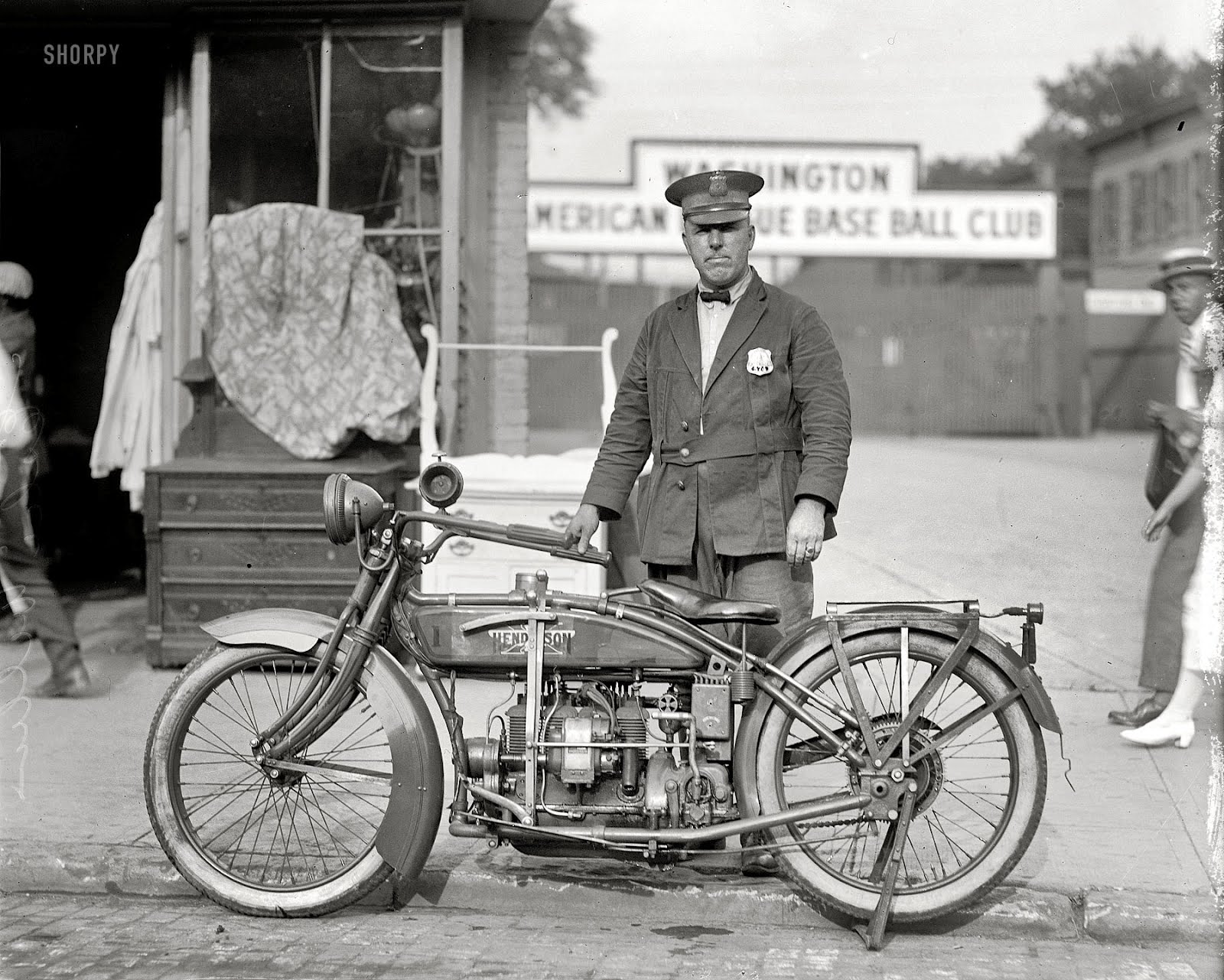
  • Motorcycle Cop: 1922

    Motorcycle Cop: 1922

    Courtesy of Shorpy.

    [This one is for you, Smokey]

  • The more things change… March 31, 1830

    Failure to Obey, old school.

    The Commissioners direct, that in future the Inspectors on Duty shall not take into custody any person brought in by a Police Constable on the vague charge of “obstructingthe Constable in the execution of his duty.” If such a charge is to be made, it must be accompanied by a specification of particulars.

    Source: Metropolitan Police. Instructions Orders &c. &c.1836. London: W. Clowes & Sons.

    [This is the last of these, which were a series of the very first police regulations ever, in real time, 182 years later. Thanks to the NPIA and the library staff at Bramshill, UK.]

  • William Hackley, Baltimore police officer, Historian

    Retired Baltimore Police Officer and amateur historian William Hackley passed away.

    Were it not for Officer Hackley, so much of the history of the BPD would be lost to time.

    I never met him, though I think I contributed a few pictures to his website. Give it a look (and get ready for some old-school website music or turn off the sound). There’s a lot there.

    While Officer Hackley will win no awards for website design, he more than made up for that with his knowledge of, dedication to, and love of the men and women, past and present, of the Baltimore City Police Department.

    Rest in peace.

    2014 update: The website moved. Now it’s here: http://baltimorecitypolicehistory.com/citypolice.

  • The more things change… March 10, 1830

    When I was a cop, we got a memo stating the mayor’s young daughter thought we had a dirty parking lot. The best response (from Gotti, naturally) implied something that would definitely be illegal, even withconsent. Reminds me of this:

    The Superintendents will take the greatest care that nothing is permitted, either by noise at relief hours, or by any irregularity or want of cleanliness in the Station house, or neighbourhood of it, which may justly give cause of complaint or annoyance of the inhabitants of the vicinity.

    Source: Metropolitan Police. Instructions Orders &c. &c.1836. London: W. Clowes & Sons.

  • The more things change… March 8, 1830

    In issuing to the Police Force the new badge to be worn when the men are on Duty, the Superintendents will fully explain that the object in view is to prevent the constant complaints that would be made by the public on seeing those of the Police Force who are not on Duty walking or talking together, which they will not be able to do without that unpleasant consequence; the badge will be worn on the left arm, just above the cuff.

    Source: Metropolitan Police. Instructions Orders &c. &c.1836. London: W. Clowes & Sons.

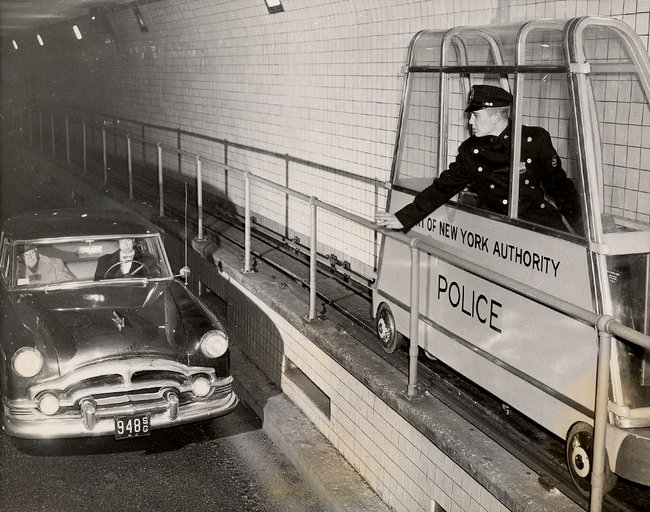
  • Most unusual cop car

    Most unusual cop car

    From the Holland tunnel in NYC. The picture from the story in the New York Times.