I’m back from St. Louis. Despite growing up in nearby Chicago, I had never been to St. Louis. In my mind, I was thinking the Baltimore of Midwest: Faded industrial glory, local pride, and the answer to one of my own favorite personal trivia questions: What city of a certain size (at least a couple hundred thousand? or perhaps with a major league sports team?)has lost the greatestpercent of it’s population?
The answer?
No, not Baltimore.
Not Detroit.
Not Newark.
St. Louise, M.O.
Yes, St. Louis. From 856,796 people in 1950 to 353,837 today. Almost 60% of the population left.
Why? Of course the usual economic and social reasons. But something had to be different about St. Louis to lose mostof it’s population.
We arrived by train from Chicago. I had St. Louis Union Station mapped out. Silly me thinking that trains actually arrived in the beautiful train station.
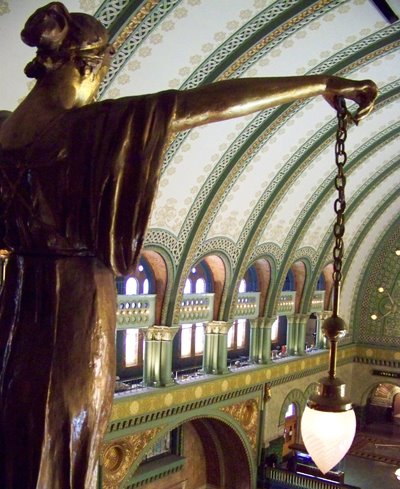
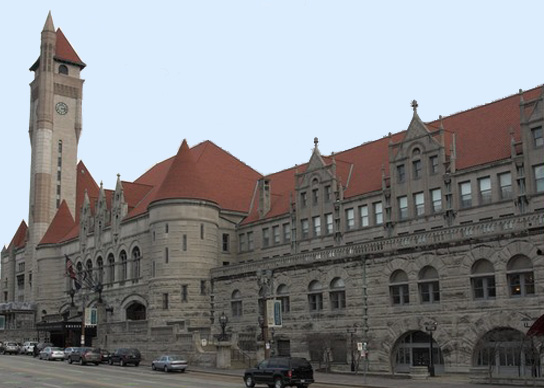
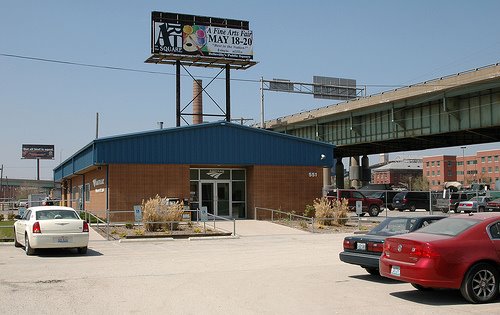
Instead Amtrak pulls up next to one of those Amtrak Shacks. Except it was dark and rainy and muddy when we arrived. Sigh.
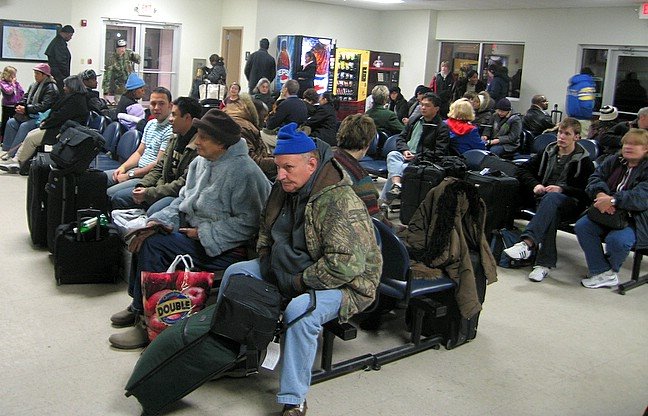
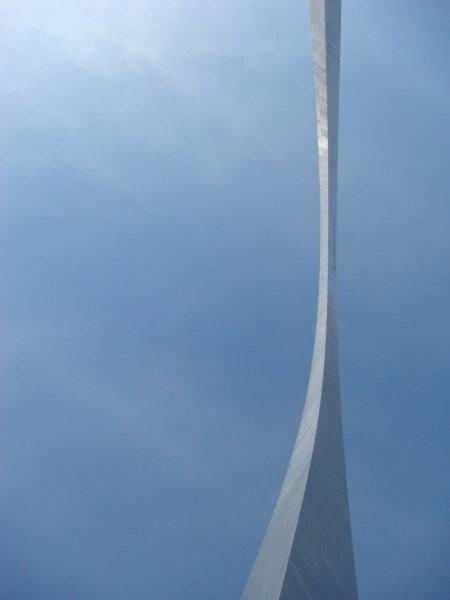 A bad train station alone does not a deserted city make. The sad part is that St. Louis, which does have some very nice parts, coulda been a contender. The city doomed itself in the 1930s when they tore out the heart of the city. Part of this area would, in the 1960s, because the St. Louis Arch (or more ominously officially called the Jefferson National Expansion Memorial). The Arch, by the way, is beautiful.
I guess destroying your city in the 1930s was cutting edge urban renewal at the time. Most cities didn’t tear themselves down till afterWWII. In St. Louis, the old courthouse used to be in the center of the city. Now it’s almost on the Eastern Edge surrounded by some ugly hotels and office buildings from the past few decades.
The old basilica used to be surrounded with glorious cast-iron buildings. Now it’s surrounded by nothing. Why do they do that? What were they thinking? Why do they still do that?
Probably about a whole square mile is gone. And it’s the part with history and character. Like Soho in New York. It’s gone. All of it. Now there’s the Arch area. OK. Fine (though there would be nothing wrong with an arch rising out of real neighborhood). And the rest? Now there’s a freeway. And empty spaces. And lots of parking. Too much parking is always a bad sign.
From the arch you can see the huge space that used to be city.
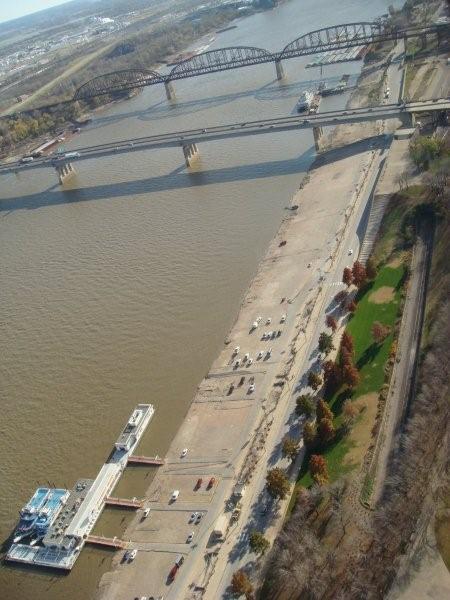
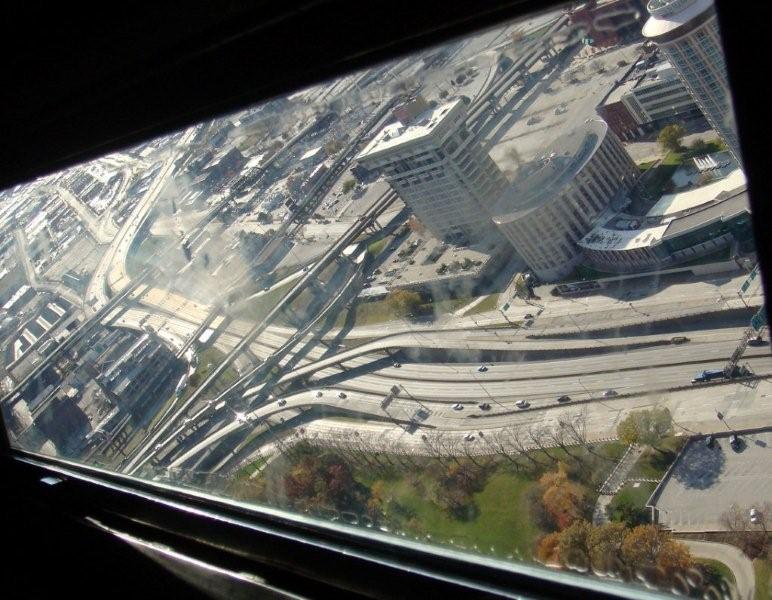
There are just a few buildings in this area left. 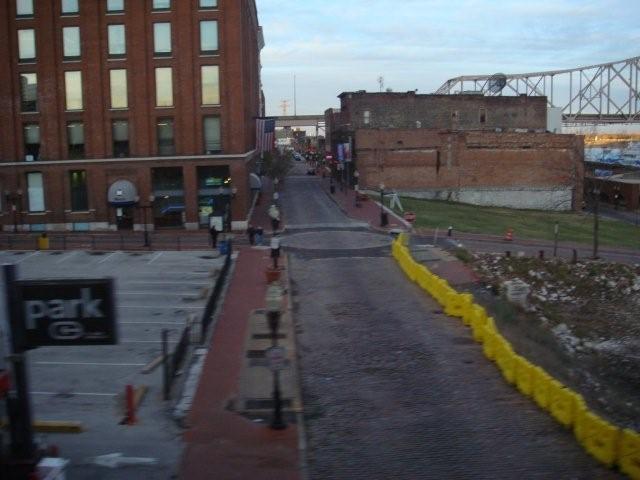 The buildings that are left look like this. Gorgeous.
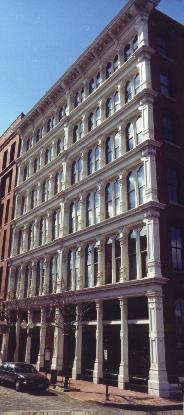
What’s left is filled with a predictable blend of mediocre restaurants and sports bars in an attempt to bring nightlife back to the city.
St. Louis could have been the New Orleans of the North. But they torn down their French Quarter. Instead, well imagine New Orleans without the French Quarter. Or, for that matter, good food or music.
I didn’t get a chance to see North St. Louis, where that half of the city that fled used to live. But in the brief time we had before our flight out, we were able to take the nice St. Louis Metro to Illinois and back. I wanted to see East St. Louis, even if a classic “slumming tour” just through the window of a light-rail train car.
East St. Louis, Illinois, is perhaps the single most f**ked up city in America (and there is tough competition). They lost their city hall in a lawsuit around 1990. That was their only asset. If you’re interested or worried about this kind of thing, you should read Jonathan Kozol on East St. Louis.
Crossing the Mississippi River, you see the casino, the talisman of attempted economic revival: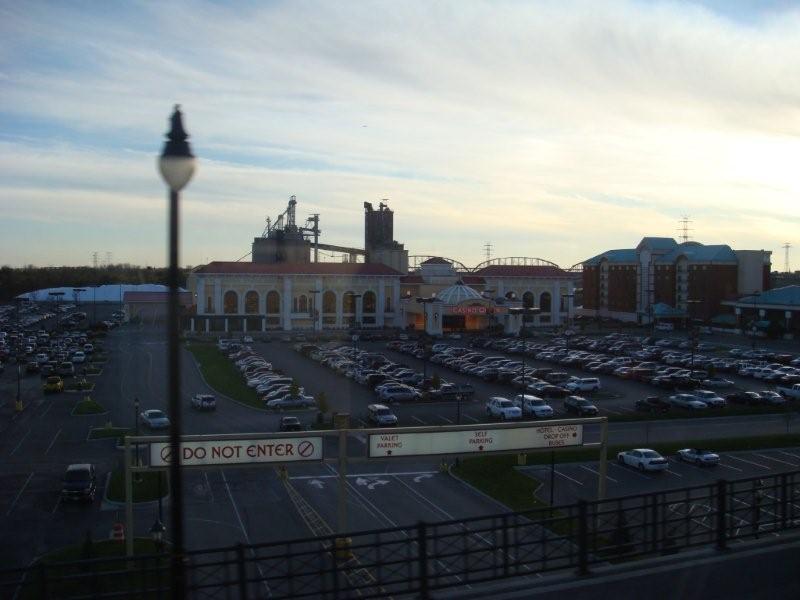
Then you see how there’s just no there, there.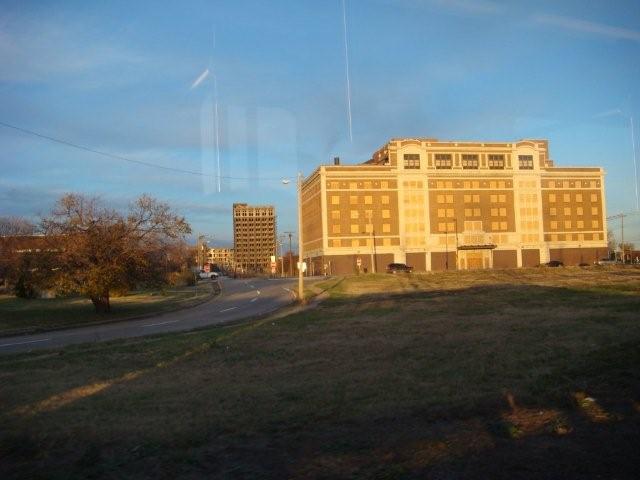
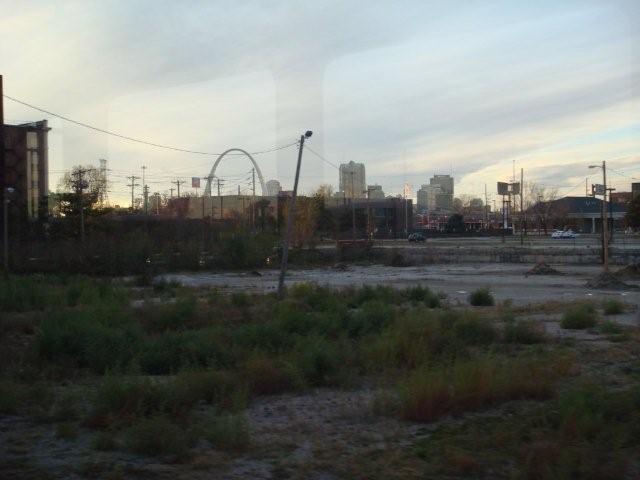 The arch rising in the distance. Yeah, I know it’s not the most subtle use of juxtaposition.
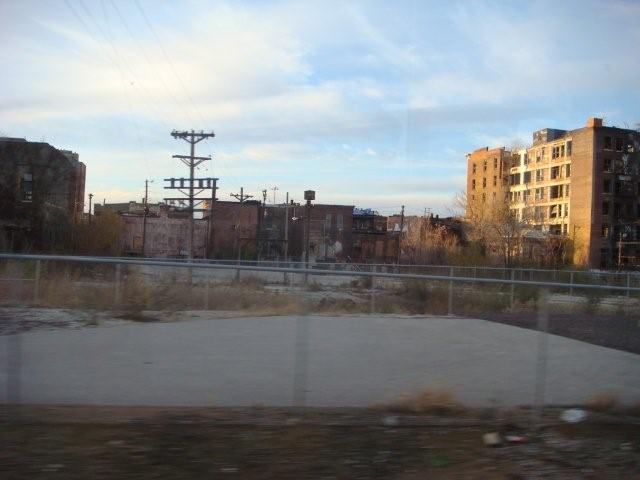
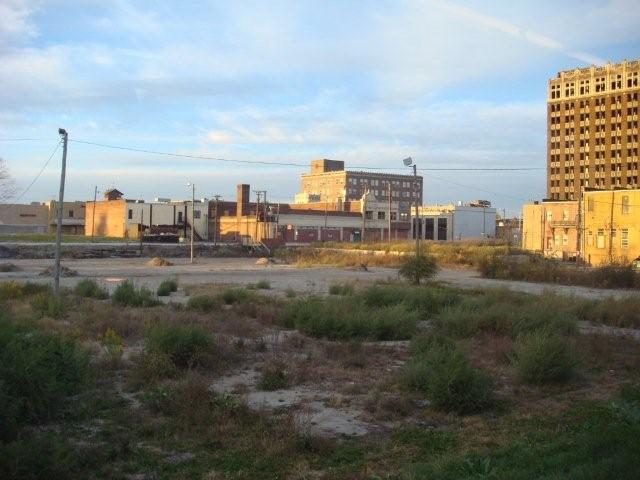 Downtown East St. Louis.
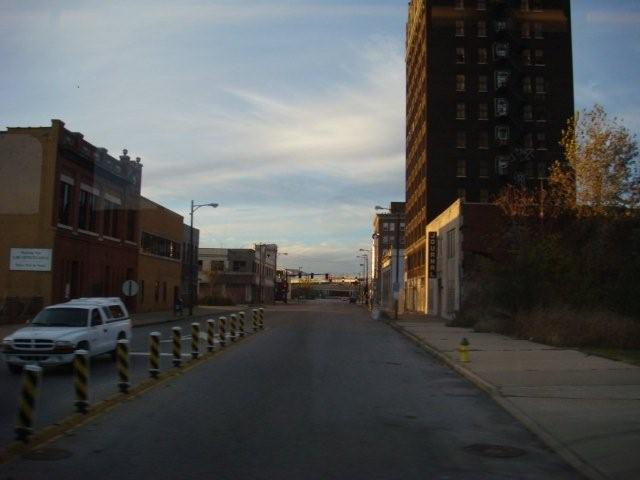
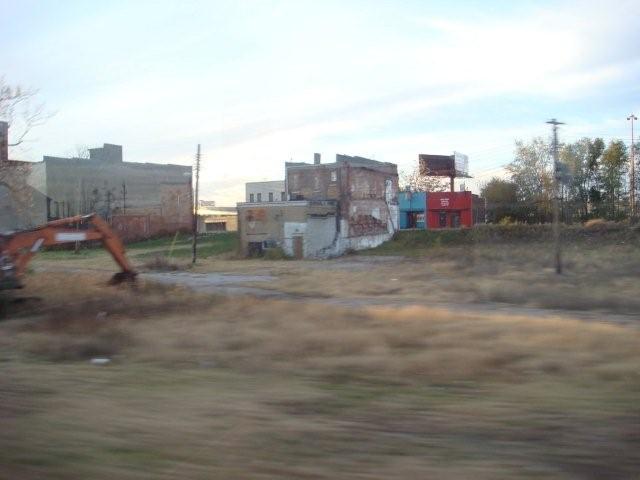
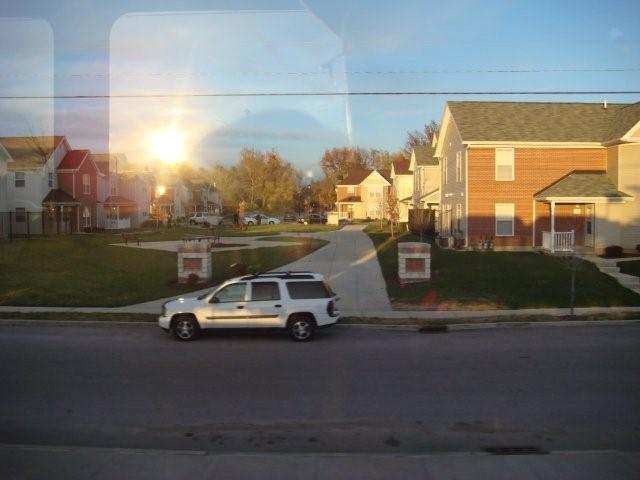 New development.
What the morale? I don’t know. Why do we let this happen? And if you think your city is in trouble… just remember, it could always be worse.
[December 10 addition: Just remembered that part of the reason we got on the light rail was to find a place to eat. The employee at the station told us authoritatively: “There are no restaurants in Illinois.”]
