Tag: NYPD

  • What’s Eating the NYPD?

    New York Magazine has a very good article by Chris Smith on Ray Kelley and the current state of the NYPD:

    Whenever Kelly leaves One Police Plaza — most likely in January 2014, when a newly elected mayor replaces Michael Bloomberg — he will be rightly celebrated as the greatest police commissioner in the city’s history. Crime, overall, is down 34 percent since Kelly took office. There have been zero successful terrorist attacks on the city since September 11, 2001.

    His impact on the department will live long beyond his physical presence in One Police Plaza. The NYPD is now thoroughly marinated in Kelly’s personality and priorities. He’s greatly broadened the department’s racial diversity, and exponentially enlarged its technological capabilities.

    An entire generation of cops has grown up schooled in his crime-fighting methods. Nearly half of the department’s 34,800 cops were hired on Kelly’s watch. He handles many promotions personally, so the NYPD’s management thoroughly reflects Kelly’s views.

    And right now, the department the commissioner rebuilt has two striking characteristics: its effectiveness and its unhappiness.

    Later in the article (it’s worth reading the whole thing):

    The newspapers were full of NYPD news on February 1. Most of it was topped by large headlines: In East Williamsburg, Officer Kevin Brennan had been shot in the head by a man wanted for questioning in connection to a homicide and miraculously survived. In the University Heights section of the Bronx, four cops were captured on cell-phone video pummeling a 19-year-old suspect. And seven alleged members of a violent gang that had terrorized the Ebbets Field housing project for years were indicted, thanks to the work of the NYPD.

    Yet as Eugene O’Donnell flipped through the tabloids that morning, he stopped at a smaller item: “No Shirt, Sherlock—Cops barred from wearing NYPD gear.” Apparently Commissioner Kelly had spotted officers wearing gallows-humor T-shirts that bore an unapproved Police Department logo. Kelly issued an order declaring that all NYPD personnel, on and off duty, were forbidden from wearing unlicensed T-shirts.

    O’Donnell — a cop, prosecutor, and now my friend and colleague at John Jay College of Criminal Justice — very astutely notices the significance of what outsiders may fail to grasp:

    Compared to the other stuff in the papers today, this seems silly, but it’s not silly to cops. None of them would ever trivialize the shooting of a fellow officer. But to the rank and file, the T-shirt thing is much more relevant and annoying, because it’s emblematic of what day-to-day life in the department has become.

    The NYPD is an agency of extremes. It can disappoint you beyond belief, and then it can do something incredible, like the hostage team or the anti-terrorism stuff. The T-shirt thing, there’s other approaches besides taking the hammer to everybody and saying they can’t wear anything with the NYPD on it. How about a letter from Kelly that says, ‘Dear colleague, is this the image we want to portray?’ Instead there’s a top-down, blanket order that allows them to catch anyone who slips up. You create a culture that says, ‘If we’re all co-defendants, I’m going to join hands with the knucklehead.’ That’s what you saw at the ticket-fixing case: ‘I don’t fix tickets, but if everybody’s going to be blanketly indicted, then we have to protect ourselves.’ 
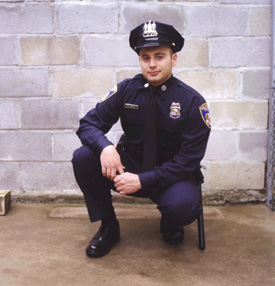
  • Officer who shot first at Sean Bell is fired

    The departmental wheels of justice turn very slowly, but they do indeed turn. It’s been six years since Sean Bell was killed. Leaving aside the merits of the case against the officers (If I remember correctly, I think my position was that the officers indeed were not criminally guilty, except maybethe officer who fired first), note that Ray Kelly didn’t have to do this. It’s not like this is still much in the public’s eye. It’s not like he’ll gain politically from this (unless, however, he runs for mayor). Maybe he just thought it was the right thing to do.

    From the New York Times:

    Law enforcement officials said word of Police Commissioner Raymond W. Kelly’s decision came late Friday. Detective Isnora, an 11-year veteran, will not collect a pension, one official said. “He loses everything,” the official said.

  • The Ray Kelly Smackdown Hour

    Except this time it was Ray Kelly who was doing the smacking down. He gave it back good to the New York City Council on the subject of stop and frisks and violence among minority youths. From the New York Times:

    “What I haven’t heard is any solution to the violence problems in these communities — people are upset about being stopped, yet what is the answer?” Mr. Kelly asked Councilwoman Melissa Mark-Viverito, who had been asking the commissioner to acknowledge that the department’s practice of street stops in minority communities left many people “feeling under siege.”

    “What have you said about how do we stop this violence?” Mr. Kelly asked, asserting that violence among minority youth is “something that the government has an obligation to try to solve.”

    Ms. Mark-Viverito, whose district includes East Harlem and part of the South Bronx, was now pressed for an answer.

    “There needs to be prevention and deeper community-based tactics and strategy” she offered. “Yeah, what is that?” he asked in a dismissive manner.

    Ms. Mark-Viverito spent the next few moments trying to exit the debate over police tactics that she had sought, eventually saying, “I think I’ve made my point.”

    To that, Mr. Kelly shot back: “I’m not certain what your point is.”

    Dammmmmmn.

    Of course there is a better solution: smarter stop and frisks, based not on “productivity goals” but on actions of intelligent police officers who have discretion and can distinguish between criminal and non-criminal black man.

    But Kelly has a point. It’s too easy to criticize the police. It would also help if you actually had some ideas as to how to make police better. And it isthe government’s obligation to try and solve the problem of violence in minority neighborhoods. It’s not that the police are without blame… but don’t justblame the police.

    Update: Some of the video can be seen here.

  • You Can’t Blame the Police

    I wrote in the New York Times:

    Much — though by no means all — of the disproportionate rate of blacks stopped, frisked, arrested, convicted and imprisoned is a simple reflection of violence in poor African-American communities. Like robbing banks because that’s where the money is, the obvious reason police focus so much of their attention on the young male black community is because that is where the murders are.

    It’s not politically correct to say so, but reality isn’t politically correct. Over 90 percent of New York City’s 536 murder victims last year were black or Hispanic. Just 48 victims were white or Asian. The rate of white homicide in the city (1.18 per 100,000) is incredibly low, even by international standards.

    This is from a greater “debate” titled “Young, Black and Male in the United States.” What’s odd about these New York Times’s “debates” is that they’re not debates. There are eight people contributing (for no pay) independently of each other, none of whom have any idea what the others are saying. This may or may not lead to good points being made, but it is a bit of shame it’s not a real debate.

    Update: And a few stats that didn’t make it in my piece, for reasons of relevancy and style.

    Leaving aside domestic violence, how many of the roughly 1.3 million white women in New York City were murdered last year by a stranger (ie: leaving out the 34 cases of domestic-related violence)?

    Zero. Zero.

    And 31% of domestic violence murder victims were male. Because compared to other locales, in terms of crime New York has a strangely broad definition of “domestic.” In most places domestic violence means you are or have had sex with somebody. In New York it means living under the same roof.

  • No New News

    I’m about to read the Village Voice’s one-sided new “scoop” about Adrian Schoolcraft. I’m going to predict it says 1) there was pressure to reduce crime stats, 2) the NYPD makes a surprisingly good faith effort to get to the bottom of the issue, and 3) keep in mind (this won’t in the article) everything Schoolcraft has done has been motivated by his desire to sue the NYPD for a lot of money.

    I’ll be happy to be surprised and admit I was wrong….

    Here’s what I’ve written about Schoolcraft in the past.

    Update: Well, not to brag, but I told you so. I’d like to emphasize #2, which of course the Voice holds against the NYPD. Damned if you do. Damned if you don’t.

    I wrote about juking the statsin February, 2010. And I mentioned this problem back as early as April 2009, when I even got on my soap box and warned young officers: don’t do it.

    A year later I wrote this, after Schoolcraft went public:

    All [Schoolcraft] seems to show is something we all should already know. In the NYPD, everybody is under intense pressure to produce good “stats” (arrests and citations) and reduce bad stats (crime numbers).

    Schoolcraft isn’t the first to point this out. He’s just the only one, in my humble opinion, who has tried to martyr himself and turn number fudging into a tidy personal $50 million profit. He and his father have tried twice beforeto sue police departments for money. Maybe the third time is the charm.

    [Update: it was]

    (Update with working links to all the posts on Schoolcraft.)

  • Prohibition Corrupts Cops

    Funny how a few illegal searches for drugs might cost your job and next thing you know, you, the “good guy,” is in prison. Why did you do it, Sarge? Was it worth it? Did you really think you going to win the drug war? From the Times:

    Mr. Eiseman, who lost his job as a result of his guilty plea, had supervised the Impact Response Team, made up mostly of recent Police Academy graduates like Officer Carsey, in Upper Manhattan. The unit patrols high-crime neighborhoods.

    Mr. Eiseman, 39, and Officer Carsey, prosecutors said, said they had smelled marijuana coming from an illegally parked van. In seeking a search warrant for the driver’s home, both testified that the man had admitted to having contraband in his apartment, where drugs and a gun were later found. But the two had actually learned of the contraband when they found pictures on the man’s phone, prosecutors said. The case against the driver was eventually dismissed.

  • NYPD’s Muslim surveillance

    I haven’t said anything about the NYPD’s surveillance of Muslims because, well, I have nothing to say. If it’s legal and good, I’m for it. If it’s illegal and bad, I’m against it. If it’s illegal and good, well then it better be damn good!

    But I have no clue. So I’ve kept my mouth shut.

    But what if it’s legal and bad? That’s a possibility raised by an FBI agent, writes Al Baker in the New York Times.

  • Criminal Officers plead guilty

    From the New York Times:

    Mr. Ortiz and Mr. Trischitta helped transport three M-16 rifles, one shotgun and 16 handguns from New Jersey to New York. Many had been defaced to remove or alter the serial number.

    In another scheme, the officers — along with Mr. Mahoney, Mr. Melnik and others — helped transport what they believed to be stolen goods, including slot machines, counterfeit merchandise and thousands of cartons of cigarettes, across state lines. According to court documents, the goods carried a street value of about $1 million.

  • In Praise of the Beat Cop

    In Praise of the Beat Cop

    In the current issue of New York’s Transportation Alternative’s Reclaimmagazine.

    [And dig the picture of me, from 12 years ago:]
    [photo by Amy Eckert]

  • Another Day at the Office (II)

    From Sarah Armaghan in the Daily News:

    Sgt. Craig Bier and Officer Donnell Myers [were] in an unmarked car … when the gunfire started.

    Myers, who was in the driver’s seat, whipped his head around to see Chinloy squeezing off shots from a .40-caliber Glock handgun at some people in front of a store, police said.

    “When Officer Myers looks over his [left] shoulder, he sees the muzzle flash on the firearm as the guy is shooting toward the group,” a police source said. “They were right there.”

    When Myers stopped the car, Chinloy came charging at them – the gun still in his hand, a police source said.

    With their guns drawn and badges on display, the cops ordered the man to drop his weapon.

    The Crip threw his weapon to the ground, police said.

    Bier – who has spent four years of his 14-year NYPD career in the gang unit – and Myers, an eight-year vet with three years in the gang unit, quickly collared the teen, police sources said.