Tag: NYPD

  • Ex-police officer Pogan convicted

    This is the guy who pushed over the bicyclist in Times Square. Pogan was convicted of filing false statements (saying that he was assaulted by the victim). Pogan was also convicted of a misdemeanor for attesting to the complaint’s truthfulness.

    Patrick Pogan, who was only on the job for 11 days, was acquitted on assault charges. Judging from the video, he looked guilty to me. But police should be given benefits of doubt on use of force. And I wasn’t in the court room or on the jury. So I’ll pipe down on the assault charge. The important thing is that Pogan was convicted and won’t be getting his job back. Good riddance to him. The NYPD can do better.

  • Arrests in the NYPD

    I’ve always said the Blue Wall of Silence is vastly overrated (for reasons I’m not going to get into today).

    Do cops get away with murder, literally or figuratively? The short answer is no. Unless, of course, one counts traffic violation and illegal parking as murder.

    What I do find interesting is that the NYPD, as reported by Al Baker and Jo Craven McGinty in the Times, arrests an average of 119 officers a year. That’s more than two a week. And about four times more than I would have guessed. Is that a lot or a little? I don’t know. (But of course if the NYPD were arresting no officers… now thatwould be worrisome.)

    To put this in some perspective (albeit in a way that doesn’t really make sense) there is approximately one adult arrest for every 23 residents in New York City. In the NYPD the figure is one in 300. Anybody know the comparable stats for other cities?

  • The Battery

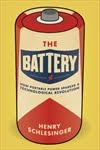
    The Battery

    I just finished a excellent book by Henry Schlesinger, The Battery: How Portable Power Sparked a Technological Revolution. You may remember Schlesinger as the co-author (with Joe Poss) of the wonderful non-fiction police story Brooklyn Bounce.

    The Batteryis all about, you guessed it, batteries. Turns out they have a fascinating history and Schlesinger tells it well.

    One interesting police note:

    In the late 1800s, Conrad Hubert … [and] his American Ever-Ready Company teamed up with a David Missell.

    Missell and Hubert’s innovation was to house their product around what would become known as the D cell battery in a tubular design, making them lighter than square wooden or metal cases of bicylce lights and easier to carry.

    Lacking neither ambition nor nerve, the partners promoted their flashlights by giving them away to New York City policemen and then collected testimonials from the patrolmen to use in advertising. The light was an unqualified success. (pp. 181-182)

  • Police Priorities

    Evidently, the MTA (New York’s subways and buses) could raise enough money to prevent massive service cuts if they could only collect the fare from 27 million dollarsof fare evaders.

    Meanwhile, the NYPD arrests more people for misdemeanor drugs possession (half of those for the lowest level of marijuana possession) than it does for fare evasion. That’s an interesting take on our city’s priorities.

    I have a suggestion for Mayor Bloomberg and Mr. Kelly…

  • It’s back!

    This was taken down for a while but is now back up. The funniest YouTube video I’ve ever seen. Maybe it’s only hilarious if you are or were a cop and don’t speak German. But I think it’s probably funny regardless.

  • NYPD Stop and Frisks

    Lenny Levitt poses an interesting question is his weekly column:

    From 2004 through 2009, [New York City] police have had nearly three million stop-and-frisk encounters, which involve patting people down or questioning them. Virtually all of those stopped are black or Hispanic. In 88 per cent of the cases, the people searched or questioned were innocent of wrongdoing. [ed note: I think innocent is too strong a word for not arrested or given a citation. But regardless, many if not most of those frisked turn out to be guilty of nothing more than living in a neighborhood where police stop and frisk a lot people.]
    Stop-and-frisk had been the tactic of the department’s former plainclothes Street Crime Unit, which prided itself on getting guns off the streets. After four improperly trained Street Crime cops shot and killed the unarmed Amadou Diallo in 1999, Police Commissioner Howard Safir put the unit into uniform, in effect destroying it. Upon taking office in 2002, Kelly abolished it entirely.

    For the record, nobody wants a return to the random violence of the early 1990s. But is the current crime decline, which has continued for the past 15 years, in any way related to Kelly’s aggressive stop-and-frisk policies, which began in 2004?

  • I got a plan. It can’t go wrong.

    This story blows me away both in terms of chutzpa and stupidity.

    Say you’re NYPD and need some extra money. Work overtime in the three-four? Naw. You don’t play that game.

    Instead… rent five vans, hire 16 day laborers, and then go to a perfume warehouse in Jersey where you have a connection. Then wave your real badge and gun around while yelling, “NYPD! Hands up!” Tie up eleven employees. Three hoursafter the start of the robbery, one of victims, says the Daily News, calls 911. According to the Times:

    When the police arrived, two of the rental trucks were at the scene. Officials traced those to a rental agency and found that Officer LeBlanca had paid $205.79 for one of the trucks with a Visa debit card, which was subscribed and billed to his home in Manhattan, the court papers said. He and Officer Checo had also provided information from their driver’s licenses, the court papers said.

    Really? That was your brilliant plan?

    What would do with a million dollars of perfume anyway? You sell it for what, twenty cents on the dollar? Minus expenses and divided by a crew of six, that comes out to about $33,000 per person. I guess it wouldn’t have been bad money for a few day’s work… if you weren’t so stupid.

  • Why you never chase

    Karen Schmeer, a friend of a dear friend, was killed on January 29 while carrying groceries home on Manhattan’s Upper West Side. She was killed by a speeding car filled with drug-shoplifting hoodlums fleeing the police. The impact knocked her out of her boots and flung her through the air, half a city block.

    Karen’s death is more than a simple tragedy. Karen wasn’t just in the wrong place at the wrong time. Karen might be alive if police did not bend or break the exact rules put in place to prevent this kind of senseless death.

    Let me be clear: the police did not kill Karen Schmeer. Criminals did. Let them rot. But their guilt does not absolve the police of responsibility.

    While it is the job of police to catch crooks, it’s not always their job to chase crooks. Not in cars. Cars are dangerous.

    Police say they weren’t in pursuit at the time of the crash, but witnesses, according to the Daily News, “saw the car weaving in and out of traffic going north on Broadway with a squad car with lights and sirens blaring in hot pursuit.” Why the discrepancy? Because police should never be chasing suspects up Broadway at 8pm.

    You don’t need to pull the trigger to be guilty of murder. You don’t have to want to kill somebody. You do need to accept the likely consequences of your actions. This is what moral responsibility is about.

    New York, like most cities, forbids car chases “whenever the risks to [police] and the public outweigh the danger to the community if the suspect is not immediately apprehended.” That’s pretty much all the time unless it’s Osama Bin Laden himself at the wheel.

    Car chases aren’t worth it. They often end in some crash. And the pursued car does not have the emergency lights and sirens to warn people out of the way. The car that killed Karen didn’t even have its headlights on.

    The NYPD pursuit policy is based on the only effective way to reduce the danger of a car chase: don’t do it. For police, it’s as simple as it is unsatisfying.

    Police love a good chase, and there are informal rules to keep your supervisor from stopping the fun. Don’t “chase.” Instead, “follow.” Don’t get on the radio unless your voice is calm and your siren is off. When the suspects bail and run, the one you catch is the driver. If, God forbid, something really bad happens, say you lost contact before it happened.

    We all know that driving is dangerous–especially so for police–and we all know people who have been hurt and killed in car crashes. When I was a rookie cop on the streets of Baltimore and driving too fast to some call, I was confronted by my partner: “Do you know anybody [out there]!? Would you cry if anybody died?!” My sergeant put it another way, “I think of my wife or children in a car. They may die. For what?” This was the wisdom of experience. The message was simple: slow down.

    Still I couldn’t resist the thrill of the chase. I remember one fondly, on small empty city streets in the middle of the night. A guy with a van was speeding, ran a red light, and wouldn’t pull over. It ended OK. The guy bailed and didn’t crash. I caught him. Nobody got hurt. I had a blast.

    Three months later, when the judge saw my suspect in court, he said, “I know you! You’re a drug dealer.”

    Taken off guard, the young man replied meekly, “I used to be a drug dealer.” Then he requested a jury trial. When I talked to him later, he said, “That judge doesn’t like me. I used to deal, but I don’t play that no more.”

    “Then why did you run?” I asked.

    “I didn’t have a license… And I was little drunk.” He was also backing up five years of prison time. He got off with a $500 fine for a suspended license.

    I didn’t need to chase that guy, but I did it for the thrill. When I look back, I count my lucky stars nobody was killed. I made a dangerous situation worse by going the wrong way down one-way streets and pushing another driver past his limits.

    Had Karen Schmeer walked in front of the car I was pursuing that night and been killed, I would have tried to cover my ass with the exact words a NYPD spokesman used in this case: “Cops tried to pull over the suspects minutes before the crash, but they lost the car momentarily. When they caught up with the vehicle, it had already struck Schmeer, as well as several other vehicles.” Maybe that’s true.

    But I’m at least willing to say I was wrong.

    [Reprinted from New York’s West Side Spirit]
  • Juking the Stats

    A recent report of retired New York City police officers warns that the NYPD is playing fast and loose with the numbers. Knowing when and where crimes occur is essential to good policing and Compstat, a system of crime-data analysis created in 1994, played a large role in bringing down crime in New York City. But ever since, numbers have ruled the NYPD’s roost. If crime numbers are not down, precinct commanding officers need numbers to show they’re doing something—something quantifiable.

    In the police world, two statistical categories are important: Part I felony crimes reported to the FBI’s Uniform Crime Statistics and internal measures of “productivity,” namely arrests, citations, and summonses. There are ways to play with both. But perhaps surprisingly, the police department’s emphasis on the latter, the so-called productivity stats, is a much greater cause for concern.

    Sergeants, lieutenants, captains and inspectors feel intense pressure to produce ever better stats. To some extent this can be good. Police are paid to work. But the pressure to produce more with less is as overwhelming as it is unrealistic. Mind you, the orders never come from above to just make numbers up, but when commanding officers talk about “productivity,” the rank-and-file hear “quotas.”

    “I’d love it if I always had enough good C’s [criminal citations], but I need numbers,” one officer told me, “And if I don’t have enough stats and Compstat is coming up, I don’t care if they’re bullshit. I’ll take whatever the f— I can get!” In a world where “better stats” and “more stats” are synonymous, the tail is wagging the dog. And police are nothing if not creative in finding ways to please their bosses.

    Officers know what they see on the streets. Any desk sergeant who reclassifies or “corrects” a report sends a terrible and destructive message. And these pressures have grown substantially in the past decade.

    When a $2,000 stolen laptop model can be found on EBay for less than $1,000, a felony larceny might be reclassified as a misdemeanor and all but disappear from the stats. Or say a tourist reports a robbery but the police, knowing she’s on the next flight back to Germany, record her loss as lost property.

    Of course statistical errors can run both ways. There’s a lot more false reporting of crime than the public realize, and police are certainly not fools. That German tourist may have simply wanted a police report to scam insurance money. Real life is not easily quantifiable, and trying to determine which bubble on a report best reflects reality leaves lots of room for honest interpretation.

    For statistical errors, data are supposed to be small and random. But for crime data, we’ll generally settle for errors as long as they’re consistent. Given that the distinction between felony and misdemeanor is basically arbitrary anyway, it doesn’t really matter if ten percent of felonies are reclassified as misdemeanors as long as it’s done every year. After all, far more than ten percent of crimes are never even reported.

    The problem with fudging crime numbers for political gain is that you can’t stop. You have to do it every year just to stay even. Eventually you’ll get promoted and transferred, if you’re lucky, leaving your more honest and naïve replacement to deal with surprisingly bad crime numbers.

    Certainly some stats, like murders and car thefts, are more reliable than others. The former are hard to fudge and the latter are generally reported for insurance reasons. And by these measures, the drop in violent crime is impressively clear. Murders alone are down 70 percent from their 1994 peak and 11 percent in the last year alone. This is real. These numbers matter.

    But too many measure of police “production” do little but produce internal stats and pad officers’ overtime pay. Take low-level marijuana possession arrests. In 1994 there were 3,141 of these in New York City. In 2008 they had exploded to 40,383! This 1,285 percent increase was not the result of a epidemic of marijuana possession but a simple change in police tactics.

    To say these arrests caused the crime drop is absurd, akin to claiming that a parking-ticket blitz prevents traffic deaths. These arrests—at great taxpayer expense and motivated only by internal police pressure to produce “stats”—simply pad officers’ overtime pay while sending tens of thousands of mostly poor minority men through the criminal-justice system.

    Messy as they may be, it’s hard to image a police world were numbers didn’t matter. What’s important is that these numbers aren’t produced for their own sake. Statistics need to stay focused on crime and not internal, malleable, and ultimately destructive measures of “productivity.” The hard-working men and women of the NYPD deserve as much.