Tag: police culture

  • “Why do some police officers seem arrogant?”

    Justin Freeman in Slate well answers this question. The short answer: “Because they have different priorities than you do.”

    Note this a related but different question than “Why are cops such assholes?”

    No doubt soon this psychoanalysis of negative police traits will be done.

  • “Why are cops such assholes?”

    This is a question I’ve been asked a surprising number of times (Once by a national TV host during a commercial break). Usually the tone is joking (ie: completely serious). A certain lazy and rude copin Chicago got me thinking about it.

    My answer: “Because they can.”

    As a non-asshole (in my humble opinion) former police officer, this is a question I take quite seriously. I think rude policing is actually a bigger problem corrupt and/or brutal policing. The latter categories, quite honestly, are rare. Rude cops are more common and are probably more damaging to policing as a whole.

    First let me say that most cops are not assholes. If you think all cops are assholes, there’s a good chance you are one.

    But when you ask, “Why are some cops such assholes?” are you really asking, “why was this cop rude to me?” If it’s just the latter, consider A) you refused a lawful order, B) you incorrectly asserted “rights” you don’t, in fact, have (often related to A) or C) you asked a really stupid question

    But what if the answer is D) None of the above. Then read on.

    But certainly we’ve all seen some cops act like dicks. But think about it: if you had to deal with the public at your job, and you could be rude, would you be? Maybe not all of the time… but some of the time?

    Have you never been rude to another motorist? Your partner? Your kids? The TV? A minimum wage employee? Well if that’s your personality and you’re a cop, you’re going to be a rude cop. This is not unique to policing (I’ve also heard some rumors about DMV employees). Public servants can be rude because 1) they don’t like their job, 2) they have job security and 3) they have to deal with the public at the public’s discretion.

    But it gets more complicated because there are cops being rude and there are rude cops.

    Think of three situations of rudeness: sometimes cops should be rude; sometimes cops can be rude; and sometimes cops are just plain rude.

    Yes, there are times when police should be rude. Sometimes a stern talking-down-to is needed. It can be an alternative to arrest. Other times something needs to be done quickly and yelling and cursing can sometimes quickly achieve a desired goal. Sometimes.

    There are other times when police don’t have to be rude, but I’ll still cut them some slack. Sometimes people do, in fact, ask for it. If you treat police (or anybody) horribly, insert Golden Rule here. I’m not saying these instances represent the apex of police professionalism, but asking a cop “why?” or asserting your “rights” (especially incorrectly, which is usually the case) is not going to endear yourself to an officer of the law. This is John Van Maanen’s (1978) concept of “The Asshole.” Police have a “moral mandate” and need to “maintain their edge” against those who are “culpable and blameworthy for their affronting action.” And if you are not an “asshole” or a “suspicious person, then you are, in Van Maanen’s trichotomy, a “know nothing.” That’s the best case scenario. So try and put yourself in the officer’s shoes. Or maybe they’re just having a bad day. Try not to make it worse.

    But there’s still the third category of rudeness, the one people ask me about, when police are assholes “for no reason.” “Yes!” they say, “Why was the cop rude to me. For I am not an idiot!” Well, actually…

    But let’s assume the officer was just a dick. Yes, even I have seen such instances. There were times when even I couldn’t help but say, why is Enser being such a dick? (just to pick a random but rhyming name)

    Because he was a bitter man. Because he was not a better man.

    Because he can.

    How to prevent assholes who are cops from acting like the assholes they are is not an easy task. Pity the sergeant, but this is where both supervision and peer pressure come into play. And bad officers do not get promoted out of patrol. (And of course, unfortunately, nobody is ever promoted into patrol.)

    Here’s my problem with asshole cops: it’s not so much that they’re being an asshole. I can often rationalize that away (see above). No, my problem is that the rude cop is a bad cops. I’m not saying this in a moral sense (“who am I to judge?”) but in a tactical sense.

    Rude police are bad police because they don’t do their job efficiently. The witness was going to say something until the cop yelled at him for sticking around.

    Rude police are bad police because they don’t do their job safely. The rude cop shows up at a scene, recently calmed, and immediately gets into a pissing contest with some drunkard idiot. The rude cop turns a routine arrest into full-on brawl.

    I often half-jokingly (ie: completely seriously) propose that four of the six months of the police academy would be better spend waiting tables at a good restaurant. Restaurants are the perfect training ground: stressful, real world, but rarely life and death. I learned a lot working for tips: multitasking, prioritizing situations (triage), staying calm under pressure, dealing with idiots, communicating efficiently, standing up for a long hours, eating quickly, holding one’s pee, and washing hands as often as possible.

    But the most important thing is dealing with obnoxious customers and maintain a professional cool. A lot of customers are assholes. A lot of customers are having bad days. So good waiters learn to achieve their goal while being polite to people they hate. A professional gets the job done and goes you home in one piece. And that’s police rule number one.

    (I wrote a similar post5 years ago)
  • Why (some) good people don’t like cops

    Because (some) cops enforce non-existent laws and treat them like sh*t. Ta-Nehisi Coates writes about a recent encounter with police on the streets of Chicago:

    Catercorner to the volunteers of Safe Passage, two cops sat in an SUV, snug and warm. Our video team was shooting the conversation between our host and the kid. One of the cops rolled down his window and yelled, “Excuse me you need to take your cameras off this corner. It’s Safe Passage.”

    When the officer wanted us to move, there was a very easy way to handle the situation. You step our your car. You introduce yourself. You ask questions about what we’re doing. If we are breaking the law, you ask us to move. If we are not breaking the law and simply making your life hard, we are likely to move anyway. You are the power.

    The cop did not speak to us as though he were human. He spoke to us like a gangster, like he was protecting his block. He was solving no crime. He was protecting no lives. He was holding down his corner. He didn’t even bother with a change of uniform. An occupied SUV, parked at an intersection, announces its masters intentions.

  • Terry v. Ohio. Happy 50th Anniverary, Detective McFadden!

    Fifty years ago today on the streets of downtown Cleveland, Detective Martin McFadden, plain-clothed and without a walkie-talkie (two-way radios didn’t become standard for another decade) stopped and arrested John Terry and two other guys after observing them casing a storefront for United Airlines.

    This arrest lead to the landmark 1968 Supreme Court Case of Terry v. Ohio (the two poor other guys unremembered). In an 8-1 vote, the Supreme Court made perhaps the most pro-police decision of the 20th century.

    I love the the original police report filed by Detective McFadden. Sure, the report is filled with typos and corrections (and “colored” was just the polite term back then), but it’s a great police report. Who would have imagined that not only would we remember it fifty years later, but that it would be taught in college courses?

    Detective McFadden wrote perhaps the best arrest report/statement of probable cause I’ve ever read. He doesn’t just say he was suspicious of these two guys. He explains, in great and explicit detail — ie: he articulates the totality of the circumstances — just what made him suspicious. He builds a scene of three men about to rob a business. McFadden paints a picture.

    Why, after reading this report, how could one not be suspicious of the actions of these three gentleman?

    Then, and without backup or a radio, Detective McFadden pushes these guys against a wall, pats them down, and finds two illegal guns. Finally, the good officer gets somebody in the store to call police.

    Talk about “real police”!

    But here’s the problem: Detective McFadden did not have “probable cause” to think these guys were armed. And how can you search somebody without probable cause? The Fourth Amendment is pretty clear about this matter. But it certain makes sense, as a police officer stopping these guys, to fear that they might be armed and to check and make sure they’re not, or disarm them if they are. But the case went to court, asking if the gun seizure was constitutional and legal even without probable cause or a warrant?

    The Court said yes.

    In doing so, the Supreme Court invented the concept of “reasonable suspicion” in which an officer may pat down the outer clothing of a suspect for weapons in order to ensure the officer’s safety. It’s hard — actually impossible — to imagine policing without Terry v. Ohio.

    The Court concluded, in affirming a lower court’s decision:

    Purely for his own protection, the court held, the officer had the right to pat down the outer clothing of these men, who he had reasonable cause to believe might be armed. The court distinguished between an investigatory ‘stop’ and an arrest, and between a ‘frisk’ of the outer clothing for weapons and a full-blown search for evidence of crime. The frisk, it held, was essential to the proper performance of the officer’s investigatory duties, for without it ‘the answer to the police officer may be a bullet, and a loaded pistol discovered during the frisk is admissible.’

    And yet it’s important to remember the words of the lone dissenting judge, Justice Douglas, in this eight-to-one affirmation:

    The opinion of the Court disclaims the existence of ‘probable cause.’ If loitering were in issue and that was the offense charged, there would be ‘probable cause’ shown. But the crime here is carrying concealed weapons; and there is no basis for concluding that the officer had ‘probable cause’ for believing that that crime was being committed. Had a warrant been sought, a magistrate would, therefore, have been unauthorized to issue one, for he can act only if there is a showing of ‘probable cause.’ We hold today that the police have greater authority to make a ‘seizure’ and conduct a ‘search’ than a judge has to authorize such action. We have said precisely the opposite over and over again.

    To give the police greater power than a magistrate is to take a long step down the totalitarian path. Perhaps such a step is desirable to cope with modern forms of lawlessness. But if it is taken, it should be the deliberate choice of the people through a constitutional amendment….

    There have been powerful hydraulic pressures throughout our history that bear heavily on the Court to water down constitutional guarantees and give the police the upper hand. That hydraulic pressure has probably never been greater than it is today.

    Yet if the individual is no longer to be sovereign, if the police can pick him up whenever they do not like the cut of his jib [his style], if they can ‘seize’ and ‘search’ him in their discretion, we enter a new regime. The decision to enter it should be made only after a full debate by the people of this country.

    Happy 50th Anniversary!

  • And no thanks to the PBA

    The PBAis the Patrolmen’s Benevolent Association. One of the two police unions (I was FOP, which for some reason I still think is slightly better in actually caring about public safety).

    A representative of the PBA recently came to roll calls in New York City and told police officers to stop stopping anybody. If crime does go up, don’t expect the union to hold itself accountable.

  • “Police work is a thinking person’s game”

    It’s worth highlighting this excellent comment to a previous post, from a anonymous police officer. You can file this under “if you don’t work, you can’t get in trouble.”

    What I’ve learned over my career, and what has frustrated me as a life-long progressively inclined citizen, is that despite all common sense and evidence to the contrary, well-meaning liberal types are stubbornly attached to this outdated narrative of white officers maliciously and illegally harassing innocent black men “doing nothing.” As you just articulated, police work is a thinking person’s game. Unfortunately the critics are often so blinded by ideology that to educate themselves on very basic police procedures which may illustrate, like you stated, that for professionals it’s not all about race.

    The real harm from this refusal to engage maturely with the subject matter is the effect this political pressure has on departments, and by extension the most vulnerable communities. I see officers putting blinders on and avoiding perfectly justified stops (not even grey area sophisticated, I’m talking straight probably cause) for fear of allegations of racism. It’s more trouble to deal with the subsequent complaints that now accompanies meaningful proactive police work than to do the bare minimum. And of course, the crime rate sky rockets because the suspects are emboldened by de-policing and ideological cover. So once again, it’s folks in the poor and predominately black neighborhoods, where the well-meaning liberal types don’t have to live, that suffer.

    It’s too easy to be for “police accountability,” whatever that means. Good intentions aren’t enough. Hell, even I’m for police accountability at some very large level. But any “accountability” needs to result in better, not worse, policing. That may sound obvious, but it’s not.

    I’m curious to see how things are going to work out in NYC with potentially two new levels of “accountability” that will just happen to coincide with a new mayor and new police chief who will have to reap what Bloomberg and Kelly sowed. It is not inevitable that crime will go up! But next year the NYPD will have to choose to do right and continue to improve and police (and stop stops for stops’ sake!) or curl-up into a ball and disengage.

    If you create a system where an officer can get banged or sued for doing his or her job, don’t be surprised when officers say, “I want to get promoted. I want to keep my pension. I’m not getting out of this car unless someone calls 911.” Individual actors still act rationally in irrational systems. So-called accountability can all too easily lead to bureaucratic paralysis (for exactly how, see “the Anticorruption Project and the Pathologies of Bureaucracy” in Chapters 10 and 11 of Anechiarico and Jacobs’s The Pursuit of Absolute Integrity.)

  • “Council Overrules Bloomberg on Police Monitor and Profiling Suits”

    So reports the Times. I would not have voted for this because it’s perceived as anti-police, but once again, I say that Ray Kelly get what they had coming. You do work for the city, and you’ve shown nothing but scorn for those who try and make the NYPD better. The chickens coming home to roost and all that.

    If the NYPD weren’t so goddamned tone-def and oblivious — not just oblivious but actively hostile to any constructive criticism and to the non-criminal residents (and academic researchers) of they city they work for — this never would have happened.

    For instance, quotas are illegal. They have been and continue to be. So the police brass invented the term “productivity goals” to hide a quota by any other name. But the rank-and-file officers aren’t dumb. They know a quota when they get f*cked by one. Instead of being semantically clever the NYPD could have simply stopped using UF-250s as signs of “productivity.”

    I do hope this doesn’t mark the turning point to the rise in crime. The shame is that if crime does go up, those who debated this law won’t look changes in police practice but rather focus on all so-called “root causes” that have less to do with crime than any sociologists wants to admit.

    If police stop policing, it would be horrible. And Ray Kelly will be out, so he won’t be around to take the blame for the consequences of his actions. There’s nothing in this law that lessons effective policing. It wasn’t easy to get more police to start being real police in the 1990s. I suspect it will be much easier to get cops to stop working next year.

    Of course crime doesn’t have to go up. It’s not inevitable. Stops can go down and crime can stay down. It happened last year (the NYPD gets kind of schizo explaining this seeming contradiction) because the stops that weren’t made last year were probably not the ones based on honest police-honed suspicion.

    If the NYPD weren’t so damned closed to the city around them — if the NYPD had simply stopped making so many stops and marijuana arrests before the shit hit the fan — this never would happened. The NYPD can blame liberals in the city council. But really, they had it coming.

  • Busting the Polygraph Busters

    The feds are really going after people who tell how and why lie detector tests are flawed?! Does anybody know what the actual crime these people are being charged with?

    I always tell my students that anybody who ever has to take a polygraph test buy and read Doug Williams’s manual on why the test is flawed and how to pass it. I did. I passed. Best $20 you could possible spend (and cheaper than what I paid for it, I think).

    Lie detectors are, and I can’t say this too strongly, bullshit. That’s why they’re not admissible in court. That’s why employers can’t give them to you as a condition of employment (the government naturally exempted themselves). You don’t take the test for the NYPD, but you do for the feds and Baltimore (at least in 1999).

    The basic problem with the lie detector test is this — brace yourself here: the lie detector test does not know if you are lying. How could it? And if you think about it, that’s a pretty major flaw for a lie detector test. Results are based on a pseudo-science that may or may not be more reliable than phrenology.

    Here’s why it matters — and pay attention — you can easily tell the truth and fail a polygraph test (and vice versa). That’s why you should never go into a lie detector test unprepared. If you’re taking the test, you need to pass. You can’t leave it to chance and the mindset of some idiot who makes a living administering a flawed test.

    [There’s one situation where a lie detector test is useful: if one person knows the specifics of a crime, those details could be used to indicate who was involved and who wasn’t. But this isn’t how the test is used as a condition for employment in law enforcement.]

    This American Life did a nice segment on the polygraph back in 2005. Definitely worth listening to, if you care about such matters. It doesn’t tell you how to pass the test (use Doug Williams for that), but This American Life does illustrate the absurdity of the the test and the pitfalls of failing!

  • Amsterdam Police Gay Pride

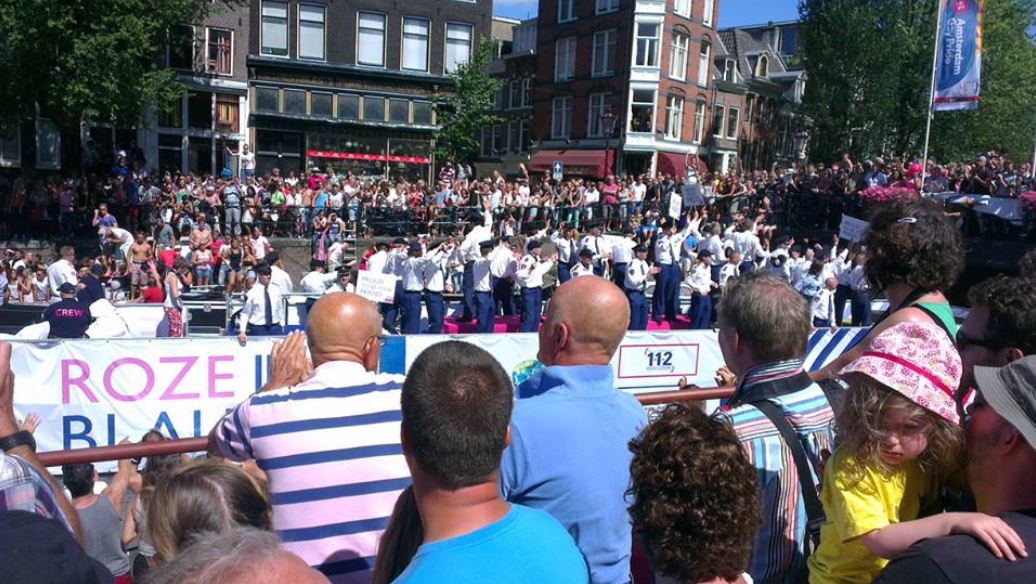
    Amsterdam Police Gay Pride

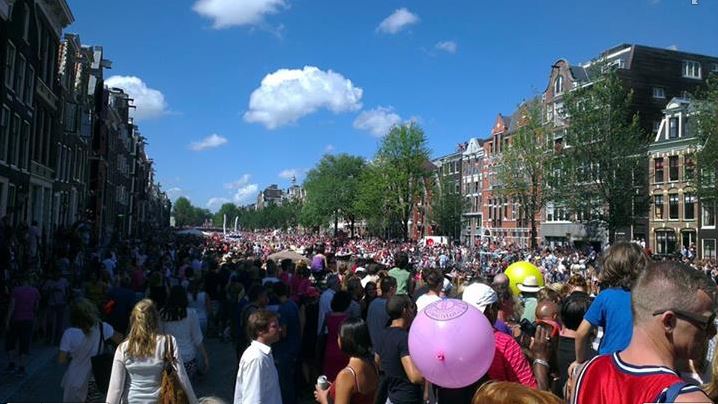
    People are always tickled to see the police boat representing at the annual Amsterdam gay pride boat parade.

    What’s unusual about this photo isn’t that hundreds of thousands (including every straight family I know) turn out for the gay pride parade in Amsterdam, it’s that there’s a blue sky.
    No city is as beautiful as Amsterdam in the sun with little puffy clouds. It happens at least twenty times a year. 

    (Photo by Pep Rosenfeld, copied from facebook)

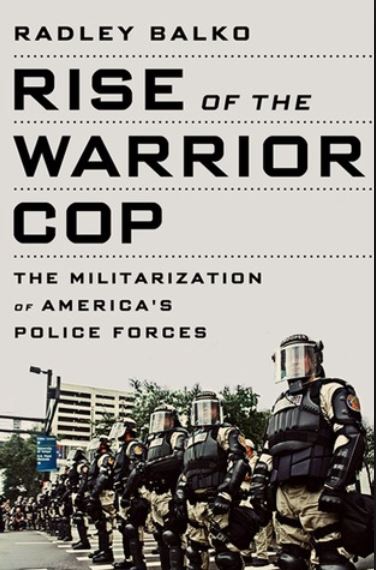
  • Lockdown Nation: How military-style policing became America’s new normal

    Lockdown Nation: How military-style policing became America’s new normal

    If you care about the militarization of police, and Radley Balko makes a strong case you should, read his “fascinating and sometimes terrifying” Rise of the Warrior Cop: The Militarization of America’s Police Forces. That quote is mine. And you can find them in the July/August issue of Pacific Standard, a great new (to me) magazine coming from California.

    Here’s an excerpt of my review:

    Journalist Radley Balko traces the changes in American policing from colonial times to the present. His focus, though, is law enforcement’s increased reliance on military hardware and strategy in the last 45 years.

    Paramilitary policing quickly spread across the country. Today there are more than 1,000 U.S. police forces with SWAT or SWAT-type units. In 1980, nationwide, they carried out an average of eight paramilitary raids a day; now there are well over 100. Balko attempts to explain why this happened, and why it matters.

    Paramilitary police tactics were designed, Balko writes, “to stop snipers and rioters-people already committing violent crimes.” Today, however, SWAT teams are used mostly “to serve warrants on people suspected of nonviolent crimes.” Paramilitary raids on American homes, which just four decades ago seemed extraordinary, have become common, as has legal forgiveness for any “collateral damage.” The Supreme Court has by and large acquiesced, creating a string of drug-related exceptions to the Fourth Amendment.

    Balko carefully prefaces his argument by noting that it isn’t, at its core, “anti-cop.” I suspect this is because he hopes to convince as many people as possible. As a former police officer, I have my doubts. Balko asserts that most police officers regularly commit felonious perjury. Lying, he writes, is “routine,” “expected,” and “part of the job.” He supplies little evidence for this claim – an absence that is particularly notable because the rest of his book is so meticulously researched and thoroughly footnoted. “Bad cops are the product of bad policy,” he warns us. But this is too glib. Bad policy creates bad policing. Bad police, however many there may be, are a separate problem.

    Even if SWAT raids don’t pose an existential threat to American liberty – and Balko makes a strong case that they do – Rise of the Warrior Cop persuasively demonstrates that they’re simply unnecessary. The problem has little to do with the Constitution, and solving it doesn’t require some radical innovation in police practice. Most warrants are served just fine the old-fashioned way: by knocking on someone’s front door. In tactically tricky situations, police can wait for their suspect to walk to the corner store. The relevant question is political: Having given our police broad access to military weapons and tactics, will we ever choose to take them away?

    _______________________________________________

    PS: I feel compelled to mention the great experience I had writing this book review for Pacific Standard. I worked with editor Peter Baker once before when he was with Washington Monthly. I’ve actually had good luck with editors over the years, but other writers crook their eyebrows and then get jealous when I mention such positive experiences. Perhaps I have been very lucky, but it’s a shame it’s even noteworthy to work with a collaborative and helpful hands-on editor. Speaking of all too rare in publishing today, kudos also go to Pacific Standard  for paying good money for a writer’s labor. And paying promptly. Thanks!