Tag: police culture

  • Good Ideas from the Baltimore FOP

    Maybe I’ve become a bit cynical after my time in New York, but I don’t normally think of the police union as a good source for rational and cost-effective advice on better policing (though protecting workers’ rights is an important part of the union).

    But I’ve got to hand it to Robert Cherry, president of my old Baltimore Fraternal Order of Police for their Blueprint for Improving Policing. (But Bob, I’m still a bit peeved that my name is misspelled as “Moslos” on my FOP, Lodge #3 card! You can send a replacement to my school address.) [The FOP is one of the major police unions. The other, which represents the NYPD, is the PBA. In my mind the FOP is somewhat better about caring for the police and the public. The PBA has a bad history of stoking public fear, which isn’t really in anybody’s best long-term interests.)

    From the FOP report:

    Our police officers are appalled by those individuals who betrayed their oath and have now pled guilty in the Majestic Towing scandal, along with others which have come to light in recent years. Many now feel embarrassed to tell others they work for the BPD. The rank and file officers attribute this scandal directly to the lax hiring practices of the BPD. 

    Specifically, maybe it wasn’t a very bright idea to go poach officers from what an incredibly corrupt Puerto Rican police department.

    The FOP report continues:

    The approximate average number of officers suspended in the BPD is 80-100 at a time, which is more than half of the officers needed to staff an entire district.

    Many officers took pride in being a police officer in one of the most challenging policing environments in America. This is simply not the reality anymore. Essentially, Baltimore city taxpayers are being duped. Their tax money is funding the training of Baltimore City police officers who, in turn, leave to work for other jurisdictions, including Baltimore County. The cost is more than just fiscal—taxpayers are losing protection and it’s a waste of resources in general. In addition to losing qualified police officers, according to in-service training surveys, not one Baltimore City police officer said he/she would recommend joining the BPD to potential applicants. At this moment, the Baltimore County Police Department has initiated a 50 member lateral class focusing on recruitment of Baltimore City officers with fewer that five years of experience.

    A recent study shows that an increasing number of BPD officers live in Baltimore City. The BPD should make certain that the trend continues by offering incentives for police officers to live within the city limits. The greater the number of officers residing in the city, the more personally invested the police force as a whole will be in the welfare of the city.

    The report also calls for getting rid of the “white shirts” (to be clear: just the shirts, not the people in them), a shockingly overdue redrawing of district and post boundaries, more patrol and more visible patrol, more focus on community focused policing and quality of life issues, a more productive (and less stat-and-blame) Comstat, and two years of college or military as a hiring requirement. It all makes a lot of sense. Kudos to the FOP.
  • UC-Davis Pepper Spray

    From Jack Stripling in The Chronicle of Higher Education:

    The pepper spraying of student protesters at the University of California at Davis in November, an incident that provoked international outrage, constituted an unjustifiable use of force in an operation that was bungled by failures of leadership and communication at nearly every level, an investigative report issued on Wednesday asserts.

    The damning report, which was commissioned by the university system’s president at the request of the campus’s chancellor, highlights a series of missteps that culminated in what it calls a “critically flawed” and unauthorized police action.

    The report’s major findings include [Still quoting the Chronicle but I’ve added the numbers]:

    1) The use of pepper spray “does not appear to have been an objectively reasonable use of force.”

    2) Davis campus police officers used a type of pepper-spray weapon they were not authorized to use, were not trained to use, and did not correctly use.

    3) Davis’s chancellor, Linda P.B. Katehi, failed to communicate that police officers should avoid using physical force.

    4) The command and leadership of the Davis police force is “very dysfunctional.”

    5) There is little evidence that protesters attempted violence against the police and weak factual basis to support the officers’ contention that they felt trapped by a “hostile mob.”

    6) Davis should develop accepted rules for regulating campus protests and commission an outside review of police protocols.

    To that I say: 1) yes, 2) don’t know, 3) rings true, 4) ditto, 5) ditto, 6) sounds good, probably bullshit.

    I have two other posts on this incident. You can find them 1) here, and 2) here.

    You know, one thing I learned at NPIA, Bramshill (the excellent UK police college where I was last semester) was a better way to handle crisis situations. The Brits do it with “Gold,” “Silver,” and “Bronze” positions of leadership. I don’t know if it’s the best way. It’s probably not the only way. But it’s a damn good way to know who is in charge and who is doing what. Now I have not risen through the ranks of a US police department. And I had the wonderful honor of taking part in an international police leadership class in the UK (a very expensive class at that). I was pretty impressed at the UK way. For instance, if you get promoted to a high rank, you go to (and live at) Bramshill and take a 10-week class. That’s leadership training.

    Because here’s the thing… I have the sneaking suspicion that most US police departments have noleadership training. From my experience, it was first officer on scene and then anybody else could pull rank. That is not a plan. That is not leadership.

    And yes, as always, please do comment and correct me if I’m wrong.

  • What’s Eating the NYPD?

    New York Magazine has a very good article by Chris Smith on Ray Kelley and the current state of the NYPD:

    Whenever Kelly leaves One Police Plaza — most likely in January 2014, when a newly elected mayor replaces Michael Bloomberg — he will be rightly celebrated as the greatest police commissioner in the city’s history. Crime, overall, is down 34 percent since Kelly took office. There have been zero successful terrorist attacks on the city since September 11, 2001.

    His impact on the department will live long beyond his physical presence in One Police Plaza. The NYPD is now thoroughly marinated in Kelly’s personality and priorities. He’s greatly broadened the department’s racial diversity, and exponentially enlarged its technological capabilities.

    An entire generation of cops has grown up schooled in his crime-fighting methods. Nearly half of the department’s 34,800 cops were hired on Kelly’s watch. He handles many promotions personally, so the NYPD’s management thoroughly reflects Kelly’s views.

    And right now, the department the commissioner rebuilt has two striking characteristics: its effectiveness and its unhappiness.

    Later in the article (it’s worth reading the whole thing):

    The newspapers were full of NYPD news on February 1. Most of it was topped by large headlines: In East Williamsburg, Officer Kevin Brennan had been shot in the head by a man wanted for questioning in connection to a homicide and miraculously survived. In the University Heights section of the Bronx, four cops were captured on cell-phone video pummeling a 19-year-old suspect. And seven alleged members of a violent gang that had terrorized the Ebbets Field housing project for years were indicted, thanks to the work of the NYPD.

    Yet as Eugene O’Donnell flipped through the tabloids that morning, he stopped at a smaller item: “No Shirt, Sherlock—Cops barred from wearing NYPD gear.” Apparently Commissioner Kelly had spotted officers wearing gallows-humor T-shirts that bore an unapproved Police Department logo. Kelly issued an order declaring that all NYPD personnel, on and off duty, were forbidden from wearing unlicensed T-shirts.

    O’Donnell — a cop, prosecutor, and now my friend and colleague at John Jay College of Criminal Justice — very astutely notices the significance of what outsiders may fail to grasp:

    Compared to the other stuff in the papers today, this seems silly, but it’s not silly to cops. None of them would ever trivialize the shooting of a fellow officer. But to the rank and file, the T-shirt thing is much more relevant and annoying, because it’s emblematic of what day-to-day life in the department has become.

    The NYPD is an agency of extremes. It can disappoint you beyond belief, and then it can do something incredible, like the hostage team or the anti-terrorism stuff. The T-shirt thing, there’s other approaches besides taking the hammer to everybody and saying they can’t wear anything with the NYPD on it. How about a letter from Kelly that says, ‘Dear colleague, is this the image we want to portray?’ Instead there’s a top-down, blanket order that allows them to catch anyone who slips up. You create a culture that says, ‘If we’re all co-defendants, I’m going to join hands with the knucklehead.’ That’s what you saw at the ticket-fixing case: ‘I don’t fix tickets, but if everybody’s going to be blanketly indicted, then we have to protect ourselves.’ 

  • “There are police and there are police”

    I received a very gracious and lengthy email from a very prominent professor (which in and of itself was thrilling). He read Cop in the Hood and wrote, in part:

    There are police and there are police. They all look similar to the general public because they are all (most, at least) in similar uniforms, wear badges and carry firearms. But departments and even individual officers differ enormously. What is common practice in one police department may be unthinkable in another. I suppose it was natural for me to settle on the importance of this rather obvious point only after I moved into retirement as I had the opportunity to reflect on the thousands of officers I got to know individually over the years and the hundreds of agencies that I got to know in varying degrees both here in the U.S. and in other countries. Understandably, I found myself rebelling at some of your descriptions and analyses of policing in Baltimore and New York City because they were in such sharp contrast with what I’ve learned about policing elsewhere….

    There in, it seems to me, is one of the major challenges for your generation. Why is it that we have such variations? Why are some departments so committed to prevention over apprehension or meaningless patrol? Why are some departments so committed to protecting the civil rights of everyone with whom they are in contact, and others so flagrant in their violation of them? Why are some individual police officers so thoughtless, and others so thoughtful? Why do some agencies handle protests in ways that protect the right of protesters, and others almost guaranteed to provoke conflict? I wish I had another fifty years in which to explore along these lines.

    What do you think? Anyone have ideas? What are the answers? Bueller…?

  • Police Apologize For Job Poorly Done

    It doesn’t happen often. But here it is. Oh, no, it’s not a US police force. That would be a sign of weakness. Wouldn’t be prudent. Might admit legal liability.

  • “Moskos, your thoughts!”

    “Moskos, your thoughts!”

    There were many periods of silence in the police academy. The environment didn’t exactly encourage free and independent thinking.

    During these awkward moments, Agent Cassidy, when he was in the room, was fond of bellowing out, often apropos of nothing, “Moskos, your thoughts!” Thirteen years later, these might be most (only?) remembered words from the academy class of 99-5.

    David Simon writes about Cassidy in the Sun (unfortunately, it seems, behind their new pay wall). You can’t say “if it weren’t for bad luck, Cassidy would have no luck at all.” He’s had his share of good luck. He’s alive, right? But he’s had more that many people’s share of rotten luck as well.

    Now Cassidy has end-state liver cirrhosis. Seems he got Hepatitis C from a blood transfusion after being shot. He needs a new liver. Cassidy was shot in 1987 trying to apprehend a man wanted for partially blinding an old man who had the gumption to tell the bastard to stop beating a girl. Cassidy pulled up on a corner and tried to take him in. There was a fight. Cassidy doesn’t remember the rest, because he took a couple of bullets from a .357, one at point blank range to the forehead. But for some reason Cassidy didn’t die, though he did lose 100 percent of his sight, smell, and taste.

    Cassidy went on with life, had kids, learned to get by with a guide dog, went to work, got a masters degree, and began teaching law class in the police academy. (Then, outside of shooting and driving, the onlywell-taught class in the Baltimore police academy. He said he wanted his kids to see him go to work everyday.)

    Cassidy’s shooter was later arrested and (barely) convicted. Seems most of the fine city jury had no opinion and simply wanted to go home (I had forgotten these details):

    A college student training to be a special education teacher, the young juror, allied with an older woman, fought a pitched battle to bring the rest of the jury around. It was a transforming experience, so much so that years later, that juror would be a Baltimore City prosecutor, her life changed by the experience in that jury room.

    It would be another 12 years, during my time on the force, after the killing of Officer Kevon Malik Gavin, before a city jury would actually be stupid enough to let a cop-killer walk free.

    Because of the Cassidy shooting, tactics in Baltimore changed. We wait for backup (right?) before putting the cuffs on a suspect. We don’t put people against walls they can push off of and spin around on us. Also, we’re inspired by Cassidy’s life and more thankful for some abilities we are all too quick to take for granted.

    “You know what I would have done differently?,” Cassidy says in a video in his memorable staccato delivery, “Very simple. I would have taken that day off. Right?”

    From the FOP Lodge #3:

    Another ‘Signal 13’ goes out for Police Agent Gene Cassidy who was shot in 1987.

    Baltimore City FOP Lodge 3 is holding a Blood Drive/Liver Donor Information at the FOP Hall on Monday, March 19th from 11:00am-6:00pm. This Blood Drive is in Honor of all Injured Police Officers, Firefighters, Medics and our Military Personnel serving the United States overseas. Come out and support one of our own heroes – Gene Cassidy of the Western District.

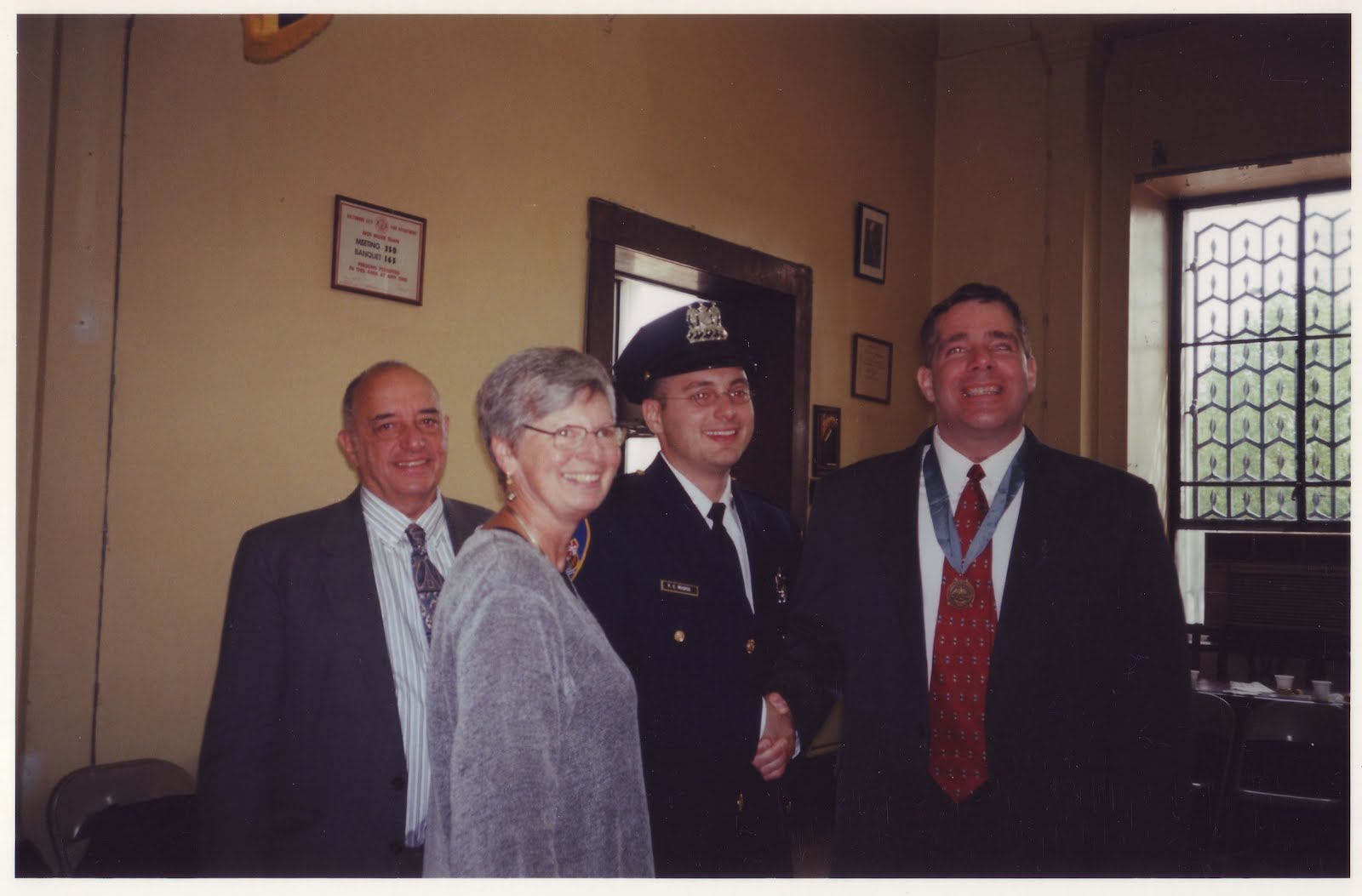
    Here’s me with Agent Cassidy and my parents, on the day of my graduation from the police academy, April 14, 2000.

  • Street Soldiers

    I’ll be on Hot 97’s Street Soldiers with Lisa Evers this coming Sunday morning (it was prerecorded today). Rounding out the roundtable is Noel Leader, co-founder of 100 Blacks in Law Enforcement Who Care, and Norman Seabrook, President of the New York City Correction Officers’ Benevolent Association. It’s a lively hour.

    You’ll hear me question Brooklyn rapper Uncle Murda as to whether a stop-snitching advocate who goes by the name of “Murda” is really a good voice for violence reduction.

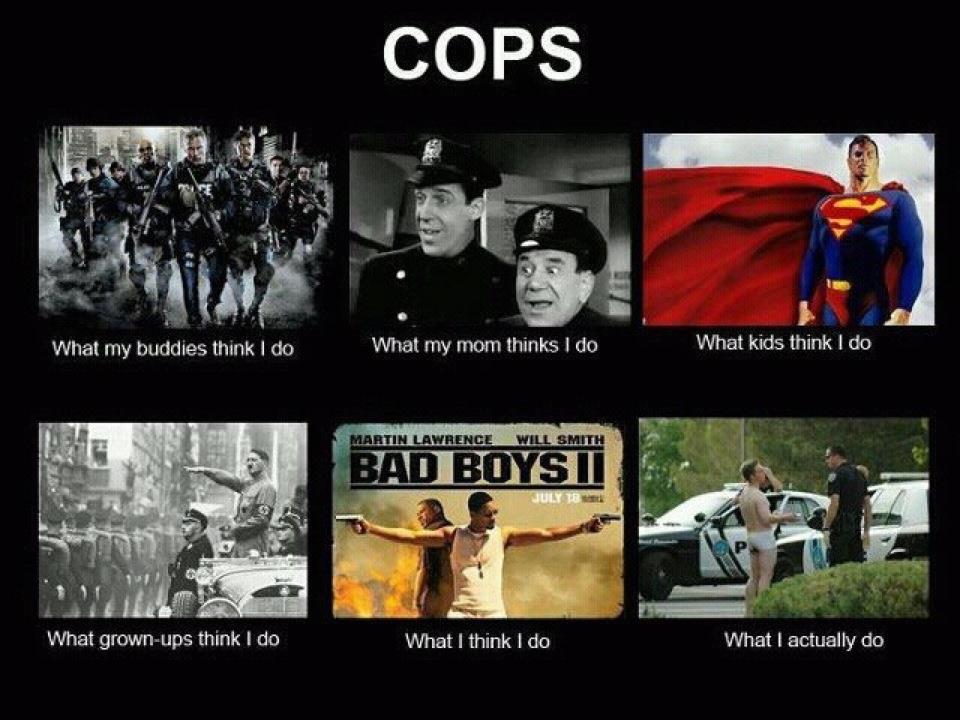
  • What they think I do

    What they think I do

    There are a lot of these “what people think I do” versus “what I do” gags going around. Some are pretty funny. Here’s one on policing. The intellectual in me thinks of the Rashomon Effect. The kid in me just giggles at seeing Lou Costello in a police uniform.

    [thanks to Stef the Greek]

    [Hey all you folks, consider buying my book, Cop in the Hood. It’s good.]

  • Teaching Chicago Police How to Write

    And not just reports. Monica Davey writes an interesting story in the New York Times.

  • Dumb-ass Training and the U.C. Davis Pepper Spray Incident:

    I’m in Dublin. I love Ireland (though England was great, too).

    I received an email from the Washington Monthly (you may remember them as one of the first magazines to publish a Flogging piece) asking my opinion about the UC Davis pepper-spray incident. I hadn’t heard of it. But ignorance is not bliss.

    So now I’ve watched the video. I wasn’t there, but here are my thoughts (best read at the Washington Monthly):

    This UC Davis pepper-spray incident from yesterday, in which campus police sprayed a group of protesting “Occupy” students who were sitting on the ground, was just brought to my attention. I don’t know all the facts, but as a former cop-turned-academic, there’s one thing I can say.

    In the police academy, I was taught to pepper-spray people for non-compliance. Ie: “Put your hands behind your back or I’ll… mace you.” It’s crazy. Of course we didn’t do it this way, the way were taught. Baltimore police officers are too smart to start urban race riots based on some dumb-ass training. So what did we do to gain compliance? We grabbed people. Hands on. Like real police. And we were good at it.

    Some people, perhaps those who design training programs, think policing should be a hands-off job. It can’t be and shouldn’t be. And trying to make policing too hands-off means people get Tased and maced for non-compliance. It’s not right. But this is the way many police are trained. That’s a shame. (Mind you, I have no problem using such less-lethal weapons on actual physical threats, but peaceful non-compliance is different.)

    When police need to remove protesters—whether that’s even the case here I don’t know—it needs to be crystal clear who gives the order, be it the president of the university or the ranking officer on scene. Officers on the scene shouldn’t be thrown under the bus because their superiors gave stupid (albeit lawful) orders. Accountability matters.

    And if police need to remove these students, then the police can go in four officers to one protester and remove them. Lift them up and take them away. Maybe you need one or two more officers with a threatening baton to keep others from getting involved. It really can be that simple.

    People don’t hate the police for fighting off aggressors or arresting law breakers. They do hate police for causing pain—be it by dog, fire house, Taser, or mace—to those who passively resist. And that’s what happened yesterday at U.C. Davis.