Tag: police culture

  • Why cops hate the New York Times

    Most cops hate the newspaper. I don’t. But that’s probably because growing up, there was more newspaper blood in my family than police blood. And a healthy freedom of the press is one of the founding principles of this nation.

    And just think for just a few bits every day, comics, sports, news, opinion, it’s all dropped off on my stoop every morning (well, not the comics. I have to get my comics online)!

    But police often have good reason to hate the press. Reporters, and it must be taught in journalism school or something, feel obliged to get all sides of the story. Sounds good… unless, of course, you understand that all opinions are not equally true. Sometimes, especially with crime stories, there really aren’t two sides to the story. Sometimes, as a reporter, you shouldbe biased (if bias is a taboo word, how about “be willing to reach a conclusion”?).

    Say a criminal gets shot by police. He had a gun. Some police spokesperson says as much. Duly noted. But then you talk to the dead guy’s mother who says, “Pookie was an angel. He would never hurt nobody! And he was home with me at the time he got shot.” Why, the mother may actually believe this. Or maybe not. But the gentle reader trying to figure out the truth sees this and says, “Hmmm, there are two sides of the story. I bet the truth lies somewhere in between.” Actually… sometimes… no. And it’s the reporter’s job to get the truth and not just lay out all the junk and let the reader decide what’s true.

    Now here’s a rule of thumb: don’t value mothers as objective determiners of their babies’ character. Nor should you value a criminal’s friends as objective determiners of the criminals non-criminal activity.

    Now the Timespresent a story that can at best be described as a police clusterf*ck and hints at a very bad police-involved shooting, with obligatory references to Sean Bell and hints at the idea that all the bullets were fired by police. The first headline said, “After 50 Shots in Harlem, One Dead and 6 Hurt.” Wow. Well, that certainly got my attention. And here’s this from the August 9th story by William Rashbaum, Karen Zraick, and Ray Rivera:

    The witness accounts retold by the police were at odds with what some other witnesses said had happened. Robert Cartagena, 19, Mr. Alvarez’s cousin, and another witness, Shariff Spencer, Mr. Alvarez’s friend, said they never saw Mr. Alvarez fire a gun. [well what do you expect them to say?]

    Mr. Alvarez’s lawyer [whose job it is to defend his client regardless of guilt] … said his client … motioned “no” when asked if he had had a gun or fired one.

    Now let’s go back to the August 8th storyby Trymaine Lee and Colin Moynihan:

    Yet questions were being raised among some witnesses as to whether the police had acted appropriately.

    When that first shot went off, “Angel was still punching,” Mr. Spencer [a friend of Alvarez] said.

    “Never once did you hear, ‘Freeze,’ ” he said. “Never once did you hear, ‘Stop.’ Never once did you hear, ‘N.Y.P.D.’ ”

    Several residents expressed outrage at the shooting, saying the police were overly aggressive.

    “People feel like they have no concern for life,” Sean Washington, a television producer who lives down the street from where the shooting occurred, said of the police. Before the gunfire started, he added, the D.J. at the block party said over the loudspeaker “how good a feeling it was because there was no violence. It was all love.”

    See… it was All Love. And then police showed up. Two guys just in a little scuffle and police blow them away.

    Having been a police officer, I assume — no, I know — that nine times out of ten the police version of the story is closer to the truth than any “witness” account.

    Now I wasn’t there. So I don’t know what happened. But I bet it’s pretty close to the Post’s account:

    Moments before a police-issued semiautomatic slug fatally ripped through Soto’s chest, he allegedly pulled his .38-caliber Smith & Wesson revolver on Alvarez, a small-time hood who was getting the better of him in a fistfight, sources said.

    Alvarez lunged for the weapon, and it went off twice during the struggle, attracting the attention of officers nearby, witnesses told police.

    Alvarez, 23, then allegedly fired at Patrolman Douglas Brightman — prompting the uniformed cop and three officers on the other side of the block to return a volley of 46 rounds, police said.

    Also, the A.P.’s Colleen Long has a good story.

    The Daily Newssays: “NYPD officials initially said Alvarez killed Soto with the revolver, before shooting at four cops who returned fire. Yesterday, cops said the revolver was in Soto’s waistband but Alvarez took it from him and shot at a uniformed officer with it.” For the record, Soto was killed and Alvarez shot many many times but is alive.

    So what’s my point? I’m not certain yet. But why does the Timessee fit to quote Ms. Craft, Alvarez’s bother, saying her brother has a job (auto mechanic) and a 2-year-old son? Well maybe because the story is trying to make Alvarez look like a victim, which makes police out to be the criminals.

    But if we want a character study on Soto and Alvarez, why not tell the whole story? The Postis willing to call Alvarez a small-time thug. And apparently there’s nothing small time about Soto. According to the Daily News:

    Both had records. Alvarez had two prior arrests, including one for gun possession and trying to run down a cop with a car, for which he served two years. Soto had been arrested eight times, including for burglary.

    But I can hear people saying, “So maybe they had trouble in the past. But how long can you hold that against them? Poor kids.” Whatever. And I have a bridge to sell you.

    Michael Feeney of the Daily Newsdigs up a Twitter account (I found this under the name BooBillzMB) and writes: “Luis Soto, slain in Harlem shootout, painted himself as tough gangbanger on Twitter.

    “I go 2 da grave b4 I be a b—h n—-! Fa’realll,” he wrote July 23.

    He posted photos of himself flashing gang signs, or holding a new iPhone, an iPad and cocktails.

    In one photo, he looked out at the camera over a thick fan of crisp new $50 bills – many thousands of dollars worth.

    Though he had no job, he planned to trade in his BMW 760, a $130,000 car, for an equally pricey Mercedes-Benz CL550, he tweeted.

    A turf rivalry between Harlem, where Angel Alvarez lives, and the Bronx, where Soto was from, surfaced in his tweets. “Not for nothin da BRONX Got More Real N—-s Den HARLEM,” he wrote July 28.

    Friends said Alvarez and Soto had an argument two weeks ago that led to their clash Sunday in Harlem.

    With a past record of illegal gun possession and assaults on police, and with a running feud with Soto, perhaps Alvarez’s biggest mistake was bringing a knife (or his fists) to a gun fight. Was Soto a b*tch n***a? Not for me to say, but he got his wish about going to the grave first. Was Alvarez just in the wrong place at the wrong time? I doubt it. Is any of this relevant? Actually, yes.

    Because imagine going to work and getting into a gunfight. Just another day at the office? Imagine the fear as you see a muzzle flash and think you’re going to die. Imagine the guilt of learning that you almost killing another officer. Imagine how lucky you feel to be alive. Imagine the relief of going back to your wife and kids. And for this the department and city you serve make you get a piss test and strips you of your gun “pending investigation.” And then in the papers your friends and family read about how you might have killed an innocent hard-working might for no reason.

    Did police behave correctly in using lethal force and shooting 46 times at these two fighting men with a gun? Absolutely. I don’t want to go too far, but it seems like the least we could do is appreciate what these officers went through and thank them for risking their life while just doing their job.
  • Schoolcraft sues NYPD for $50 Million

    Don’t hold your breath waiting for this to sort itself out. Here’s what I’ve already said on this one.

    [Update: A link to the lawsuit.]

    (Update with working links to all the posts on Schoolcraft.)

  • “I feel as though…”

    These are adopted from my field notes:

    It’s 1am and ______ and I are on the way to John’s Express to pick up a pizza I ordered 10 min. earlier. They said they’re closing at 1am. I’m hungry. We’re going south on Broadway past Monument and the Hopkins folks are waving to us. I wave back. But they really want us to stop. “Son of a bitch!” I say.

    The Hopkins security tells us that a woman with them there has been raped. I suspect she wasn’t. But it’s not an obvious failure-to-pay case so I think it may be real. I talk to the woman and ask her what happened. She was with a guy and says, “I feel as though I was raped.” The cop in me knows that the “I feel as though” means it didn’t happen. Still, it’s my job to figure out what did happen.

    She says, “We was just kicking it.”

    So I start asking the important questions. These questions might seem insensitive to some. But these are questions that need to be asked. And it’s my job to ask these questions. I can be sensitive, but I’m not a rape counselor. I’m investigating a potential crime.

    “What is he to you?” A friend.

    “Where did you meet him?” On Central.

    “How long have you known him?” I just met him.

    “What were you doing on Central?” Walking.

    “Where did this happen?” Over down there a few blocks.

    I ask some more questions. All in all, she’s pretty straight with me. And she doesn’t look bad for a 25-year-old (later I find out she’s 19). She tells me she wanted $20 and got $5. They have sex. It’s never clear to me exactly how consensual this was. But what she’s most upset about is not the perhaps forced sex but that he took her jackets before kicking her out. And not just one jacket, but three. It’s cold out.

    I ask her–sincerely, not sarcastically–what she wants. “I just want my jackets back,” she says. That’s not an answer I was expected. But at least this, I think, we can do.

    My partner and I go to the place where whatever happened happened. I knock on the door and someone else answers the door. Then the guy in question comes down stairs. I get him alone and say, “Look, this woman is saying some very serious things. [I don’t use the R-word because I want to cover my own ass, but I make it pretty clear] … She’s also saying all she wants is her jackets back. Why don’t you make this easy for all of us and find her jackets and give them to us. Then we can go and leave and everything is cool.”

    First the guy says he doesn’t know her. Then he says she was with his brother, who left [not very convincing]. Then he goes out the back [luckily he came back] and comes back with three jackets. We take the jackets and leave.

    We give the woman back her jackets and she thanks us.

    We tell the woman she should quit her crazy lifestyle and wish her the best.

    And then we go on our way. I make it to John’s Express at 01:20 and get my pizza.

    Best of all (from a cop’s perspective), because the call was on-view and not called in, there was no paperwork.

    Did I handle this by the book? No. Was the woman raped? Hard to say. Could I have locked him up? Yes. Could I have locked her up? Certainly. Should I have locked either up? I don’t know. But I didn’t.

    She wanted her jackets back and I got them for her. I felt strangely satisfied at how I handled this situation. Was I right?

  • Rape Claims in Baltimore

    While I was out, there’s been a bit of a brouhaha over a Sunreportthe fact that “since 2004, Baltimore has led the country with more than 30 percent of rape reports marked ‘unfounded’ by detectives, meaning police believed the victim was lying.”

    And though I applaud Bealefeld for his generally sensitive handling of this issue, forcing officers to call a detective or a sergeant whenever somebody utters the R-word isn’t really going to help matters.

    It’s not politically correct to say so, but of course many supposed rape victims in Baltimore are not, in fact, raped (more on that below). Certainly that’s no solace to those who areraped and not taken seriously by the police, but I suspect false reports of rape are related to Baltimore high level of poverty and heroin use more than anything else. Perhaps that is why Baltimore’s stats are so out of sync with other cities. I’d bet–if rape stats were reliable across jurisdiction, which they’re not–that false rape claims would be directly proportional to poverty levels, drug addiction, and thus the number of women turning tricks. Of course you could turn those stats around and say that cops just don’t care about poor drug-addict rape victims.

    It’s certainly true that some patrol officers cops are probably horrible at dealing with rape claims in the city. What can one really expect from some poorly paid 22-year-old macho guy straight out of the suburbs and the academy? And certainly a few cops can’t fathom that a prostitute on the job can be raped. And yes, most cops will do their best to talk everybody, potential rape victims included, out of going to the hospital because of the inevitable hours of waiting involved.

    But all that said, what too many non-police don’t realize is how many lies and how much gray exists in the work police deal with every day. That’s the real, un-politically correct world cops know all too well and navigate all the time.

    One time when I was police there was an actual stranger on young-woman-walking-down-the-street-going-to-work kind of rape. It’s the only one like that I can remember from my brief time on the street. I was surprised at how all we normally cynical cops swung into action and worked hard to catch the bad guy. At the time, I asked a few in my squad why they suddenly cared so much about this rape as opposed to all the others “rape” victims we deal with. “Because she really was raped,” was the generally answer. And the fact she was a working girl and not a “working girl” also mattered.

    So if this woman was “really raped,” what does it mean to be “not really raped”? The obvious example is a woman turning tricks who isn’t paid. She’s pissed off and says she was raped. It’s like the guy buying drugs, who gives money, gets nothing, and calls in a robbery. How often does this happen? Quite frankly, a lot. There may have been a crime, but it’s not what the call came out as. And it doesn’t help matter than the “victim” has also committed an arrestable offense.

    The “failure-to-pay” victim doesn’t really want to go through the rigmarole of being a rape victim. Hell, she wasn’t raped. She consented. She just wants her money. Short of that, she wants the guy who stiffed her to spend a night in jail. It’s a reasonable request morally, but not legally. What is the cop supposed to do?

    Another problem is that some women, at least in Baltimore’s Eastern District (especially those who are familiar with the system) simply don’t want to deal with hassle of being a rape victim. Going to a hospital to get examined and going through the ordeal of a “rape kit.” What’s the point? Especially if your attacker was an intimate or a John. These women want justice, but it’s not a kind of justice police can provide.

    Let’s say you’re having an affair and don’t want to leave. And then on the way home to your main man you sober up and realize your fling is going to talk. How often does this happen? More often than you probably think. Or let’s say you really are raped. You have a drinks and make out a little with your ex. When you want to leave but he says no and forces you to have sex. Either way you call police and an officer shows up.

    The officer asks some tough questions because the officers assumption is that you’re not telling the whole truth. Why? Because nobody tells the truth, the whole truth, and nothing but the truth. It’s the officers job to figure out some version of the truth. And when this happens, you, the rape victim, have a decision to make.

    Option one is to officially become the rape victim. You’re going to have to answer police questions, get intimately tested at the hospital, and then go through the criminal justice as a victim. Option two is to talk with friends or family or a councilor, maybe have a stiff drink or three, cry, and then take a very long shower and try and get some sleep. Which would you choose? Which is the better option? I have no idea.

    And when I was a cop, after I presented option one, I didn’t think it was my place to criticize a woman for choosing option two. If a woman says she doesn’t want to go through with testing and criminal prosecution, who was I, a young man, to tell her otherwise. What do I really know about such matters?

    What can or should the police do in these cases? It’s not police’s fault successful prosecution demands a rape test. It’s not police’s fault that crimes have to proved beyond a reasonable doubt. It’s not the fault of police that people sometimes lie.

    I may provide an interesting example tomorrow.

  • Schoolcraft Tapes

    The more of these tapes I hear, the more I think how good these secretly recorded NYPD officers sound. And this is the best [read: worst] they could come up with? To me it shows what a good job most men and women in the NYPD do.

    In the latest batch, particular kudos to Lt Rafael Mascol, who offers some pretty good suggestions as to how Officer Schoolcraft could get higher job evaluation rankings. He offers him other tours. And he says, “Go out there answer some more radio runs. Do some more summonses. Write more reports. Do more proactive work. If you’re have trouble seeing activity, we can put you with a more active officer who can see the activity and maybe point it out to you.”

    It’s that last part I really love. And he’s not saying this sarcastically. He’s trying to help.

    Even if Schoolcraft’s basic point may be correct (that crime is being downgraded), and despite an order to talk with his sergeant, he did leave an hour early saying he didn’t feel well. You can’t just walk away from work as a police office. It’s called going AWOL. If he did something violent or had a heart attack, the NYPD would have been held responsible.

    Even Chief Marino sounds reasonable. Schoolcraft certainly sounds sane, but it’s understandable that he has to go to the hospital to get checked out. He was complaining of chest pains, for crying out loud!

    He didn’t have to get EDP’d (or EP’d, as we say in Baltimore, or, in normal lingo, declared crazy and getting taken to the hospital). It sounds like he could have gone on his own free will as a medical patient. Instead, he said was going to lie there until he felt better. So he went as a mental patient.

    The idea of throwing a guy in a mental ward because he’s got evidence against the brass sounds great, but it’s not what you hear on the tapes. Did he need to be kept locked up for days? I don’t know. But that’s on those doctors and not the NYPD.

    Of all these “secret recording,” I couldn’t find one of them that says anything that isn’t common knowledge or makes the speaker look bad. Most of them make the speaker look good!

    Here’s Part 1, 2, 3, 4 in the Village Voice. And Lenny Levitt’s most recent take. And my first post on the subject.

    (Update with working links to all the posts on Schoolcraft.)

  • Cops Cuff Cop at Mets Game

    Cops arrest an off-duty cop for being drunk and obnoxious at the ballpark.

    This doesn’t surprise me. But I mention it for those who talk too much of the Blue Wall of Silence and some secret code of brotherhood and that cops never arrest another cop unless they have to and somebody is hurt.

    Now I’m sure (and would hope) that the drunk cop in this case was given a chance to behave maturely. And perhaps one extra chance that a non-cop wouldn’t get. Thatis professional courtesy.

    But then they slapped the cuffs on and arrested the schmuck. And they didn’t let him go and all laugh and have a drink together as soon as they were out of public view.

  • Hyper-Alertness

    Hyper-Alertness

    I was listening to my all-time favorite interviewer, Milt Rosenberg, talk to a few Chicago cops. Like most cops talking in public, this interview starts out a bit stilted, but they open up by the end.

    [I was on this show last year–my life’s dream! I’ve been listening to Uncle Milt for about 30 years (and I’m only 38). He would come on after away Cubs games and I would just listen even though I was far too young to understand all the discussion. I think he’s why I’m an intellectual. And just for the record, Milt is quite conservative (though I think he’s become more conservative over the years). But, unlike, say, Rush, he’s an intelligentconservative. Listen to this discussion about Obama to hear his show at its best…. Now if only I could figure out why my interview isn’t on their archives.]

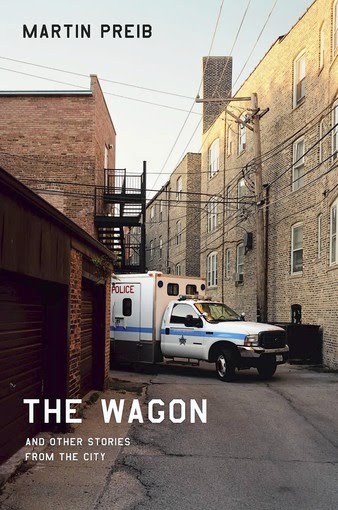
    One of the cops, Martin Preib, wrote a wonderful book, The Wagon and Other Stories From the City. I keep meaning to write on it but haven’t (his book is not the only thing I mean to write on but haven’t). It’s great. Buy it. Read it. If you’re reading this, you’ll like Preib’s book. It’s not super light reading (published by the University of Chicago) but I mean that in a good way. The guy can write. And it reads really really well. It will stand the test of time.

    So these guys got me thinking. Brought me back to the old days (shocking to think it’s been 9 years since I’ve walked the beat).

    Here’s one thing I don’t miss about being a cop: Hyper-Alertness (I just made that term up).

    What do I mean?

    1) When you walk into a store, is your first thought, “Is the place being held up?”

    2) When you’re looking in the mini-mart fridge, are you looking in the reflection in the glass to see who enters the store?

    3) When you enter a room of strangers, do your eyes move to people’s hands?

    4) When you sit in restaurant, do you always sit with your back to the entrance, ideally with your back to wall?

    5) Do you assume that everybody is lying?

    6) Is the thought of taking a nap in a public park completely insane?

    7) Do you always carry a heavy badge and credentials?

    8) Do you feel a bit naked without your gun?

    9) When you’re off duty, does the thought of hearing these words terrify you, “I know you!”

    10) (…if you’re a cop, feel free to add what I’m forgetting.)

    If you’re a cop, you’ll say yes to all these things. These are the things that just come natural to cops. If you’re a cop, you can’t imagine doing otherwise.

    I quit the P.D. in 2001. It took about two years before I could stop carrying my badge (though during that time I never pretended I was a cop). It took anothertwo years andtaking another job (my current job) before I could ignore the above rules and… relax.

    And remember, I was only a cop for two years (and I’m a pretty relaxed person by nature).

    Being hyper-alert is part of the job. It keeps cops alive. And if you start being hyper-alert, it’s not something you can just turn off in public.

    [If you’re not a cop but happen to ride a bicycle in the city like I do, you can kind of understand hyper-alertness in a different way (at least if you’re alive to read this). Now imagine that level of alertness 24/7.]

    But being hyper-alert doesn’t make life more fun. Ignorance canbe bliss. Sometimes it’s nice to tune out. Sometimes it’s nice to put on headphones, blast techno music, and ignore everybody around you. Because if you’re not a cop, there’s a good chance that nobody will hurt you.

    And you know what? Most people can live all their lives oblivious and unarmed and die peacefully in bed surrounded by loved ones.

    I don’t miss being hyper-alert. I’m happy I’m no longer hyper alert. Though obsessionally something will trigger it.

    Does not being hyper-alert make me less safe? No doubt. But not being hyper-alert makes me so much happier.

  • Workplace Conflict Scenarios

    There’s an article in the New York Times that isn’t actually supposed to about police. An academic study asked participants how often they experienced eight “workplace conflict scenarios.” These are:

    * Someone treating them unfairly
    * Someone blaming or criticizing them for something that wasn’t their fault
    * Someone failing to do the work that needed to be done, or doing it in a sloppy or incompetent way
    * Someone getting annoyed or angry with them
    * Someone gossiping or talking behind their backs
    * Someone teasing or nagging them
    * Someone providing unclear directions about work they needed to do
    * Someone making too many demands

    Er, isn’t this every day in your average police department?

    Though maybe the study isabout policing. It says that conflict is highest with men who held supervisory roles in their early 40s.

  • School[craft] Readings

    The NYPD Tapes, Part 2, by Graham Rayman in the Village Voice. (And a link to my comments on Part 1)

    Commentary:

    Oh, You Mean Those Quotas” by Radley Balko.

    Those Schoolcraft Tapes” by Leonard Levitt.

    Update with working links to all the posts on Schoolcraft.

  • The NYPD Tapes

    A reader pointed me to this story in New York’s Village Voice.

    In the 81st Precinct in New York City, a cop, Schoolcraft, secretly recorded roll call and other happenings over the course of the year.

    Bold.

    Though all he seems to show is something we all should already know. In the NYPD, everybody is under intense pressure to produce good “stats” (arrests and citations) and reduce bad stats (crime numbers). I suppose the good of the tapes is the department may finally have to stop trying to say with a straight face that officers are not under pressure to meet arrest and citation quotas. Compstat has done a lot of good. But the impact of a stat-driven culture on the incoming rank-and-file is not very productive.

    The article, which is a bit too long (though I look forward to reading the next installment!), makes some claims I strongly disagree with. For instance, responding officer at a scene certainly has a responsibility to judge the validity of a victim’s claim. Police patrol officers are not just report writers. And detectives who claim otherwise are doing a grave disservice to the majority of police officers.

    Overall, reading the story and listening to some of the recordings, I couldn’t help but think what good leaders these were. The men and women leading roll call look out for their troops, warn them of bureaucratic nightmares, and try an instill a strong work ethic.

    And some of the stories just make me nostalgic for my policing days. The sergeant who deadpans the danger of mine shafts in Bed-Stuy? What a progressive pedagogical approach (I’m trying to use fancy words here) to help officers not get in trouble for failing to carry… whistle holders. Yes, in the police word, where you put your life on the line almost every day, if they want to, they can bang you for sh*t like not carrying a whistle holder. (Just FYI, I had previously never heardof a whistle holder. In Baltimore, I managed to hold my whistle just fine without a dedicated whistle holder. The whistle, it turns out, makes an excellent key chain for the easy to lose but important to have handcuff key.)

    Nobody’s got your whistle holder, and half of you don’t have your whistle. That’s unacceptable. When I fall down the mine shaft, I’m the only one that’s going to be able to call for help. The rest of you are going to have to fire off your gun, and they’ll give you a [reprimand] for that.

    I love this guy!

    And is this really too much to ask?: “You want to draw penises, draw them in your own memo book.” Hard to argue with that request.

    But I think the only reason we didn’t “cock” memo books in the Eastern was because Baltimore cops don’t have memo books. (Is there a point to memo books except creating more paperwork?) Makes me think of my buddy who reads this blog (yeah, I’m talking about you). He would wait for any new LT to finish roll call with the very decent question, “Does anybody have anything?” To which he would answer with unbridled glee, “I have this horrible burning sensation when I pee!”

    Cracked me up every time.

    Update with working links to all the posts on Schoolcraft.